
Baby animals are the cutest creatures on Earth. Puppies, kittens, piglets, goslings, cubs, calves, and more — they are simply too adorable to resist! However, if you spot a baby animal out in the wild, you need to try your best to avoid picking them up or “saving” them. People can accidentally cause serious harm to baby animals if they don’t know what they’re doing!
Pause and Assess
The most important thing to do when you see a baby animal is to pause and take stock of the situation.
According to the National Wildlife Federation (NWF), your first step should be determining whether or not a baby animal actually needs our help. “In many cases, it’s totally normal for wildlife babies to be on their own,” the NWF said in a statement. “’Rescuing’ an animal that doesn’t need rescuing actually decreases its chance of survival.”
According to the Humane World for Animals, here are the signs a baby animal might need your help:
- The animal is brought to you by a cat or a dog.
- A bird is featherless or nearly featherless and on the ground.
- The animal is shivering.
- There’s a dead parent nearby.
- The animal is crying and wandering all day long.
- The animal shows signs of injury, such as a broken limb, bleeding, or asymmetry in their eyes, wings, legs, etc.
Call your local wildlife rehabilitator or wildlife center for help. Injured baby animals often require around-the-clock care from experienced veterinarians, and the professionals will advise you on what to do. (Note: You can find a list of local wildlife rehabilitators on the National Wildlife Rehabilitators Association HERE.)
While waiting for a professional to arrive, do not feed the baby animals, even if they appear hungry. Baby animals have very specialized diets, and feeding them the wrong food could cause serious injury, according to the Humane Rescue Alliance. Keep reading for specific tips on what to do if you come across these baby animal species.
Baby Bird
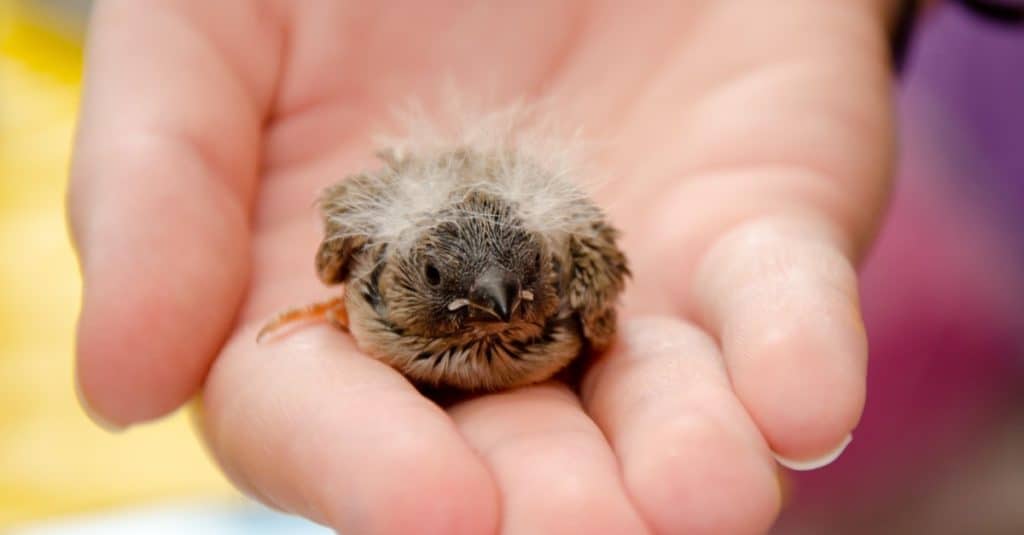
If you find an injured bird, gently place it in a ventilated box or container in a quiet, dark place and contact a licensed wildlife rehabilitator for further instructions.
©Olena Kurashova/Shutterstock.com
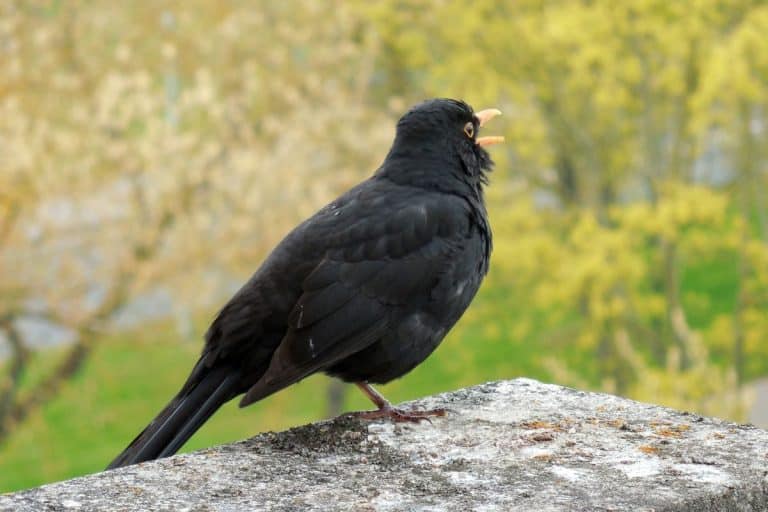
If a baby bird does not have feathers, the National Audubon Society recommends placing it back in its nest. Birds without feathers or with minimal down feathers are referred to as nestlings, and they are helpless creatures. If it’s uninjured, you can just scoop it up and deposit it in the nest it fell out of.
However, if a baby bird does have feathers, it’s considered a fledgling, and it’s better off being left on its own. The bird is learning how to be a bird and how to fly, and it doesn’t need any human intervention (unless it’s in immediate danger from dogs or cats nearby).
If the bird is a duckling or gosling, leave them be until their parent comes back. A trapped duckling can be helped to escape and returned to its mother, and you can always call a licensed rehabilitator to tell you what to do.
If you come across an injured bird, gently place it in a ventilated box or container indoors, keep it in a quiet and dark place, and contact a licensed wildlife rehabilitator for guidance. Keep it away from pets and noise.
Baby Squirrel
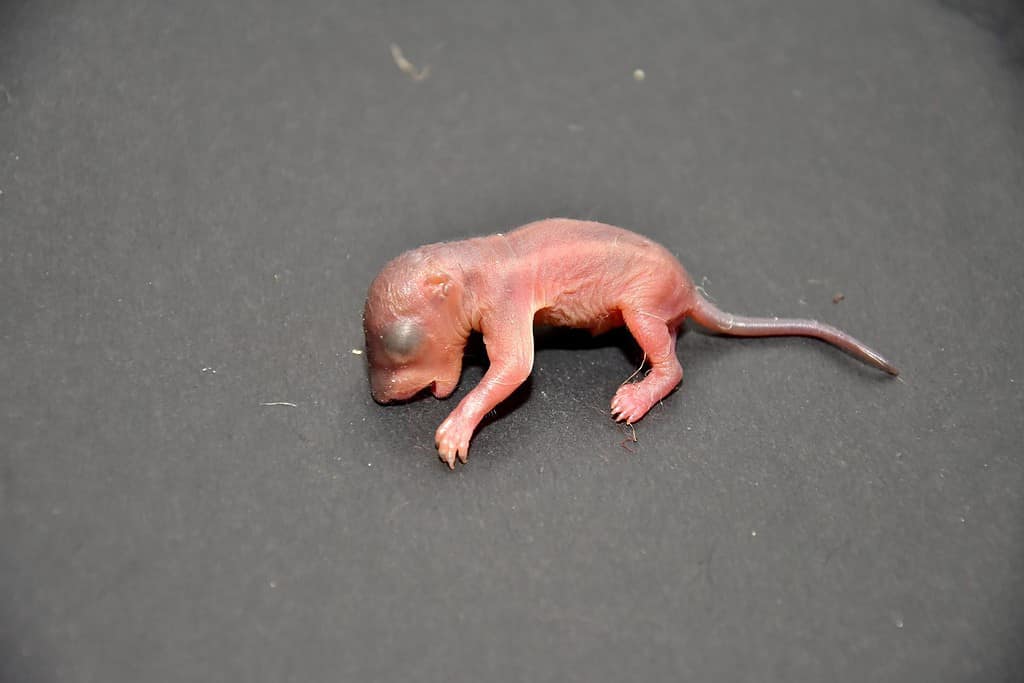
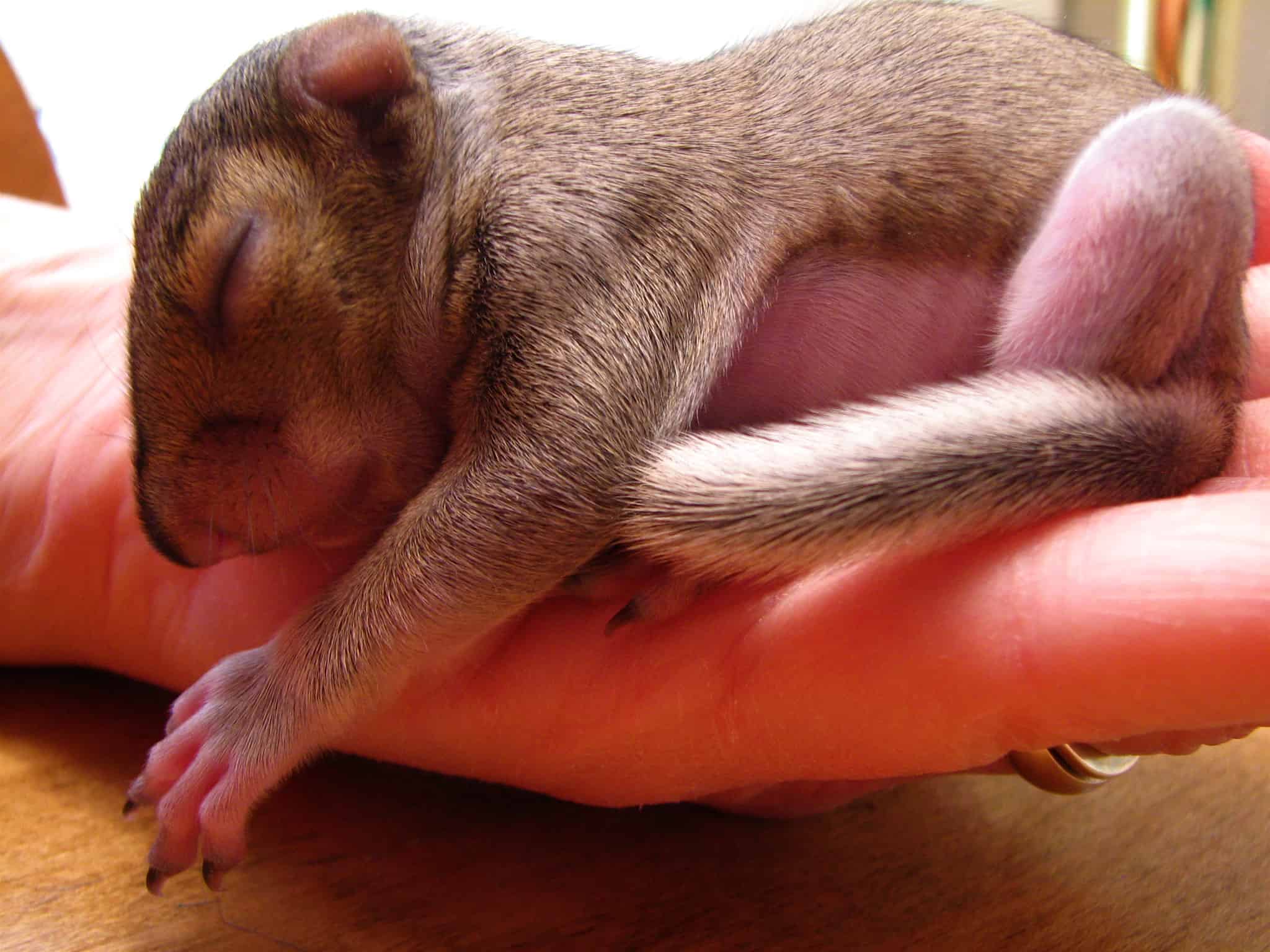
Mother squirrels will generally return fallen baby squirrels to their nests.
©chetanya kumar suman/Shutterstock.com
A baby squirrel found on the ground may have fallen from its nest up in the tree. Its mother will bring the baby back to the nest unless it feels cold, according to Humane Rescue Alliance. To help the baby stay warm, microwave a cotton sock filled with dry rice, then put it in a box with the baby squirrel. Once the baby squirrel is warm, place it at the base of the tree near the nest. The organization recommends playing baby squirrel sounds from a YouTube video to get the mom’s attention. Call a wildlife rehabilitation center if the mom doesn’t come to rescue her baby.
Baby Rabbit
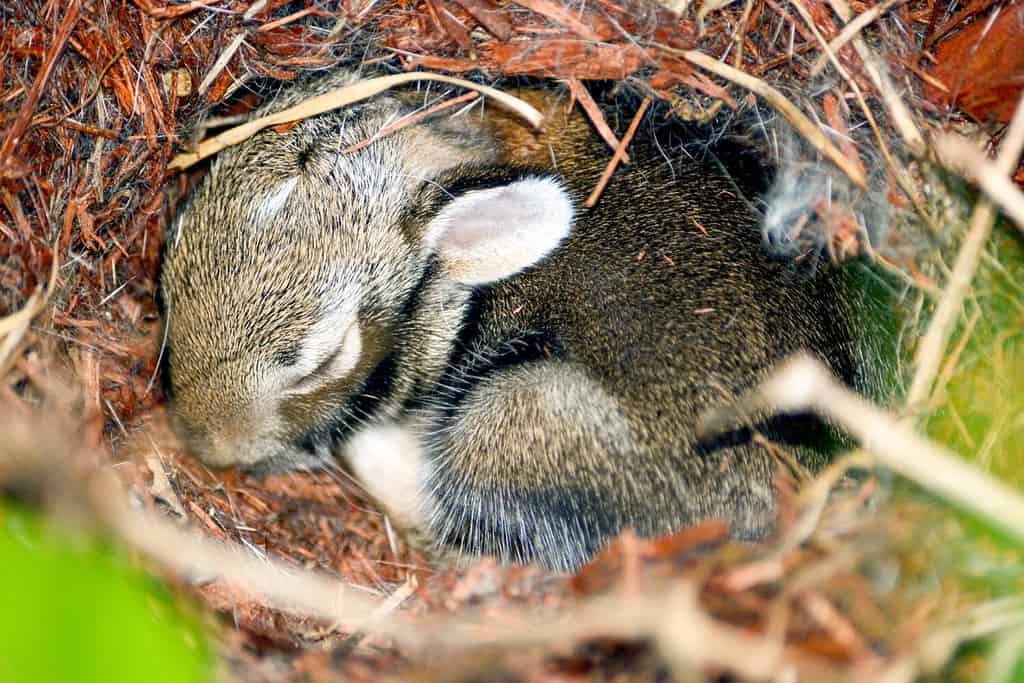
Rabbits will leave their babies during the day to hunt for food.
©Jerry Morse/Shutterstock.com
Chances are, if you see a baby rabbit in your yard, it is totally fine. That’s because babies are often kept in shallow nests while their mom leaves them to feed during the day. According to Humane Rescue Alliance, a baby bunny that is the size of a tennis ball or larger is old enough to be on its own; whereas a bunny smaller than a tennis ball should be in its nest, which is often just a small dip in the ground covered in grass.
If you are unsure whether the bunny is abandoned, the organization recommends making a circle of regular flour around the nest and checking for footprints in the morning. If the babies are cold, covered in ants or flies, lethargic, have a sunken belly or wrinkly skin, call your local wildlife rehabilitation center.
Baby Deer
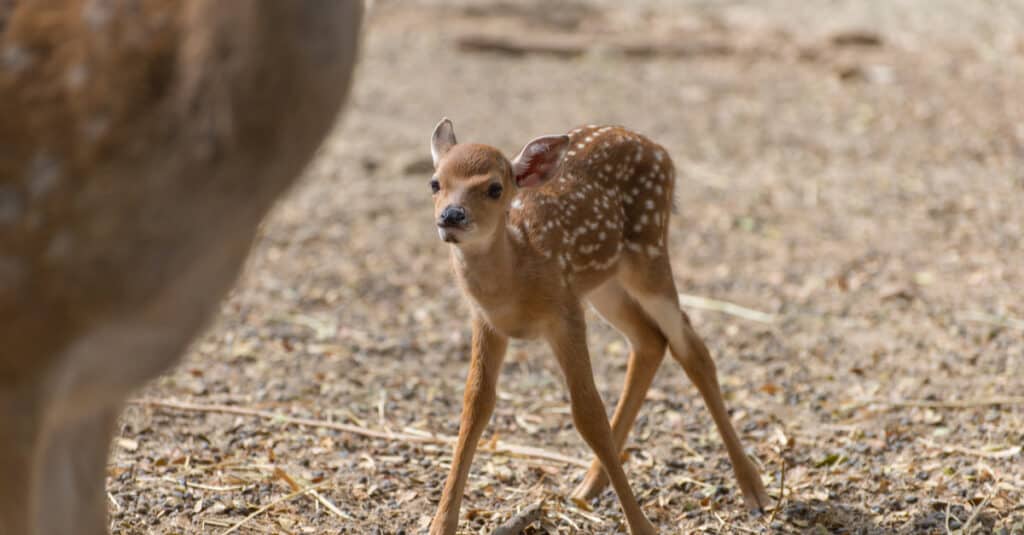
A fawn lying alone peacefully is generally not a cause for concern.
©rolehcab/Shutterstock.com
Leave a fawn alone if you come across it in the wild, as its mother will come periodically throughout the day to nurse the baby deer, per Humane World for Animals. A doe won’t like a human smell on her baby, so you should stay away. If you’ve already handled the deer, return it to the same spot you found it and leave. If the fawn is lying on its side, wandering and crying all day, then call a wildlife rehabilitation facility to help.
Baby Opossum
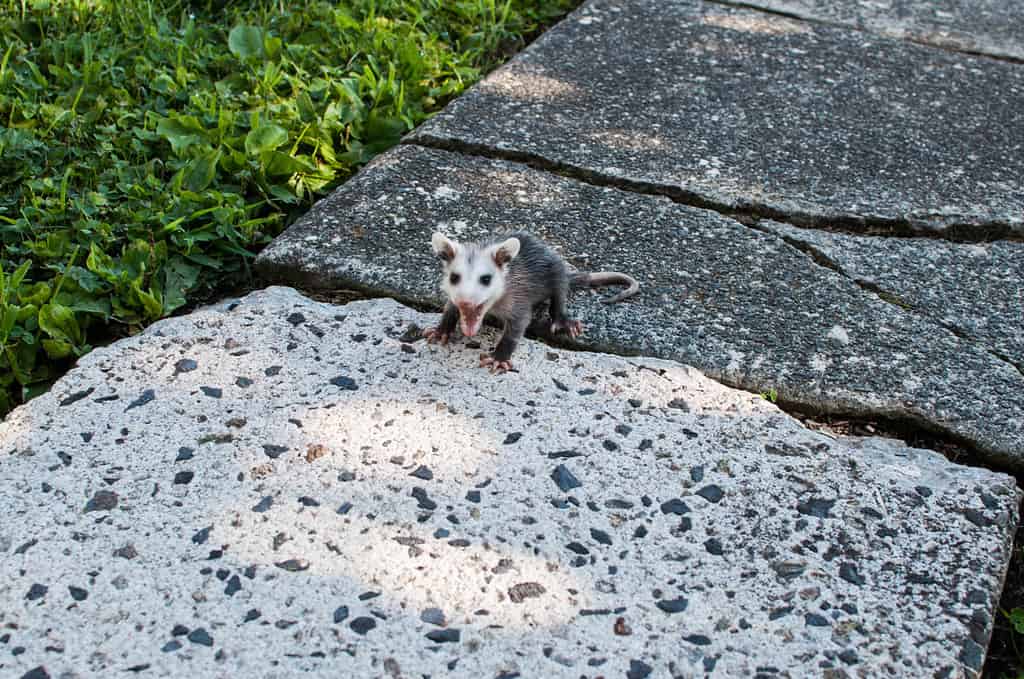
Opossums are tiny and tucked away as babies and can’t be on their own until they’re about 7 inches long.
©Barbara MacDonald/Shutterstock.com
Opossums are barely larger than a bee when born. These tiny creatures will hang out in their mother’s pouch like a kangaroo until they are big enough to ride on their mother’s back (generally at about 3 to 4 inches long). If you find an opossum that’s over 7 inches long, they are old enough to be on their own. Otherwise, call for help.
Baby Skunk
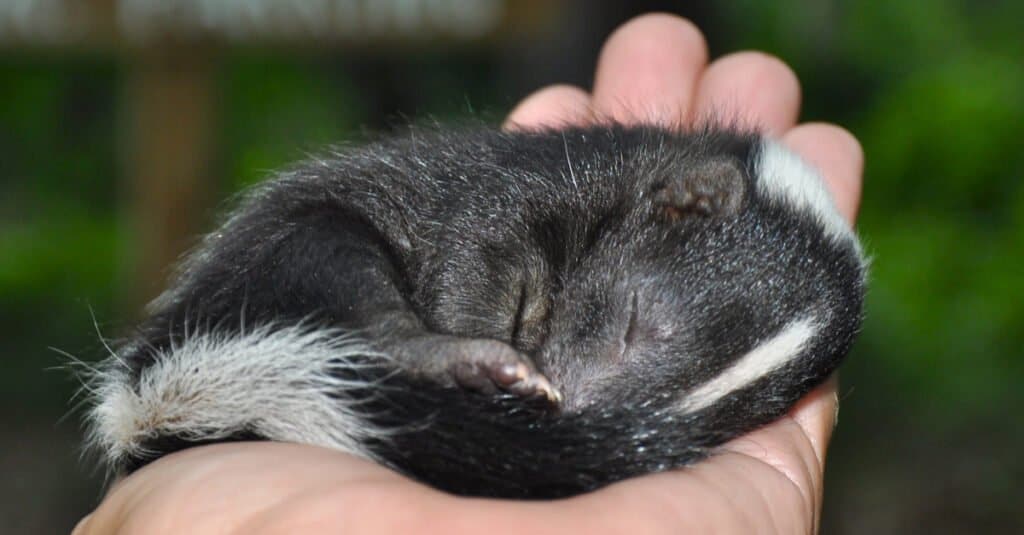
Don’t get too close to a baby skunk, even if you are trying to keep it safe.
©Becky Sheridan/Shutterstock.com
Because baby skunks have poor eyesight, it’s not uncommon for them to lose their mother. If a baby skunk is running around, it may be lost. Humane World for Animals recommends putting a plastic laundry basket over the baby to make it easier for the mom to return to them. Just move slowly and speak softly to avoid being sprayed. Call a wildlife rehabilitator if the mother doesn’t return.
Baby Raccoon
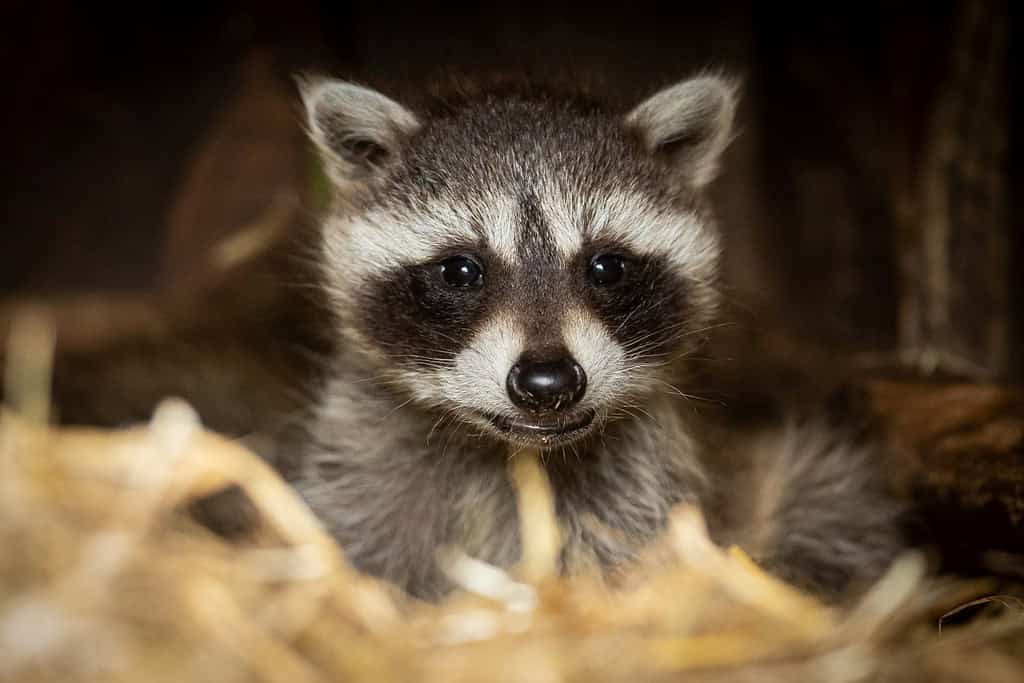
A baby raccoon might wander on its own, but it’ll always return to its mother.
©AB Photographie/Shutterstock.com
As a general rule of thumb, baby raccoons will stay with their mother for up to a year after birth. However, they will start wandering on their own at 3 months. If you find one and think it needs help, check if there are bugs or flies on the baby’s body, if the baby has been crying constantly, if it appears sick or injured, or if it’s been in human care for more than 24 hours. Call a wildlife rehabilitation center to help.
Baby Fox
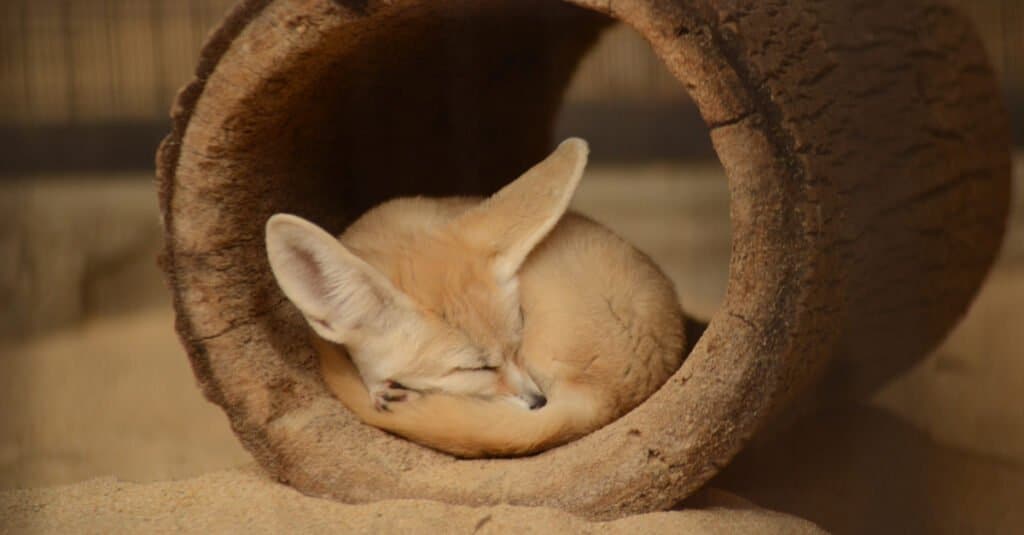
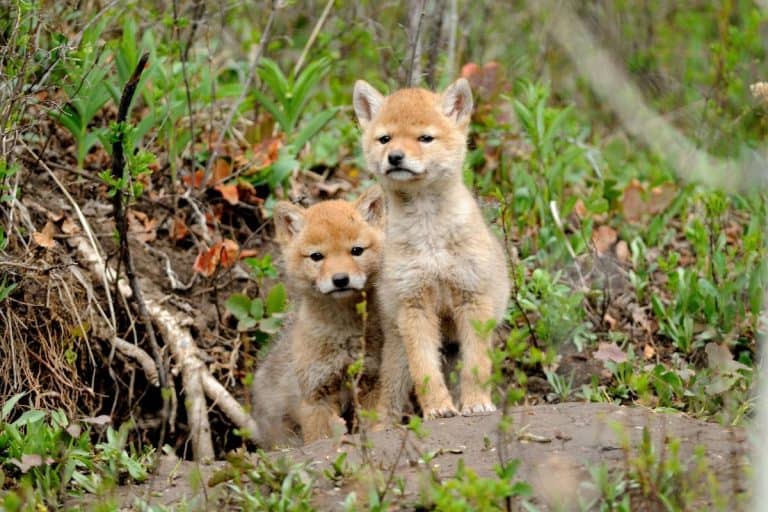
Fox kits are playful and fun like puppies, but they will act sick and/or distressed if their parents are gone.
©natapornL/Shutterstock.com
Fox kits are left alone while their parents hunt for food. To entertain themselves, they’ll often play with their siblings like puppies. Later, they will go on hunting trips with their parents. Leave them alone if they appear energetic and healthy; only call for help if they seem sick or weak, or if you believe both parents are dead.
Baby Reptile
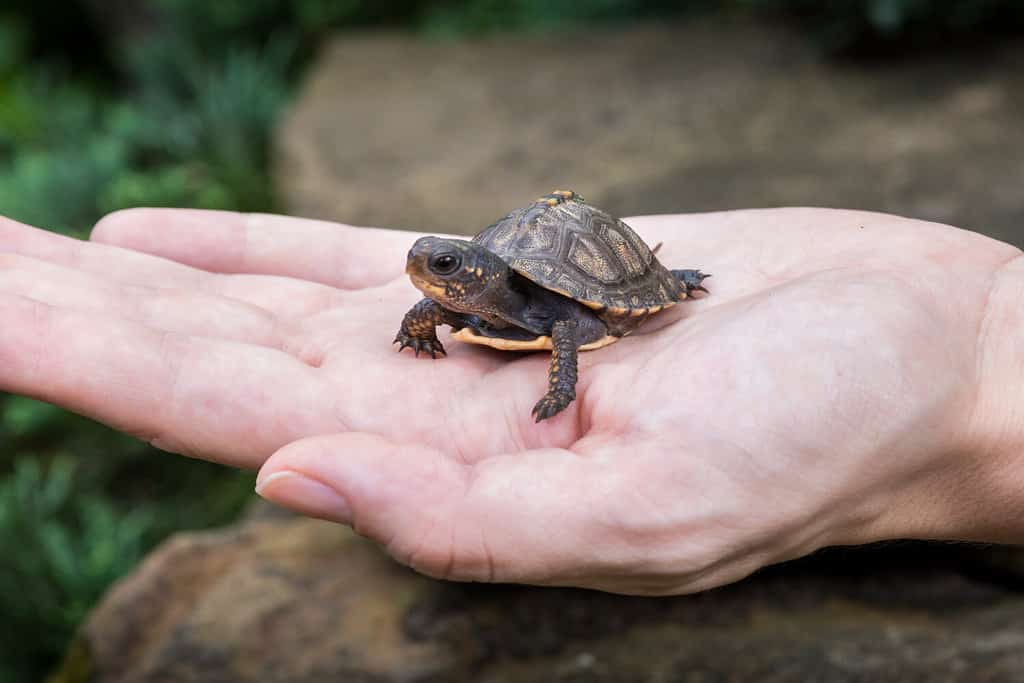
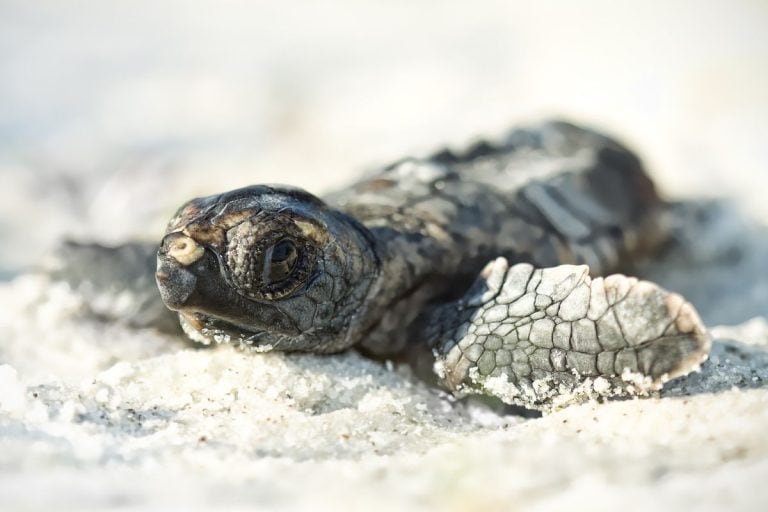
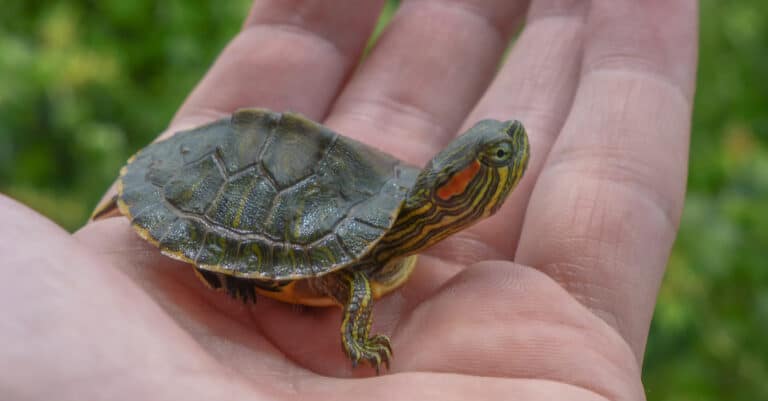
No matter how tiny a wild turtle is, it can survive on its own.
©JasonYoder/Shutterstock.com
Turtles are adorable and make for wonderful pets — just not the ones you find in the wild. The Turtle Rescue League advises, “Never take a wild turtle home as a pet.” The organization recommends determining whether the turtle is an aquatic species. If it is, place the turtle at the edge of the water and let it enter at its own pace. If it is not, place the baby turtle in the underbrush near the edge of a forest. Even the smallest turtles are built to survive in the wild!
Other Things to Know
The National Wildlife Federation recommends not moving a wild animal unless it is in clear and imminent danger. If you need to move a baby animal, wear thick leather gloves and long pants and sleeves, as animals may bite. From there, place the sick or injured animal in a secure container, like a cardboard box with high sides. Do not offer food or water, and take the animal to a licensed wildlife rehabilitator as soon as possible. Keep in mind: If the animal is moving erratically, approaching people without fear, or foaming at the mouth, stay away from it and call animal control.