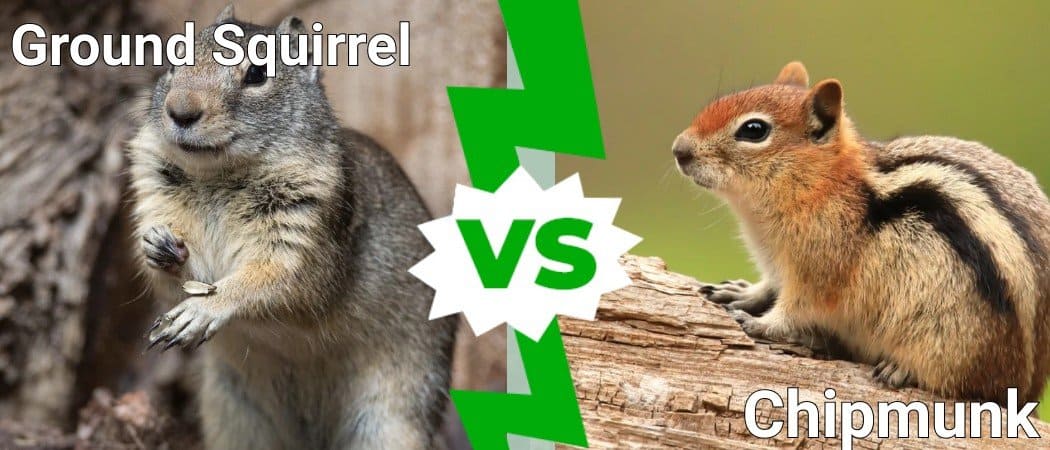

At first glance, it may not be easy to differentiate whether the critter running around on the ground or in the trees is a ground squirrel or a chipmunk. Both are known for having stripes on their backs, both enjoy a very similar diet, and both build incredible tunnels underground. For those who have not often been around the two members of the squirrel family, it can be difficult to know the key differences between a ground squirrel and a chipmunk. But when the two are examined more closely, the differences become apparent, making it easier to determine whether you are in a chipmunk or ground squirrel habitat.
Size and Weight
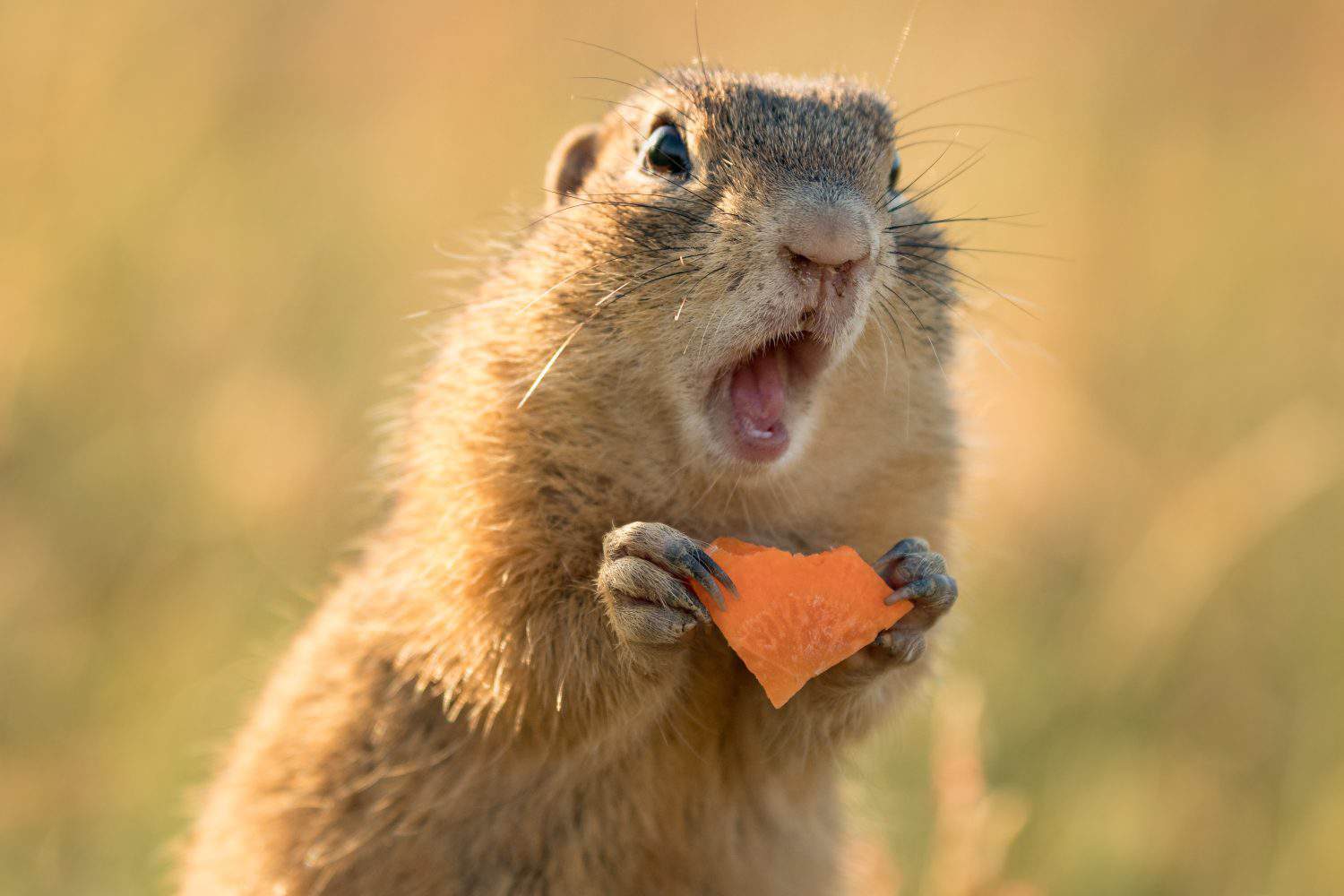
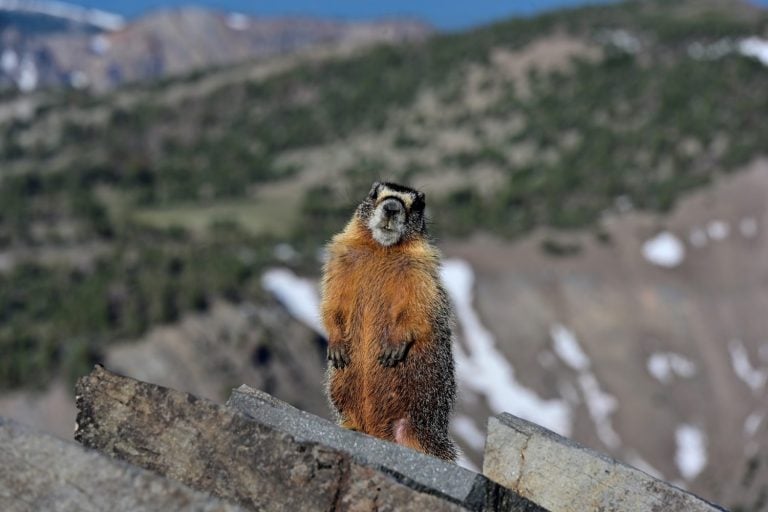
Ground squirrels are significantly larger than chipmunks.
©Jan Stria/Shutterstock.com
From a distance, ground squirrels and chipmunks look to be the same size as one another. But, if the two were placed side by side, the size differences between the two would be apparent.
Ground squirrels and chipmunks differ significantly in size and weight. Where the ground squirrels are approximately nine to 20 inches long, including their tails, chipmunks are a bit daintier, with a length of five to eight inches.
Additionally, measuring in at 2.5 ounces to 4.5 ounces, chipmunks weigh less than ground squirrels. Their squirrel relatives weigh up to a substantially larger at one pound to 1.5 pounds.
It is not only weight and length that differ between the chipmunks and ground squirrels. The coloring of the two animals varies as well.
Appearance
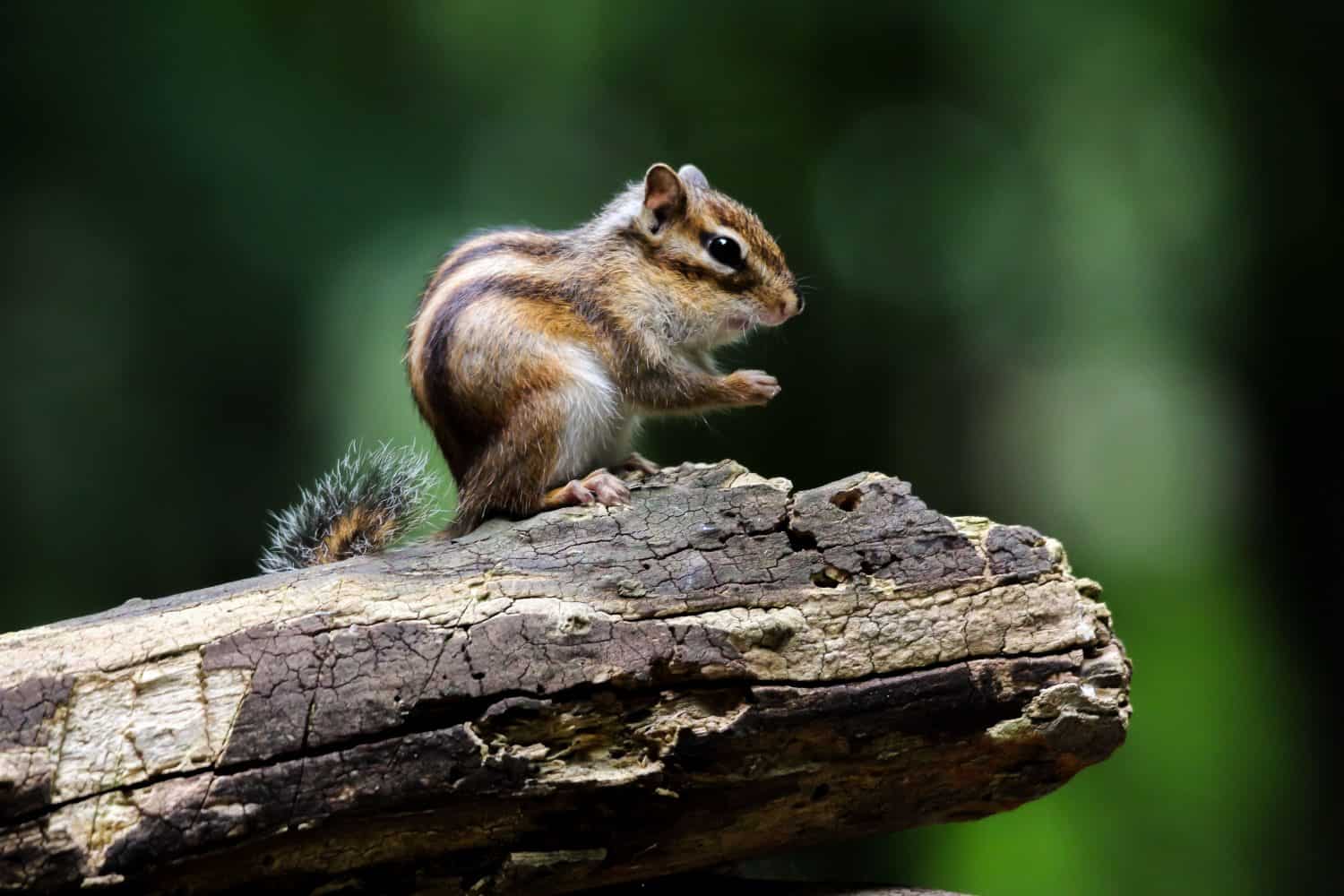
Chipmunks have distinct stripes that go from their head to their tails, which varies from ground squirrels.
©Wirestock Creators/Shutterstock.com
Simply looking at ground squirrels and chipmunks when not next to one another can make anyone do a double-take. This is because both ground squirrels and chipmunks share similar coloring, stripes, and tails. It is only when the two are closer to one another that the differences between them become clear.
While both chipmunks and ground squirrels have stripes, the location of said stripes is different for each animal. Most chipmunks, such as the eastern chipmunk, have five dark stripes separated by lighter stripes running from their heads down their backs. Ground squirrels can have stripes, but do not always. If they do, the stripes are different sizes and only grace their backs, not their heads.
Additionally, the tails of the ground squirrel and chipmunk are different. The ground squirrel has a longer, less bushy tail than the chipmunk. The chipmunk tail tends to be a bit bushier, but is shorter. The latter is also known for running with its tail up, while the former does not.
The final big difference in appearance between the chipmunk and the ground squirrel is their ears. Where the ground squirrel has small ears that are close to the head, chipmunks have rounded ears that are close to the top of the head. But it is not just looks that can help identify whether a ground squirrel or chipmunk is running around. The habitat can be a huge clue as well.
Habitats
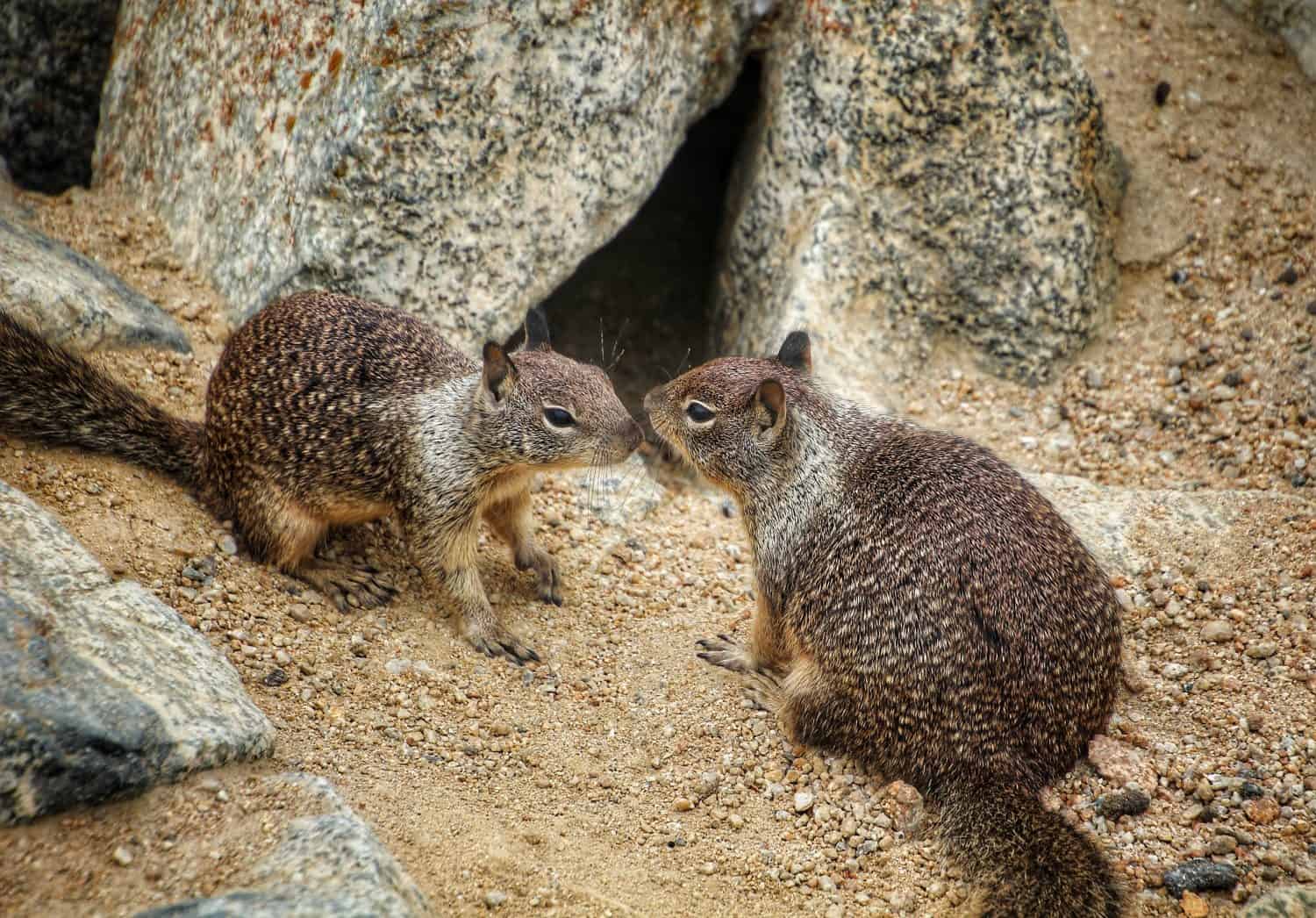
Ground squirrels live in a more varied number of habitats than chipmunks.
©C W NGO/Shutterstock.com
If you are unsure whether a ground squirrel or chipmunk is popping in and out of holes in the ground, you can look at the habitat to help identify the animal. This is because ground squirrels and chipmunks live in two very different environments.
Ground squirrels spend their time living in grasslands, meadows, forests, and deserts. Within each of these regions, the squirrels will build intricate tunnel systems. These tunnels can be anywhere from five to 28 feet long and may be more than four feet beneath the surface. It is within the tunnels that the ground squirrels live, only coming out to find food. If there is a surplus of food, ground squirrels will store the food in their burrows. This allows the squirrels to stay underground longer and potentially avoid predators.
Chipmunks enjoy living in forests, woodlands, and open meadows. Here, the chipmunks will build tunnels that can be 30 feet long. The tunnels serve as both a refuge from predators and a resting place. They, too, store excess food in their tunnels, which is helpful during the winter when food is scarce and also helps keep chipmunks safe from predators.
Both the ground squirrel and the chipmunk are found in the majority of states across the nation. However, the ground squirrel has its biggest populations in the Pacific Northwest, the Rocky Mountains, the Great Plains, and the Midwest. The chipmunk can be found in 37 states around the U.S., with the Pacific Northwest, Southwest, and South being the regions where chipmunks are most likely to be seen. If the location of the ground squirrel and chipmunk is not enough to identify them, their social interactions might be.
Social Behavior
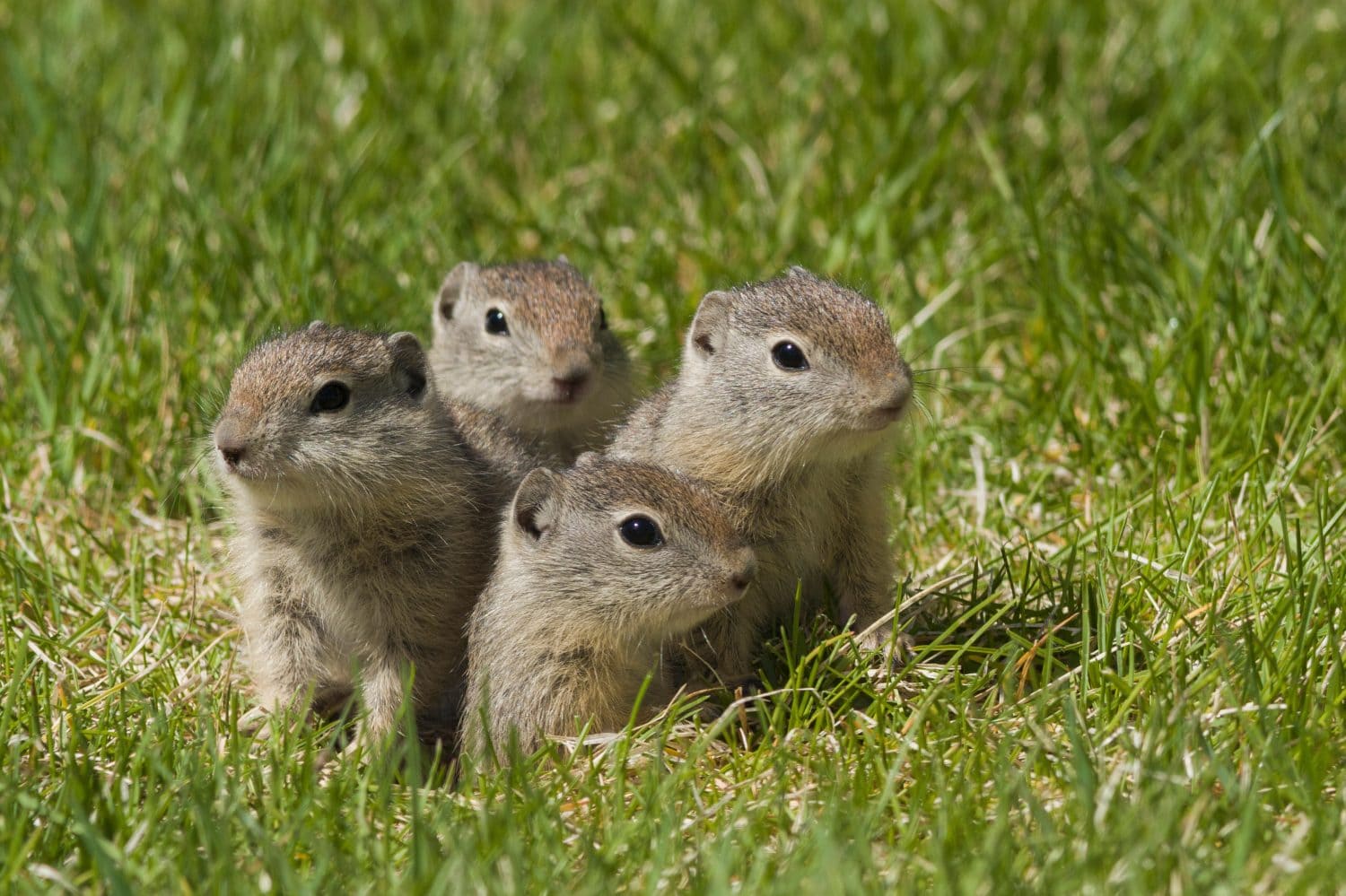
Ground squirrels have a larger social network than chipmunks do.
©Danita Delimont/Shutterstock.com
Chipmunks prefer solitude, while ground squirrels are more social and live in colonies. Within the burrows that chipmunks construct, each chipmunk has its own burrow. A chipmunk will only allow another chipmunk into its burrow during mating season. Then, a male may be permitted to enter a female’s burrow for a short time before he leaves to return to his own. Females then share their burrow with their offspring until it is time for them to leave and build their own tunnel systems.
Ground squirrels build their burrows with the intention of having multigenerational ground squirrels living there. The ground squirrels live in a colony rather than solo. Because of this, their burrows have multiple tunnels and living spaces for all the ground squirrels in the colony. Depending on the ground squirrel species, there can be as few as two or as many as 30 ground squirrels living in a burrow at one time. These colonies help ground squirrels share resources, raise offspring, and protect one another from predators, allowing them to live longer lives than chipmunks.
Winter Activity
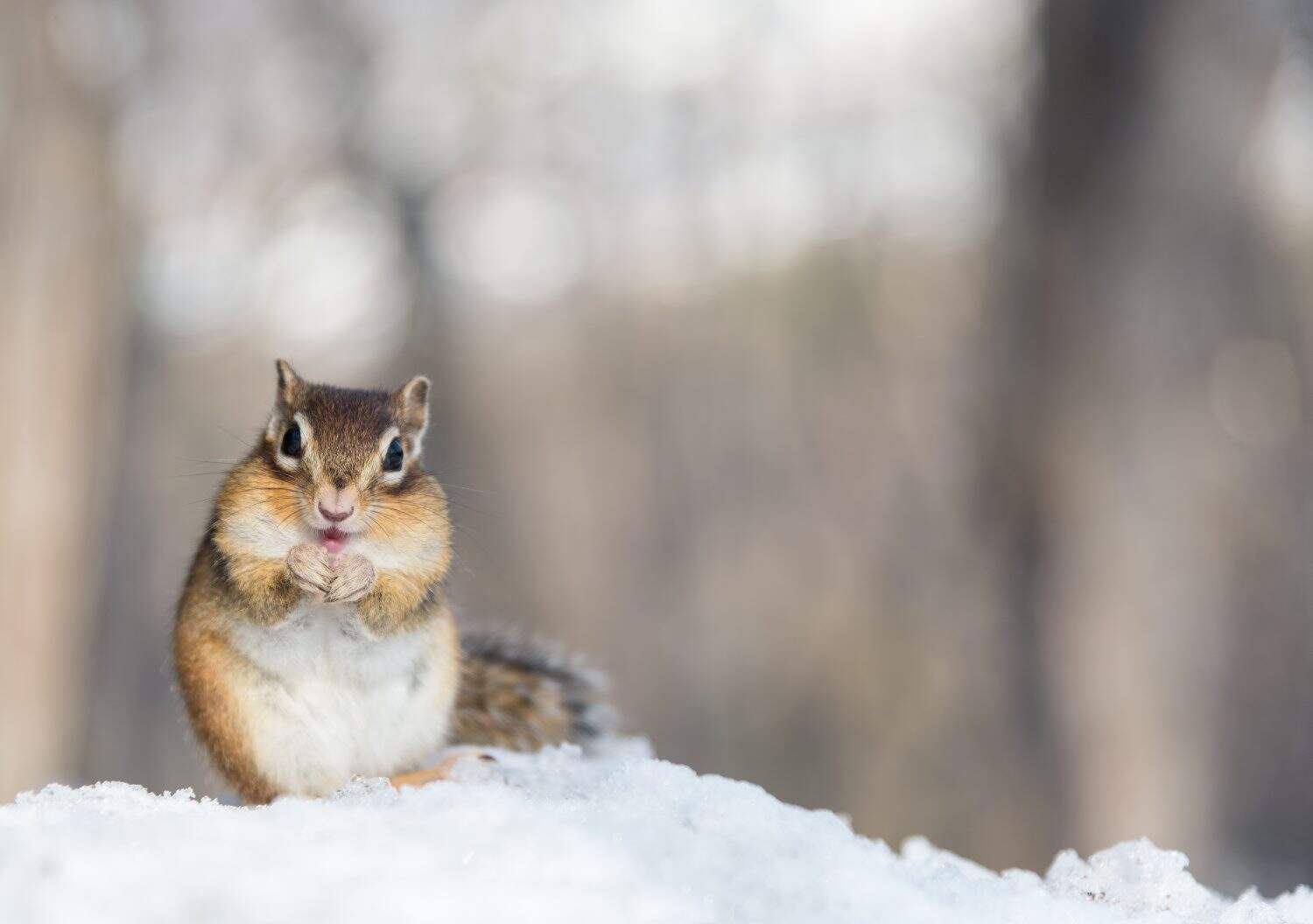
Chipmunks are not true hibernators like ground squirrels are.
©stock_shot/Shutterstock.com
During the winter, if one of these squirrel species is seen, it is likely a chipmunk. This is because, unlike ground squirrels, chipmunks do not hibernate when the weather gets cold but instead enter a state of torpor. Torpor is a state where an animal’s heart rate and body temperature drop, allowing it to conserve energy when the weather is cold and resources are scarce. However, it does not last for months like hibernation does. Instead, chipmunks wake periodically during the winter to find food before returning to a deep sleep for a few days. This process is repeated multiple times from late October to early March. Ground squirrels do practice hibernation. From September to March, the squirrels will slumber away the cold months underground. Because of their burrows being multiple feet below the surface, they are able to remain warm even as temperatures drop.
Once ground squirrels wake, they are incredibly hungry. As they become fully alert, they forage around their burrows. As the weeks go on, they venture out more, gathering the nutrients they need during the warmer months before it is time to begin hibernation again. Ground squirrels and chipmunks do share some similarities, both being from the squirrel family. However, there are some marked differences between the two as well. Once those differences are known, it is easy to tell the difference between the squirrel who enjoys the company of others and the chipmunk who would prefer to live life on its own.