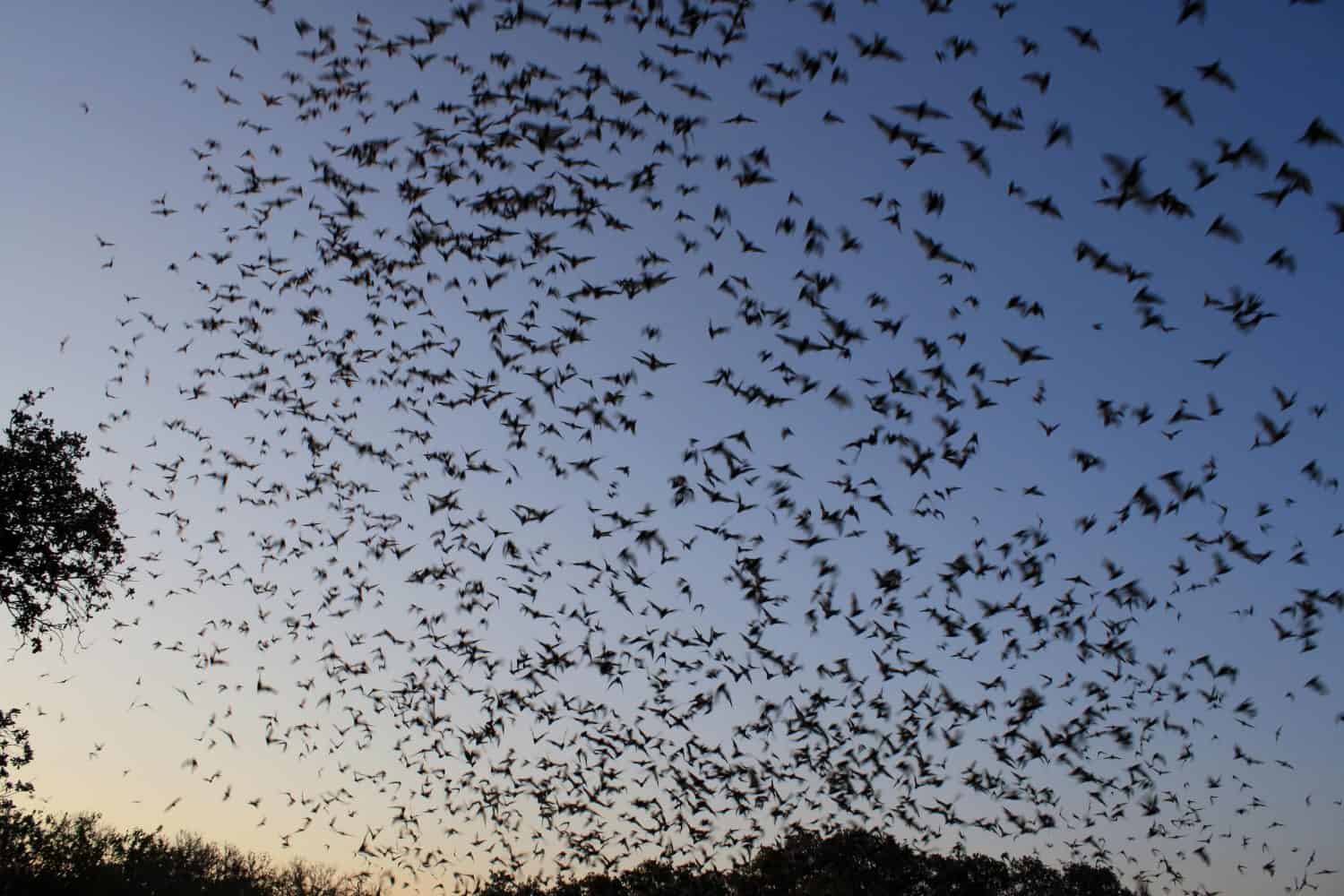

Hearing that 20 million bats swarm a Texas cave each year sounds like nothing short of a tall tale. However, not only do these many bats make their spring and summer home in the Texas Hill Country, but it has been happening for thousands of years and will continue to do so, hopefully for many more to come.
Bracken Cave, just outside of San Antonio, Texas, is the migratory home of Mexican free-tailed bats. The colony of bats that migrates into Texas each year is the largest colony of bats in the world. These bats have been coming to Texas for generations to raise their young and each year, put on a show for onlookers as they emerge from Bracken Cave to hunt for insects during the spring and summer. Interested in seeing the spectacle up close? Make reservations early, as tours sell out quickly each year.
20 Million Mexican Free-Tailed Bats Swarm Bracken Cave Annually

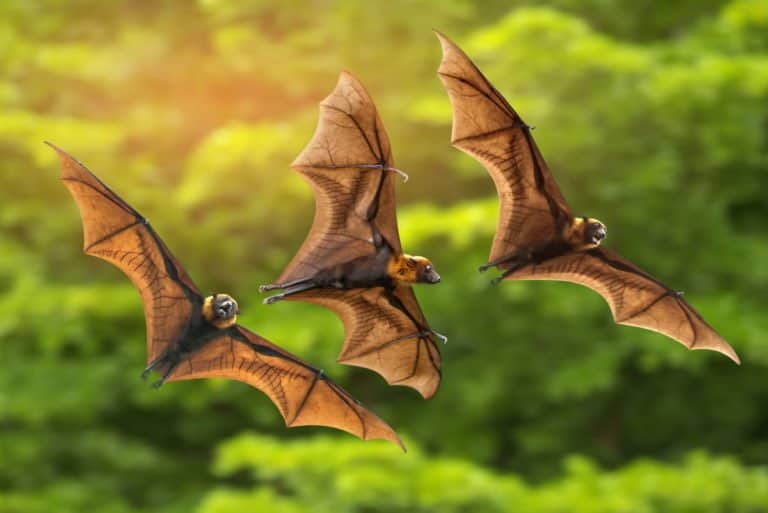
20 million Mexican free-tailed bats migrate to and from Bracken Cave annually.
©Jeff Reeves/Shutterstock.com
It may sound like an exaggeration, but it is not. Each year, a swarm of 20 million bats comes to the Texas Hill Country. As Mexican free-tailed bats fly to Bracken Cave, just outside of San Antonio, they put on a spectacle that is incredible to watch for several months during the spring and into the summer, delighting residents and visitors alike for hours at a time.
Mexican free-tailed bats have called Bracken Cave their summer home for generations. Here, female bats come en masse to give birth to their young and raise them until they are ready to fly long distances for the winter. The cave, which was formed after the creation of a sinkhole, has a half-circle opening. The size of the opening is quite deceiving, making the cave appear to be much smaller than the 60-foot depth that it is. However, the cave is capable of housing millions of bats with ease, where the Mexican free-tailed bats not only grow but thrive.
The heat may seem extreme in the cave. However, according to Texas Today, the 102°F temperature helps to keep the newly born pups warm and healthy. Here, they will spend weeks nursing off their mothers until they are ready to take flight between five and six weeks of age. They will remain in the cave until it is time to migrate south for the winter in October. By this time, the bats have learned to hunt and grown strong from the numerous insects they eat nightly, and are ready for their over 1,000-mile flight to Mexico. While not all will return to Bracken Cave, many will and will continue to do so for generations to come, thanks to the protected status of the cave.
Bracken Cave Is a Protected Location for Mexican Free-Tailed Bats
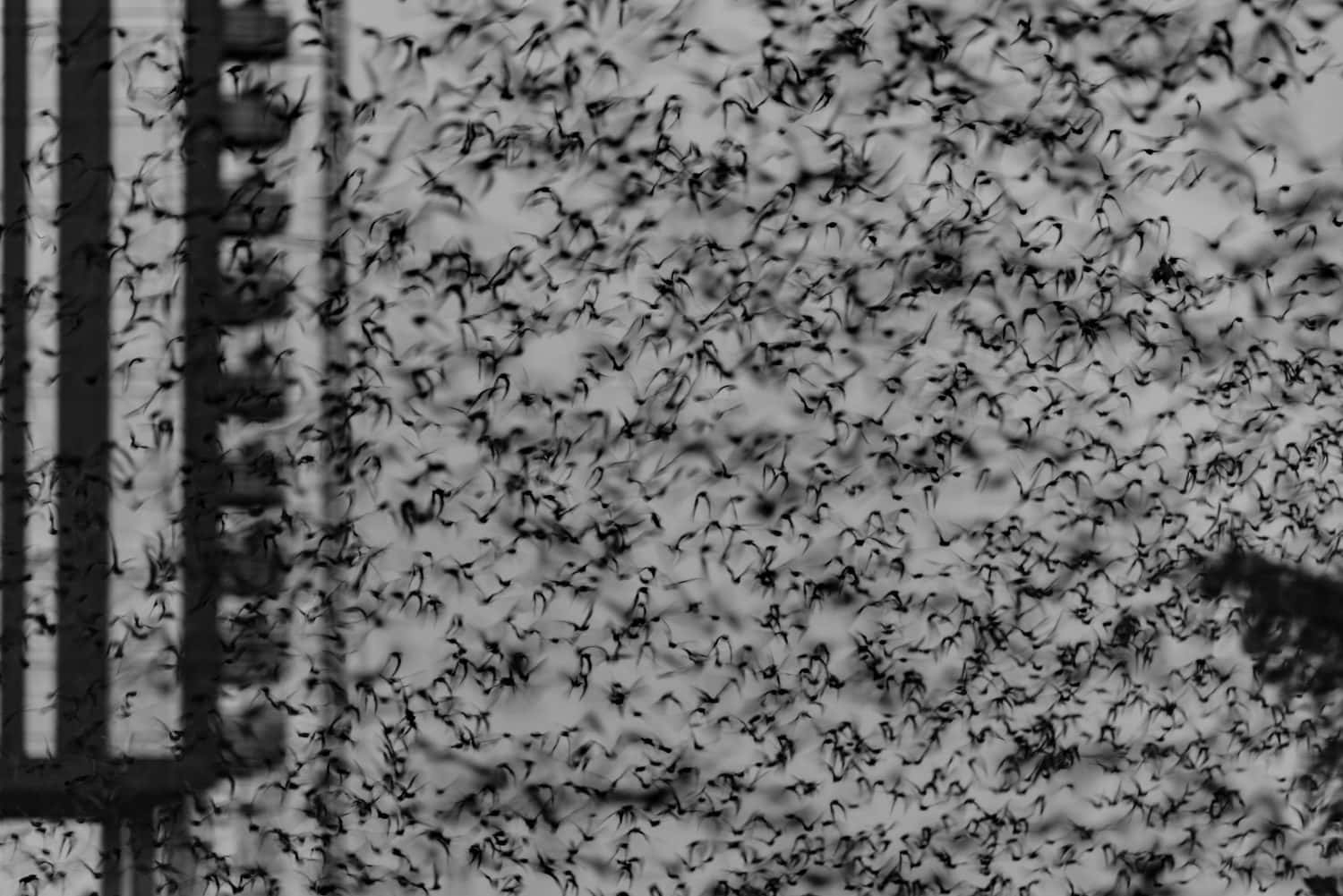
Bracken Cave is located in a preserve, protecting the millions of Mexican long-tailed bats that live there.
©Kristelle Maguire/Shutterstock.com
Bracken Cave is located within the Edwards Aquifer Recharge Zone. Despite this area being an important habitat for endangered species, such as the golden-cheeked warbler, it was under the threat of being developed with a 3,500-home housing tract in the late 1980s to early 1990s. If this had happened, both the endangered species and the world’s largest bat colony would have been irreparably harmed.
In addition, the Edwards Aquifer Recharge Zone is where the water for two million Texans is drawn from annually. Had this been damaged, the entire city of San Antonio may have had to look elsewhere for their drinking water.
Fortunately, according to The Nature Conservancy, a multitude of organizations and people spoke out against developing the area within the Texas Hill Country. Not only did they speak out, but these organizations, including The Nature Conservancy, Bat Conservation International, and the City of San Antonio, pooled enough money together to purchase 5,000 acres of property, which included the Bracken Cave. This purchase ensured the Mexican free-tailed bats would remain protected in Bracken Cave, where generations of these bats have returned annually to give birth and raise the young bats before heading south to Mexico for the winter.
Mexican Free-Tailed Bats Have Lived in Bracken Cave for Thousands of Years

Millions of Mexican free-tailed bats have been coming to Bracken Cave for thousands of years or more.
©GizmoPhoto/Shutterstock.com
The reason there are so many Mexican free-tailed bats in Bracken Cave is that these bats have come to this cave for thousands of years to raise their young. If the bats were to become displaced, there would be immediate negative consequences for the colony, and the Mexican free-tailed bats that have such a strong population would decline rapidly.
Mexican free-tailed bats have been migrating to Bracken Cave for at least 10,000 years. This figure was determined by carbon dating the guano in the cave, which is approximately 60 feet deep. While a core sample has yet to be taken from the tens of feet of guano in the cave, scientists may be able to prove that the Mexican free-tailed bats have been coming to Bracken Cave for longer than just 10,000 years, with some estimating it could be a millennium instead.
How Mexican Free-Tailed Bats Benefit the Texas Hill Country
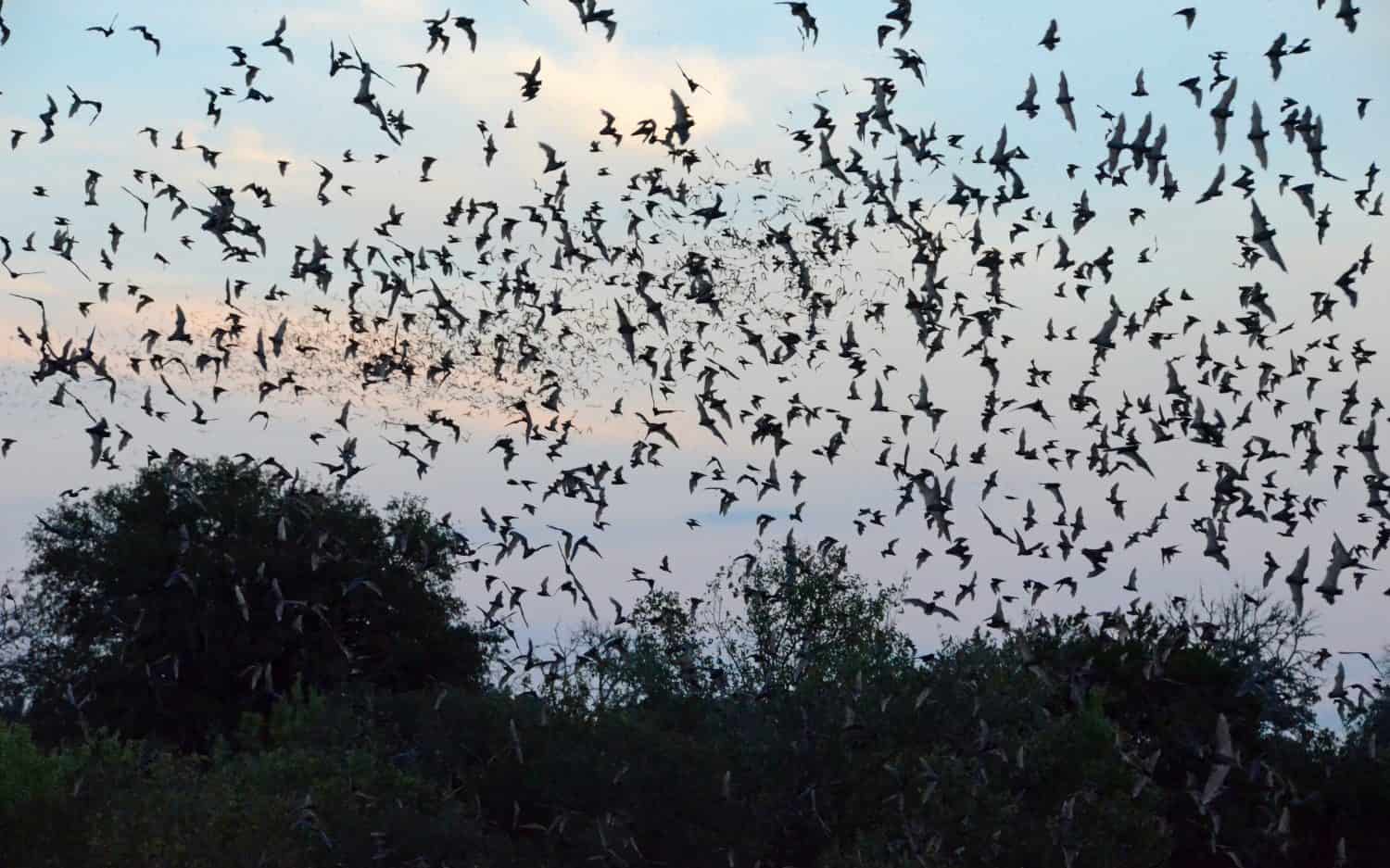
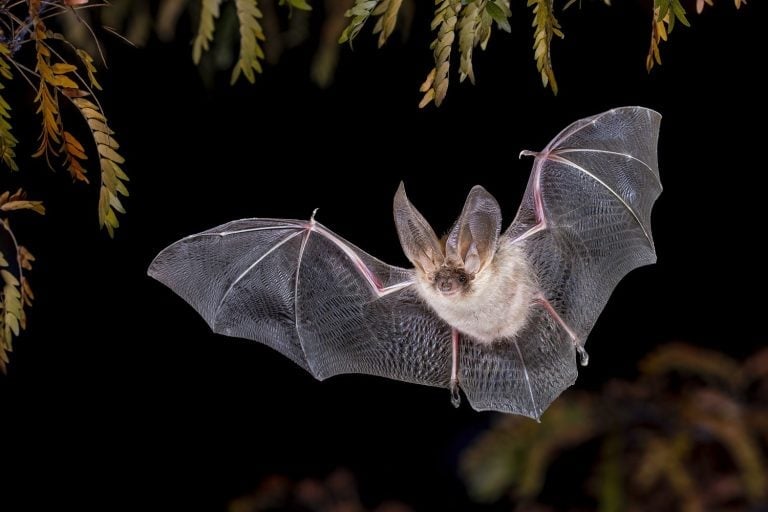
Mexican free-tailed bats are important to the ecosystem and economy of the Texas Hill Country.
©Jeff Reeves/Shutterstock.com
Mexican free-tailed bats are not only a sight to behold when they all take flight from Bracken Cave, but they also serve a major benefit to the Texas Hill Country by their presence multiple months out of the year.
Thanks to Mexican free-tailed bats, not only are insect populations kept in check, but pollination during the spring and summer occurs, helping to keep a biodiverse region outside of San Antonio. The benefits of having Mexican free-tailed bats migrate to Bracken Cave annually include:
- An estimated 250 tons of insects, including cotton bollworm moths and army cutworm moths, which wreak havoc on crops, are consumed each year by Mexican free-tailed bats.
- As they drink nectar from plants, the Mexican free-tailed bats act as pollinators throughout the Texas Hill Country.
- By consuming as many insects as they do, Mexican free-tailed bats save the local economy $50 billion annually by not having to use pest control on crops.
- While pollinating, Mexican free-tailed bats help to spread seeds across the Texas Hill Country, keeping a biodiverse landscape beneficial to all creatures that call the region home.
While Bracken Cave is located in a preserve and access to explore it is restricted to ensure the health and safety of the Mexican free-tailed bats, there are ways to see these magnificent animals in flight, without disturbing them in the process.
How to See the Mexican Free-Tailed Bat “Tornado”
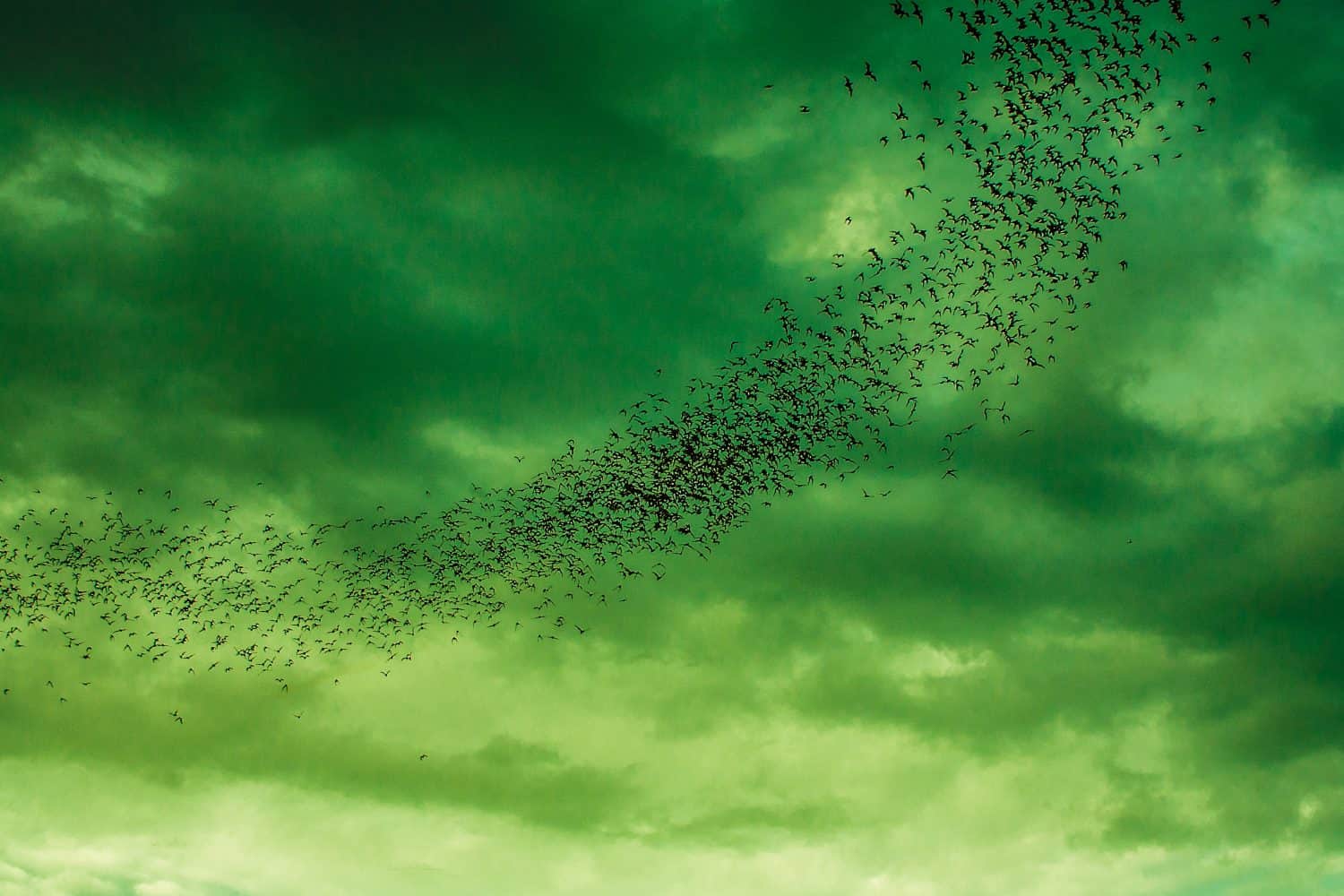
Reservations can be made to see the “tornado” of Mexican free-tailed bats as they leave Bracken Cave in the Texas Hill Country.
©Navigatia/Shutterstock.com
As the millions of Mexican free-tailed bats fly into the air each evening around dusk, they create a bat “tornado.” It is a sight that is unlike any other, and for those who are fortunate enough to secure a reservation, they can see the swarm of millions of bats up close and in real time.
The Mexican free-tailed bats begin to arrive at Bracken Cave around March each year. This is when the female bats will give birth to their pups and raise them for several weeks in the cave before the young bats are ready to take flight.
Because the female bats are nursing their young, they require a hearty meal each evening to sustain their energy levels and nutritious milk for the pups. This results in millions of bats leaving Bracken Cave each evening. However, the best viewing of the Mexican free-tailed bats is not during the spring. Instead, according to Bat Conservation International, it is when the young bats are ready to take flight that a truly incredible view occurs.
The best viewing for the bats begins in June and July, when the young bats have learned to fly and are learning to hunt the insects flying in the air. It is during this time that up to 20 million Mexican free-tailed bats can be seen nightly.
To view the Mexican free-tailed bats, reservations have to be made through Bat Conservation International. The visits to the cave last for two to three hours, where the “tornado” of bats will fly through the air hunting during the dusk and twilight hours. When there is no longer any light to see the bats, the tour comes to an end. Lights are not used to spotlight the Mexican free-tailed bats so as to interfere with them as little as possible.
Reservations are available May through September, with the reservation schedule opening in March each year. Once a reservation is made, and the date comes to see the Mexican free-tailed bats take flight, there will be an approximate half-mile walk to watch the bats. While cameras are allowed, flash photography is not.
Watching the Mexican free-tailed bats in their natural element as they take to the sky may take visitors’ breath away. While hearing that there will be 20 million bats flying through the air, witnessing just that many bats fly at one time is something else altogether, which genuinely needs to be experienced to understand the magnitude of bats that migrate to the Texas Hill Country annually.