
Quick Take
- Bat pups spend their first weeks in warm maternity colonies where they rely entirely on their mothers for food and protection. See how mothers identify pups →
- July is a crucial milestone as bat pups begin practising flight and learning to use echolocation to hunt insects. Watch the pre-flight process →
- Young bats gradually become independent by mastering the skills needed to catch flying insects in complete darkness. Explore July's critical window →
- As they mature, bat pups help control agricultural pests, providing a valuable natural service that benefits farmers and local ecosystems. Discover their pest control role →
Every July, bat nurseries in North America are at their busiest as millions of young bat pups start to take flight. The young bats have spent weeks clinging to their mothers or huddled in crowded roosts but are finally mature enough to graduate to flying. The huge maternity colonies become a hive of activity as the young bats begin their first short training flights. Although these first attempts are often clumsy, they mark one of the most important points in a bat’s life. Keep reading to learn what happens inside these busy bat nurseries!
Life Inside a Bat Nursery
Bat pups are typically born in the spring and summer months when the temperatures begin to increase. Although some species are fairly solitary, other species give birth in large maternity colonies. A maternity colony is formed when a large group of females gathers together in a warm, safe space to give birth. These colonies can consist of anything from a handful to several thousand bats. The largest maternity colony in the world is the Bracken Cave colony in Texas, which is occupied by approximately 15 to 20 million Mexican free-tailed bats (Tadarida brasiliensis) each year.
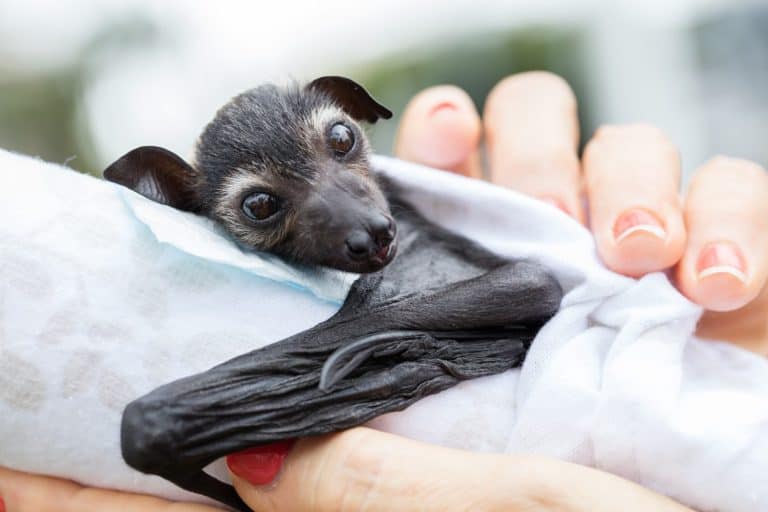
Bats typically give birth to just one pup each year, which is born after a six- to nine-week gestation period, depending on the species. They are completely helpless, blind, and hairless when they are born. They cannot fly at birth and are completely reliant on their mother. Maternity colonies are ideal places to raise bat pups, as they typically provide a warm environment that helps keep the pups comfortable.
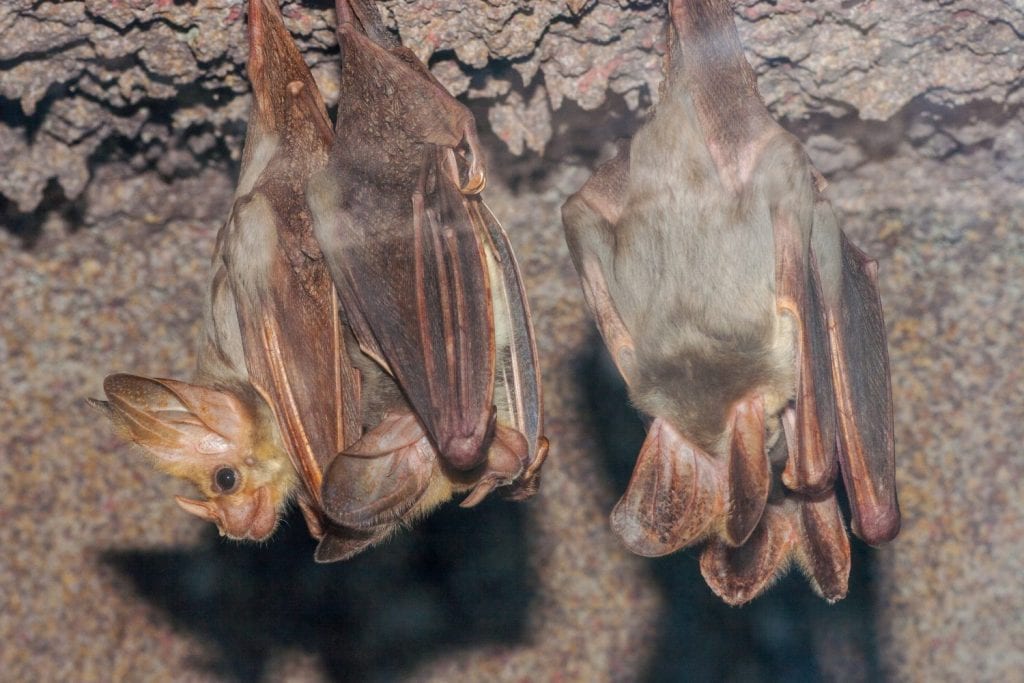
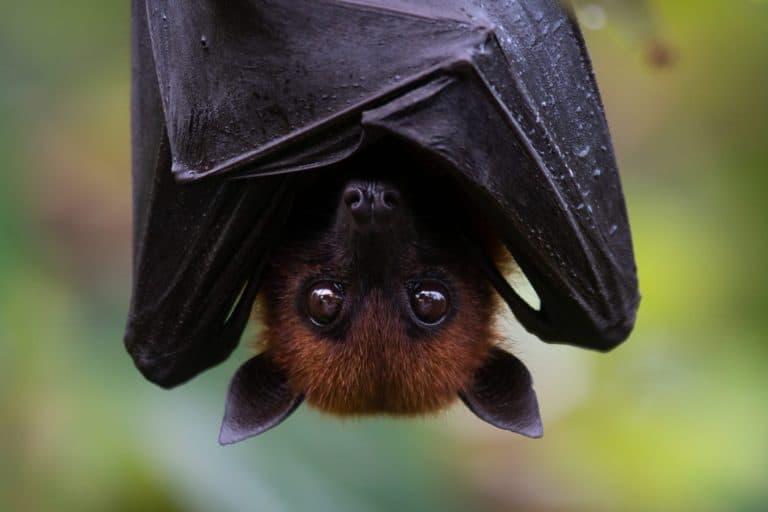
Bats cling to the walls of the maternity roost where it is warm and safe.
©Ken Griffiths/Shutterstock.com
Bat pups typically remain in the roost for the first few weeks of their lives. While they can cling to the roost, they also spend much of their time clinging to their mothers with their sharp claws in order to nurse. The females go out hunting but can still find their own pup within seconds upon returning to the maternity colony. This is because they have a strong sense of smell and use a unique set of vocalizations to help them identify their own offspring.
How Do Bats Learn to Fly?
For many North American bat species, July is the month that sees the young bats finally start to fly. Bats are usually fully weaned by the time they are six weeks old, after which they become fully independent from their mothers. However, learning to fly is no easy feat.
Before they can actually fly, the young bats start by flapping their wings as they cling to the walls of the roost. As well as building their confidence, this helps them develop the muscles in their wings that they need for flying. The first few flights are often anything but graceful, as learning to stay airborne can be a challenge. The first few attempts usually consist of short glides and awkward landings until the pups develop enough strength for longer flights. Occasionally, these flights are unsuccessful, and as a result, bat pups can sometimes be found on the ground in or around the roost during the summer.
As the bat pups become stronger and more confident over the first few weeks, they begin to take longer flights outside the roost. Each of these longer flights helps the young bats to strengthen their muscles and improve their coordination. Eventually, they become more agile in the air, learning to control their speed and turns.
The females typically continue to feed their pups during this learning stage. Meanwhile, the young bats are also beginning to learn echolocation, which involves emitting high-frequency calls and listening for the returning echoes. Echolocation helps the bat pups navigate and detect prey.
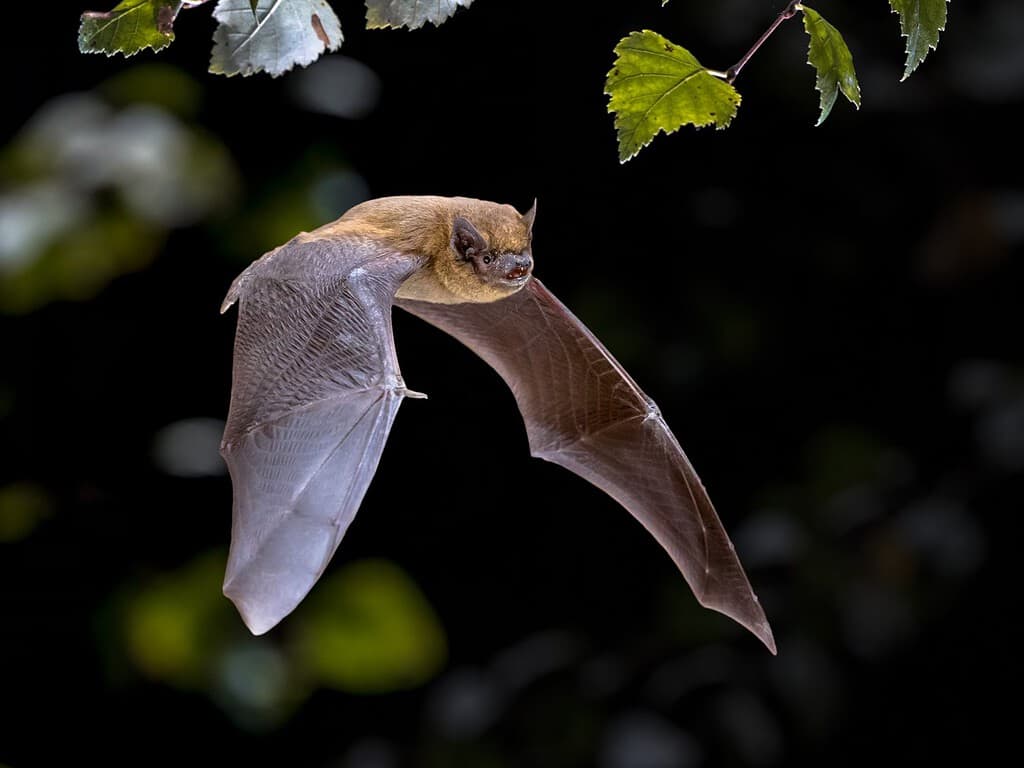
The first few attempts at flying can be challenging for young bats.
©Rudmer Zwerver/Shutterstock.com
Why Young Bats Matter
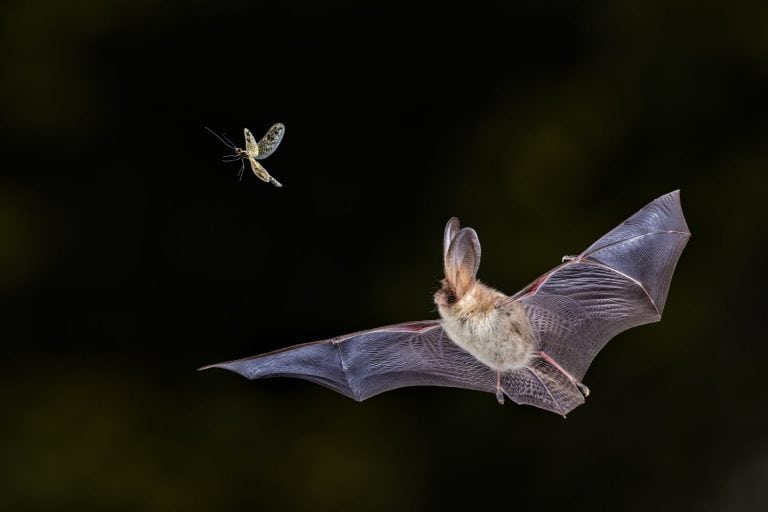
The first few weeks after the young bats begin to fly are crucial. Usually, their transition to independence comes at the perfect time of the year, when food is at its most abundant during the summer. Although it varies a little between species, most bats are insectivores. Bats typically hunt during flight, so they tend to prey on flying insects, such as moths, mosquitoes, midges, and beetles. It takes a lot of skill and coordination to successfully capture tiny insects at night. By the end of the summer, however, the young bats have usually become capable hunters and are able to survive without any help from their mothers.
Because bats prey on flying insects, they are particularly effective at controlling agricultural pests, making them extremely beneficial for farmers. Bats can consume vast quantities of insects, sometimes eating several thousand in a single night. Bats eat insects that cause crop damage, helping to reduce pest numbers and protect the harvest.
Many of the insects that bats consume are the adult forms of species that are also agricultural pests in their larval stage. By reducing adult insect populations, bats help limit pest numbers in the following year. In the long term, bats help control pest insect populations, which can reduce farms’ dependence on chemical pesticides and benefit both agriculture and the wider ecosystem.