
Quick Take
- Earthworm classification has frustrated scientists for decades, and the reason why reveals a deeper problem hiding in plain sight across thousands of species.
- The Ili River valley is more than just remote. Its geography does something unusual that turned it into a living time capsule millions of years in the making. Explore the valley's geography →
- Identifying a new species takes more than a microscope, and researchers had to use three separate methods because no single one was enough on its own. See the three methods →
- This earthworm carries a structural feature so unusual that it helped crack its identity, and that feature is nothing like what you would expect to find inside a worm. Discover the unusual feature →
Earthworms are a keystone species in ecosystems. They function like miniature soil engineers, regulating soil structure, cycling nutrients, and balancing microbial dynamics. Nearly 6,000 earthworm species have been named and are distributed widely across the world. One family of earthworms, Lumbricidae, just got a new member, thanks to research conducted in the Ili River Valley in northwestern China. The species, named Eisenia ilensis Xu, is the first step in helping scientists understand more about the elusive Eisenia genus of earthworms found in the region.
The classification of earthworm species has long been a point of frustration for scientists. Many of them are cryptic species, meaning they look almost identical to others on the outside. This has led some experts to develop their own classification systems for earthworms. The taxonomic framework for this genus is also ambiguous in China. Furthermore, studies conducted in the country’s northwestern region are rare. Even the Lumbricidae family, considered one of the youngest families within the subclass Oligochaeta, is undergoing ongoing revision. To both identify and confirm the identity of the Eisenia ilensis Xu species, researchers relied on a combination of morphological examination, DNA sequencing, and molecular species delimitation.
Finding the Worm

The Ili River valley in northwestern China has unique characteristics that protect ancient fauna from major geographic and climate changes.
©roypann/Shutterstock.com
The Ili River valley in China’s Xinjiang Uygur Autonomous Region is like something out of a fairytale. Verdant green in the summer, it offers a blend of enchanting scenery and expansive sky views. The valley’s unique topography and temperature inversion effect keep it relatively free from cold currents traveling down from Siberia. This makes it a refuge for more ancient forms of flora and fauna. One such group is earthworms. Several ancient earthworm lineages have survived major geological and climate changes for millions of years.
In May 2025, researchers funded by the National Science and Technology Fundamental Resources Investigation Program of China headed to the region. In the Wild Walnut Nature Reserve, famed for having some of the oldest and largest wild walnut trees, researchers looked to the dirt. Using a process of digging and hand sorting, they managed to collect several earthworm specimens for further study. After preserving them in 100% ethanol in the field, they brought the specimens back to the laboratory and began the identification process.
Examining, Sequencing, and Species Delimitation
First, researchers used a stereomicroscope and imaging software to capture images of the earthworm’s characteristics. They measured body length and width and noted external features. These included body coloration, number of segments, position of the prostomium, and more. They also dissected the worms to document internal characteristics such as gizzards, calciferous glands, and seminal vesicles. Notably, this earthworm had a distinct pale yellow color, a saddle-shaped mating band, and unique sperm pockets attached to its inner body wall without any connecting vessels.
Next, the researchers cut a small piece of tissue from the earthworm’s tail. Using a chemical kit, they broke open the specimen’s cells. They then removed all cellular material except for the DNA. They looked for a specific gene called COI, which acts like a universal barcode—each animal has a slightly different variant. This makes it an ideal tool for identifying new species. Next, they used high-frequency sound waves to split the DNA into small fragments. A sequencer read millions of these fragments, and specialized computer software assembled them into a complete genetic blueprint.
However, the researchers still needed to compare their results to known species. To do so, they ran the DNA sequences through a program to measure the genetic distance between different earthworm species. They also used a program called BEAST to build a family tree. This helped them identify the boundary between distinct species and small genetic variations within the same species. Combined with the morphological evidence, the genetic data showed that these earthworm specimens formed their own unique evolutionary branch. Thus, a new species was confirmed.
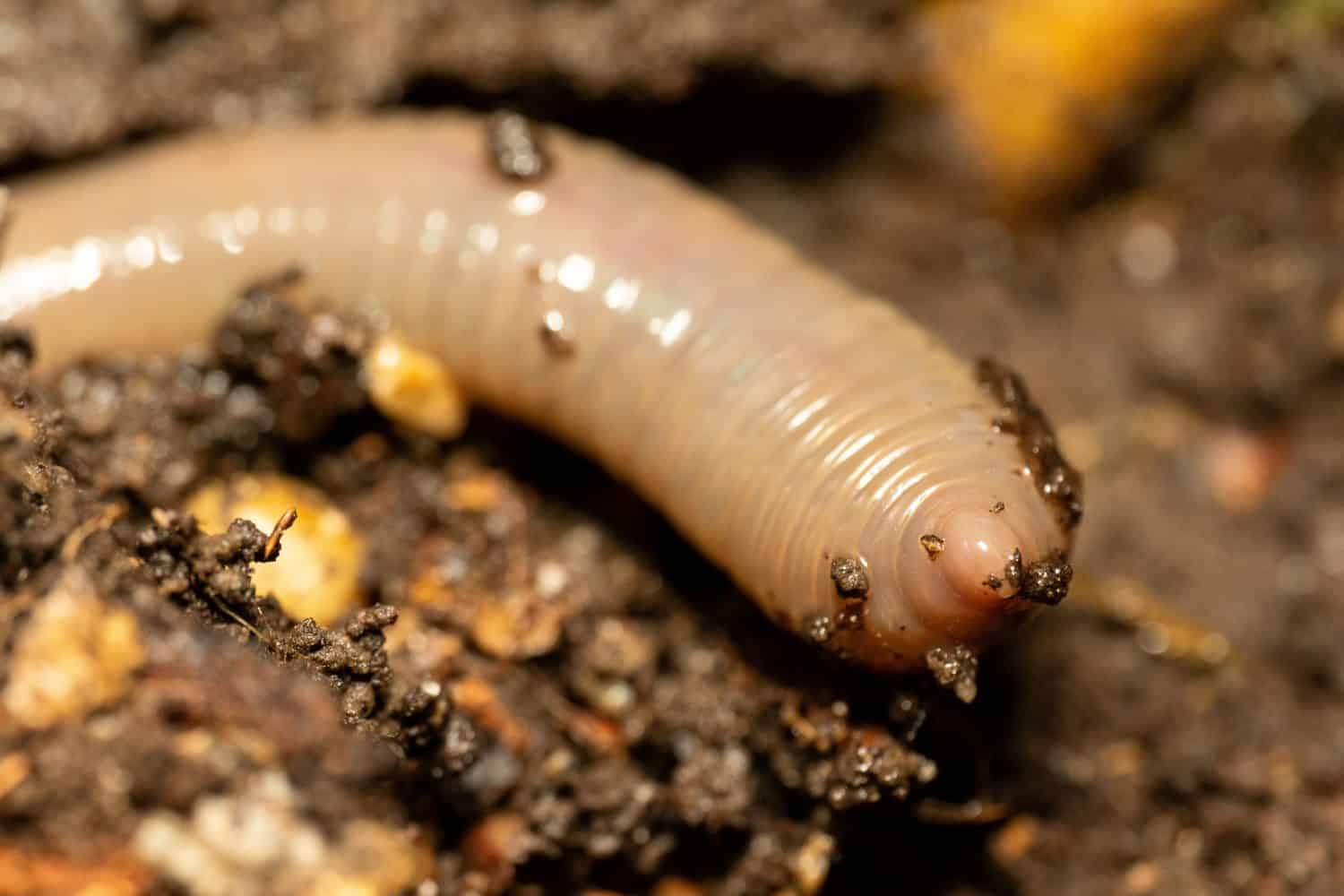
Eisenia ilensis
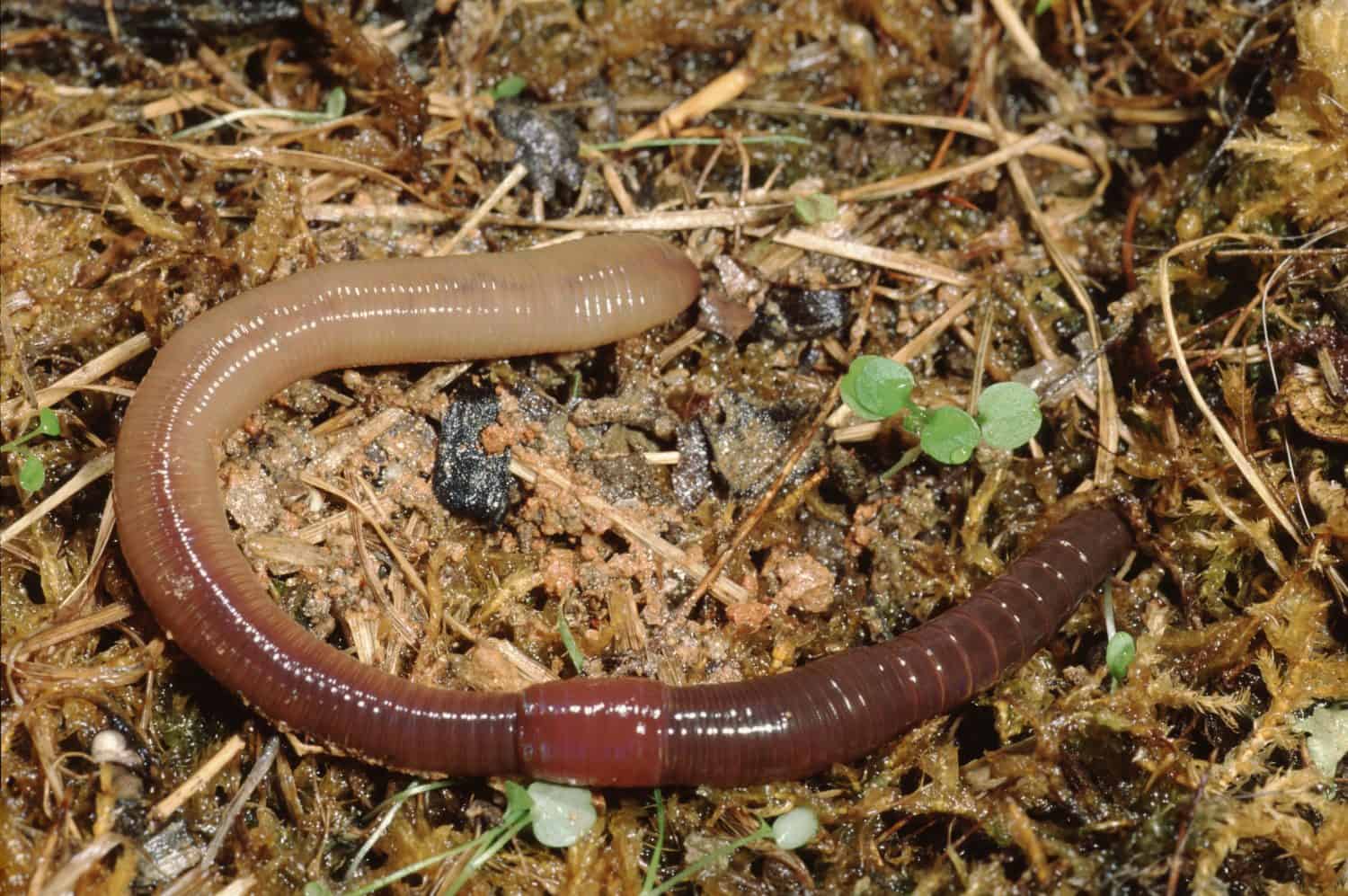
The newly discovered Eisenia ilensis earthworm has a distinct pale yellow body and belongs to the family Lumbricidae.
©Liz Weber/Shutterstock.com
The new Eisenia ilensis is a native earthworm species in the family Lumbricidae. It measures between 43 and 67 millimeters in length. It also features a pale yellow body with hints of brown and a distinctly white mating band. Its most distinctive features include two pairs of sperm-storing sacs attached directly to its inner body wall and a dorsal pore that begins at the groove of the fourth segment on its outer body. Like other earthworms, it thrives in leaf litter and upper soil layers.
As the researchers explained in their paper, this discovery “offers crucial insights for elucidating the structure and functioning of the local ecosystems. Additionally, it provides essential baseline data and constitutes a valuable case study for biodiversity conservation and monitoring initiatives.”