
Chickens are fascinating animals. Not only are they a close relative of dinosaurs, but they have complex communication, great memories, and some even say they have the intelligence of a toddler. However, chickens do things that make people scratch their heads from time to time as well. They can squat when people walk by, they make holes in the ground for no apparent reason, and even roll around in the dust.
The latter of these is actually a necessary activity that chickens participate in. Many may wonder why chickens dust bathe and what it says about their health. The answer is quite simple, as when chickens bathe in the dust, they are healthy. Those who do not, but have dust baths regularly in the past, may have underlying health issues. Consequently, paying attention to how often a chicken takes a dust bath is a great way to determine how healthy they are.
What A Dust Bath Is
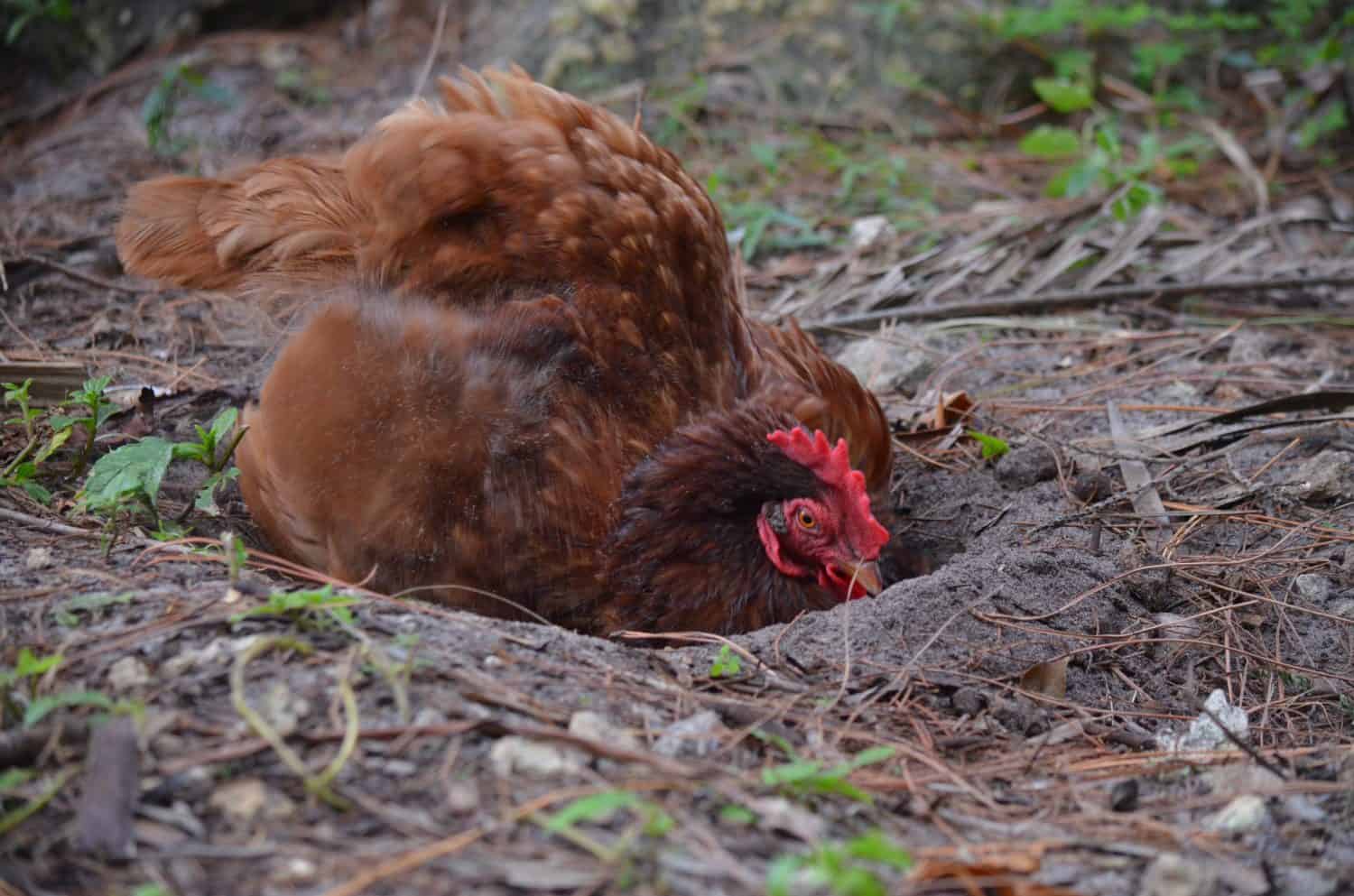
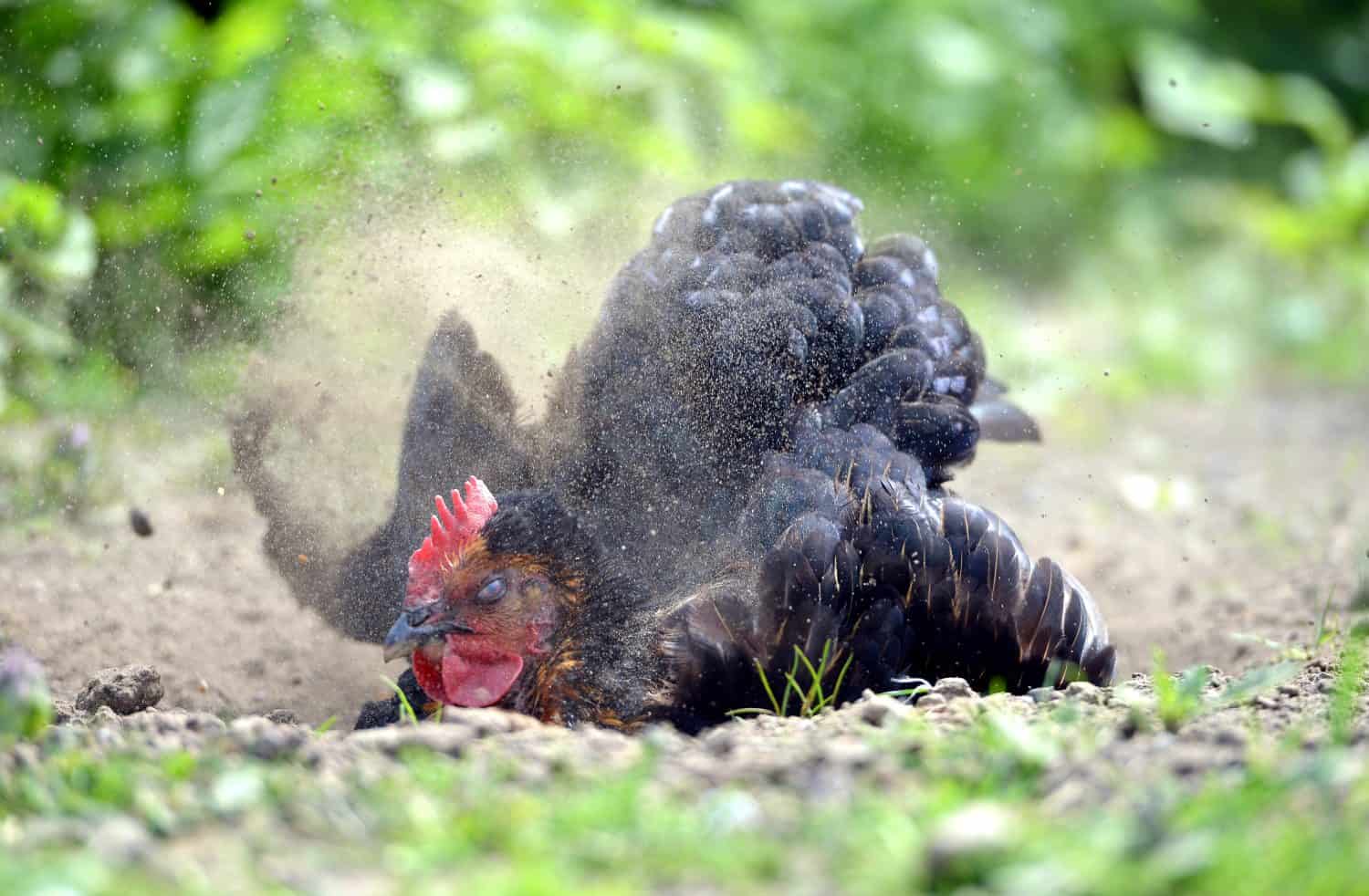
A dust bath is when an animal rolls around in small particulate matter to clean themselves.
©SoFlo Shots/Shutterstock.com
It may sound counterintuitive, but many species of animals bathe in dust and other fine particulates to clean themselves. Not only does it rid the body of accumulated oils, but dust baths also help keep parasites, mites, and other harmful organisms from reaching levels that can cause animals to get sick.
Dust baths involve the animal rolling around in their choice of dirt, sand, or other small, dust-like material. For some animals, dust baths are necessary because the regions they inhabit have scarce water supplies. Others, however, have access to water and still choose to dust bathe. It may seem strange when some animals take a dust bath, but it is an experience that the animals learned from their ancestors that they enjoy. More importantly, however, overall health is improved each time a dust bath is taken.
Why Chickens Dust Bathe
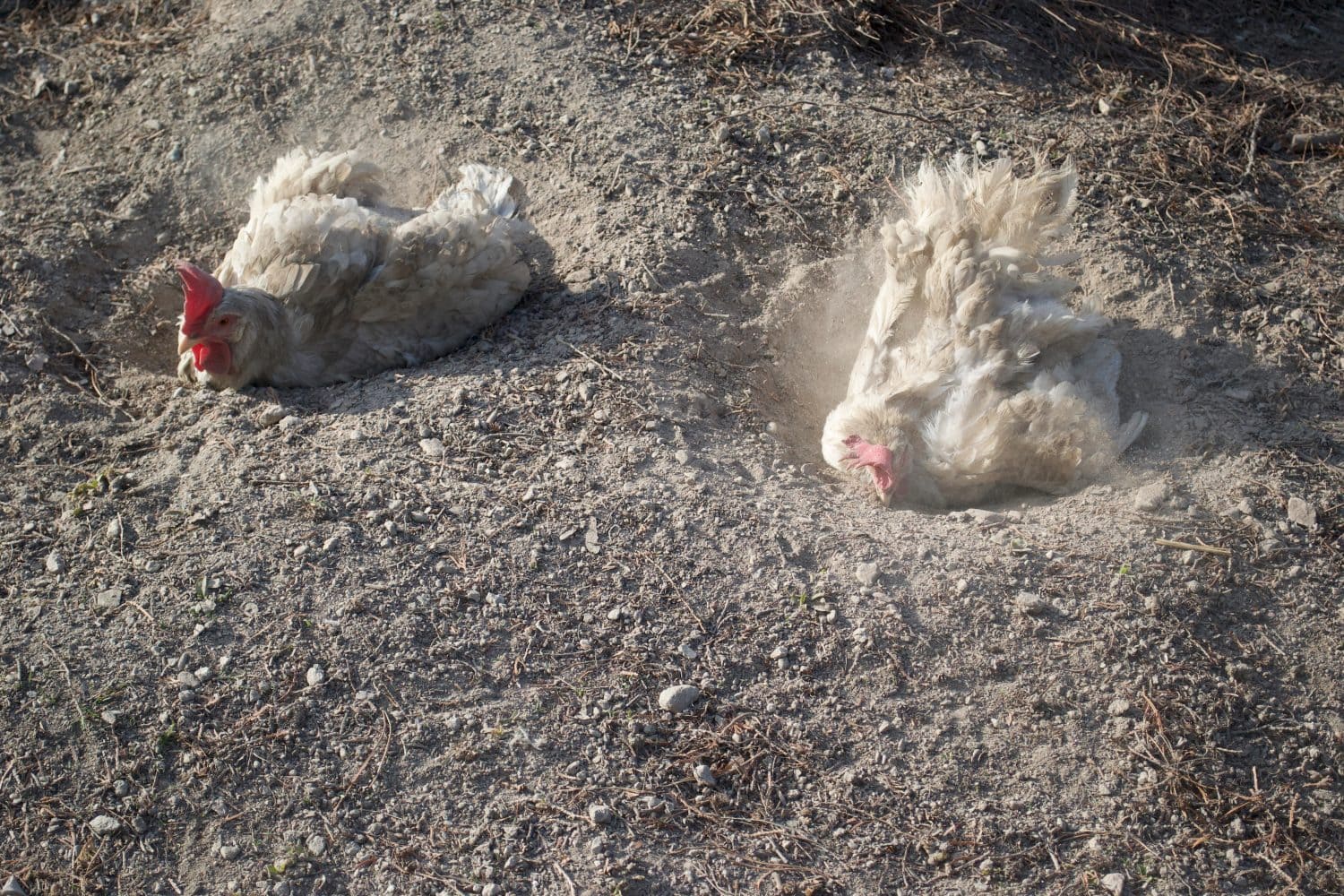
Chickens dust bathe for their physical and mental health.
©Szike/Shutterstock.com
Watching chickens dust bathe can be a frightening experience for those who have never witnessed it. To those who do not recognize that the chickens are simply taking a dust bath, seeing them flopping, kicking up dirt, and rolling around can appear to indicate something neurologically wrong with the chicken. However, dust bathing for chickens is an ancestral trait that is done for the health and overall appearance of chickens.
Chickens are quite fastidious animals. They like to keep their feathers fluffy and in good shape. This is not done by grooming. Instead, a dust bath, made up of fine particulate matter, does. In addition to keeping their feathers healthy, chickens also take dust baths to remove parasites from their bodies. This is why chickens that are incredibly crowded in chicken farms tend to be less healthy than chickens that are allowed to roam or those that live in coops with just a few other chickens, as chicken farm chickens do not have space to take dust baths.
During warmer weather, chickens will be seen taking dust baths more often than they would during the cooler months. This has to do with cooling themselves off with the dust, as well as dust bath locations potentially becoming too filled with moisture as rain sets in. Dust baths are also a social activity for chickens. It is not uncommon to see multiple chickens take a dust bath at the same time, regardless of whether it is needed. Dust baths can be a communal event, showing they are just as much a physical health necessity as a mental health one.
How Often Chickens Take Dust Baths
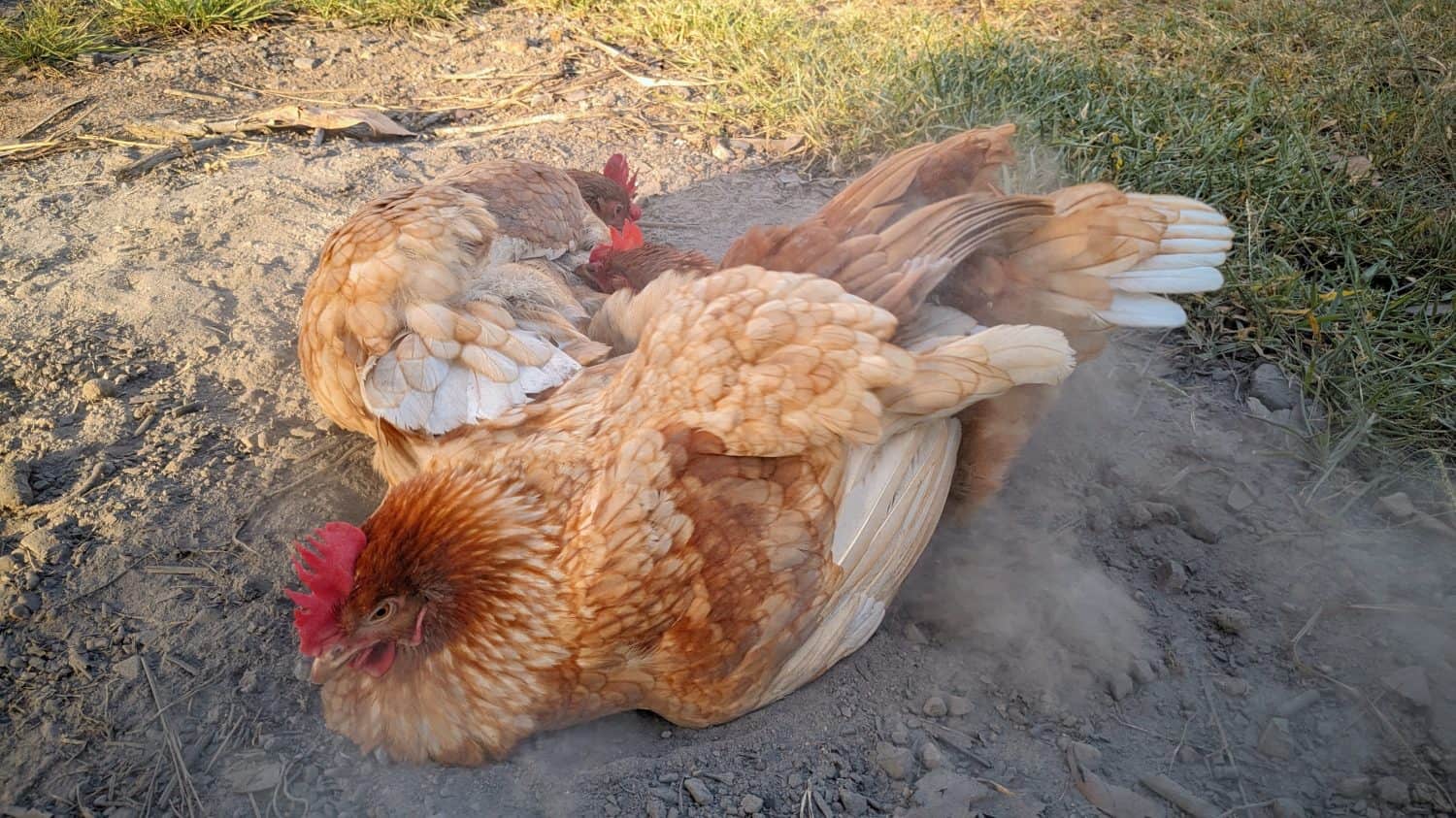
Chickens will dust bathe several times a week.
©Francisco Daniel C/Shutterstock.com
There is no set schedule for chickens to take baths. The frequency depends on the weather, how much the chickens like their dust bath spot, and the chickens’ personalities. On average, a chicken will take a dust bath a few times per week. This could increase as the temperature gets warmer, if other chickens are taking dust baths more frequently, and the chickens want to be social, as well as if the chickens truly love their spot for taking a dust bath.
During the cooler months, the parasitic activity slows, which means chickens are not as driven to take dust baths. Additionally, when it rains, the dust bath areas could be temporarily ruined, becoming a mud pit instead. No chickens will want to bathe in muddy water. This is why it is recommended to make a spot for chickens to take a dust bath that is protected during the winter, so that there is access to the sand, dirt, or other materials chickens like to take dust baths in, no matter the weather.
Creating the Ideal Dust Bath
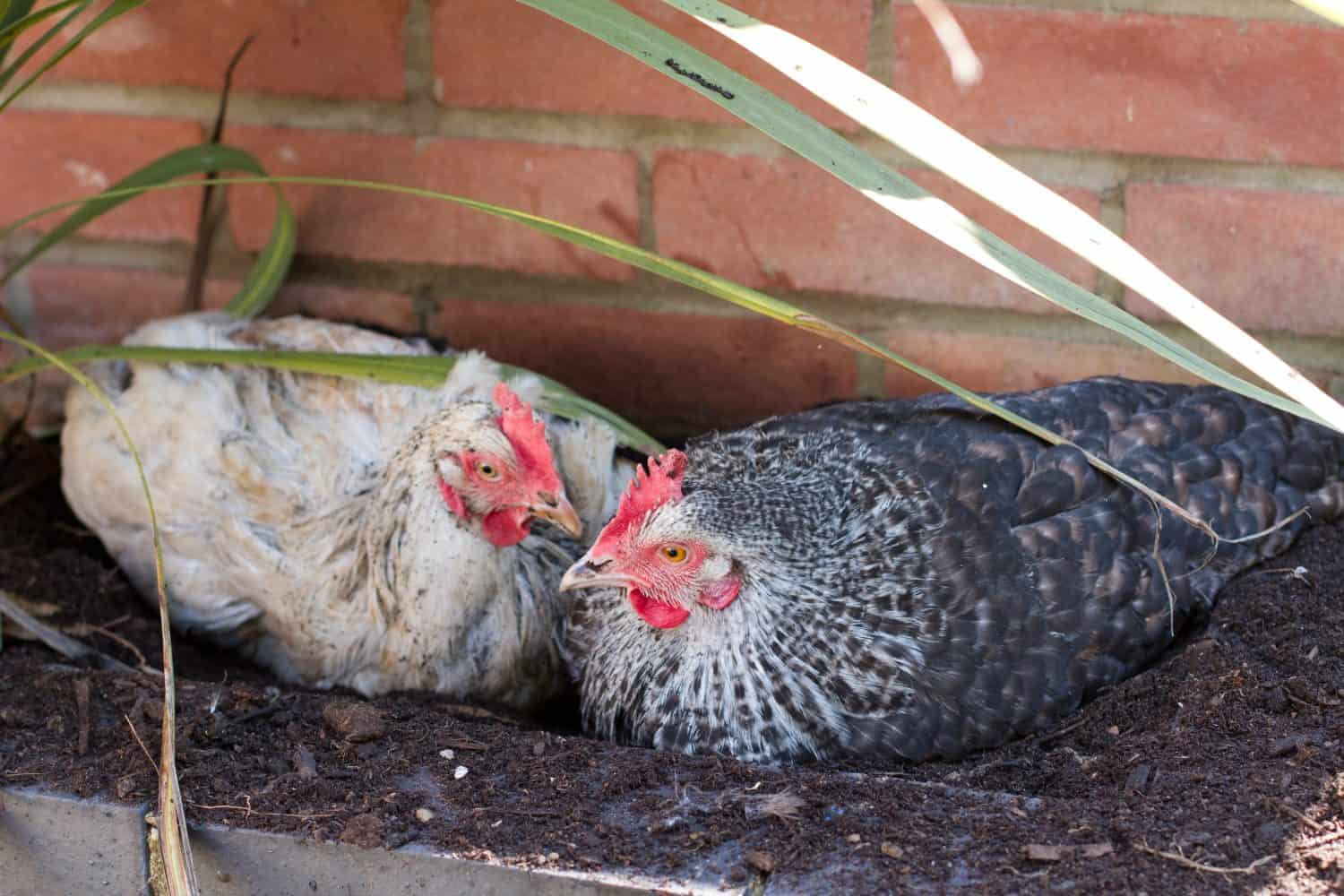
Many different materials can be used to make a dust bath for chickens.
©smikeymikey1/Shutterstock.com
Some chicken owners have acreage that allows chickens to roam freely, finding a spot they enjoy for dust bathing. But for those who need to create the dust bath location, there are some ingredients to add in to make the dust bath irresistible for chickens.
Some of the best ingredients for creating a dust bath for chickens include:
- A container large enough to hold a chicken
- Soil
- Wood ash
- Dried herbs
- Sand
- Sulfur dust
Some chicken owners like to use diatomaceous earth, while others believe it is a health hazard for chickens. The reason some do not use it is that diatomaceous earth can cause respiratory issues for those who use it frequently. Therefore, it is recommended to use best judgment when setting up a dust bath for chickens and include only what is comfortable for the chicken owner.
Why Some Chickens Do Not Take Dust Baths
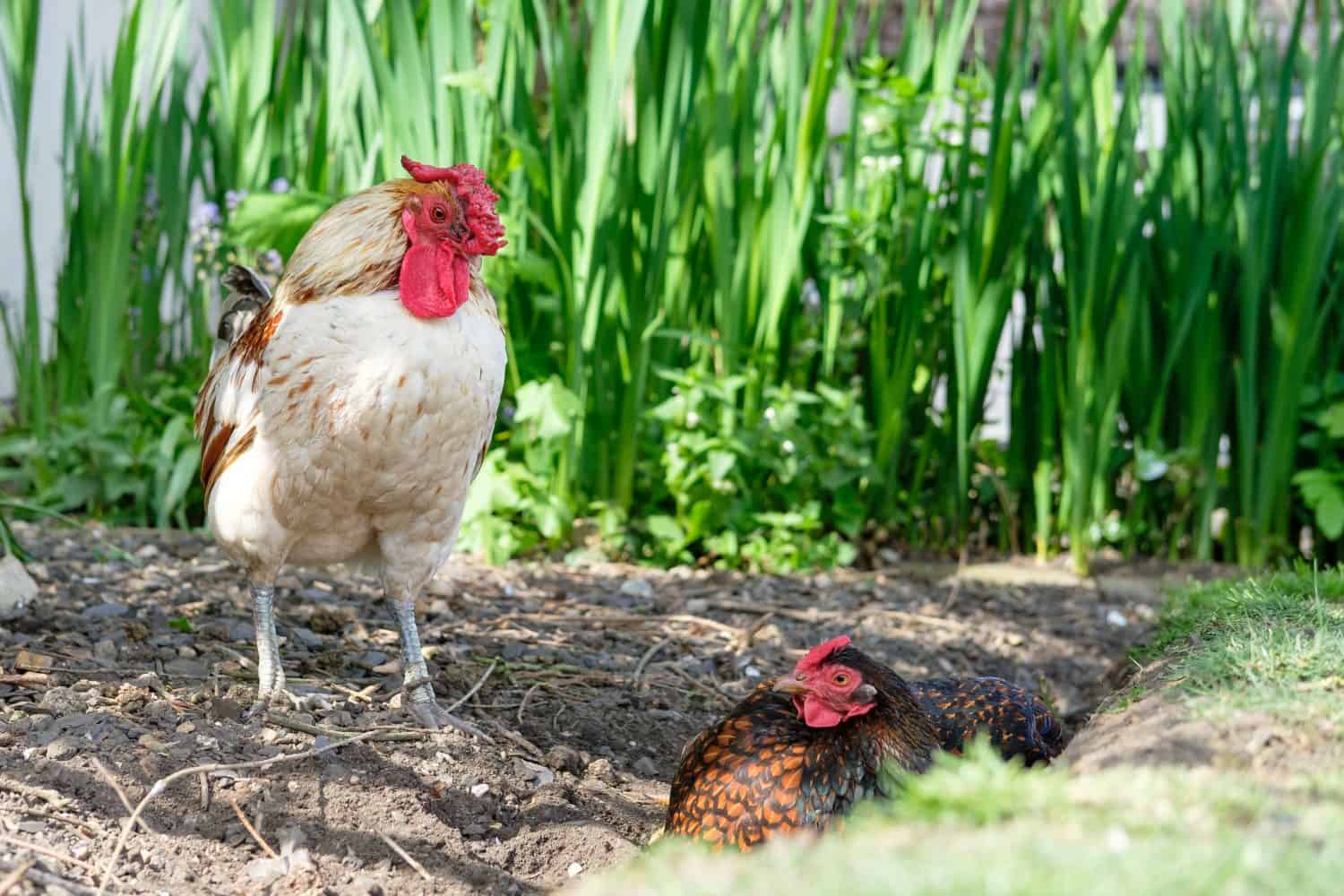
Some chickens may have some hesitation about taking a dust bath.
©Nick Beer/Shutterstock.com
While dust baths are necessary for the overall health of chickens, some chickens may struggle to bathe, while others in their flock do so without a problem. This does not necessarily mean there is a problem with the chicken. It could just be that this feathered friend is a bit more particular than others when it comes to dust bathing. For those chickens who refuse to participate in dust bathing in the designated area, several techniques can be tried to entice them. Those techniques include:
- Place the chicken near the designated dust bath area, but do not place them in it, so the chicken can get used to where the bath area is and the material in the dust bath.
- Place treats near the designated dust bath area.
- Place toys near the designated dust bath area.
- Create a platform for the dust bath.
- Put the contents of the dust bath in a shallow tray.
Some chicken owners have even had luck with sprinkling a bit of the contents of the dust bath on chickens to get them interested in taking a dust bath. In most instances, chickens will get over their hesitation to take a dust bath and will join the rest of the flock. There are times, however, when chickens have zero interest in dust bathing, which could be a sign of an underlying problem.
When to Be Concerned
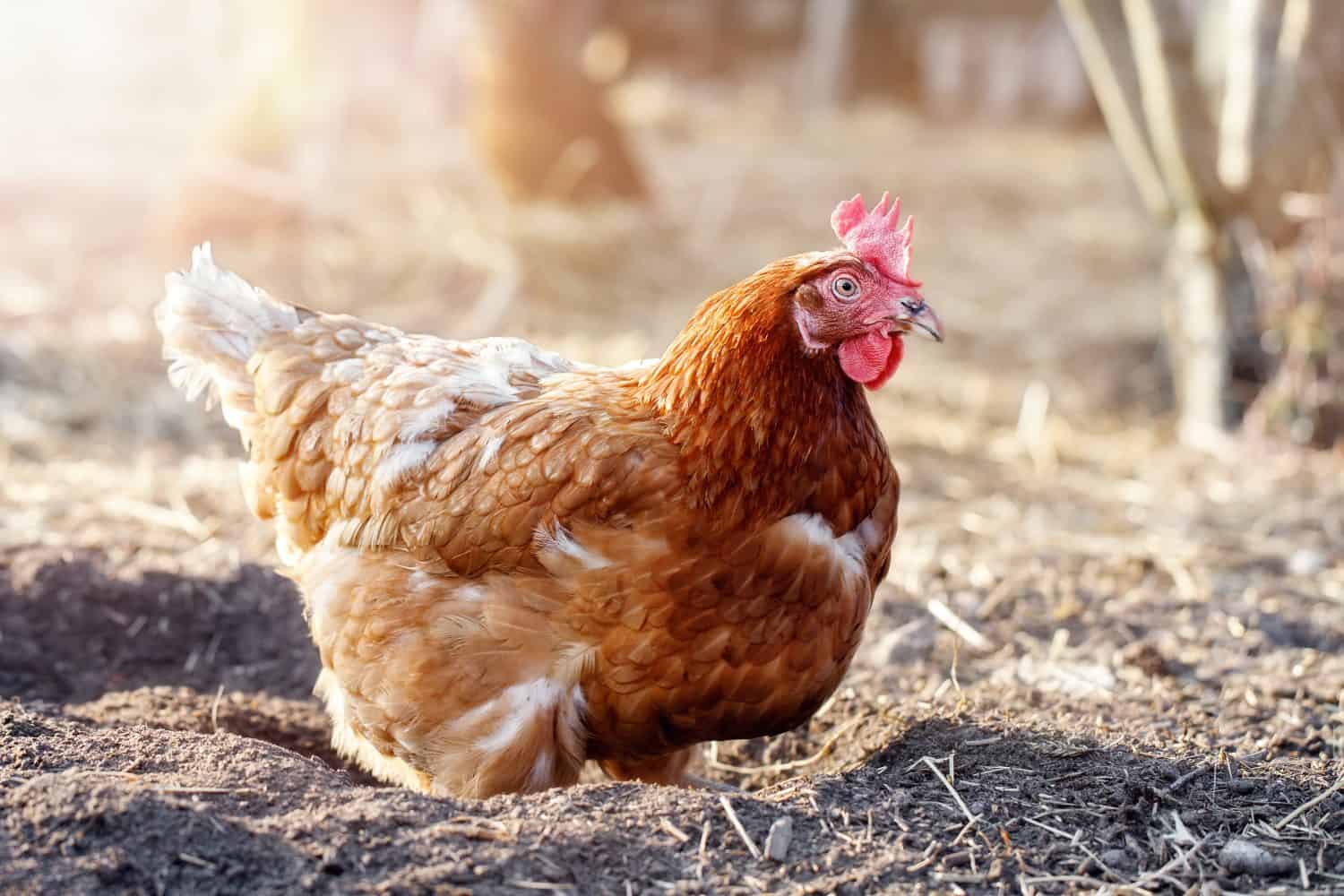
When chickens have dust baths in the past and suddenly stop, it can be a sign of an underlying health issue.
©Linas T/Shutterstock.com
While the time of year or the quality of the dust bath contents may deter chickens from dust bathing as often, if all chickens in the flock are participating in a dust bath except one, there could be serious health issues with the non-participating chicken. Chickens need to take dust baths to properly care for themselves, which helps prevent illness. If a chicken refuses to suddenly participate in taking a dust bath after consistently doing so at least several times per week, not only is there an indication that something is wrong, but their health will decline without a dust bath.
If dust baths are missed, chickens have a higher likelihood of getting lice and other parasites. Additionally, the feathers will begin to look unkempt and perhaps even broken when chickens do not dust bathe. This is why it is important to keep an eye on chickens as well as their dust bath location to ensure that the contents of the dust bath have not been compromised, discouraging chickens from wanting to participate. If all appears to be well with the dust bath, a check with a veterinarian may be necessary to determine if there is an underlying issue as to why the chicken does not want to dust-bathe and, if there is, how to remedy it.