
Quick Take
- Honey bees must make it back to their hives before dusk to avoid individual bees becoming lost or exposed to nighttime dangers.
- Research has proven through polarized-light cues that light can create a navigation hazard after dark.
- Specialized nocturnal insects require slower visual processing, which is a liability in daylight, which is why bees maintain sight that works best in daytime.
- Forager bees sleep overnight so that they are ready to work the following day; however, other activities within a hive persist in dark hours.
Contrary to the behavior of certain other insects, bees don’t actually fly once it’s dark, according to this trending Instagram reel. But what exactly happens to a bee when the sun sets? A honey bee’s entire job depends on safe, repeatable navigation, which is why darkness is often a no-go for these flyers. It removes the cues that make safe flight for bees possible.
Most of the bees people know are daytime flyers. They aren’t built to navigate the night in the same way that moths do. They also don’t have an alternative navigation system that works well when their surroundings become low-contrast and difficult to distinguish in the dark. Night quickly changes the rules for bees, which is why foraging is essentially limited to daylight hours for honey bees and most types of bumble bees. But which ones, and why is the dark so dangerous?
This article explains what happens to bees when the sun goes down, why darkness makes flight unsafe for them, what happens to bees that get caught outside after dark, which bee species are most affected, and what activities continue inside the hive at night.
What Changes for Bees When the Sun Goes Down?
While it may not be surprising, a honey bee colony operates according to precise timing. This schedule continues after dark, and bees are more sensitive to changes in light than we might expect.
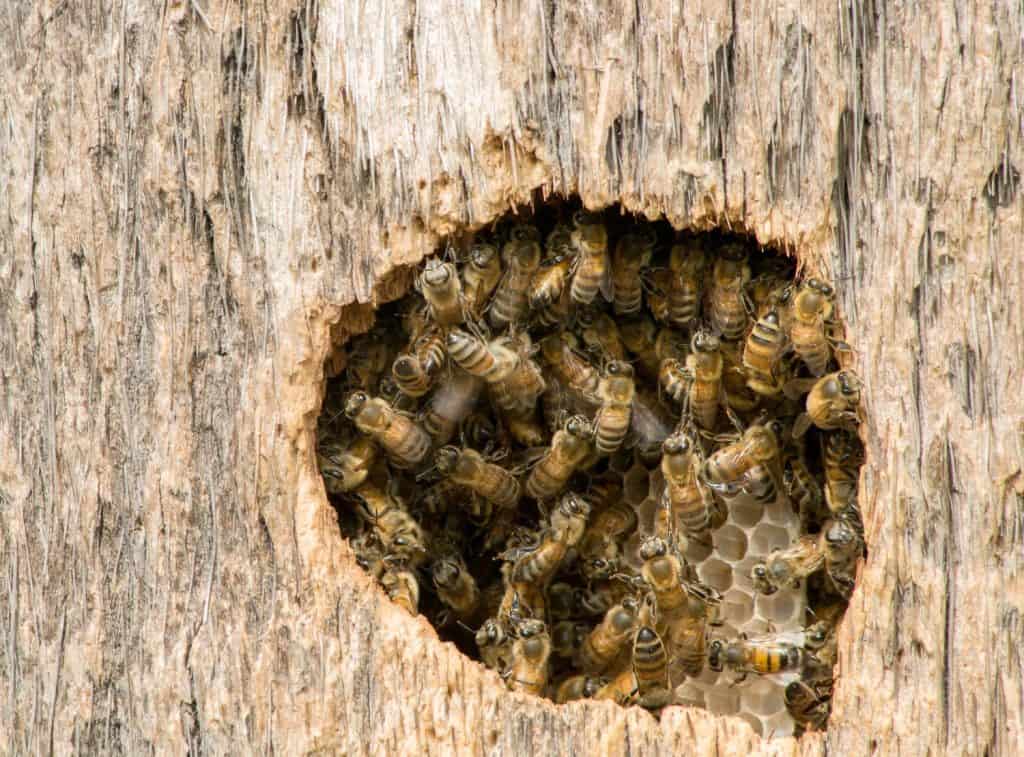
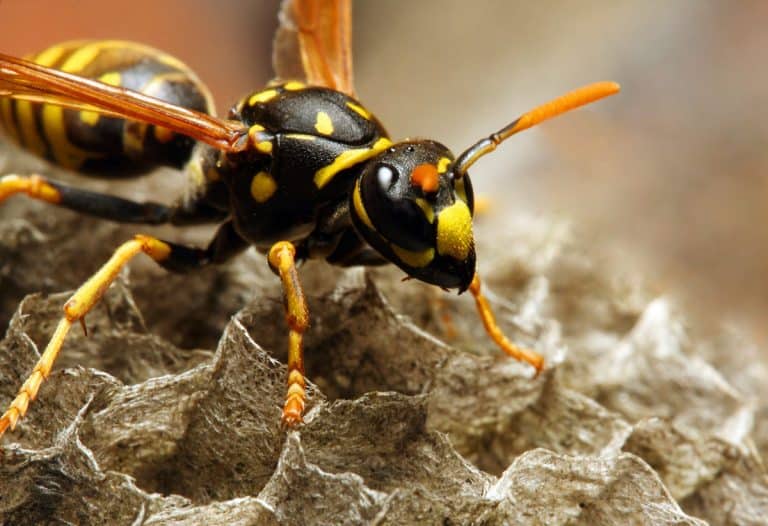
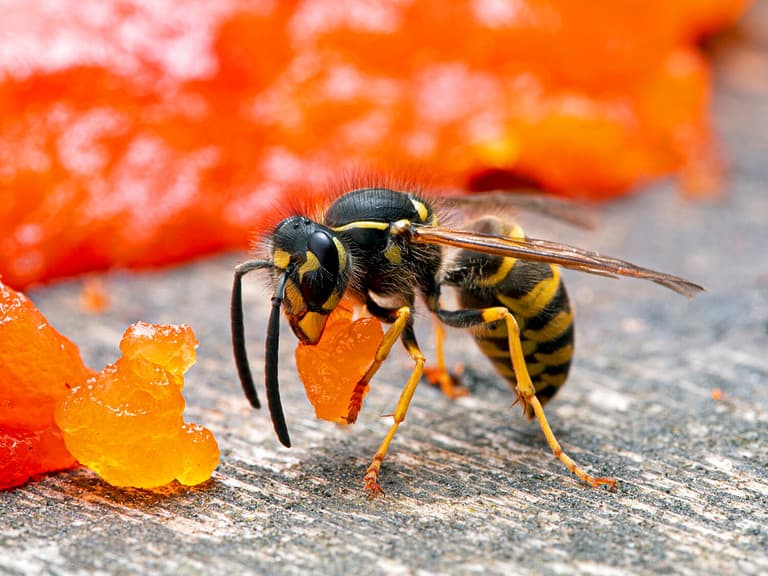
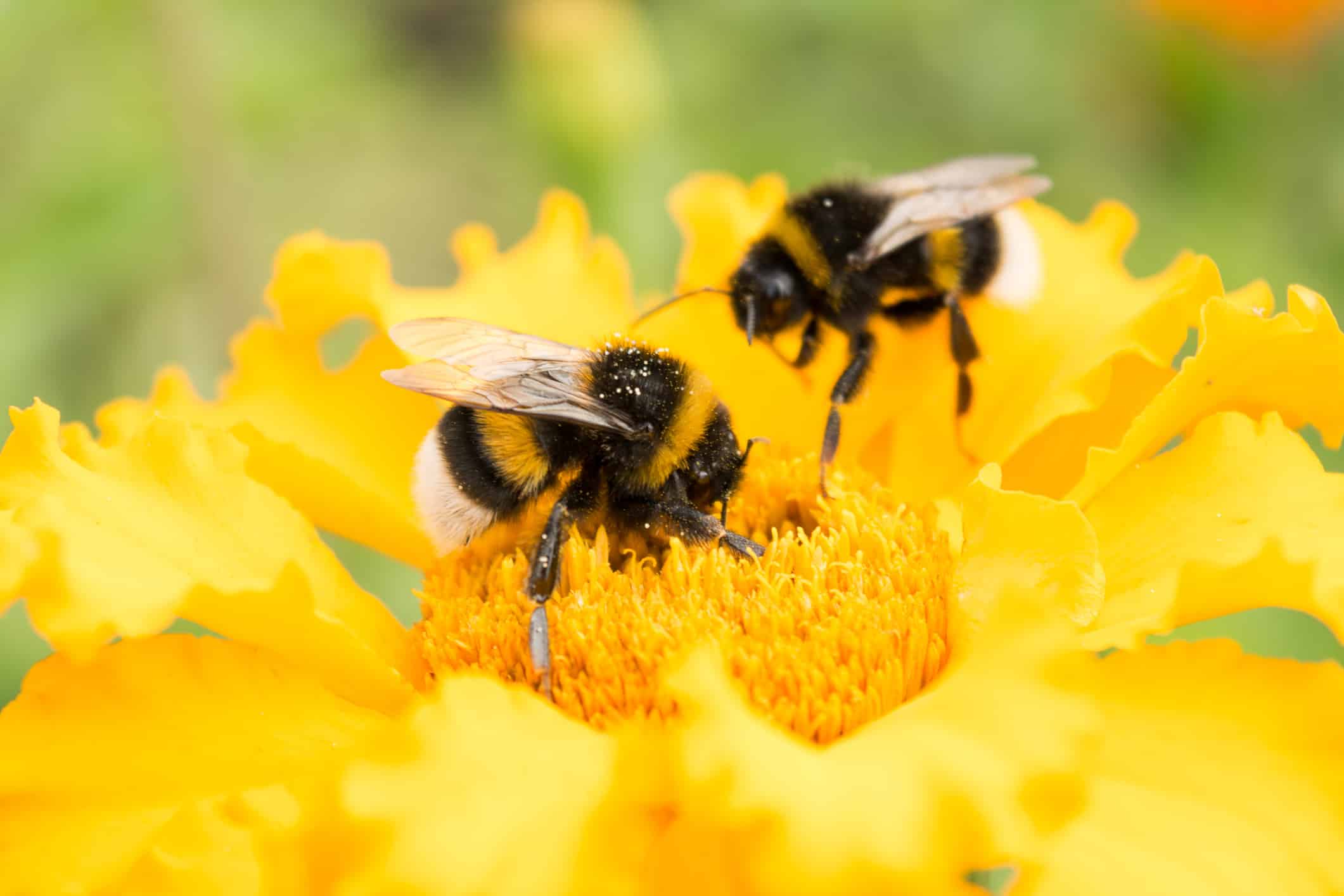
Most bees can’t actually see in the dark, which is why they can get lost.
©Donna Bollenbach/Shutterstock.com
As dusk approaches, forager bees attempt to finish what they’re doing and get back to the hive before dark. Even if there’s more work to be done, anything happening outside the hive after dark stops being worth the risk. This isn’t because bees get tired; rather, they stop working at night because flying without reliable visual information increases the risk of getting lost or encountering danger.
Why Can‘t Bees Fly in the Dark?
For honey bees and many bumble bees, flight is actually a vision-heavy activity. Steering, landing, obstacle avoidance, and directional awareness all depend on what their eyes can extract from the world around them. That’s the main reason why darkness is a no-go.
In a UC Riverside study, entomologist Quinn McFrederick observes that honey bees and bumble bees are daytime flyers that use sunlight cues, including polarized light, to guide them. The sun is their map, their way of understanding how to return home.
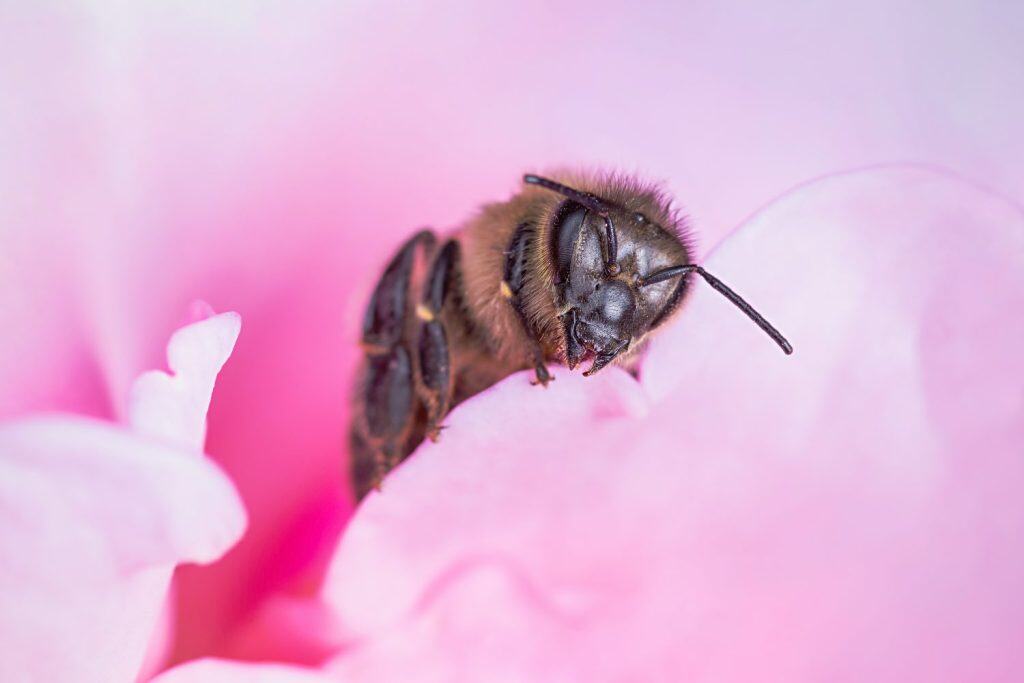
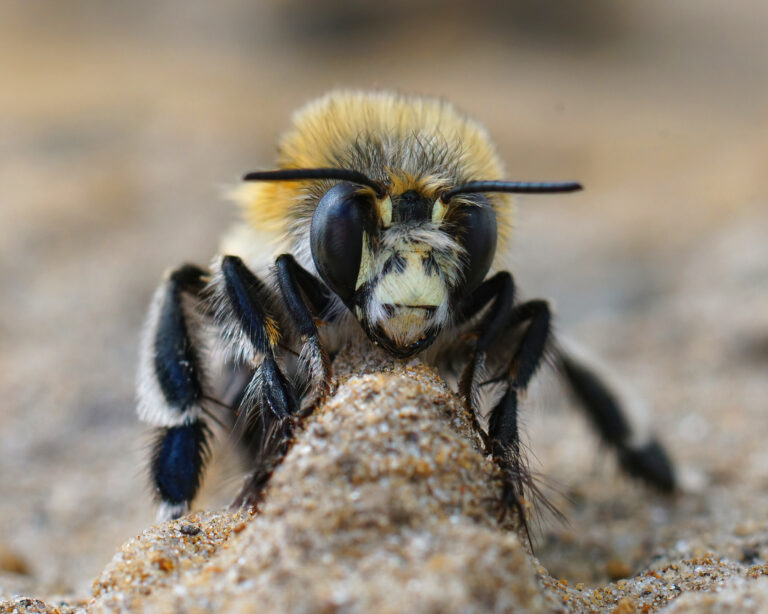
Both navigation and physical flight control in bees require sunlight.
©nechaevkon/Shutterstock.com
Honey bees naturally use the sky’s polarized-light pattern for direction, and researchers have tested how bees obtain and communicate that information in controlled experiments. Research shows that bees can derive compass-like information purely from polarized light and signal it through their dance communication to other bees.
Flight control is also a huge factor, not just navigation. Many insects regulate their speed and stability using optic flow, which is the visual motion pattern sweeping across the eyes as they move. When light levels drop, optic flow becomes more difficult to parse, and a bee can’t trust it the same way they can in the daytime. Without light, bees don’t receive the reliable information they need to fly safely.
What Happens to a Bee That’s Out After Dark?
If a honey bee gets caught outside at dusk, what happens to it? For its own safety, a lost bee usually doesn’t keep flying deeper into the night; it chooses a safe place to land and camp out.
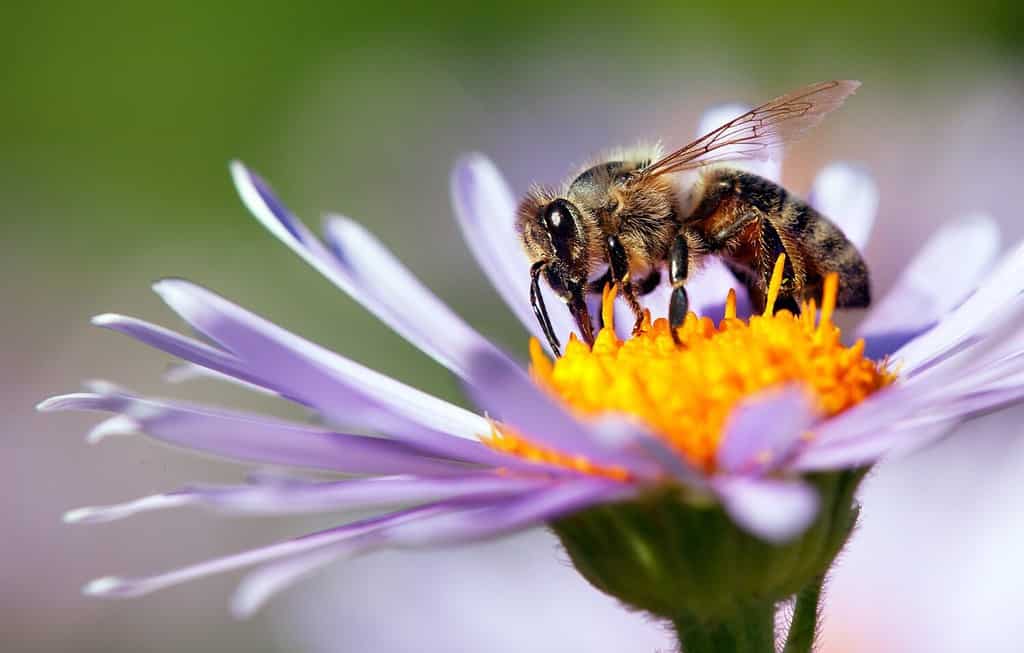
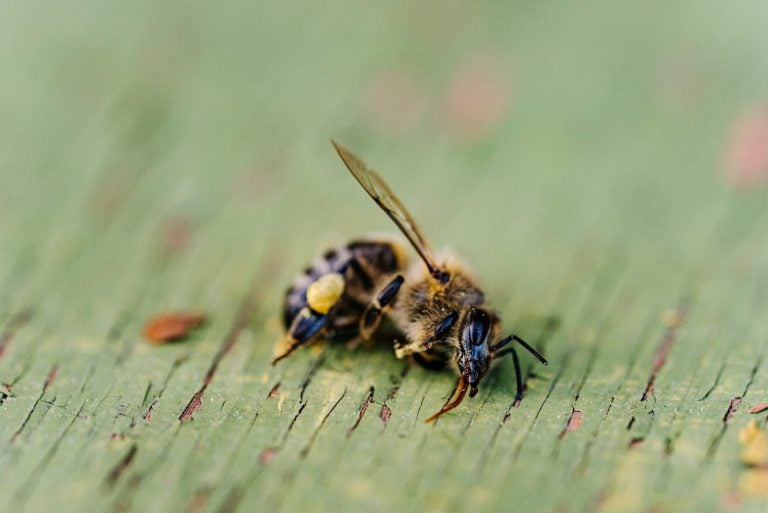
A bee trapped outside the hive after dark will typically find a safe place to hide overnight.
©Daniel Prudek/Shutterstock.com
A late bee will often cling to vegetation or tuck into a flower and wait until dawn. Even if the hive is nearby, this is the safest move when a bee’s navigation and flight control are degraded. However, that doesn’t mean there aren’t risks to staying still outside the hive after dark.
A bee may face the following challenges if it’s caught outside the hive overnight:
- Cold can make it harder to warm flight muscles back up for takeoff
- Predators are more active around dusk and night
- Disorientation can turn into exhaustion, especially transitioning from darkness to bright lights
- The bee may simply never make it home, even when the sun comes back up
Bee colonies are delicate systems where losing individual bees is undesirable, but a healthy colony can usually withstand the loss of a few workers. However, their systems work best when every bee makes it home safely.
What Do Bees Do in the Hive at Night?
A bee’s hive continues its operations during the night, but the pace may look a bit different compared to its daytime routine. Foragers, the older worker bees that fly during the day, tend to sleep at night in recognizable and measurable ways.

Work doesn’t cease overnight in beehives; it just looks a little different.
©wisely/Shutterstock.com
In a Journal of Experimental Biology study on differences in sleep architecture between forager and young honey bees, the researchers noted that foragers have strong day-night rhythms. They are active during the day, sleep at night, and even have identifiable sleep-like states, making worker bees a fascinating study.
In addition to the foragers, other tasks within the hive continue after dark. Broods need care, nectar must be processed, temperature and ventilation within the hive require constant attention, and guarding the hive entrance continues around the clock.
Are There Bees That Can Fly at Night?
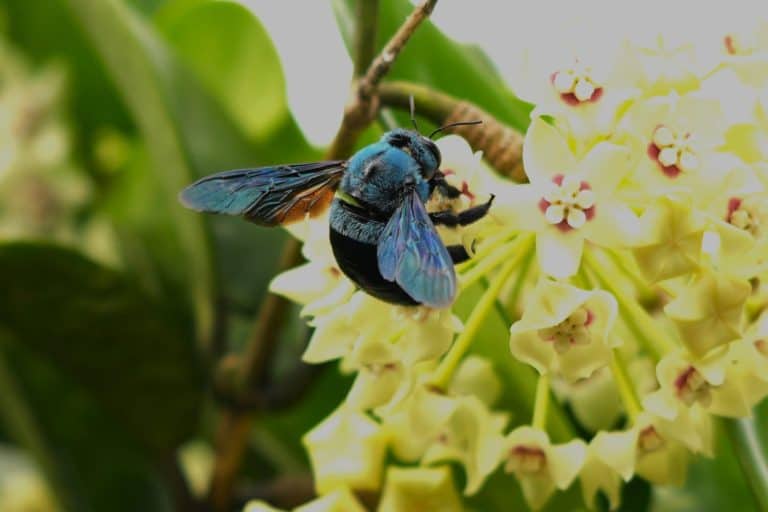
Some bees are actually adapted to dim conditions and can navigate in light levels that other bees can’t handle. For example, a Current Biology paper on the nocturnal sweat bee Megalopta genalis discusses how this species learns and uses landmarks under extremely low light to both work and find its way home after dark.
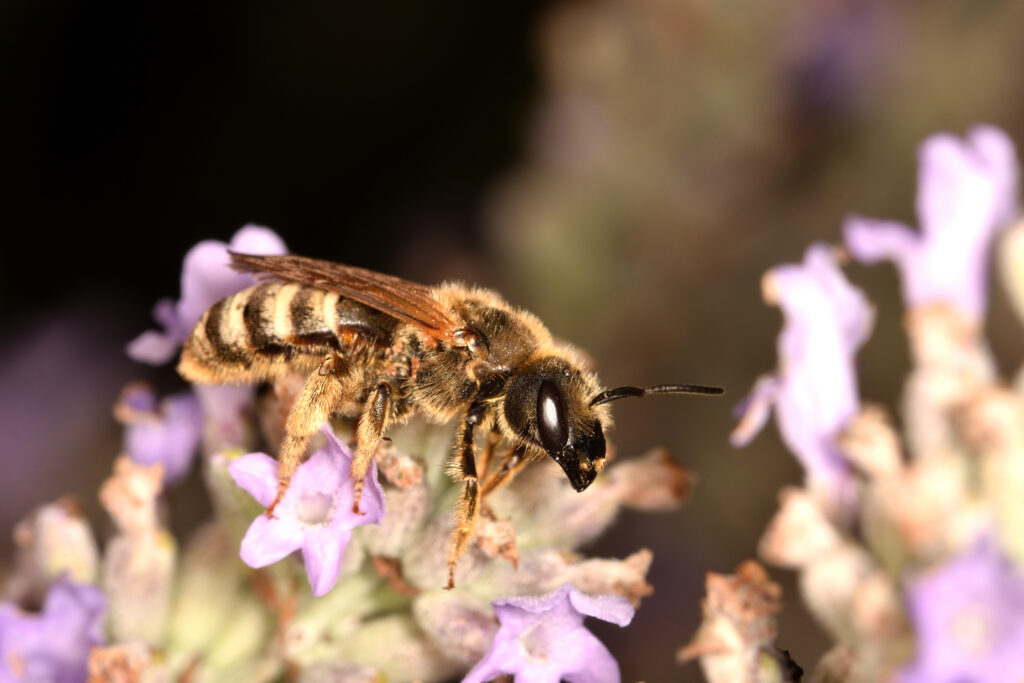
There is a nocturnal version of the sweat bee, which means they can see and fly at night.
©Davide Bonora/Shutterstock.com
In a Royal Society review on the remarkable visual capacities of nocturnal insects, researchers described adaptations that make vision workable at night in certain insects, including more sensitive visual processing that can be less effective or even detrimental in bright daylight, though some nocturnal insects can adjust their vision to cope with a range of light conditions.
While it’s mostly true that the bees most people encounter, especially honey bees, can’t fly at night, there are some specialized night-flying species. However, these night-flying species are much less common than the many bee species that avoid flying at night altogether.
How Do Porch Lights Affect Bees and Other Insects?
Bright lights, such as porch or security lights—especially those near flowers—can keep insects active longer than normal, disorient them, and may even cause them to circle the light or become lost. There’s also emerging evidence that constant artificial light can interfere with normal rest patterns for insects.
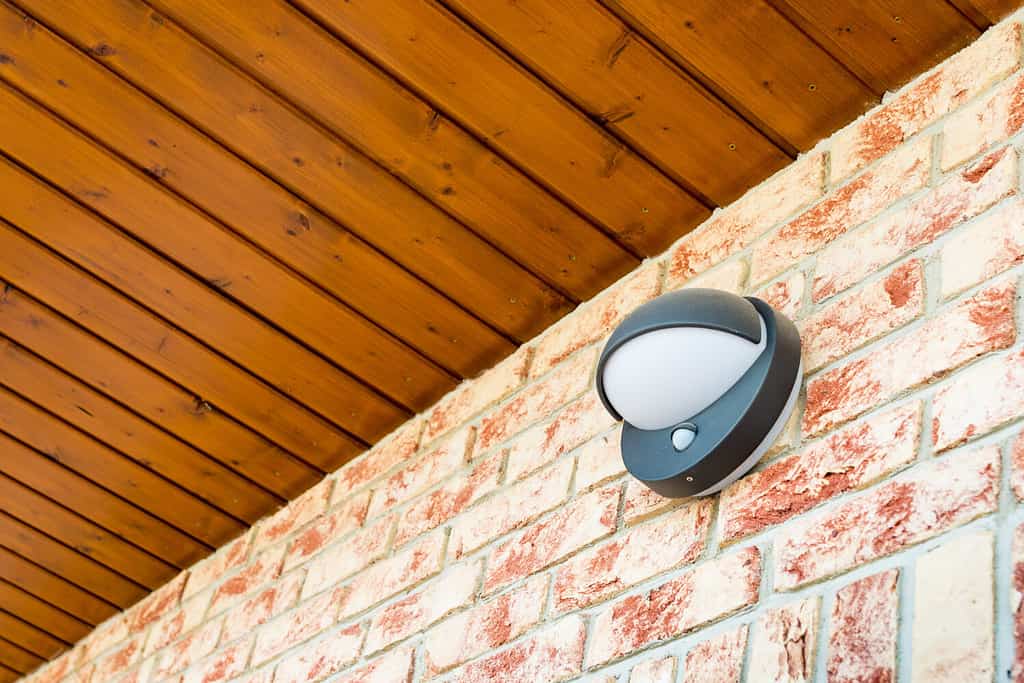
Keeping your outdoor lights on all night can disturb bug species.
©bubutu/Shutterstock.com
In a Scientific Reports study on constant artificial light and honey bee forager sleep, researchers uncovered disrupted sleep in foragers under constant light exposure, which has obvious implications for behavior and colony function. If you have a light near a potential hive or a group of pollinator plants, consider turning it off at night to help local bees. Your local bees will thank you!
Bees and Darkness: Why They Only Fly in the Daytime
When the sun goes down, bees lose the tools they rely on to make flight safe. Honey bees and many bumble bees rely on daylight cues and sky information to navigate, which is why it’s so valuable for them to make it home on time.
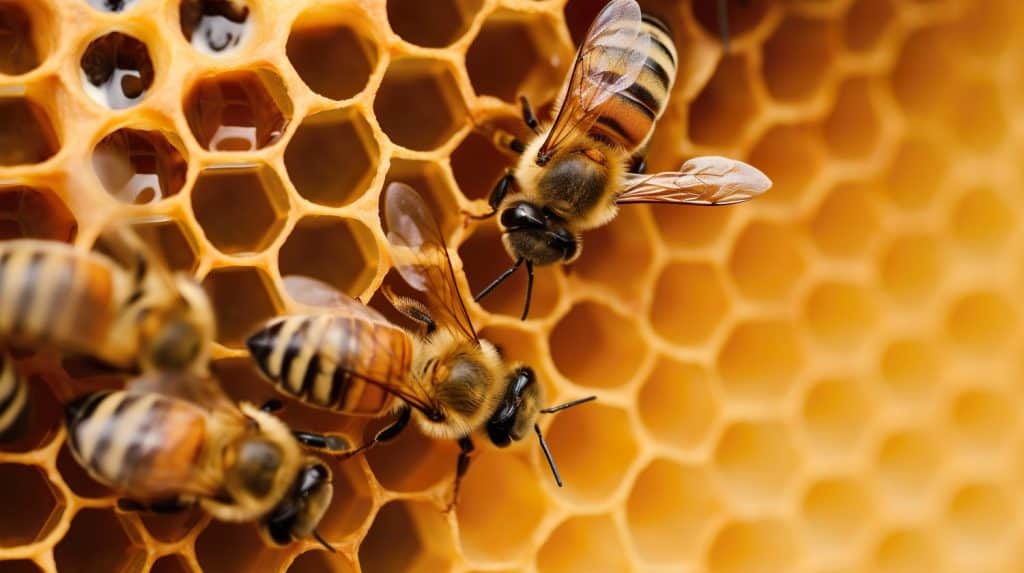
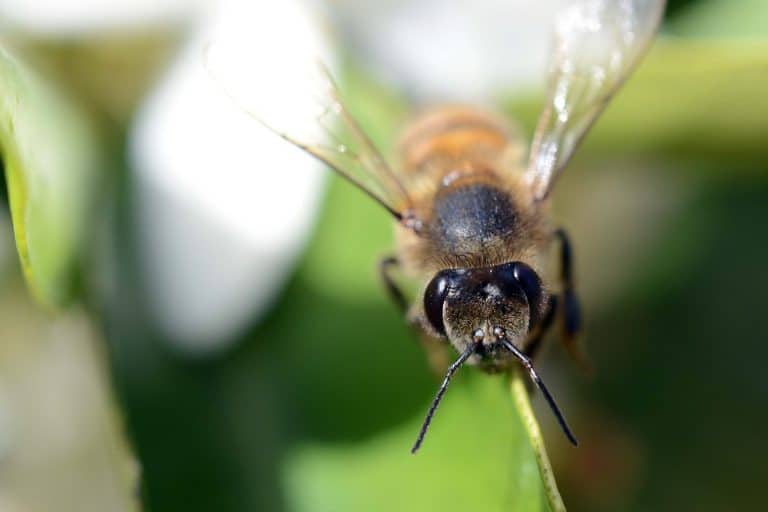
Bees fly in the daylight because they may get lost otherwise.
©Tools Konten/Shutterstock.com
A bee that gets caught out late can land, wait, and hope for the best, while the rest of the colony continues working and awaits the return of their lost bee. Losing even one worker can impact the entire colony, so let’s hope your local bees make it back to the hive safely tonight!