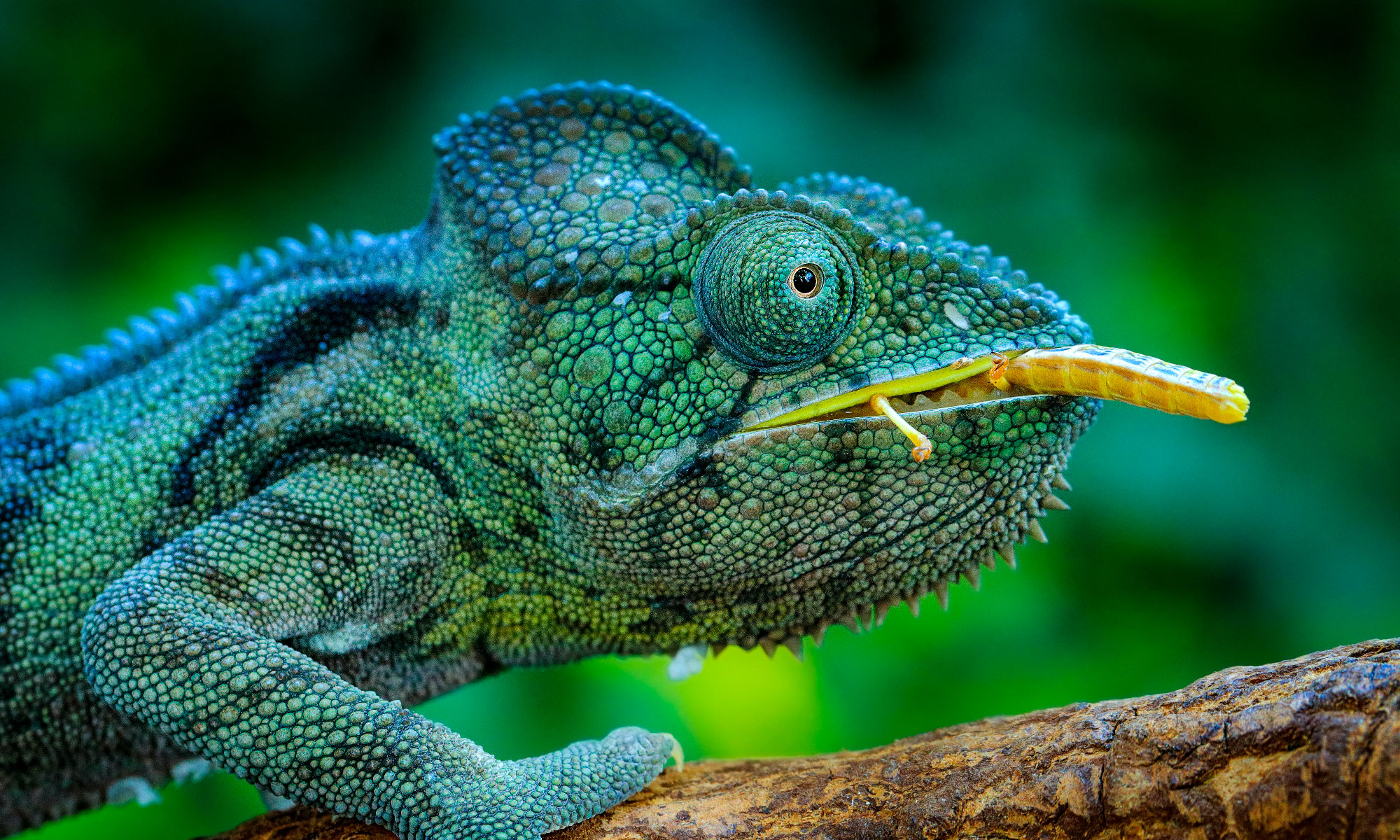

A team of conservationists supported by the Conservation Leadership Program has discovered a previously unknown population of the critically endangered Belalanda chameleon (Furcifer belalandaensis) in southwestern Madagascar, in an area where the species had never been recorded before. This tiny chameleon is known for living within an extremely limited habitat, but researchers are now hopeful of a larger distribution. Although the population remains under severe threat from habitat loss, due largely to charcoal production and agriculture, the discovery offers hope to teams working on behalf of this small, highly vulnerable reptile.
Celebrating such a win for Team-Chameleon is easy to do, as these colorful creatures are beloved by many. Chameleons are diverse in behavior and adaptations, with each species carrying a unique set of traits that set them apart from the rest. One of the traits that distinguishes chameleon species is their method of reproduction. Some chameleons lay eggs, while others give live birth, prompting the question of why this difference exists. This video by BBC Earth shows a chameleon’s live birth, a rare recording that is amazing to view. Read on to learn more about why some chameleons lay eggs and why others do not.
This post was updated on October 25, 2025 to include information on the Belalanda chameleon discovered in Madagascar.
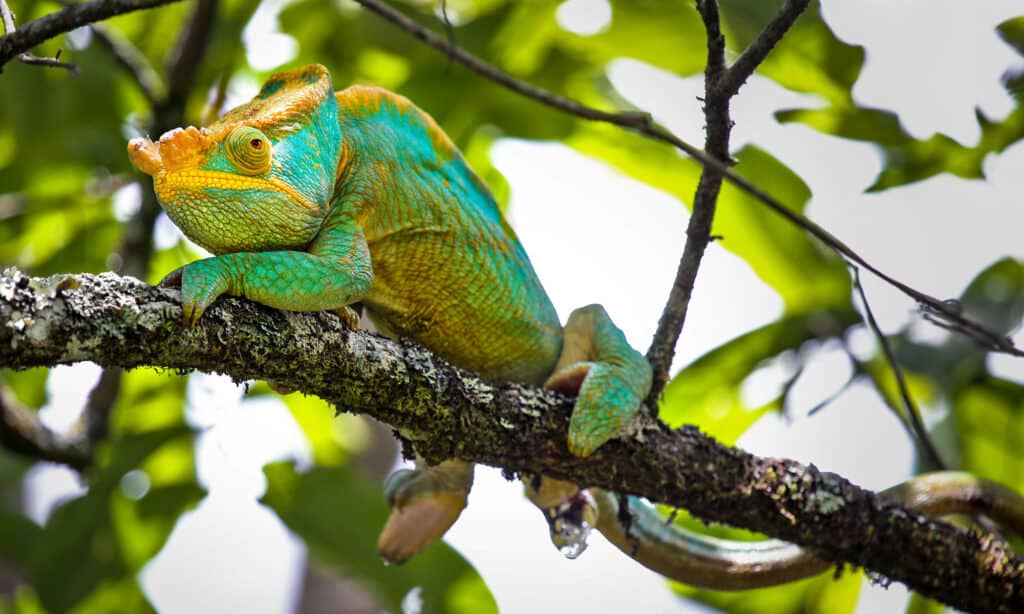
There are oviparous and viviparous chameleons.
©Ryan M. Bolton/Shutterstock.com
Eggs Versus Live Births
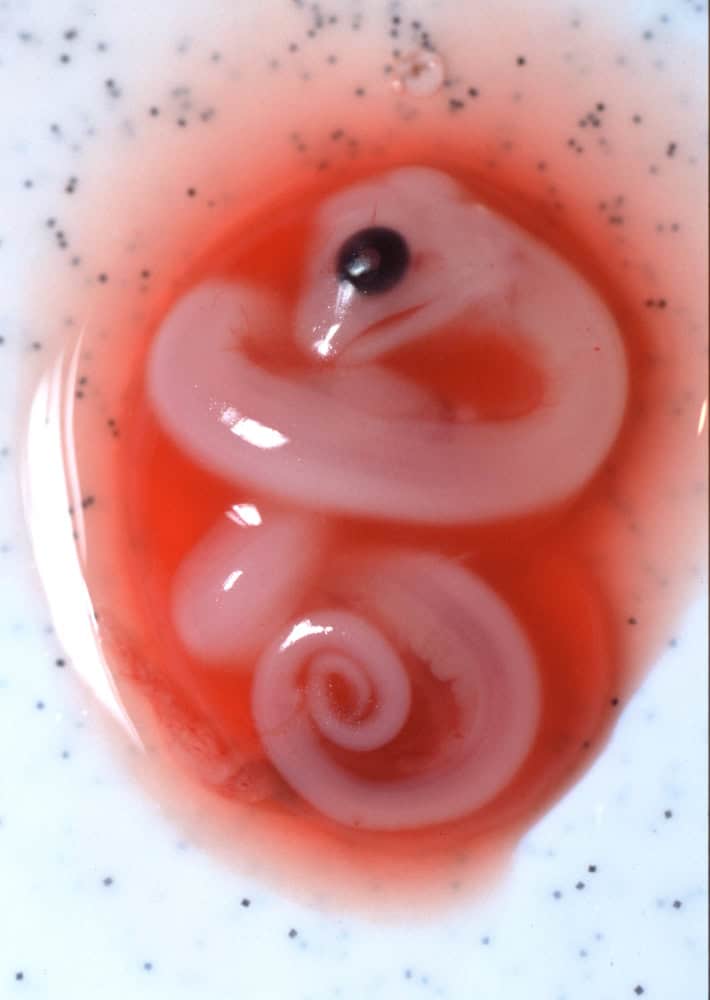
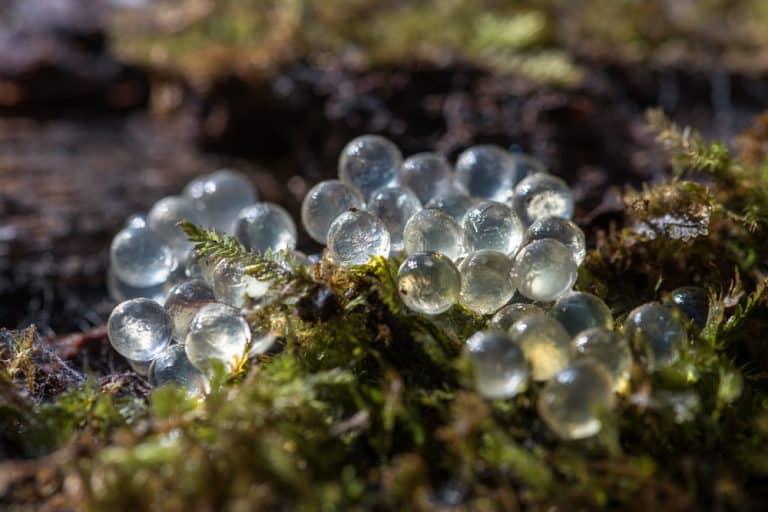
Chameleons can be broken up into two categories in regards to birthing: oviparous and viviparous. Oviparous animals lay eggs as their method of reproduction. There are many animals that are oviparous, including the majority of chameleon species. Typically, a female chameleon will burrow into the ground to lay her eggs. This prevents predation and temperature irregularities from affecting the eggs. Egg clutches vary in size between species, anywhere from a handful to over 100! Viviparous animals give birth to live young, and only a few chameleon species reproduce this way. The Jackson’s chameleon is the most well-known species that gives live birth. Rather than burrowing to lay eggs, the embryo develops in the female’s body, protected similarly from temperature and weather irregularities. When the offspring are ready, they are born live, similar to other viviparous animals.
There are a few reasons for the difference in evolution, mostly due to environmental factors. Oviparous chameleons live in warmer climates, which are perfect for incubating their eggs in the soil. The warm, moist soil increases the chances that the chameleon’s eggs will hatch successfully. Oviparous chameleons need the soil to be around 75 to 80 degrees Fahrenheit, depending on the species. If too hot or too cold, the eggs will likely die.
Viviparous chameleons, on the other hand, typically inhabit high-altitude environments where the soil may be too cold for incubation. If they were to lay eggs here, the eggs would face risks of freezing and poor development. This makes live birth important as the mother can actively regulate her temperature through sunbathing. The Jackson’s chameleon can give birth to between five and 30 babies at a time after a five- to seven-month gestation period. Therefore, while live birth is not typical for most chameleons, it offers a survival advantage for species living in colder environments.