
Few curiosities in nature are as intriguing as a spiral beehive. These elegant, swirling structures are crafted not by honey bees, but by a small, stingless cousin: Tetragonula carbonaria, a bee native to Australia. Instead of stacking neat horizontal sheets like their more familiar relatives, they twist their brood comb upward into mesmerizing spirals that look almost architectural—like miniature staircases rising inside tree trunks. But why do they build this way? And what makes these bees so different from the stinging varieties we know? Let’s step inside their world and uncover the mystery of the spiral hive.
Meet the Makers: Australia’s Stingless Bees
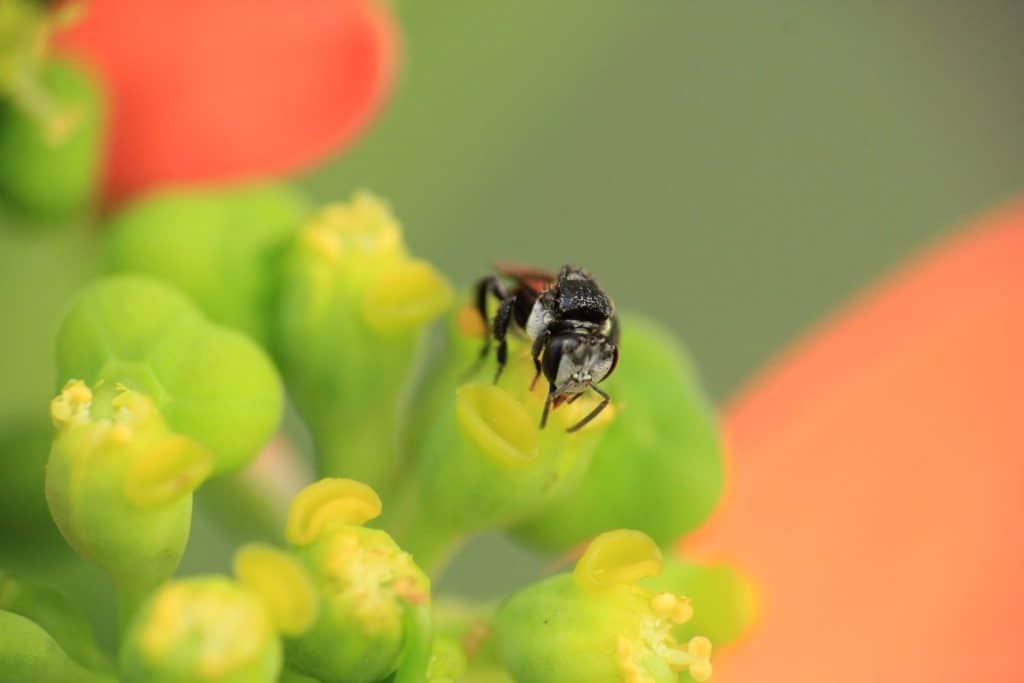
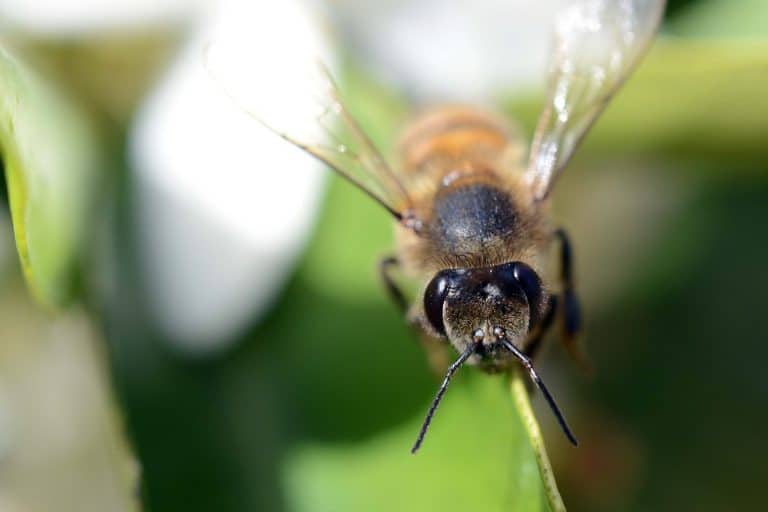
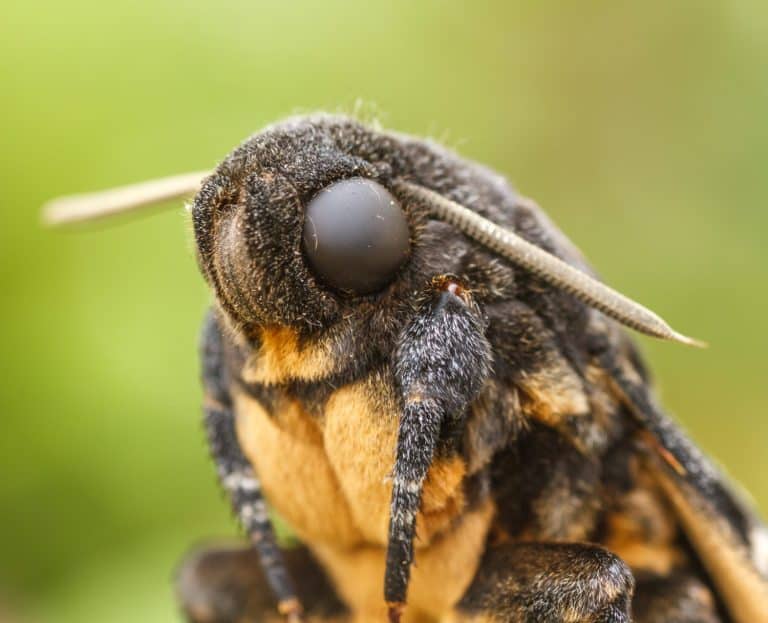
Tetragonula carbonaria is a small, black bee that lacks a functional stinger.
©frozygraphie/Shutterstock.com
Tetragonula carbonaria—often called the “sugarbag bee”—is one of the most well-known stingless species in Australia. Small and black, they play an outsized role in pollination across forests, farms, and suburban gardens. They may lack stings, but they are far from ordinary. Their claim to fame lies in the homes they build: tightly coiled, multi-tiered hives that rise in spirals instead of flat sheets. These can be found hidden in tree hollows, fence posts, and even urban water meters. To the eye, their brood comb looks like a natural skyscraper curling upward in perfect order.
Australia isn’t the only place with stingless bees. More than 500 species are found worldwide, particularly in tropical regions of Africa, Asia, and Central and South America. In Brazil, for example, stingless bee honey is highly prized and even sold in specialty markets. Each region’s species has its own quirks, but the spiral-building behavior of Tetragonula carbonaria stands out as one of the most visually stunning.
Why Spirals? Clues in Navigation and Nature
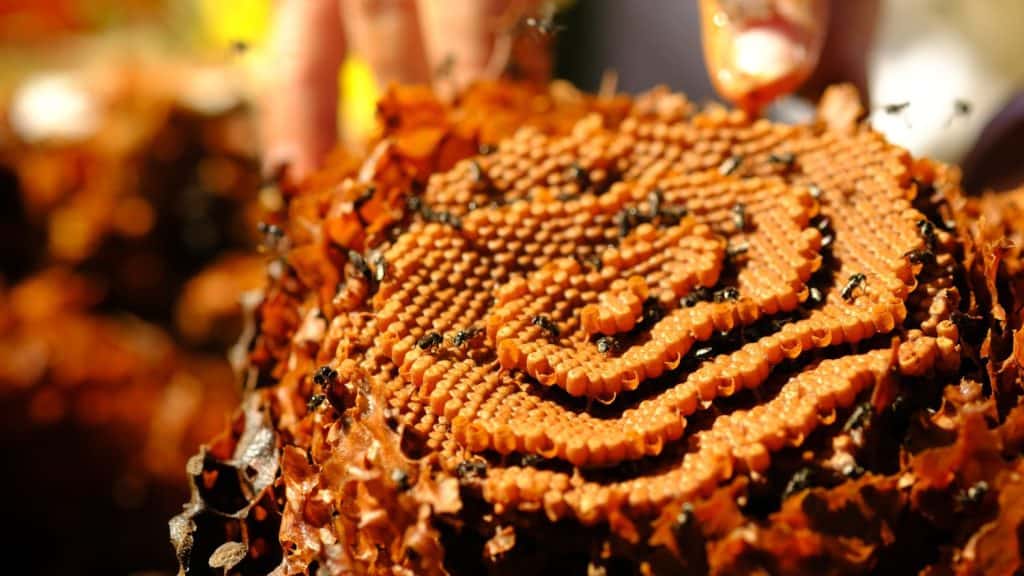
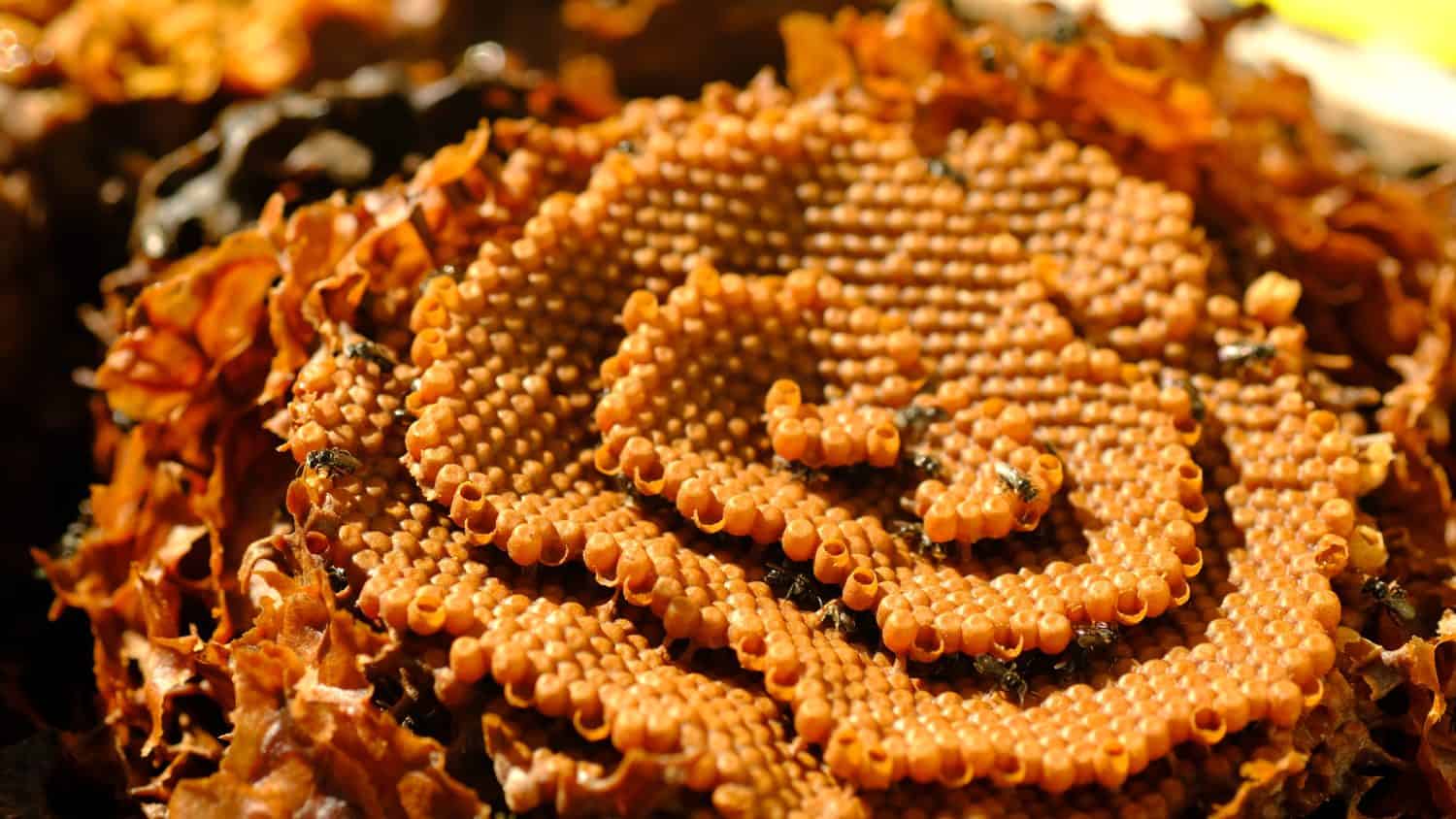
A rare approach among bees, but the stingless bee builds its hive in a spiral.
©wisely/Shutterstock.com
Scientists have puzzled for decades over why these bees build spirals. Honey bees stick to flat horizontal combs, so what’s the advantage of curling upward?
- Navigation: One leading idea is that spirals help the queen. Inside a dark hive, sight doesn’t matter—bees rely on touch and smell. A spiral gives the queen a continuous path, making it easy to move cell to cell, laying thousands of eggs without circling back or getting disoriented.
- Climate control: Another theory points to airflow. Spirals might regulate temperature and humidity more effectively, a critical feature for thousands of crowded bees enduring the sweltering Australian summer.
- Mathematical growth: The most fascinating clue comes from computer models. When scientists simulate hive growth, they find the bees follow simple building rules—placing new hexagonal cells at the edges, sometimes slightly upward. Over time, these basic choices naturally produce spirals. The process is eerily similar to the way crystals form in nature. What looks like artistry is actually the outcome of repeated, rule-based behavior written deep into their DNA.
Why Stingless? Evolution’s Peaceful Path
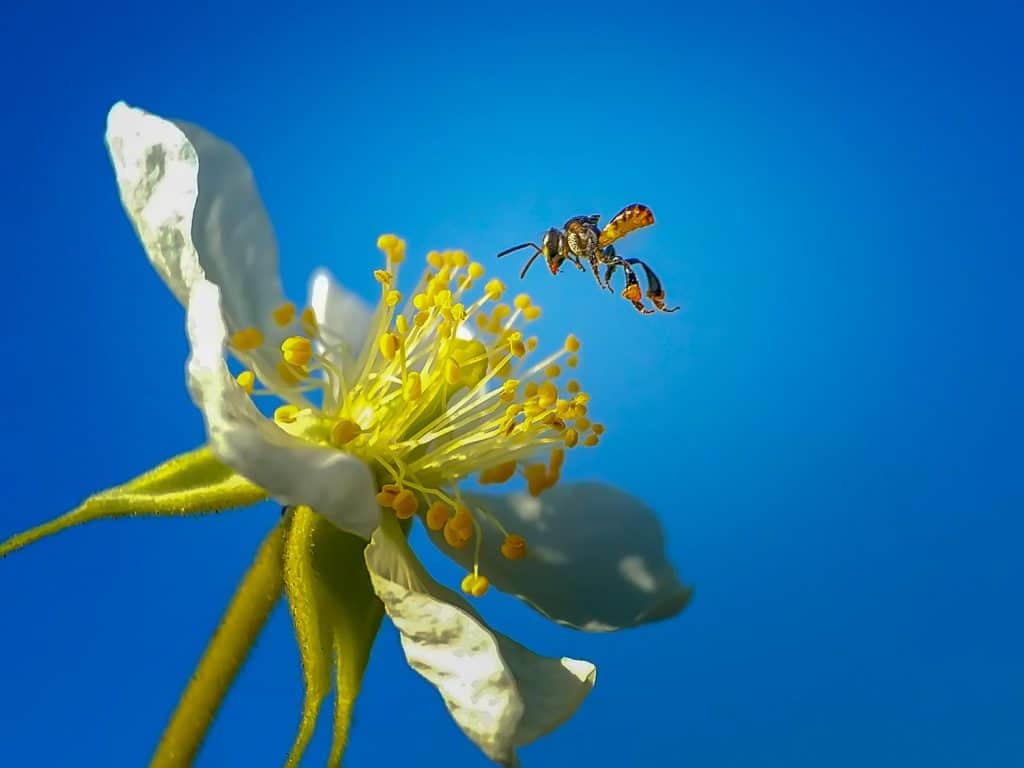
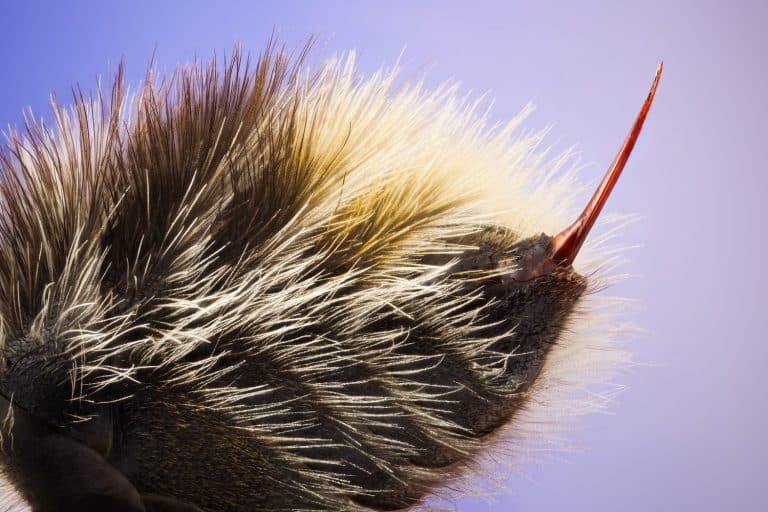
From this side view, it’s clear the bee has no stinger at the end of its tail.
©Kadarusman Efendy/Shutterstock.com
The absence of a stinger might sound like a fatal flaw, but Tetragonula carbonaria proves otherwise. Instead of venom, these bees use other defenses:
- Biting: They attack intruders with strong mandibles, aiming for soft areas like eyes, ears, or noses.
- Resin warfare: Sticky plant resins serve as natural glue, used to trap and immobilize small invaders.
- Mummification: If a beetle or moth sneaks in, the bees encase it in resin, wax, and mud—entombing it permanently.
- Guarding entrances: Narrow hive openings are easy to defend, with guards stationed to block threats.
These tactics keep their colonies secure. And their lack of sting makes them especially safe for backyard beekeepers, schools, and community gardens.
Building the Spiral: Step by Step

The hive of a stingless bee colony is reminiscent of a spiral staircase like this one.
©Vaios Parinos/Shutterstock.com
So how does a spiral actually form? Brood comb begins flat. Workers lay down a layer of hexagonal cells in a sheet, much like honey bees. However, the edges curl upward. Instead of remaining flat, the bees tilt new cells slightly upward. Over time, this causes the sheet to become a staircase-like coil of honeycomb. The queen moves along the growing edge, filling each fresh cell with an egg. Worker bees go on to add honey and pollen to feed the larvae before sealing each cell.
Over time, the older layers near the bottom are abandoned, dismantled, and reused as material for storage or new brood. Sometimes the result is a single spiral, other times a striking double-spiral pattern. Either way, the design is sturdy, efficient, and visually extraordinary.
The Taste of Sugarbag Honey
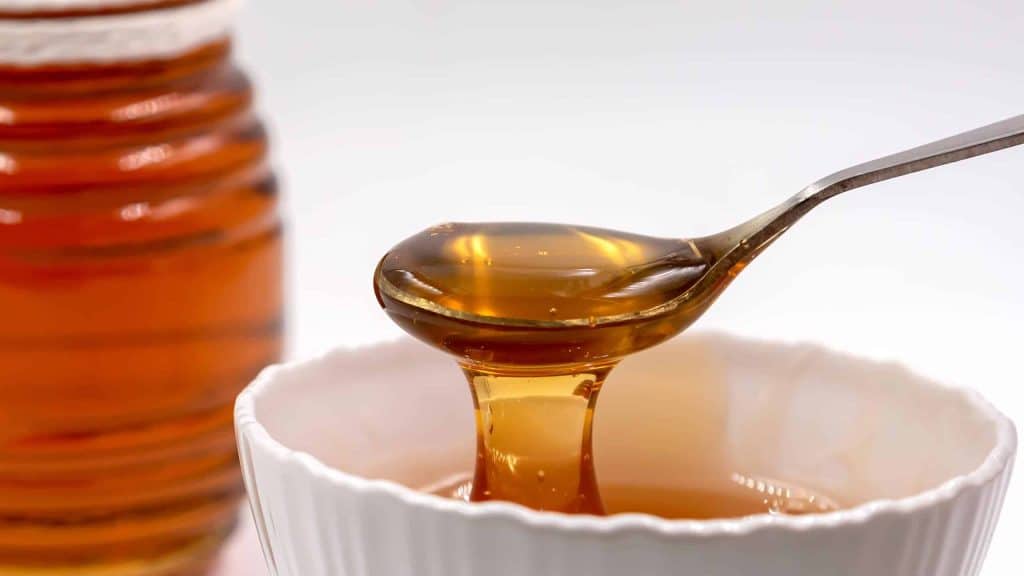
Sugarbag honey is only produced in small quantities and is considered a fairly rare delicacy.
©montira areepongthum/Shutterstock.com
One of the most celebrated gifts of stingless bees is their honey, known as sugarbag honey. Unlike the thick, golden sweetness of European honey bees, sugarbag honey is tangy, almost citrus-like, with a slightly runny texture. Indigenous Australians have treasured it for generations, both as a food source and for its medicinal qualities. Because stingless bees produce honey in much smaller quantities—often less than a kilogram per hive per year—it’s considered a delicacy. Harvesting requires care so that the fragile spiral brood isn’t damaged.
Do Spiral Hives Help Bees Survive?
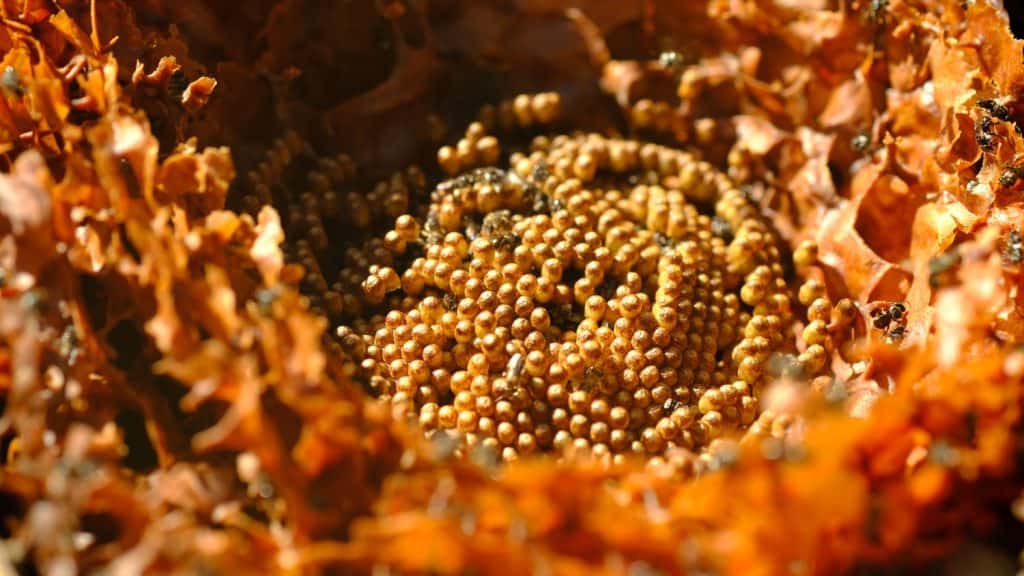
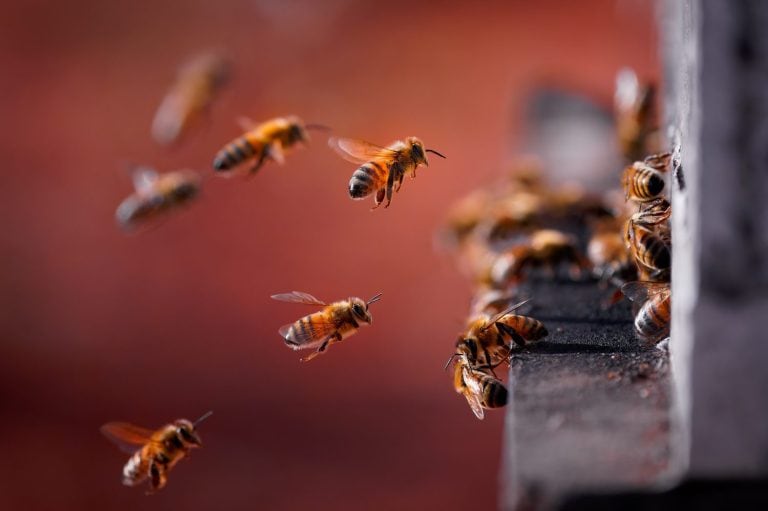
The shape of a stingless beehive gives it some advantages over conventional hives.
©wisely/Shutterstock.com
In nature, beauty usually comes with purpose. The spiral structure helps stingless bees thrive in several ways:
- Propagation: Beekeepers can split colonies more easily thanks to the spiral’s organized shape, making hive division safer for both bees and larvae.
- Temperature regulation: The central brood chamber stays well insulated, allowing colonies to endure both hot summers and cooler southern climates.
- Durability: The spiraling brood comb makes for a strong, compact structure that resists collapse in tight spaces like tree hollows.
Together, these advantages give Tetragonula carbonaria an edge, ensuring its survival in diverse environments while continuing its pollination work.
Bees as Pollination Powerhouses
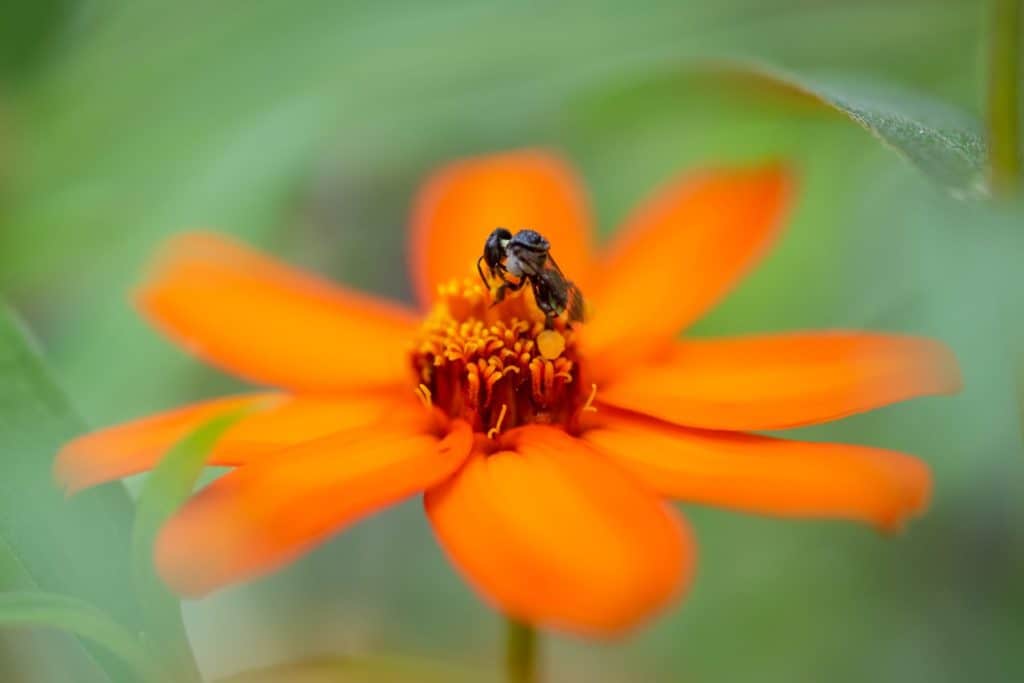
Ecologically speaking, the role of stingless bees as pollinators is more significant than their honey production, tasty though it is.
©whitejellybeans/Shutterstock.com
While honey gets the spotlight, the real ecological value of stingless bees is pollination. They play a crucial role in maintaining biodiversity by carrying pollen between native plants. In agricultural settings, they’re increasingly used to pollinate crops like macadamias, mangos, and berries. Unlike European honey bees, stingless bees are perfectly adapted to Australia’s flora. Some plants may even rely more heavily on them than on imported honey bees. By maintaining stingless bee populations, farmers and conservationists also safeguard countless native plant species that form the backbone of entire ecosystems.
Beekeeping in Australia
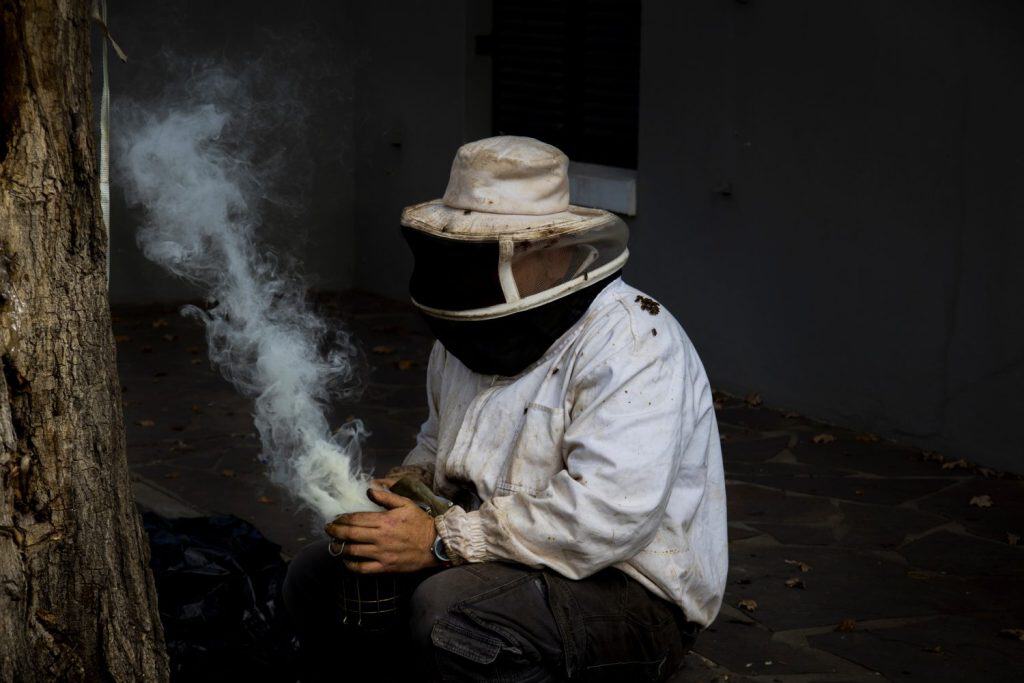
Working with traditional honeybees, this beekeeper wears protective clothing and uses a smoker—neither of which is necessary for stingless bee hives.
©Jacques Hugo/Shutterstock.com
In recent years, hobbyists and professionals alike have taken up stingless beekeeping. Wooden hive boxes have been designed for Tetragonula carbonaria, allowing people to keep colonies in backyards, schools, or research stations. Unlike honey bees, these colonies don’t require keepers to wear protective suits or use smokers when handling the hive. Children can safely watch them up close. Still, managing them is delicate work—splitting a hive or harvesting honey must be done carefully to avoid damaging the brood comb.
Can Stingless Bees Be Crossbred with Honey Bees?
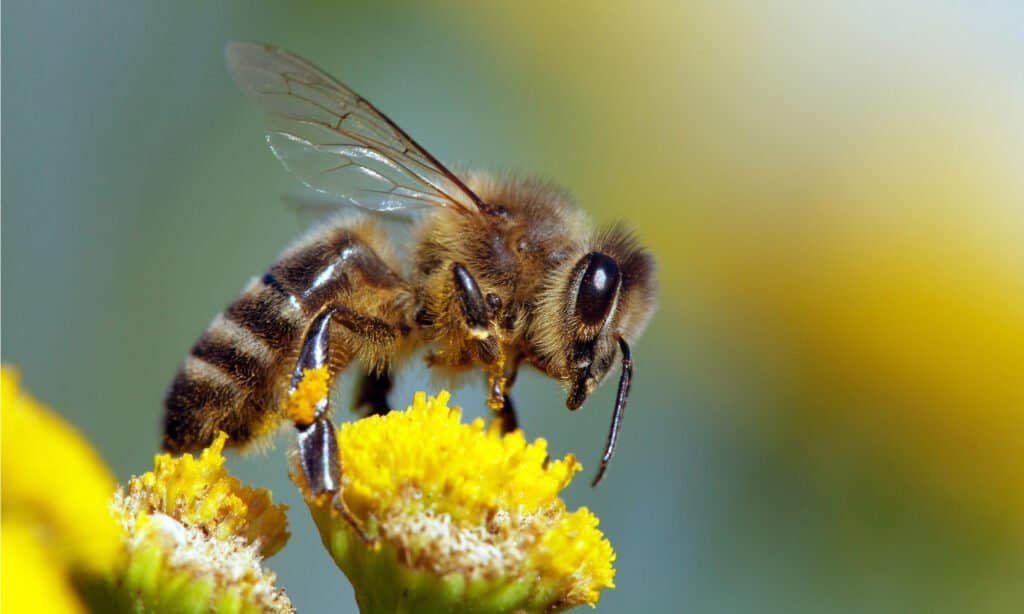
Honeybees are a different species from stingless bees; they cannot be hybridized.
©Daniel Prudek/Shutterstock.com
An obvious question is whether stingless bees could be bred with honey bees to develop a stingless, high-producing variety. The first thing to note is that beekeepers don’t necessarily want bees to lose their stingers. Honey bees need to defend the hive from predators ranging from wasps and hornets to mammals like skunks and bears. The stinger, though fatal to the worker that uses it, deters attackers and buys the colony time to protect itself. While individual bees will be lost in this strategy, the hive as a whole endures.
Increasing honey production is a perpetual goal for those who invest their time, energy, and money into keeping hives. Stingless bees produce up to 2.2 pounds (1 kilogram) of honey per year, compared to 60-100 pounds (27-45 kilograms) from a typical honey bee hive. Stingless beekeepers in Australia use special hive designs, carefully split colonies to start new ones, and optimize foraging conditions by providing the types of plants and flowers the bees prefer.
Creating a hybrid with honeybees is not biologically possible. Although they both belong to the insect order Hymenoptera, they are different species and far too genetically distant—more like cats and dogs than close cousins. Their reproductive biology and colony structures are also incompatible. While we cannot rule out the wonders that genetic engineering and other futuristic technologies may accomplish in the future, natural hybridization of these two species is impossible.
Function and Beauty
The spiral hive of Tetragonula carbonaria is equal parts art, mathematics, and survival. At first glance, the intricate structure seems like something crafted by human design, yet it arises entirely from instinct and collective effort. These stingless bees show that function and beauty can coexist, and their spiraling hives testify to how the steady work of individuals, each carrying out a simple role, can come together to form a masterpiece of astonishing complexity.