
Quick Take
- Lanternfly honey is created from insect waste.
- The waste excreted by lanternflies provides food for honeybees in the fall.
- Lanternfly honey undergoes two separate stages of digestion.
- Counterintuitively, some research suggests that honey derived from lanternfly honeydew may have more medicinal value than certain floral nectar varieties.
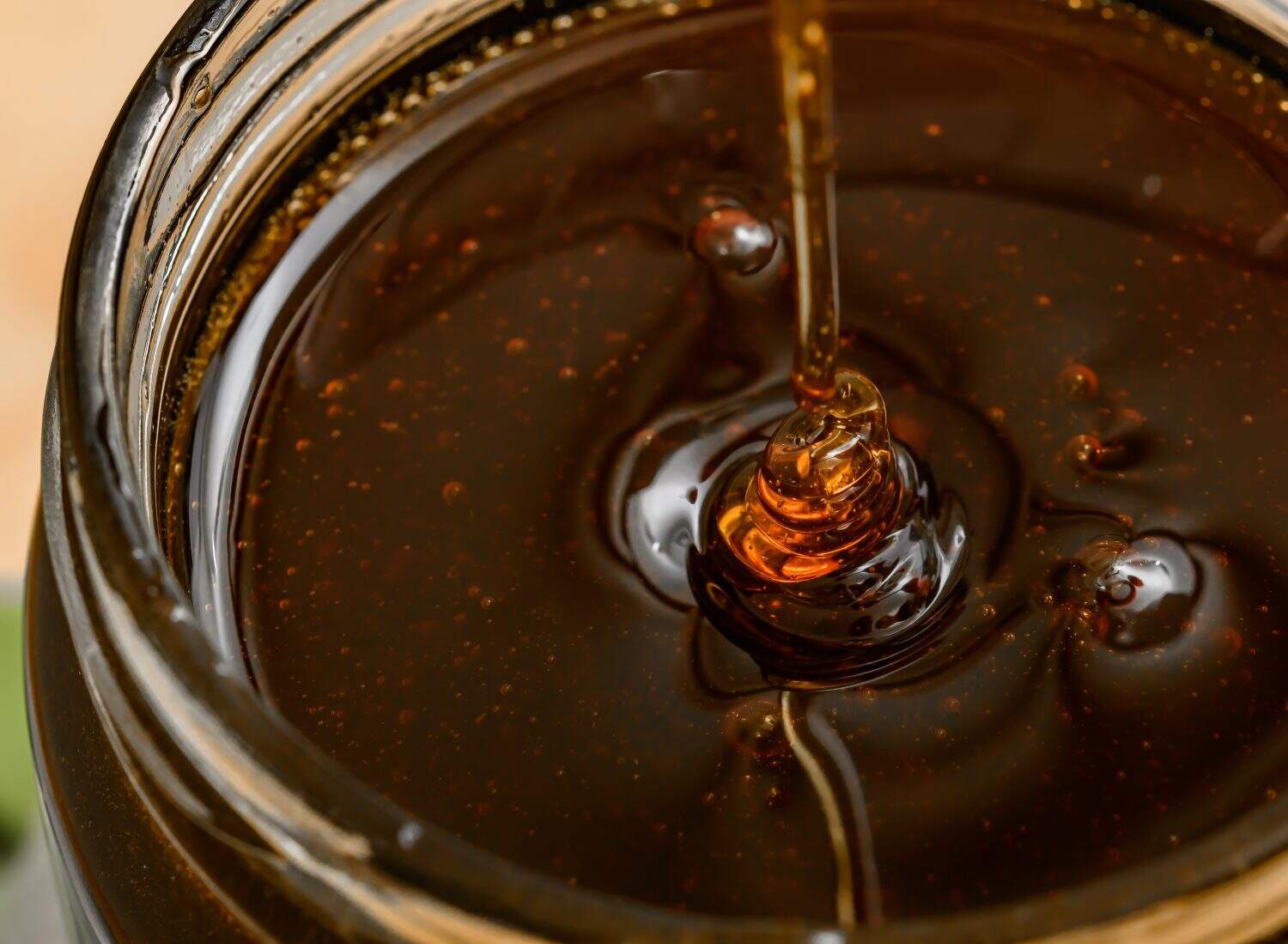
In trendy boutiques across the Northeast United States, a mysterious, nearly black syrup known as Doom Bloom is flying off the shelves. Thick and glossy, this reddish-amber substance looks more like motor oil or molasses than the familiar golden honey squeezed from a plastic bear. But its unusual appearance is only the beginning—its origin story is enough to make even adventurous food lovers hesitate.
Most people expect honey to come from bees and the sweet nectar of flowers. Doom Bloom does come from bees—but not from flowers. Instead, it begins with the sugary waste of the invasive spotted lanternfly, an insect scientists urge people to kill on sight.
In blunt terms, it’s honey made from insect poop. And yet, despite the initial “yuck factor,” foodies are obsessed, beekeepers report thriving hives, and scientists are uncovering medicinal properties that may rival the world’s most famous therapeutic honeys. The result is a strange paradox: a gourmet product born from ecological disaster.
The Science of “Honeydew”
To understand lanternfly honey, you first have to understand the insect itself. Unlike leaf-chewing pests, spotted lanternflies are sap-suckers. Using a needle-like proboscis, they tap directly into a tree’s phloem—the vascular system that carries sugary sap throughout the plant.
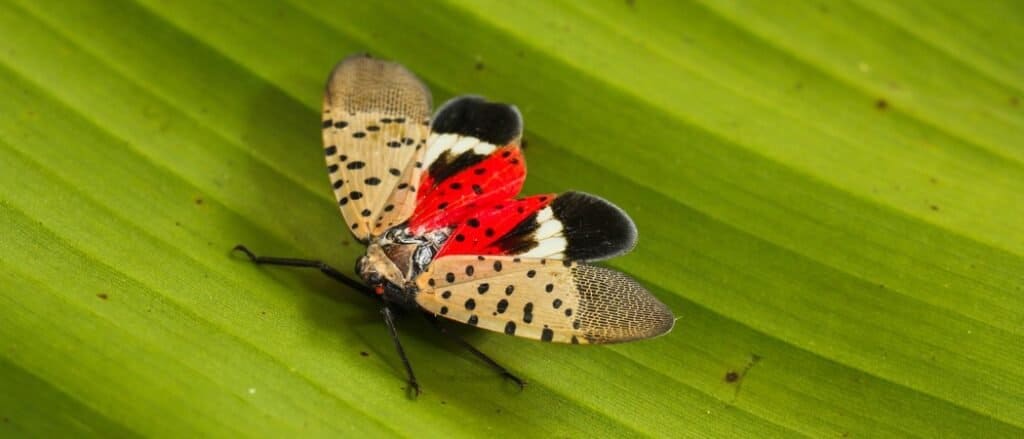
Spotted lanternflies are most active in late summer and fall, which provides honeydew for honeybees to collect when floral nectar is scarce.
©vm2002/Shutterstock.com
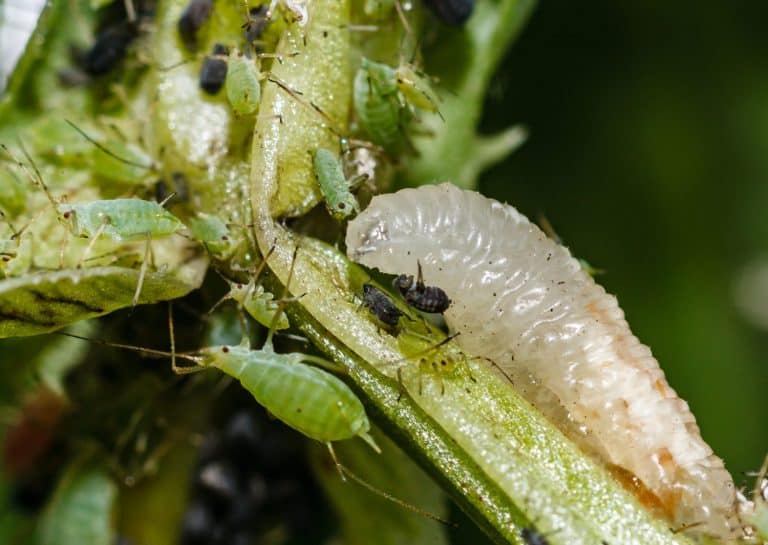
Sap is rich in water and sugar but extremely low in nitrogen, a nutrient lanternflies need to grow. To compensate, lanternflies consume enormous quantities of sap to extract the trace amounts of nitrogen. Because phloem sap is under pressure, it rushes through their bodies quickly. The insects filter out what little nutrition they can get and excrete the rest as a clear, sticky liquid called honeydew. Tree trunks, leaves, and even sidewalks beneath lanternfly infestations can become coated in this sugary residue—a nuisance for humans, but a goldmine for bees.
An Opportunity for Honeybees
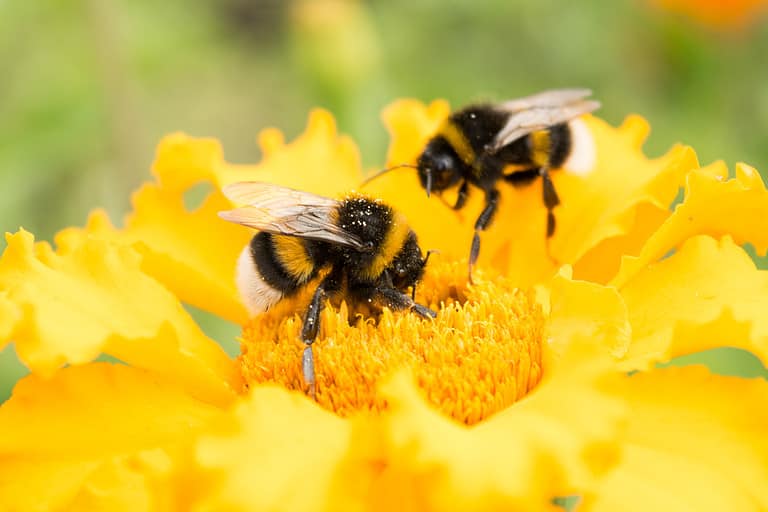
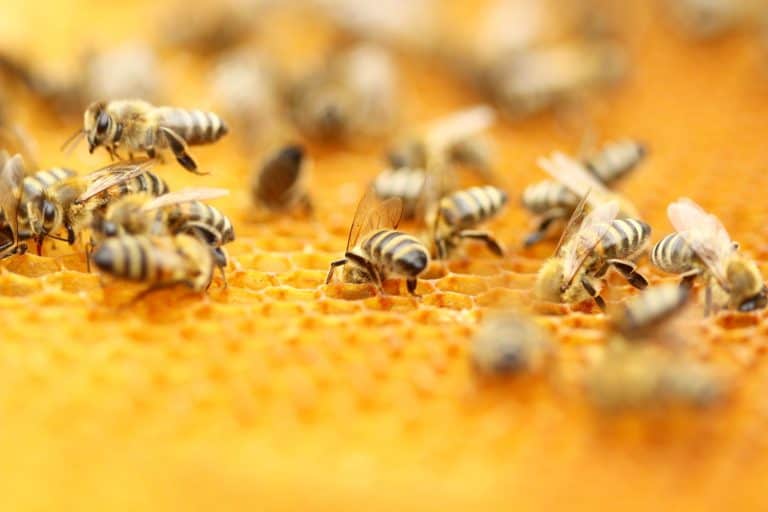
By late summer, many flowering plants like goldenrod and clover have finished blooming, creating a seasonal food shortage for bees known as nectar dearth. Faced with dwindling floral resources, honeybees become opportunistic. When they encounter honeydew dripping from lanternfly-infested trees, bees collect it just as they would nectar. Back at the hive, they evaporate excess moisture and add enzymes that break down complex sugars. The result is a dark, savory substance known as forest honey—a product European beekeepers have prized for centuries.
A Double-Processed Delicacy
Traditional honey is processed once: from flower to bee. Lanternfly honey, in contrast, is processed twice.
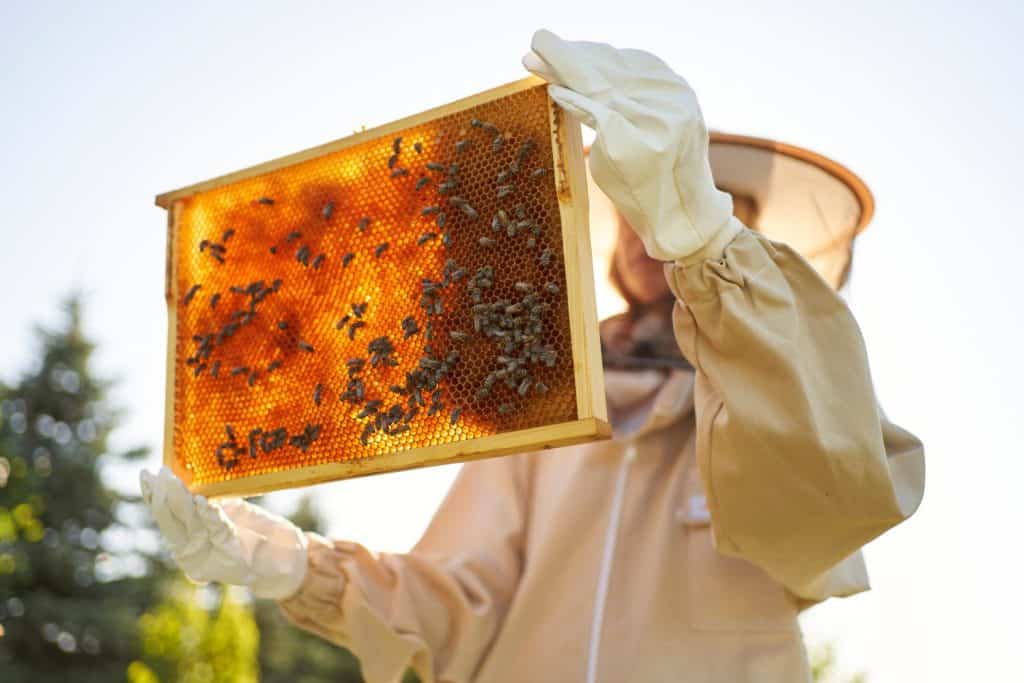
Honeydew from lanternflies provides a quality energy source for bees and helps them get through the winter.
©Hakim Graphy/Shutterstock.com
First, the lanternfly consumes the tree sap and excretes honeydew. Then, the honeybee collects that honeydew and refines it into honey. This dual filtration creates a distinctive chemical profile unlike that of floral honey. Lanternfly honey is less acidic and unusually rich in complex sugars like melezitose and erlose, which contribute to its thick texture, resistance to crystallization, and long shelf life. This “double digestion” is also what gives the honey its unusually deep color and unique bioactive properties.
Appearance, Texture, and Flavor
Lanternfly honey bears little resemblance to conventional floral honey. Ranging from deep mahogany brown to a brooding reddish-amber, it often appears nearly black in the jar. While most honeys eventually crystallize, lanternfly honey stays smooth far longer. It is dense and viscous, frequently compared to dark molasses or molten glass. It looks more like ancient resin than a typical breakfast condiment.
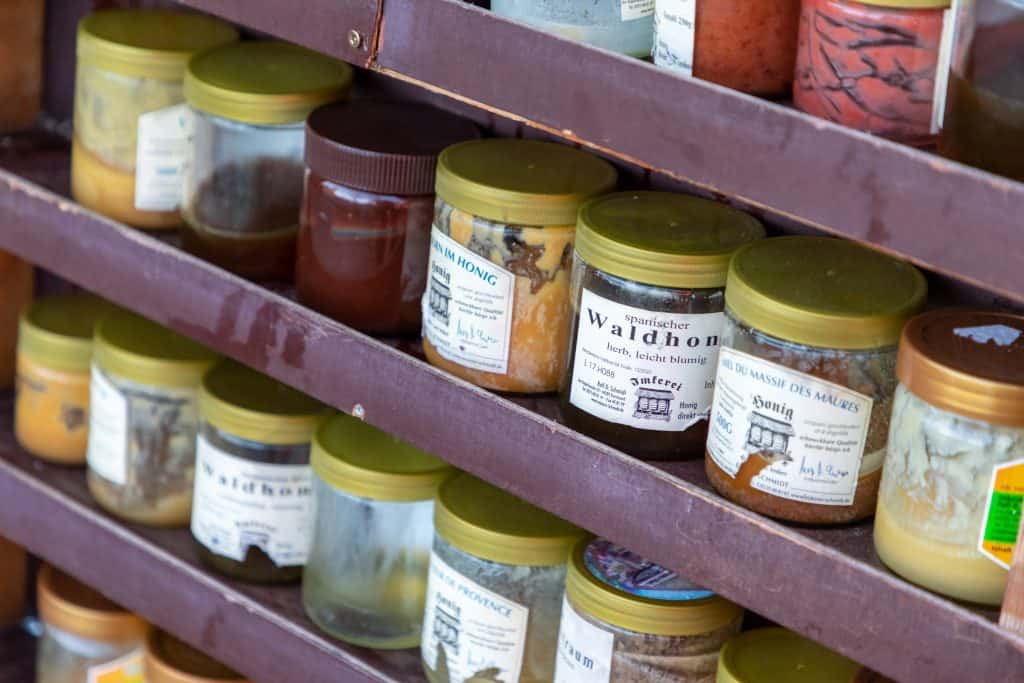
German Waldhonig, or forest honey, often commands premium prices in gourmet shops and international airports.
©Dietmar Rabich / Wikimedia Commons / “Münster, Domplatz, Wochenmarkt — 2019 — 2646” / CC BY-SA 4.0 – Original / License
Its flavor profile defies expectations. Instead of the bright sweetness or floral notes found in traditional honey, lanternfly honey offers a savory, earthy complexity. Tasters describe smoky, salty undertones reminiscent of campfire embers or smoked bacon, layered with malty flavors similar to those of strong coffee. Deep, forest-like flavors such as dates, dried figs, and damp forest floor linger on the palate, sometimes finishing with a medicinal, herbal note reminiscent of old-fashioned cough drops.
Is Lanternfly Honey the New “Liquid Gold”?
Recent research suggests lanternfly honey may be among the most potent honeys ever identified in North America. For years, New Zealand’s Manuka honey has dominated the world of medical-grade honey. However, laboratory studies conducted by researchers at Penn State and the University of Texas at San Antonio suggest that lanternfly honey may outperform it in several key areas.
In preliminary laboratory tests, lanternfly honey inhibited the growth of E. coli and Staphylococcus, in many cases more effectively than Manuka honey. It also proved to be nearly twice as effective at suppressing MRSA, a dangerous antibiotic-resistant bacterium. Researchers also found that its unique double-processing results in high concentrations of compounds that protect human cells from oxidative damage.
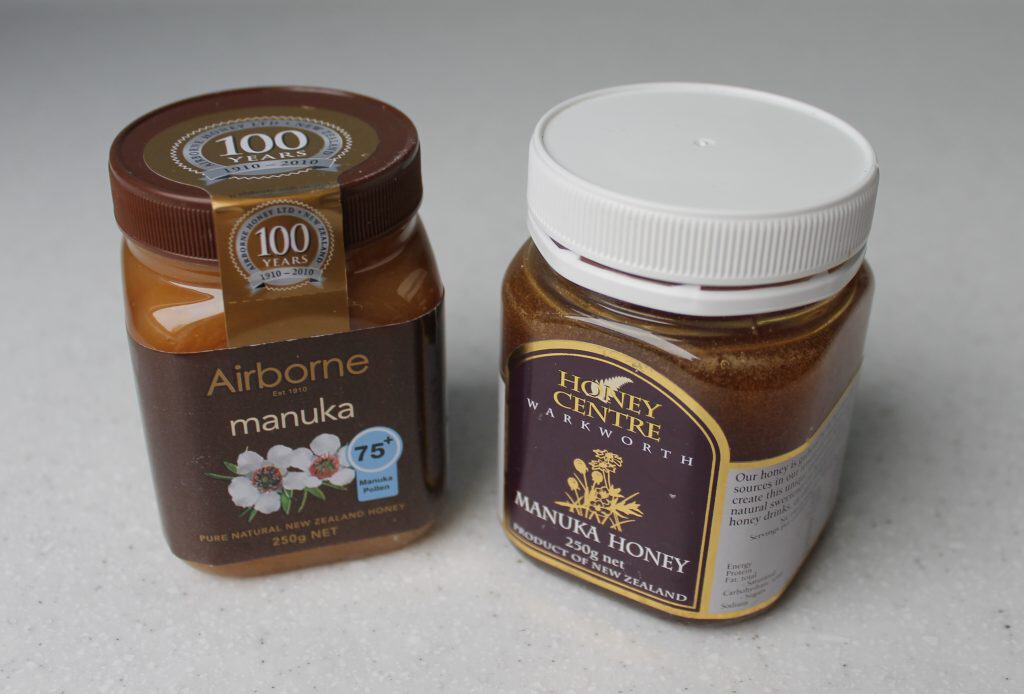
Manuka honey can only be made with nectar from the manuka tree.
©Grey Geezer / CC BY-SA 4.0 / Wikimedia Commons – Original / License
A Bioactive Cocktail
Part of the lanternfly honey’s potency comes from the insect’s preferred host plant, the invasive tree of heaven. This hardy species produces strong chemical defenses, which are transformed into the lanternfly’s honeydew. Scientists are now exploring potential applications, ranging from wound healing and reducing inflammation to relieving sore throats and naturally preserving food. Its antimicrobial strength may even offer new tools in the fight against antibiotic resistance.
Testing the Kill Zone
To measure the antibacterial power of lanternfly honey, researchers used agar well diffusion, placing honey into dishes of actively growing bacteria and measuring the “zone of inhibition” — the area where microbial growth is stopped.
Lanternfly honey produced unusually large zones of clearance against E. coli, staph infections, and MRSA. In some trials, Pennsylvania-sourced lanternfly honey produced a larger bacterial “zone of inhibition” than Manuka honey.
Why Darkness Matters
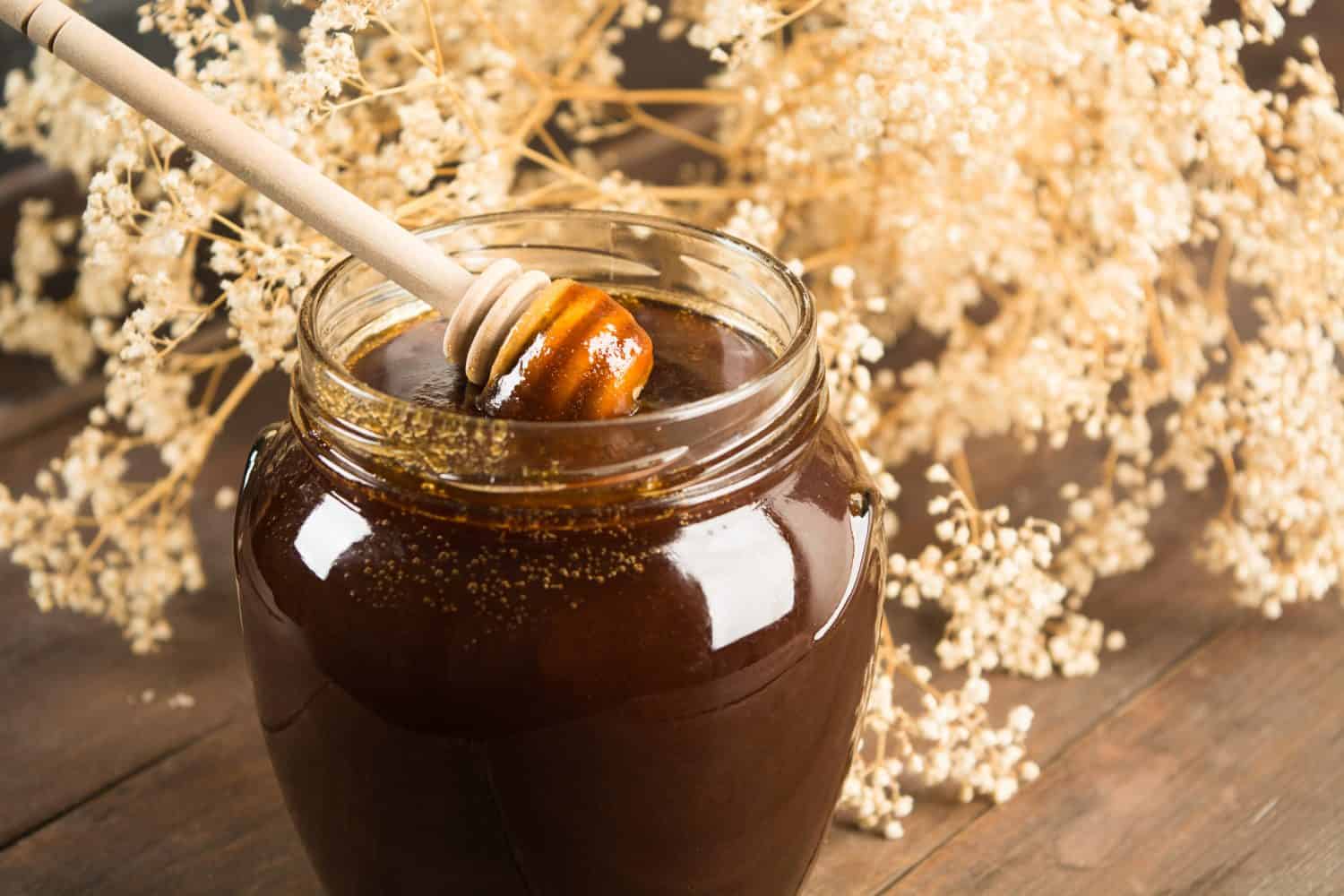
Lanternfly honey is less sweet than honey made from floral nectar.
©Karlevana/Shutterstock.com
In melittology — the study of bees and honey — darker honeys typically contain higher levels of antioxidants and medicinal compounds. Lanternfly honey is among the darkest honeys ever documented. Its color reflects its dense concentration of antioxidants, minerals, and plant-derived defensive chemicals. Combined with its unusual sugar profile, this makes lanternfly honey hostile to bacteria, even those that have evolved resistance to traditional antibiotics.
Branding a Crisis
When beekeepers first realized they were producing honey derived from insect waste, many feared it would be unsellable. However, some chose to embrace its strange origins. Brands like Philadelphia Bee Co. reframed the product as a bold, limited-edition curiosity. By naming it Doom Bloom, they transformed an invasive pest into a conversation starter—and a bestseller. Consumers were not just buying honey; they were buying a story about ecology, resilience, and adaptation.
The Environmental Paradox
For beekeepers, lanternfly honey can be a lifeline. Some report that colonies overwintering on lanternfly honey fare well, possibly due to its high mineral content and energy-dense sugars. During late-summer nectar shortages, it provides critical, life-saving sustenance.
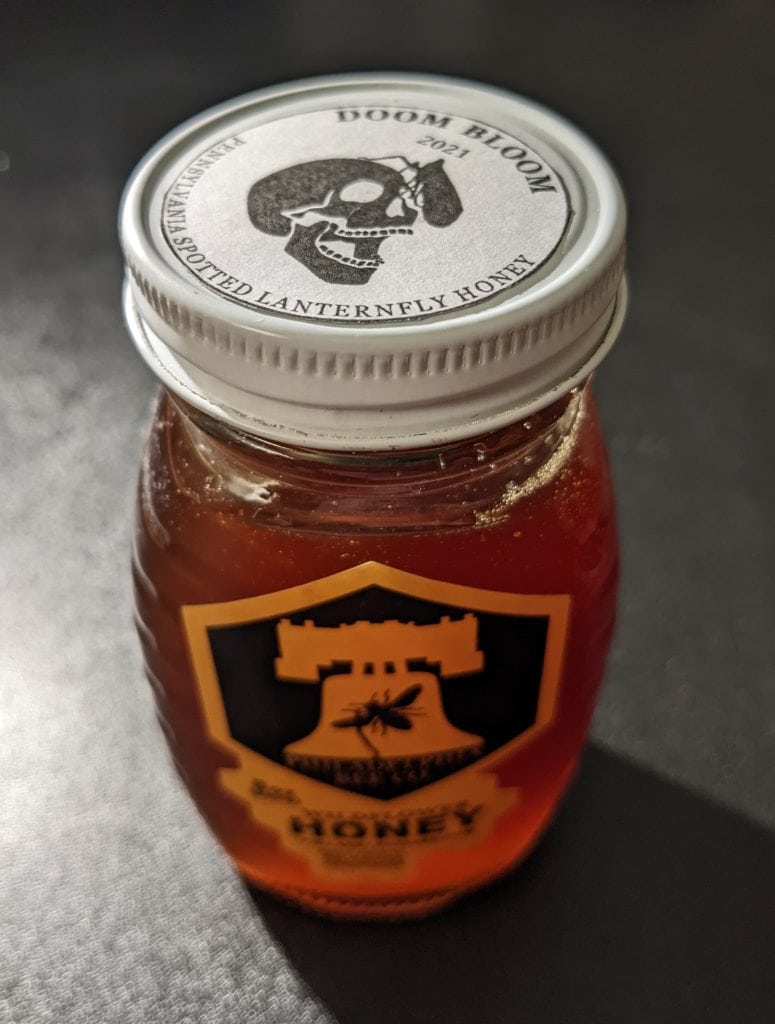
The popular Doom Bloom honey first debuted in late 2020.
©Kches16414 / CC BY-SA 4.0 / Wikimedia Commons – Original / License
However, this resource remains deeply problematic. Spotted lanternflies are invasive in North America and devastate vineyards, weaken fruit trees, damage forests, and fuel the growth of sooty mold, which blocks photosynthesis. Lanternfly honey may be a silver lining to the spotted lanternfly invasion in North America, but it does not redeem the pest that produces it. Instead, it is a strange, bittersweet reminder that ecological disruption can create unexpected and deeply complicated consequences.