
Quick Take
- Predator Swamping: Synchronized calving overwhelms predators, allowing most wildebeest calves to survive despite high predation risk.
- Timing and Environment: Rainfall, nutrition, and social cues trigger a narrow birthing window, ensuring calves are born when survival odds are highest.
- Evolutionary Advantage: Spreading births over time would increase calf mortality, making mass, synchronized calving the most successful reproductive strategy.
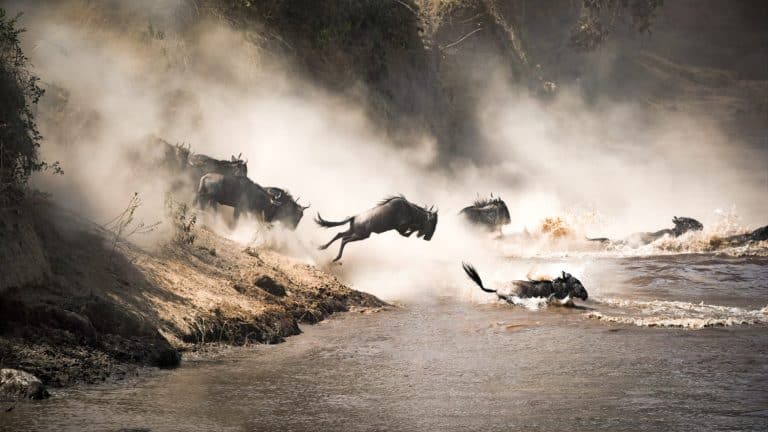
Each year, the southern plains of the Serengeti host one of the most dramatic wildlife events on Earth. Over a brief window of just two to three weeks, more than 400,000 wildebeest calves are born, often only minutes apart, carpeting the grasslands with wobbling newborns. This mass arrival unfolds in full view of lions, spotted hyenas, cheetahs, leopards, and crocodiles, all of which are more than capable of killing a calf. And yet, despite the danger, the vast majority of calves survive their first days of life.
The reason lies in a powerful evolutionary strategy known as predator swamping. By synchronizing births so tightly, wildebeest overwhelm predators with far more prey than can be eaten, hunted, or even chased. This may seem counterintuitive. It’s similar to being at a buffet with so much delicious food that you can’t possibly eat it all, so much of it goes uneaten. Let’s break it down.
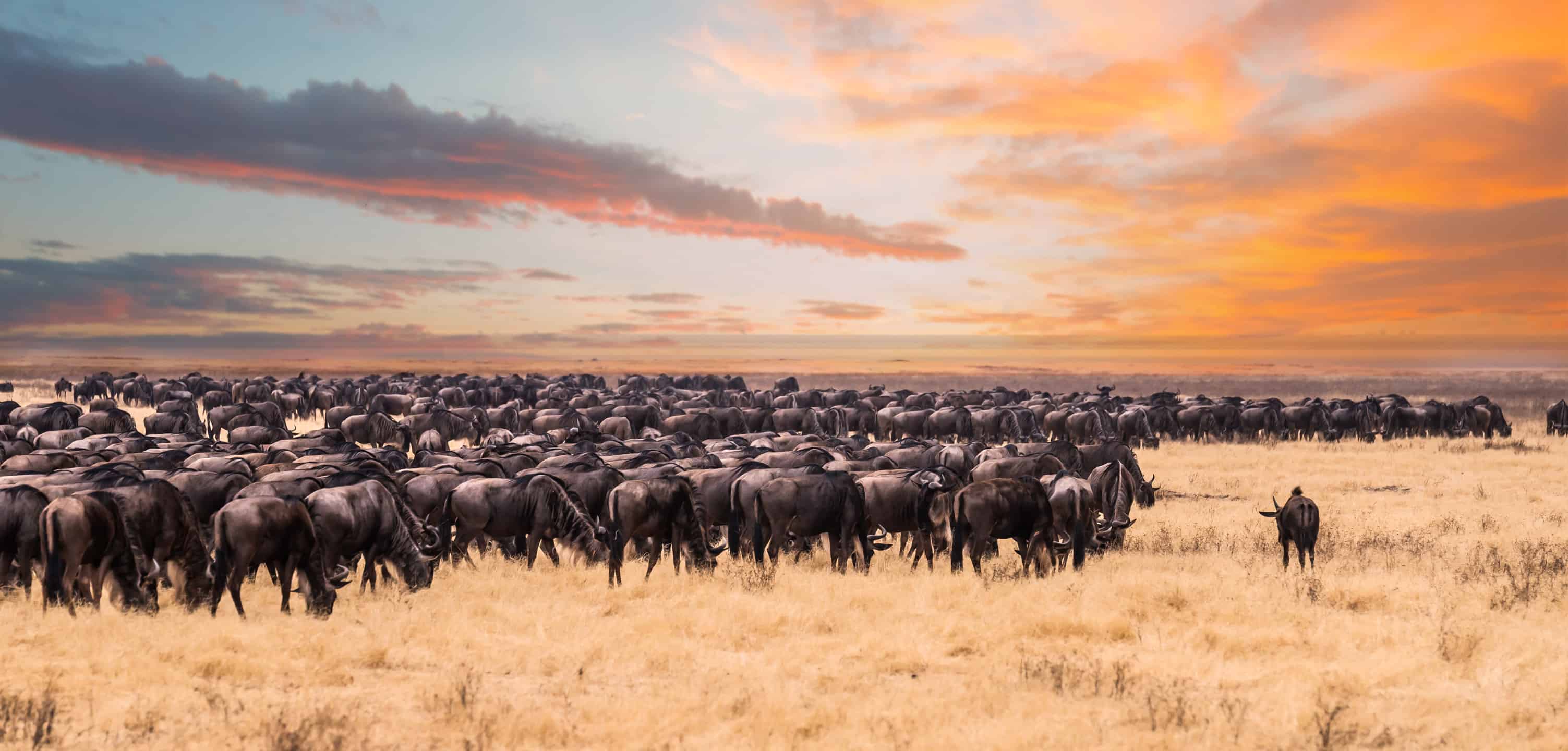
Hundreds of thousands of wildebeest calves are born within weeks, creating one of Earth’s largest synchronized wildlife births.
©GUDKOV ANDREY/Shutterstock.com
The Serengeti-Mara ecosystem supports the largest population of migratory wildebeest in the world, with roughly 1.2 to 1.5 million animals. About a third of these are adult females, and most give birth during the short calving season that usually peaks in late January or early February.
During this period, observers routinely record days when 8,000 to 10,000 calves are born within a single 24-hour stretch. In peak moments, a calf may be born every few seconds somewhere on the plains. The density is staggering. A lion pride might be surrounded by hundreds of vulnerable newborns, yet manage to kill only a handful before becoming exhausted or distracted.
This extreme concentration of births is no accident; it’s the foundation of predator swamping. This strategy is not unique to wildebeest; it’s documented in many species, from cicadas emerging after years underground to fish releasing millions of eggs at once. But in wildebeest, the approach is refined to an extraordinary degree.
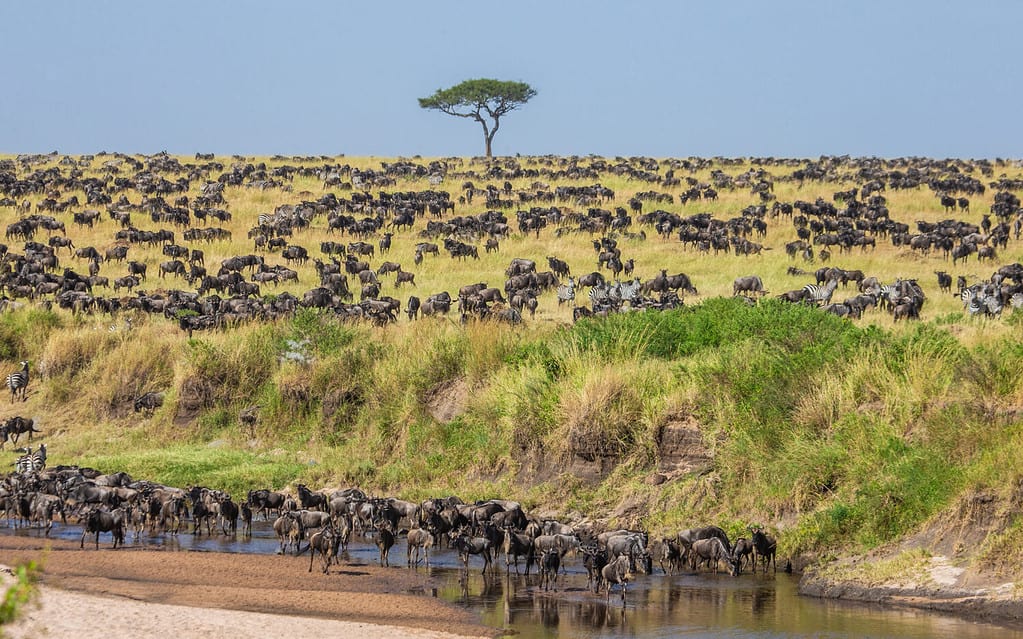
By flooding the landscape with newborns at once, wildebeest overwhelm predators beyond their physical hunting limits.
©Karl Weller/Shutterstock.com
Predator swamping operates on a simple principle: predators have limits. They can only hunt, kill, and eat so much in a given day. When prey appear all at once in enormous numbers, individual animals face a lower chance of being targeted, even though predators are abundant.
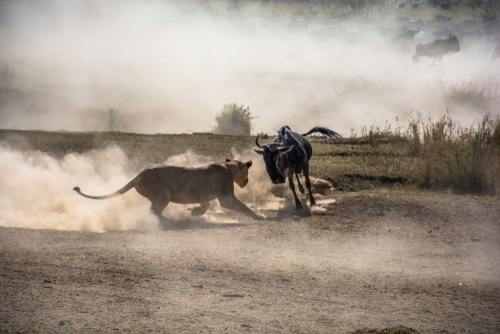
On the Serengeti plains, lions and hyenas quickly focus on calving areas once births begin. Kill rates rise sharply during the calving season, but they quickly plateau. A lion can eat roughly 15 to 20 pounds of meat in a sitting and cannot kill repeatedly without rest. Hyenas can consume more over time, but they also face physical limits and competition from other scavengers.
When thousands of calves are born simultaneously, predators are effectively saturated. Even if a pride or clan kills multiple calves in a day, the vast majority escape simply because predators cannot keep up. So while many calves are indeed lost during the event, from an evolutionary standpoint, it’s an acceptable sacrifice, ensuring the survival of most.
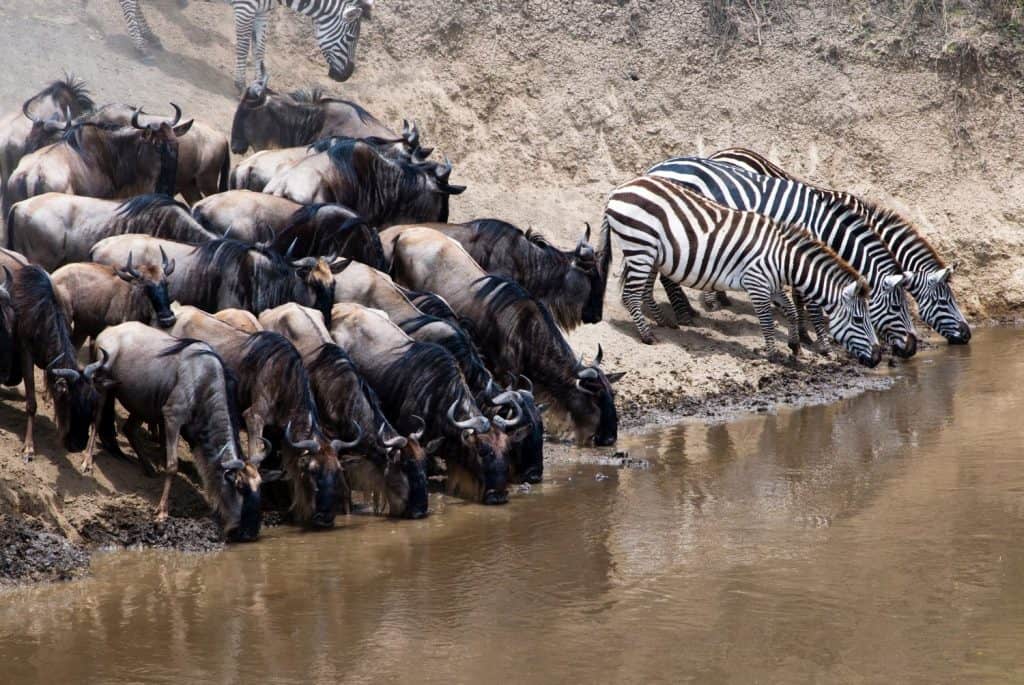
Tightly synchronized births shorten the period when calves are vulnerable, reducing overall losses to predators.
©Robert Harding Video/Shutterstock.com
Wildebeest calves are precocial, meaning they are born relatively well-developed. Most can stand within five minutes and actually run with the herd within half an hour. Though it certainly doesn’t eliminate danger, this rapid mobility is essential for survival.
The first few days of life are the most perilous. Despite their advanced development, calves still remain smaller, slower, and less coordinated than adults for weeks. Predators focus on calves that become separated from their mothers or stumble while trying to keep up with the herd. By compressing births into a short window, wildebeest ensure that predators cannot specialize on calves for long. Before predators can fully exploit the opportunity, the calves have grown stronger, faster, and harder to catch.
If births were spread out over several months, predators would have a steady supply of vulnerable prey. They would have time to rest and recover between hunts, increasing their hunting success. Calves would remain at high risk for a much longer period, and predator populations might also grow in response to the reliable food source, compounding the problem.
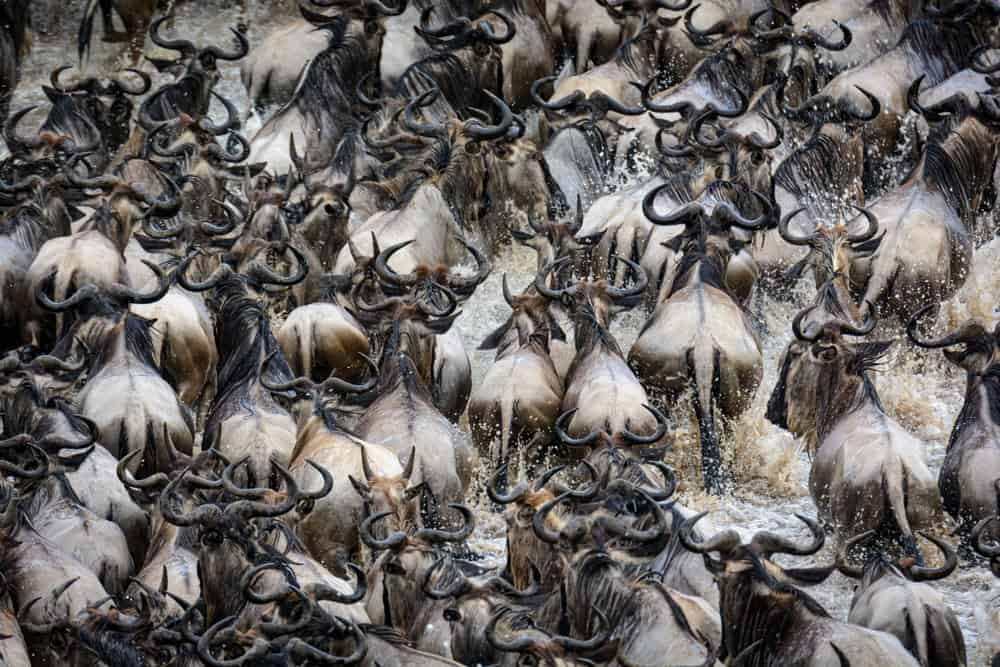
Rainfall, nutrition, and tightly timed mating ensure calves are born when food is richest, and survival odds are highest.
©Roger de la Harpe/Shutterstock.com
There is no single trigger for the tight birthing window, but one of the most important factors is rainfall. Wildebeest time mating so that late pregnancy coincides with the start of the short rains in the southern Serengeti. These rains transform the plains into nutrient-rich grazing grounds. Fresh grass in this region is unusually high in protein and minerals, which are critical for lactating females. Better nutrition means mothers can produce richer milk and calves grow faster in their earliest weeks. Gestation in wildebeest lasts about eight-and-a-half months. Because mating is so tightly synchronized during the rut, births naturally cluster together months later.
There is also evidence that social cues play a role. When many females are pregnant simultaneously and experience similar hormonal changes, their births may become even more synchronized, creating a cascade effect where one birth quickly follows another throughout the herd.
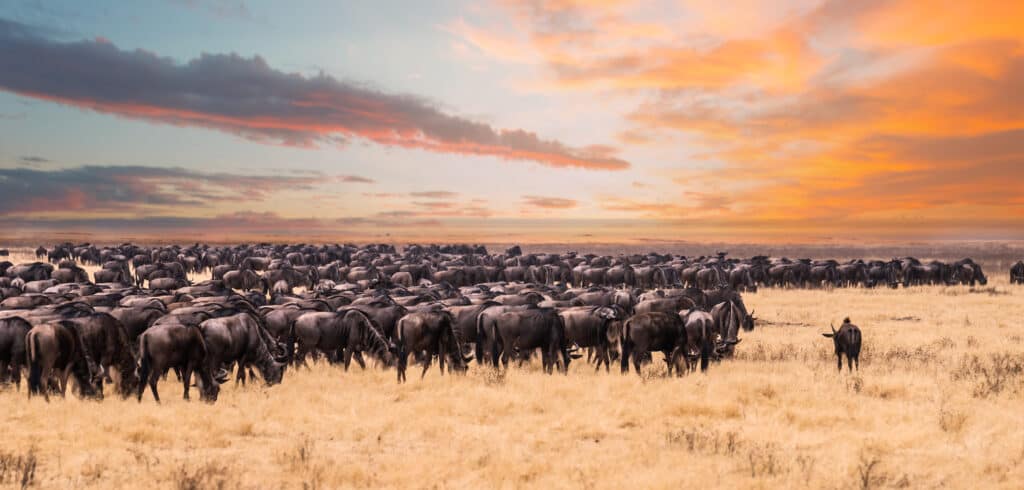
Open grasslands limit ambush opportunities and give mothers and calves clear sightlines to spot approaching predators.
©iStock.com/MrRuj
The southern Serengeti plains are not chosen at random. Unlike wooded or bushy areas, the open grasslands offer clear sightlines in every direction. This reduces the effectiveness of ambush predators like lions and leopards, which rely on cover to stalk prey. Mothers can spot predators from hundreds of yards away, giving them time to reposition or bunch together defensively.
Open terrain also allows calves to use their most important defense: running away. Wildebeest calves can reach high speeds within days of birth. While they cannot match adult endurance, they can sprint fast enough to evade many attacks if they receive early warning.
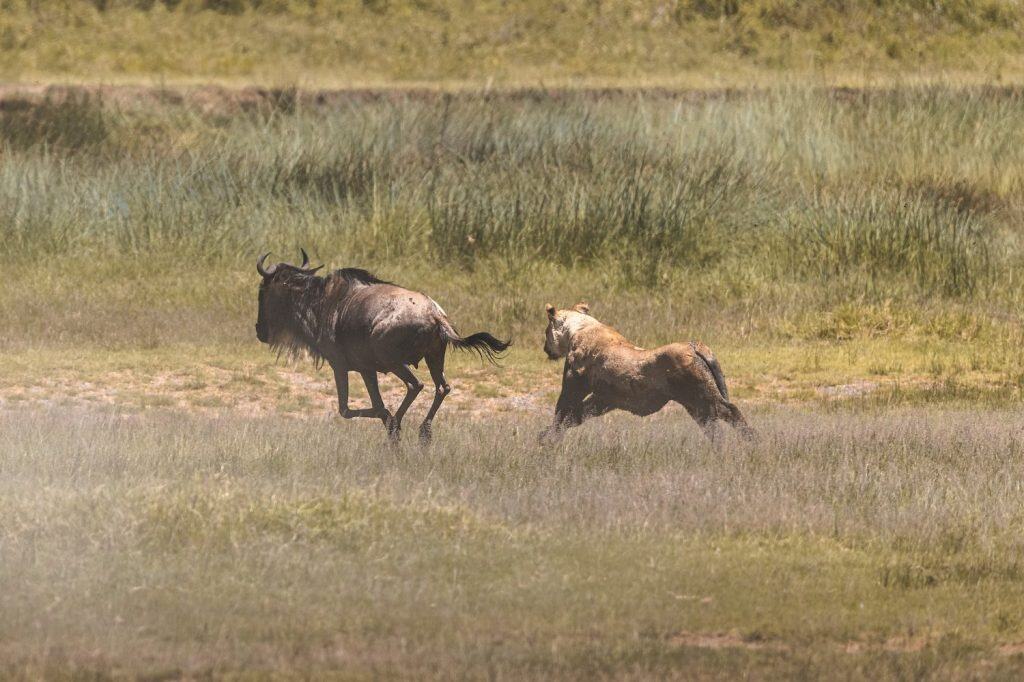
Late rains or drought disrupt synchronization, increasing calf deaths and threatening long-term population stability.
©ANDRES MENA PHOTOS/Shutterstock.com
For synchronized calving to work, the timing has to be precise. If rains arrive late or early, or if climate patterns shift unpredictably, the consequences can be severe. Poor forage reduces milk quality, slows calf growth, and increases vulnerability to predators and disease.
In years of drought, calf mortality rises sharply, even when births are synchronized. However, even in these bad years, a prolonged calving season would be far worse. Predators would have more time to exploit weakened calves, and mothers would struggle to recover before the next breeding season.
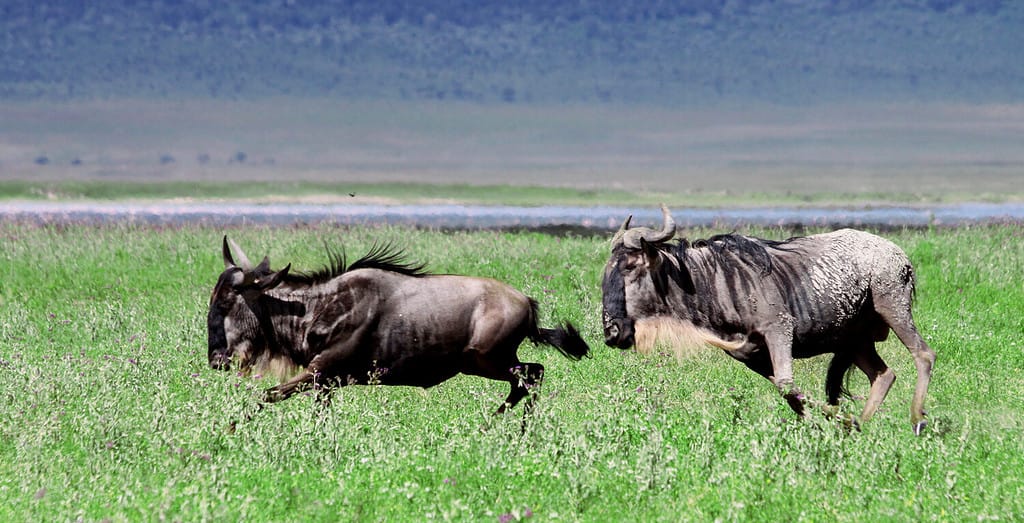
Despite visible losses, synchronized calving consistently produces more surviving offspring than spread-out births.
©Greens and Blues/Shutterstock.com
At first glance, giving birth surrounded by predators seems reckless. But evolution does not reward caution; it rewards results. For wildebeest, predator swamping produces more surviving offspring than any alternative strategy shaped by natural selection.
Spreading births out might reduce the chaos of calving season, but it would expose calves to prolonged predation pressure. Over generations, those herds would leave fewer descendants. The synchronized approach, despite its drama and visible losses, produces the highest net survival. This logic applies across the animal kingdom. Whether it is frogs laying eggs by the thousands or insects emerging all at once, nature often favors overwhelming numbers rather than cautious spacing.
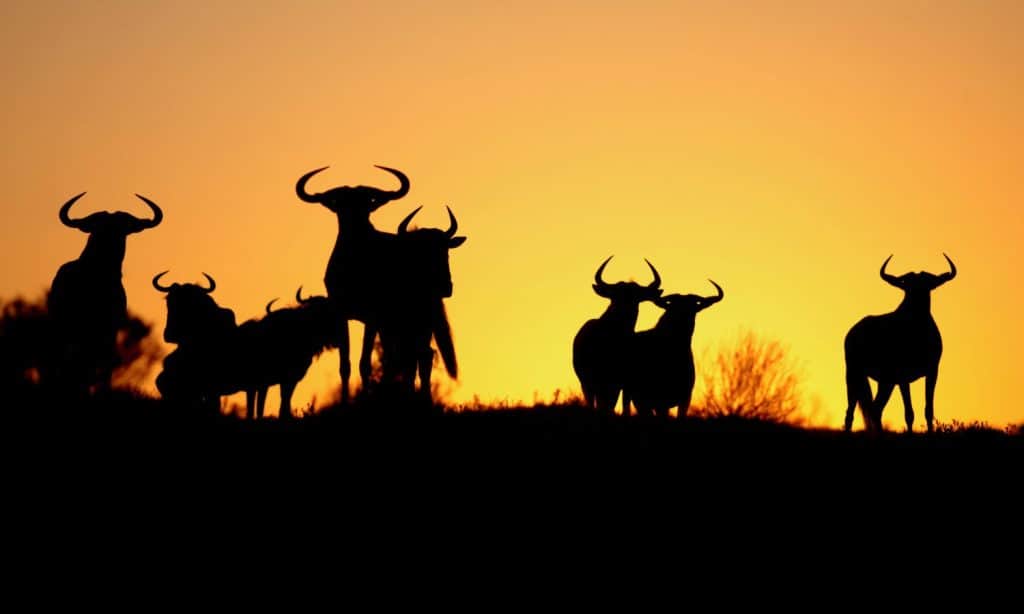
Wildebeest endure danger by arriving together, proving that timing and numbers can outweigh individual strength.
©JONATHAN PLEDGER/Shutterstock.com
Let’s back up and think about that buffet metaphor again. You can only fill your plate so many times before you’re full and exhausted and need to rest and digest. Now imagine that once you’ve rested and digested and are ready to eat again, the buffet is gone and won’t be laid out again until next year. Sure, you got one good meal, but overall, you barely made a dent in all that food—just as the lions, hyenas, crocodiles, and others barely make a dent in the wildebeest population. But if that food were served to you not as a buffet, but as smaller meals over time, you’d eventually eat all of it.
Buffet metaphors aside, the wildebeest’s strategy on the Serengeti is a finely tuned system shaped over thousands of generations. In a landscape full of predators, survival does not belong to the strongest individual, but to the species that knows when to arrive—and does so together.