As you wander through the forests of the northern US states and southern Canada, you may have heard a strange drumming noise. This sound is made by the ruffed grouse, a dappled gray and reddish bird that is easier to hear than to see. If you are curious to see what this talented ‘percussionist’ looks like, you can watch this YouTube clip. In this article, we will take a closer look at this fascinating behavior.
More About the Ruffed Grouse
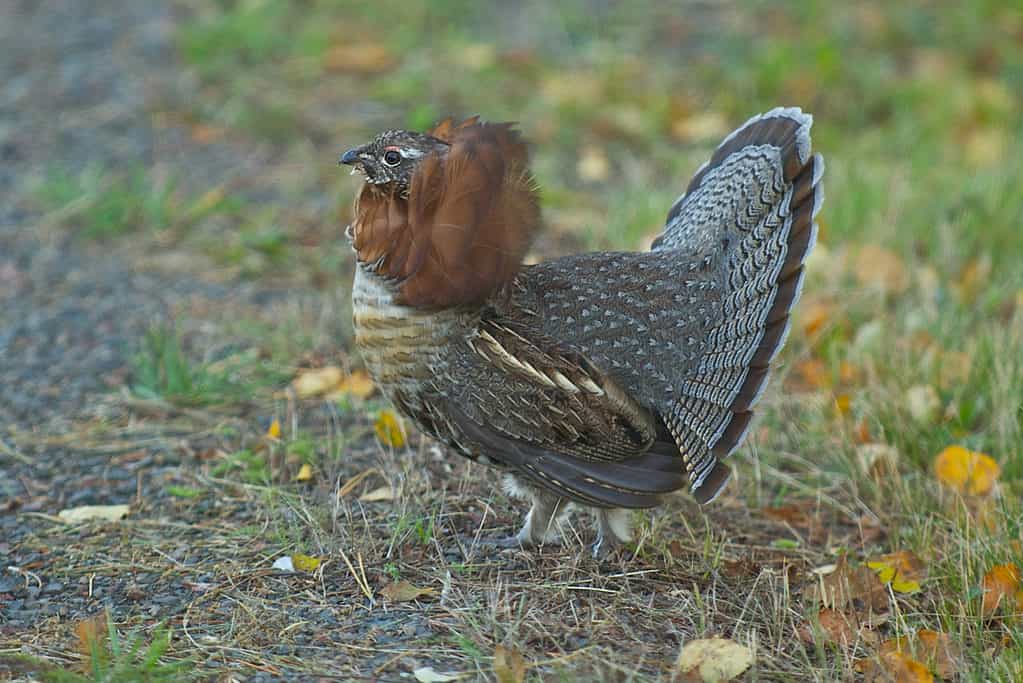
The ruffed grouse lives in forested areas.
©iStock.com/tmarko
The ruffed grouse is a medium-sized game bird with a plump body and a short crest. Their height is around 18 inches. It spends its time foraging on the forest floor for seeds and insects—these birds are omnivores. You are most likely to come across them in clearings of coniferous forests, but they are also found along forested streams and in areas that have been recently burned or logged. However, they generally avoid large, open fields and prefer areas with dense cover. In the northernmost parts of their range during winter, they will roost in soft snowdrifts. They even have special structures on their feet to help them walk on snow.
Male Ruffed Grouse Drumming
Many people have heard the drumming sound made by this grouse, but few people have actually seen it. As you can see in the clip, the sound is produced when the bird rapidly rotates its wings forward and backward, causing air to rush between them and generate a deep, thumping sound wave that is transmitted forward. The sound can be heard up to a quarter of a mile away. To avoid detection by predators, this sound is not as easily heard from the side.
The Purpose of Drumming
Only male birds drum, and they do so in the spring when seeking a mate. There are three motivations behind it. The first is that it serves as a call to nearby females. He is trying to attract them to his territory. These birds do not form monogamous bonds, and for the male, the more females he can mate with, the better!
Secondly, it is a challenge to any nearby males. He is showing that he is the most dominant male in this part of the forest and that the others should back off. Finally, it is a way for him to show prospective female partners how vigorous and healthy he is. He is demonstrating that he is strong and healthy enough to produce this impressive sound repeatedly throughout the day. The goal is to impress the female so much with his powerful sounds that she chooses to mate with him.