
Quick Take
- The organ behind the lyrebird's voice isn't built anything like ours, and that fundamental difference is what allows it to do something no human throat ever could. See the syrinx explained →
- These birds don't mimic chainsaws and car alarms at random. There's a specific reason they favor man-made noise over the calls of other birds. Why man-made sounds win →
- Their mimicry is not a party trick. It solves a survival problem that most birds never face. Mimicry's survival purpose →
- Lyrebirds can reproduce sounds long after the source is gone, revealing an impressive capacity for vocal memory.
Birds are some of the most diverse and unique creatures on the planet. With so many different species, each one has its own unique traits. One example is the superb lyrebird, whose mimicking abilities are some of the best out there. This YouTube video by Zoos Victoria shows a superb lyrebird making its many different calls and vocalizations. Read on to learn more.

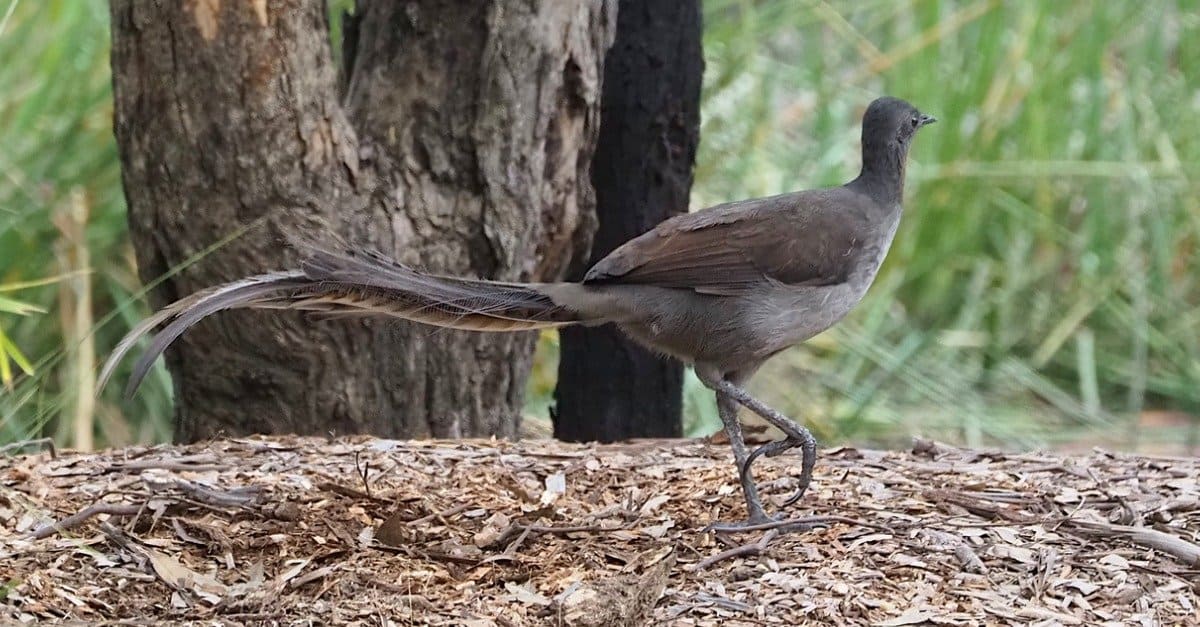
The superb lyrebird often replicates camera shutters and car alarms because these sounds are memorable, and producing impressive vocalizations indicates the bird’s prowess and health.
©CSIRO, CC BY 3.0 <https://creativecommons.org/licenses/by/3.0>, via Wikimedia Commons – Original / License
How Lyrebirds Mimic
Superb lyrebirds are one of the greatest examples of vocal mimics in the animal kingdom. These birds blend dozens of different noises together into a unique performance. The video above is a perfect look at this amazing ability. Whether they are mimicking other birds’ cries, human-made sounds, or natural noises, their vocalizations are remarkably similar to the originals. Their vocalizing abilities are thanks to an organ called a syrinx. Unlike a human larynx, or voice box, the syrinx is intricately built with muscles that give lyrebirds control over airflow and vibration. This allows them to produce pitches and rhythms in ways that are difficult for humans to imagine. For example, lyrebirds love mimicking chainsaws, camera shutters, and alarms. But why do they do this?
Superb lyrebirds don’t just mimic what they hear directly around them; they also have a mental repertoire of past sounds. Their mental library of sounds indicates exceptional memory and hearing. Mimicking isn’t just a fun trick for these birds; it is also a result of their environment. Superb lyrebirds live in dense forests and rainforests in southeastern Australia. Since most birds establish territory and attract mates through visual displays, the dense forests make this difficult for them. So instead, superb lyrebirds use their blend of sounds that reverberate throughout the forest for the same purpose. Males can easily attract mates and advertise territory without necessarily needing to see other lyrebirds. While their mimicry is fascinating to hear, it also serves several practical purposes in nature.