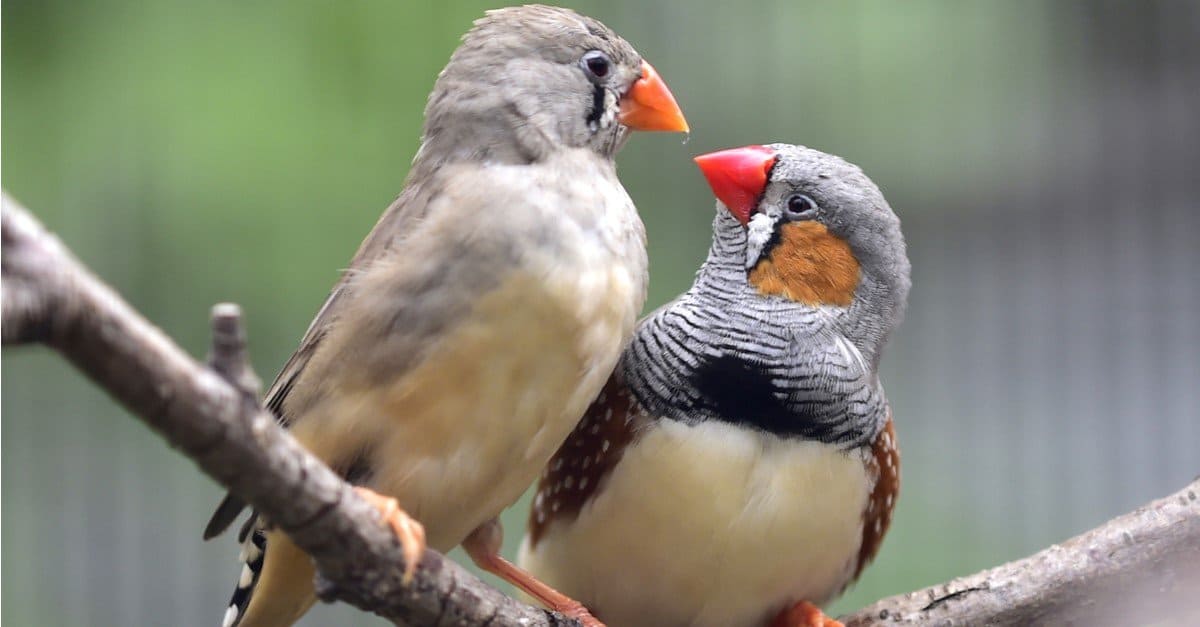

When most of us hear birds chirping, we may assume it’s just simple background noise. However, a new study from the University of California, Berkeley, suggests that at least one small songbird is doing something far richer. Zebra finches, it seems, may not just be reacting reflexively to each other’s calls. They may actually understand them.
In a recent work published in Science, neuroscientist Julie Elie and colleagues show that zebra finches categorize their calls in a way that points to genuine meaning and mental representation, not just automatic stimulus–response. As Elie tells A-Z Animals, “For the first time, we were able to ask animals if we (the scientists) have correctly identified the ‘words’ or building blocks of their ‘language.’ The small passerine we are studying, the zebra finch, showed that they agree with how we classified all the vocalizations it is producing.”
For a bird that weighs only half an ounce, that’s a big cognitive claim.
From ‘Mindless Chirps’ to Mental Imagery
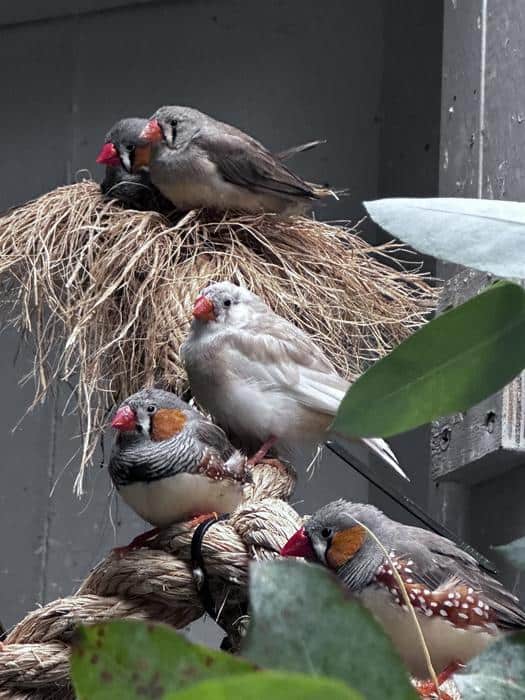
Three male and two female zebra finches, including two mating pairs. Females are typically all gray, though here one female is a white morph. Males are colorful, with red cheeks, zebra stripes on their chest, and brown patches with white spots on their sides.
For decades, a common assumption in animal communication has been that most vocal behavior is largely reflexive. A bird hears an alarm call; it flies. It hears a mate call; it answers. Useful, yes, but not necessarily “thoughtful.”
Elie says that assumption is precisely what this work challenges. “The simplest human assumption is that communicating animals are deprived of intent, or any form of consciousness, their vocal production is a simple reflexive response, and they respond reflexively to communication calls,” she says. “Yet, by demonstrating that zebra finches have a mental representation of the meaning of their calls, we are starting to break the wall between our own species and the rest of the animal kingdom. Animal communication could be closer to our own sense of communication.”
In other words, when a zebra finch hears a call, it may not just be processing a sound; it may be calling up an internal “picture” of what that sound means: danger, hunger, a mate, a location. Elie describes this as a form of mental imagery. “They further showed us that upon hearing a vocalization from another zebra finch, they do not only hear how it sounds like (for instance: loud/quiet, high/low pitch) but also experience a mental imagery of what it means (for instance: “I’m hungry”, “watch out”, etc…),” she says.
That’s a striking step toward something we normally associate with human language.
How Do You Ask a Bird What Its “Words” Mean?
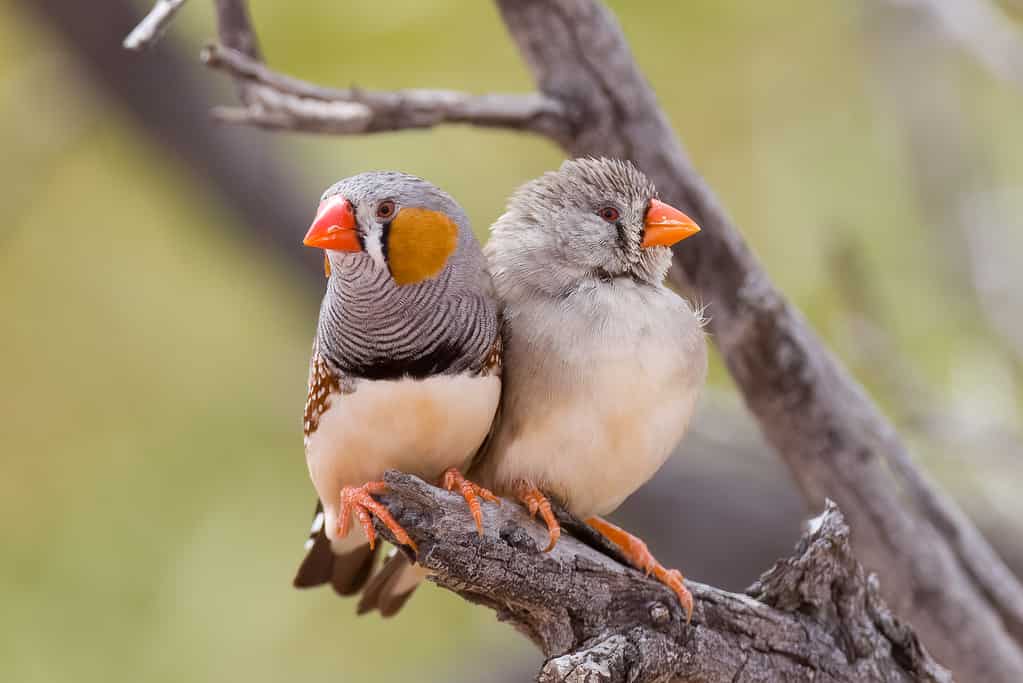
Australian zebra finches may have a more complicated “language” than expected
The core challenge in this kind of research, while straightforward, is actually very hard to solve: scientists can’t just ask a bird what it heard.
Instead, Elie and her team turned to a clever reward-based experiment that essentially lets the birds “vote” with their beaks. The method is a twist on classic behavioral tasks used to probe animal perception.
“Reward-based discrimination tasks have been used by many researchers to study how animals perceive and classify sensory stimuli such as sounds or images,” Elie says. Traditionally, birds might be trained to pull different strings or peck different keys that correspond to various sounds. But that can take weeks of training, and it often asks a lot of an animal that doesn’t know what the experiment is about.
Here, the researchers used a simpler setup adapted from a paradigm developed by neuroscientist and songbird researcher Tim Gardner. Each zebra finch was placed in a special operant box with a single key. Pecking that key triggered a playback of one zebra finch call from a large library. Some of those calls were designated as “special,” and if the bird happened to hit one of them, it got a seed reward.
Interestingly, the researchers created this setup to deliberately frustrate the bird into behaving a certain way. Elie explains, “This paradigm only requires one actuator (one key or one string) and leverages the frustration that one experiences when swapping through non-preferred (non-rewarded) media (videos for humans, calls for zebra finches).” Just as you might quickly skip past boring videos in a feed, the finches learned to rapidly interrupt “wrong” calls by pecking again to move on, hunting for the rewarded call-type.
Because each peck both ended the current call and initiated the next, the birds ended up making hundreds of choices. Over months of data collection, the team built a detailed picture of which calls the birds treated as “the same word” and which they kept distinct, essentially creating a library of key words and phrases the birds used to communicate.
That alone would be a valuable dataset. But the most exciting discovery, Elie says, came from looking closely at the mistakes.
Zebra finches truly understand what they are saying, and their vocal exchanges seem to be far from a simple reflexive behavior.
Dr. Julie Elie, neuroscientist
What Do Mistakes in Bird Calls Mean?
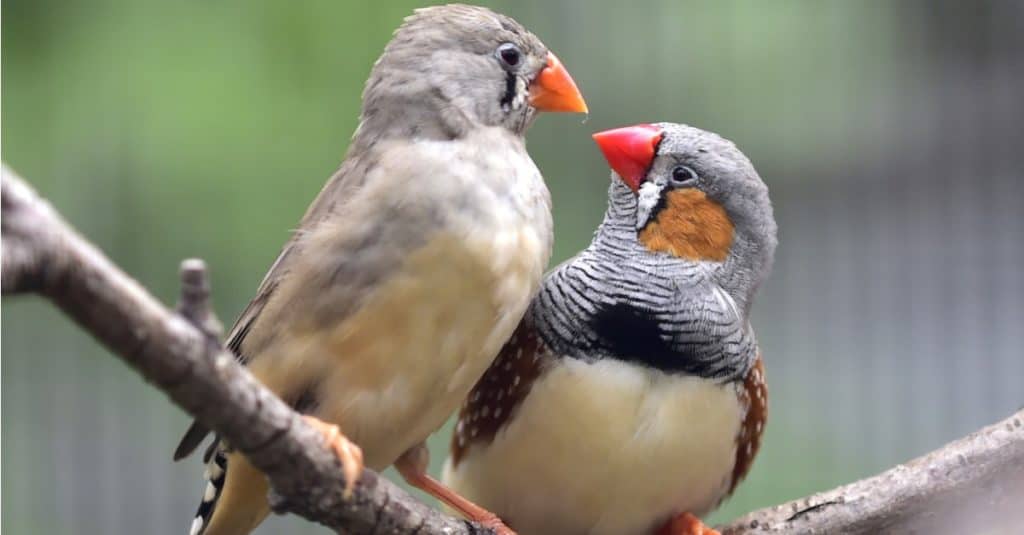
Elie and the team created a “database” of finch calls and what they may correspond do
©Wang LiQiang/Shutterstock.com
No animal is perfect, and sometimes the finches picked the wrong call, or failed to skip one they “should” have. Those mistakes turned out to be the key to the most provocative conclusion.
“I think the most exciting moment was when we discovered that the errors made by the birds in the operant chambers were not solely driven by the acoustics of the calls (how similar the calls sound) but by their meaning (or how they are used by the birds),” Elie recalls. “The fact that we add enough data to be able to analyze statistically these fewer instances where they were making errors was already exciting. But demonstrating that their errors are in part guided by the meaning of calls was everything: exciting, because we realized we were on something much bigger than what we ought to test in the first place (that the zebra finches agrees with our human-observer organization of their vocal repertoire); puzzling, because we could only explain these results by assuming that birds had a mental imagery of the meaning of their calls.”
In other words, the zebra finches were more likely to confuse calls that meant similar things, even when those calls sounded quite different. And conversely, they had no trouble telling apart calls that sounded alike but were used in very different contexts.
If their behavior were driven purely by sound—pitch, loudness, and timbre—you’d expect errors to cluster among acoustically similar calls. Instead, the error pattern fits better with a system in which the birds are grouping calls into “semantic categories” based on what they refer to in the birds’ everyday lives: staying in touch, alarm, hunger, courtship, and so on.
That’s why Elie describes the work this way: “Zebra finches truly understand what they are saying, and their vocal exchanges seem to be far from a simple reflexive behavior. These results speak for the unsuspected social intelligence of zebra finches and birds in general. With this study, we further illustrate how the study of animal communication can reveal the existence and complexity of animal internal life.”
Months of Bird-Watching, Seed-Dispensing, and Bird “Hackers”
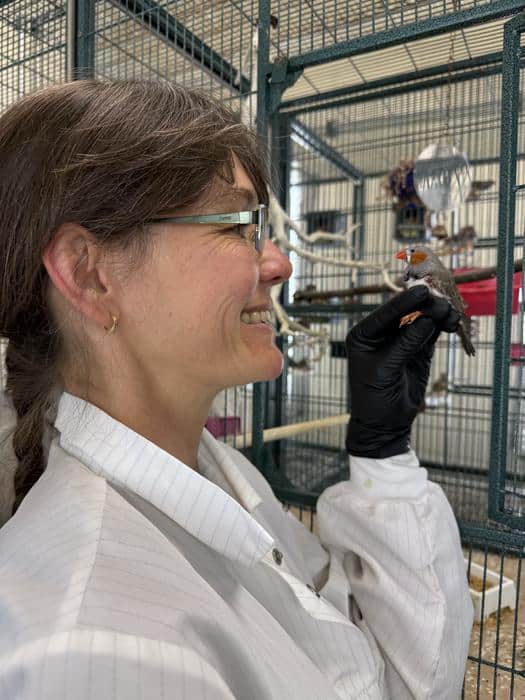
Julie Elie of UC Berkeley holds a zebra finch in a UC Berkeley lab.
However, to reach these exciting findings, Elie and the team spent months in the laboratory studying the birds.
Before the operant experiment could even begin, Elie had to build a detailed catalog of zebra finch call-types and link them to specific social situations. That meant long hours quietly watching birds, recording, and annotating. “To record all the vocalizations that would be then used as stimuli, I spent hours sitting behind a lookout and manually annotating the context of every call and the identity of the vocalizer in groups of zebra finches freely interacting,” she says. “This data collection took me 4-6 months between the recording itself and the segmentation and identification of calls in these long recordings.”
Collecting the operant data required just as much persistence from both birds and humans. Birds were tested individually for a couple of hours a day, seven days a week, for months. Elie teamed up with then-undergraduate Ben Malit to keep the schedule going. “We had to test our birds continuously over many days, including Saturdays and Sundays,” she notes. “Preparing the stimuli every night so that he or I could place the birds in the operant chambers on the following morning, whether it was Saturday, Sunday, or Thanksgiving! It took us about another 6 months to collect all the data from all 13 birds.”
Along the way, the birds made the researchers’ lives…interesting. Each finch had its own personality. Some became tiny escape artists focused on the reward system rather than the sounds. “Some birds tried to access the seeds by all means, sticking their head into the hole that delivered them. And some birds were successful!” Elie says. The team spotted the cheating on video and had to redesign the seed dispenser so the “hackers” couldn’t bypass the task.
Other birds simply stopped skipping calls and waited passively, forcing the team to adjust how often the rewarded calls appeared so the birds would become “bored” again and resume pecking. And some behavior was just charming according to Elie: “Another unexpected behavior is that birds would quite often NOT interrupt one specific call-type, the song, which is a courtship signal learned by vocal imitation and produced only by males. We can only interpret this fact as both sexes enjoying listening to songs!”
A Scientist Who Learned to “Hear” Finch Language
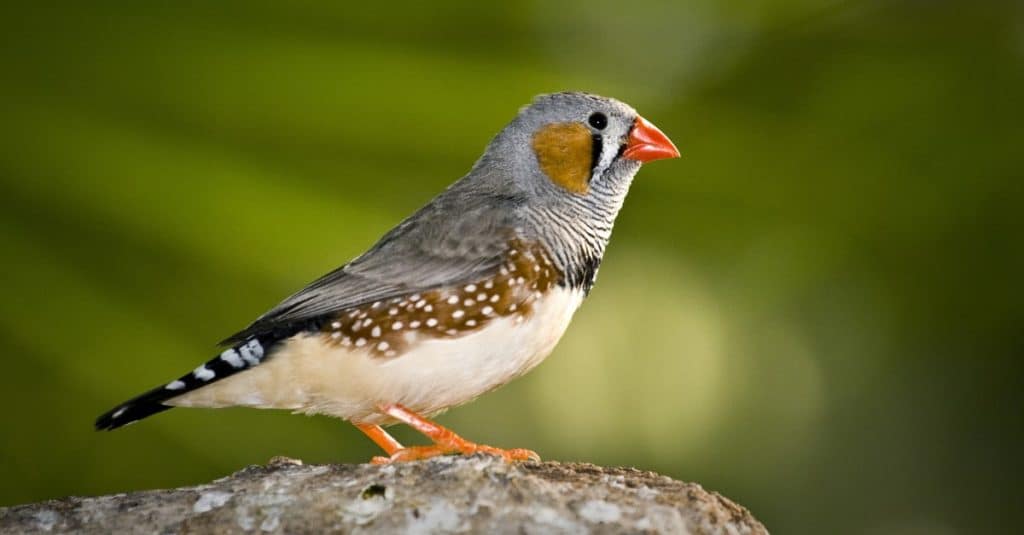
Zebra finch song may be more than just background noise.
©jurra8/Shutterstock.com
For Elie, this study is also the latest chapter in a much longer relationship with zebra finches.
She admits she didn’t start out as a “bird person.” “The avian world was a discovery for me as I had always been drawn to mammals rather than birds, probably because all of the ‘pet’ animals around me were mammals,” she said. During her PhD, her mentors persuaded her that zebra finches were a powerful model for studying social behavior and communication.
That decision changed her career. “I started my PhD journey by spending hours a day observing the social behavior of zebra finches and annotating their interactions,” she recalls. Over time, vocal patterns began to line up with behavior so clearly that she felt she was starting to follow their conversations. “I also figured out that after spending so many hours observing them, I could easily match specific vocalizations to specific behavioral interactions. For instance, they would always do that same whiny call when sitting side by side with their partner in the nest.”
She confirmed her growing “ear” against the classic work of Australian zebra finch expert Richard Zann, and even traveled to the Australian outback to record wild finches herself. “In some sense, I could understand the zebra finch language!” she said. “There came the idea of fully investigating this bird language and finally ask one question dear to my heart: what animals communicate to each other and can we, humans, understand these exchanges?”