
Quick Take
- Your lawn care routine might be fueling toxic algae blooms miles away, and the connection is less obvious than you would expect. See how nutrients fuel blooms →
- Once a cyanobacteria bloom takes hold, a biological feedback loop kicks in that makes stopping it nearly impossible, and that loop involves the very organisms it kills. Explore the self-reinforcing cycle →
- You don't have to swallow lake water to suffer serious harm from a toxic algae bloom. See how exposure harms humans →
It’s summer, and gardens aren’t the only things that are growing. Toxic algal blooms, caused by cyanobacteria (blue-green algae), also love July’s hot weather. These are considered Harmful Algal Blooms, or HABs. When environmental conditions are right, they can wreak havoc on local lakes and ponds.
Cyanobacteria blooms drastically alter the dynamics of aquatic ecosystems. They also harm local wildlife and pose a threat to humans, something many realize far too late into their swimming trips.
What Causes HABs to Grow?
The perfect storm of nutrient-dense water, changes in pH, salinity, and temperature is the root cause of HAB growth. Cyanobacteria require high levels of nitrogen and phosphorus, which feed the algae as they reproduce. As temperatures heat up, so does the rate of decay in many lakes and ponds. This process is natural but also produces an excess of nitrogen byproducts.
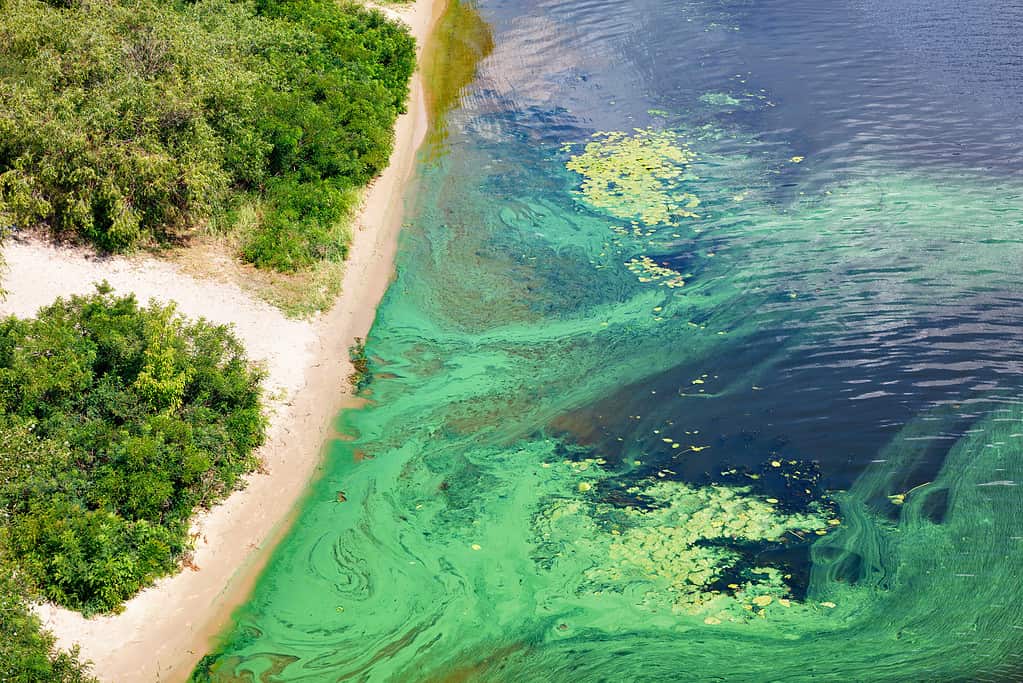
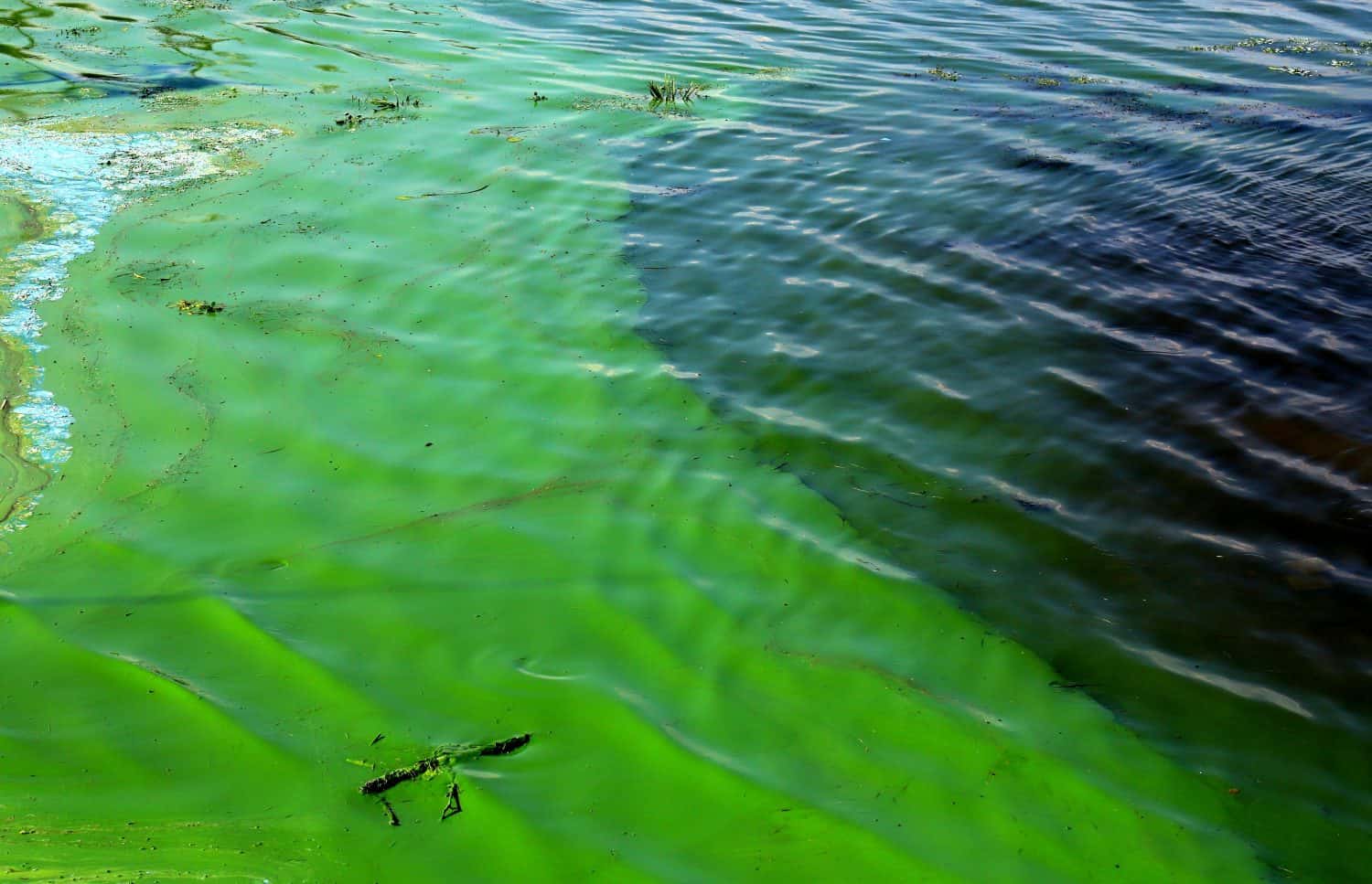
Blue-green algae are often a result of water pollution.
©Sergii Petruk/iStock via Getty Images
Phosphorus, on the other hand, comes from less obvious sources. More frequent storms cause runoff, which eventually ends up in lakes and ponds. As the water moves, it picks up substances such as fertilizer and animal waste from yards. When these nutrients are carried into the water, they fuel toxic algae growth. This is also why cyanobacteria blooms are less common during the winter months in many places due to lower temperatures. However, milder winters and climate change are making winter blooms increasingly possible in some regions.
In some cases, phosphorus can also come from shore erosion. As phosphorus binds tightly to eroded sand or soil, it can travel with eroded materials and be carried downstream. Natural events, such as flooding, can also increase the rate at which phosphorus enters a lake or pond due to erosion.
How HABs Alter the Aquatic Landscape
It’s important to note that not every algal bloom produces toxins. According to the United States Environmental Protection Agency, this fluctuates depending on the conditions under which the bloom forms. However, those that do, such as cyanobacteria, have devastating effects on ecosystems. These include:
- Microcystin-LR
- Cylindrospermopsin
- Anatoxin-a group
All of these toxins are produced by blue-green algae, which form a thick, neon bluish-green layer on the surface of a lake or pond. When this happens, the algae steal oxygen from the surrounding water. Cyanobacteria use photosynthesis to grow, absorbing carbon dioxide and sunlight to spread. As this happens, the water’s oxygen levels decrease, suffocating aquatic life that depend on it.
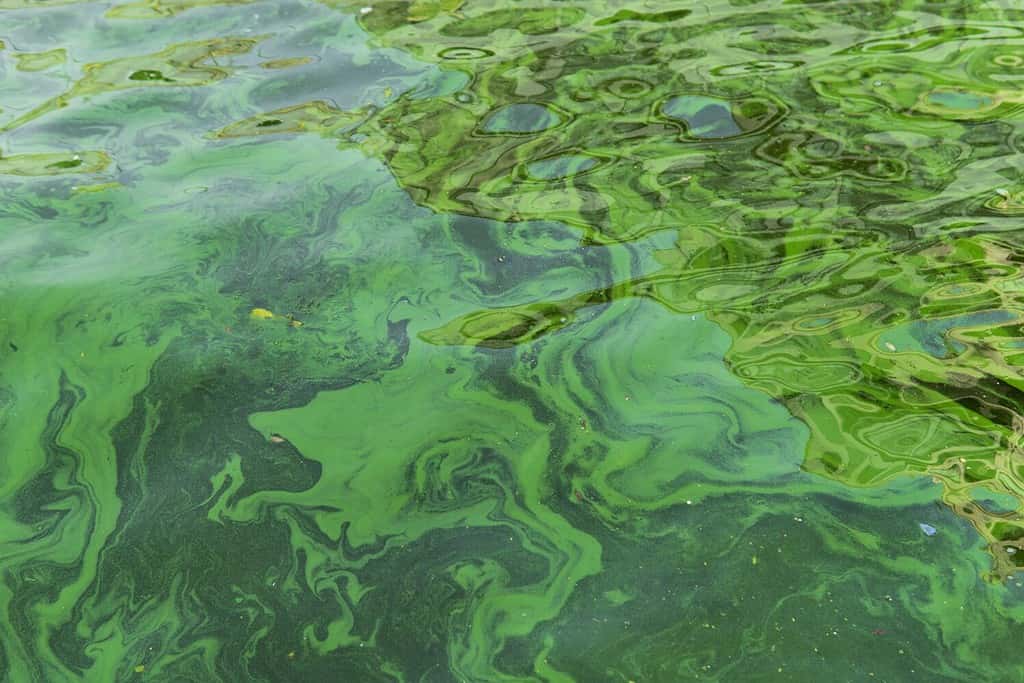
Even inhaling blue-green algae can have devastating consequences.
©Aleksandrkozak/Shutterstock.com
As this happens, aquatic plant life living beneath the toxic blooms begins to die out. This cycle is difficult to stop once it starts because dead plants release nitrogen as a byproduct, which then feeds the cyanobacteria and encourages further growth. As a result, the bloom poses a threat to unsuspecting wildlife and humans.
How Toxic Algae Blooms Harm Living Things
As the landscape in and around a toxic algae bloom slowly begins to suffocate, living organisms are also exposed to its effects. Fish are typically the first to experience the negative effects of an algae bloom. A telltale sign of a cyanobacteria bloom is dead fish floating on the surface. Potent cyanotoxins can cause tremors, paralysis, seizures, and muscle failure. These toxins target the central nervous system, killing wildlife quickly—often before anyone realizes what has happened.
Humans experience similar symptoms, but the symptoms vary depending on the type of exposure.
| Contact With Skin | Inhalation | Ingestion | |
| Symptoms | Allergic rashes, blisters, hives, itchy skin, and red or irritated eyes. | Sore throat, cough, congestion, and asthma-like symptoms from breathing in airborne water droplets. | Stomach pain, nausea, vomiting, diarrhea, and fever. Swallowing large amounts can cause liver damage or neurological symptoms like tingling, numbness, and progressive muscle weakness |
In severe cases, liver and neurological damage can result from ingesting too much cyanotoxin. In any case—whether through skin contact or ingestion—you should seek medical attention immediately.
As these algal blooms grow, they make the water uninhabitable. The resulting consequences create a domino effect. Blooms near residential or recreational areas become off-limits. This disrupts everything from summer activities to tourism, and there is no foolproof method to remove cyanotoxins from a body of water. In most cases, the blooms must be left to die off on their own.
For wildlife, a cyanobacteria bloom can be devastating. These blooms can kill hundreds of animals each summer, with some years seeing even larger mortality events depending on the severity of the bloom. Unlike humans, animals can’t determine whether water is safe to enter. As a result, animals may unintentionally enter contaminated water and die a slow and painful death. These fatalities can impact local wildlife populations, especially in areas with frequent HABs.