
Butterflies are beautiful creatures that typically have magnificent coloring and are associated with sunshine, flowers, transformation, hope, and freedom. They play important roles in the ecosystem as pollinators and food sources.
They can adapt to all sorts of habitats, from forests to the Arctic tundra, and assist in maintaining an eco-friendly balance that helps environments thrive. About 35% of the world’s food crops depend on animal pollinators, including butterflies.
In terms of pollination, butterflies tend to prefer taking care of herbs and vegetables, leaving fruit to their distant apian relatives. Examples of plants that different types of butterflies pollinate include: artichokes, basil, beans, cabbage, cauliflower, celery, cilantro, and parsnips. These beautiful arthropods also pollinate cotton, a key crop.
How Many Types of Butterflies Are There?
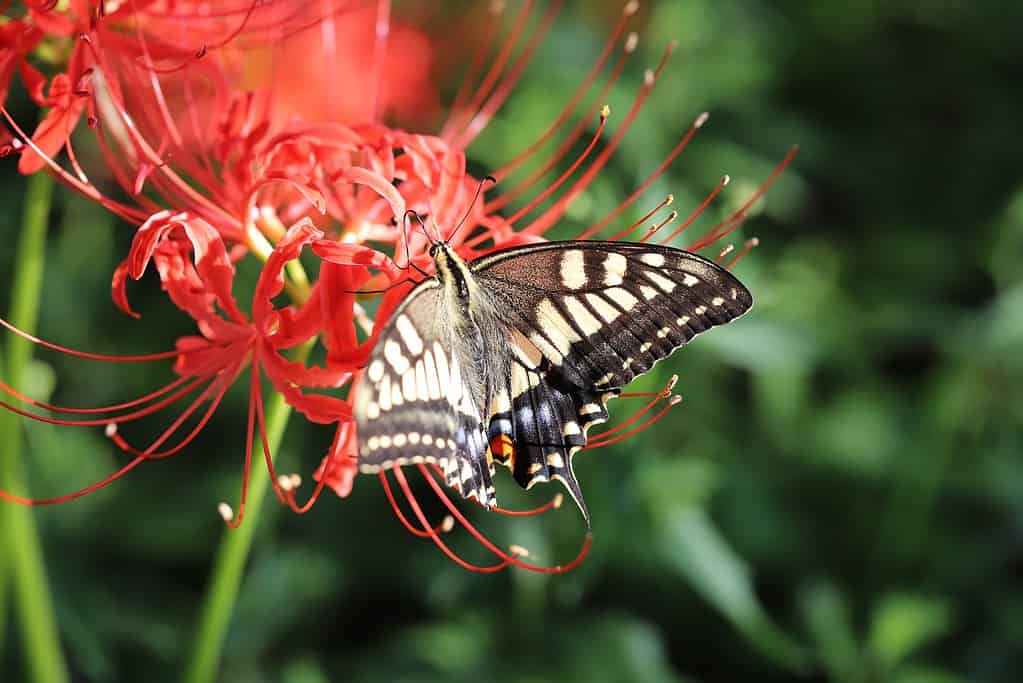
The swallowtail butterfly is found in more than 500 varieties all over the world except in Antarctica.
©Tasak/Shutterstock.com
It’s thought that there are more than 17,500 butterfly types across the world, with some estimating up to 20,000 butterfly species on Earth. In the United States, approximately 750 species of butterflies are present.
Butterflies belong to the Lepidoptera order of insects that also includes moths. Lepidoptera covers 180,000 species in 126 families, making it one of the world’s most widespread and recognizable insect orders.
While there is some debate about the classification of butterflies, they can be considered as comprising of the following six families:
- Hesperiidae: Including around 3,000 species in the world and called Skippers
- Lycaenidae: Covering more than 5,000 species, including Blues, Hairstreaks, and Coppers
- Nymphalidae: With around 5,000 species, known as Brush-Footed Butterflies
- Papilionidae: Consisting of about 600 species, referred to as Swallowtails
- Pieridae: Encompassing more than 1,000 species, called Whites and Yellows/Sulphurs
- Riodinidae: Estimated to have approximately 1,000 species, with the common name of Metalmarks.
Keep reading for a look at 10 of the most beautiful common butterflies.
1. Brush-Footed
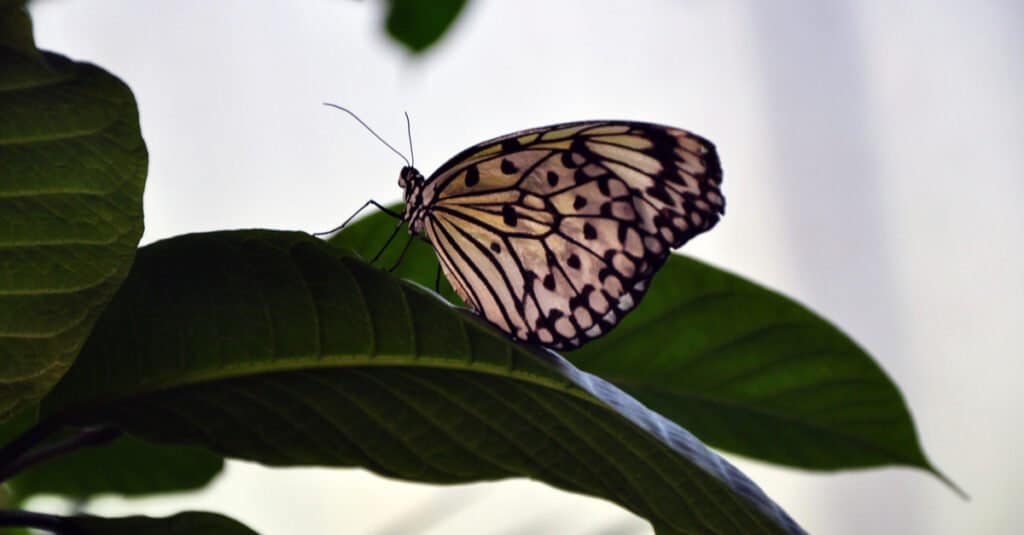
The brush-footed butterfly has more than 6,000 species in its family.
©EmekKiziltas/Shutterstock.com
The brush-footed butterfly family (Nymphalidae) is the largest, with around 6,000 species. These butterflies are also sometimes called the four-footed butterflies because they only use four legs for walking (the other two legs curl.)
These butterflies are named for their characteristically smaller forelegs that tend to appear fuzzy and resemble brushes. Not only do they have feet that look like brushes, but they also have a pair of antennae that come out of the tops of their heads.
Brush-footed butterflies are generally medium to large in size and have a wing size between 1.5 and 3.5 inches. Their wing colors are typically yellow, brown, and white with colored markings on the undersurface. Those colors tend to be duller.
2. Monarch
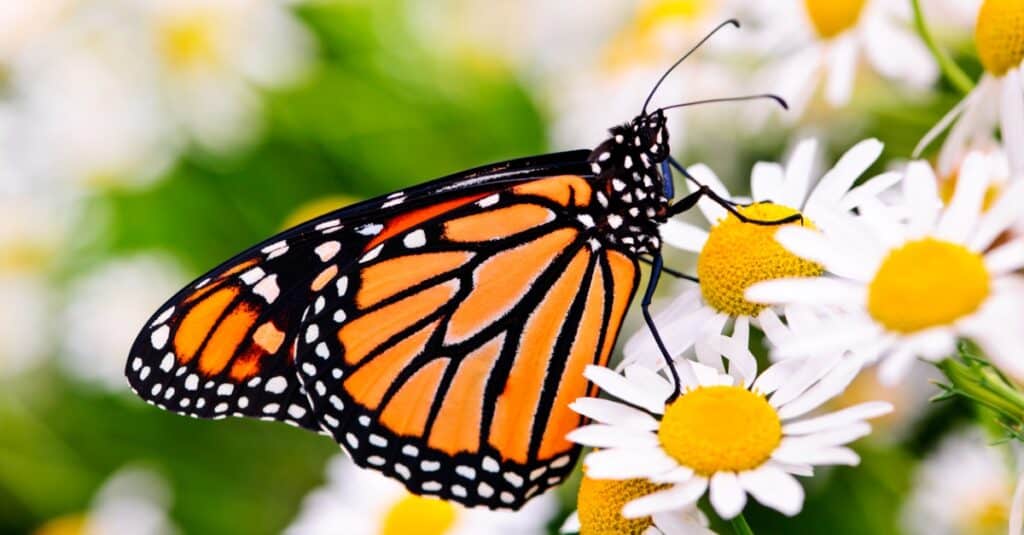
One of the most well-known types of butterflies, the monarch, is recognized for its distinct color patterns.
©iStock.com/Elenathewise
A common butterfly, the monarch still manages to be one of the uniquely colored and beautiful among all butterflies. They’re easily recognized by an eye-catching combo of markings of white, orange, or black meshed with vibrant orange wings with white dots and black veins and borders.
Monarch butterflies call home sections of Central, North, and South America. They have also established populations in Australia and some Pacific Islands. Legend says that some European settlers in America were such fans of a particular monarch known as William of Orange (Prince of Orange from birth and then King William III) that they named it in his honor. So monarch, meaning king, was given to the butterfly because of its primary color.
3. Karner Blue
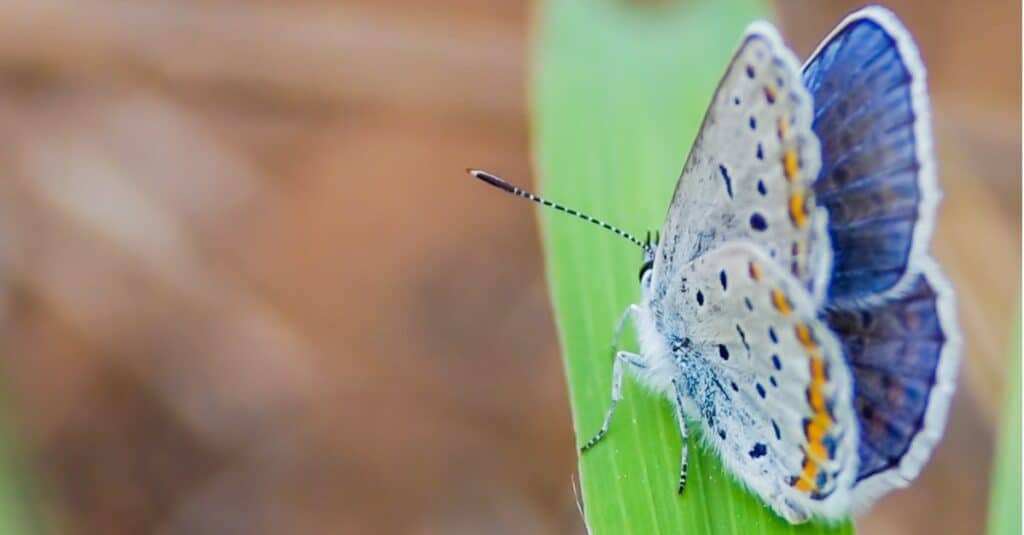
The Karner blue butterfly is present in Wisconsin and Michigan.
©iStock.com/BobGrif
The Karner blue butterfly is small and delicately beautiful. Once upon a time, these types of butterflies boasted a huge population, extending from eastern Minnesota to southern Maine. Today, they inhabit parts of Wisconsin, Michigan, New York, New Hampshire, Ohio, and Minnesota. The Karner blue is a small butterfly with an average wingspan of just one inch. The female has a smart display of grayish-brown with touches of topside blue, orange-colored bands with narrowed black borders. The males have either dark blue or silvery topsides matched up with narrow black margins. These butterflies are classified as an endangered species within the United States.
4. American Snout
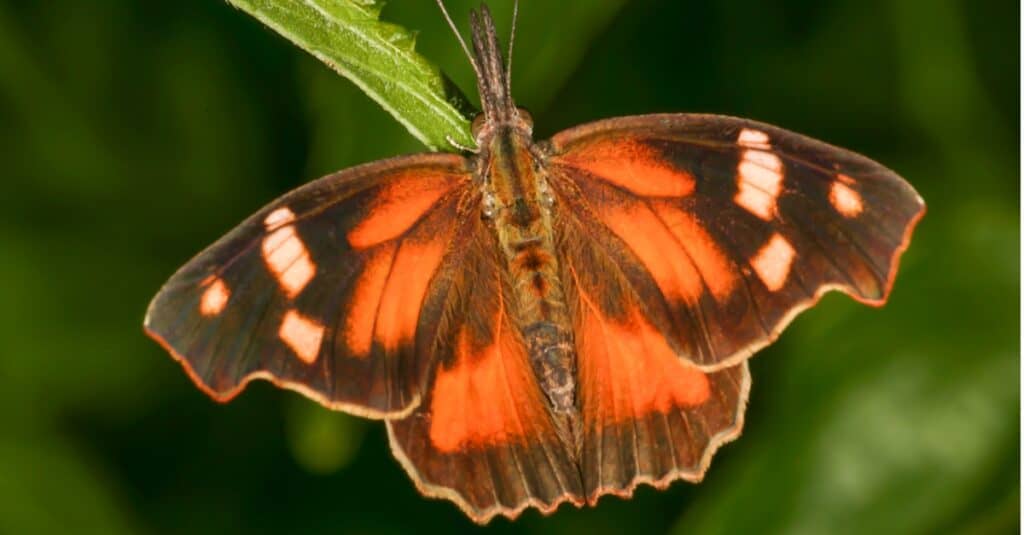
The American snout butterfly gets its name from its elaborate snout.
©iStock.com/EdwardSnow
The American snout butterfly is so named due to its distinctive snout. Scientists believe that it lets them mimic dry leaves and camouflage themselves to avoid predators. These butterflies have a wingspan of 1.4 to 2 inches. Besides being relatively small, these butterflies come in dull colors, which probably complements the snout’s ability to effectively camouflage the creatures. Upper wing surfaces are brownish-black with orange patches. The forewings have white spots. But the hind wing underside contrasts those subdued colors with beautiful purples and browns.
5. Blue Morpho
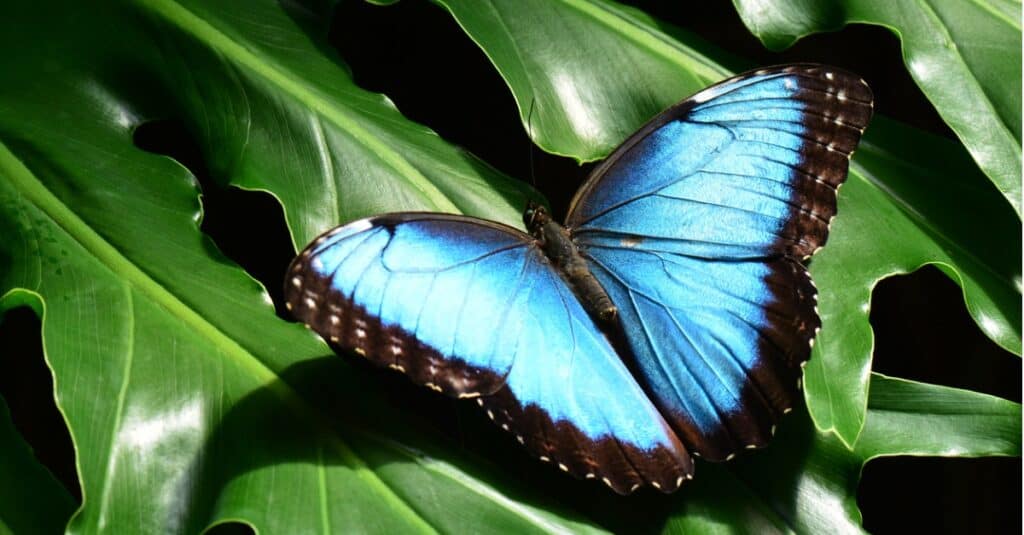
The morpho is one of the largest butterflies in the world and has a wingspan of 5 to 8 inches.
©iStock.com/SHAWSHANK61
Belonging to the tropical areas of Latin America, the blue morpho is a striking butterfly. Its iridescent, vivid blue color consists of microscopic scales that reflect light off the wings. The underside of its wings is dull brown and, when closed, offers camouflage against birds, insects, and other predators. In-flight, the flapping blue and brown wings give the illusion that the morpho is disappearing and reappearing. They are also one of the largest butterflies in the world, with a wingspan that can reach up to 8 inches, though most are 5–6 inches across. The entire life cycle lasts about 115 days, but the adult butterfly lives only 2–3 weeks. Besides natural predators like the jacamar, which preys on the morpho, their habitats are also being decimated by human encroachment.
6. Sleepy Orange
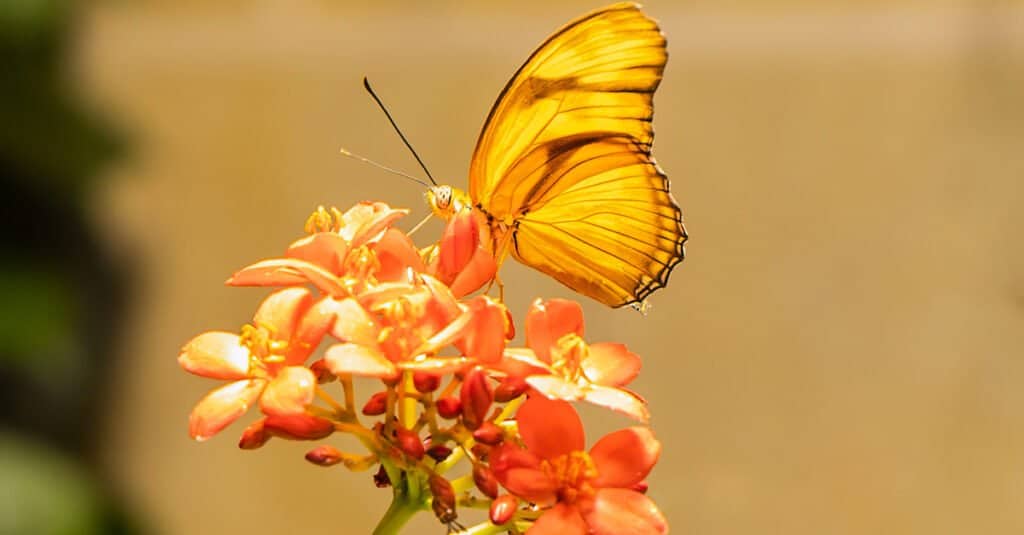
There is nothing sleepy about the sleepy orange, which is active year-round in Central America.
©iStock.com/Ami Parikh
The sleepy orange butterfly is known for its distinctive bright orange coloring, often with black borders across the wings’ upper sides. However, the underside colors vary based on the seasons. In summer, the wings will be a sharp yellow with red highlights. However, in colder seasons, the wings keep a brown shade with comparatively heavier markings.
They have a wing size of 1.4 to 2.24 inches. Interestingly, there’s nothing sleepy about these creatures, despite their name. They’re quite busy and are active all year round across Central America and the southern region of North America.
7. Creamy Marblewing
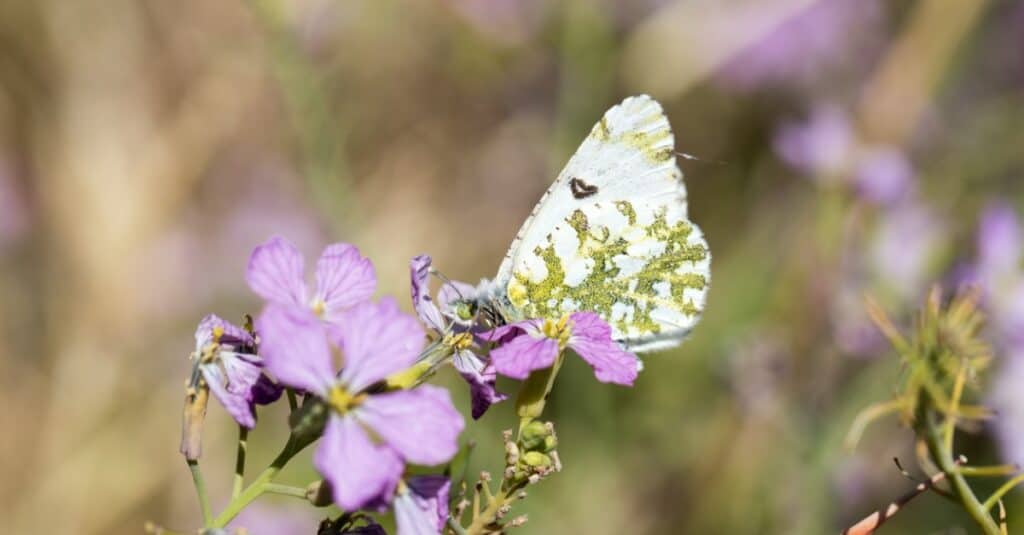
The creamy marblewing lays eggs on terminal flower buds that are typically a variety of the mustard family.
©iStock.com/yhelfman
The creamy marblewing butterfly is found in open habitats across western and northern North America, from Alaska to southern Colorado and as far east as Michigan. They like open, free-range fields and meadows.
These butterflies have a head of furry scales with green, and large, round eyes of the same green color. The underside of the wings is cream with a curious marble-like greenish hue. The top surface is creamy white with black markings along the tips and edges.
The creamy marblewing lays eggs on terminal flower buds. These plants belong to a variety of the mustard family. The insect larvae feed on the flowers, buds, and fruits of the plants.
8. Small Copper
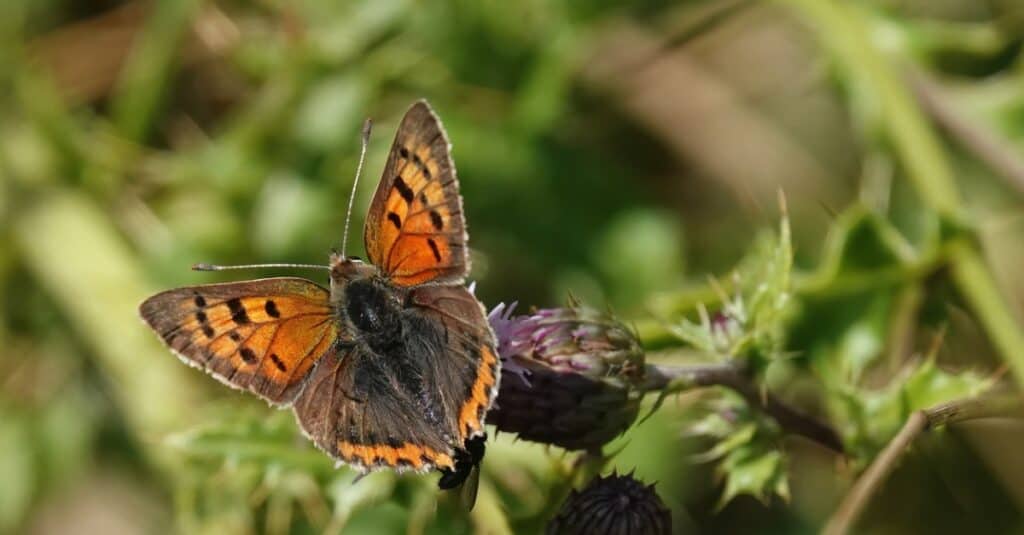
The small copper butterfly inhabits the UK.
©iStock.com/Nigel Harris
Famous for its speed and vibrant forewings of copper color, the small copper butterfly is all over Britain and Ireland. They like sunny, dry habitats, including woodland edges, downland, and waste ground.
Small copper butterflies have a wingspan of 1.25 to 1.4 inches. The upper wing side is a shiny yellow with black blotches and dark brown margins. The underside of their wings is bright orange with darker blotches and margins highlighted by reddish stripes. These features easily distinguish these butterflies from other types. In gardens, they prefer a diet of nectar-rich foods and, for overwintering, they seek shrubs and climbing ivy.
9. Red Admiral
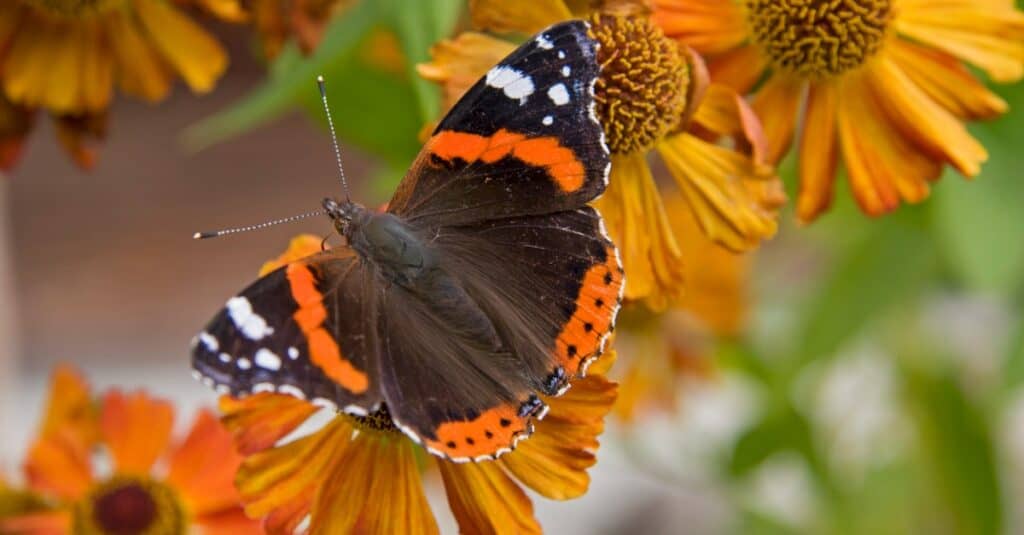
The red admiral is a type of butterfly that has a fairly large wingspan of nearly three inches.
©iStock.com/Tinieder
The red admiral is a distinctive butterfly found in Britain and Ireland. They belong to the Nymphalidae family and are considered medium-sized creatures. They have a wing size of 2.6 to 2.8 inches and are famous for striking black wings with a blend of orange bands and white spots.
Red admirals are often found in parks and gardens, marshes, moist fields and woods, and open fields. They also live in habitats ranging from tundra to subtropical regions.
The red admiral is migratory, heading north in the spring and south in the autumn. One of the many interesting facts about these insects is that they’re extremely territorial. Females only mate with males that control their habitat. Males also settle on ridge tops and wait for the female. There, the female will lay eggs on plant leaves.
10. Swallowtail
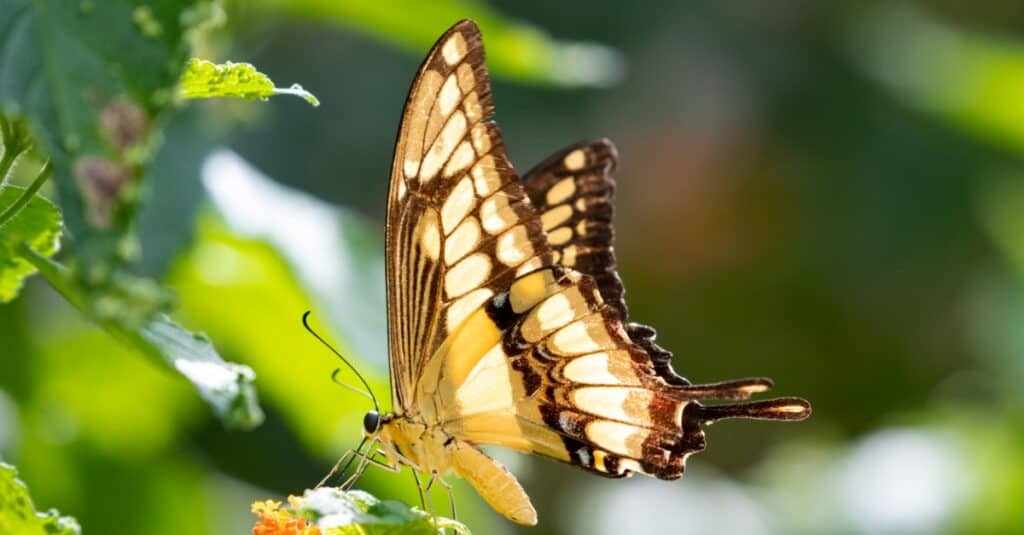
The swallowtail has 40 species that occur in North America.
©iStock.com/Chelsea Sampson
Large and colorful, the swallowtail butterfly comes in more than 500 varieties. The swallowtail is a type of butterfly with a wingspan ranging from 0.3 to 3.5 inches. Belonging to the Papilionidae family, these creatures are found all over the world except in frigid Antarctica. The greatest population and diversity are in subtropical regions like East and Southeast Asia. A total of 40 species occur in North America. There’s an even dozen in Europe.
One of this butterfly’s interesting facts is that its name came from the extensions in their hind wings, which are tail-like. However, we should note that some species don’t have the extensions. There’s a range of colors, and the majority of species feed solely on milk parsley, while others prefer wild carrots.