
Quick Take
- Pit bulls carry a fierce reputation for aggression, yet the AKC's take on what actually drives their behavior might surprise you. Pit bull personality explained →
- Owning a pitsky could mean inheriting the worst training headaches of two very different parent breeds, but it might also mean inheriting none at all. See the training tradeoffs →
- One of these dogs needs up to twice the daily exercise of the other, and underestimating that need comes with real consequences. Compare their exercise needs →
- Despite looking like a tougher, hybrid upgrade, the pitsky comes with a set of inherited health vulnerabilities the pit bull doesn't share. Pitsky health vulnerabilities →
The American pit bull terrier, commonly called a pit bull, is a medium-sized, muscular, and athletic dog known for its strength, loyalty, and affectionate nature. The breed has a varied history, most notably as fighters. The breed’s foundation traces back to 19th-century England, Ireland, and Scotland. Breeders crossed the sturdy, muscular Old English bulldog with the quick, energetic terrier. Settlers brought these bull-and-terrier crosses to the United States, where farmers and ranchers prized them as versatile working dogs capable of herding, hunting wild boars, and guarding homesteads. The pitsky is an energetic, highly athletic hybrid mix between an American pit bull terrier and a Siberian or Alaskan husky. Known for their loyalty, these mixed-breed dogs require active owners who can keep up with their demanding exercise needs. Continue reading to learn about the key differences between pit bulls and pitskys, including appearance, coat, temperament, exercise needs, and trainability.
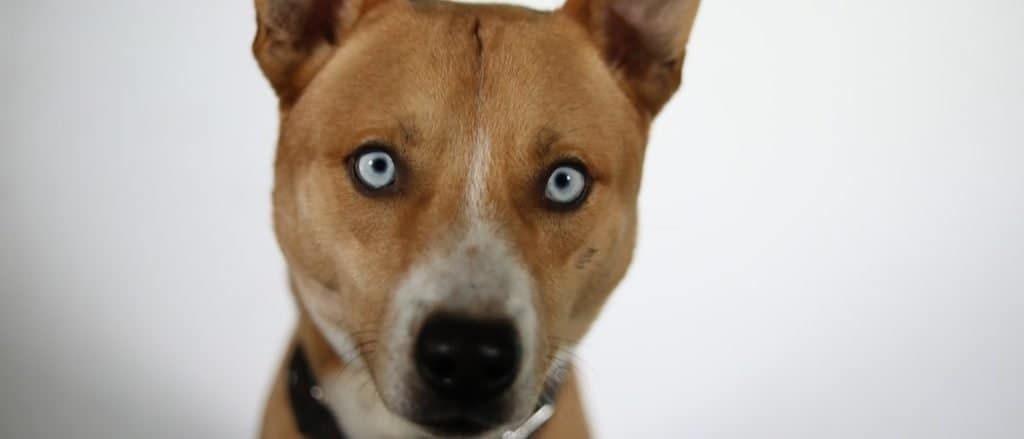
The pitsky emerged as part of the American designer dog movement of the 1990s and early 2000s.
©ClockArt Production/Shutterstock.com
Appearance
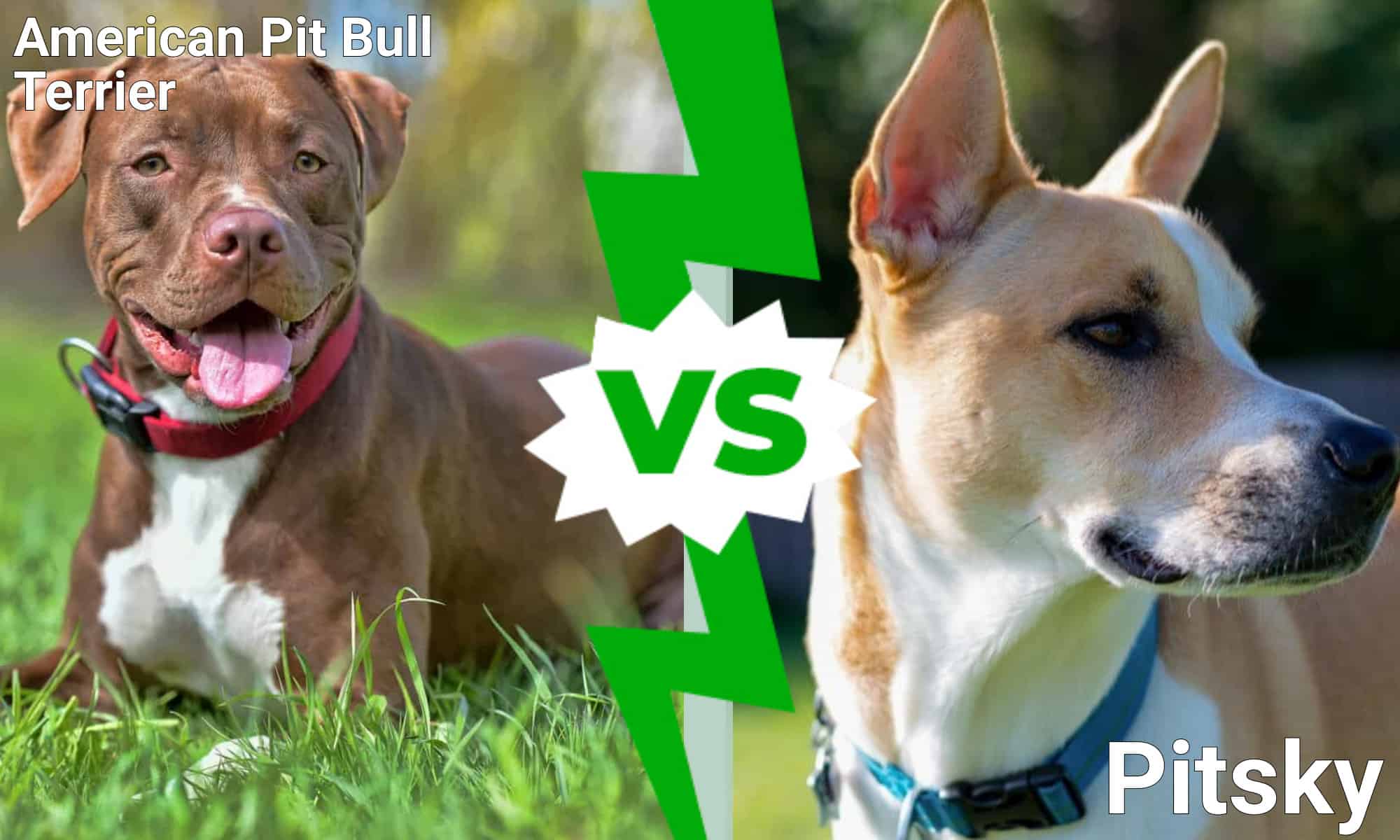
Pit bulls are short, stocky dogs, while pitskys that take after their husky parents will be taller and have less boxy frames. Both dogs are muscular and have long snouts.
American Pit Bull Terriers stand 17-21 inches at the shoulder. Meanwhile, Huskies stand taller at 20-23.5 inches. Pitskys may take after either parent, so they will fall somewhere in that 17-23.5 inch range–but will be taller than Pit Bulls on average.
Both breeds weigh between 30 and 60 pounds, but pitskys weigh slightly more on average than American pit bull terriers.
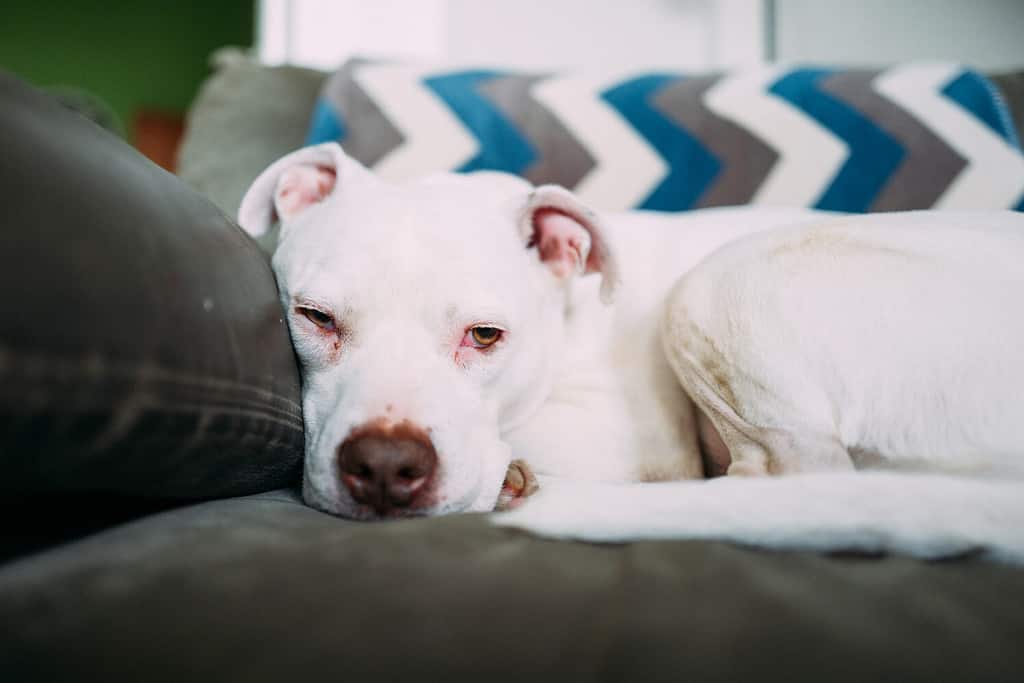
Pit bulls tend to be shorter and stockier than pitskys.
©Veronica Varos/Shutterstock.com
Both pit bulls and pitskys will naturally have long tails, although many owners will dock their pit bulls’ tails, originally thought to prevent injury. Pit bulls may also have their ears cropped, primarily for cosmetic reasons, but pitskys typically have the upright ears of the husky.
Pit bulls have short coats that, according to the UKC breed standard, can be any color except merle or albino. Meanwhile, the AKC accepts the following Husky coat colors:
- Agouti and white
- Black and white
- Gray and white
- Red and white
- Sable and white
- White
- Brown and white
- Black, tan, and white
- Black
Pitskys may have any of these coat colors, as well as other colors seen in huskies, or even a combination of colors from both parents.
Because huskies have thick double coats, pitskys are also likely to have thicker and longer fur than pit bulls, although this is not always the case. Fur length and color may vary even within the same litter.
Temperament
As a mixed breed, a pitsky will have traits from both parent breeds, making its temperament less predictable than that of purebred dogs. However, even purebred dogs can vary in temperament, so each dog should be considered an individual.
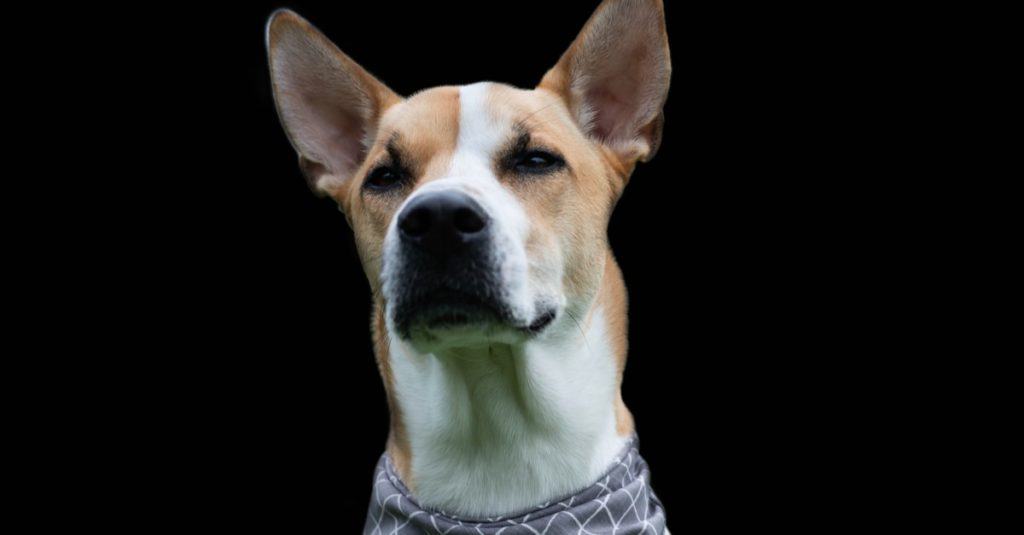
As a mixed breed, pitskys are very similar to pit bulls but also have husky traits.
©AllisonJ7/Shutterstock.com
Both huskies and pit bulls are friendly, playful, family-oriented pups. Although pit bulls have a reputation for aggression, the AKC notes that aggressive behavior is uncharacteristic of the breed, arguing that canine behavior relies heavily on individual upbringing, training, and socialization.
However, pit bulls often don’t get along well with other dogs, and although huskies are pack dogs, a pitsky pup may inherit the aloofness of the pit bull or the pack mentality of the husky.
Neither breed tends to make a good guard dog unless you’re simply looking for a big bark and the presence of a large dog to scare off would-be intruders.
Pitskys may be more vocal, depending on which parent they take after. While pit bulls bark moderately, huskies are quite vocal.
Both pit bulls and pitskys have a strong prey drive and may not do well in homes with smaller dogs, cats, or other small animals. However, when it comes to human family members, both pit bulls and pitskys tend to be very affectionate and loyal.
Pit bulls need plenty of daily exercise, including walks and play. However, huskies, and consequently, some pitskys, are on another level. They’re working dogs bred for endurance and require 1-2 hours of exercise a day to keep them physically and mentally stimulated.
A bored pitsky may become overly vocal, destructive, or depressed. Meanwhile, you’ll be able to tell they’ve had enough exercise when they slow down, pant heavily, or otherwise seem tired.
Trainability
American pit bull terriers tend to be eager to please. They’re smart dogs who will pick up on new cues quickly. Huskies, however, have a reputation for stubbornness, and they can be quite vocal when they don’t want to listen. Therefore, a pitsky may be easy to train or may be stubborn and resistant to commands, depending on which parent breed they take after. This smart breed also needs plenty of mental stimulation to keep it occupied.
Health
Both the American pit bull terrier and the pitsky are generally considered healthy, robust breeds with average lifespans ranging from 12 to 16 years. However, both are susceptible to a few common genetic conditions.
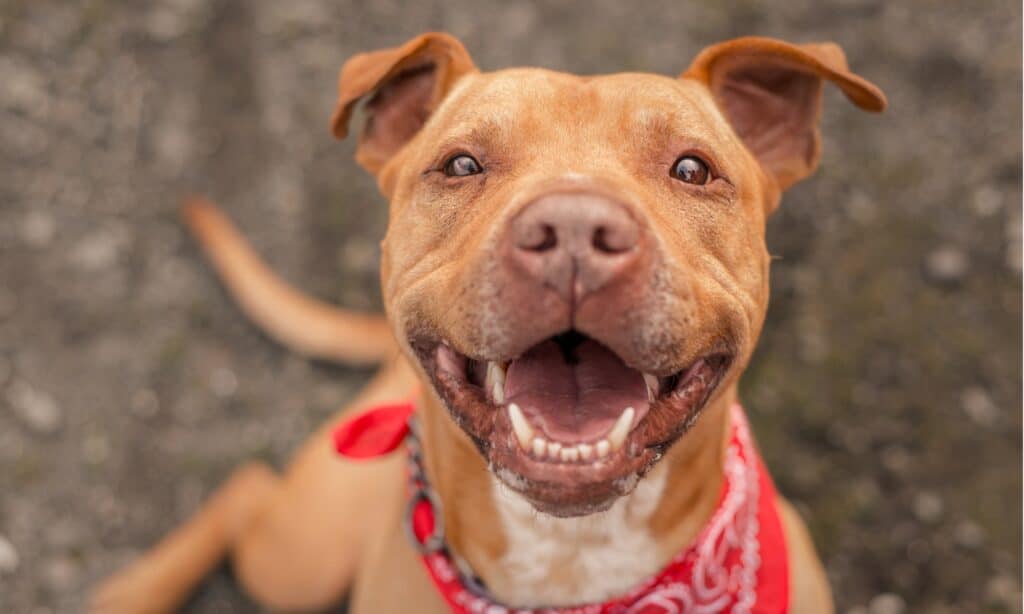
The best way to keep your pit bull or pitsky healthy is to provide them with proper care. This means a quality, vet-recommended diet, daily exercise, and regular veterinary check-ups.
©iStock.com/Photography by Adri
Both pit bulls and pitskys are prone to hip dysplasia and thyroid disease.
Pit bulls are prone to several skin conditions and have higher rates of allergies when compared to other breeds. They may also develop luxating patella, which is when the kneecap slips out of place. Of course, pitskys can also develop these conditions if inherited from their pit bull parent.
Huskies are prone to a number of eye conditions, which a pitsky might inherit from its husky parent.