Quick Take
- The moose is the largest extant species of deer.
- The royal antelope is about the size of a rabbit.
- Antelopes have horns while deer have antlers.
Antelope and deer are umbrella terms that refer to a variety of hoofed animals. There are over 90 species of antelopes in the family Bovidae, which are related to cattle, sheep, and goats. Deer, which number between 43 to 47 species, are contained in the family Cervidae. They are related to elk, moose, and reindeer. Both antelopes and deer are quadrupedal mammals, but antelopes have horns while deer have antlers. They’re herd animals, known for their speed and skittishness. Continue reading to discover the key differences between these two animals, including size, antlers, speed, and distribution.
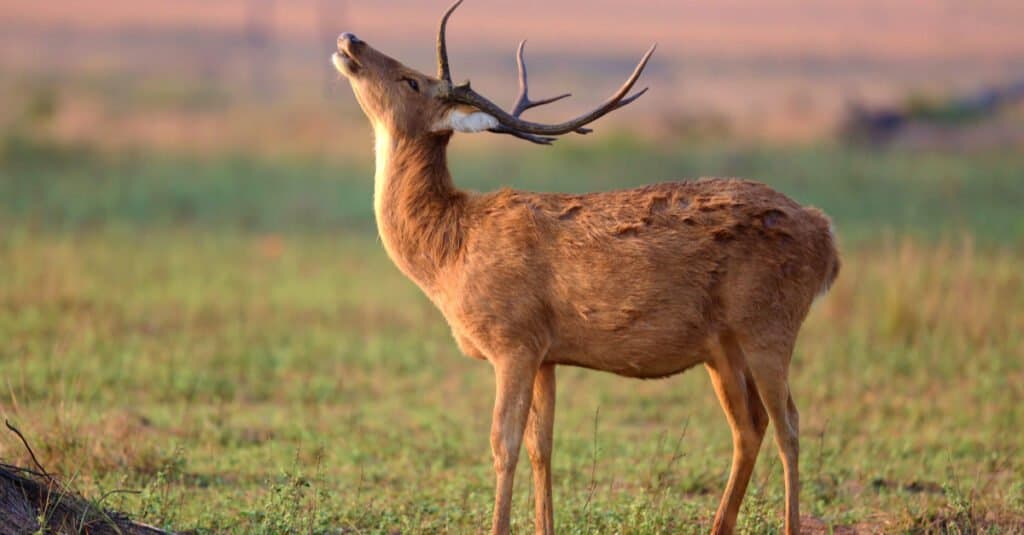
Deer and antelope differ in their sizes, antlers, and distribution.
©PhotocechCZ/Shutterstock.com
Size
Depending on the specific species, antelopes can weigh from 110 to 2,000 pounds, and stand between three feet and six feet tall at the shoulder. Likewise, Deer vary in size according to species, weighing between 22 and 1,800 pounds, and standing between two and seven feet tall at the shoulder.
The largest antelope species is the Giant Eland (Taurotragus derbianus), an enormous spiral-horned antelope found in Africa that can stand over 6 feet tall at the shoulder and weigh up to 2,200 pounds. Found in West Africa, the Royal Antelope (Neotragus pygmaeus) is the world’s smallest antelope. This petite species is about the size of a rabbit, standing only 10 inches tall at the shoulder and weighing 5.5 to 6.6 pounds.
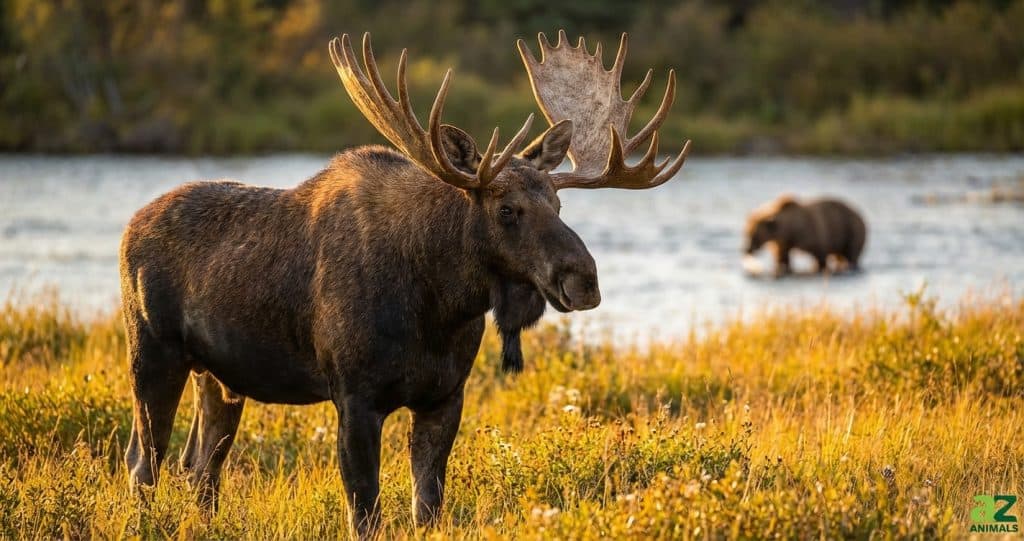
Moose are the largest and heaviest extant species within the deer family.
©A-Z Animals
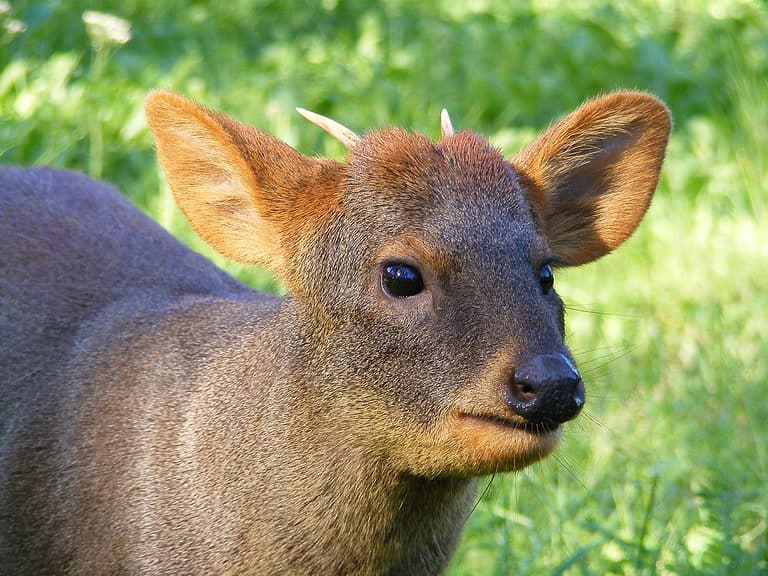
The Moose (Alces alces) is the largest and heaviest extant species in the deer family. Found in the Northern Hemisphere, adult moose can weigh up to 1,800 pounds and stand nearly 7 feet tall at the shoulder. Pudus are the world’s smallest deer, standing between 13 and 17 inches tall at the shoulder and weighing 15 to 30 pounds. There are two species of pudus, Southern pudu (Pudu puda) and the Northern pudu (Pudella mephistophiles). They are native to South America.

The pudu is one of the smallest deer species.
©Rob Jansen/Shutterstock.com
Speed
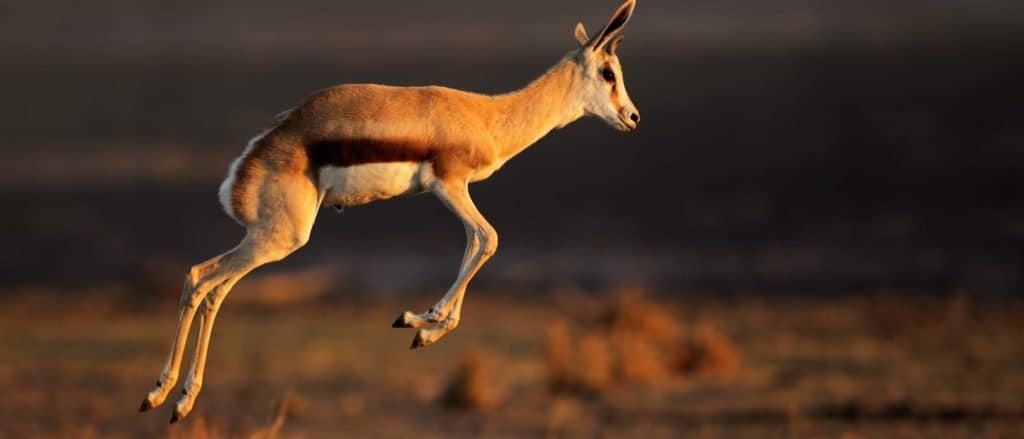
The springbok antelope is capable of running at 55 mph.
©EcoPrint/Shutterstock.com
Some antelopes can reach speeds of up to 60 miles per hour (mph), while the fastest deer can sprint at approximately 50 mph.
The fastest true antelope is the goitered gazelle (Gazella subgutturosa), which can sprint at speeds of up to 60 mph. The Common Eland (Taurotragus oryx) is widely recognized as the slowest antelope in the world, with a maximum speed of only about 25 mph.
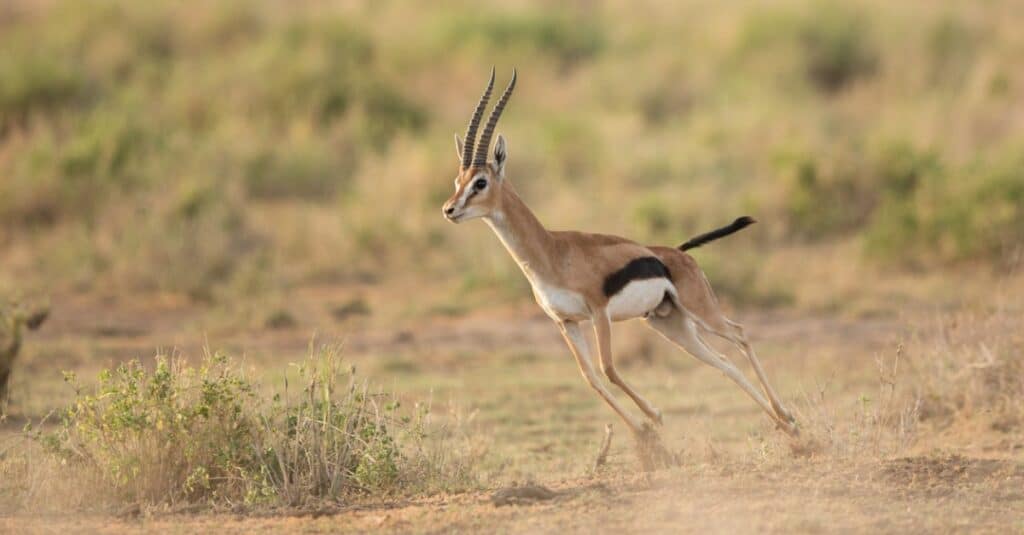
Gazelles are among the fastest antelopes.
©iStock.com/StuPorts
Caribou (Rangifer tarandus) hold the title for being the fastest deer species at 50 mph. The moose is generally recognized as having a slower top running speed compared to other large deer species, typically topping out around 35 mph.
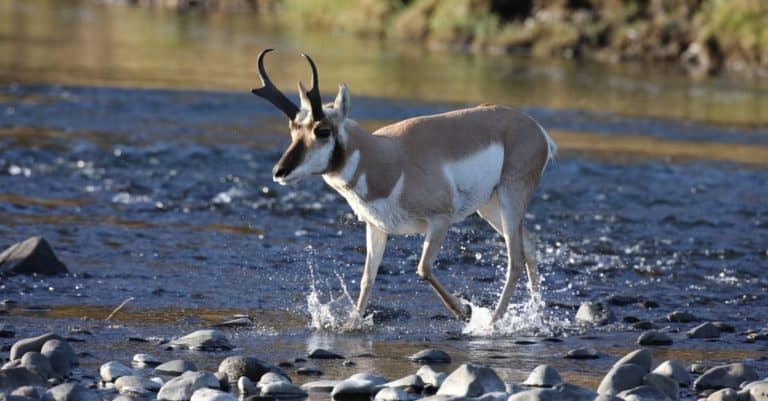
The pronghorn (Antilocapra americana) is recognized as the fastest land mammal in North America and the fastest land animal over long distances. While not a true deer or antelope, it is commonly called the American antelope or pronghorn antelope, and can maintain speeds of over 60 mph for extended periods.
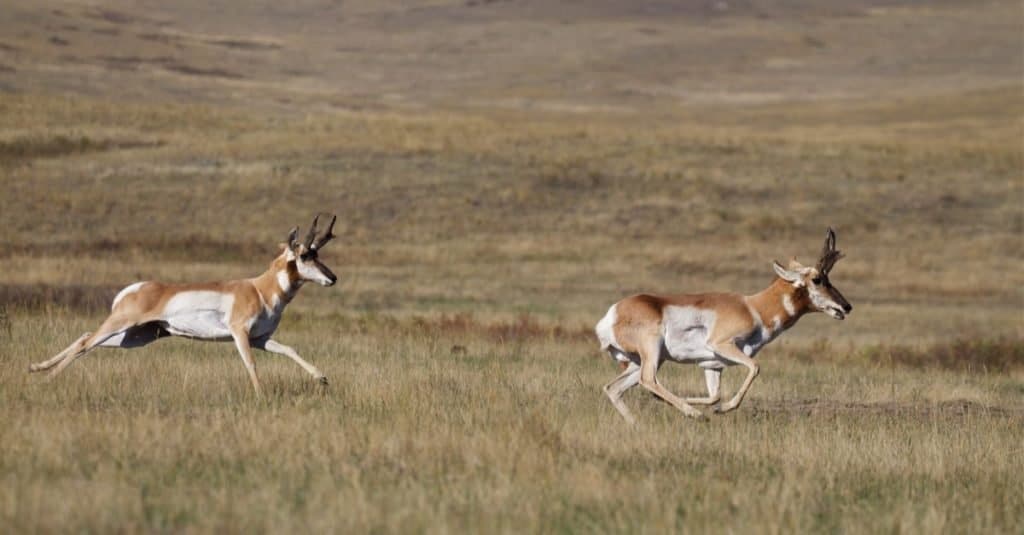
Although they are not considered true antelopes, pronghorns are the fastest mammal in North America.
©Tom Reichner/Shutterstock.com
Antler Morphology
Antelopes have horns and deer have antlers. Although these structures may appear to be similar, they’re very different. An antelope’s horns do not branch off or have multiple points. Instead, the horns grow several inches long or a few feet long throughout the course of the antelope’s life. Often, they’ll grow straight up from the antelope’s head, or curve backward.
True antelope species do not shed their horns, as they are composed of a permanent, living bone core covered in a keratin sheath that grows throughout their lives. Some female antelopes, such as gazelles, have horns, though they are often smaller and shorter than those of the males.
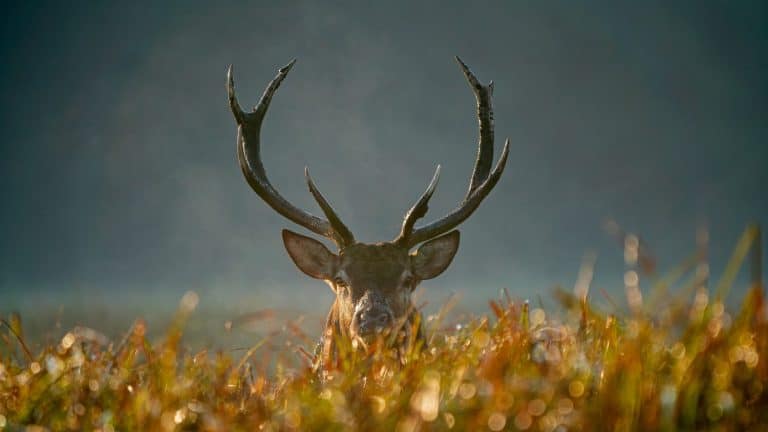
Deer antlers are made of true bone, growing as extensions of the skull and covered in a layer of skin called velvet. They can branch off into several different points and rapidly grow throughout the year. Deer use their antlers to fight with other deer and fend off predators.
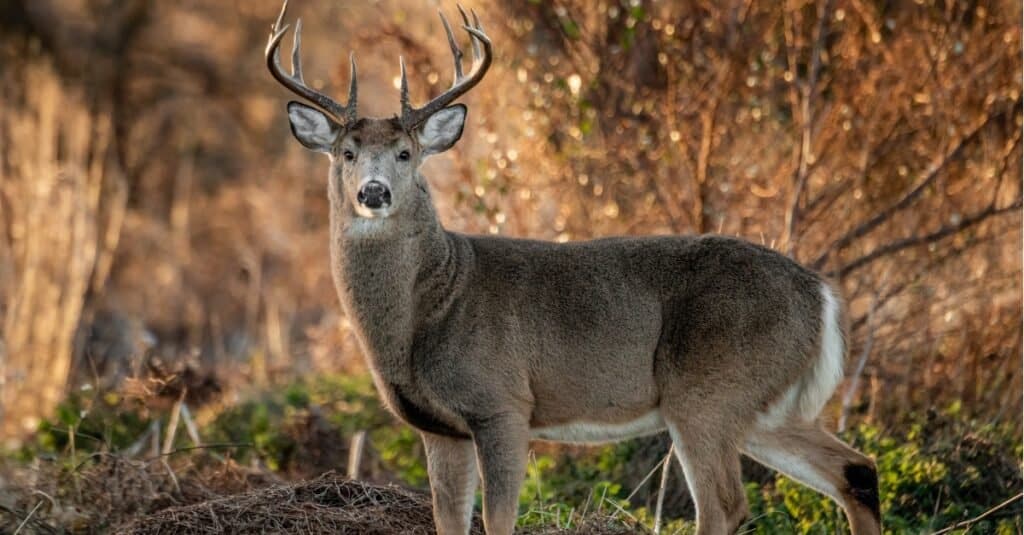
Deer antlers branch off, unlike antelope horns.
©iStock.com/Harry Collins
Male deer, called bucks, shed their antlers annually, typically in late winter after the breeding season, and then regrow new ones each spring. In most deer species, only males grow antlers, but in some species like caribou, females also have antlers, which they retain throughout the winter and shed in the spring after their calves are born.
Distribution
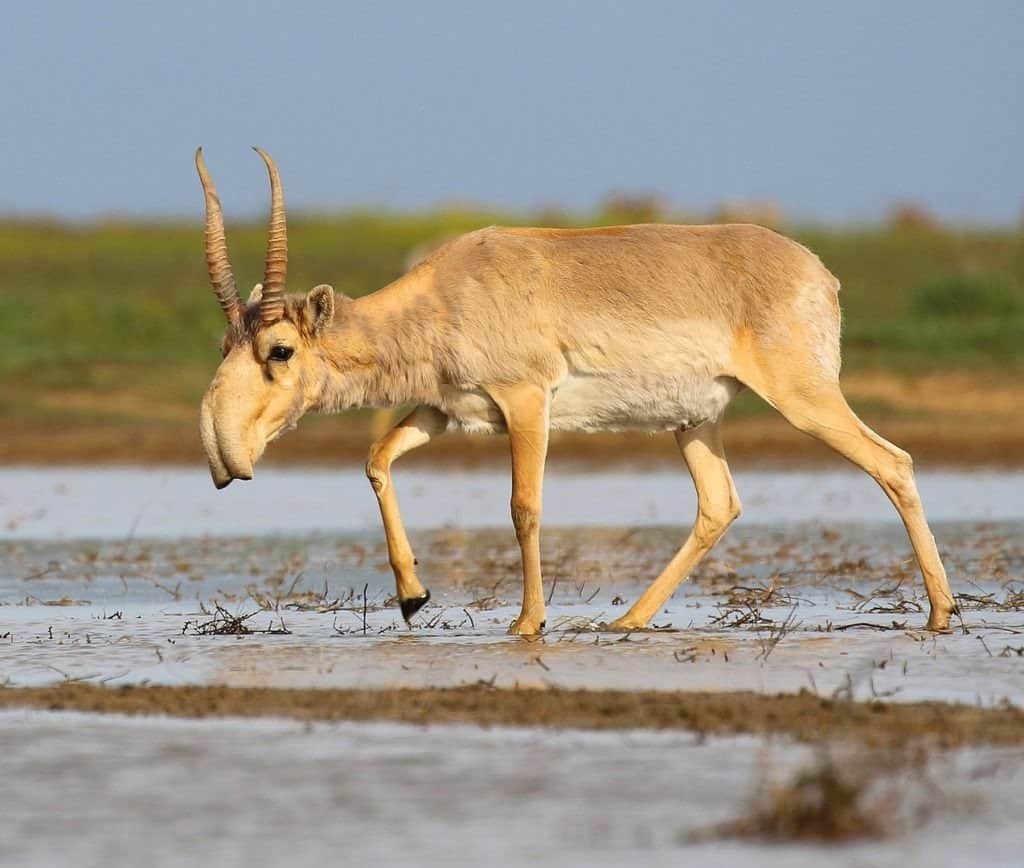
Antelopes are native to Africa and Eurasia.
Deer live throughout the world, and can be found on every continent except for Antarctica. However, antelopes have a somewhat limited range that includes Africa and parts of Eurasia.
There are no true antelope species native to North America; the pronghorn, often called antelope, is not a true antelope.