Quick Take
- One spider species outsmarted researchers by finding a faster route through a maze than the scientists had designed, and the way it did so challenges everything we assume about invertebrate cognition. See the maze experiment →
- Portia jumping spiders hunt by impersonating something entirely different, depending on their target, and the level of deception involved is hard to believe for an animal with a brain the size of a poppy seed. Discover Portia's deception →
- Black widows were long dismissed as primitive sit-and-wait predators, but a simple lab experiment flipped that assumption on its head. See the lab findings →
- When researchers secretly swapped out a spider's prey mid-hunt, the spider's reaction revealed a cognitive ability most people would never attribute to an arachnid. See the prey-swap test →
Simply because spiders are small and have tiny brains doesn’t mean that they aren’t intelligent. There isn’t a specific amount of brain tissue necessary to carry out complex behaviors, and it is very common for spiders to process situations cognitively rather than respond automatically. From ghost spiders trained to associate positive reinforcement with the smell of vanilla to orb weavers that build their webs based on their prey type, spiders are more intelligent than one might imagine. After all, it’s not the size of the brain but how it’s used that matters. So, are spiders smart? Continue reading to learn everything you need to know about how smart spiders are.
Can Spiders be Surprised?
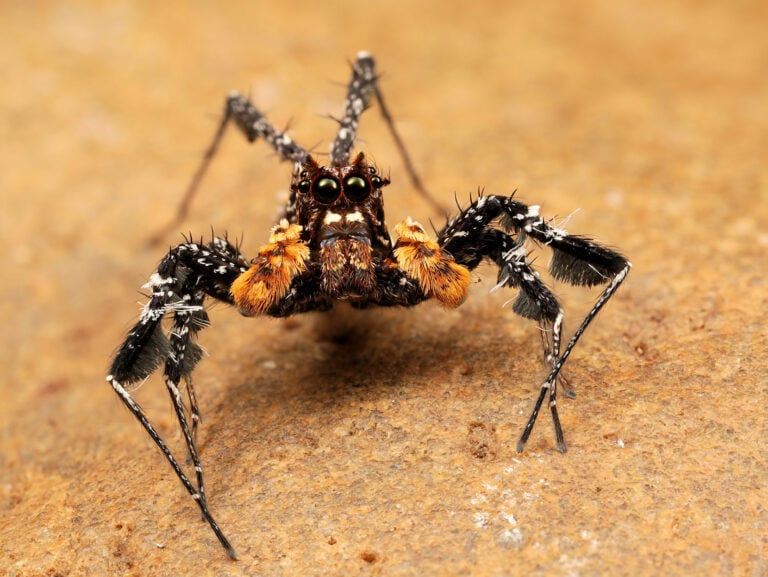
Jumping spiders in the genus Portia are exceptionally smart. Research conducted with these spiders has demonstrated that they have problem-solving, planning, and memory skills. They are specialized hunters known for eating other spiders, and their intelligence is largely adapted to this complex predatory behavior, including the use of aggressive mimicry to manipulate web-dwelling spiders.
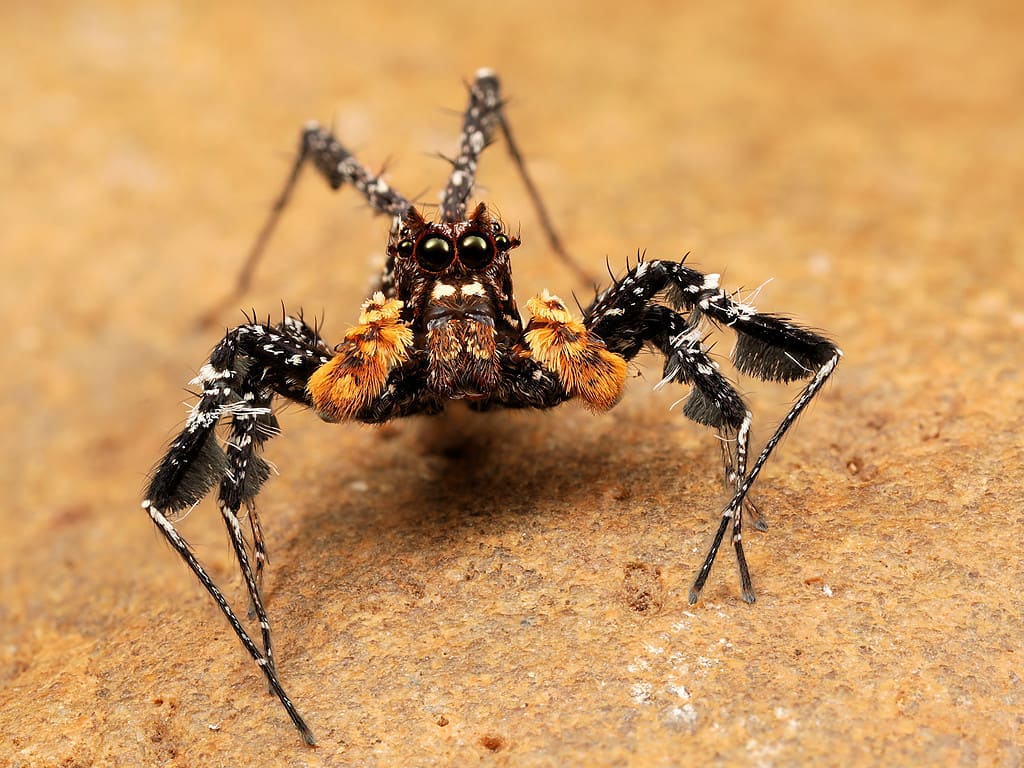
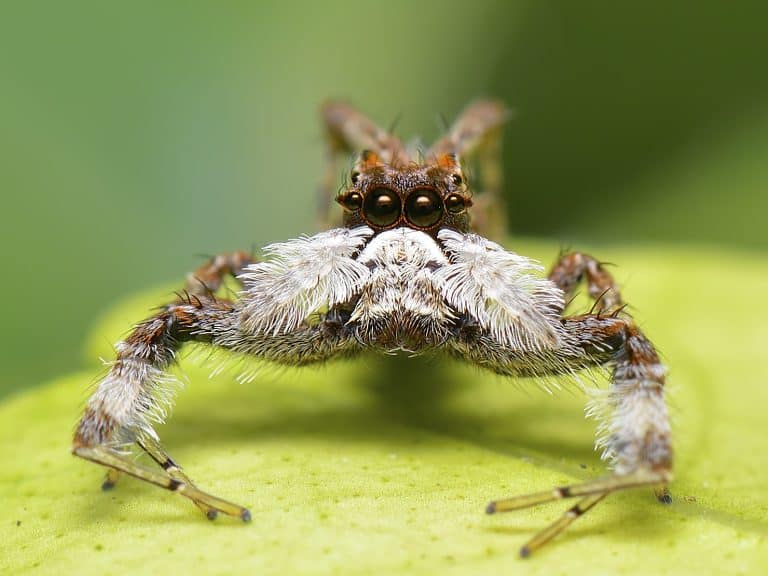
The long-legged dandy jumping spider (Portia schultzi) can form mental images.
These brilliant little Portia spiders are also able to form mental images of their prey. To test this hypothesis, researchers Fiona Cross and Robert Jackson showed the spiders their presumptive prey.
They then blocked the prey animal from the spider’s field of vision by closing a shutter for 90 seconds, during which time they swapped the original prey specimen for a different species. In these cases, the Portia spiders were significantly less likely to attack compared to when the prey remained the same. This hesitation was interpreted as a sign that the spider had formed a mental image that was violated, causing it to pause and reassess.
Can Spiders Strategize?
Jumping spiders in the genus Portia will pluck the silk threads of a target’s web in varied patterns, mimicking struggling prey or a potential mate to lure the web-owner into attacking, at which point the jumping spider kills it. They will even use this strategy on other jumping spiders.
Female Euryattus spiders build their nests in dead leaves and suspend them in mid-air with silk attached to vegetation or rocks. When males court these females, they crawl down the silk rope and, once they reach the nest, shake it in a way that encourages the female to come out. Portia spiders mimic this shaking behavior, drawing the female into an ambush.
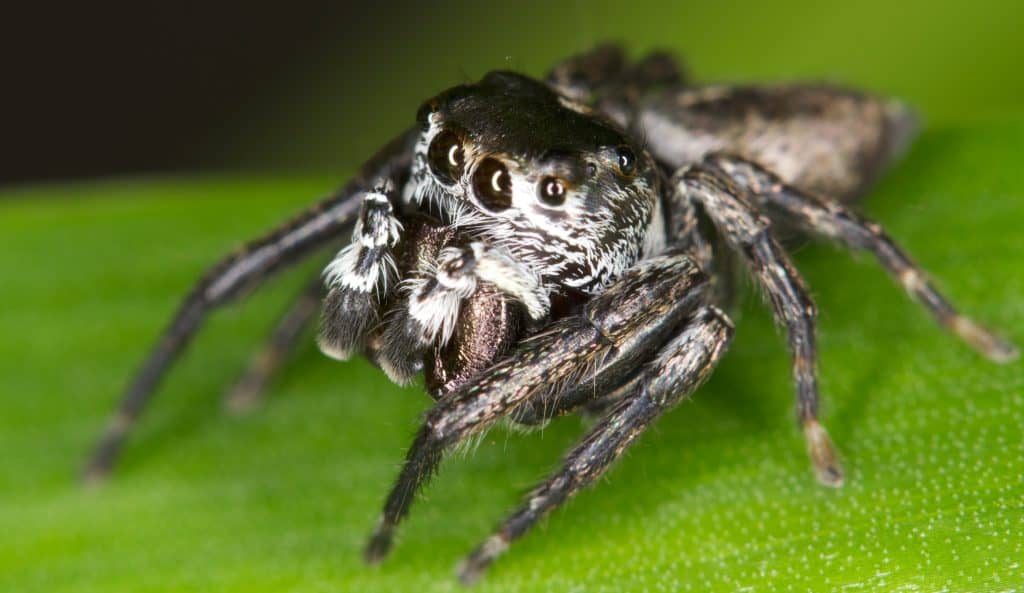
Bleeker’s Jumping Spiders (Euryattus bleekeri) may be ambushed by other jumping spiders.
Do Black Widows Have Memories?
Black widows (genus Latrodectus) and similar web-spinners are sit-and-wait predators, relying on silk traps to capture prey before consuming them. While traditional scientific thought considered these spiders more primitive than spiders that actively hunt, experimental evidence is proving this assumption wrong.
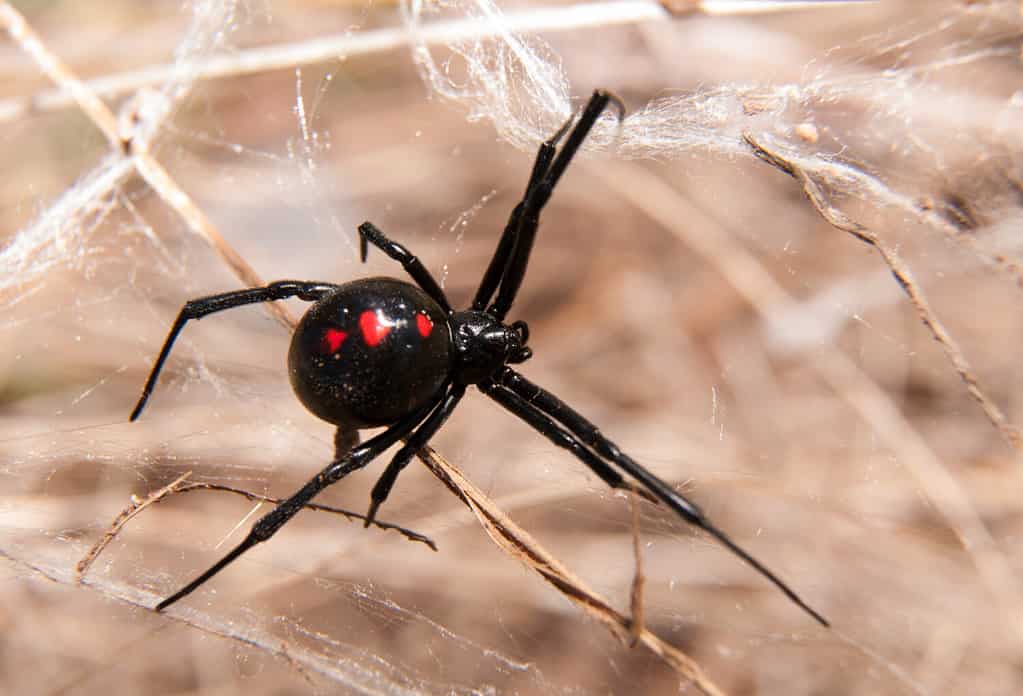
Black widows and other species of web-building spiders use the waiting game technique, where they sit and wait until their prey gets entangled. Once they have entrapped their prey, they devour it in a gruesome fashion.
©Sari ONeal/Shutterstock.com
Researchers tested black widow spiders’ memory by removing prey from their web after the spiders had acclimated. The spiders continued to search for the missing prey in the original web, demonstrating that they possess and rely on spatial memory to locate past food sources.
This behavior is not limited to black widows; it is seen in other web-building spiders as well.
Can Spiders Assess Risk?
In an experiment, Portia piders were placed on a platform surrounded by water and presented with four different routes to reach a goal. While most spiders initially favored the shortest and safest path to minimize risky leaps over water, a fascinating behavior emerged when some chose the longest, most complex route.
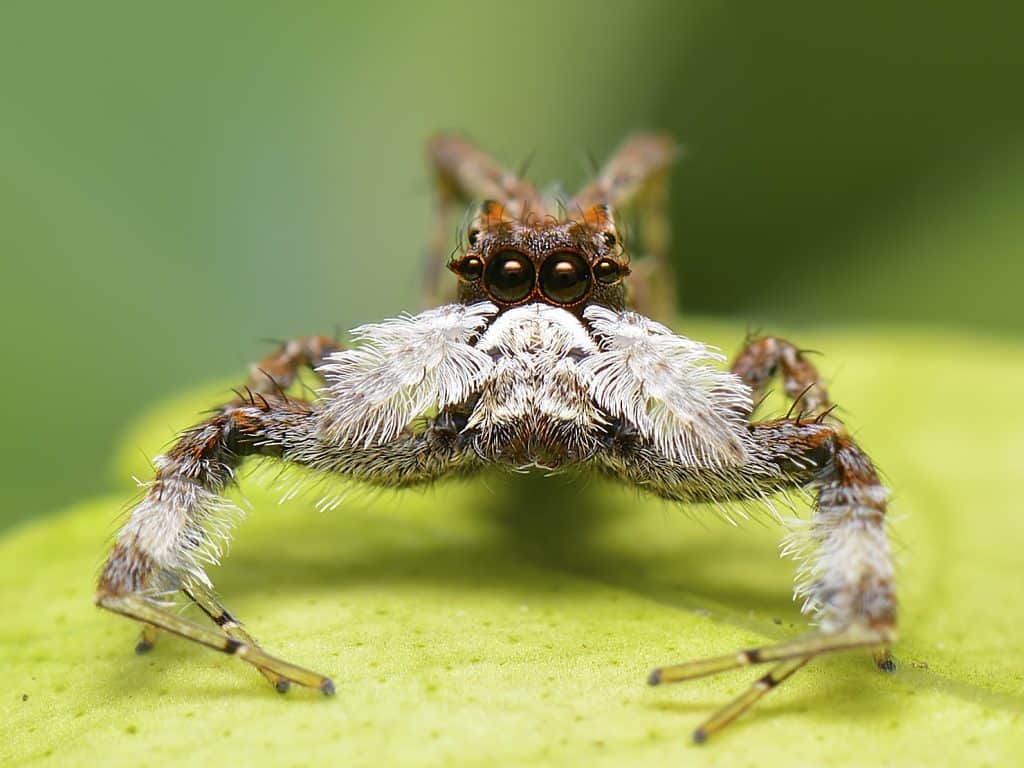
White-moustache jumping spiders are considered astoundingly intelligent.
Researchers discovered that this wasn’t an error but a case of unconventional shortcutting. The longest route was specifically designed with a curve that, while appearing inefficient, actually brought wooden dowels close enough for a single leap. By identifying these hidden connections, the spiders effectively discovered a better path than the experimenters’ intended path, creating a faster, safer route.
Can Spiders Count?
In a study of the African dandy jumping spider (Portia africana), it was determined that these spiders can count. In the experiment, conducted by Cross and Jackson, African dandy spiders were placed on a tower to observe a specific number of prey (1, 2, or 3). While the spider took a detour to reach the prey, losing sight of them briefly, Cross and Jackson changed the number of prey. When the number of prey was different from the number originally presented, the spiders were less likely to attack. Even when the number of prey decreased, the spiders were still significantly less likely to attack, indicating that the spider remembered the initial number of prey and expected it to remain the same.