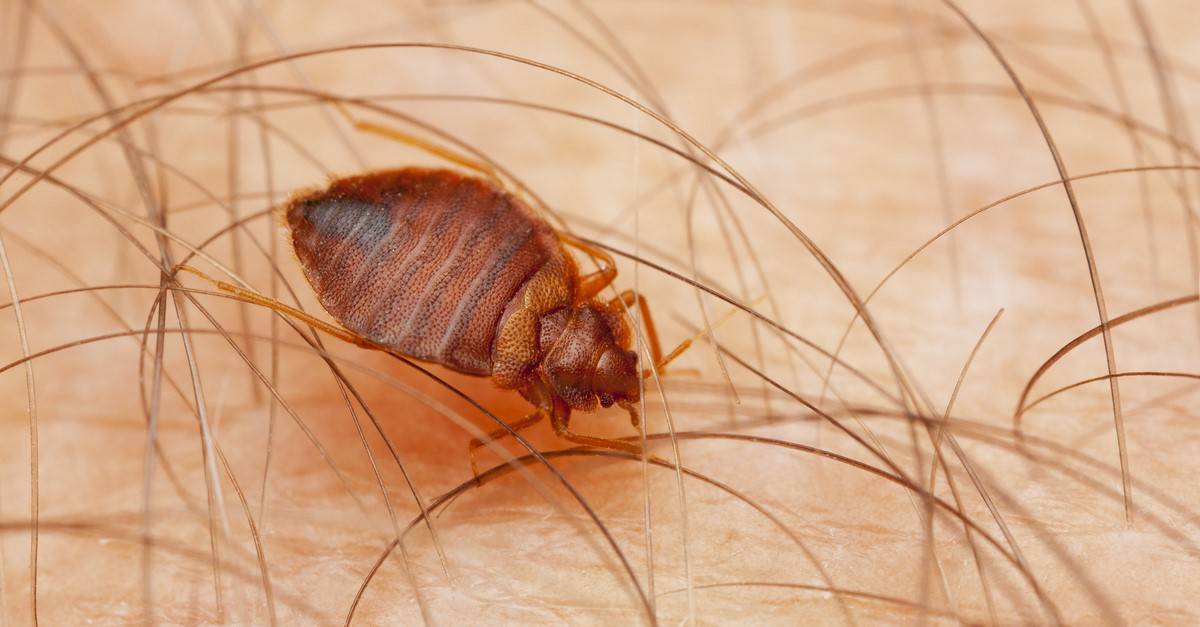

‘Bugs’ is a general term that many of us use to describe small insects. Within this group are bed bugs, bat bugs, swallow bugs, and poultry bugs. They all look quite similar and belong to the Cimicidae family of insects. These bugs all live by feeding on the blood of birds or mammals. Two bugs in particular can cause infestations in human houses – the bed bug (Cimex lectularius) and the bat bug (Cimex pilosellus). Here we look at the bat bug vs bed bug key differences and examine how to get rid of these pesky house guests.
What Are Bat Bugs?
The scientific name for bat bugs is Cimex pilosellus and they are a member of the Cimicidae family of insects. They are less than a quarter of an inch long and oval with six legs but no wings. As their name suggests, bat bugs live on bats. However, they are not very good at holding onto their hosts, so they spend most of their time in bat roosts. When the bats are in the roost, the bat bugs feed by sucking their blood. They need to do this about once every 10 days. When there are no bats to feed on, they go in search of other mammals. Bat bugs can end up in the roosts of several other mammals and unfortunately, that includes human homes!
What Are Bed Bugs?
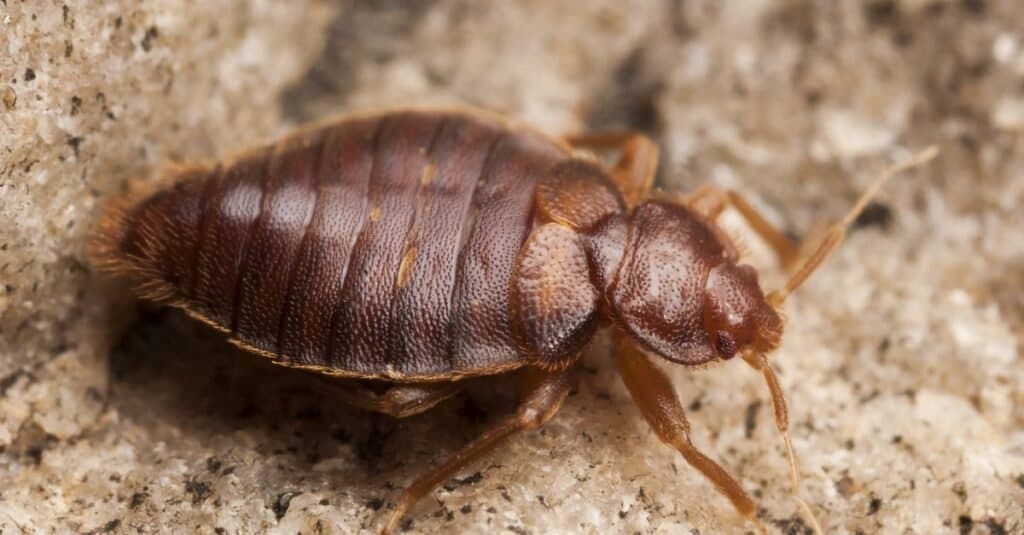
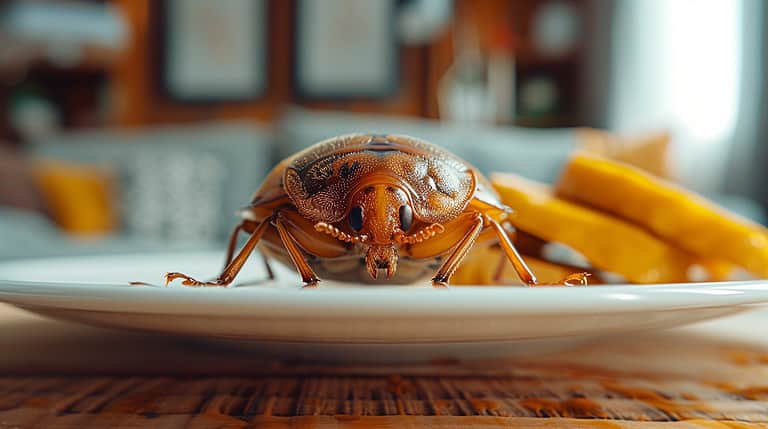
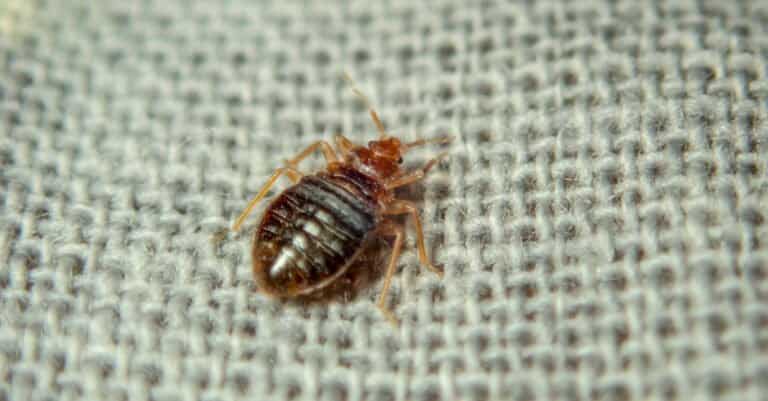
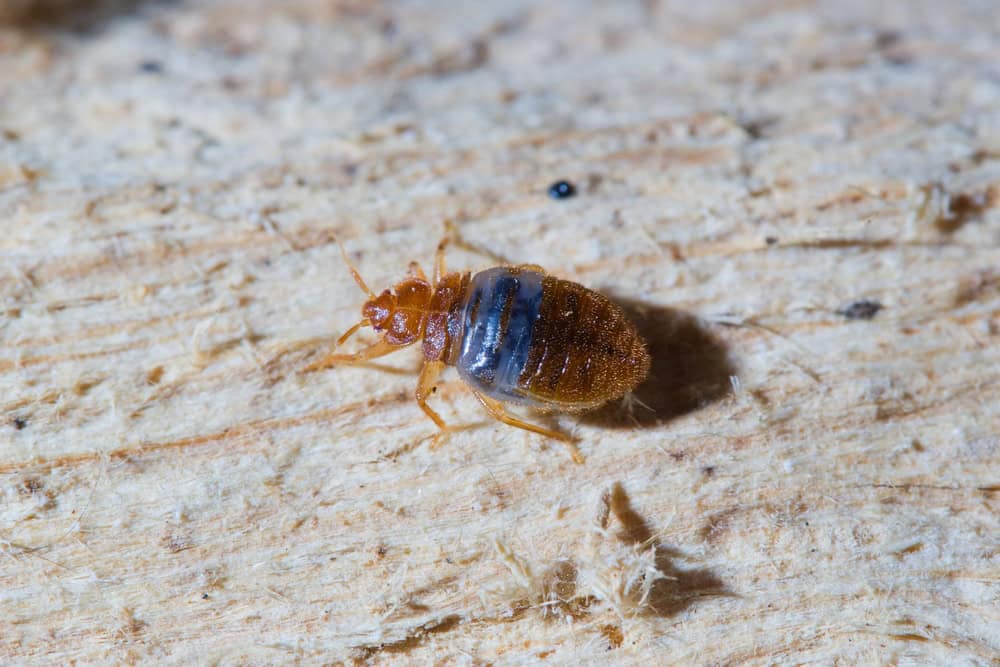
Bed bugs have reddish-brown bodies.
©Pavel Krasensky/Shutterstock.com
There are around 90 species of bed bugs but only three of them trouble humans. The first is called Leptocimex boueti and is only found in West Africa and South America and the second is Cimex hemipteru which is called the tropical bed bug and is generally found in tropical regions between 30 degrees north and south of the equator.
We will be focusing on Cimex lectularius which is the bed bug you are most likely to come across in the US and Europe. Their primary food source is human blood and therefore their hosts are humans. When they are not feeding on humans, they live in our homes including in carpets, sofas, and, of course, in beds.
Bat Bugs vs. Bed Bugs – What They Have In Common
Bed bugs look very similar to the naked eye.
©Michael O'Keene/Shutterstock.com
Bat bugs and bed bugs have a lot in common. They both have a short broad head that is attached to a prothorax (front segment) and an oval-shaped body. They are a reddish-brown to grayish-brown color and are around 3/8 of an inch long when they are fully grown. In fact, to the naked eye, they look identical.
Neither of them has true wings but they do have small wing pads. They have six legs and get about the place by crawling – they do not jump. When they have not fed, their bodies are flattened. Once they have had a meal, they swell up and look more rounded. Both of the species rely on warm-blooded hosts to provide them with food (blood). Therefore, they can both be found in the nests/homes of these hosts. They also both feed on blood by piercing the host skin with their mouthparts to find a capillary space. The bugs feed until they are full and then they leave the host to go and find somewhere quiet to digest their meal. Neither species is known to transmit diseases to or between humans. However, both can bite humans and cause uncomfortable itchy raised patches that look like regular insect bites.
Bat Bugs vs. Bed Bugs – Key Differences
A European bat bug.
©zdenek_macat/Shutterstock.com
If you have the opportunity to look at these bugs under a microscope, you can spot that in bed bugs the wing pads are narrower at their inner margin. Also, bat bugs have fringe hairs on their pronotum that are longer than or equal to the width of their eye but in bed bugs, these hairs are shorter. Bed bugs have a more mahogany or red coloration and may be slightly larger. These guys have different habitats. Bat bugs are found around their food source which is the bat nest. In human homes, you generally find them in ceiling spaces, on walls, and inside unused chimneys. Bed bugs, on the other hand, need to be near humans and are found in beds, headboards, and furniture.
Geographic Location
When it comes to geographic range, bed bugs are found all over the world. However, bat bugs are found mainly in North America and are common across the northern United States and Canada. There has also been one report of bat bugs in a home in Scotland, UK.
If you suspect that you have either bat bugs or bed bugs in your home, correct identification is critical. The steps to eradicate these two insects are different so it is vital that you know which is present.
| Number | Difference | Bat bugs | Bed bugs |
|---|---|---|---|
| 1 | Wing pads | Wider at their inner margin | Narrower at their inner margin |
| 2 | Hairs | Fringe hairs on pronotum are longer than or equal to the width of their eye | Extensive cleaning, decluttering, and treatment with insecticide |
| 3 | Color | Red/brown/grey | More likely to be red or mahogany |
| 4 | Size | Under 1/4 inch | Around 1/4 inch |
| 5 | Diet | Bat blood | Human blood |
| 6 | Location in home | Close to bat’s nests – attics, chimneys, ceilings | Close to humans – beds, nightstands, headboards |
| 7 | Geographic range | US and Canada with one UK report | Worldwide |
| 8 | Eradication method | Remove bats (when allowed) | Extensive cleaning, decluttering and treatment with insecticide |
Which Is More Common?
This depends on where you live. If you live outside the geographic range of the bat bug then bed bugs are more common. In states such as Colorado, bat bugs used to be the more common insect. However, there has recently been an increase in bed bugs so now both insects are found. The primary hosts for bat bugs are bats and so the bottom line is that if you have bats in your home, you are more likely to have this bug!
How to Get Rid of Bat Bugs
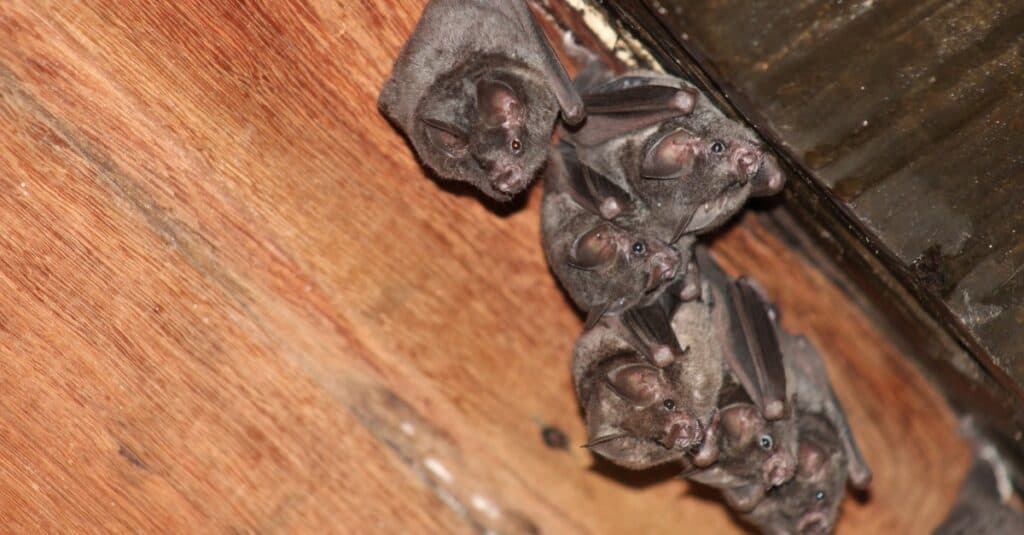
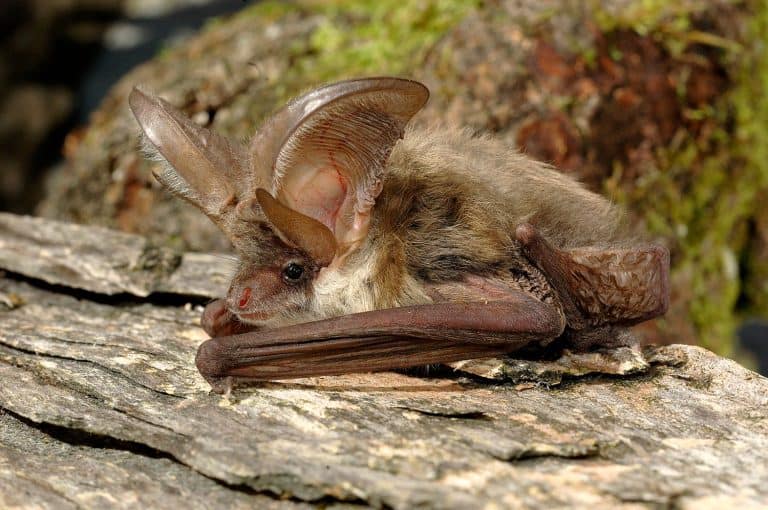
To get rid of bat bugs you have to get rid of the bats.
©Hermann Moller/Shutterstock.com
In theory, you should be able to get rid of bat bugs quite easily by getting rid of their hosts – the bats. Bat bugs cannot survive for very long without bats. In the short term, removing the bats may make the situation worse as the bugs will be desperate for food and will bite humans. This situation will not last for long. You can also mitigate this to some extent by sealing off the bat roosting area so that the bugs cannot gain access to human accommodation. By treating cracks and crevices with insecticides you can reduce the likelihood of migration.
In practice, however, getting rid of bats is not straightforward. Federal laws protect many bat species so there are restrictions on when you can remove them. Each state has specific regulations depending on the bat populations in the area. These are important restrictions that have been put in place to protect sensitive bat populations so they must be strictly followed.
While bats remain in their roost, you can only apply treatment inside the home and not near the bat roost. It is useful to identify areas where the bugs are gaining access to your home. If any bat bug harborages are identified, they should be vacuumed. Suitable insecticide can then be used to set up barriers and further barriers can be placed around human seating and sleeping areas.
How to Get Rid of Bed Bugs

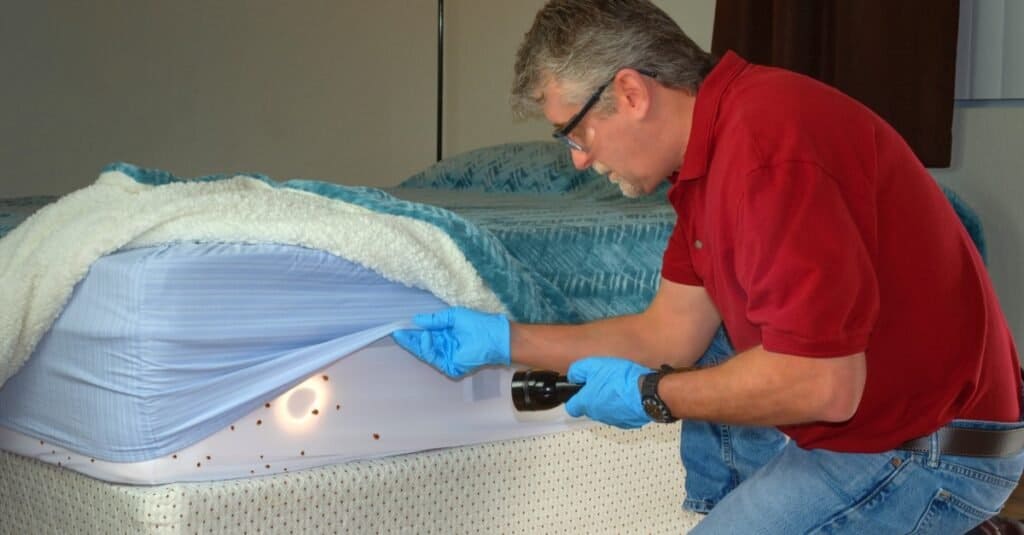
One of the ways to get rid of bed bugs is to have pest control workers spray pesticides in the bedroom.
©yurakrasil/Shutterstock.com
Bed bug infestations can be challenging to treat. It may be best to call in an expert removal company. The US Environmental Protection Agency does have advice for do-it-yourself bed bug control online. You are advised to take steps to stop the infestation from spreading including removing infested items and sealing small hiding areas. It is important to prepare for treatment by reducing clutter and moving your bed at least six inches away from the wall. You can then attempt to kill the bed bugs using heat treatment, cold treatment, and steam cleaners. The pesticide options for treating infestations include pyrethrins and desiccants.
Are Bat Bugs or Bed Bugs Harder to Get Rid Of?
It is generally easier to get rid of bat bugs because you can remove their host even if this takes some time. With bed bugs, however, we are the hosts! This gives them a constant supply of food and makes them more challenging to eradicate. The key to successful eradication for both species is correct identification. For this, it would be sensible to consult an expert.