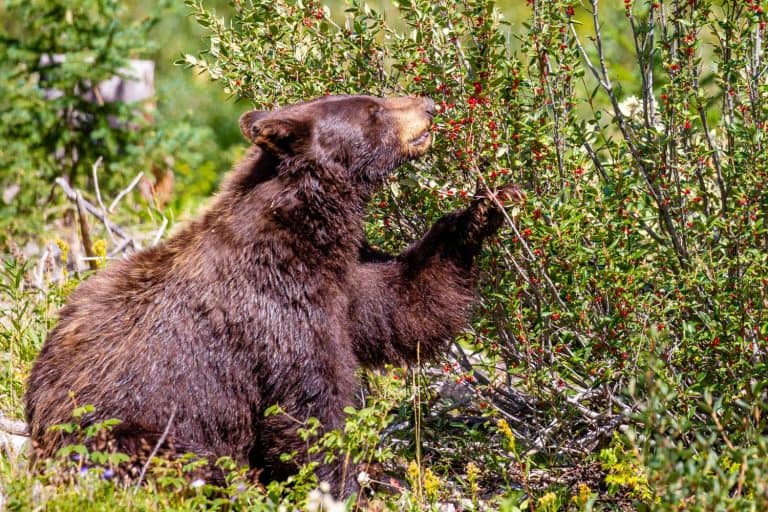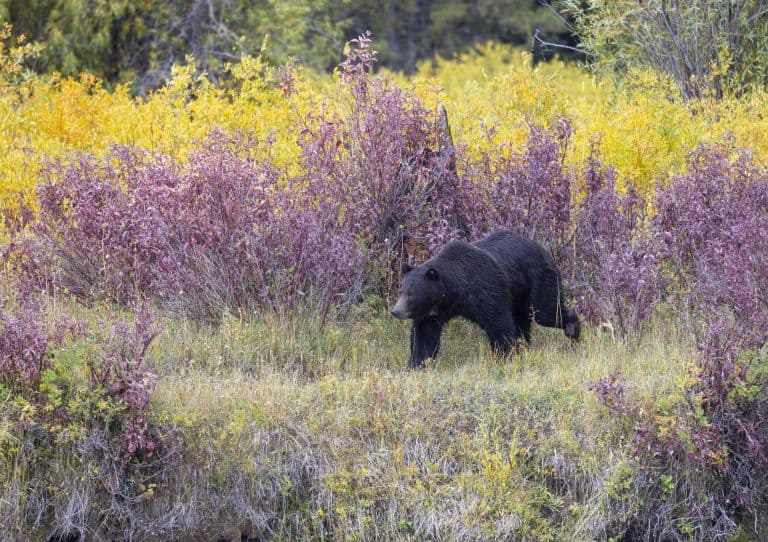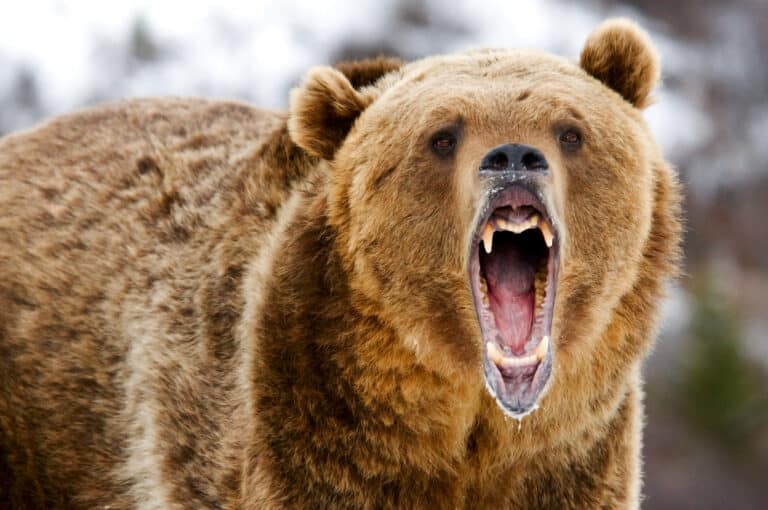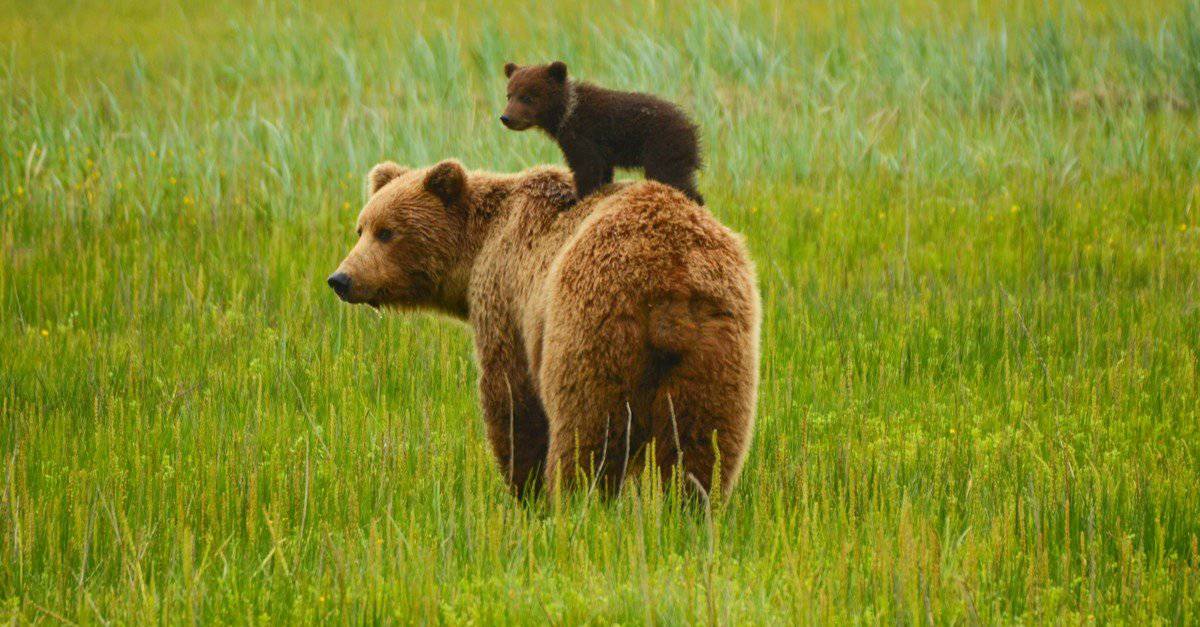

The awe-inspiring brown bear (Ursus arctos) is one of the most prominent living terrestrial members of the order Carnivora. They inhabit the mountains and forests of northern North America, Asia, and Europe. Several European countries recognize the brown bear as a national and state animal.
Brown bears vary in size depending on which type of population they belong to. Their typical length ranges from 5 to 9.2 feet. Male brown bears weigh between 400 and 1,200 pounds. On average, females weigh approximately 300 to 800 pounds. Both genders are sizable when standing on their hind legs.
Brown bears have long captured our attention in ways that few other wild animals have — they dig cozy caves using their claws, pack lean body mass while hibernating, are omnivores, and love hibernation. Read on to get more intriguing facts about one of the world’s largest predators.
1. Brown Bears Have a Strong Sense of Smell
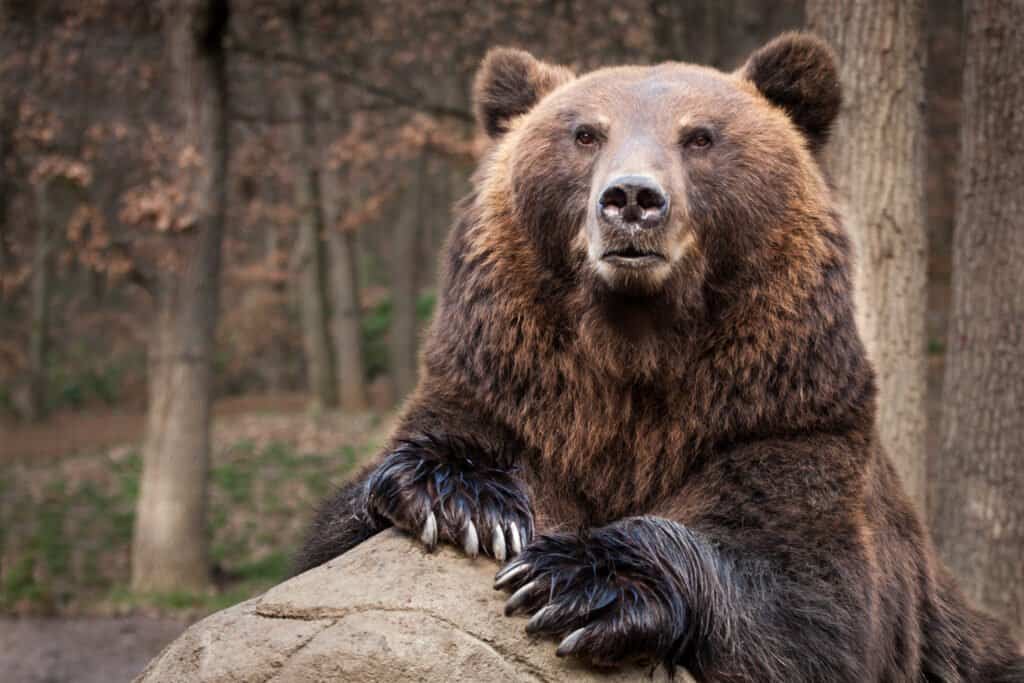
Brown bears have an excellent sense of smell.
©Marie Dirgova/Shutterstock.com
First, brown bears have a keen sense of smell, often regarded as being one of the best in the animal kingdom. Brown bears’ sense of smell even surpasses that of dogs. The sense of smell helps brown bears find food and mates, avoid danger, and keep track of their young ones.
Their olfactory bulbs, the areas that manage the sense of smell, are about five times larger than those of humans. This is why brown bears can smell prey or animal carcasses from 20 miles away. Therefore, you should assume they can also smell the food in your bag.
2. Brown Bear Cubs Are Born the Size of a Tiny Chipmunk
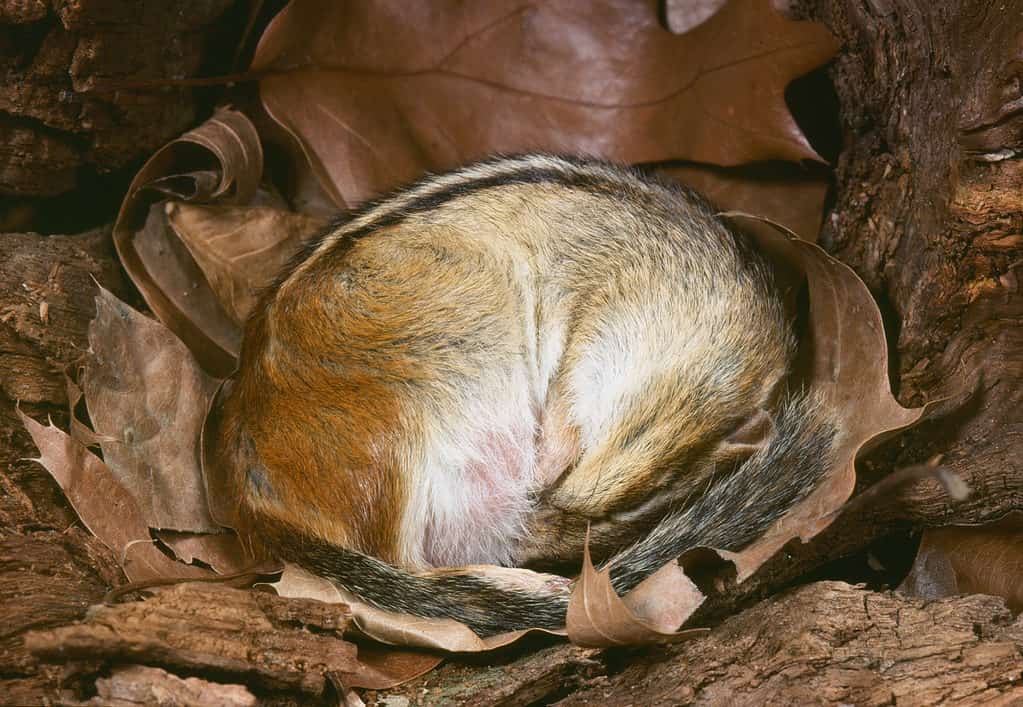
Baby brown bears weigh close to one pound.
©Breck P. Kent/Shutterstock.com
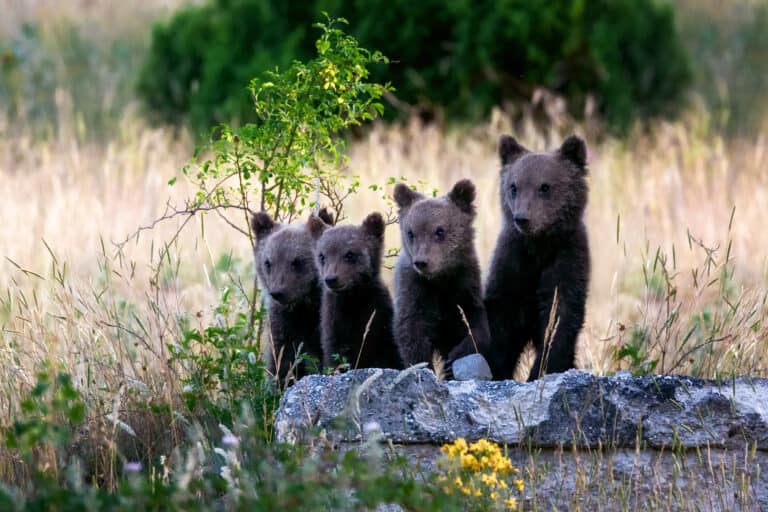
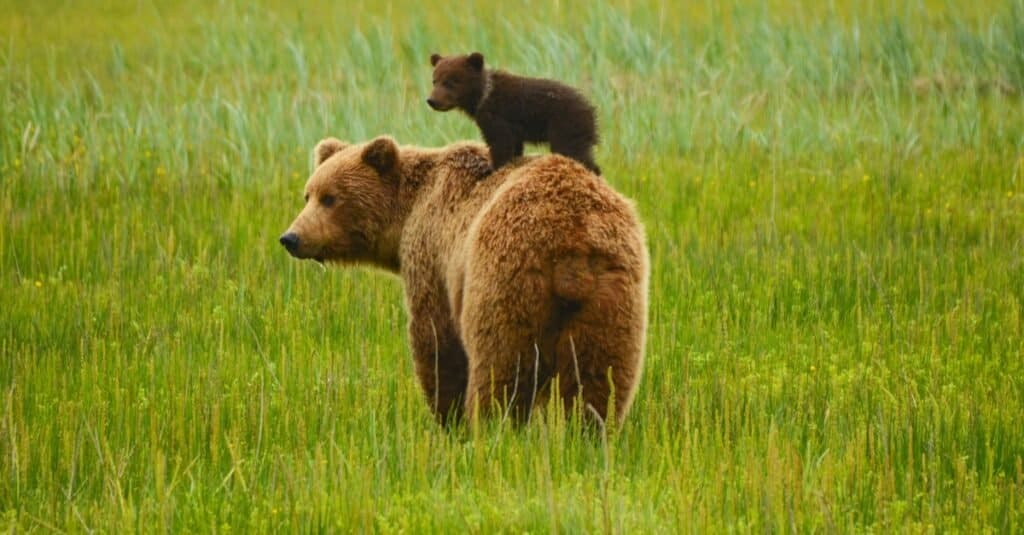
One would expect the cubs to weigh at least five or 10 pounds at birth because their mothers are enormous. However, they are born extremely small, averaging about one pound. They do not weigh more than five pounds until they leave the den. Cubs are born between January and March. They are born blind and without fur. The mother bear weans the cubs at about five months old, but they remain with their mother for approximately two to three years.
3. More Than 2,000 Brown Bears Live In Katmai National Park
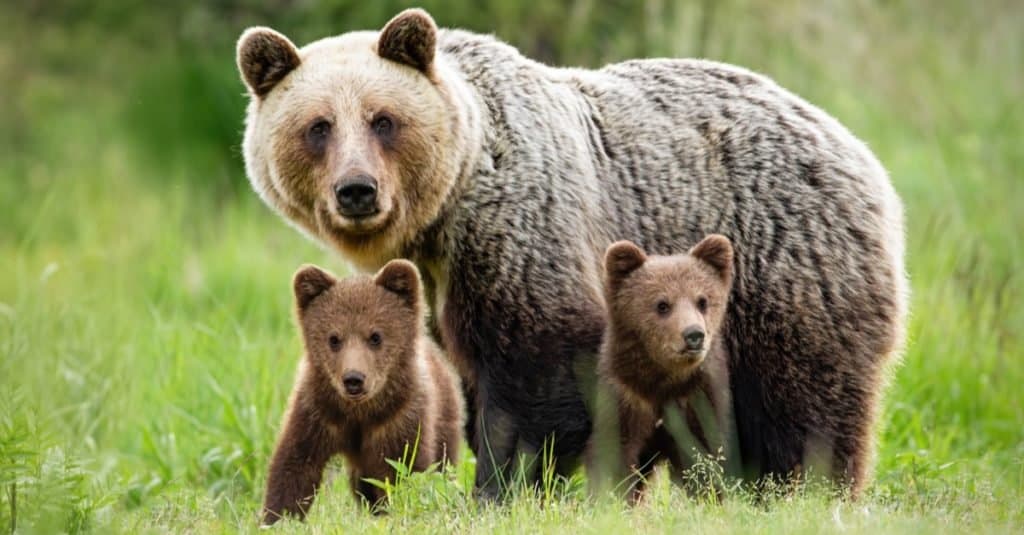
The Katmai National Park in Alaska is home to more than 2,000 brown bears.
©WildMedia/Shutterstock.com
When most people envision Katmai, they only think of brown bears. The Katmai National Park in Alaska is home to more than 2,000 brown bears, making the place one of the perfect bear-viewing destinations worldwide. Katmai provides an unaltered habitat for brown bears, while many bear populations worldwide continue to decline. Visitors from around the globe visit the park to enjoy the view of these magnificent animals in their natural habitats.
4. Brown Bears Are Generally Loners
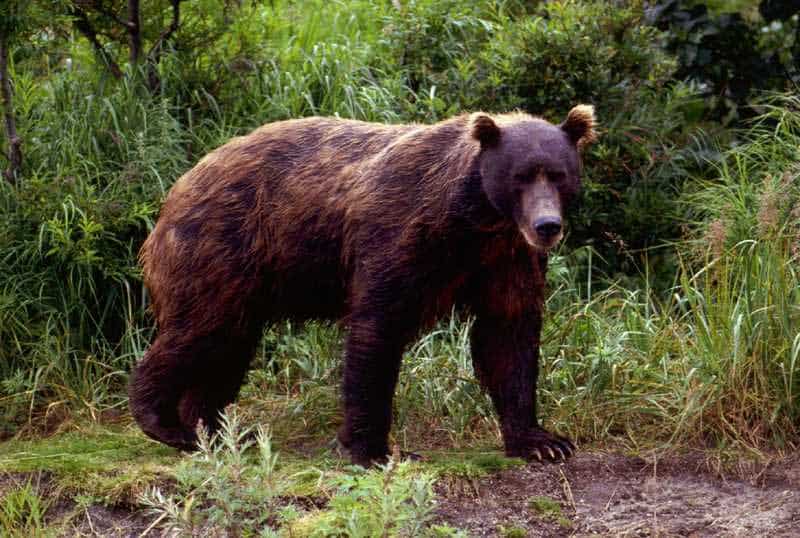
The brown bear is typically a loner.
©Arsen Gushin – Public Domain
Brown bears are typically loners who only seek a mate for short periods. They typically roam their natural habitats alone unless they have cubs. Long-distance communication would be required to inform other brown bears of gender, occupant age, and territory borders.
5. Brown Bears Are Active at Dusk and Dawn
Brown bears forage for food at night in areas inhabited by humans to avoid people during the day.
©David Rasmus/Shutterstock.com
Moving on to our next fact about brown bears, brown bears are usually active at dusk and dawn, though they can still be seen throughout the day. They come out at night, not because they are nocturnal animals, but because they want to avoid the summer heat. Brown bears also forage for food at night in areas inhabited by humans to avoid coming across people during the day.
6. There Are Many Subspecies of Brown Bear
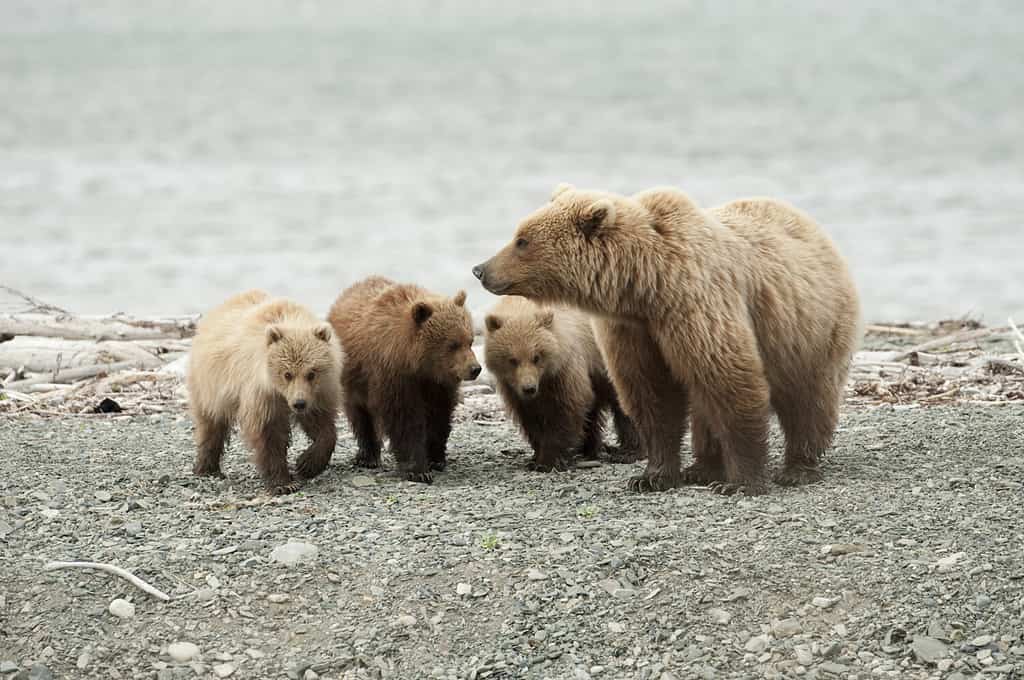
Approximately 7 to 9 subspecies of brown bears currently exist.
©Lorraine Logan/Shutterstock.com
There are many subspecies of brown bears, with scientists often citing the number to be between seven and nine. However, there are currently two living subspecies in North America — the Kodiak bear (Ursus arctos middendorffi) and the grizzly bear (Ursus arctos horribilis). Unfortunately, the California grizzly (Ursus arctos californicus) was driven to extinction less than 75 years ago after the discovery of gold.
The last California grizzly was shot in Tulare County in 1922. It was then declared the official state land mammal of California thirty years later. Check out the California state flag, and you will see brown bears. Brown bears became the largest taxidermy specimens at the Pacific Grove Museum of Natural History.
7. Brown Bears Can Reach 30 MPH
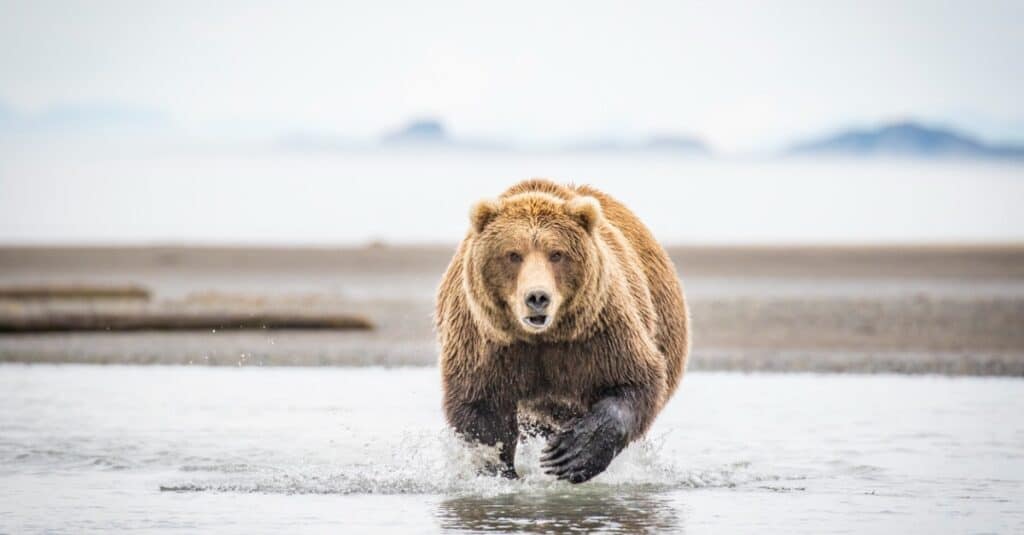
Grizzly bears can weigh over 600 pounds and can move very fast.
©iStock.com/Jess Bray
Although they look like lumbering giants, brown bears can reach speeds up to 30 mph. However, they can only sustain this speed over a short distance. These speeds are usually only attained when chasing prey or when they are in danger.
8. Hundreds of Brown Bears Descend on Brooks Falls Each Year
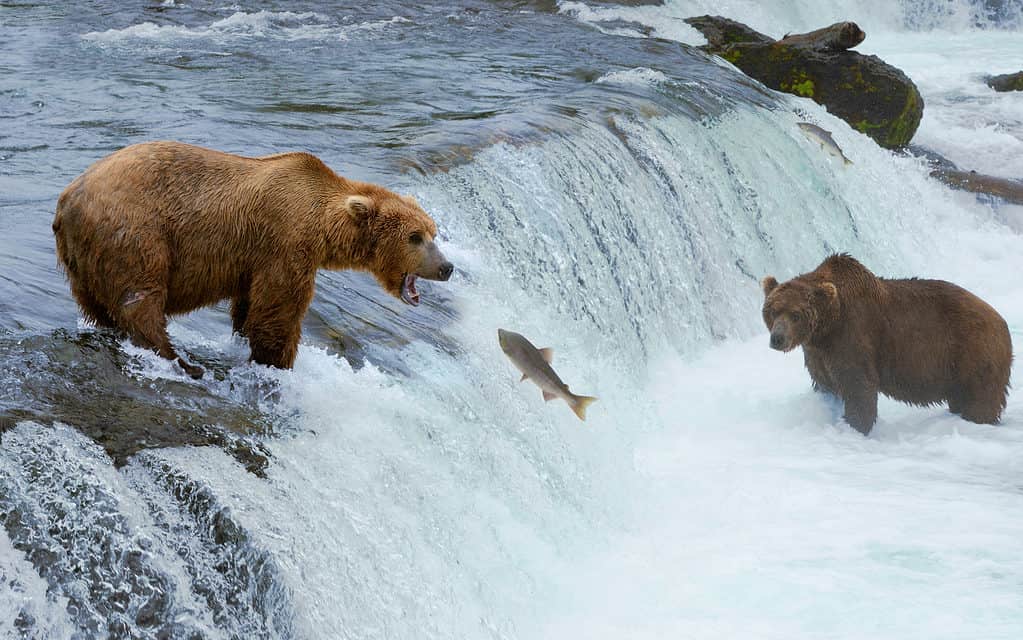
Grizzly bears can be seen fishing in Brooks River.
©Michal_K/Shutterstock.com
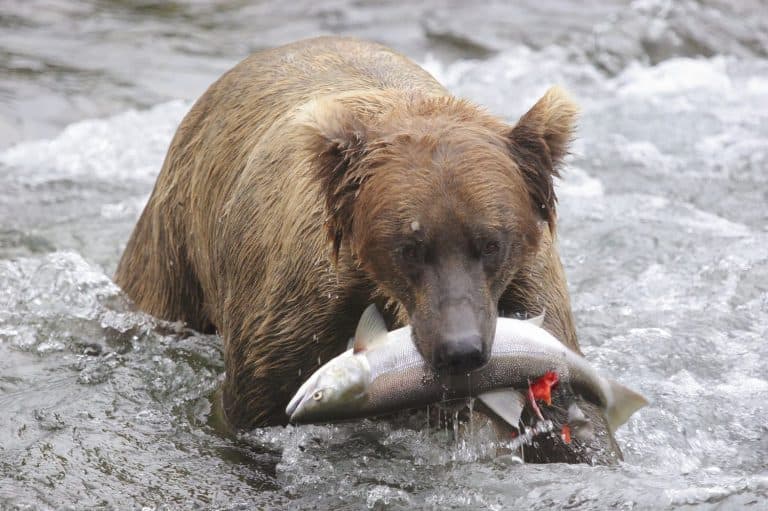
Brown bears lead relatively solitary lives but can be found together at Brooks Falls yearly, feasting on the migrating sockeye salmon. Dozens of brown bears descend on the Falls every year and can be found there from mid-spring until mid-fall. It’s one of the most awe-inspiring scenes to watch brown bears trying to catch food.
9. The Brown Bear’s Lifespan Ranges Between 20 and 30 Years
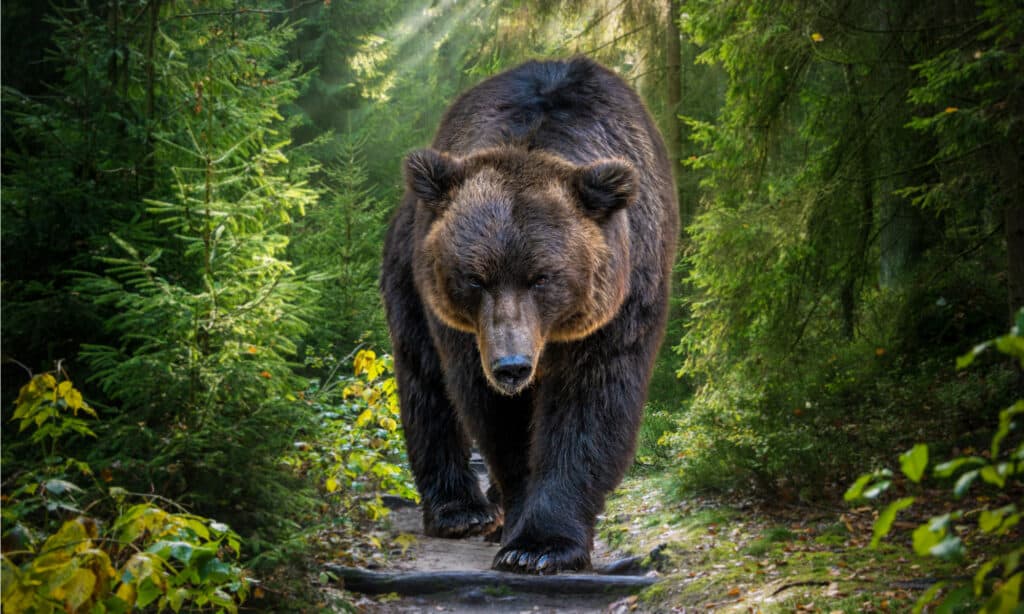
Brown bears can live for decades.
©Michal Hlavica/Shutterstock.com
Brown bears can live up to 20 to 30 years in the wild and up to 40 years in captivity. However, despite their long life expectancy, many brown bears die very early. They have almost no predators but are constantly threatened by starvation, humans, drought, accidents, internal parasites, and other bears.
10. Brown Bears Communicate Through Sound and Smell
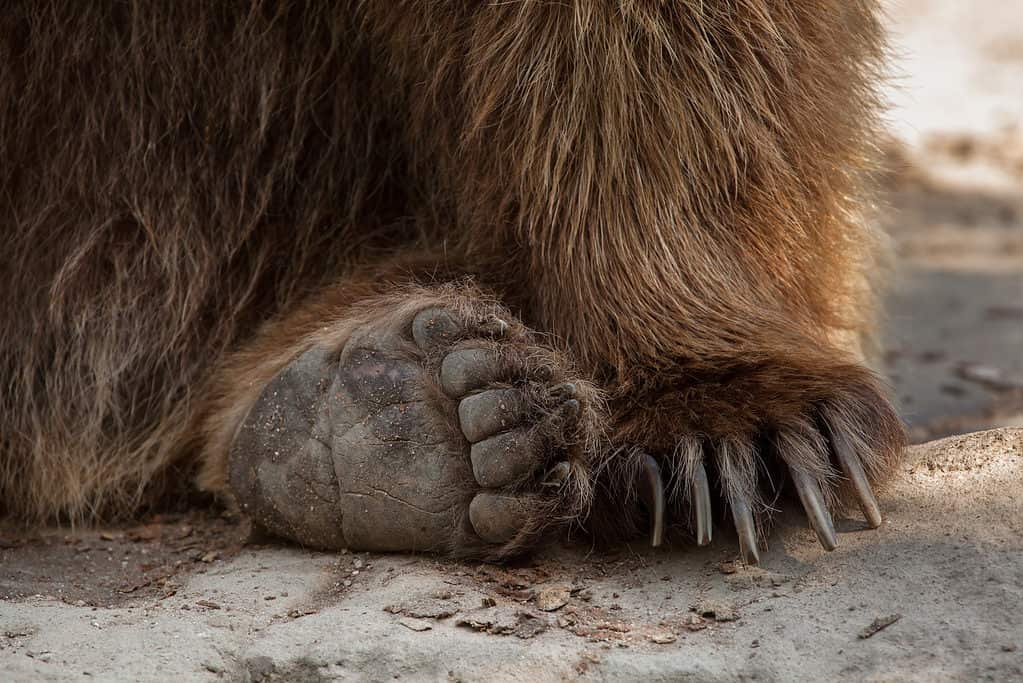
Brown bears have scent glands in their feet.
©Vladimir Wrangel/Shutterstock.com
Finally, brown bears twist their feet on the ground to release the scent from glands in their feet. The scent has about 20 different compounds, acting like sticky notes for other brown bears, relaying information such as gender. Cubs learn the smell of their mother when they’re young.
Brown bears also use amiable sounds like tongue clicks and grunts to show concern for the cubs or when a bear is approaching another to mate. They growl or bark when angry, agitated, or annoyed. A whimper, squeal, bellow, or bawl sound indicates pain. A purr, hum, or mumble portrays contentment. In many cases, brown bears accompany vocalizations with different body postures.