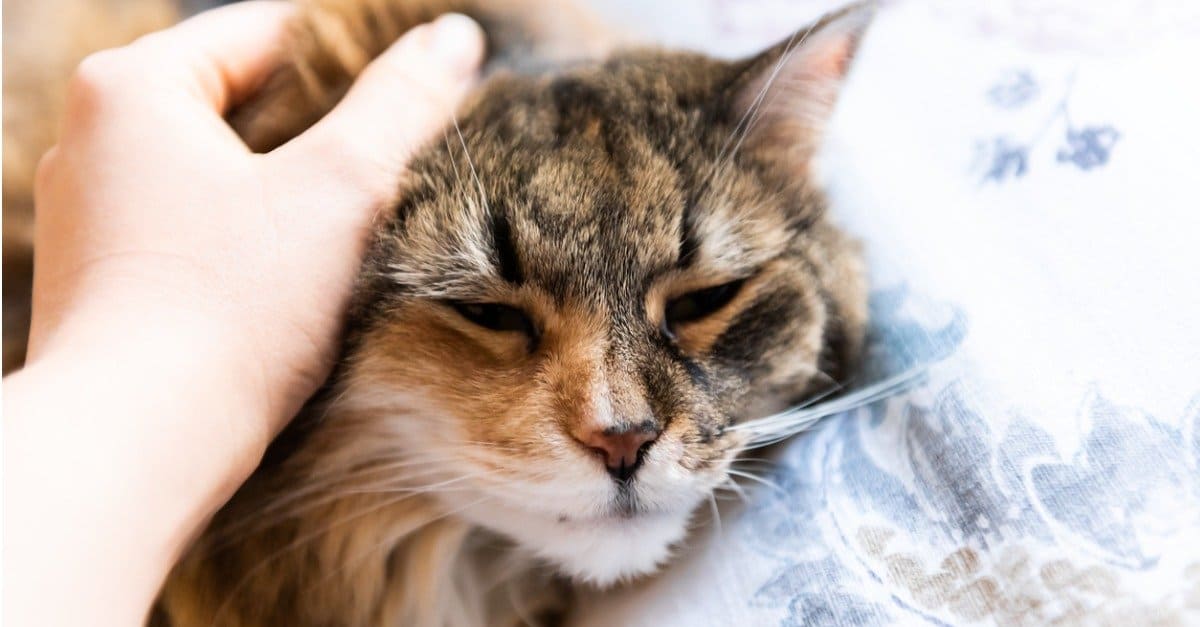

Pets can often act as emotional support animals to humans, but that doesn’t mean they don’t have their own mental health struggles. Nobody wants to see their furry friend in emotional pain, but unfortunately, like humans, our pets can get the blues, too. However, how far does this go? Can animals like cats experience depression the way humans do? If so, how can we help ease their pain and suffering as their owners?
If your cat has been acting off lately and you’re wondering whether it’s struggling with mental-health-related issues, you’ll want to understand the signs of depression in cats. Here is everything you should know about depression in cats and potential ways to support your pet.
Can Cats Get Depression?
Yes, cats can suffer from depression. In fact, there is even some evidence that cats can experience mental health conditions like post-traumatic stress disorder (PTSD). This, of course, goes beyond a simple bad day while you’re away for vacation or a lonely night locked out of your bedroom. Depression in cats can be ongoing and persistent, requiring treatment to alleviate the symptoms.
What Triggers Depression in Cats
Many situations can trigger depression in cats. For instance, if you recently moved to a new home, your cat might struggle with depression while adjusting to this change. On the other hand, maybe you recently lost a family member or pet your cat shared a strong bond with. If this is the case, your cat might display signs of depression as it mourns the loss — just as a human would.
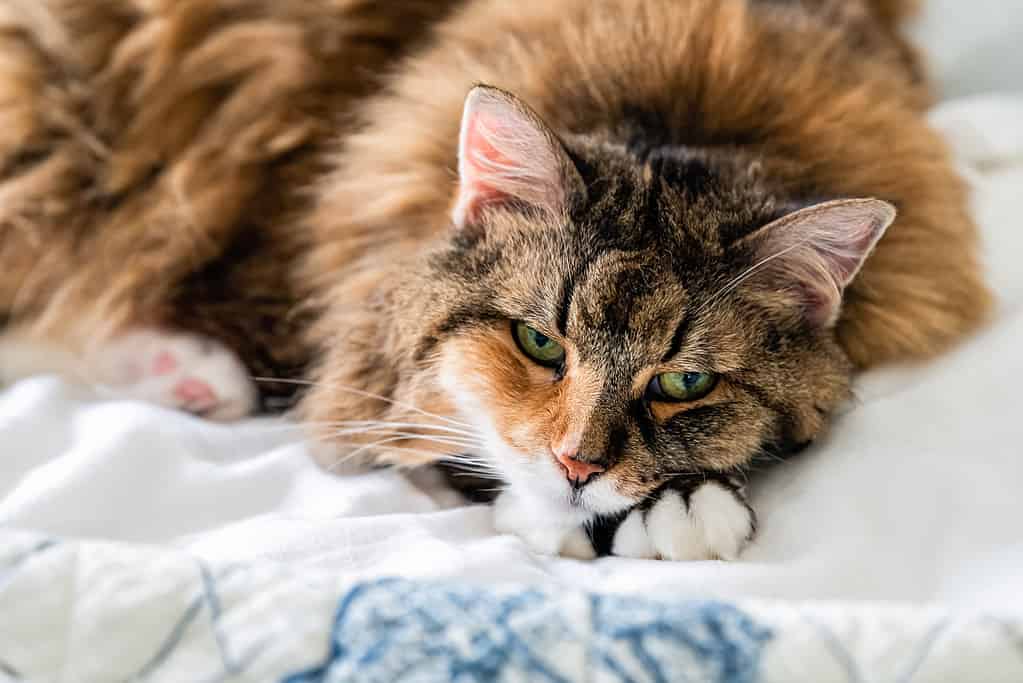
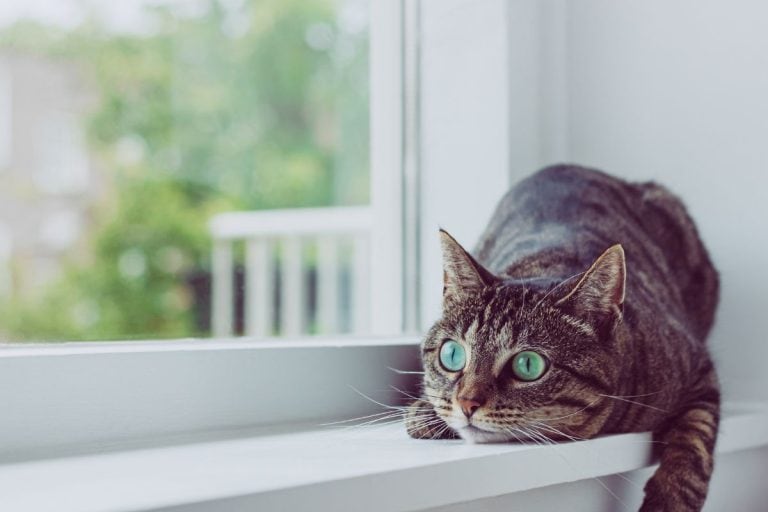
Like humans, cats can experience mental health issues like depression and anxiety.
©krblokhin/iStock via Getty Images
Even a simple shift in your schedule can impact your cat’s mental health, which is why it’s so important to stay in tune with your furry friend and pick up on any signs of emotional distress.
Signs Your Cat Is Depressed
Are you worried your cat is experiencing mental health issues? Here are a few signs that your kitty is struggling with depression.
Lack of Appetite
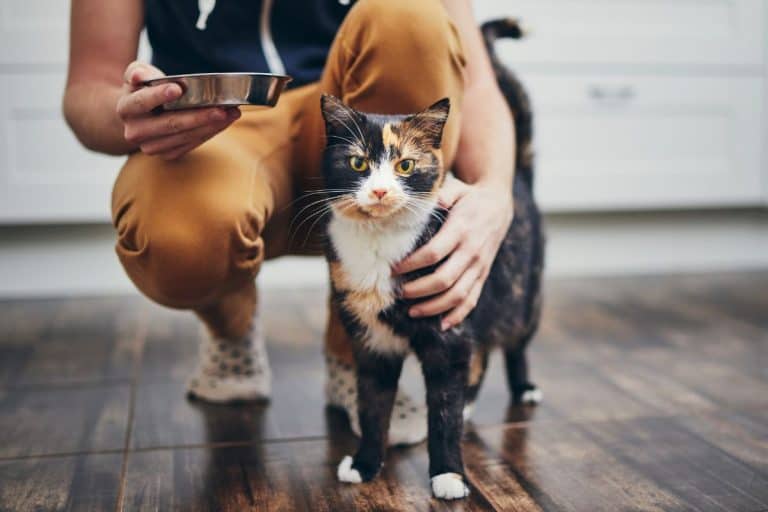
If your cat hasn’t been eating as much as usual, it might be struggling with depression. Just as humans experience a lack of appetite when they’re going through a difficult time, cats can also get a nervous stomach that prevents them from eating. You should contact your cat’s vet to address related concerns as soon as you pick up on this issue.
Behavioral Changes
Certain behavioral changes can also indicate depression in cats. For instance, if your cat is less playful or more clingy than usual, it might be struggling with its mental health. Remember: you know your cat best, and reporting any abnormal behaviors to a vet is valid.
Increased Vocalization
Some cats are more vocal than others, but increased vocalization might point to an issue like depression. Just like humans cry as a form of release, cats sometimes vocalize their emotional pain, too. If your cat is consistently vocal — especially with long and deep meows — mention this symptom to a professional.
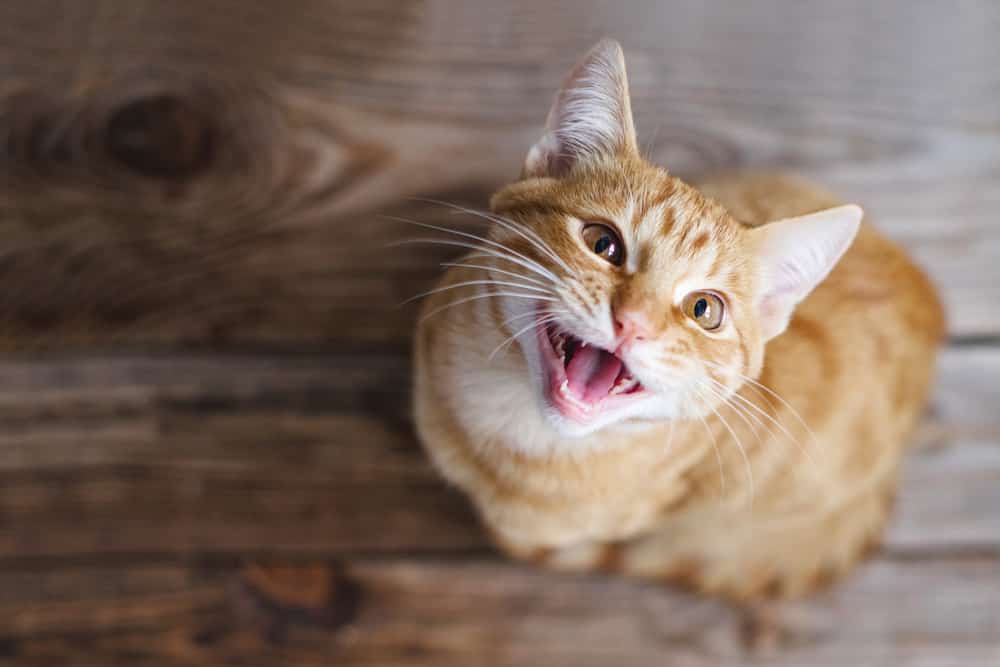
Increased meowing might be your cat’s way of communicating its sadness to you.
©savitskaya iryna/Shutterstock.com
Lethargy
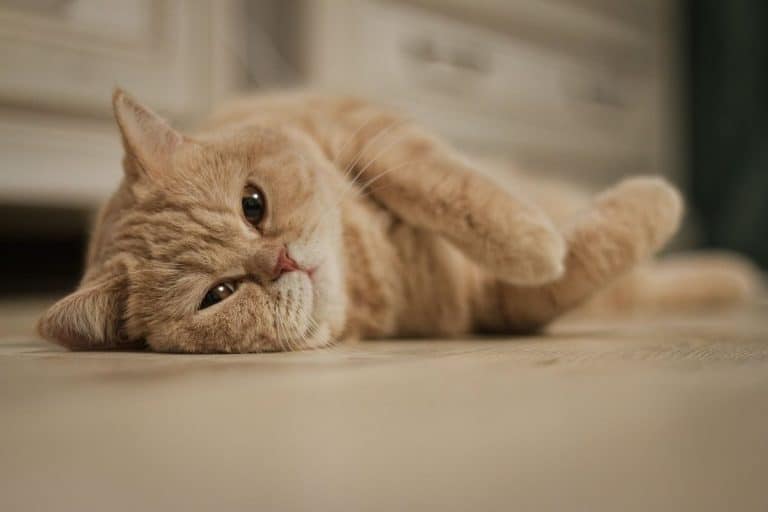
Depression can be exhausting, and lethargy is a common result of mental distress like depression. If your cat has been lying around more often than usual or isn’t acting like its energetic self, it might be time to bring your furry friend to the vet for a mental health visit.
Lack of Grooming
Just as it can be difficult for humans to keep up with their health and hygiene during depressive episodes, cats will sometimes stop grooming themselves when they’re experiencing depression. If you notice your cat hasn’t been taking care of itself as much, this might be a good indicator of depression.
Increased Urination
Increased urination is another sign of depression in cats. If your cat is making more frequent trips to the litterbox, first take it to the vet to rule out other health issues. If nothing is wrong physically, you can determine whether depression is the cause of this symptom.
Caring for a Depressed Cat
If your cat displays signs of depression, don’t panic — this can happen from time to time. Your first course of action should be to take your feline friend to the vet, as they might prescribe medication or provide other treatment options.
Some additional ways you can support your kitty are by spending quality time with your cat, keeping an eye on new or worsening symptoms, trying new toys or games, and simply ensuring your cat is taking care of itself. As with humans, cats with depression require love and support throughout their journeys.