
Adult chickens can definitely eat pineapple but with a few restrictions. Owners should offer pineapple in moderation, and in lower volume than other, healthier treats. Some parts of the pineapple, such as the tough outer skin, the core, and the leaves should probably be avoided. And owners should never offer moldy pineapple to their chickens. Read on to learn more about feeding chickens pineapple and how much can cause problems.
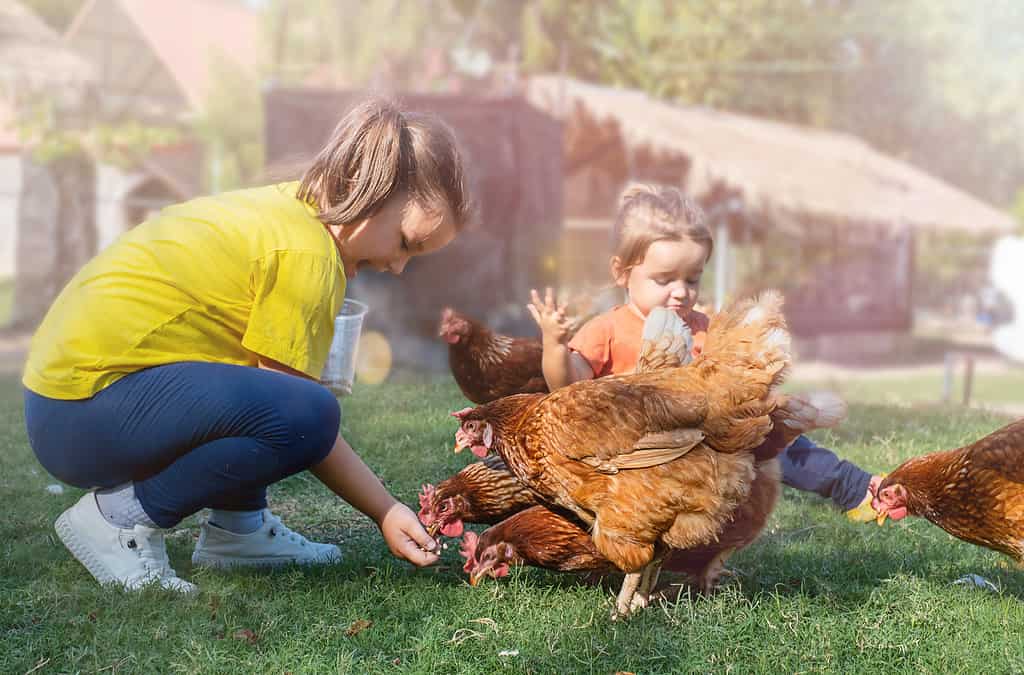
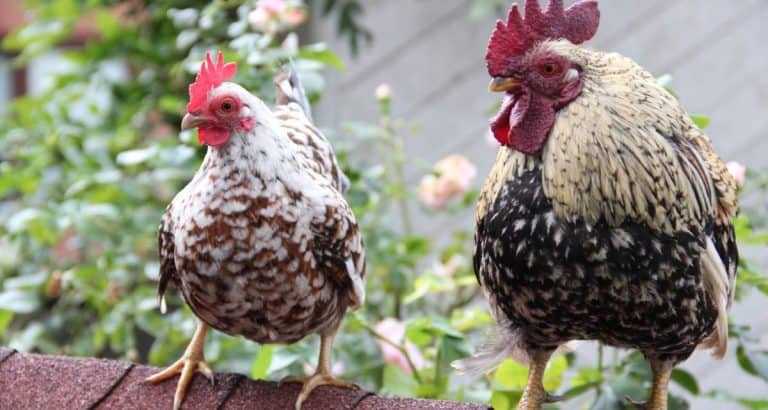
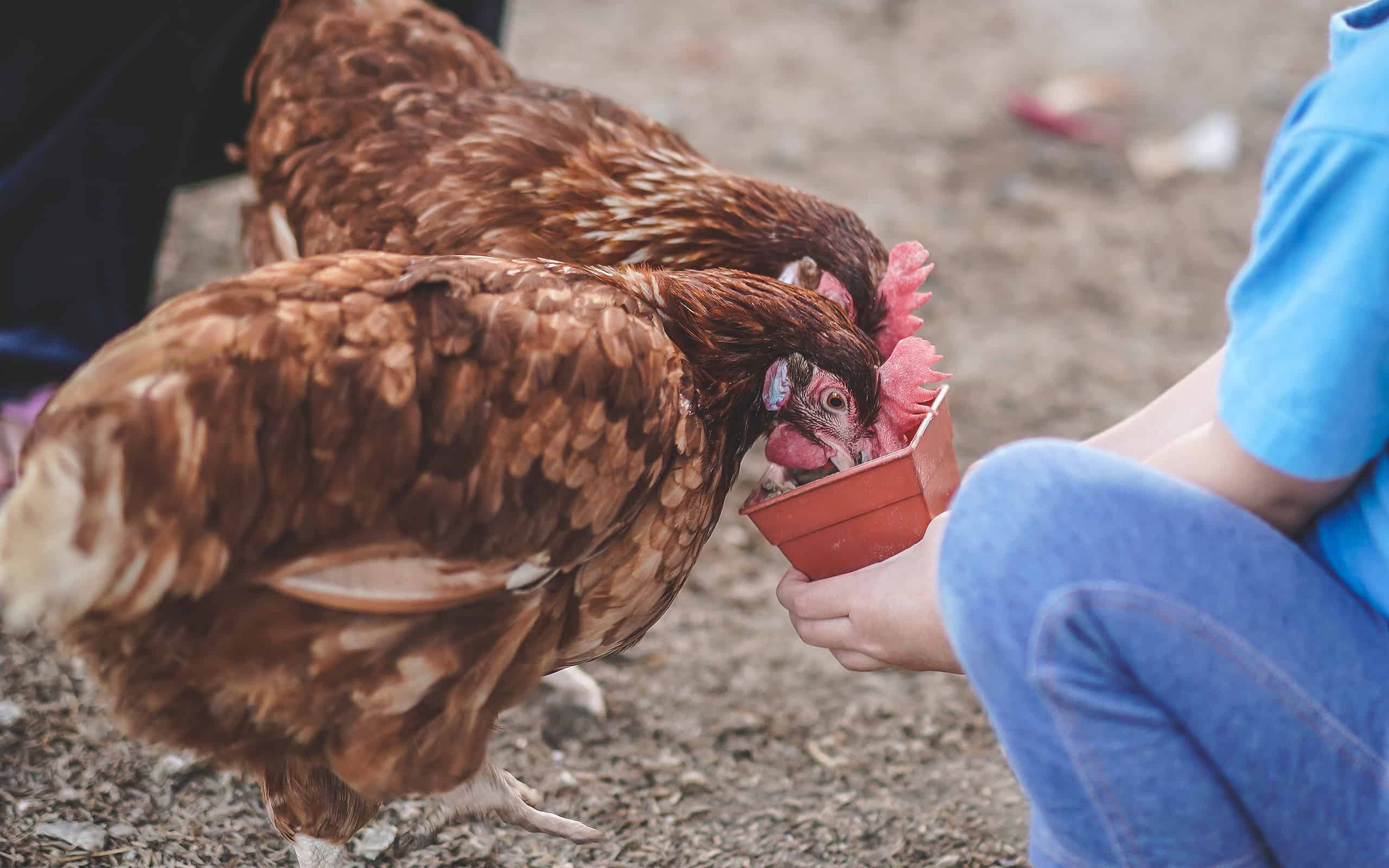
Chickens love treats, but pineapple should be fed in limited amounts.
©Valeriia Kuznetsova/iStock via Getty Images
Can Chickens Eat Pineapple?
Pineapple is one of the many table scraps chickens can safely eat in moderation. No part of a pineapple is toxic to chickens, although some parts can cause health issues if eaten in excess. To limit any problems, owners should feed chickens only small amounts of pineapple, and avoid giving them the tough skin, the leaves, and the core.
What Nutrients Do Pineapples Provide?
Pineapple provides lots of vitamins and other nutrients, including Vitamin C, Vitamin B6, Vitamin B5, manganese, thiamine, folic acid, iron, potassium, magnesium, and trace amounts of Vitamin A, Vitamin K, calcium, phosphorous, and zinc. These various nutrients support the immune system, muscle development, healthy skin, brain development, and much more.
How Much Pineapple Can Chickens Have?
According to Purina Mills, a leader in poultry nutrition, chickens should be fed a diet consisting of 90 percent high quality, balanced commercial feed and 10 percent healthy treats. Laying hens require about 0.25 pounds of feed per day, or about 0.5 cups. That means they should only get about 2 tablespoons of various treats, such as pineapple, each day.
| How Much to Feed Chickens | Balanced Feed | Treats |
|---|---|---|
| Percent of total diet | 90 percent | 10 percent |
| Amount for hens each day | 0.25 pounds or 0.5 cups | 2 tablespoons |
Can You Feed Chickens Pineapple Every Day?
The type of treats chickens receive, ideally, should vary and include more leafy green treats than sweet fruits. Given this, owners should probably try to limit pineapple offerings to no more than a couple of tablespoons per chicken, no more than two or three days a week.
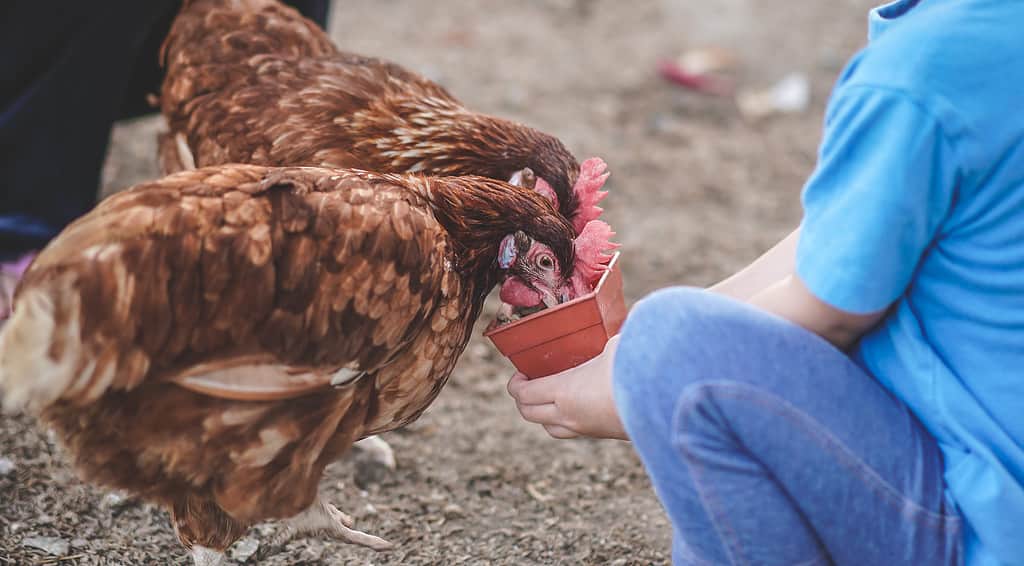
Treats should be limited to no more than 10 percent of a chicken’s total diet.
©RB Stocker/iStock via Getty Images
Can Feeding Chickens Too Much Pineapple Cause Problems?
Feeding chickens too much pineapple can cause digestive problems including diarrhea, indigestion, constipation, and even intestinal blockage. It can also cause irritation of the digestive tract, skin rashes, and obesity.
Too Much Pineapple Can Cause Obesity
In chickens, as in humans, too many sweet treats can lead to obesity. Pineapple is high in sugar. Whether you feed your chicken fresh pineapple, canned pineapple, or even dried pineapple, the sugar content is nearly the same as candy. Too much can easily lead to weight gain.
Pineapple Can Cause Digestive Issues
Feeding chickens too much pineapple can lead to an array of digestive issues. These include diarrhea and indigestion, mostly caused by the high acidity and excess sugar in the pineapple. The high amount of undigestible fiber in the core and skin of pineapples can cause chickens to become constipated or develop blockages that begin in the crop.
Bromelain in Pineapple Can Irritate Chickens
Feeding chickens too much pineapple can cause problems related to bromelain, an enzyme found in the fruit. Bromelain breaks down the bonds in proteins. It has been used as a meat tenderizer due to this effect. But eating too much bromelain can cause irritation of the digestive tract and even cause skin rashes in chickens. The skin and leaves contain the highest levels of bromelain. Cooking pineapple before offering it to chickens can help reduce the bromelain content.
Benefits of Feeding Chickens Pineapple
One of the greatest benefits of feeding chickens pineapple is the high level of Vitamin C. This essential vitamin helps to boost the immune system. The bromelain in pineapples also helps to break down the proteins in their diet and make them easier to digest. Manganese and calcium promote good bone health, and iron and folic acid boost red blood cell production and help prevent anemia. Just remember many of these nutrients can also be provided by leafy green vegetables and other, healthier treats.
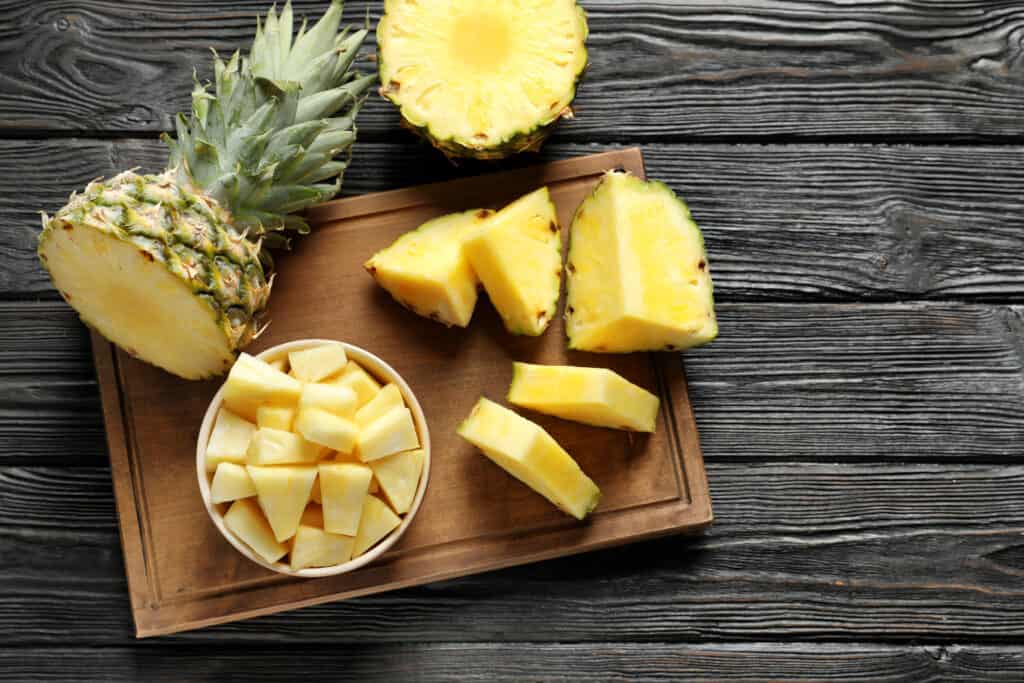
A little bit of pineapple as an occasional treat can be beneficial to chickens.
©New Africa/Shutterstock.com
Avoid Feeding Pineapple to Chicks
Although adult chickens can tolerate pineapple in small amounts, owners should avoid feeding this treat to chicks. The nutritionists at Purina Mills recommend waiting until chickens reach 18 weeks of age, or until hens lay their first egg, before introducing treats. They need all the nutrients in their balanced feed, and offering pineapple or other treats may prevent them from getting all the nutrition they need for healthy growth.
Never Feed Chickens Moldy Pineapple
In addition to the toxic foods chickens should not eat, owners should never feed their flock moldy fruits or vegetables. Some types of mold can be deadly to chickens. As a rule, don’t feed chickens any fruit that you wouldn’t feel safe eating yourself. This includes moldy or fermented pineapple.
Remove Uneaten Pineapple to Avoid Pests
Some chickens love pineapple and others will take a hard pass. Make sure to remove any uneaten pineapple or other treats from your chickens’ enclosure or yard within a few hours to avoid drawing pests.
Watch for Signs of Digestive Problems and Allergies
Although rare, chickens can have allergic reactions to various treats. If you notice signs of acute digestive issues or other problems after feeding your chickens pineapple, or any other new food, stop giving them the treat and provide plenty of water. Seek medical attention from your veterinarian if your bird shows any signs of an allergic reaction, such as serious skin rashes, difficulty breathing, watery stools, or any other symptom that causes alarm.