
Rabies is a disease that causes a huge amount of concern because it is always fatal once the symptoms have started. It is caused by a virus that targets the central nervous system and is mainly passed from one animal to another through a bite. One important fact about rabies is that it is a solely mammalian disease – fish, birds, and reptiles cannot get it. Most human cases of rabies in the US are attributed to bats but worldwide domestic dogs cause most cases.
In most of the US, cats and dogs have to be vaccinated against rabies. However, this does not prevent exposure to rabid wildlife. We know that raccoons, foxes, and skunks can carry the virus but what about rats? Can you catch rabies from wild living or pet rats? Here we examine whether rats can have rabies and what you should do if you are bitten by one.
Can Rats Have Rabies?
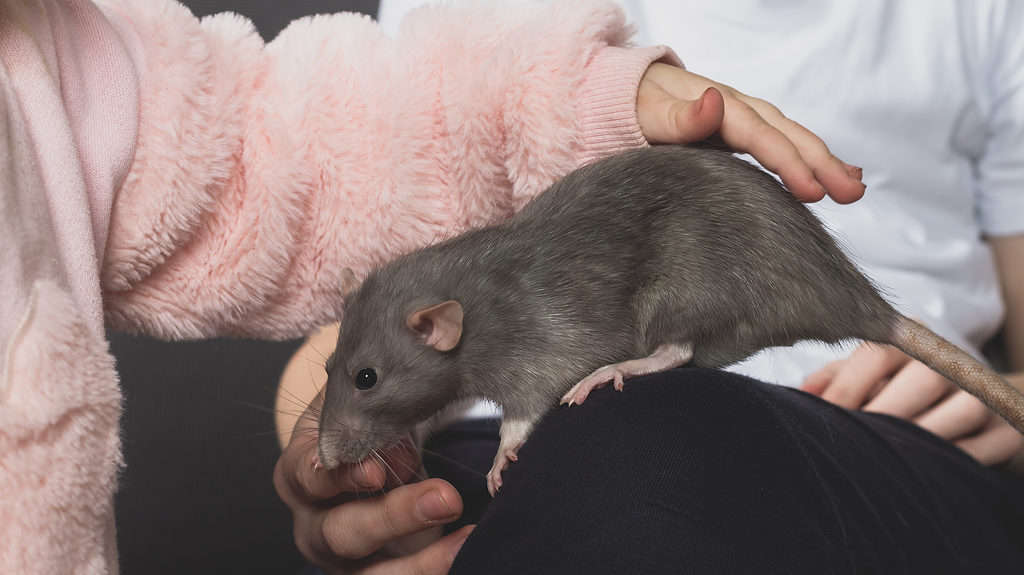
There are at least 14,000 rat bites each year in the US.
©iStock.com/Olga Evtushkova
Rats are mammals and therefore, in theory, they could carry rabies. They would probably have caught it by being bitten by a rabid wild animal (such as a fox) or by a dog or cat. According to data from the US Centers for Disease Control, at least 14,000 people are bitten by a rat each year and this is thought to be a conservative estimate. Also, at least 400,000 US households have a pet rat or mouse so there are plenty of opportunities for exposure!
Scientists have infected rats with rabies in laboratories and the virus has been found in their saliva. This further supports the theory that you could get infected from a rat bite.
Have Any Us Rats Had Rabies?
No, rabies surveillance in the US has yet to identify a rabid rat. Furthermore, there are no records of any human catching rabies from a wild living or pet rat. The reasons for this are not entirely understood. However, you need to bear in mind that rats are small. If they were to be bitten by a rabid raccoon or dog, they are unlikely to survive the attack. This means that they would never go on to infect any other animal – including humans. Also, most pet rats are kept indoors and in cages where they are protected from bites from any other animal.
What Do Rats With Rabies Look Like?
There is little information on what a rat with rabies would look like but we do know that you cannot tell if any animal has rabies by looking at them. Some appear to be tamer and more docile whilst others are aggressive. In other wildlife, rabies can cause poor coordination leading to paralysis and eventual death.
Can Rats Carry Other Diseases?
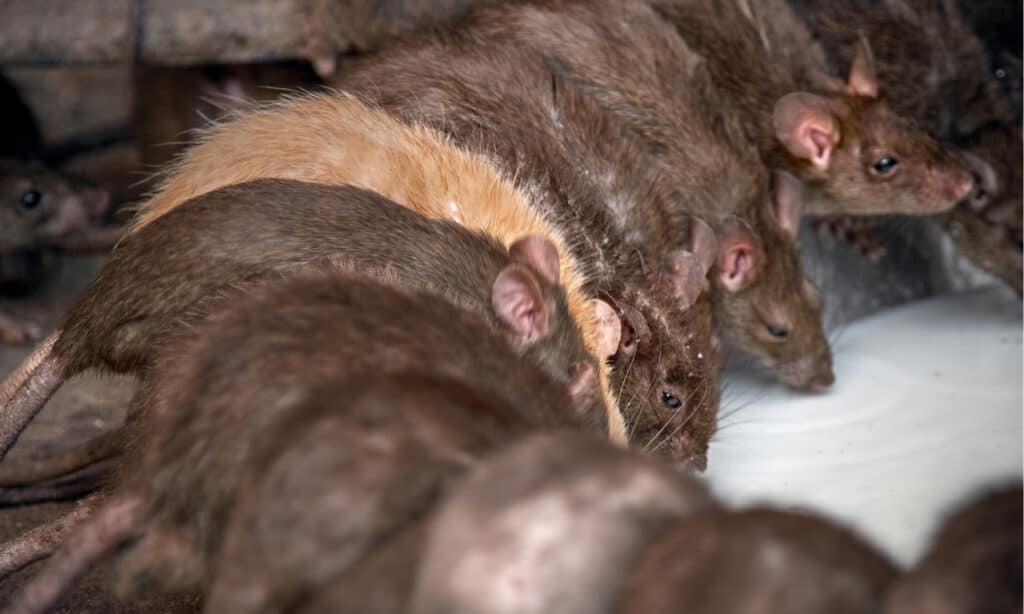
Rats can carry several nasty diseases.
©Kylbabka/Shutterstock.com
There are plenty of other infections that you can catch from wild-living rats (and some pet rats) that are much more common than rabies! Perhaps the most well-known is rat bite fever. This is a rare disease caused by bacteria called Streptobacillus moniliformis and Spirillum minus. You catch it from rat bites or scratches or from contact with rat poop or pee. Around one in ten rat bites results in a case of rat bite fever. Children and people with compromised immune systems are most at risk. The symptoms include fever, vomiting, headache, and muscle pain.
Rat bites can also transmit Seoul virus and several local bacterial infections that could eventually spread throughout the body. If you are working in areas infested with rats, protect yourself with appropriate personal protective equipment including gloves.
What to Do if You Are Bitten by a Rat – First Aid
If you are bitten (or scratched) by a pet or wild rat the first priority is to stop the bleeding by firmly pressing on the wound with clean gauze. Then, clean it with soapy water and rinse thoroughly. Cover the wound with a dry dressing and monitor it for signs of infection. If you are able to trap the rodent so it can be tested for infection that can be very useful. You may want to get elderly, young, or infirm people checked over by a doctor.
Symptoms of infected rat bites normally start within three to 10 days. There may be redness, swelling, heat, and pus formation. You may also feel feverish. If this happens, you need to see a doctor right away.