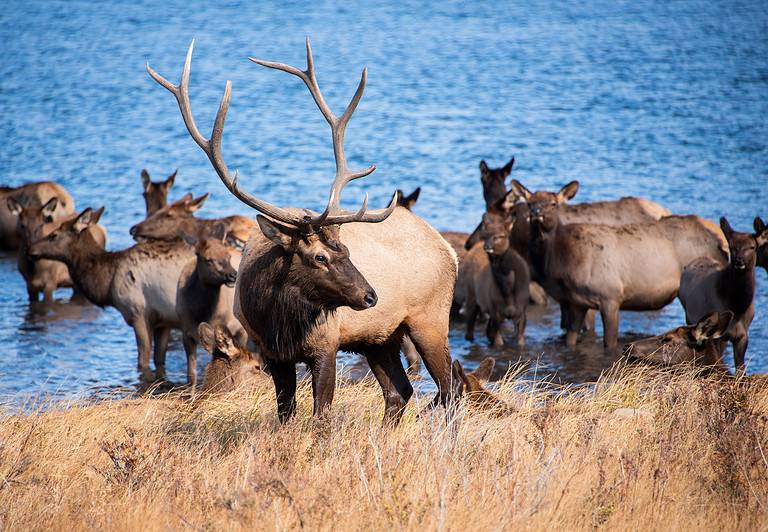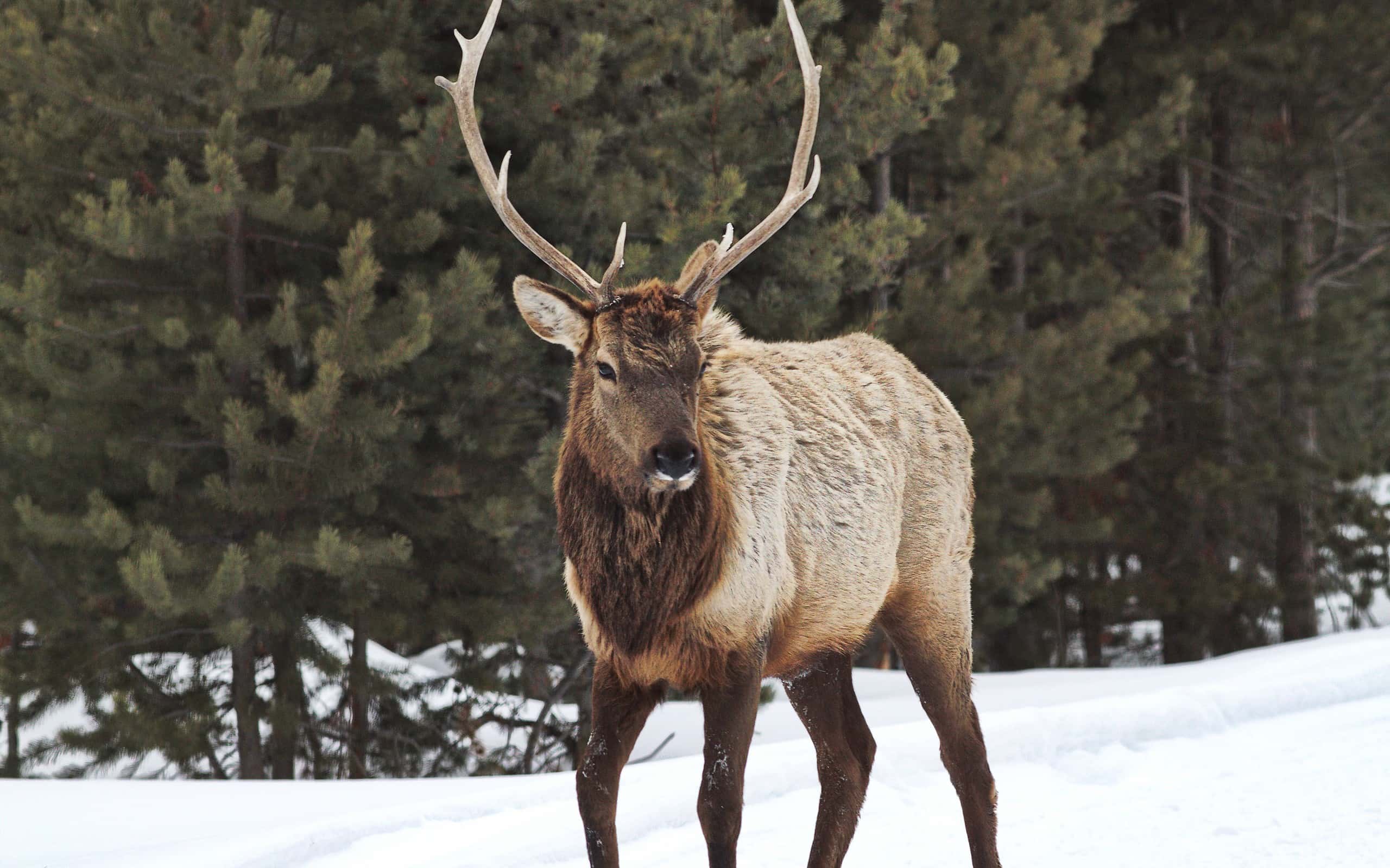

Sadly, people have hunted elk to near extinction in Tennessee. Since the 1800s, there have been very few elk in the state. Luckily, Tennessee has been working on a few reintroduction programs, introducing a few herds into the state. Luckily, you can now see elk in Tennessee.
Currently, there are two locations where you can see elk in Tennessee. These are inside state parks, where elk have protection.
Always be cautious when viewing elk. While elk aren’t aggressive, they can be territorial and are much bigger than humans. It doesn’t take much for an elk to injure you, and you don’t want to push your luck. It’s important to remember that wildlife is WILD.
Let’s take a look at these two locations:
1. North Cumberland Wildlife Management Area
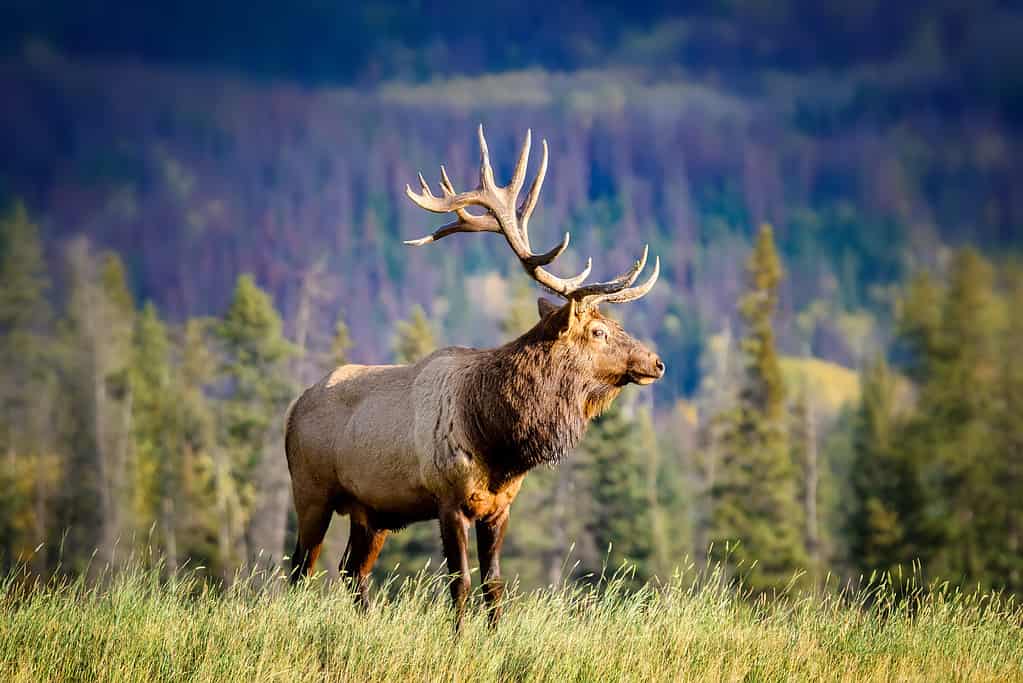
If you want to see elk in their natural habitat in Tennessee, North Cumberland Wildlife Management Area is the place to do it.
©Jaroslav Sugarek/iStock / Getty Images Plus via Getty Images
This wildlife area is located near LaFollette, TN. It is one area where the state has been reintroducing elk. The area has many habitats, including hardwood forests, wetlands, and rocky areas. Therefore, it is able to support a pretty large elk population.
Of course, elk are not present at all places in the area. The best place to see them is Hartfield Knob Creek Viewing Tower, which can provide quite the view. These views won’t be up close, but that’s probably for the best. The tower offers a panoramic view of the surrounding valleys and hills, and elk commonly graze in these areas.
The area also has a live camera, which may occasionally catch elk. You can also use this camera to determine when elk are out and about, which can make viewing them in real life a bit easier.
There are also many scenic trails in the area. Often, these trails don’t provide much opportunity to view elk, though. Elk usually hear and smell you before you see them. Therefore, walking around isn’t usually the best way to see them. Still, hiking trails can be fun before or after you head to the viewing tower.
Morning and evening are the best times to see elk. Be mindful of opening hours, though. You don’t want to get there TOO early, but you don’t want to plan on staying after dark, either.
You may want to bring some binoculars to spot elk at a distance. Getting close to elk isn’t a good idea, and you likely won’t have much of a chance to get close to elk in this area, either.
2. Cataloochee Valley in Great Smoky Mountains National Park
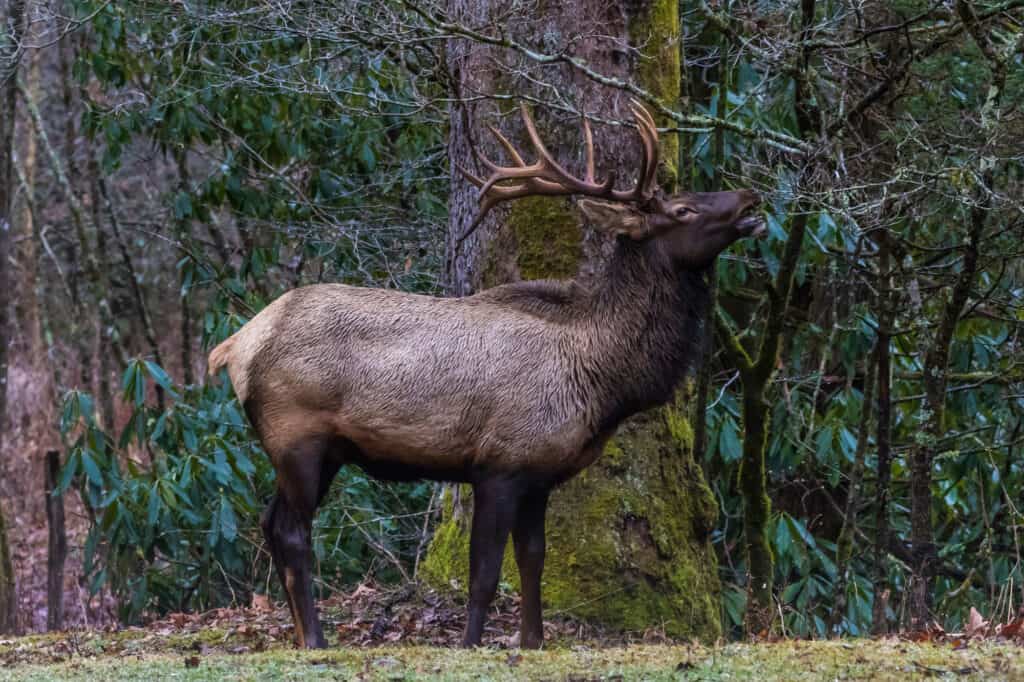
You’ll spot elk easiest by the treeline or grazing in meadows.
©iStock.com/DimitrisTimpilis
The only other place to see elk is the Cataloochee Valley in Great Smoky Mountains National Park. Elk are re-established in this area and regularly appear by the roadside.
This valley sits between the mountains of this national park. There are several meadows, old-growth forests, and spruce woodlands. These habitats are enough to support the smaller herd of elk in the park. However, the smaller size of the valley limits the herd’s growth.
Spotting elk in this valley isn’t very predictable. Because the herd is rather small, you’re less likely to see them than in other locations. However, they commonly graze along the roadways. While driving through the valley, keep your eyes open for signs of the elk. They tend to graze in the early morning or during the evening hours. During the hotter part of the summer, they tend to spend more time hiding in the shade of the trees. The shade makes them harder to spot.
For the best chance of seeing elk, you may want to stay near the park and drive the scenic valley a few times. The park offers several other activities, including hiking trails and overlooks. Consider spending the day in the park or nearby Gatlinburg, driving through the valley in the morning and evening.
We also recommend you plan your trip for the weekdays or during the “off” season, as the park may be very crowded. While elk in this valley aren’t very fearful of people, they may stay away from larger crowds.
Drive slowly while looking for elk, especially since the roads inside the park tend to be a bit treacherous, anyway. The scenic beauty is something to enjoy, even if you don’t see any elk along the way.
Of course, be cautious around elk and always follow park regulations. In winter, many roads around the park close due to bad weather. Once it snows, much of the park shuts down for the season. Keep this in mind as you plan your visit.