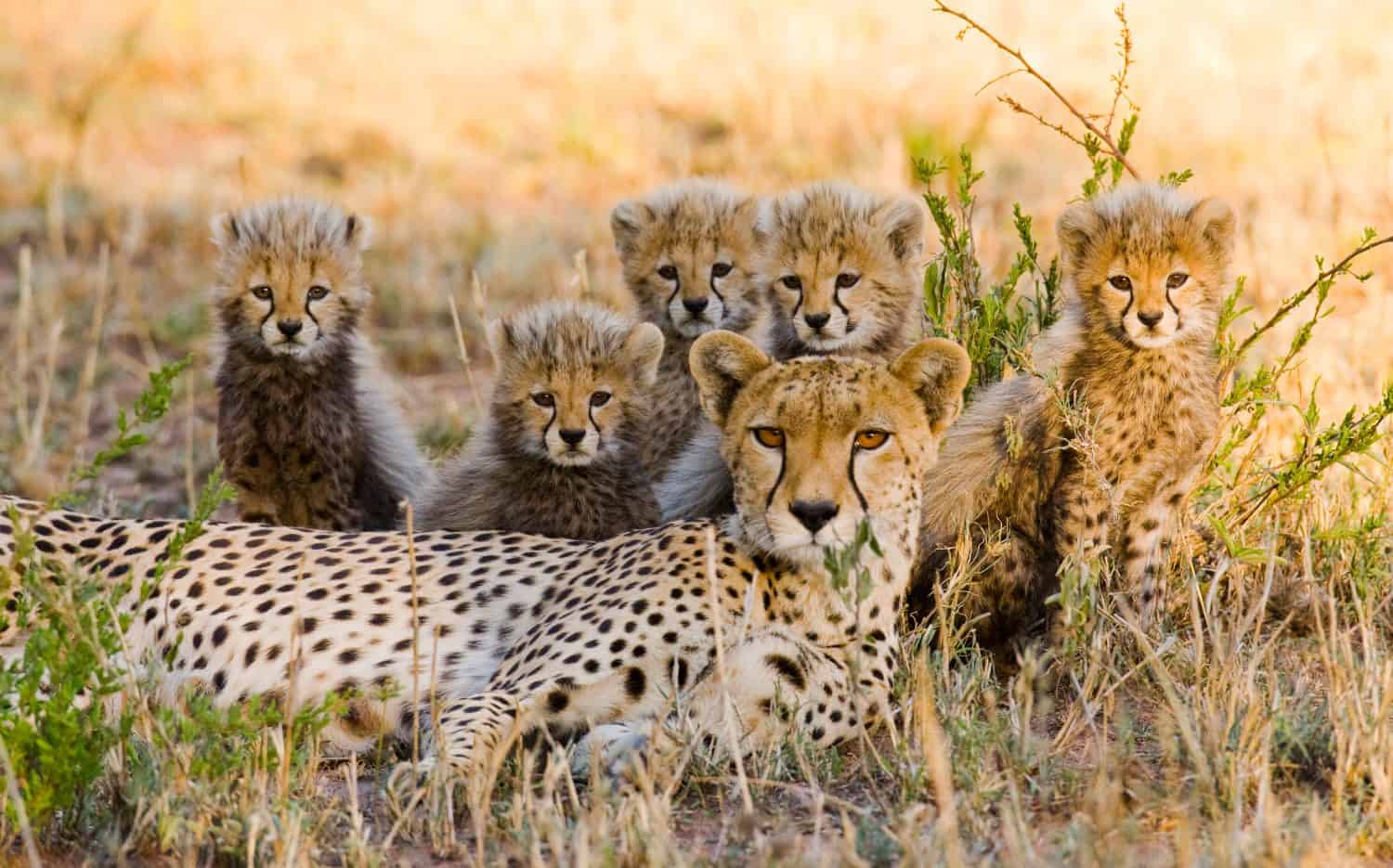

Cheetahs may lead solitary lives, but they make incredible mothers. Female cheetahs tend to live alone unless they have their cubs with them. Mother cheetahs don’t let their cubs stray far and will defend them to the death. A video from Kenya Jairus Bushlife Tours filmed in the Masai Mara National Reserve in Kenya shows just how fiercely mother cheetahs protect their young when a pair of hyenas closes in.
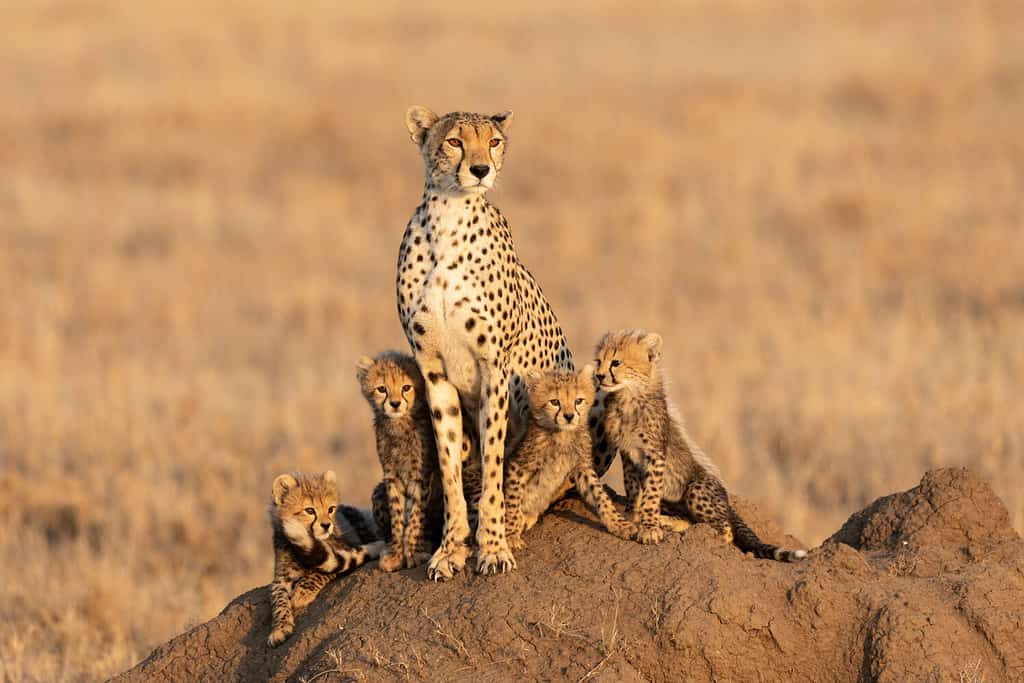
Cheetah cubs stick close to their mothers until they are about 18 months old and learn to fend for themselves.
©Stu Porter/Shutterstock.com
Cheetahs Are Built for Speed, Not Combat
Cheetahs are fast predators, but they aren’t at the top of the predatory hierarchy. According to the Londolozi Blog out of Kruger National Park in South Africa, the predator food chain looks like this:
- Lions
- Spotted hyena
- African wild dog
- Leopard
- Cheetah
At the bottom of the list, cheetahs have a lot to be wary of. Their delicate frame is built for fleeing quickly, not fighting back. Cheetahs can easily run at an average pace of 40 miles per hour. But if they need to, they can reach 70 miles per hour in less than three seconds.
Cheetahs have slim waists, deep chests, and large nostrils for oxygen intake. Additionally, their large hearts and strong arteries pump blood through their circulatory system with utmost efficiency. All of this gives cheetahs the advantage of speed. However, their slimmer frames make them less powerful fighters than other predators.
It’s typically best for a cheetah to flee rather than fight. This means they often have to give up their kill to a stronger predator that comes along to take it. While adult cheetahs are so fast that not many predators have a chance to keep up, their cubs are another matter. Cheetah cubs are vulnerable to attacks from lions, hyenas, and wild dogs.
Hyenas Hunt Cheetah Cubs
Spotted hyenas are strong hunters. They combine their strength and intelligence by working together in groups to bring down their prey. Where cheetahs are streamlined and light, hyenas are bulky and powerful. Hyenas have a strong bite force, enough to crush bones. Though hyenas are less agile and speedy than cheetahs, they can endure a long chase.
Although male cheetahs sometimes work together in coalitions to hunt and defend their territory, female cheetahs are solitary. Hyenas, on the other hand, hunt in packs, with their numbers increasing their strength.

Mother cheetahs are constantly vigilant when raising young cubs.
©Jairus Bushlife Tours / YouTube
As we can see in the video from Kenya Jairus Bushlife Tours, hyenas often target young cheetah cubs. The cheetah mother is alone in caring for her young and must defend the cubs on her own. In the video, two hyenas relentlessly circle the mother cheetah and her cubs. But she doesn’t give up, chasing the hyenas away while her cubs stick close.
How Cheetah Mothers Defend Their Young
Cheetah cubs live in nests with their mother for about the first six to eight weeks. During this time, she will move them from nest site to nest site to avoid predators. Once they are old enough, they will accompany her as they learn to hunt and avoid predators. The cubs will stay with their mothers until they are about 18 months old.
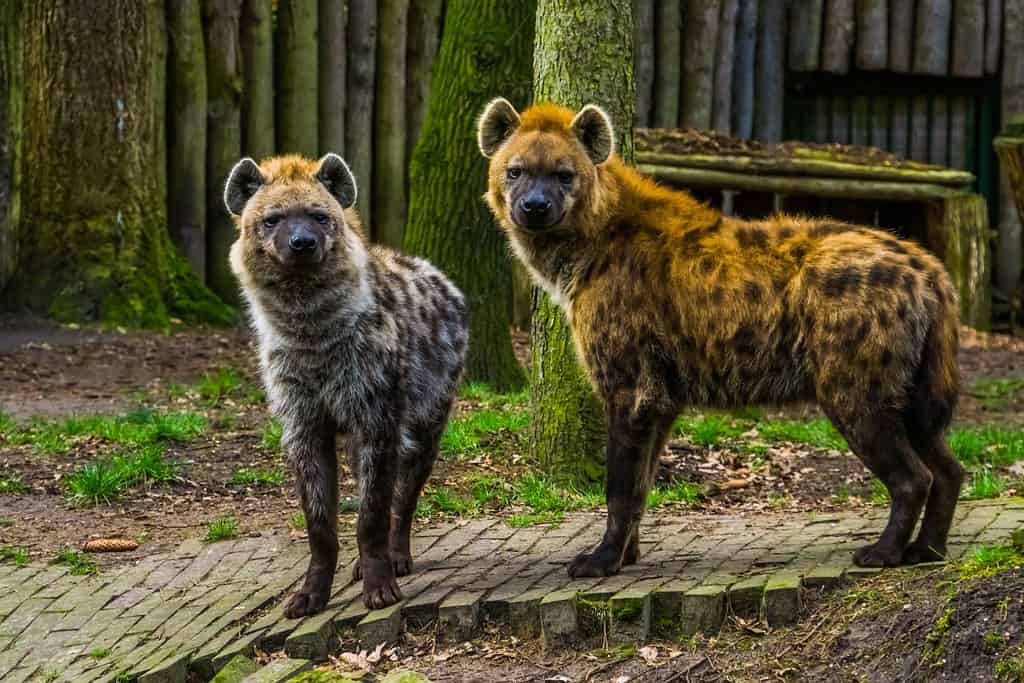
Hyenas work together in packs to hunt and bring down prey.
©Charlotte Bleijenberg/Shutterstock.com
A lone cheetah might flee from a pair of hyenas, but the cubs in the video are too young to escape. The cheetah mother can’t retreat but must drive the pair of hungry hyenas away from her cubs. Research has shown cheetahs will move out of their territories in the presence of lions or hyenas to avoid confrontation. But when cubs are present and an escape isn’t possible, cheetahs must defend themselves or attempt to lure the predator away from the cubs.
In the video, we can see the female cheetah chasing and attacking the hyenas. In this case, fleeing wasn’t an option, and she chose to defend herself and her cubs with all her strength.
A Mother Cheetah Is Vigilant
Research has shown that mother cheetahs use vigilance to defend their cubs. Cheetahs tend to eat their kills quickly because they are often in danger of having their prey stolen by more powerful predators. But when a cheetah mother is feeding with her young, she eats much more slowly. She will stop eating often, raising her head to scan the area for threats. She’ll gather the cubs and leave the kill unfinished if she senses danger.
Vigilance, not speed, is the mother’s key to keeping her cubs safe. But when predators attack, she will defend her offspring against animals she would normally run away from. Once the cubs are about a year and a half old and have learned to hunt for themselves, the mother leaves them to survive on their own.