
No major kennel club (American Kennel Club or United Kennel Club) recognizes Labrador Huskies as they are a mixed breed. They are the result of breeding a Siberian Husky with a Labrador Retriever, which results in a larger breed that is often very fluffy. As a mixed breed, these dogs are often healthier than others. They draw from a wider range of genetics, which prevents them from inheriting poor genetic traits from either part. However, there are common Labrador Husky health problems, and we break them down below.
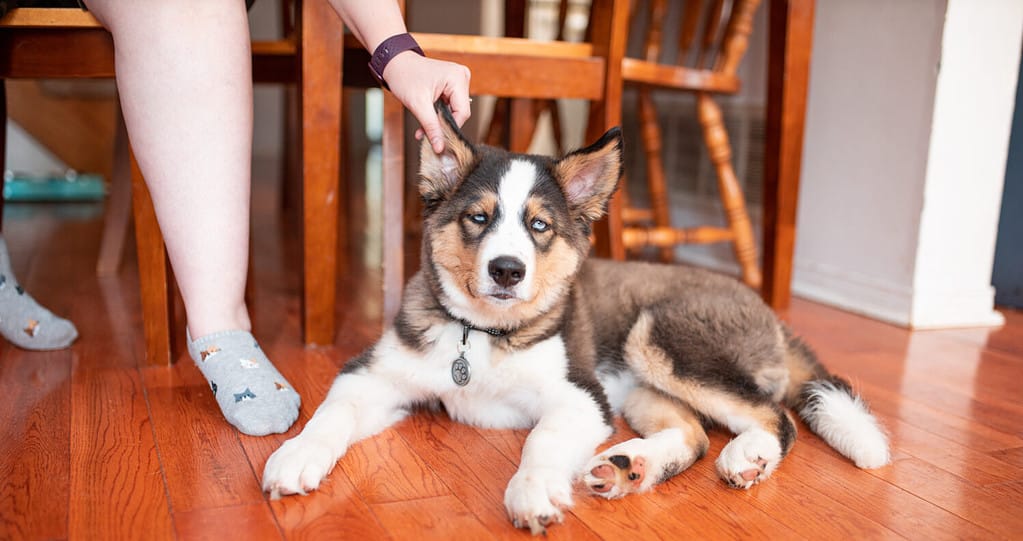
Because this is a big dog, they are often prone to the same conditions that other big dogs are prone to.
©Christopher Teixeira/Shutterstock.com
1. Hip Dysplasia
Hip dysplasia is a condition that is at least partially genetic. It occurs when the joints do not develop properly, leading to erosion of the hip joint. Over time, this leads to joint instability, inflammation, pain, and eventually arthritis.
Dogs with hip dysplasia often show signs of lameness and may have difficulty getting up. There is no way to cure hip dysplasia. However, you can use medication for pain management and weight control.
2. Elbow Dysplasia
Elbow dysplasia is very similar to hip dysplasia but with the elbows. The elbow joints don’t develop properly, leading to cartilage damage. Eventually, the dog gets symptoms similar to arthritis, but at a fairly early age.
Dogs with elbow dysplasia may have a limp, and they may not want to exercise particularly hard. You may notice that they don’t want to get up (or don’t get up as quickly as they once did).
Treatment involves managing the symptoms, as there is no cure for the condition.
3. Progressive Retinal Atrophy
PRA refers to a group of inherited eye diseases that gradually cause the degeneration of the retina. This can lead to progressive vision loss and, in some cases, blindness.
There is no cure, but affected dogs often adapt to their environment once they become familiar with it. Early signs often include things like night blindness and difficulty seeing in dim light. However, dogs will slowly lose their sight altogether.
4. Cataracts
Cataracts also cause vision issues, though it is caused by a clouding in the eye’s lens. This condition can be a normal part of aging, though it can also be caused earlier by poor genetics.
Affected dogs often show signs of visual impairment, including cloudy or bluish eyes. You may be able to see the cataracts. Surgical removal is the only way to restore the dog’s vision, though it isn’t always an option.
5. Hypothyroidism
Hypothyroidism occurs when the thyroid gland doesn’t produce enough hormones. This can lead to many different issues, including weight gain, hair loss, and fatigue.
This condition usually isn’t curable. However, it can usually be managed with medication, which supplements the hormones that the thyroid isn’t producing.
6. Exercise-Induced Collapse
When a dog exercises too much, it leads to exercise-induced collapse. This condition tends to affect Labrador Retrievers, and their puppies can develop it, as well. Often, it’s linked to exercise, but excitement can cause it as well. It may cause muscle weakness and collapse, but the dog usually recovers.
Signs may include wobbling, muscle tremors, and similar signs of weakness. However, it isn’t always clear what may cause the problem until the dog collapses.
Luckily, this condition isn’t serious, though it can be very scary for owners at first.
7. Obesity
Obesity is an excessive accumulation of body fat. As you likely know, obesity links to various problems, including diabetes, heart issues, and joint strain. The more excess weight on your dog, the more likely they are to develop serious health problems because of it.
Overweight dogs often have a harder time moving. They may breathe particularly heavily, for instance. They are also at risk for other health conditions, and they tend to gain more weight over time.
Therefore, it’s important to start managing your dog’s weight early, as it helps prevent them from becoming obese. It’s easier to prevent them from gaining weight than it is to help them lose weight.
8. Skin Conditions
Skin conditions in dogs can encompass many different problems. For instance, allergies, hot spots, and dry skin all fall into this category. Signs of skin conditions often include itching, redness, hair loss, and skin infections. These issues can sometimes be treated with localized medication. However, other times, your dog’s diet may need to change.
You’ll need to work with your vet to find the best solution to your canine.
9. Bloat
Also called gastric torsion, bloat is a life-threatening condition where the stomach fills with gas and then twists on itself. It usually cuts off blood flow and can lead to tissue death pretty quickly. It’s an emergency that requires quick surgery to avoid necrosis of the tissue around the stomach.
The symptoms of bloat include a swollen abdomen, restlessness, drooling, and unsuccessful vomiting.
Summary of Common Labrador Husky Health Problems
| Number | Health Condition |
|---|---|
| 1 | Hip Dysplasia |
| 2 | Elbow Dyplasia |
| 3 | Progressive Retinal Atrophy |
| 4 | Cataracts |
| 5 | Hypothyroidism |
| 6 | Exercise-Induced Collapse |
| 7 | Elbow Dysplasia |
| 8 | Skin Conditions |
| 9 | Obesity |