
Quick Take
- One skunk species does something you'd never expect from a ground-dwelling animal, which changes where you'd look for them. See the climbing skunk →
- Skunks have a surprisingly strict hygiene habit inside their dens that most people would never associate with a wild animal. Explore skunk den habits →
- The skunk's reputation as a loner falls apart completely in winter, and what they actually do to survive the cold is unexpected. Discover winter denning →
- Not all skunks are equally comfortable near humans, and knowing which species you are dealing with could matter if one sets up in your yard. Meet the less urban species →
Skunks are small to medium-sized mammals belonging to the family Mephitidae, widely known for their distinctive black-and-white coats and powerful chemical defense spray. There are 10 recognized extant species grouped into four genera, primarily distributed across the Western Hemisphere. The striped skunk (Mephitis mephitis) is the most common variety, found widely across Southern Canada, the continental United States, and Northern Mexico. However, North America is also home to the Western spotted skunk (Spilogale gracilis), the Eastern spotted skunk (S. putorius), which are smaller than the striped skunk, and the hog-nosed skunk (Conepatus leuconotus), and the hooded skunk (M. macroura), which are found in the Southwestern U.S. and Mexico. Continue reading to discover the places skunks live and take shelter.
Where do Skunks Live?
Skunks generally live in the abandoned dens of foxes, woodchucks, coyotes, and ground squirrels. Occasionally, however, skunks will use their strong, sharp claws to dig their own burrows. They usually build their burrows with chambers lined with grass, leaves, and hay. They tend to create at least four entrances to their dens for easy exiting.

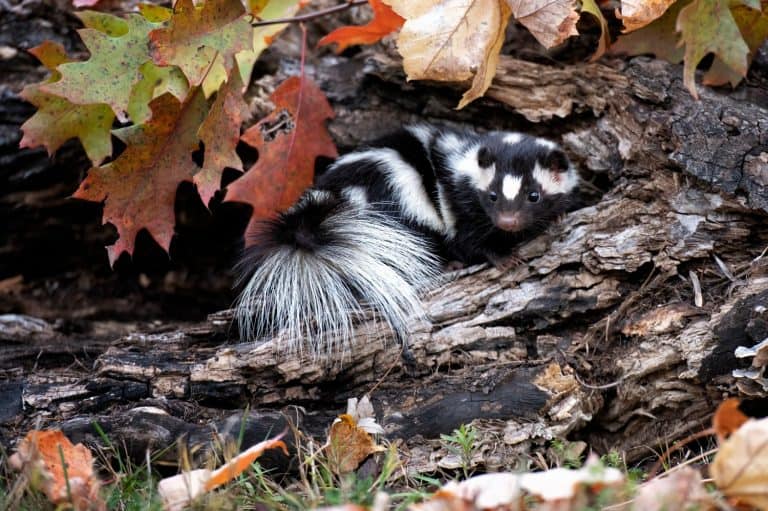
The adorable spotted skunks live in various places all over the United States. You may find their nests under porches or in hollowed-out trees.
©Holly Kuchera/Shutterstock.com
Skunks are exceptionally clean animals that maintain tidy living spaces by designating a specific, dedicated area as their bathroom. This means they routinely expel their waste away from where they sleep, eat, or raise their young.
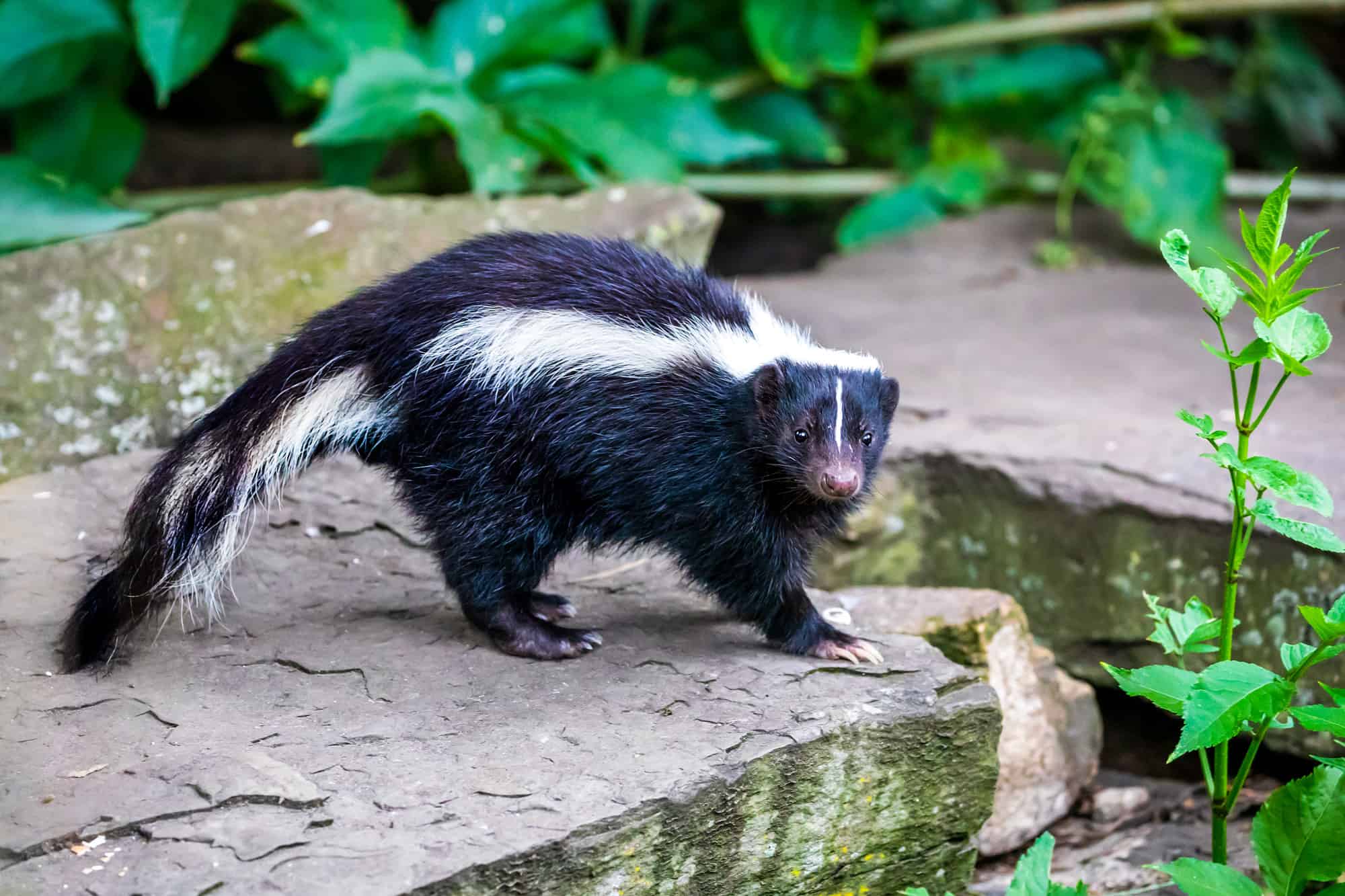
Skunks may nest in places such as open prairies, woodpiles, underbrush, hollow logs, under porches and other structures, and in culverts.
©iStock.com/Edwin_Butter
Striped Skunk
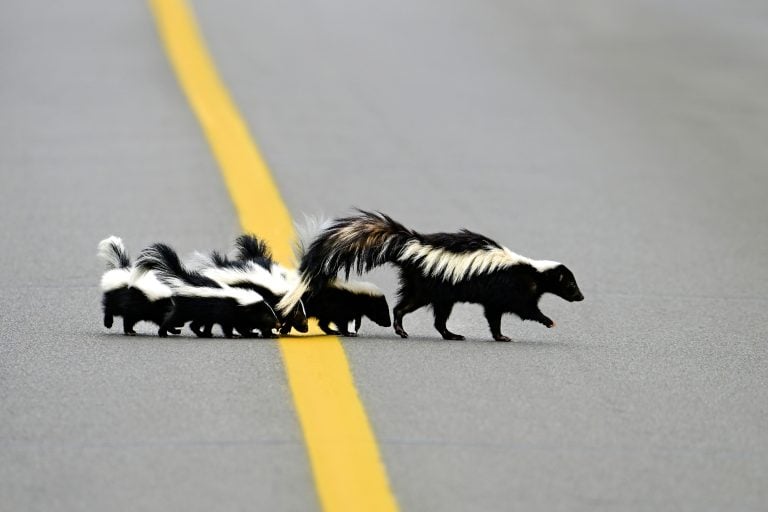
Striped skunks are incredibly adaptable animals that thrive almost anywhere, from open woodlands and prairies to dense urban and suburban neighborhoods. They are highly tolerant of human activity and frequently utilize man-made structures like porches, decks, and sheds for shelter.
Spotted Skunk
Both Eastern and Western spotted skunks are more particular about their habitat preferences than striped skunks. They tend to favor areas with dense vegetation and natural cover, but can sometimes be found near human-modified landscapes. Spotted skunks prefer dense understory vegetation, brushy fence rows, forest edges, and rugged, rocky terrain. Unlike striped skunks, they are accomplished climbers and often nest in hollow tree cavities.
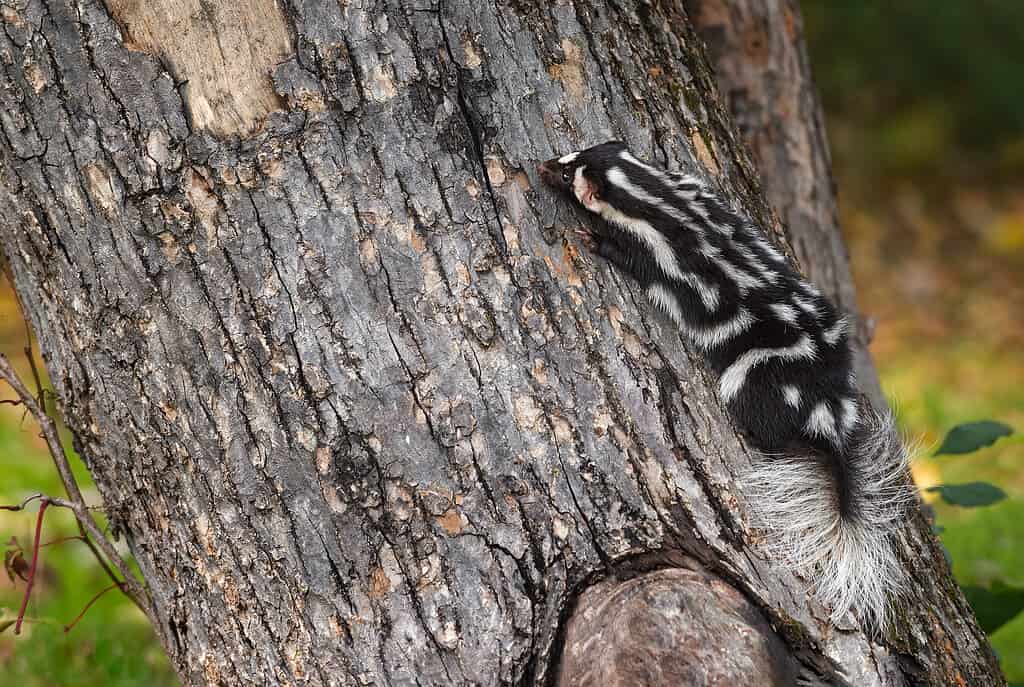
Spotted skunks are excellent climbers.
©Holly Kuchera/Shutterstock.com
Hog-nosed Skunk
Hog-nosed skunks are more solitary than their cousins. They live in solitary shelters in rugged terrain, including natural rock crevices, caves, canyon walls, and deep fissures. They frequently excavate their own tunnels using their massive claws. Hog-nosed skunks will not hesitate to occupy vacant burrows, overtaking abandoned underground tunnels dug by other animals, such as armadillos.
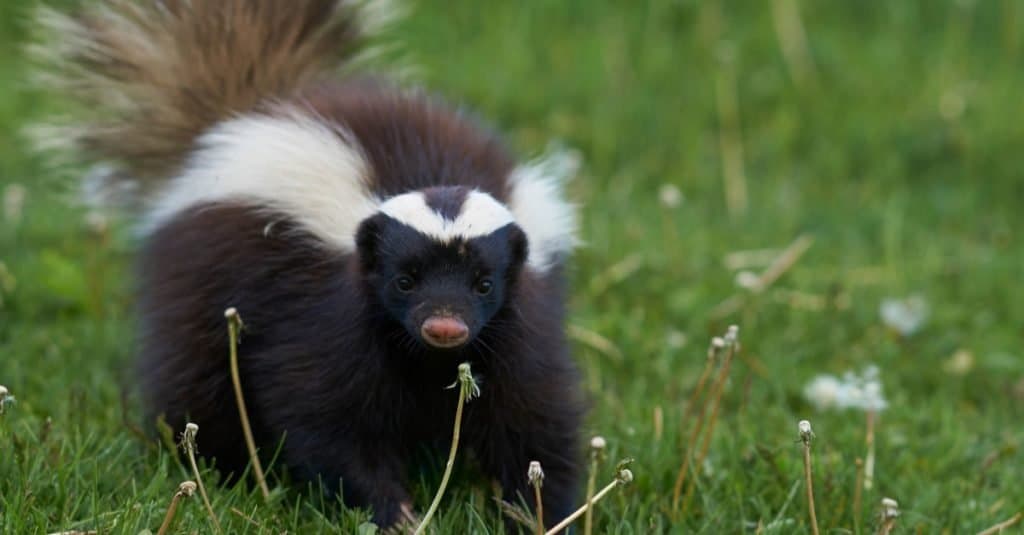
Hog-nosed skunks are the introverts of the skunk family.
©Jeremy Richards/Shutterstock.com
Hooded Skunk
Hooded skunks prefer warm, arid to semi-arid landscapes and are commonly found in deserts, scrubby grasslands, pastures, and mountain foothills of the Southwestern United States and Mexico. While they may den near water sources and occasionally use abandoned rural buildings, they are generally less tolerant of urban environments than striped skunks.
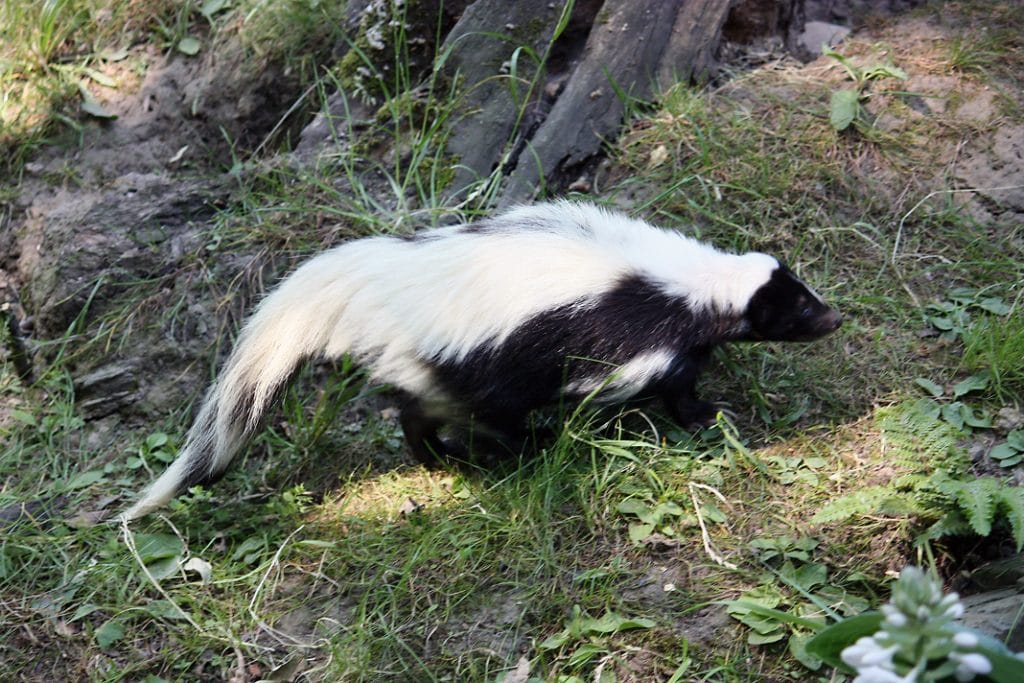
Compared to the highly adaptable striped skunk, the hooded skunk is more selective.
Where do Skunks Live in Winter?
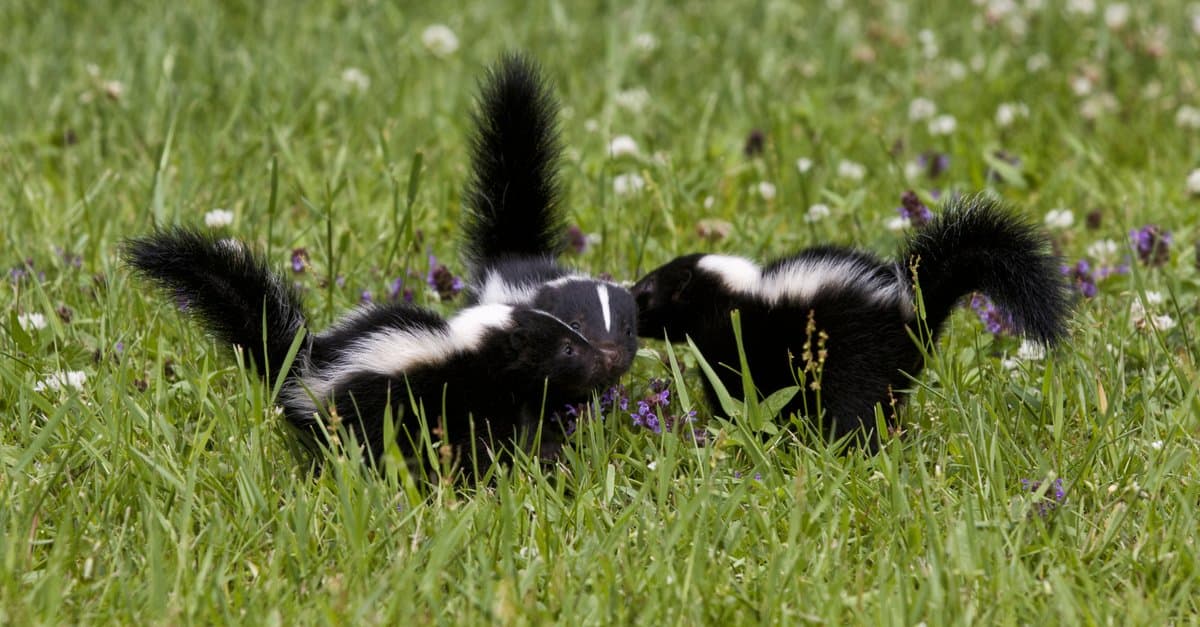
Skunks spend the winter hunkered down in cozy dens to endure cold weather and snow. During the harshest spells, they enter a state of torpor, a deep, lethargic sleep where their body temperature drops and metabolism slows.
Although they are solitary for most of the year, in the winter, skunks, especially females, will often huddle together in groups of up to a dozen to share body heat. Males tend to be more solitary but may occasionally join communal dens.
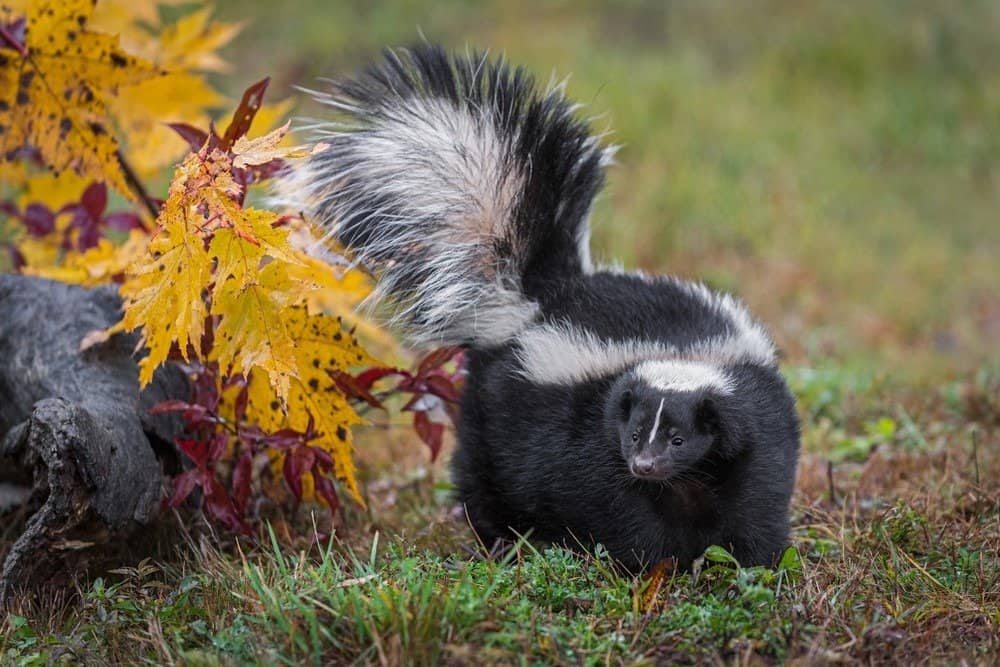
Because they don’t stockpile food, skunks will occasionally emerge on warm days to forage.
©Geoffrey Kuchera/Shutterstock.com