
Quick Take
- One entomologist ranked bee stings by letting them sting him personally, and his vivid descriptions of the pain are unlike anything in science. About the Schmidt Pain Index →
- The bee most Virginians are afraid of isn't necessarily the most painful stinger in the state. See the most painful stingers →
- Some Virginia bees can sting you without you ever realizing it happened. Meet the unnoticeable stingers →
- For one Virginia bee species, stinging a human is a death sentence, yet it still does it anyway. How stinging kills the honey bee →
There are over 20,000 bee species worldwide, with about 4,000 native to North America. Virginia is home to over 400 documented native bee species, as well as honey bees (Apis mellifera), which are an introduced species brought from Europe in the 1600s. Of the 400+ bee species in Virginia, most are solitary and either cannot penetrate human skin at all or have a mild sting that is minor and short-lived. Male bees do not have stingers. The stinger is a modified egg-laying organ (ovipositor), meaning it is a trait exclusively found in female bees. Only a few bee species in Virginia, such as honey bees, bumblebees, and large carpenter bees, are known for stings that are considered highly painful to humans. These species are primarily social bees that actively defend their hives or nests. Continue reading to discover the bees in Virginia with the most painful stings.
What Is The Schmidt Pain Index?
The Schmidt Pain Index is a legendary, albeit subjective, scale developed by American entomologist Justin O. Schmidt. It measures and ranks the relative pain inflicted by the venomous stings of over 80 species of ants, bees, and wasps.
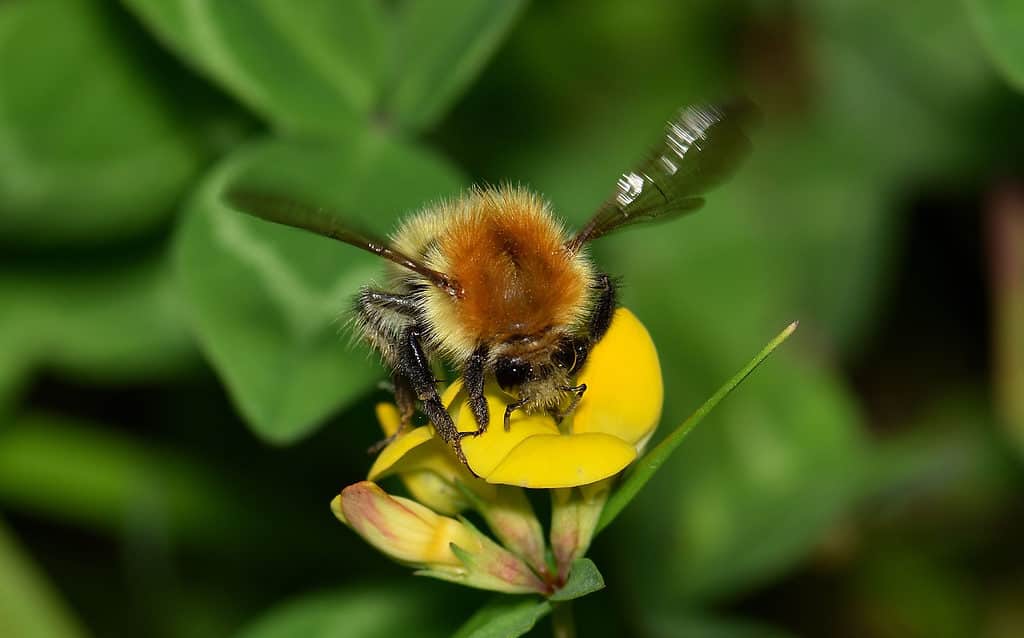
Bumblebees often nest underground and have fairly painful stings, ranking as some of the most painful in Virginia.
©iStock.com/Wirestock
The index originally rated stings on a scale from one to four, where one is a mild, brief irritation (like a sweat bee), while four is reserved for the most excruciating stings known to humans. However, Schmidt classified some stings as 0.5 when the pain was too insignificant to mention. Schmidt personally experienced virtually all of the stings himself as an occupational hazard of his work as a field entomologist.
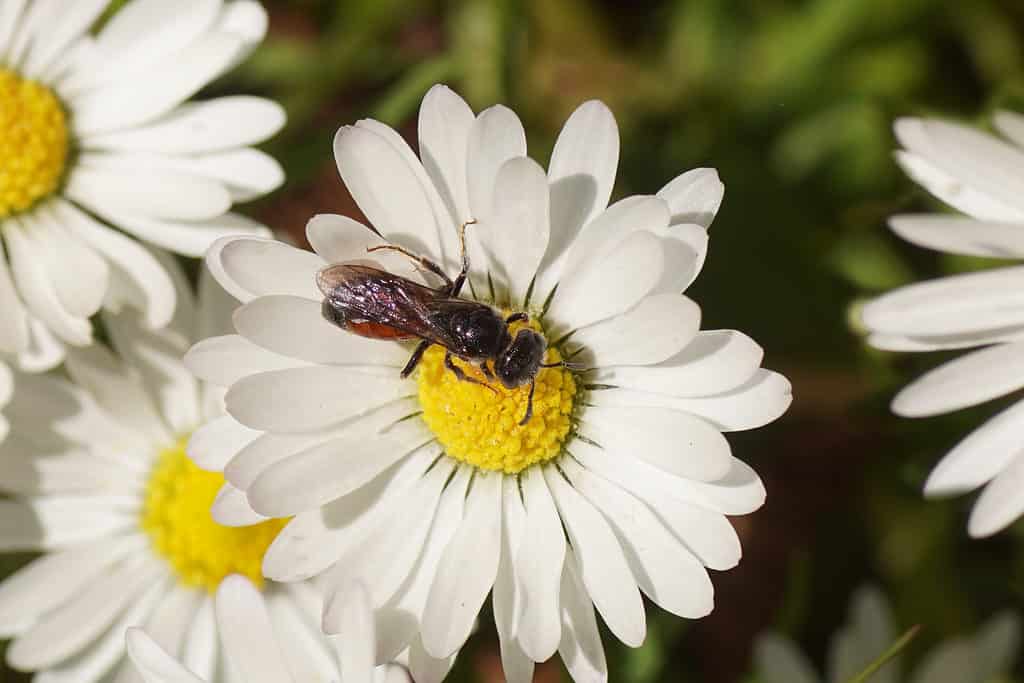
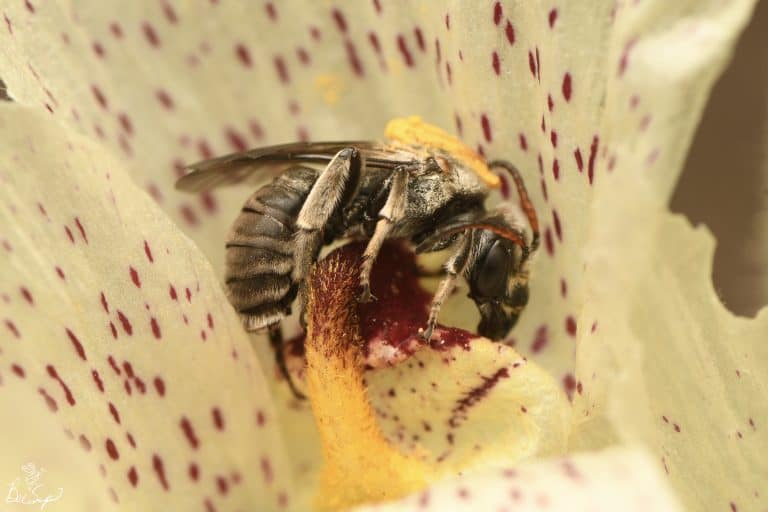
Sweat bees are tiny and usually don’t cause much of an issue. Their stings are usually forgotten instantly.
©Thijs de Graaf/Shutterstock.com
Pain Level 0.5: Sweat Bees and Cuckoo Bees
The lowest ranking pain on the scale is 0.5. Stings with this ranking are so mild that they may go unnoticed.
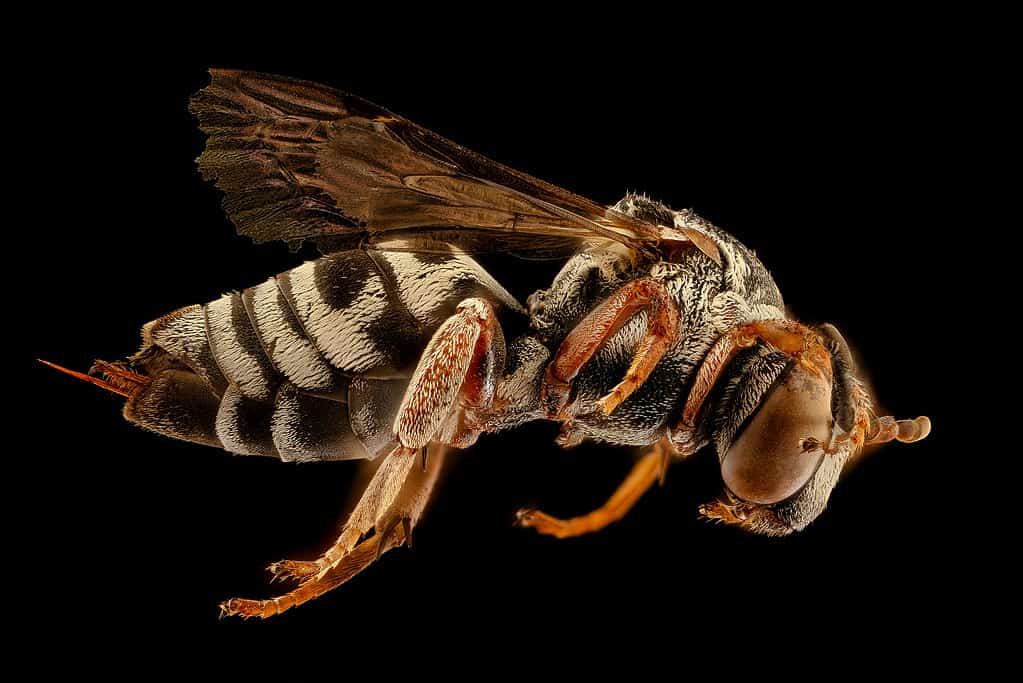
Up close, cuckoo bees look kind of vicious, but they have the least painful stings in Virginia.
©lego 19861111/Shutterstock.com
Sweat bees (family Halictidae) are small, non-aggressive, and generally avoid humans. Virginia is home to numerous species of sweat bees, which are generally black or brown, though some have bright metallic green or blue coloration. Markings range from green to red to yellow, and they’re typically banded like honeybees.
Cuckoo bees (family Apidae; subfamily Nomadinae) get their name from their nesting habits, which involve laying eggs in the nests of other bees, similar to cuckoo birds. Virginia is home to several species of cuckoo bees, whose stings are mostly painless.
Pain Level 1: Digger Bee, Leaf Cutter Bee, Miner Bee, Polyester Bee, Small Carpenter Bee
Most small bees have stings that Schmidt classified as level one. A level one sting is less likely to go unnoticed, but is not long-lasting and does not typically require any intervention. Sensitive individuals may have a mild reaction that can be treated with an over-the-counter pain medicine or a locally applied cream.
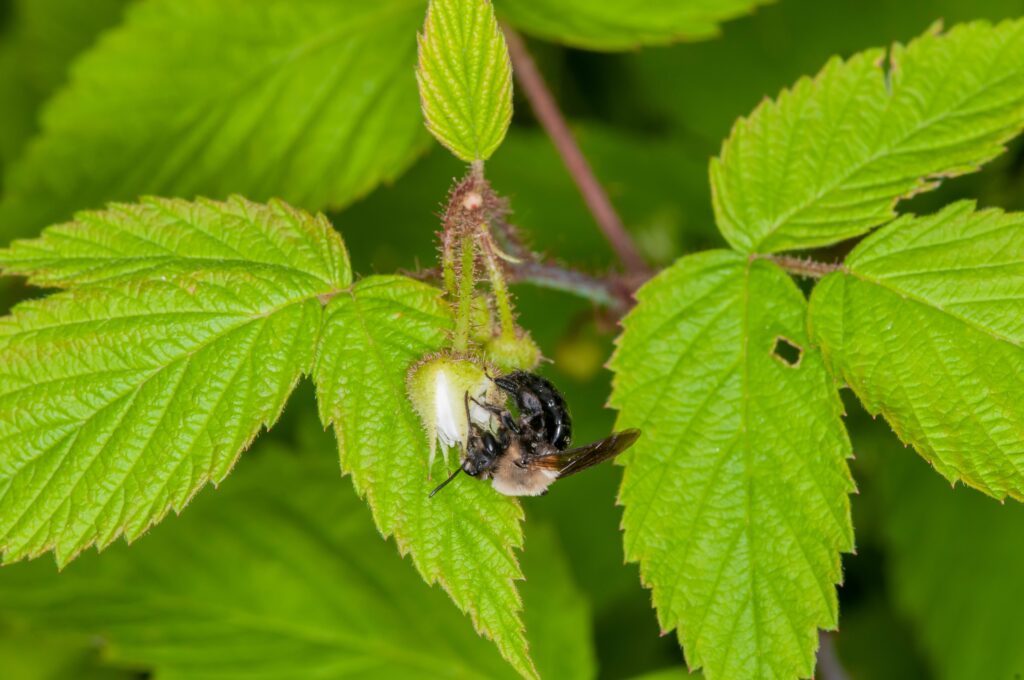
The digger bee has a slightly painful sting.
©Michael Siluk/Shutterstock.com
Virginia is home to several species of digger bees (subfamily Apinae), non-aggressive, solitary ground-nesting bees. Digger bees are incredibly docile and will only sting if they are directly handled, trapped, or crushed.
Polyester bees (family Colletidae), also called cellophane or plasterer bees, rarely sting, but when they do, it can be mildly painful or at least irritating. There are numerous species of these bees in Virginia. The bees earn their name from the biodegradable, plastic-like material they produce to line their egg cavities.
Virginia is home to many species of leaf-cutter bees (family Megachilidae), which are non-aggressive and, like digger bees, will only sting when they’re handled or crushed. Even when they do sting, the pain is mild.
Miner bees (subfamily Andreninae) are also solitary, ground-nesting bees, and Virginia is home to several species. Like other bees with a pain index of one, miner bee stings are minor.
Schmidt also ranked small carpenter bee (subfamily Xylocopinae) stings as level one. Schmidt described the pain as “light, ephemeral, almost fruity.” There are multiple species of small carpenter bees present in Virginia.
Pain Level 1.5: Masked Bee
A 1.5 pain level on the Schmidt scale means that the pain is a bit more than a pinprick and you’ll feel the pain. Usually, though, unless you’re allergic or particularly sensitive, the pain will diminish and is forgotten within minutes.
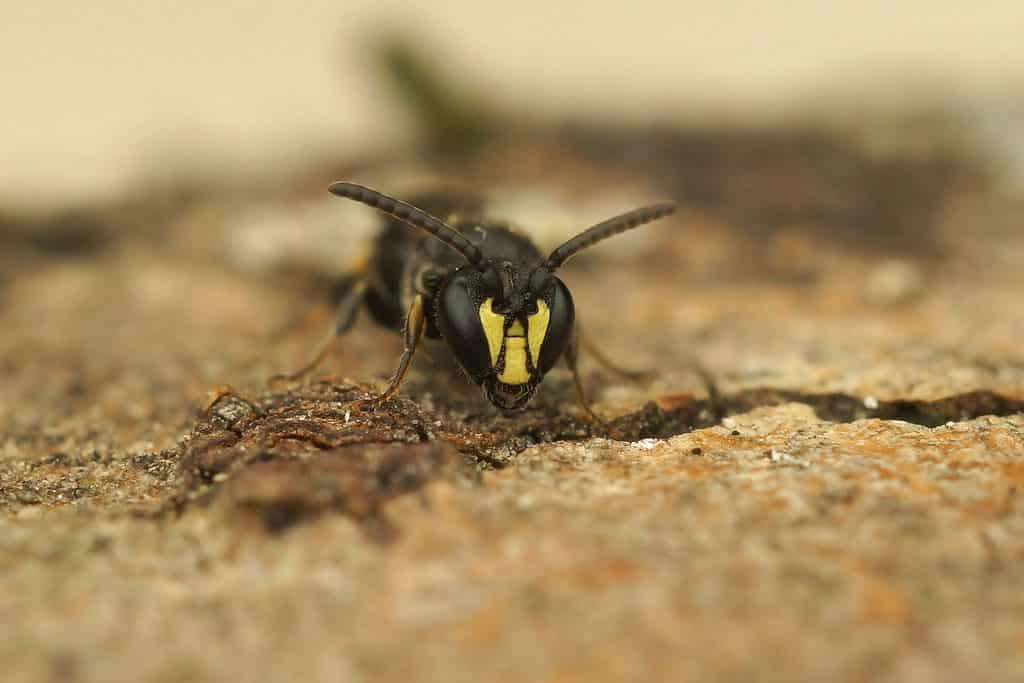
The masked bee has distinctive yellow markings on the face that sort of resemble a mask. They have a slight to moderately painful sting.
©2051664692/Shutterstock.com
There are several species of masked bees (subfamily Hylaeinae) in Virginia. These bees are named for the yellow masks on their faces. Masked bees are solitary cavity-nesting bees that deposit their eggs in pithy plant stems, rock crevices, or human-made bee hotels. Their stingers are weak and small, and they will only sting if they are crushed.
Bee Sting Pain Level 2: Bumblebee, Large Carpenter Bee, Long-horned Bee, Mason Bee
Moving up the scale to the most painful bee stings in Virginia, we reach level 2. At this level, you’ll feel the sting and will likely need a remedy to help ease the pain, such as an over-the-counter pain reliever, ice, or topical cream. In the event of multiple stings or if an individual experiences an allergic reaction, medical attention may be necessary.
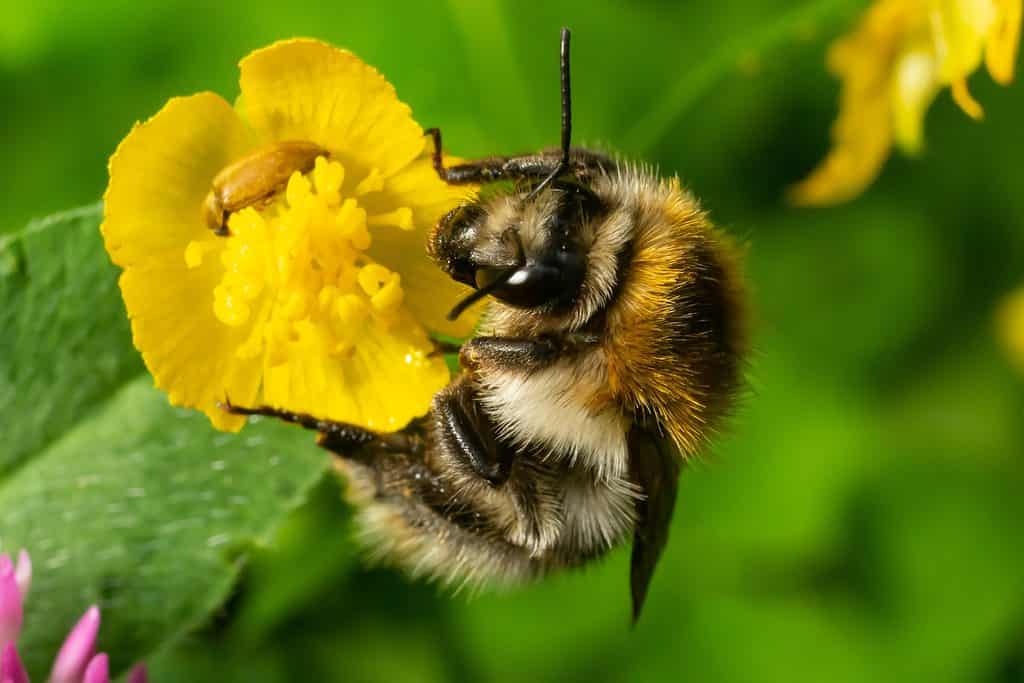
The bumblebee actually has one of the most painful bee stings in Virginia.
©olko1975/Shutterstock.com
Bumblebees (Bombus) aren’t prone to stinging. However, they have smooth stingers and are therefore able to sting multiple times. Other bee species only sting once because of the barbs on their stingers. Bumblebees will defend their nests, but otherwise, they’re very unlikely to use those stingers on humans.
Large carpenter bees (subfamily Xylocopinae) drill into wood to create their homes. Virginia is home to two species of large carpenter bees: the Eastern carpenter bee (Xylocopa virginica) and the Southern carpenter bee (Xylocopa micans). These bees are not aggressive and are reluctant to sting.
Virginia is home to dozens of species of long-horned bees (subfamily Apinae), which are medium-sized, solitary, ground-nesting bees. They are not aggressive and will only sting in self-defense.
There are several species of mason bees (family Megachilidae) in Virginia. These bees are solitary cavity-nesting bees that are not aggressive and will only sting in self-defense.
Honey Bee
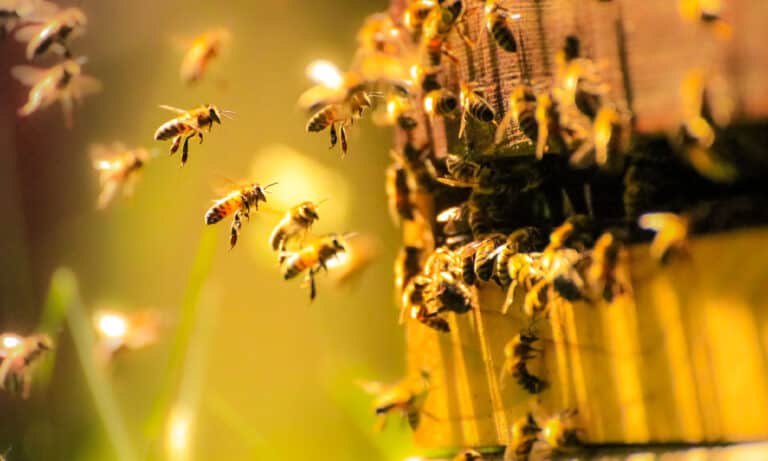
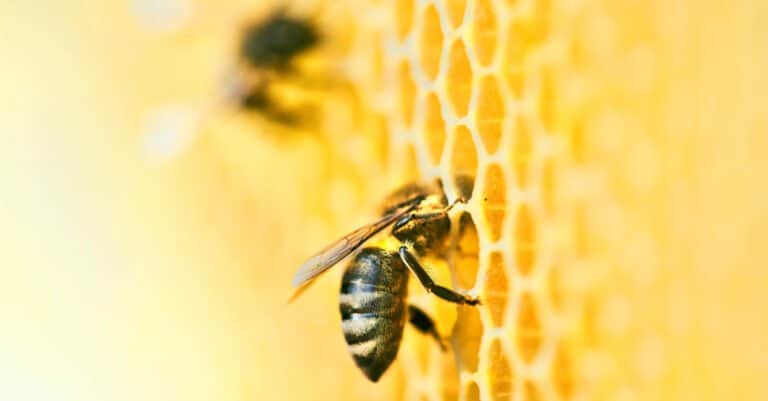
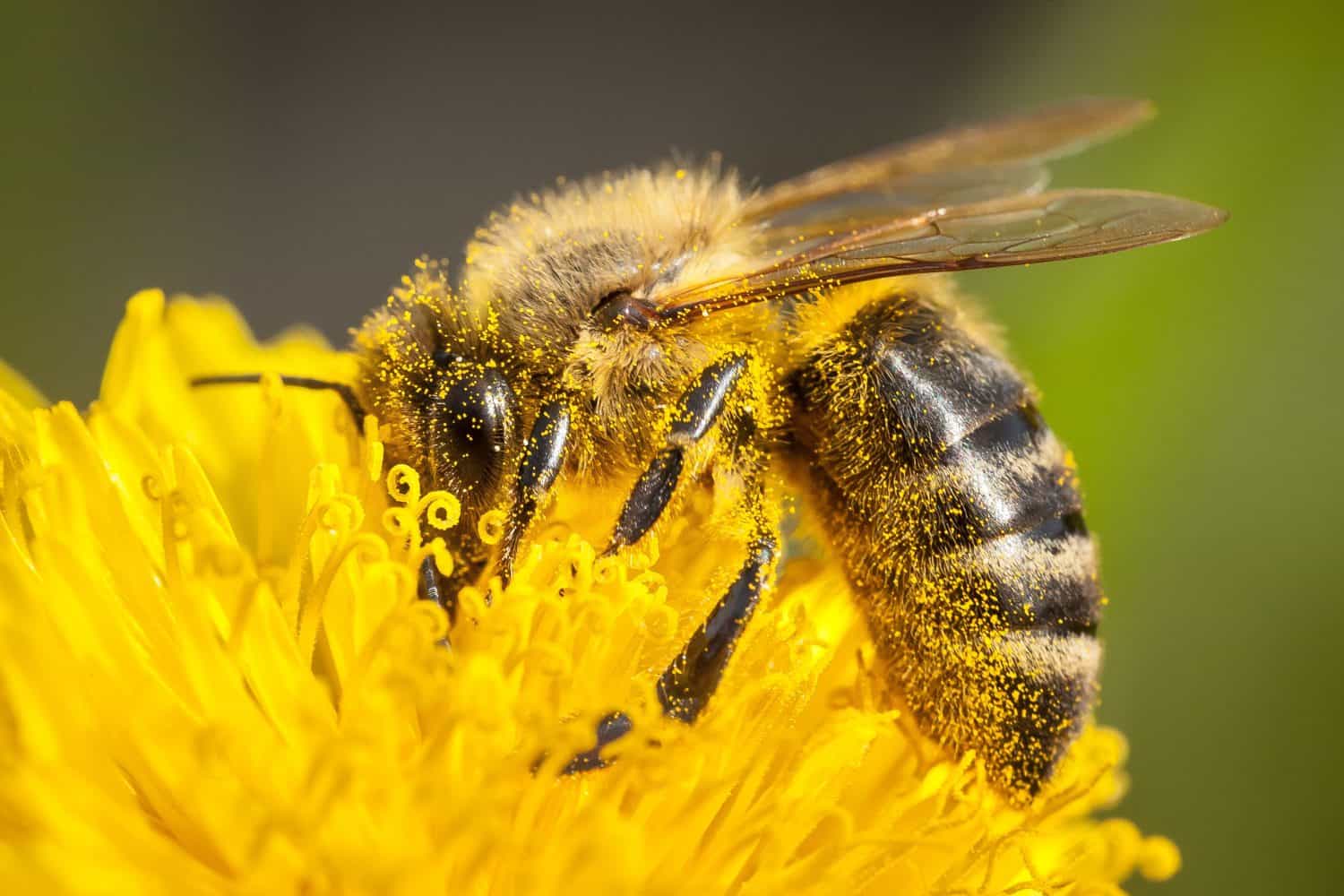
Virginia is home to one species of honey bee, Apis mellifera. Honey bees are highly eusocial insects that live in colonies, which include a queen, worker bees, and drones. Honey bees are naturally docile and will only sting as a last resort. When a worker honey bee stings, her barbed stinger becomes permanently lodged in the skin. As she pulls away, it rips out her digestive tract, venom sac, and abdomen, resulting in her death.
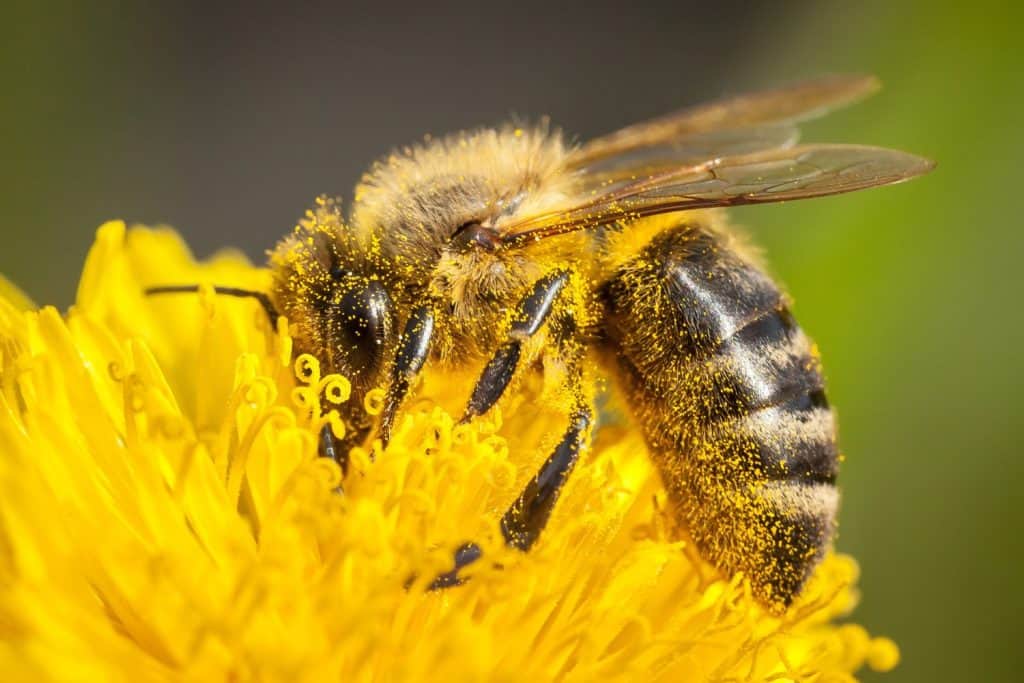
Honey bees were brought to North America by European colonizers.
©Lima_84/Shutterstock.com
Schmidt described the pain of a honey bee sting as “like a match head lands on your arm and is quenched with lye and then with sulphuric acid.”