
Quick Take
- Managing 80,000 insects requires a lethal response to specific mammalian threats.
- The weight of a single mouse prevents caretaker bees from executing disposal tasks.
- Hive sterility relies on the counter-intuitive preservation of organic decay.
- The winter cluster is necessary for protection even though it leaves the entrance unguarded.
Mice love to take shelter inside beehives. It’s a perfect spot for a mouse; warm and cozy with plenty of honey to eat. However, bees aren’t too keen on invaders, and they have ways of dealing with wasps, robber bees from other colonies, or even an errant mouse that’s wandered into their home.
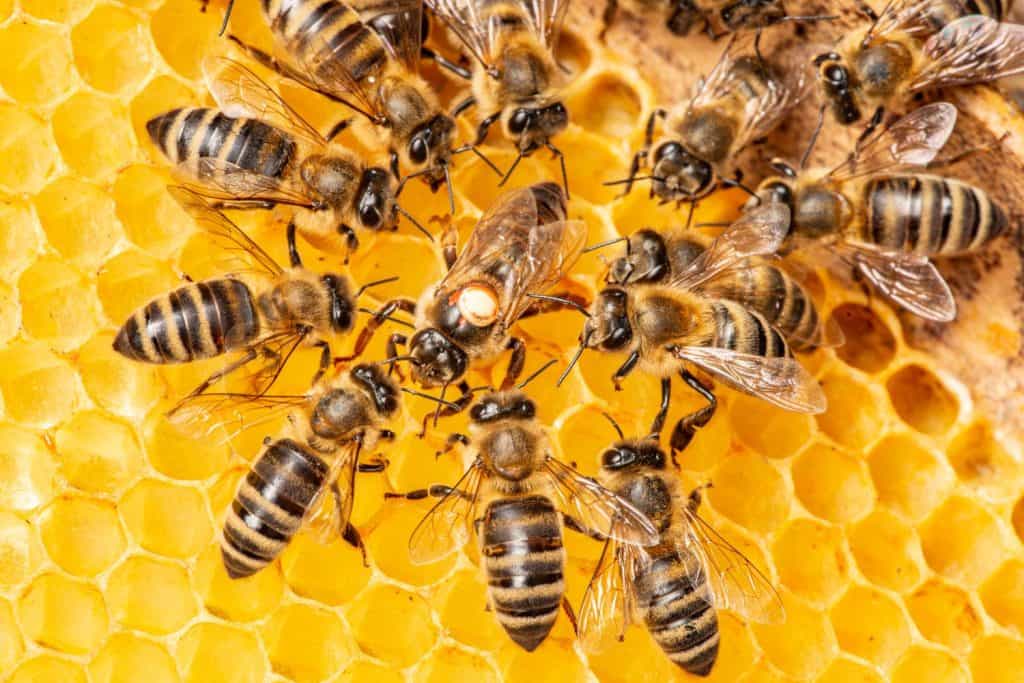
Worker bees care for and protect the queen of their colony.
©Kuttelvaserova Stuchelova/Shutterstock.com
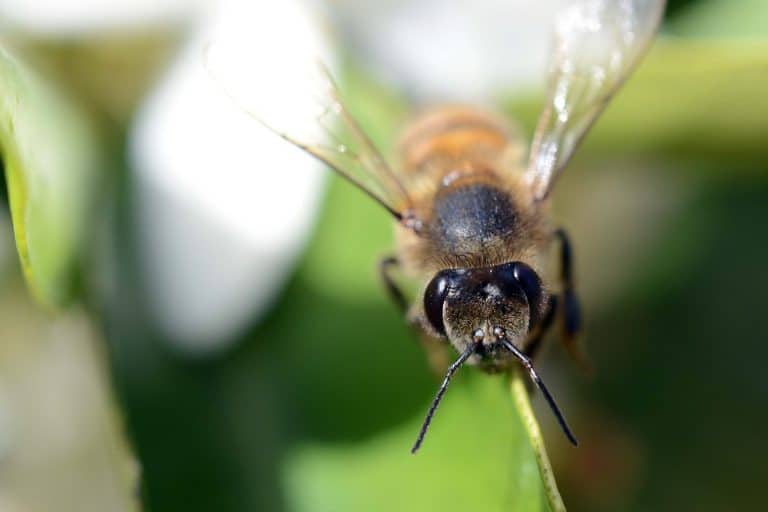
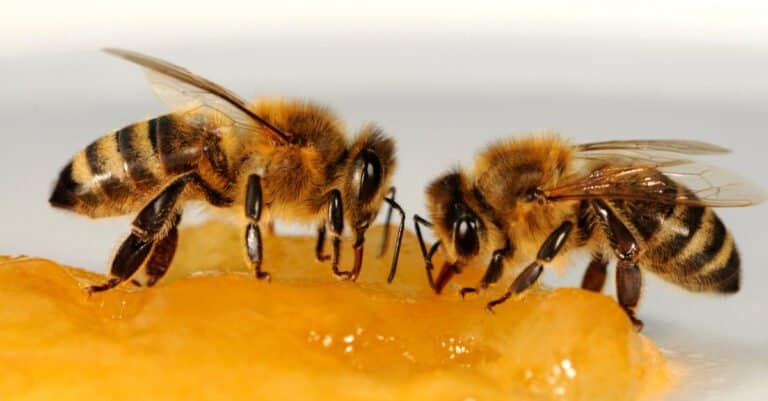
Honeybees (Apis mellifera) are highly social insects that often live in colonies ranging from about 10,000 to 80,000 bees. Each bee has its role to play, and there are three main types of bees: the queen, the worker, and the drone. The queen’s job is to lay eggs. The drones are male honeybees, and their only function is to mate with the queen. Most of the bees are worker bees, and each worker bee has a job to do. Workers build the hive and honeycombs, care for the queen and her larvae, forage for pollen, and guard the hive.
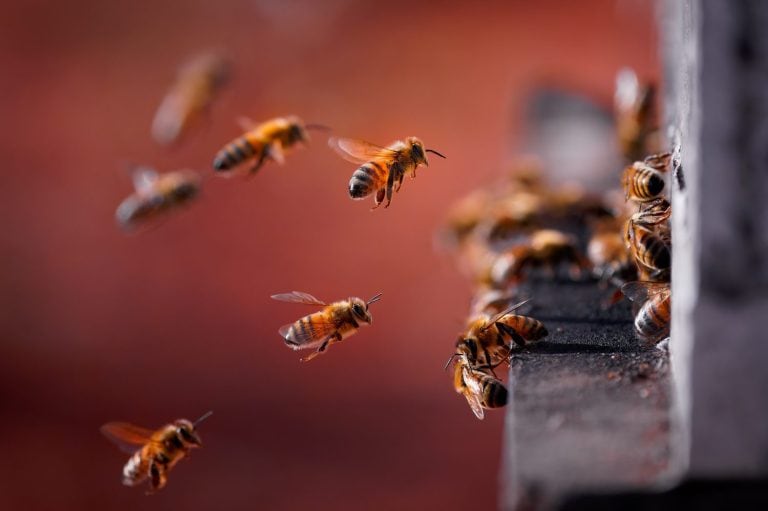
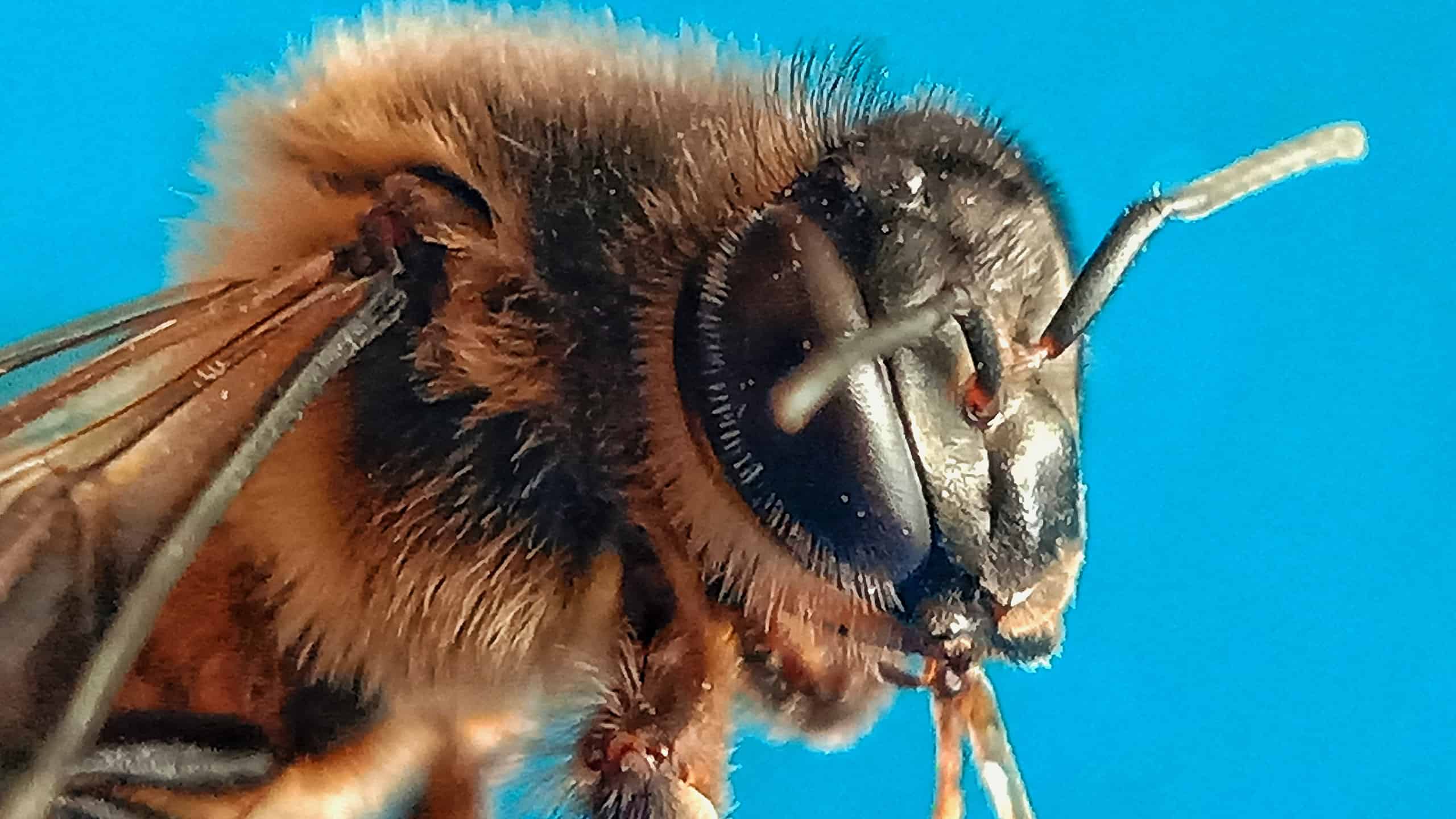
Bees are highly aware of intruders entering their hive. The smell of honey is enticing to many creatures, from the tiniest ant to a large bear. Guard bees protect the entrance of the hive from wasps, robber bees from other colonies, other insects, and mammals.
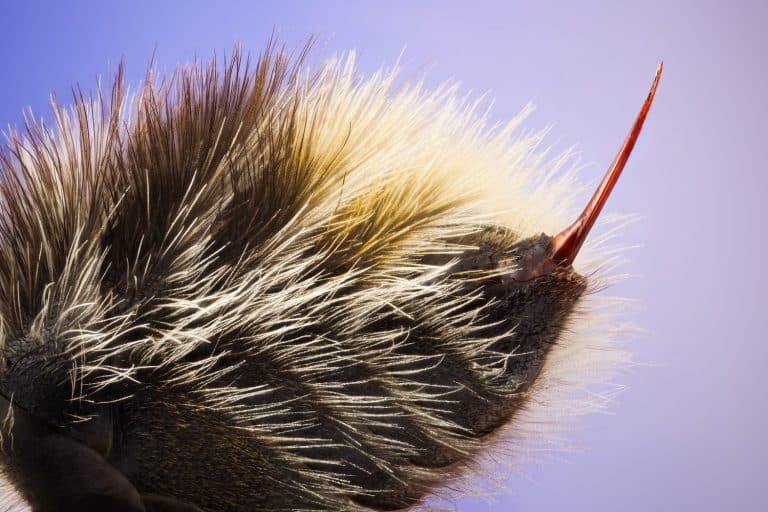
The bees’ main defense is their stinger, but they also have other ways of warding off intruders. When a bee stings an intruder, its stinger remains behind, rupturing the bee’s abdomen and causing a fatal injury. However, bees have other means of protecting the hive. Sometimes, bees form a “bee ball” where they swarm an insect, smothering it until it can no longer breathe. A swarm of bees circling a creature can also raise the body temperature of the intruder to lethal levels.
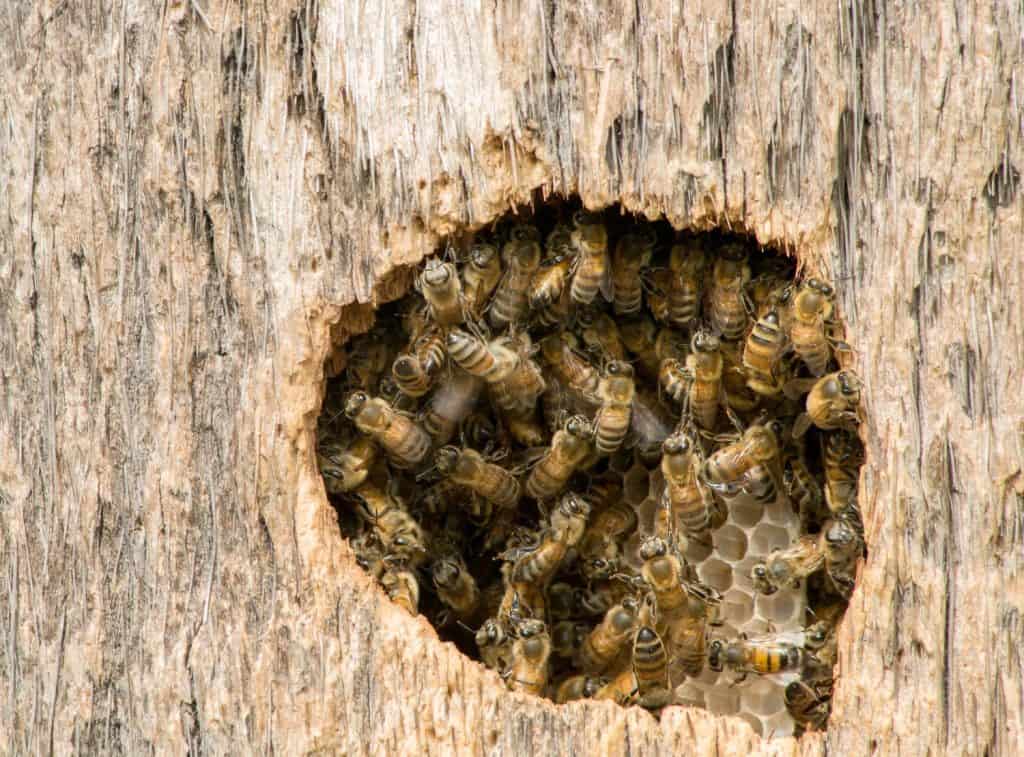
Honeybees have guard bees that protect the entrance to the hive, ensuring no intruders invade undetected.
©Donna Bollenbach/Shutterstock.com
When bees kill an insect in the hive, caretaker bees, whose job it is to remove the dead from the hive, will carry the insect’s body out. This keeps the hive free from bacteria and parasites, and also helps them avoid other predators drawn to the smell of the decaying body. But what can bees do when the dead body is too large for the caretaker bees to remove? Let’s explore the fascinating way bees handle mice in their hive.
Mice can squeeze into the tiniest of places, and they are attracted to beehives by the smell of honey. When a nest of honeybees discovers a mouse inside their beehive, the bees swarm the mouse. They will either sting the mouse repeatedly until it dies or ball up around it, smothering the mouse to death. Once the rodent has died, the body is too heavy for worker bees to lift and carry out of their home. But leaving a body to decay in the beehive could result in other animals and insects being attracted to the hive by the odor. Decay can also introduce disease to the colony.
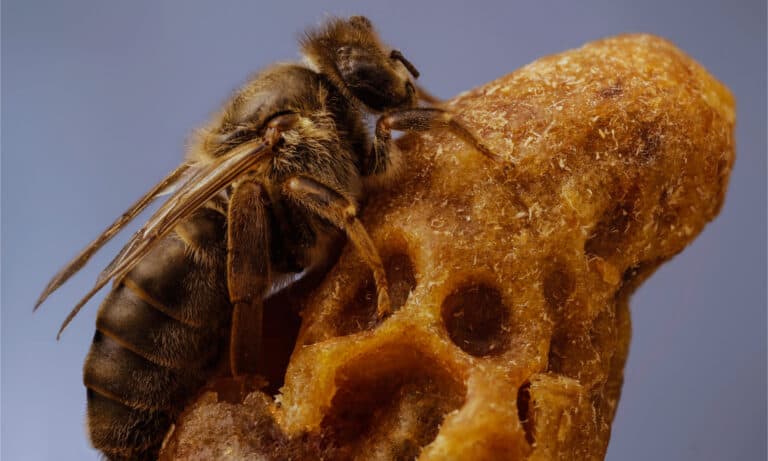
The bees don’t leave the mouse to rot; instead, they mummify its body. Bees produce a substance called propolis that they make from resins collected from a variety of trees and plants, including poplars, conifers, and other sources. Propolis, also known as bee glue, has antibacterial, antifungal, and preservative properties. Bees use it to line the hive’s inner walls, protecting themselves from pathogens.
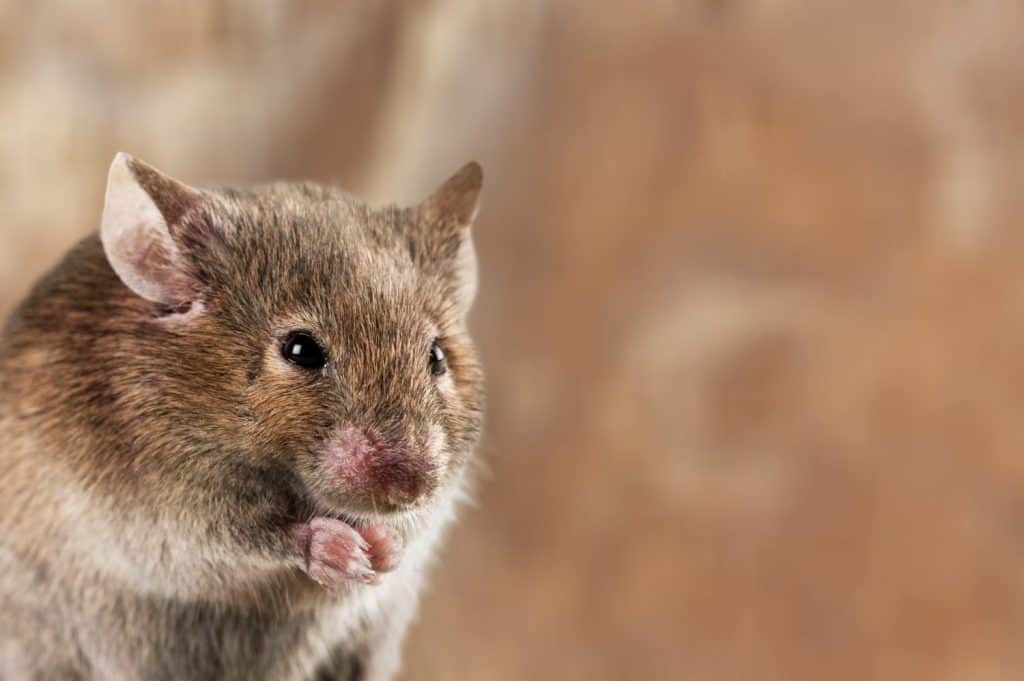
Mice will search for ways inside a honeybee hive during winter to eat the honey and have a warm place to live.
©Billion Photos/Shutterstock.com
In addition to building, bees use propolis to cover a dead mouse, applying it layer by layer over the body. When the layering is complete, the mouse’s body is enclosed in the substance and is essentially mummified. Now, the dead mouse will be largely preserved and protected from rapid decay, allowing it to remain in the hive without causing significant problems.
It’s not just bees that use propolis. Humans have been collecting and using propolis from the bees for centuries for its wound-healing attributes. Today, evidence suggests that propolis has anti-inflammatory properties, and people use it to treat various maladies such as cold sores, wounds, and fungal infections.
For bees to stay healthy and safe, they need to notice intruders as soon as possible. Typically, guard bees can detect an intruder right away by using chemical cues, such as pheromones. However, there is a time during winter when honeybees form a cluster around their queen to keep warm. The bees alternate shivering their wings to generate warmth. The group stays together in one part of the hive, eating honey in a cluster. Unfortunately, this leaves portions of the hive empty and unguarded.
If a mouse or several mice find their way inside the hive during this time, it’s possible they will go undetected. Just like in your home, mice can do a lot of damage inside a beehive in a short amount of time. Mice will eat honey and bee larvae, and they also cause physical damage to the hive. They tear out space to make their own nest and eat the honeycomb. Beekeepers will often install mouse guards or other protections to keep their hives safe from rodent damage during the winter.