
Gnats are so annoying! These tiny little flying insects hover around in swarms like little drones and they like nothing more than to dive-bomb your head. “Gnat” is a general term people use for different varieties of small flying insects, most of which don’t bite but aggravate the heck out of people and animals. Fortunately, we get a bit of a reprieve when temperatures cool, but where do gnats go in the winter? Are they off dive-bombing new heads in the tropics, or sleeping somewhere in your basement? Read on and find out.
Get to Know Gnats
Description
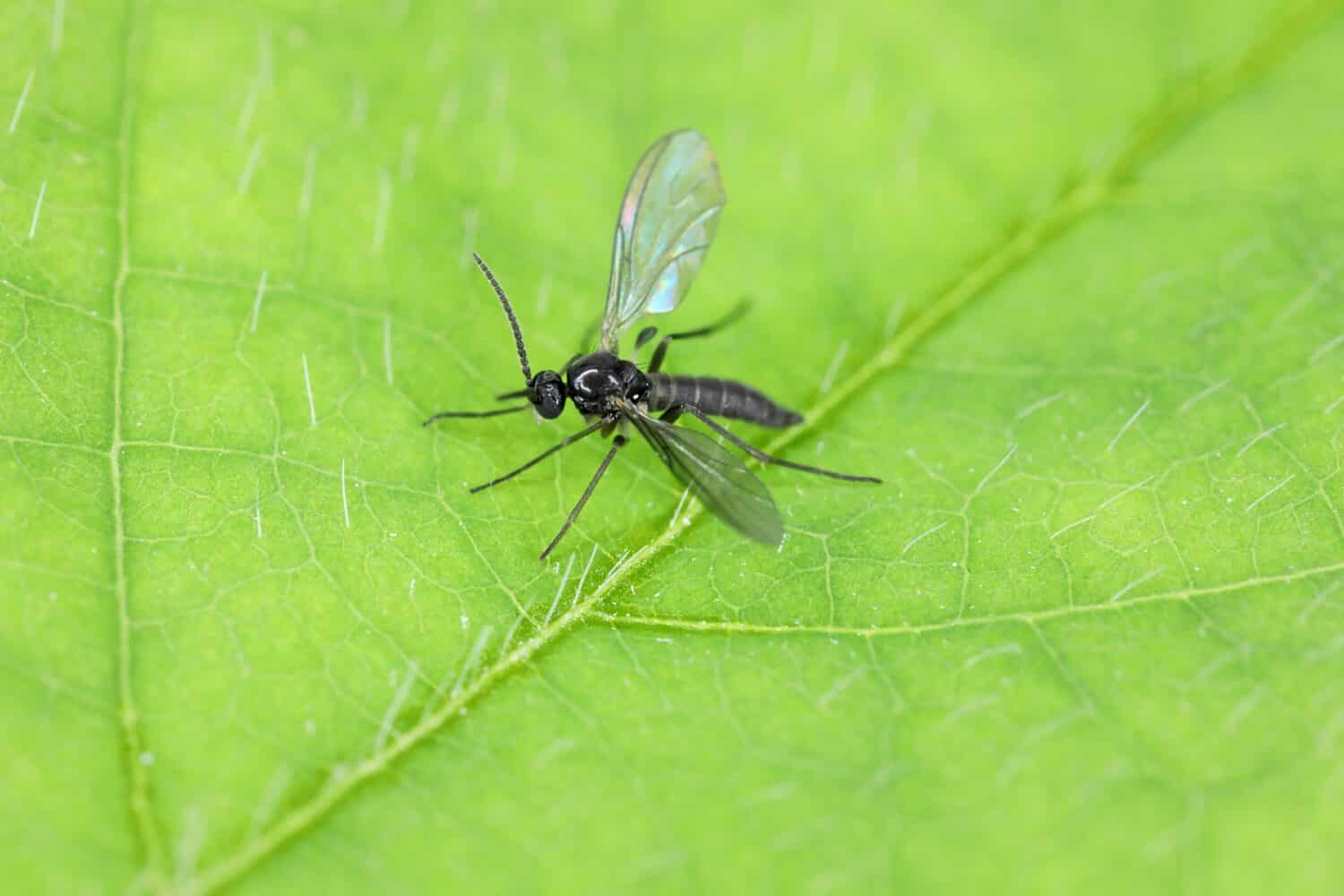
Gnats are a kind of tiny fly with six legs, a narrow set of wings, and a three-part body made up of a head, thorax, and abdomen. They also have long, skinny antennae that are in six or more segments and are longer than their heads. Gnats are delicate little things and not strong fliers, so they only fly short distances and then have to rest. They range in size from 1 mm to 13 mm long. Some gnat varieties are so small you can barely see them, so they are called colloquially, “no-see-ums” among other descriptions. Their colors may be brown, yellow, grey, or black.
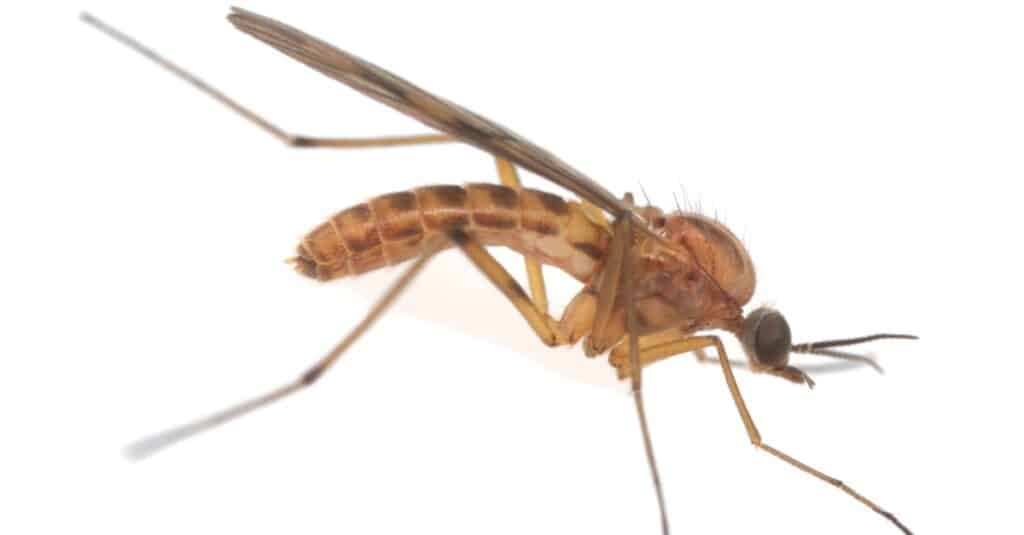
This is a wood gnat. The body structure of a gnat is similar to that of other insects. They are very delicate and can’t fly for long distances.
©Henrik Larsson/Shutterstock.com
Life Cycle
The life cycle of gnats is like other flies. They go through the four life cycle stages of egg, larva, pupa, and adult. The adult female lays her fertilized eggs in moist soil and foliage, on rotting vegetable matter, or manure, where the larvae can feed off its surroundings. They grow into a cocoon-type stage called the pupae which, when it unfolds, is the adult gnat. Warmer temperatures cause speedier development of the life cycle, but a temperature of 75 ºF (23.9 ºC) results in a life cycle of three days for eggs, 10 days for larvae, and four days for pupae.
Some gnats are more aquatic, so the adult lays the eggs in water, on water-soaked plants, or in pools, water containers, or gutters where trash and debris become food sources during the larvae stage. The life span of an adult is only long enough to reproduce. That’s when they become swarms as they go through a mating ritual. The entire life cycle is only four to five weeks.
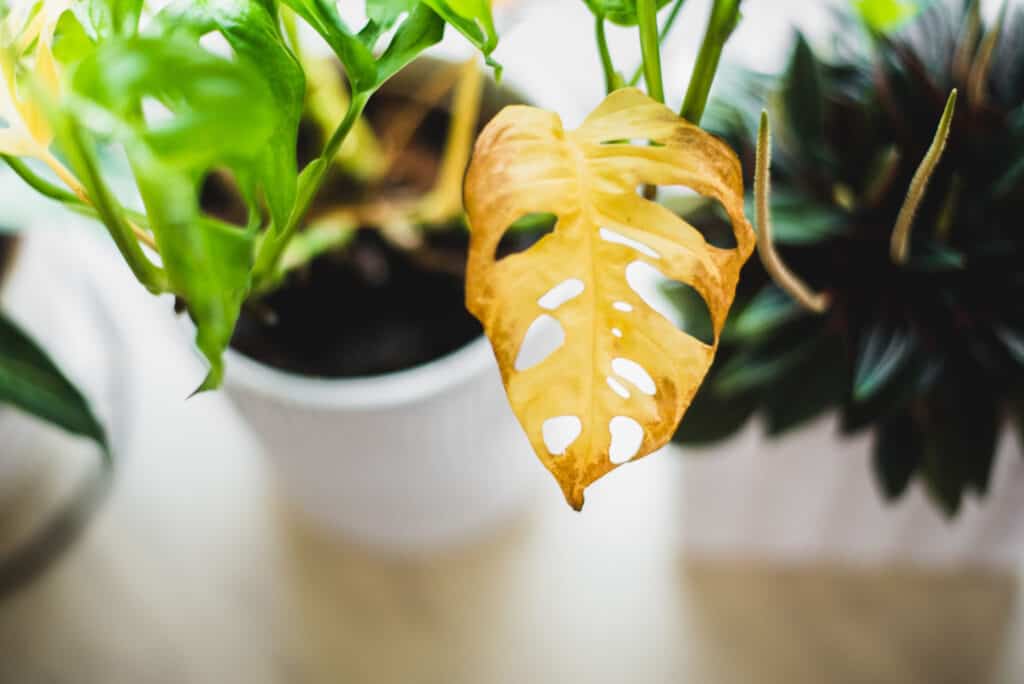
Overwatering houseplants can attract gnats. Here, the leaves of a monstera are starting to turn yellow and brown as a result of overwatering.
©Jus_Ol/Shutterstock.com
Eating and Being Eaten
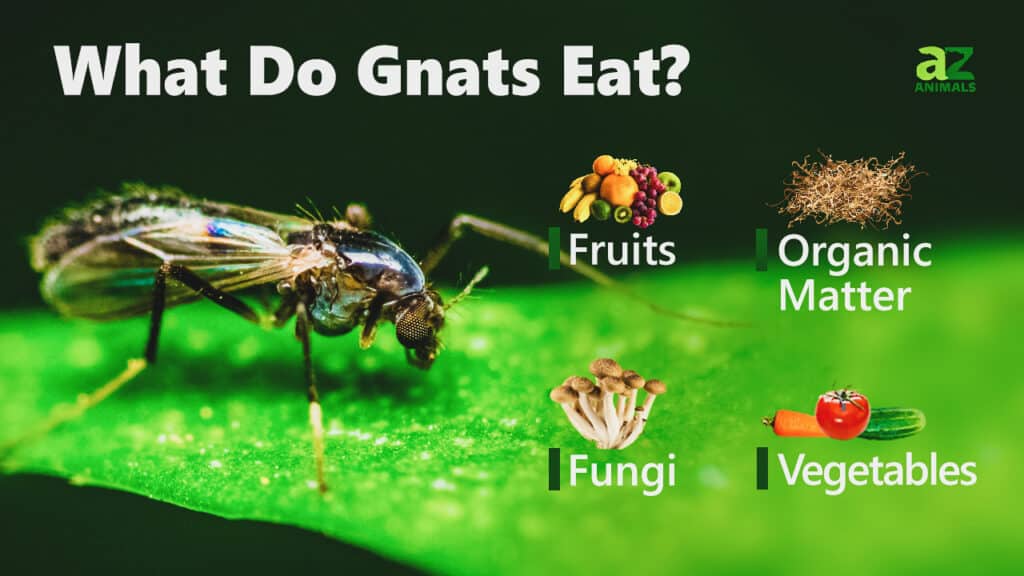
Adults and larvae have favorite foods. Fresh fruit not only tastes good, but they lay their fertilized eggs in the softening fruit. They can easily destroy fruit trees when their swarms collect around them. They eat all kinds of fruits – cherries, lemons, apples, strawberries, bananas, etc. The same is true with vegetables, especially any that have softer outside skins. Vegetables of any kind in a decaying state will attract gnats as well – potatoes, leafy greens, pumpkins, squash, etc. They are attracted to strong smells and to fermented plant products like wine. Other substances also attract gnats: the nectar of flowers, plants that are heavily watered, the slime that develops on wet soil and drain areas and gutters, decaying carrion and rotten meat thrown into the garbage, fungi that grow on different ground and rock surfaces, and fresh, manure from any kind of animal. Though they are so small, gnats are typically eaten by birds, other insects, spiders, and small wild animals.
Where Do Gnats Go in the Winter?
Because gnats include a variety of species and live in diverse climate zones, they have a variety of strategies for surviving the winter. Some migrate to areas with warmer weather. Others die off, leaving behind eggs that will hatch in warmer weather. Some hide in animal burrows, hollow logs, or any place that can protect them from the elements. Inside they particularly like to hang out in overwatered houseplants, damp drains, and any garbage they can find.
The grocery store and your home actually are primary ways for some gnats to survive and multiply all winter long. As fruits and vegetables are transported to the stores, they may become over-ripe. Gnats may have laid eggs within the softened crevices. Meats past their safe sale dates may be in danger of gnats. If produce items are placed in plastic bags in the store and are left in them too long, moisture that cultivates gnat eggs is created.
If produce packaging has been damaged or is leaking or if food is unsealed, even small spills can attract gnats as the scent of aging food becomes stronger. Perhaps you buy a potted plant from the flower department. Gnats can sneak in easily among the foliage and the root system. Once they stow away into your house, not mopping up spills, leaving fruit or food sitting out uncovered, or not keeping trash covered or emptying it frequently enough garbage cans can encourage infestations of gnats.

Gnats can travel into your home on produce, meat, or potted plants.
©Jason Person/Shutterstock.com
How to Get Rid of Gnats
- Get rid of or fix standing water, blocked drains and gutters, decaying wood and plants, etc. If you compost, keep it in a covered container.
- Seal up any cracks, holes, or damaged window and door screens in your house.
- Use strong-smelling oils such as citronella, lemon, and peppermint oils in a diffuser, or mix a little essential oil from them with water and spray with a spray bottle.
- Aerosol sprays that contain pyrethrins are safe for humans and pets.
- Use boiling water to wash down sink and tub drains.
- Use sticky traps.
- Put an over-ripe fruit in a bowl and cover it with plastic wrap with small holes punched into it. Gnats will get in but not find their way out so easily.
- Prepare a mixture of ½ cup apple cider vinegar in a cup of warm water with a few drops of dish soap. Gnats will be attracted to the smell, but the dish soap will make them sink into the mixture and drown.
- Keep trash and garbage bins covered and empty them frequently.
- Clean up spills, pet accidents, and litter boxes.
- Allow potted plants to dry out completely before watering them again.
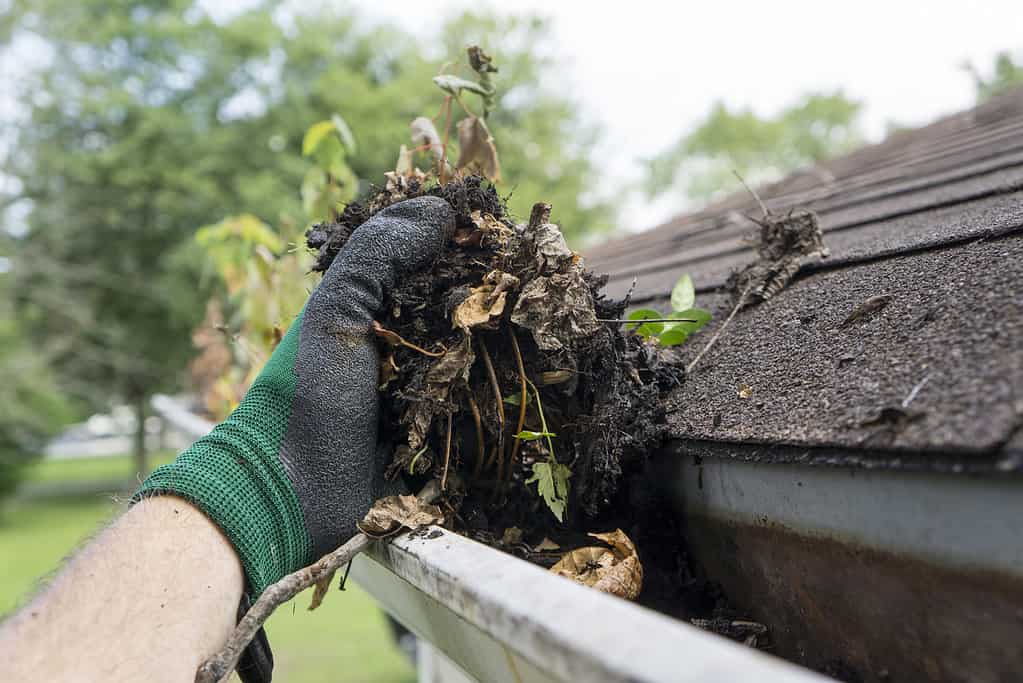
Cleaning up moist, decaying plant matter inside and outside your house can deprive gnats of their favorite environment.
©iStock.com/IndyEdge
Gnats have a lot of tricks up their sleeve when it comes to winter survival, whether migrating, hiding in sheltered places, or dying off after laying eggs to hatch in spring. Even though they are incredibly annoying, one positive side effect is that they can motivate us to keep our houses cleaner and our food preparation practices more sanitary. In the end, by creating an environment that kills gnats, we make one that is safer, healthier, and more enjoyable for us at the same time.