
Birds are among the most intelligent and talkative animals in the entire world. Their babbling, chatty, and loose-lipped mimicry has inspired various stories from across all human cultures. However, true mimicry is a rare phenomenon. It is largely restricted to parrots and only a few songbirds. This makes parrots ideal test subjects for studying the evolution of speech in birds that can talk. Scientists have found that parrots can recognize abstract patterns in ways that most songbirds and other types of birds cannot. Both parrots and songbirds share a similar core song system in the brain, but parrots have evolved deeper vocal learning abilities. Continue reading to learn more about ten of these talking birds.
1. Grey Parrot
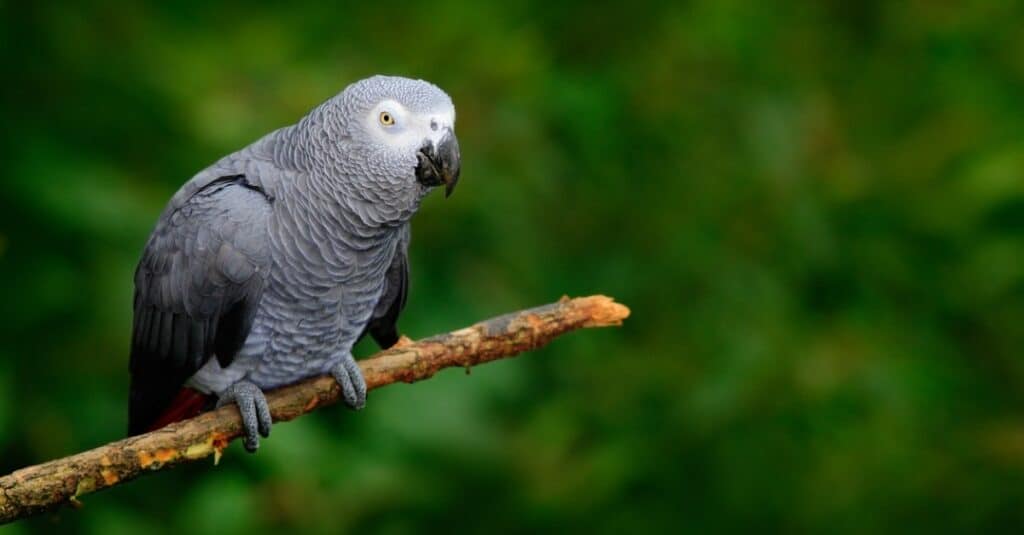
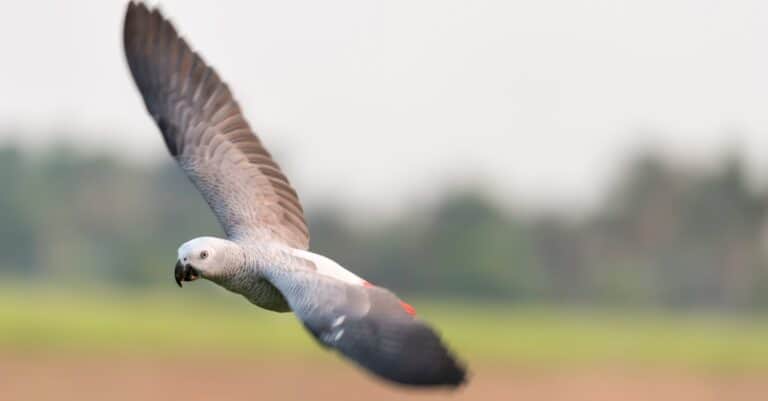
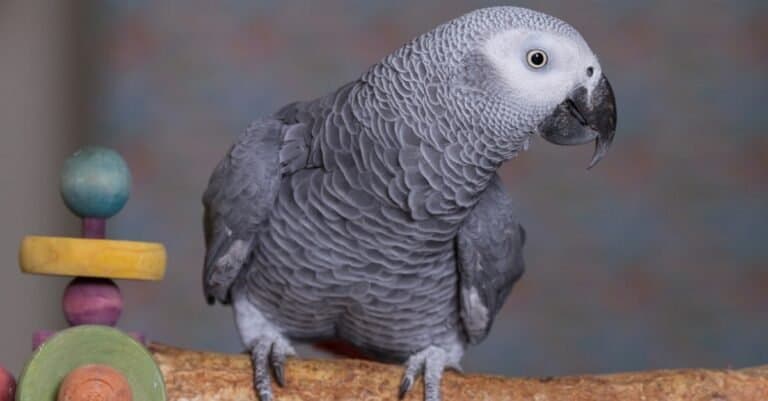
The African grey parrot is known as one of the best-talking birds in the world.
©iStock.com/Ondrej Prosicky
A native of equatorial Africa, the grey parrot (Psittacus erithacus), is widely regarded as one of the most intelligent talking birds. With their sweet and pleasant voices, they can amass a vocabulary of more than a hundred words (and perhaps, in some cases, more than a thousand), sometimes even combining existing words to describe a new object. Some studies have compared their cognitive ability, at least in some respects, to that of a four- to six-year-old human child.
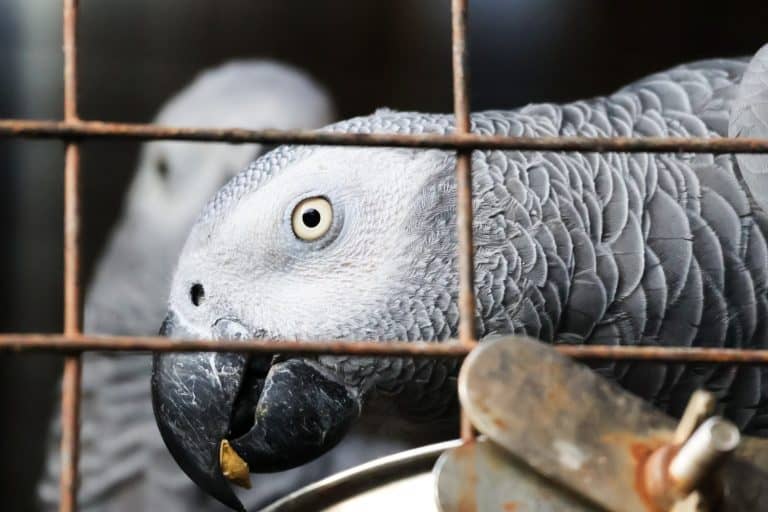
Whereas many parrots sport all manner of bright colors, the grey parrot is covered in various shades of grey feathers, with white edges on the head and body and red feathers on the tail. They are some of the most popular birds in the exotic pet trade, but the IUCN currently considers them to be endangered in the wild because of poaching and habitat loss.
2. Budgerigar
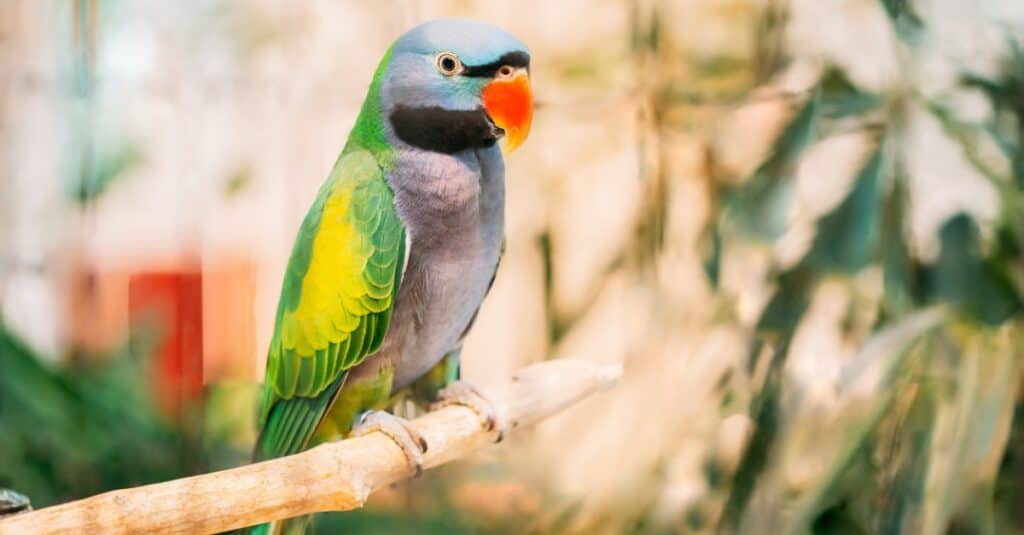
A parakeet named Puck set a world record for having the largest bird vocabulary.
©Grisha Bruev/Shutterstock.com
Also known as the common parakeet, shell parakeet, or just budgie for short, this seed-eating Australian native is a member of the parrot family. The budgerigar (Melopsittacus undulatus) is swathed in yellow, blue, green, and white feathers with black markings along the back, nape, and wings.
Parakeets want to fit in with the flock to survive in the wild, as the flock helps them ward off predators and forage. This is why they learn to talk so quickly. If they are only around other parakeets in their first year of life, they will imitate one another. However, if they are a new member of a human family, parakeets will try to fit in with that flock too.
A budgerigar named Puck once set a world record for the largest bird vocabulary, with 1,728 words. They are also highly social animals and enjoy practicing speech with their owner. This proficiency has made them quite famous. One of these birds appeared on The Tonight Show with Johnny Carson.
3. Amazon Parrot
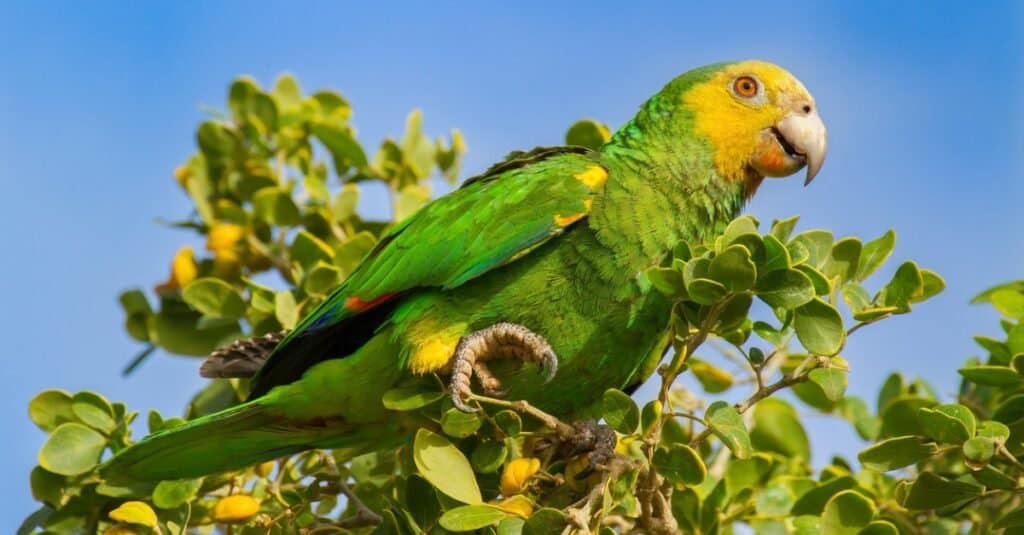
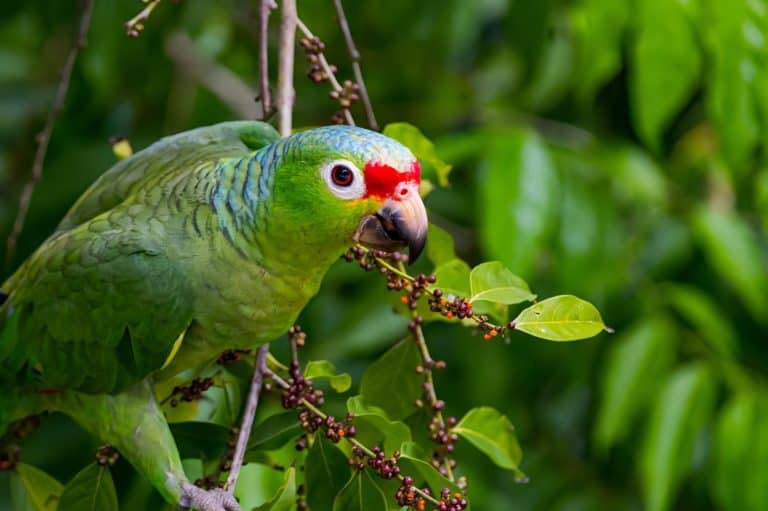
Amazon parrots have a history of charming people with their vocal talents.
©Ben Schonewille/Shutterstock.com
Found throughout most of South and Central America, Amazon parrots (Amazona) are a group of birds comprising 30 distinct species, all of them swathed in green or red feathers. Most Amazon parrots are proficient in speech. The key to their vocalizations could be their highly social nature. These are gregarious birds that gather together in large flocks for foraging, roosting, and nesting.
Evidence suggests that Amazon parrots have a long history of captivating people with their vocal talents. Mummified parrots have been found dating back centuries before the arrival of Europeans. Although poaching is illegal in many countries, illegal trade and poaching of Amazon parrots still persist, and enforcement remains a challenge. They continue to be traded as pets in many regions. They are so popular that many birds have escaped from captivity and have established feral flocks in some regions, including the United States and Europe.
4. Rose-ringed Parakeet
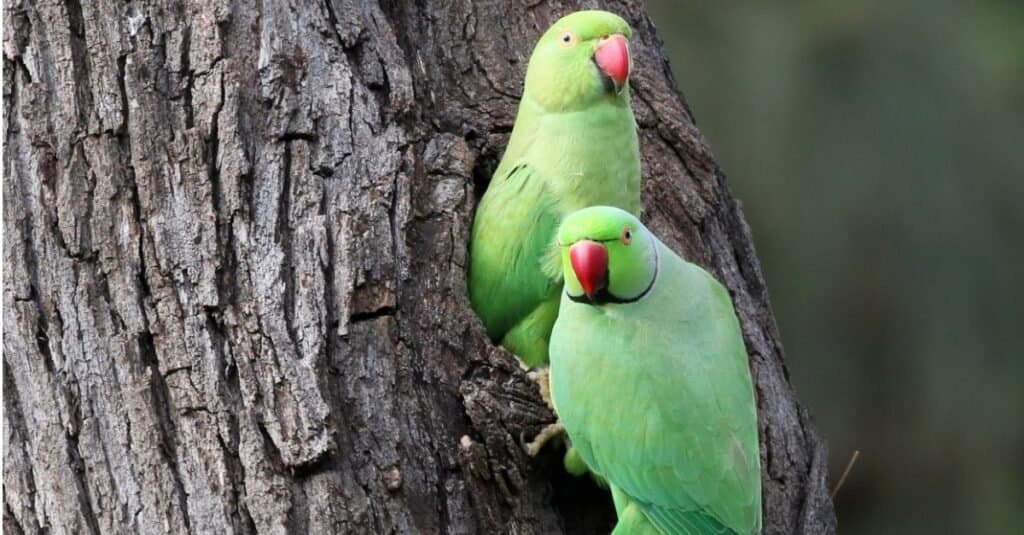
Rose-ringed parakeets are presumably good at recalling longer phrases.
©Randy Bjorklund/Shutterstock.com
The rose-ringed parakeet (Psittacula krameri), a medium-sized bird identifiable by its light green plumage, orange beak, and rose ring around the neck, is common throughout India and parts of Africa. While other birds are sensitive to urbanization and deforestation, the rose-ringed parakeet has adapted to urban living. In terms of their verbal proficiency, they are good at recalling longer phrases. One story claims that these birds would hang out near gardens and learn how to mimic the daily prayers of Indian religious leaders. It is thought that they can learn up to a few hundred words.
5. Quaker Parrot
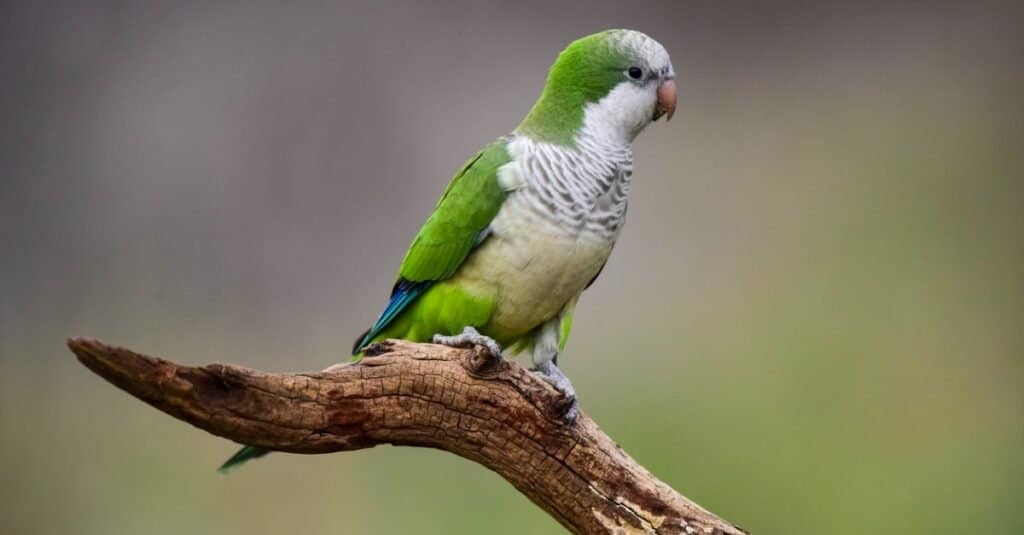
Quaker parrots are highly social, intelligent, and quick to grasp human vocabulary.
©Foto 4440/Shutterstock.com
The Quaker parrot (Myiopsitta monachus), a small, bright green bird with a grayish breast, is native to Argentina and the surrounding region. While not the most capable speakers, quaker parrots are highly social, intelligent, and quick to grasp human vocabulary. This makes them popular among novice or inexperienced bird owners. Because they can sometimes escape and become agricultural pests, the sale and ownership of this species is banned in several U.S.states, including California, Colorado, Connecticut, Georgia, Hawaii, Kentucky, Maine, New Jersey, Pennsylvania, Tennessee, Wisconsin, and Wyoming. Some states, like New York, allow ownership but regulate the sale of these birds.
6. Papuan Eclectus
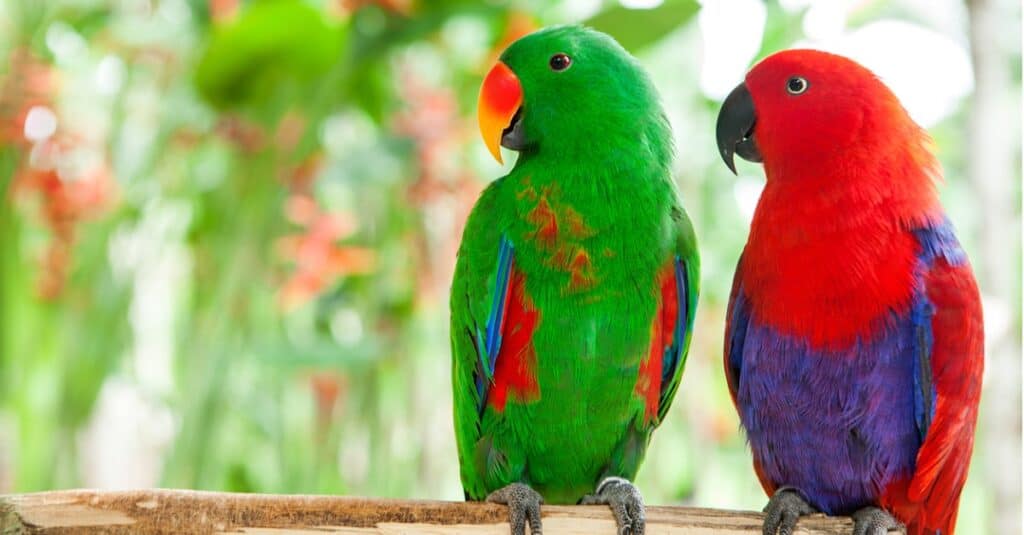
Eclectus parrots can learn around a hundred or more words in captivity.
©iStock.com/redchanka
Native to New Guinea, Papuan eclectus parrots (Eclectus polychloros) feature one of the most interesting cases of sexual dimorphism in the entire bird world. The males have bright green plumage with red and orange mixed in, while the females are bright red with some blue feathers. They are sometimes mistaken for different species entirely. While calm and not too noisy, they do make screeches and whistles in the wild to communicate with each other. In captivity, they can learn an extensive vocabulary of more than one hundred words.
7. Common Hill Myna
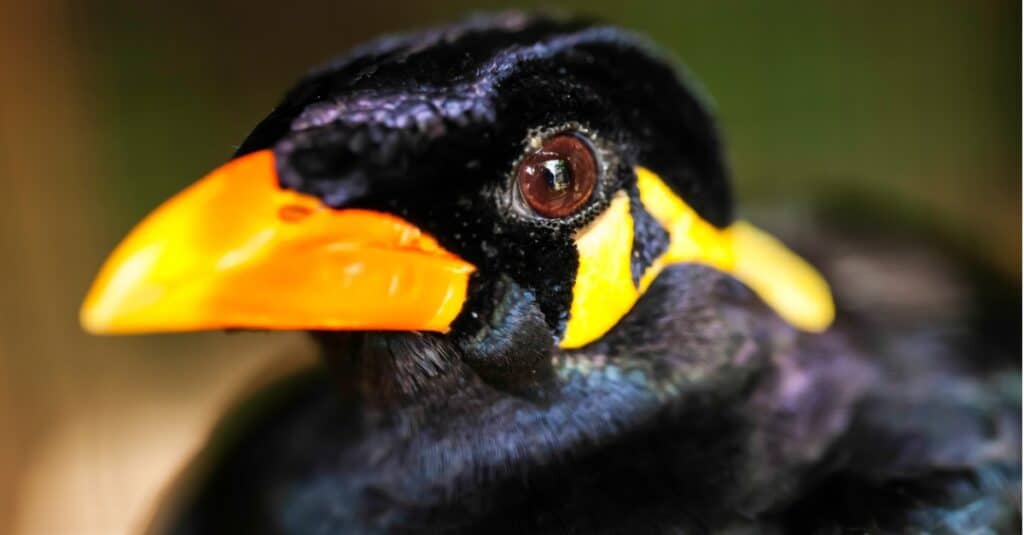
Hill mynas can mimic sounds with such clarity that they can match human tones.
©iStock.com/nattanan726
The common hill myna (Gracula religiosa) is known for its amazing ability to mimic human speech. A member of the starling family, this group of black songbirds is native to southern Asia. In the wild, they make a variety of different shrieks and whistles to communicate with each other. Younger birds appear to learn warning calls from elders by mimicking their sounds. When placed in captivity, the common hill myna can mimic speech with enough clarity to match the tone of a human voice. Some people claim they even rival the grey parrot in sheer speech ability.
8. Cockatoo
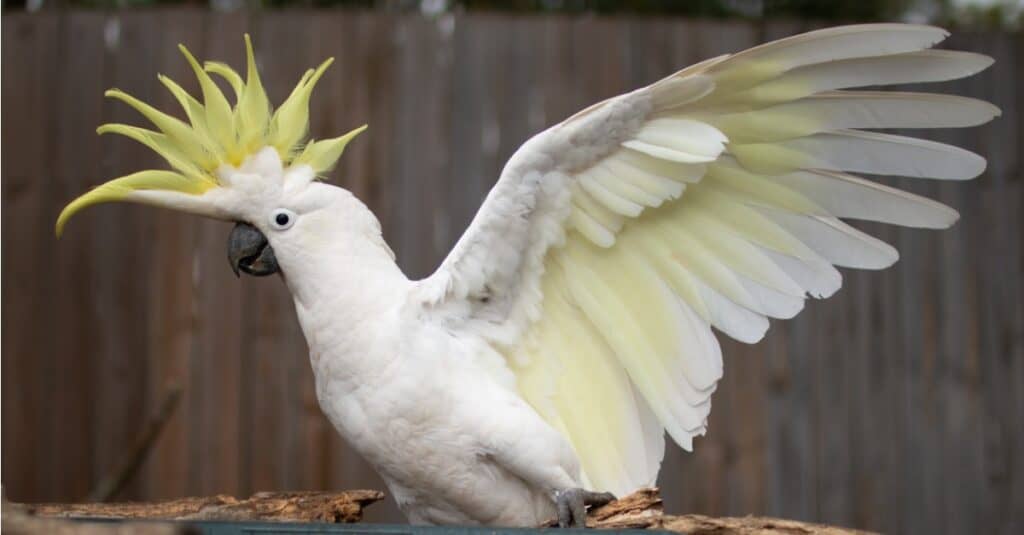
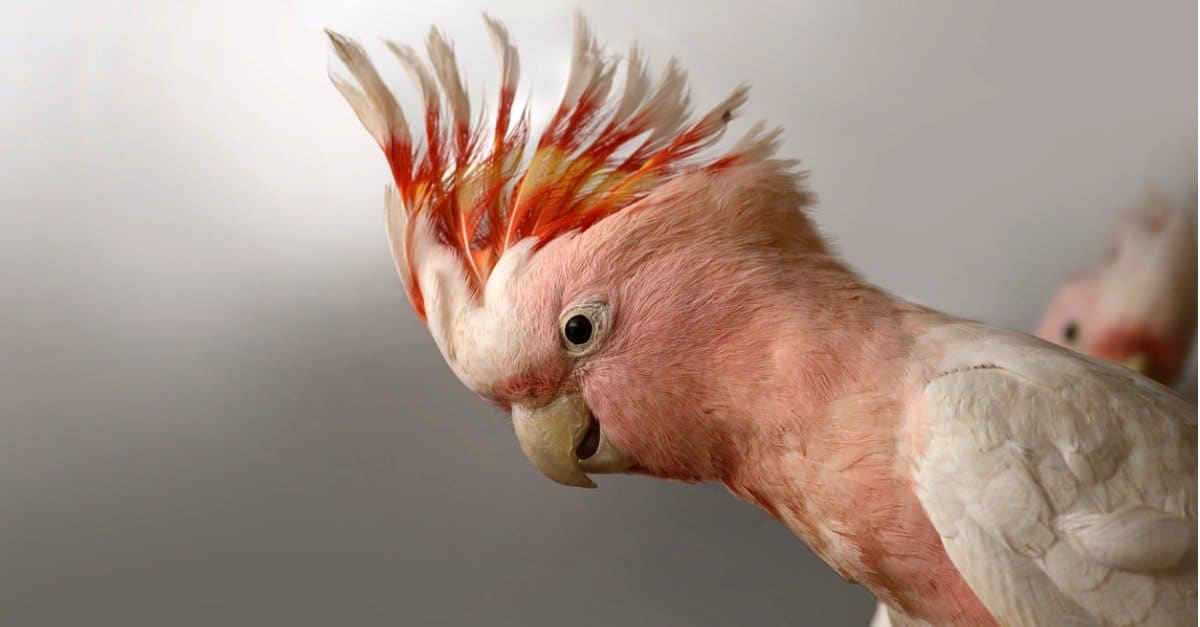
The voice of a cockatoo is considered to be loud and harsh.
©QuickStartProjects/Shutterstock.com
Common throughout the Asian Pacific region, the Cacatuidae family is comprised of 44 species, all of them adept at vocal mimicry to some degree. They are identifiable by their fairly large size, their prominent crests, and their curved bills. Their plumage tends to be fairly plain, white, gray, and black, sometimes accentuated with red and yellow. Cockatoos are not as desirable as other talking birds, at least in terms of vocal ability. Their vocabulary is limited to approximately 20 to 30 words, and their voices are considered to be loud and harsh. Nevertheless, they can still dazzle and fascinate people with their mimicry. They are also curious and sociable birds.
9. Macaw
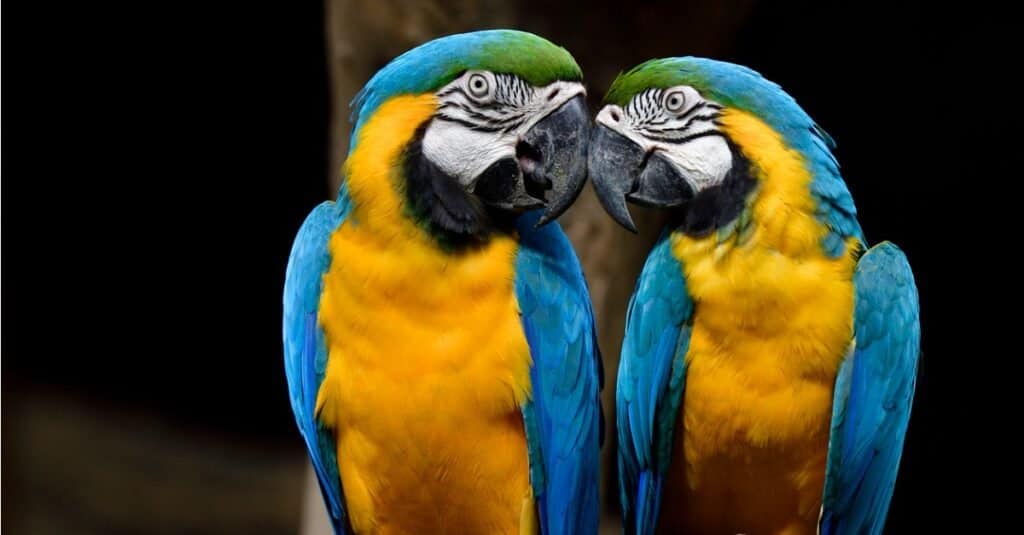
Although sometimes harsh and unclear, macaws can mimic speech to various degrees.
©iStock.com/PrinPrince
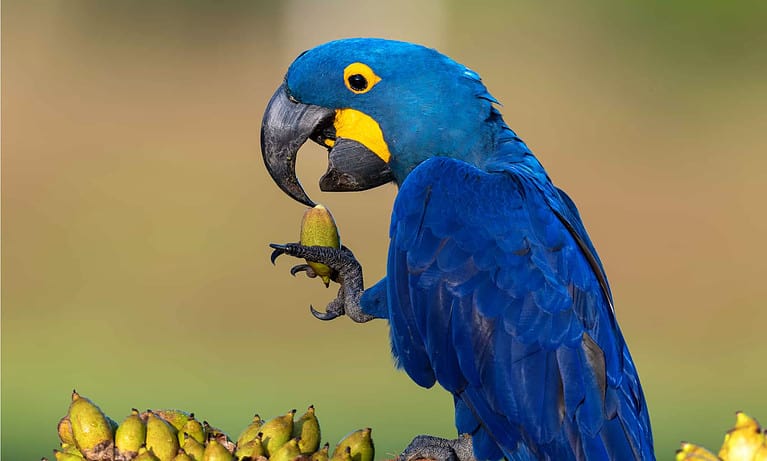
This group of colorful and beautiful New World parrots includes 19 different macaw species. They are often identified by their huge, hooked beaks, exceptionally long tail feathers, and relatively bare facial patches. Their loud noises are an integral part of their personality. The blue and yellow macaw (Ara ararauna) is especially known for its vocal talents. It can learn around 20 words, but all macaws can mimic speech to various degrees. However, their speech tends to sound a little harsh and unclear.
10. Ravens (and other Corvids)
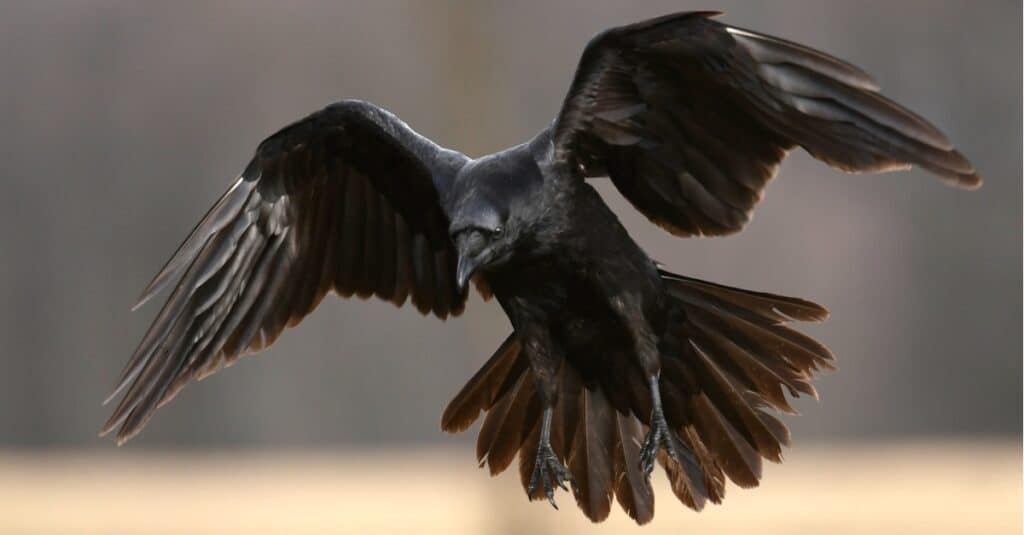
Corvids, such as ravens, are one of the few animals that use tools regularly to obtain food.
©iStock.com/Piotr Krzeslak
Immortalized by Edgar Allan Poe, ravens (along with closely related crows, rooks, and magpies) can mimic many sounds, including human speech. They put this ability to good use by pretending to be other species. Zookeeper Gerald Durrell once saw a magpie amuse itself by continuously tricking a group of chickens to come out with a feeding call. Because of their large brains relative to body size, their cognition and problem-solving abilities are unparalleled in the bird world. Corvidae is one of the few animal families on the planet that regularly use tools to obtain food.