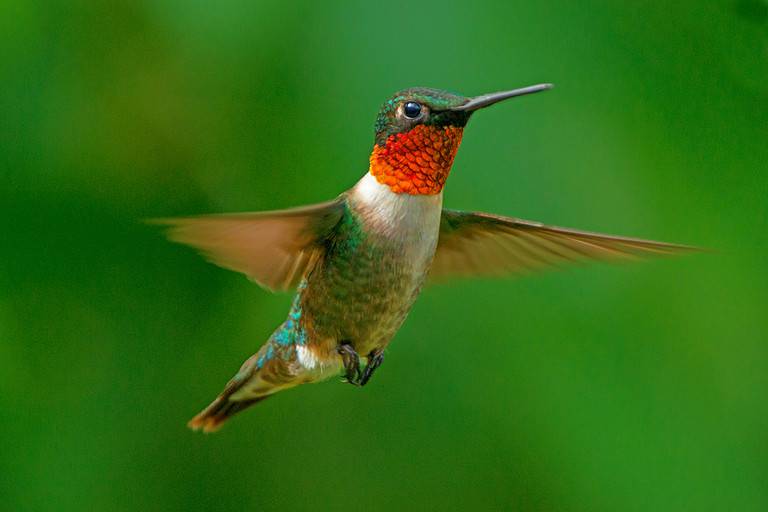

Hummingbirds have the highest metabolic rates among vertebrates and require a specialized diet to meet their extraordinary energy needs. The ruby-throated hummingbird (Archilochus colubris) is no exception. This iconic species splits its time between its summer range in the eastern half of the United States and Canada, where it is the region’s only native breeding hummingbird, and its winter range in Florida, Mexico, and Central America., with spectacular spring and autumn migrations in between that for many involve a non-stop, superpowered flight over the Gulf of Mexico. So what exactly do ruby-throated hummingbirds eat to power their tiny but mighty bodies? Read on to find out!
#1 Flower Nectar
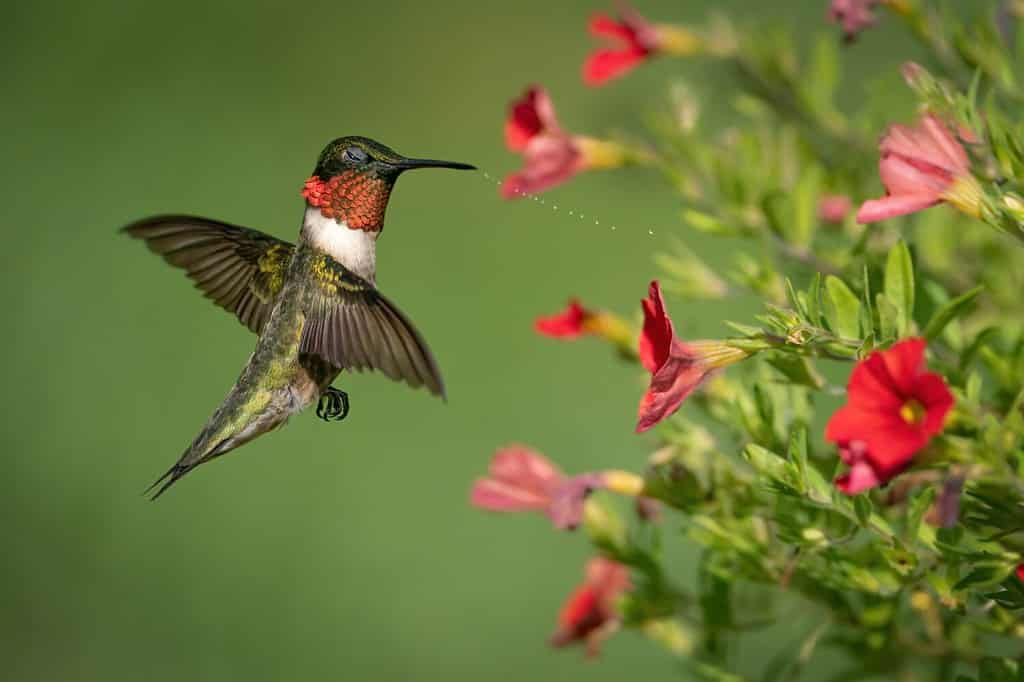
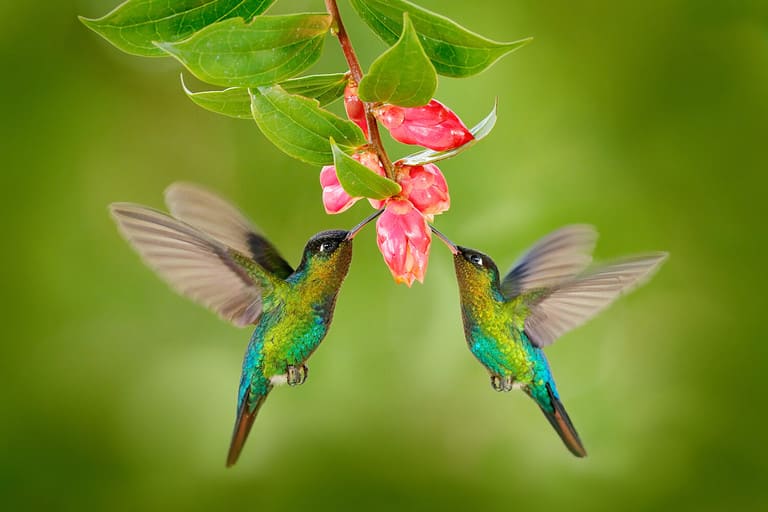
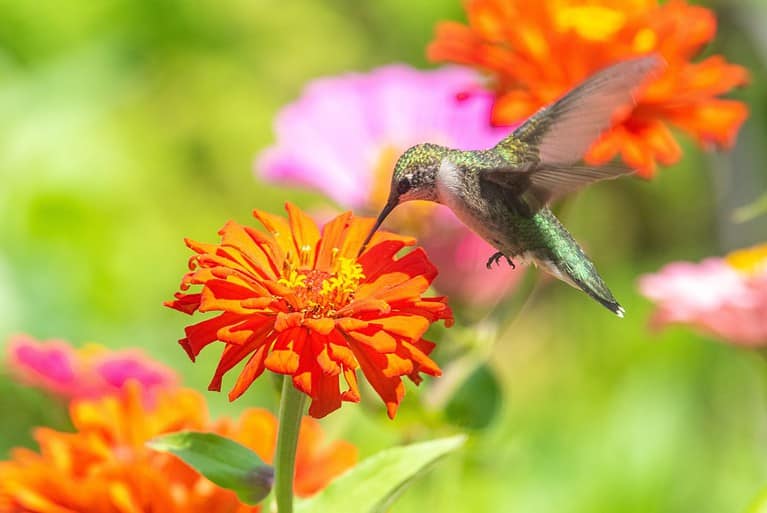
While it’s true that ruby-throated hummingbirds love red tubular flowers like these, they will also happily sip from many other colors and shapes of flowers.
©Cavan-Images/Shutterstock.com
Like all hummingbirds, ruby-throated hummingbirds are nectarivorous and important pollinators of native flowers. They exhibit a preference for red tubular flowers such as trumpet vine (Campsis radicans), which may have in part co-evolved with them. However, they will also visit a wide variety of both wildflowers and flowering shrubs and trees across their range. They can take nectar both during hovering flight and while perching directly on the plant.
#2 Tree Sap
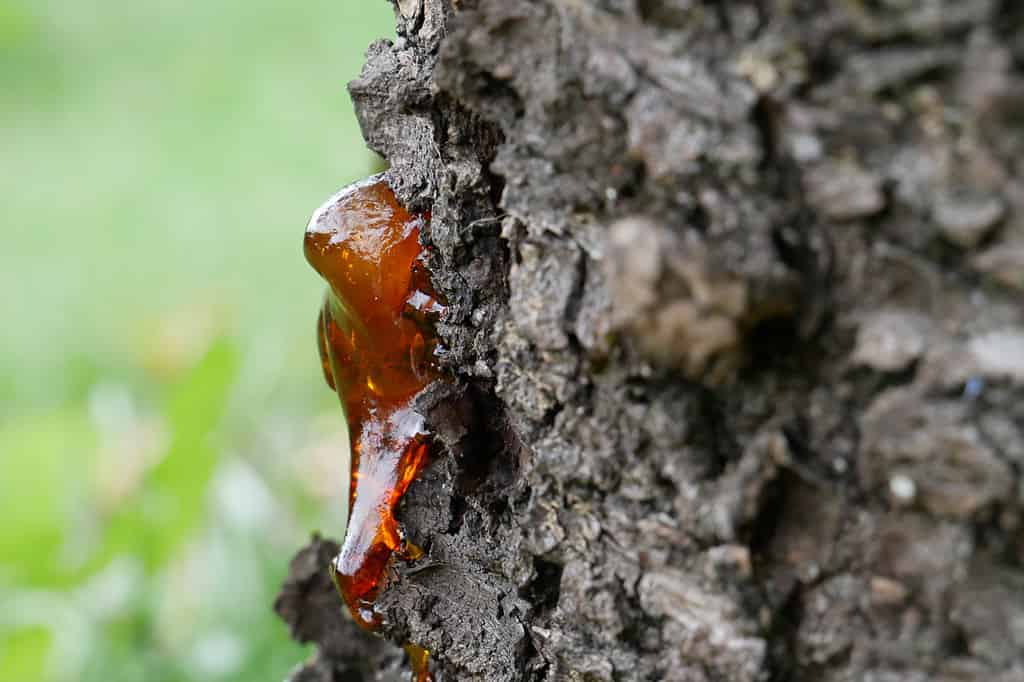
Tree sap is an essential alternate source of energy when nectar isn’t readily available.
©Elimage/iStock via Getty Images
In addition to nectar, hummingbirds also drink tree sap. Sap is an especially important sugar source during early spring and late autumn migration when nectar sources may be scarce. Ruby-throated hummingbirds have been documented using sap wells excavated by yellow-bellied sapsuckers (Sphyrapicus varius) in birch, poplar, and maple trees.
#3 Small Insects and Spiders

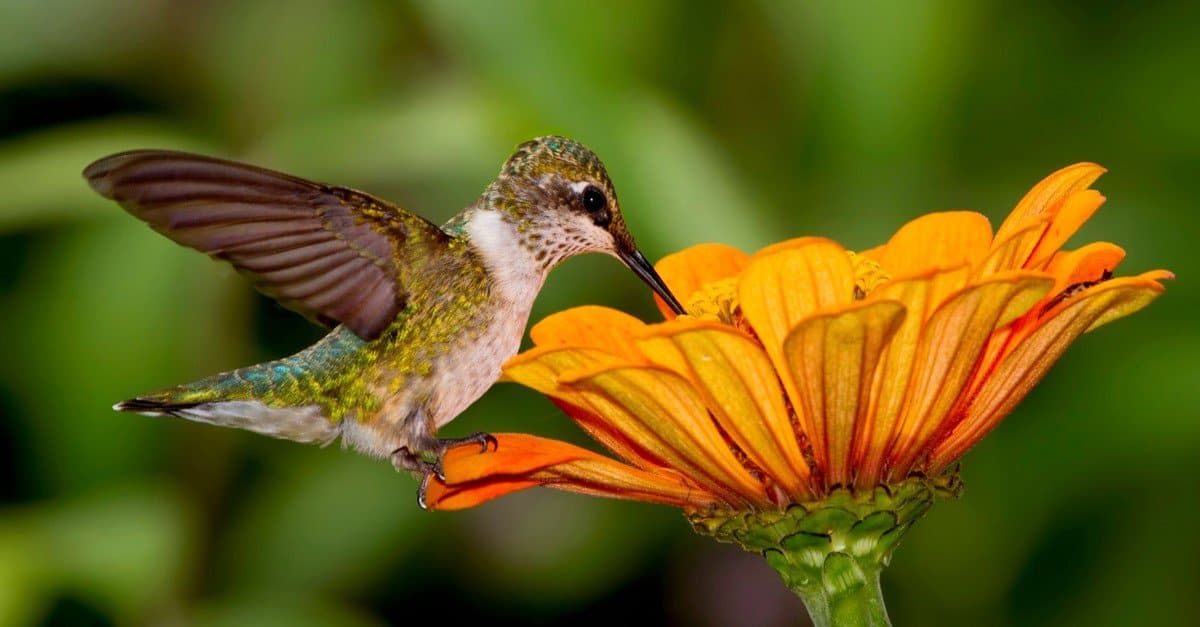
Mother ruby-throated hummingbirds raise their young chicks on a diet of regurgitated nectar mixed with a hearty helping of small insects and spiders.
©RobDemPhoto/Shutterstock.com
In addition to sweet nectar and sap, ruby-throated hummingbirds also snack on a variety of small insects. These include mosquitoes, gnats, fruit flies, small bees, aphids, and caterpillars, as well as insect eggs. They also eat spiders. Hummingbirds can both catch flying insects mid-air by “hawking,” and forage in trees and on the ground. Insects and spiders are an important source of protein for hummingbirds at all life stages and are the primary food fed to nestlings.
#4 Artificial Nectar Feeders
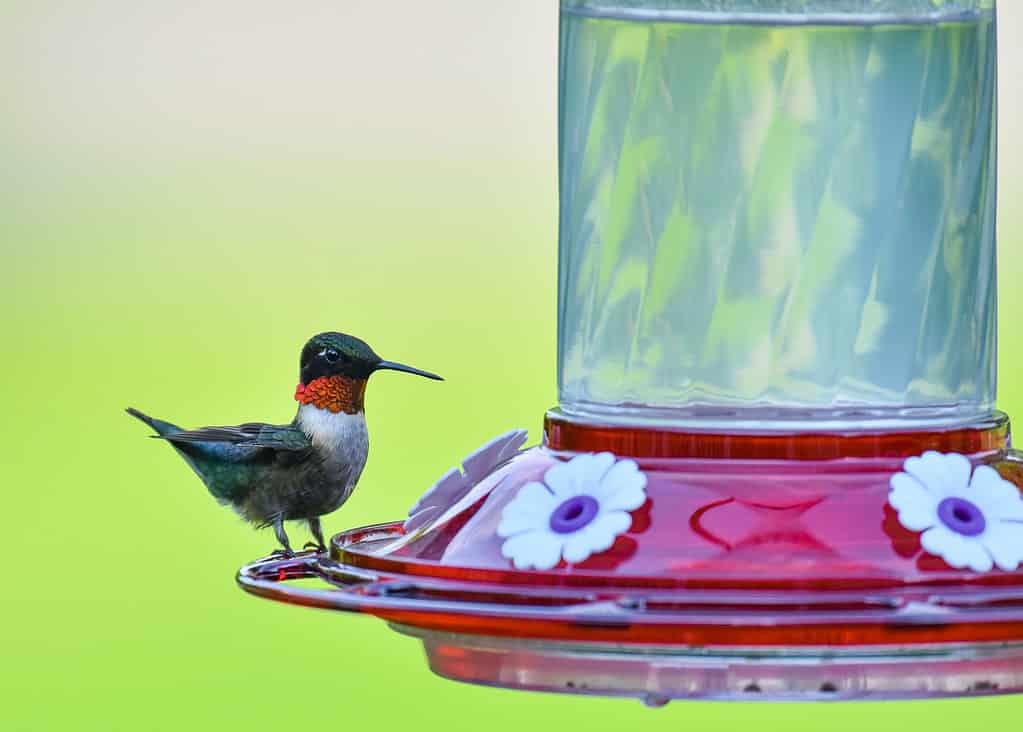
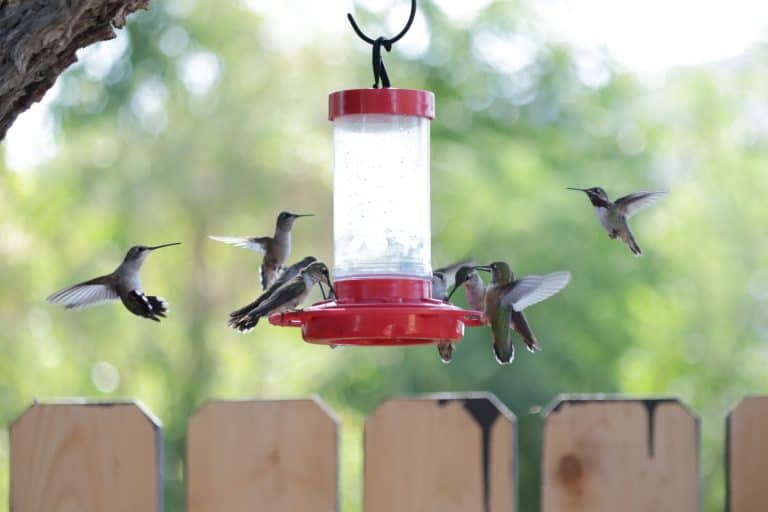
Putting up a hummingbird feeder is a proven way to attract hummingbirds to your garden.
©Christine Balleau/iStock via Getty Images
Last but certainly not least, humans have discovered that they too can feed hummingbirds via artificial nectar feeders. Of course, creating a pollinator garden full of nectar-rich flowers remains the best way to provide hummingbirds with the natural nutrition they need. However, nectar feeders provide a nice way to attract your hummingbird visitors to optimal viewing spots for better close observation. They are also great for enticing migrating hummingbirds to stop at your place for a bit, and maybe even to stay and breed for the season. As the use of hummingbird feeders has grown across their range, hummingbirds have shown site fidelity to those who reliably put up their feeders every year. In other words, if you hang them, they will come!