
Quick Take
- One Missouri ant species never bites, yet it can still trigger life-threatening infections in hospitals. Pharaoh ant hospital risks →
- The most destructive ant in Missouri demolishes wood without ever eating a single splinter of it. Carpenter ant wood damage →
- One species hiding in Missouri homes releases a smell so distinct you'll instantly recognize an infestation the moment you accidentally crush one. The rotten-coconut smell →
- Pavement ants have colonized Missouri for centuries, yet not a single one is actually native to North America. Pavement ants' European origins →
Ants are social insects belonging to the family Formicidae, which includes over 15,700 named species and subspecies. Missouri is home to approximately 150 of these ant species. Ants live in colonies, managed by a queen. Because prolonged exposure to freezing temperatures can be fatal, ants enter a state of dormancy called diapause during the winter. Their metabolism drastically slows down, and they retreat to the lowest chambers of their nests, emerging again in the spring. The vast majority of ants live outdoors, where they help sustain the environment by tilling soil, controlling pests, and dispersing seeds. However, a few species are aggressively invasive and can pose threats to structures, landscaping, and human health. Continue reading to learn about the different types of ants emerging in Missouri and the potential threats they may pose.
Pharaoh Ants
Pharaoh ants (Monomorium pharaonis) are incredibly small, measuring between 0.06 and 0.08 inches long. These tiny ants live in wall voids, behind baseboards, inside furniture, or under floors. They seek out foods that contain protein, fat, and sugar, so they often reside in and near kitchen walls and floors. They also eat gnats, flies, and other tiny bugs.
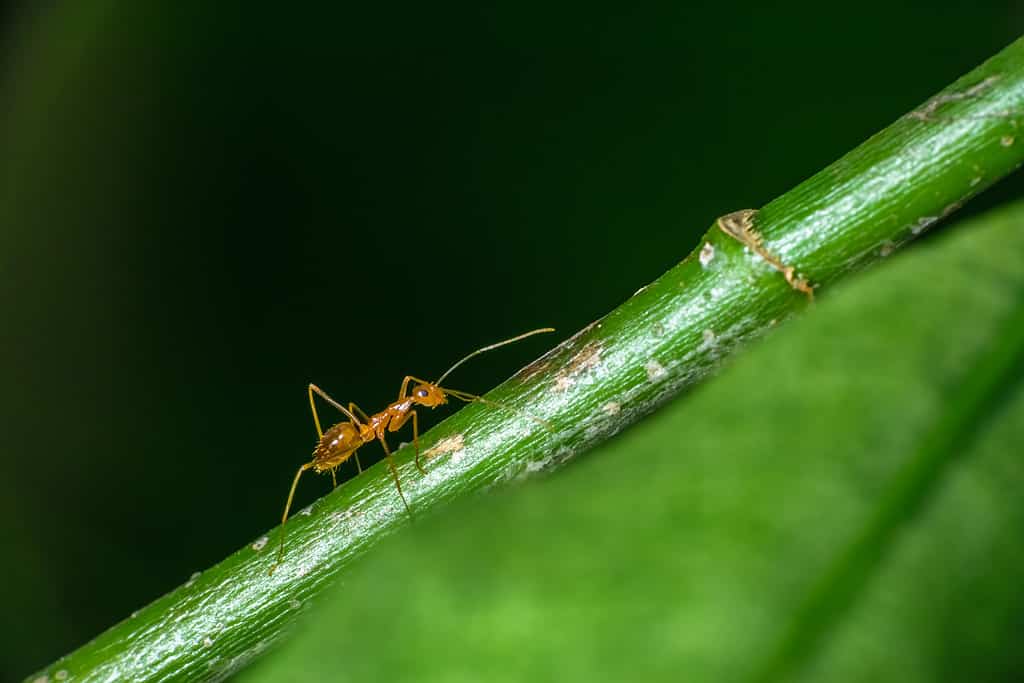
Salmonella is one of the main germs Pharaoh ants spread
©iStock.com/Suman Ghosh
While they do not generally bite or sting humans, Pharaoh ants nonetheless present a danger to humans through their tendency to transmit disease. In homes and commercial kitchens, foraging ants can track unsanitary pathogens across food surfaces and into food packaging. In hospitals and nursing homes, Pharaoh ants are notorious for wandering into wounds, IV tubes, and sterile dressings, which can lead to life-threatening bacterial infections and sepsis.
Pavement Ants
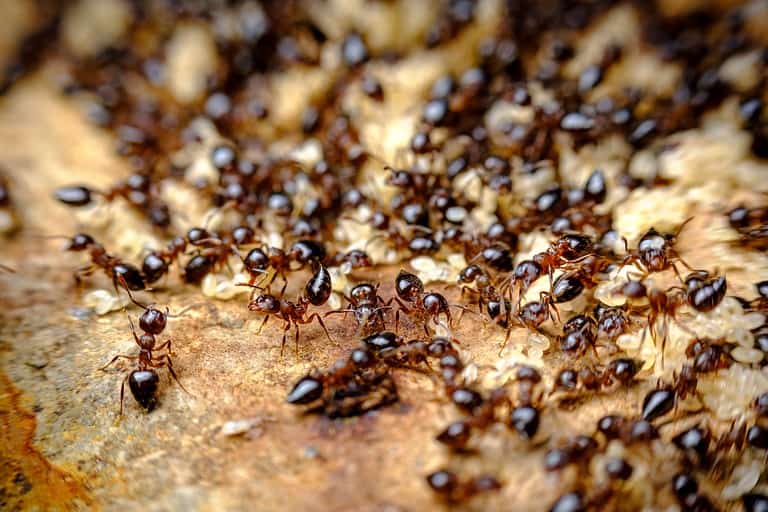
Pavement ants (Tetramorium caespitum) are known to colonize any type of pavement, from sidewalks to slabs, under and around foundations, and within basement walls.
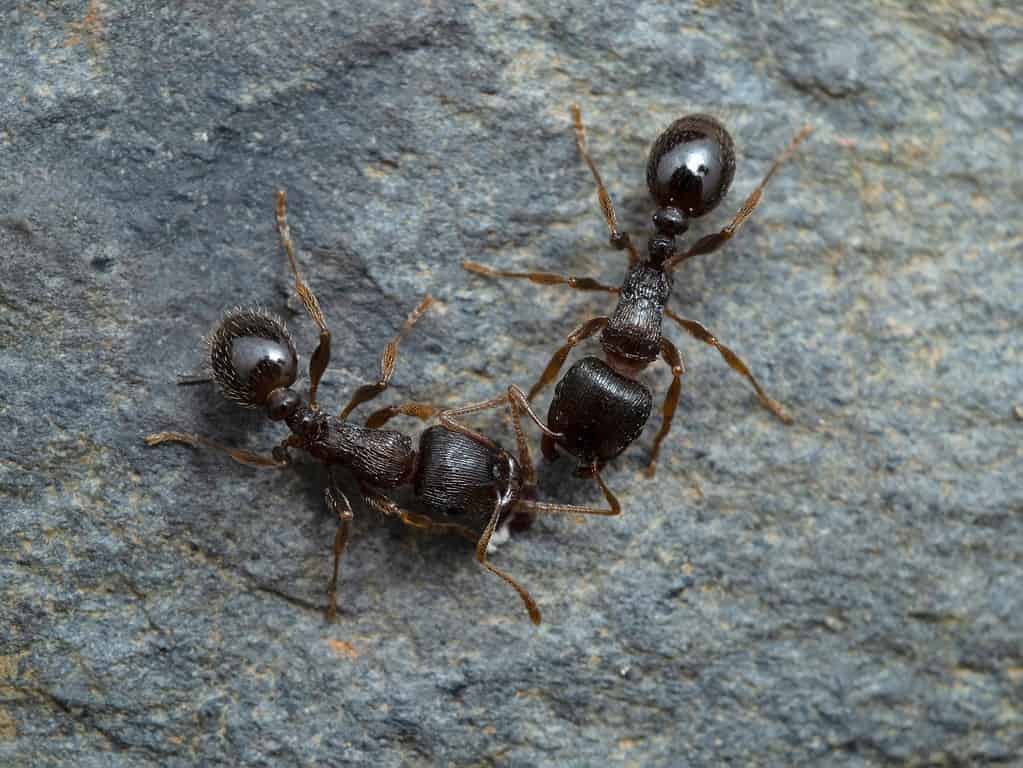
It is believed that pavement ants arrived in North America on ships from Europe.
©Ernie Cooper/Shutterstock.com
They’re not native to North America but were inadvertently introduced by European colonizers in the 18th century. Pavement ants are dark brown to black, and measure between 1/16 and 1/8 of an inch long.
Pavement ants eat fruit, seeds, other insects, and just about any kind of human food they can find. As a result, they often invade homes in search of kitchen scraps.
When they find food, they leave behind chemical trails for others in the colony to follow.
Western Thatching Ants
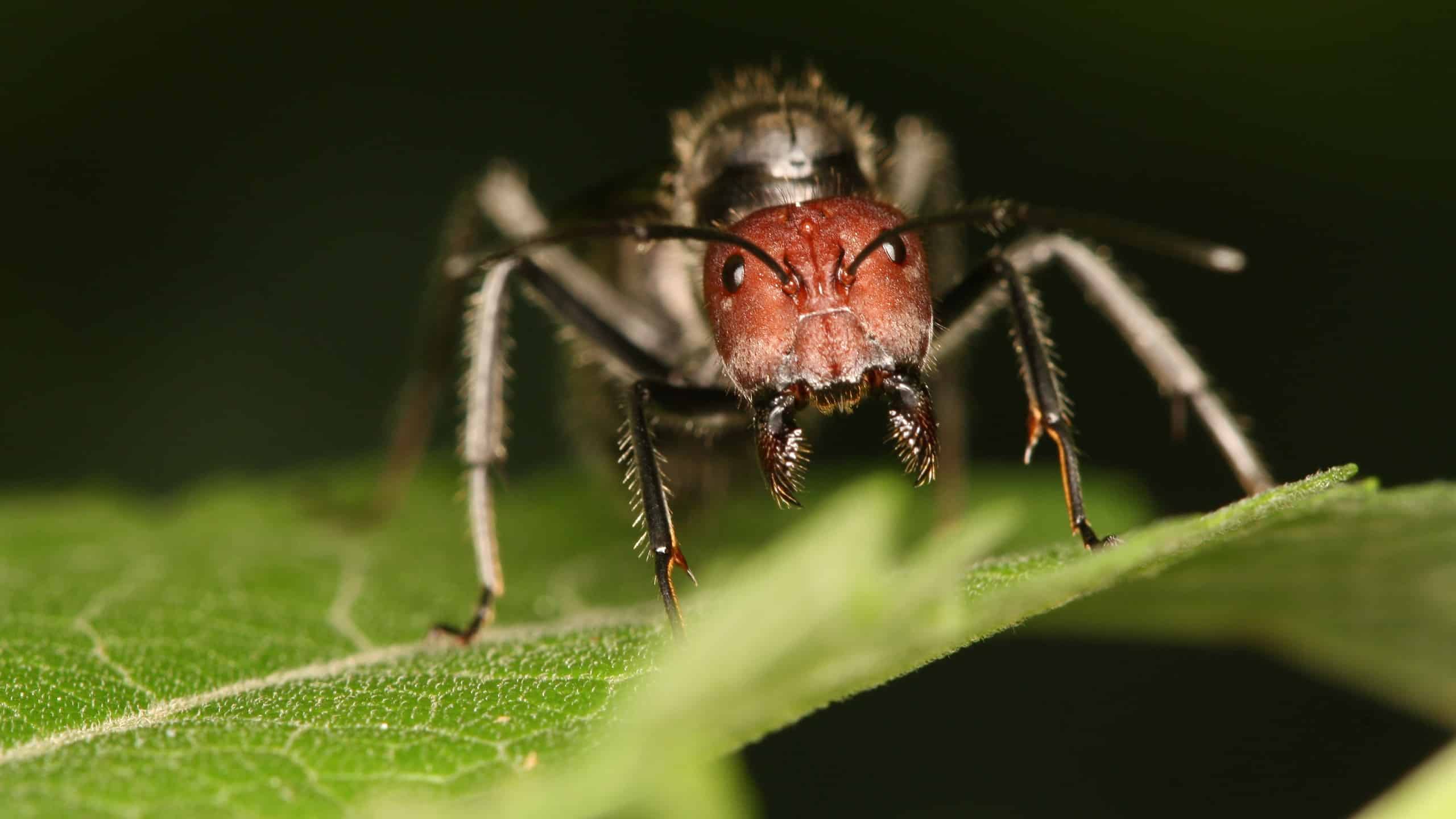
Western thatching ants (Formica obscuripes), also called field ants, are among the most problematic invaders in Missouri. They build unsightly mounds in lawns, landscaping, and agricultural fields, and will aggressively swarm and bite if disturbed.
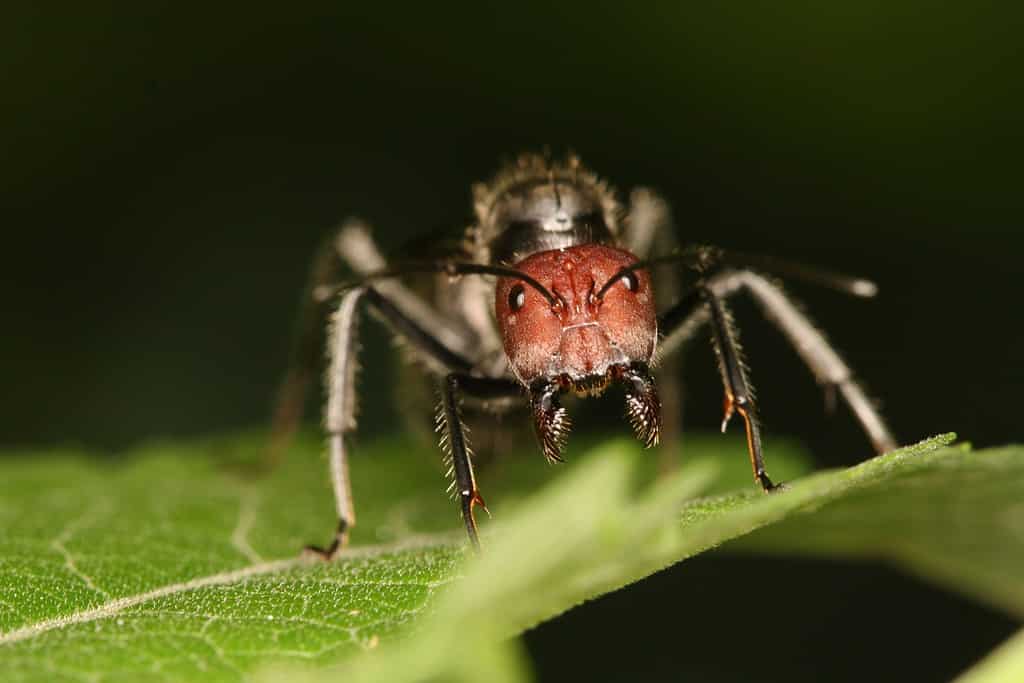
The thatching ant or field ant is an intimidating-looking insect.
©Rezha Pratama Putra/Shutterstock.com
These ants have a distinctive reddish-orange head, a red or black thorax, and a black abdomen. Workers measure between 1/8 and 1/3 inch long, though queens are slightly larger, reaching lengths of up to 3/8 of an inch.
Odorous House Ants
Odorous house ants (Tapinoma sessile) are the most common house ants in Missouri and are also considered the biggest pests. They build shallow nests near heaters, furnaces, ovens, fireplaces, and other warm places, both inside and outside homes.
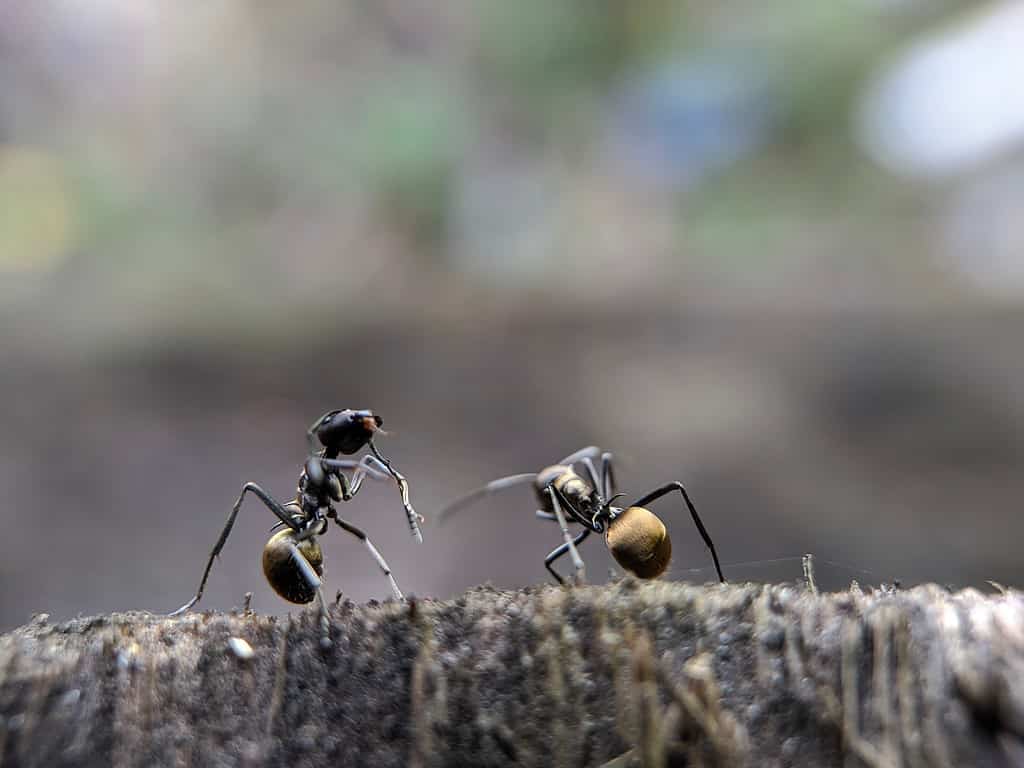
Also called sugar ants, coconut ants, and stink ants, odorous house ants emit a pungent smell when crushed.
©Dhe Tong/Shutterstock.com
Odorous house ants seek shelter and warmth above all else, as long as there’s also a plentiful food supply. Even when it gets colder, odorous house ants remain active.
The common name for these ants comes from the distinctive odor they emit when crushed, which is said to smell like rotten coconut.
The ants are black or dark brown and grow to about 1/8 of an inch in length. They prefer the honeydew of aphids but will eat anything sweet.
Missouri Acrobat Ants
The Missouri acrobat ant (Crematogaster missouriensis) has a heart-shaped abdomen and light brown to black coloring. These ants earned their name for their ability to raise their abdomens over their heads like acrobats. They are about 1/8 of an inch in length, though queens can be up to three times that size.
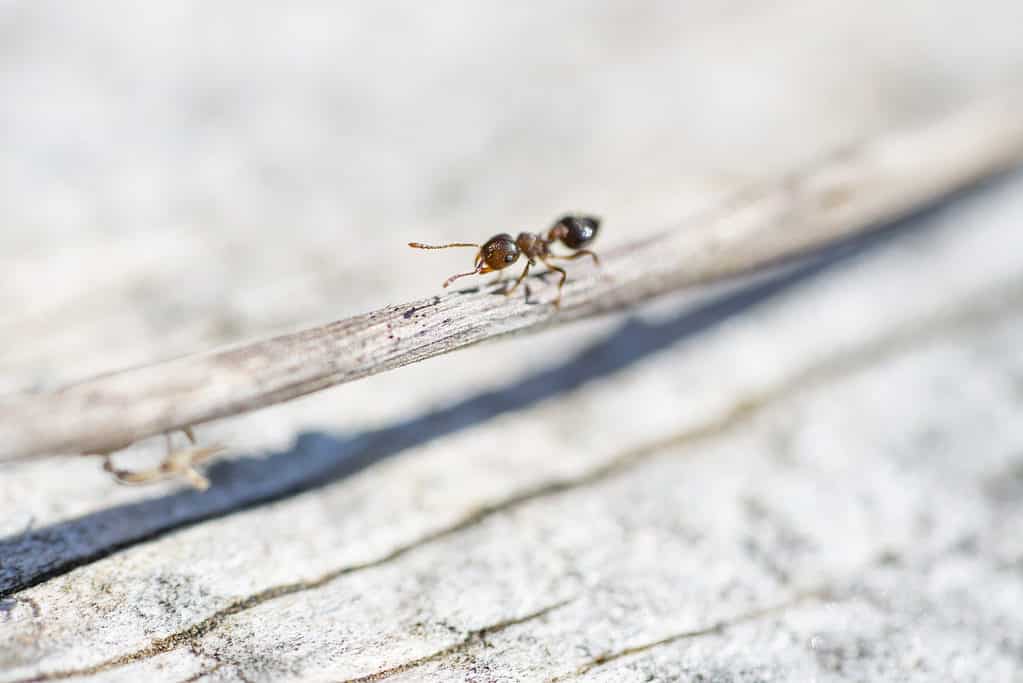
Acrobat ants have heart-shaped abdomens.
©iStock.com/ErikAgar
Missouri acrobat ants love aphid honeydew, insects, and extracting protein from bird droppings, although sugary foods are their favorite.
When threatened, Missouri acrobat ants raise their abdomens over their heads and emit a pungent formic acid to repel predators, including spiders and birds.
Missouri acrobat ants thrive near moisture, often finding their way into bathrooms where they build nests near bathtubs. They also nest in leaky roofs, wood piles, under rocks, in stumps, and under siding.
Eastern Black Carpenter Ants
Of all the ant species in Missouri, Eastern black carpenter ants are the most destructive to structures, as they can cause significant damage to wood in homes and buildings. They build tunnels in decaying wood, which isn’t so bad, but unfortunately, they also tunnel through healthy wood, although they prefer wood that has already been softened by fungal decay or high moisture.
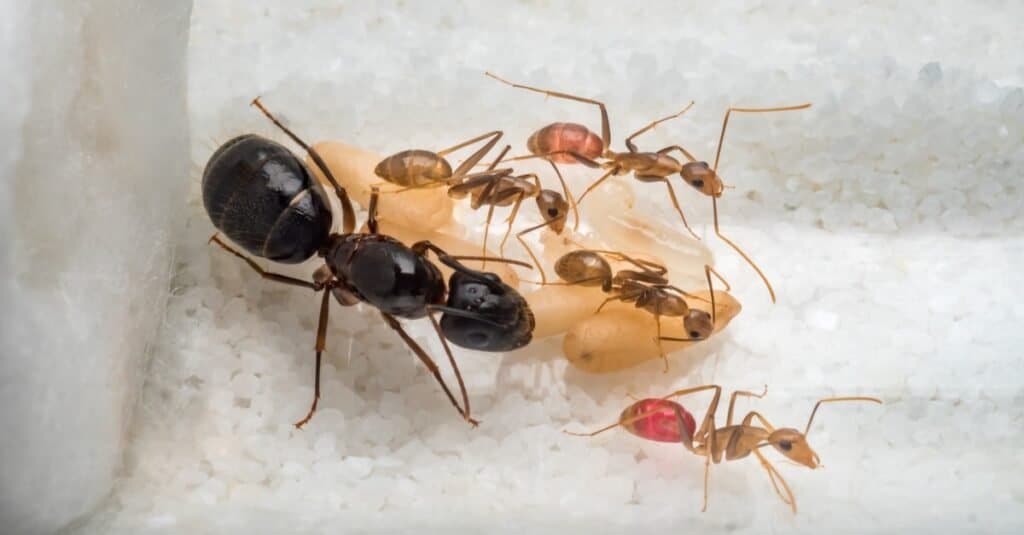
Worker carpenter ants take care of the queen ant, eggs, larva, and pupae.
©Poravute Siriphiroon/Shutterstock.com
Unlike termites, carpenter ants do not eat wood. These ants prefer sugary foods.
A likely sign of carpenter ants is the trails of sawdust they leave behind. If left untreated, damage from Eastern black carpenter ants can be devastating to a building’s structural integrity, potentially leading to sagging floors, warped walls, and severely compromised support beams.
Carpenter ants are between 1/4 and 3/4 of an inch in length. These ants are usually black, though they may be brown or red. They swarm, especially in spring and autumn.