
Quick Take
- Bacterial infections top the list of what houseflies carry, but the pathogen type ranked second will genuinely surprise you. See the surprising second →
- A single fly landing on your food probably won't make you sick. That said, there is a specific condition that flips that risk dramatically. See when risk spikes →
- Some of the most effective housefly deterrents are already sitting in your kitchen, and none of them have anything to do with pesticides. Explore kitchen deterrents →
Flies are the bane of every picnic, barbecue, and outdoor event. Where there’s food, there are inevitably house flies waiting nearby. The problem is that flies don’t discriminate about what they eat, which means they can go from a dumpster to a raw hamburger patty and then to your plate in as little as 60 seconds.
This is only one way they spread more than 100 pathogens, including bacteria, fungi, viruses, and even parasites. Risks vary based on location and timing, making exposure levels even more challenging to calculate. So, what are the chances a common housefly can make you sick? In this case, the devil–or the fly–is in the details.
What Pathogens Can Houseflies Carry?
This is the biggest question and the one most people worry about. The common housefly (Musca domestica L.) carries harmful pathogens such as:
- Dysentery
- Cholera
- Typhoid fever
- Shigellosis
- Salmonella
- E. coli
However, this list is not comprehensive. Houseflies can carry less common pathogens, such as hookworm parasites and Listeria. Some of these are rarer than others, but can all be transmitted the same way: by coming into contact with food or drink.
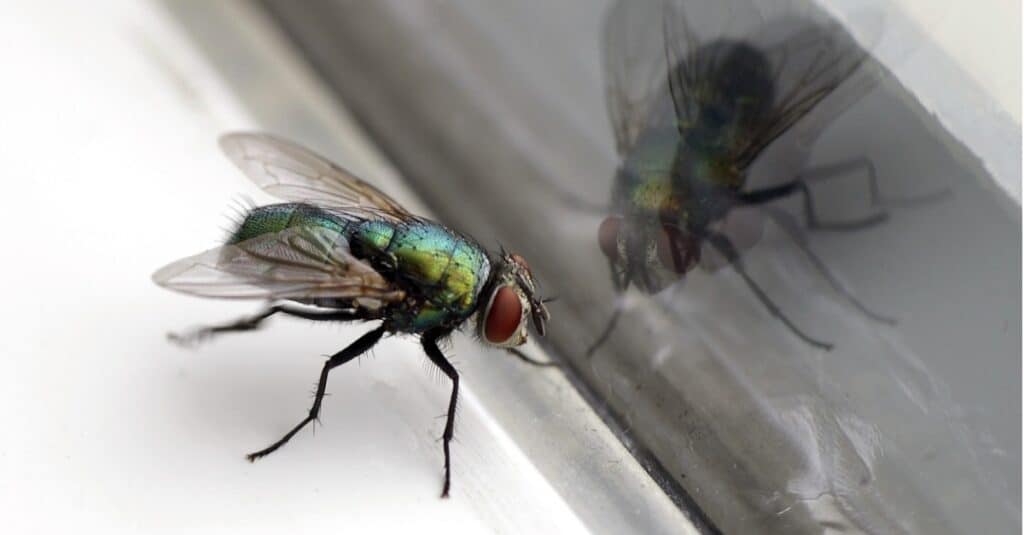
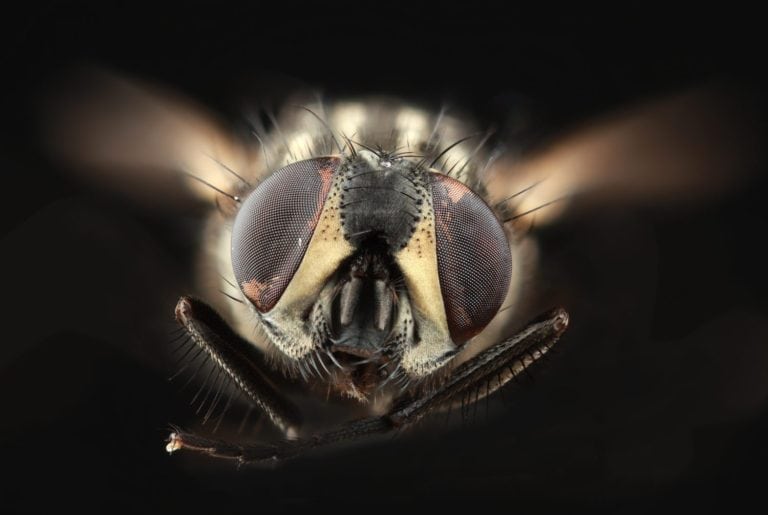
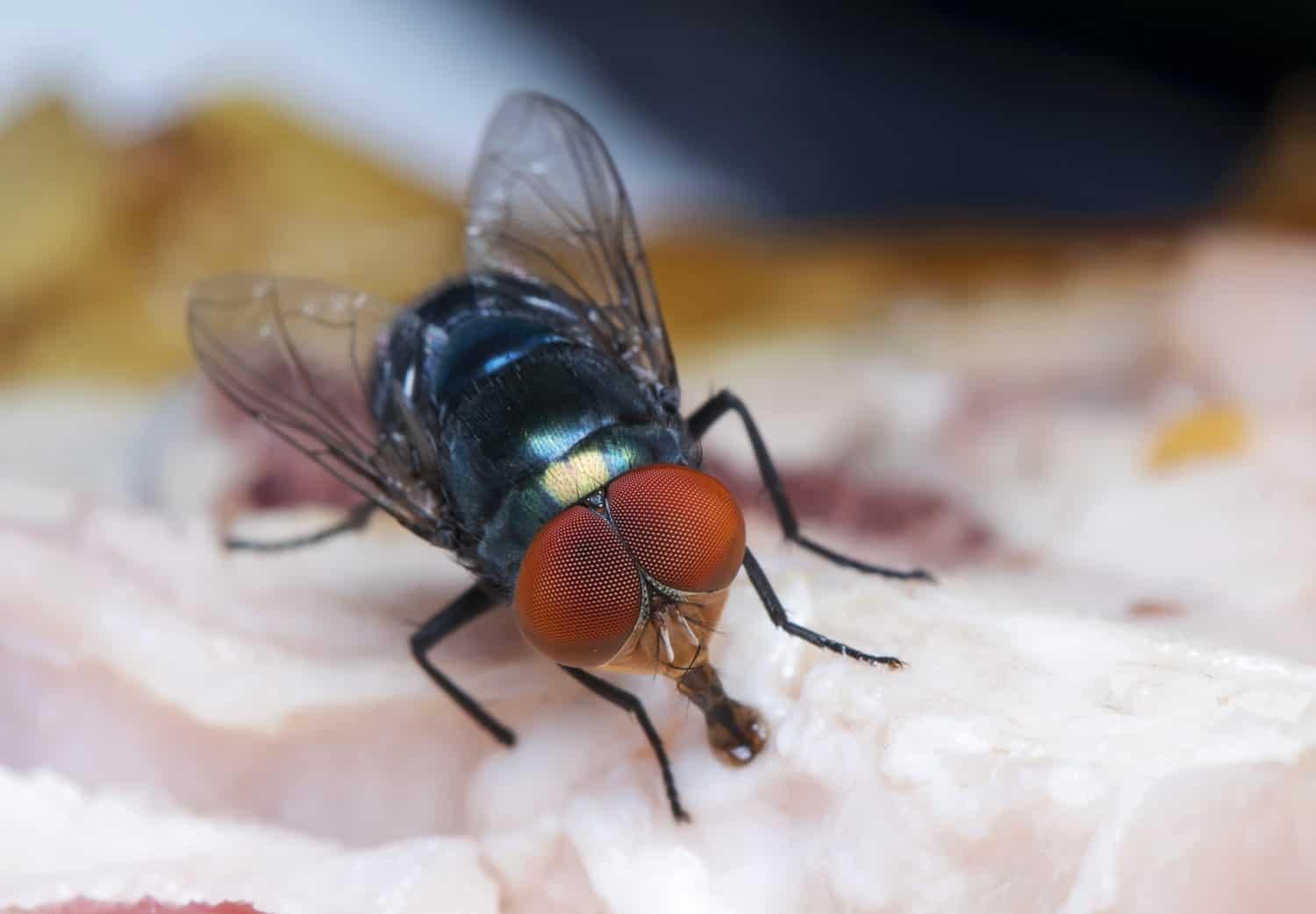
Pathogens stick to the body of a housefly, helping diseases spread more widely.
©iStock.com/photointrigue
It’s generally accepted in the scientific community that one fly that lands on food for a short period of time is not likely to transmit anything significant. However, those living near farms, in areas with poor cesspool drainage, or in areas with infestations may have an increased risk of infection. A 2018 study by BMC Health systematically reviewed published studies on housefly-borne pathogens dating back to 1970 and recorded all pathogens tested. The results varied across 21 countries but provided crucial information about how pathogens are transmitted by houseflies.
Most Infections Were Bacterial, Followed by a Surprising Second
The team recorded more than 130 pathogens during testing. The majority were bacterial infections, such as E. coli, Salmonella, Bacillus, Staphylococcus, Shigella, Streptococcus, Listeria, and other less-commonly known infectious diseases. These were reported far more often than the others, suggesting that houseflies can be significant vectors for bacterial infections.
However, fungi followed as a close second to these results. This included fungal infections such as Penicillium, Aspergillus, and Candida. Penicillium and Aspergillus, genera of mold, can cause respiratory difficulty and asthma-like symptoms in sensitive individuals. Candida is equally unpleasant, causing oral thrush, yeast infections, and Cutaneous Candidiasis. In severe cases, immunocompromised individuals may develop Invasive Candidiasis, which is life-threatening.
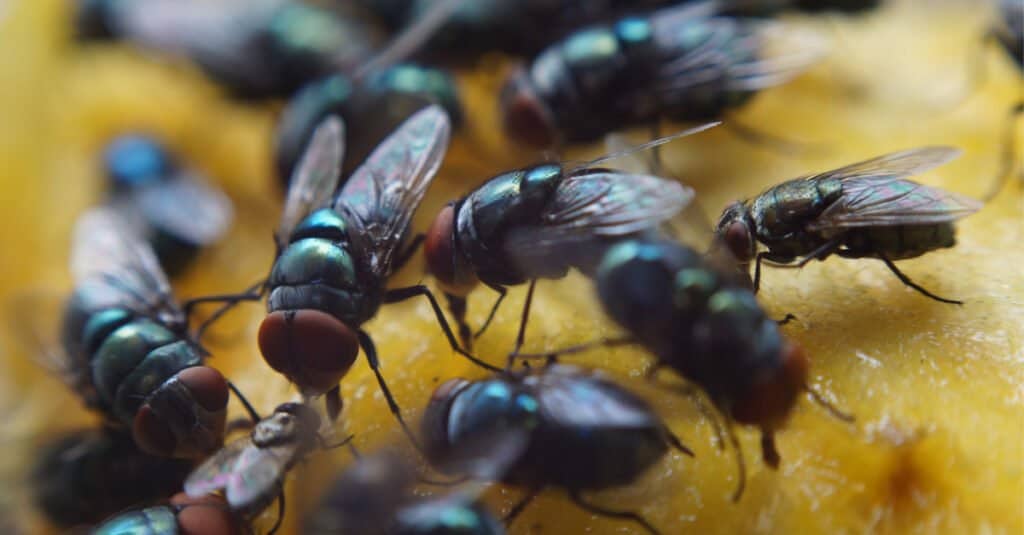
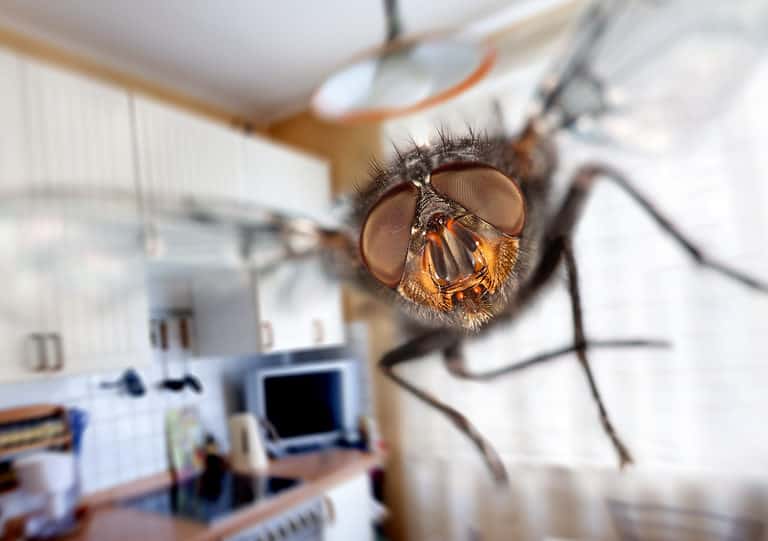
A housefly doesn’t need to be on food for an extended period of time to transfer a pathogen.
©iStock.com/reyborfrla
Even more disturbing is what these houseflies fed on prior to picking up the pathogens. Results showed that many of the insects consumed a steady diet of feces, animal manure, carrion, and other decaying organic matter. These houseflies were also most commonly found in human habitats, dwellings, and near farms. Scientists determined that when houseflies complete their life cycle in these unsanitary locations, pathogens adhere to their mouthparts, wings, legs, and other body parts.
Houseflies Are Only Vectors and Are Not Infected with Pathogens
In contrast to some other insect species, such as mosquitoes and ticks, houseflies are only vectors for pathogens. The study concluded that, rather than directly spreading infections, houseflies are merely messengers. This makes contact with pathogens almost entirely random, with no definitive way to tell what a housefly may be carrying.
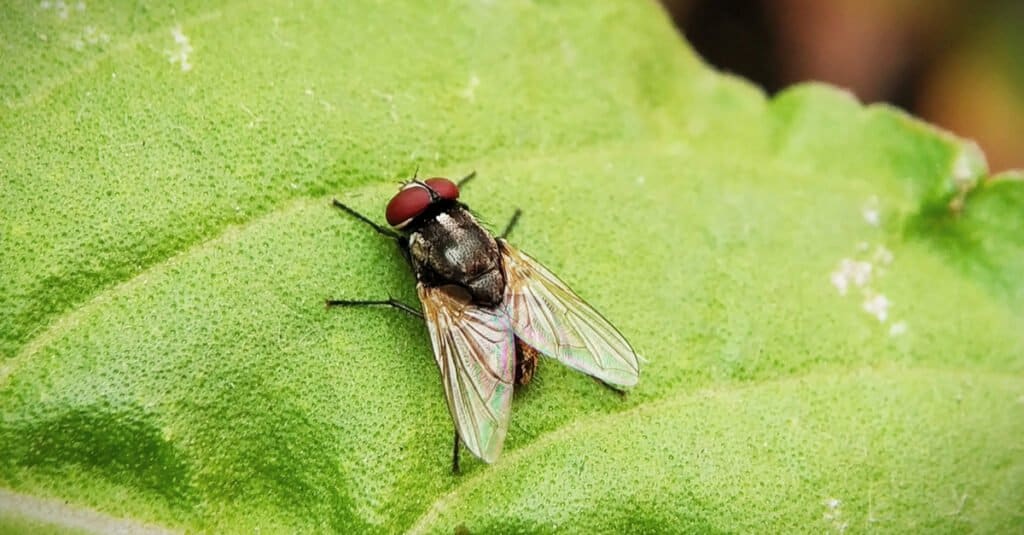
Bacterial infections are the most common pathogens spread by houseflies.
©IamBijayaKumar/Shutterstock.com
As houseflies fly back and forth between feces, trash, and carrion, they pick up pathogens at random. As they land on food, frequently touched surfaces, or humans themselves, these pathogens are transferred indirectly. Through these methods, scientists also discovered that bacteria spread through feces–such as E. coli strains–were among the most commonly transmitted pathogens.
This enteric bacterium is most likely the culprit behind most illnesses caused by contact with houseflies. The risk increases with proximity to areas with higher animal waste, such as farms and agricultural land. And while the data is concerning, there are ways to protect yourself against the spread of pathogens by houseflies.
How to Keep Houseflies from Infecting Food and Contaminating Surfaces
When eating outside, invest in collapsible screens or plastic domes to cover food. This prevents all insects from landing on dishes, not just houseflies. Since one of the primary means of transmission is through contaminated food, this is the first step in eliminating the threat posed by houseflies. Additionally, disposing of all discarded food and trash away from eating areas is strongly recommended.
Routinely wiping down surfaces with disinfectant is another way to keep surfaces from being contaminated. This includes outdoor dining areas, tables, and chairs. Inside, this includes countertops and work surfaces. Avoid leaving cooking utensils out, as they can also become surfaces to land on.
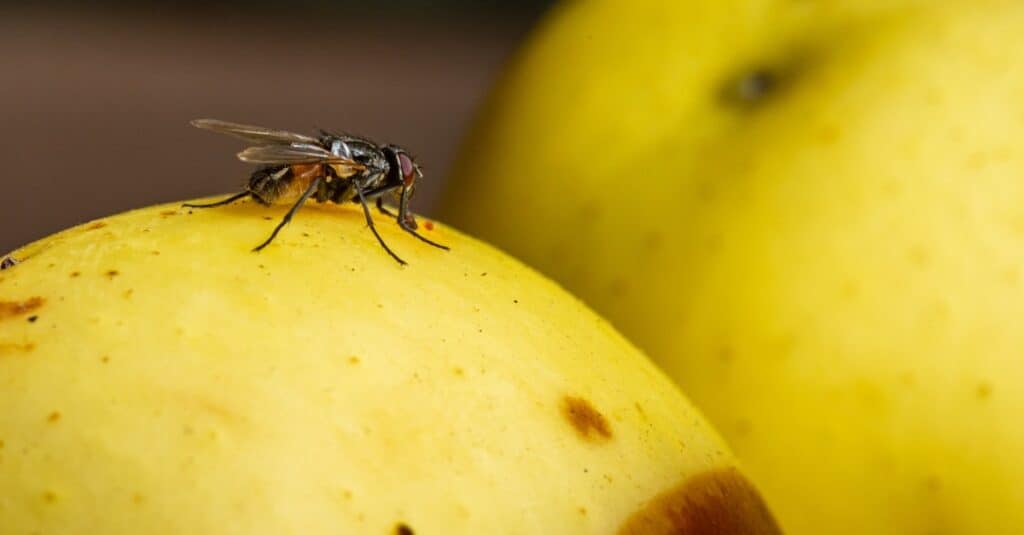
Precautions, such as covering food, can limit the spread of housefly-transmitted illnesses.
©iStock.com/heckepics
As an additional preventive measure, using an outdoor fan near dining areas can help keep houseflies from landing. Planting natural deterrents, such as lavender, mint, or basil, can also help keep houseflies from coming near food. Lemons and cloves are also strong deterrents and can be placed around dining areas both indoors and outdoors. And, of course, keeping doors closed during the spring and summer when flies are most active is a must.