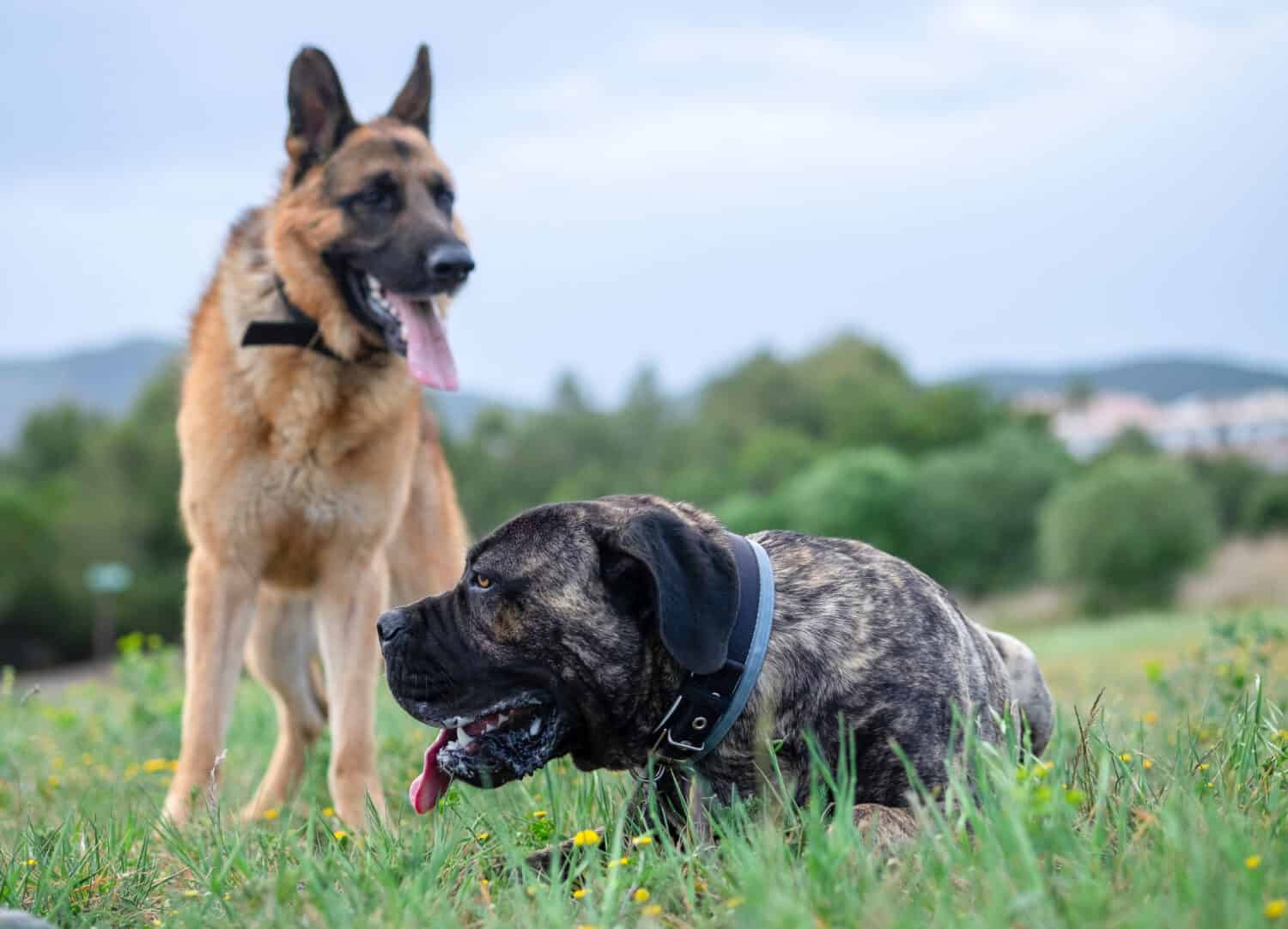
German Shepherds and Mastiffs have different energy needs.
©PILAR G.ABADIAS/Shutterstock.com
Everybody loves a good, old-fashioned mutt, but what about two purebred parent dogs of differing breeds? Some breeds are best mixed with caution due to their high prey drive, size, or temperament. In this article, we will discuss the combination of a German Shepherd and a Mastiff and the pros and cons of each breed. These are two large, protective breeds known for their massive size, ferocious bite, and high prey drive. What does all that mean when contained in the body of an adorable fuzzy puppy?
German Shepherd
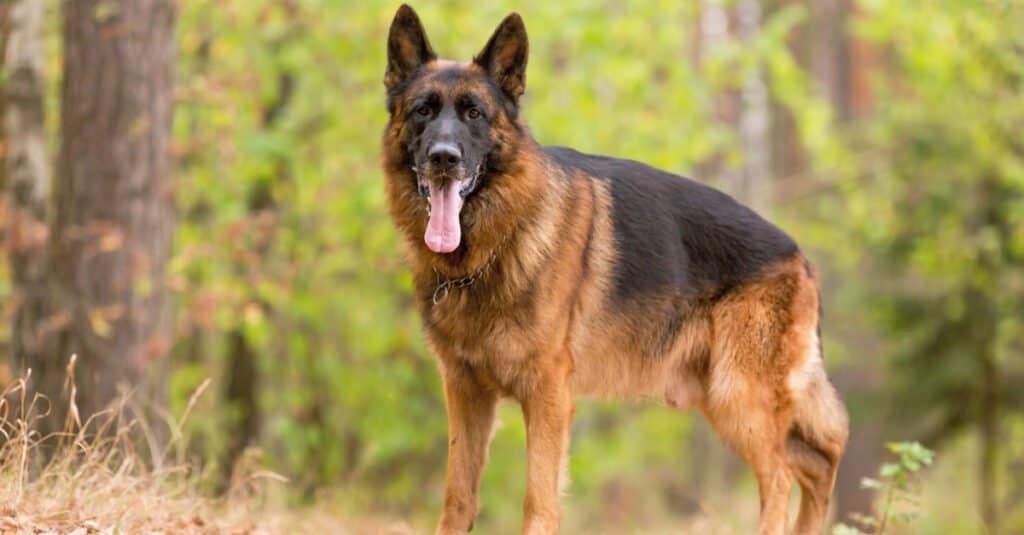
German Shepherds are available in many different colors, though black and tan are the most common.
©Osetrik/Shutterstock.com
In 1899, Max von Stephanitz “created” the German Shepherd by breeding various German herding dogs to create the perfect working dog breed. Now, over 124 years later, these beautiful and loyal dogs still list high among the favorite breeds in the world. Originally bred for herding sheep, these dogs found other ways to captivate human beings.
Physical Appearance of the German Shepherd
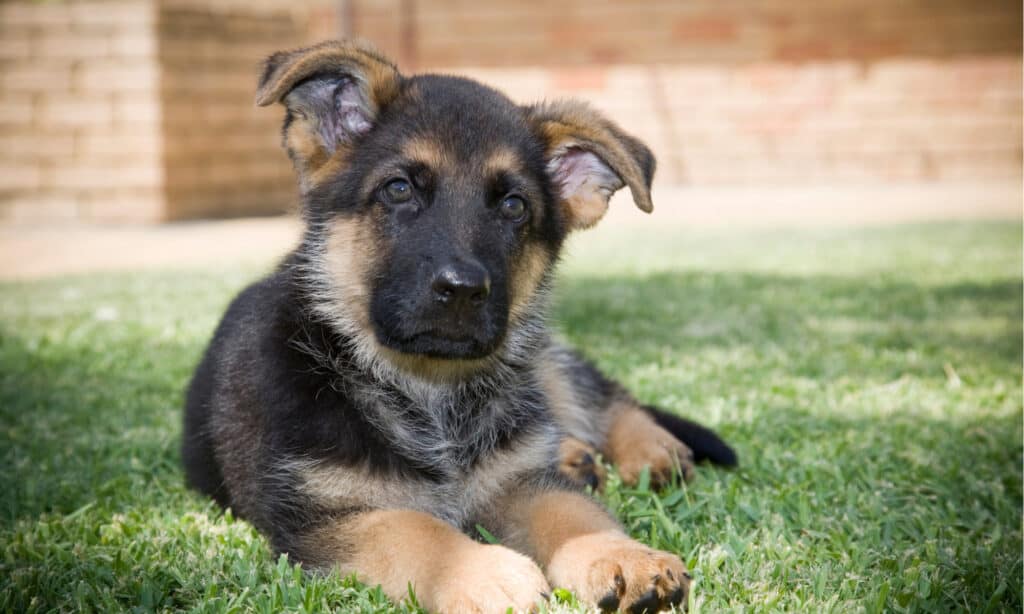
German Shepherds might start small, but they can be over 100 pounds when full-grown.
©Tap10/Shutterstock.com
Size
The size of a fully grown male German shepherd can surpass 90 pounds of muscle, agility, and intelligence. The females tend to be a bit slighter at 50-70 pounds but offer the same speed, intelligence, strength, and loyalty as seen in the males of the breed. These dogs’ average height is 22-26 inches at the shoulder.
Coat
German Shepherd coats require a good bit of maintenance in the way of brushing frequently. They are known as shedders due to their fuzzy undercoat and tough exterior wiry upper coat. They do poorly with “summer grooming” haircuts that chop into the protective undercoat. It is an excellent barrier that keeps them dry, cool in the heat, and warm in freezing temperatures. It isn’t entirely unlike a duck’s feathers as a form of physical protection from the elements.
German Shepherd Care
German Shepherds require a lot of stimulation and exercise.
©Roger costa morera/Shutterstock.com
Exercise
German shepherds are a breed of athletic dog that requires a lot of exercise and stimulation to keep them from being bored, sedentary, overweight, and destructive. They need to go for walks, play ball and stay active to stay happy and healthy. You are the person who your dog looks to for guidance. Make sure to help them avoid destructive behaviors, like digging, chewing up personal items, and redecorating your home. Once this behavior is rewarded with attention, it will become exactly that; attention-seeking behavior.
It is essential to establish an exercise routine early on. Train your puppy as early as possible to walk on a leash and obey basic commands for their safety. All dogs can bolt if they are not on a leash. Even the best-trained dogs might see or smell something exciting and lose all sense of their manners to chase it across a busy street. Always keep your dog on a leash or in a fenced backyard to help your dog lead a full life.
Nutrition
All dogs require a protein-rich, balanced diet to be their best selves. Knowing what to feed your German Shepherd can be tricky since so many types of dog food are on the market. It is easier to grab a bag of whatever is cheapest, but that’s not the best way to ensure you’re feeding your best friend a diet they need. When in doubt, Purina One Large Breed puppy and dog food is veterinarian approved and safe for most dogs unless an allergy is present. When taking your puppy in for checkups, ask your vet what they suggest for puppyhood and adulthood.
Training
German Shepherds are brilliant canine companions and should receive adequate treatment as such. It’s best to start with puppy obedience classes as early as possible. This breed thrives on consistent, positively reinforced commands and rewards. Continuing their training into adulthood is highly recommended to get the most out of the sessions. A lazy mind will stumble.
Health Issues
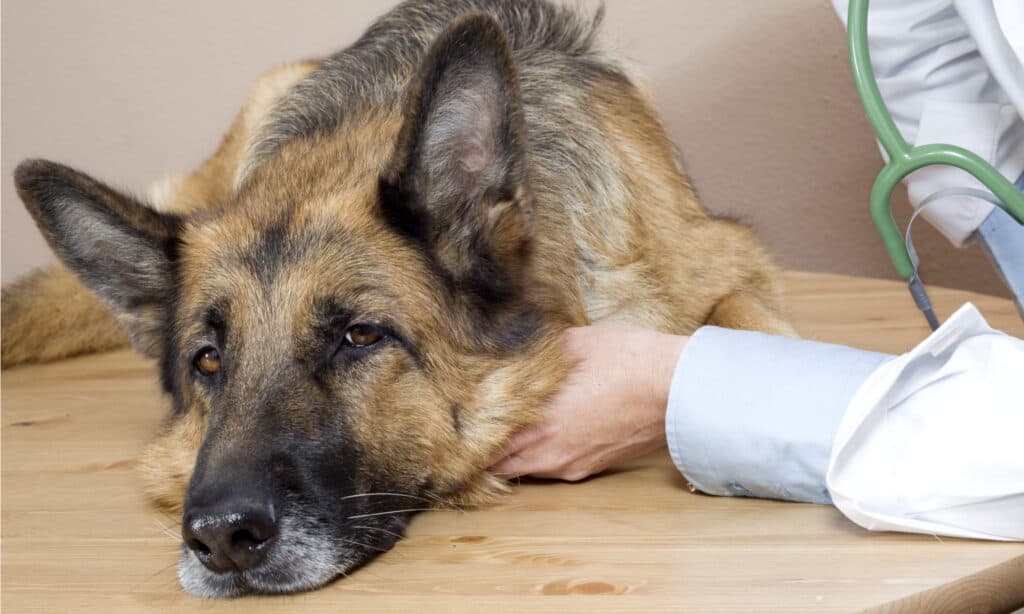
Unfortunately, German Shepherds are one breed plagued by hip disorders. These generally do not appear until later in their senior lives, but it is a reason for concern. Proper nutrition and supplementation can create less of an issue, to some degree, though it is widespread in purebred German Shepherds. Omega supplements are recommended, so be sure to approach your vet about the best supplement for your dog.
German Shepherds are also susceptible to the onset of sudden bloat, which can be life-threatening. Please read up on the possible physical conditions your dog might encounter in their lifetime so you’ll know what to look out for.
Mastiff
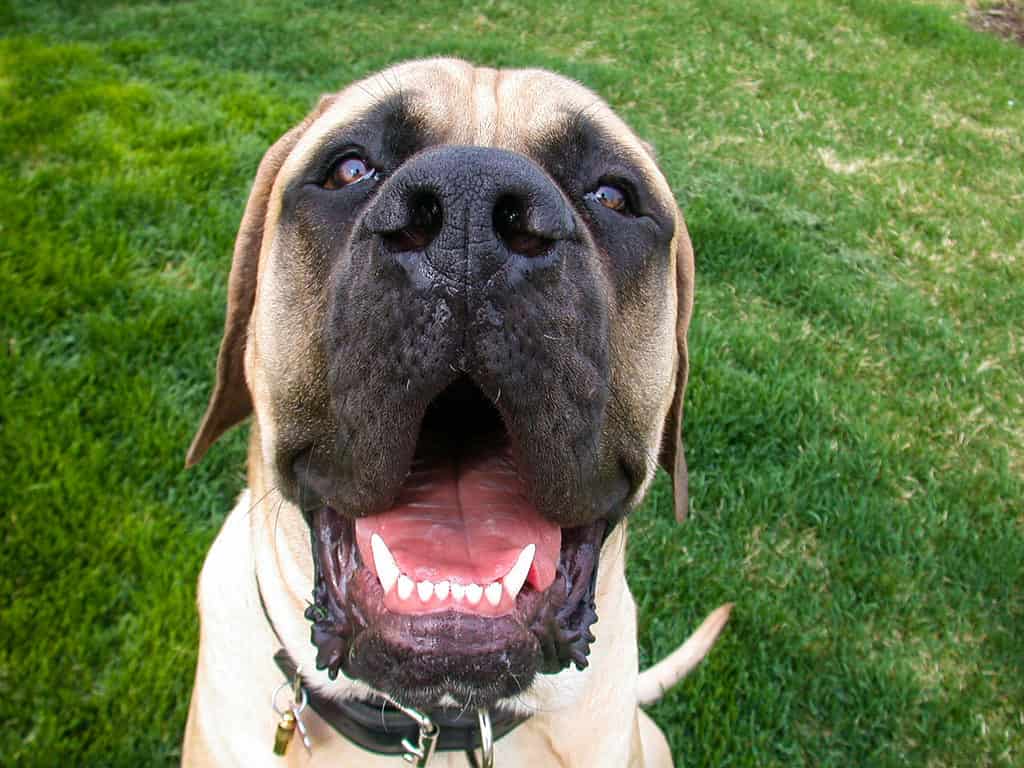
Mastiffs can reach over 200 pounds as an adult.
©iStock.com/ericv
Mastiffs are one of the oldest breeds of dogs. These big dogs appear in legends and history books and have been known to go along with settlers. Mastiffs have been guard dogs, dogs of war, and fighting dogs for centuries. Over all this time, these large poppers are still taking their jobs as protectors very seriously, similar to the German Shepherds. The original Mastiff can be traced back to Egypt and Rome. Caesar wrote about a dog with the description of a Mastiff in his journal describing when he invaded Britain in 55 B.C.
Physical Appearance of the Mastiff
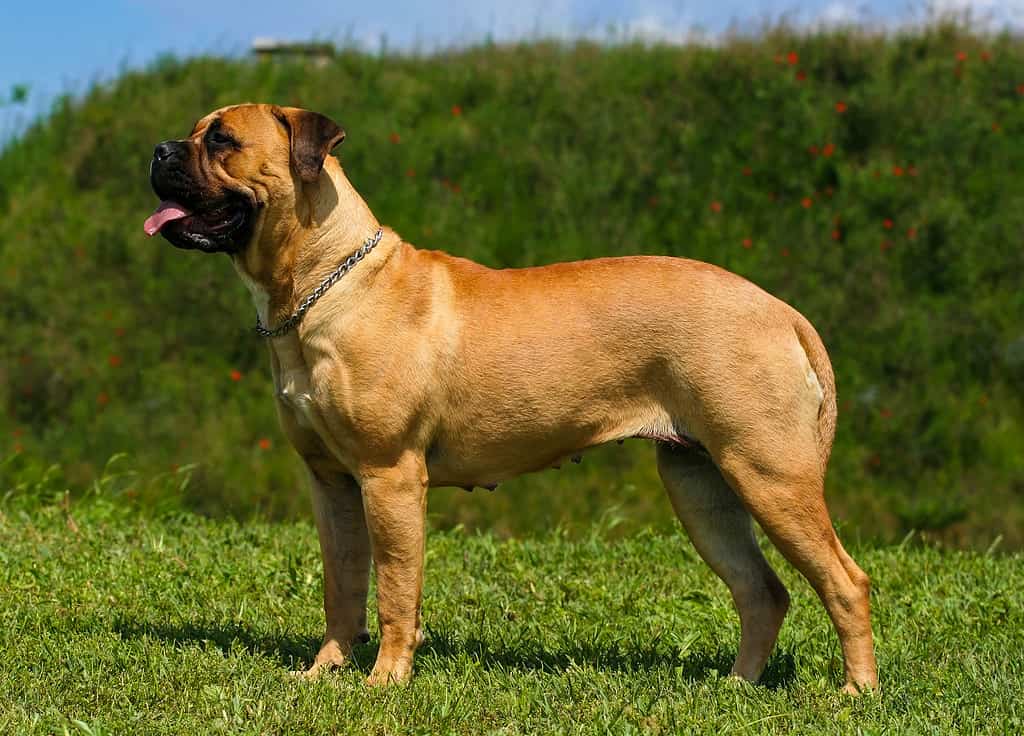
Mastiffs are one of the largest and most powerful breeds of dog.
©iStock.com/Wavetop
Size
The size of a full-grown adult male Mastiff can weigh anywhere between 160-230 pounds and measure 30 inches or more at the shoulder. The females weigh between 120-170 pounds and are 27.5 inches and above at the shoulder. Different breeds of Mastiff descent can be smaller or larger, depending on which breed. They generally do not live as long as some other dog breeds at 6-10 years, but that means they have more love to give faster.
Coat
Much like the German Shepherd, Mastiffs have a double coat which requires frequent brushing. They tend to shed much the same as the German Shepherd, and you will want to invest in an excellent pet-style vacuum cleaner. All Mastiffs tend to have a short coat, which can be better at cleaning up than the longer coats on some breeds. Mastiffs are available in fawn, apricot, or brindle stripes.
Mastiff Care
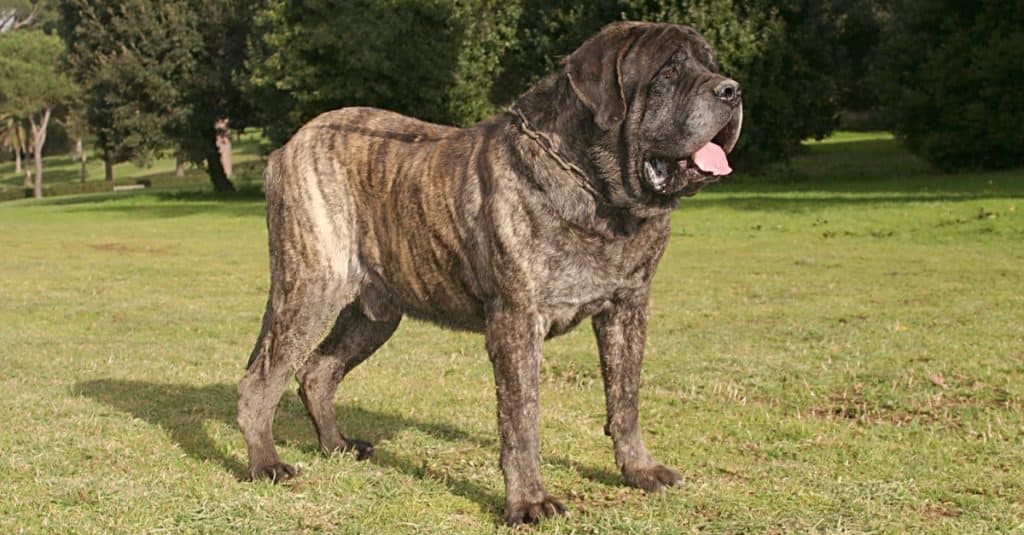
These big dogs tend to be rather lazy.
©Ricantimages/Shutterstock.com
Exercise
Unlike the German Shepherd, Mastiffs enjoy leading low-energy lives and can even be suitable for living in an apartment. This does not mean your Mastiff shouldn’t enjoy daily play and walks like every other dog. It has a positive effect on their overall happiness and health. These gigantic pups tire easily and lie down for extended breaks when walking too far. Be sure to walk them as far as you want to carry them back!
Being a lower-energy dog makes them excellent for snuggling on the couch during a lazy weekend or taking long naps. Don’t be surprised when your oversized best friend snores and drools in their sleep. Sharing a pillow is not recommended!
Nutrition
Proper nutrition for large-breed dogs is vital to their overall health. Mastiffs become adults on their second birthday and should remain on large-breed puppy food until then. As always, consult with your vet regarding diet. Some vets may recommend feeding puppies adult food with the correct vitamin and mineral needs met. The protein content should not exceed 26%. They will be able to answer all of your questions best and provide feedback on large-breed supplements. They must receive the correct calcium/phosphorus amount in their daily feedings. Since these dogs gain weight fairly quickly, it’s best to feed on a schedule instead of free feeding. The Mastiff Club of America is an excellent resource for all Mastiff owners.
Training
Mastiffs are brilliant dogs who love rewards. However, they can quickly become bored during routine obedience classes and fall asleep. Puppy classes are an excellent idea for any puppy, but you may want to save time and money on adult classes. You can efficiently train your Mastiff independently and at your own pace. They tend to get their vast feelings hurt relatively quickly, so be cautious about raising your voice at them.
Health Issues
Like the German Shepherd, Mastiffs are plagued with hip issues, including dysplasia. Responsible breeders should always know if their stock contains hip, eye, heart, or other joint problems ahead of time. It is always a good idea to get your puppy evaluated as soon as possible once adopted by you. These dogs can develop cushions on their elbows from laying on hard floors, which your vet should not drain. They are a protective measure. Another similarity to German Shepherd health is the ability Mastiffs have to bloat. Read up on bloat and make sure you can recognize the signs, or it can be fatal.
What to Expect from Your German Shepherd-Mastiff Mix
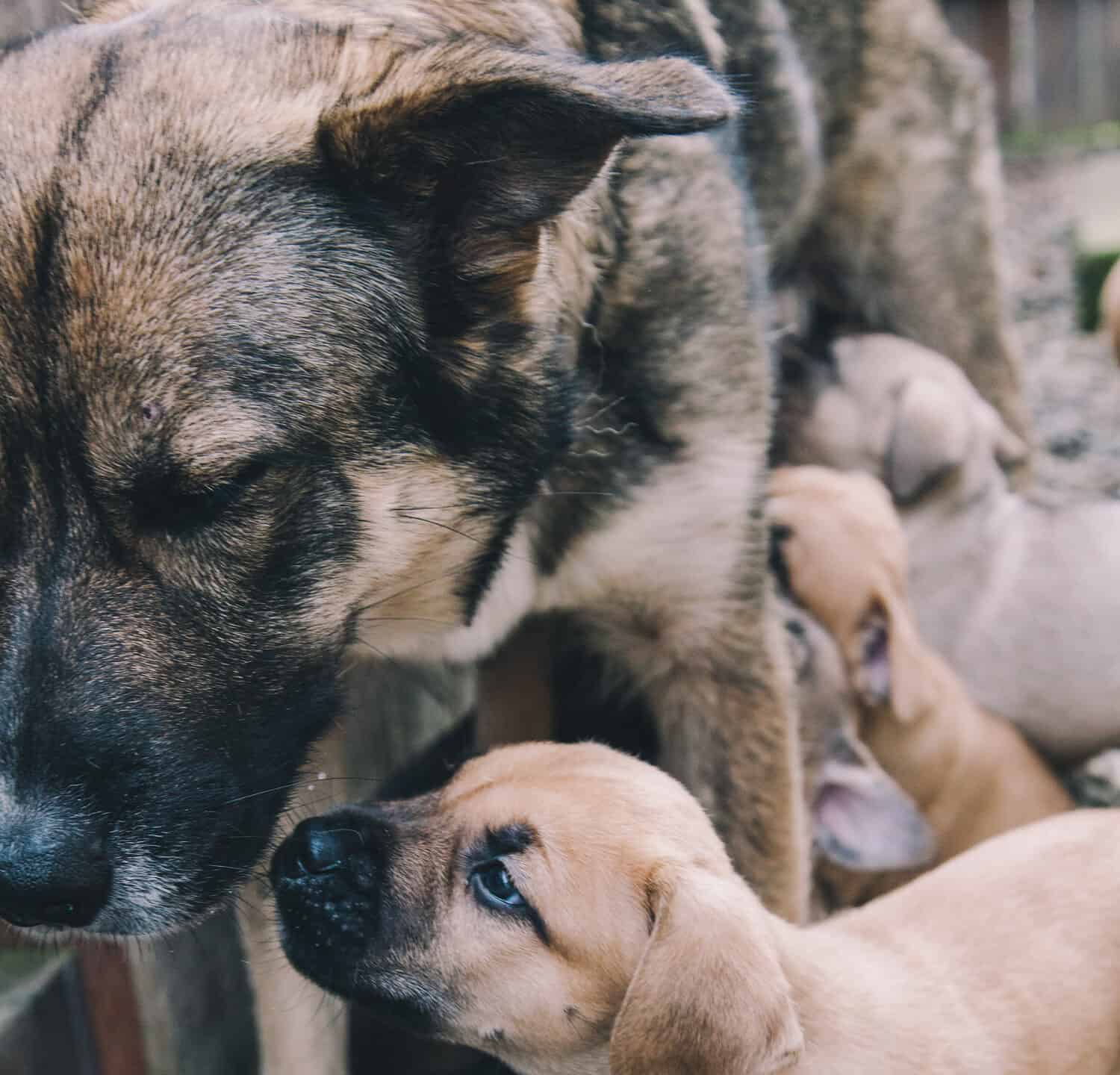
A mother German Shepherd with her Mastiff mix puppies.
©Canna Obscura/Shutterstock.com
By now, you have a pretty good idea of what to expect from German Shepherds and Mastiffs. With this information, you should be able to figure out what kind of big, intelligent dog you will have if you choose a mix of Mastiff and German Shepherd. Of course, like people, dogs will all have unique personalities. Let’s take a quick trip down the “what to expect” lane and discuss precisely what to expect when adopting a Mastiff/German Shepherd mix.
Physical Appearance of the Mastiff/German Shepherd Mix
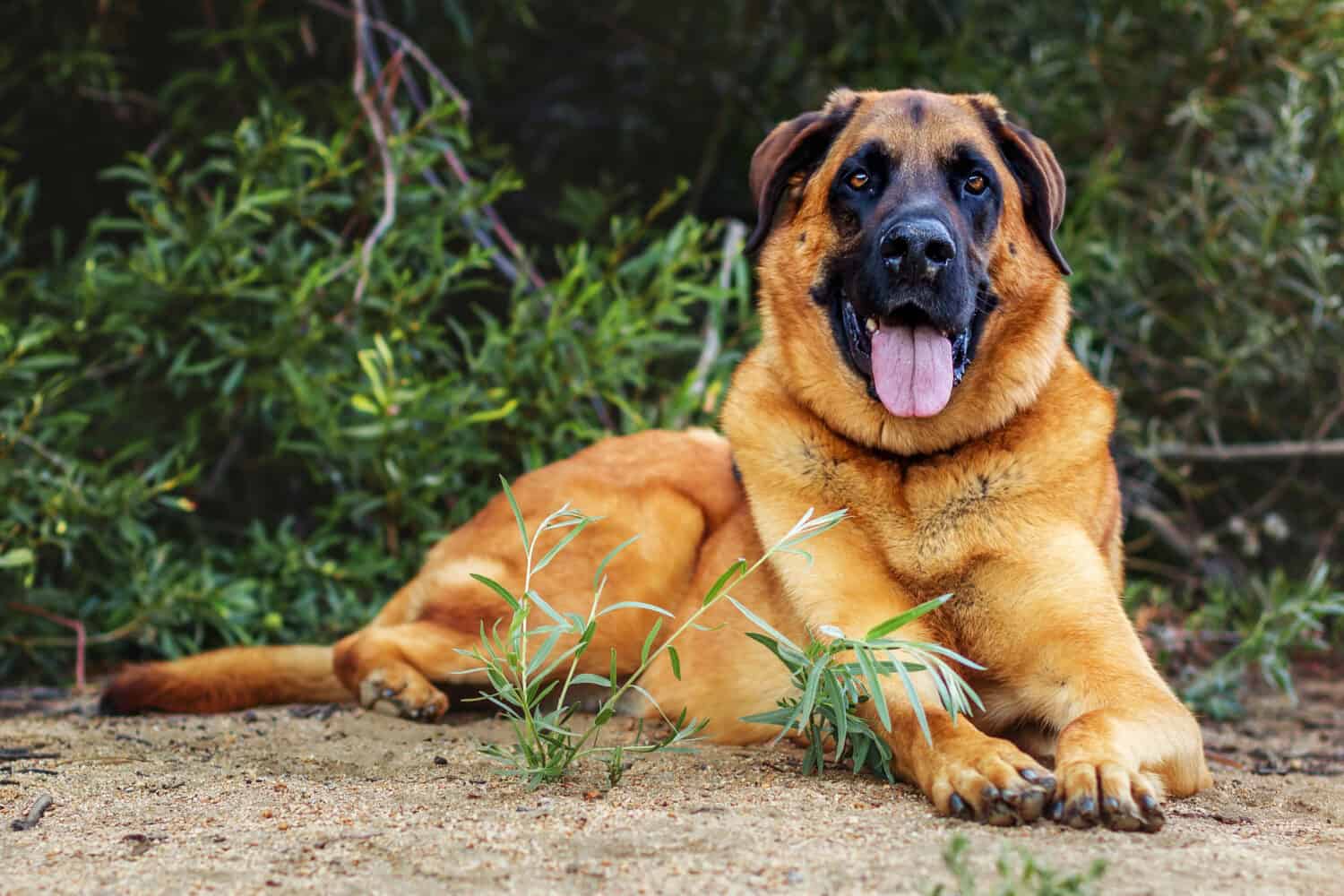
Expect your German Shepherd Mastiff mix to be larger than an average German Shepherd.
©Tanya Little/Shutterstock.com
Size
The size of a full-grown adult male Mastiff/German Shepherd mix can weigh anywhere between 85-230 pounds and measure 25-30 inches or more at the shoulder. The females weigh between 75-170 pounds and are 25-27.5 inches and above at the shoulder. Depending on what type of Mastiff the German Shepherd breeds with will determine the size of your pup when fully grown. The combo breed will likely not live past 12 years, but every dog is different.
Coat
German Shepherds/Mastiffs both have a double coat which requires frequent brushing. They tend to shed, and you will want to invest in an excellent pet-style vacuum cleaner. Depending on if your dog’s German Shepherd lineage is long or short-haired will determine what you can expect from your dog. Mastiffs and German Shepherds are available in fawn, sable, black and tan, grey, white, black, black and silver, apricot, or possibly with brindle stripes. It is a gamble, but one thing is for sure, you will have a gorgeous large dog.
Mastiff/German Shepherd Mix Care
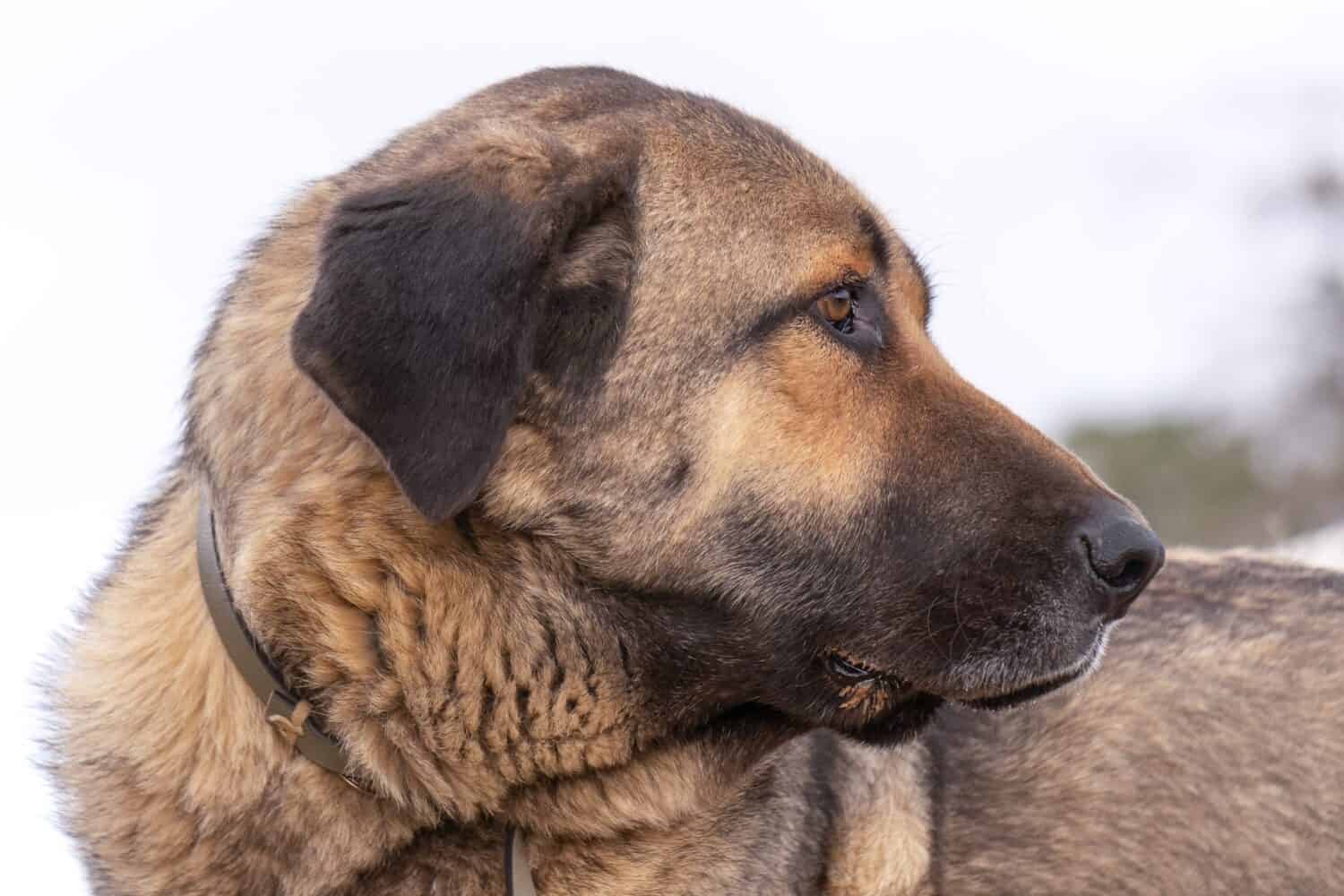
A German Shepherd Mastiff mix can be the best and most loyal friend you will ever have.
©Cavan-Images/Shutterstock.com
Exercise
What type of energy your dog will have might be another gamble since both dogs have different energy levels and needs. You can expect to play with your pup daily and aim for a morning and nightly walk. This is a standard issue for most dogs. The length of your walk will need to be adjusted to what your dog can do and is willing to do. You don’t want to be stuck carrying a stubborn 150-pound dog back a mile or more! Start small and work your way up, just the same as you would when figuring out your exercise routine. You might end up with a huge couch snuggle buddy who likes leisurely walks. One thing to remember is that both breeds of dogs are powerful and may not be best for someone with health, strength, or stability issues. These dogs can be a good bit larger and stronger than an adult male human, which is another reason why training beginning at the puppy stage is extremely important.
Nutrition
Proper nutrition for large-breed dogs is vital to their overall health. Mastiffs and German Shepherds become adults on their second birthday and should remain on large breed puppy food until then. As always, consult with your vet regarding diet. Some vets may recommend feeding puppies adult food with the correct vitamin and mineral needs met. Mastiffs must receive the proper amount of calcium/phosphorus in their daily feedings, while German Shepherds need plenty of protein. It is essential to spend some time googling Mastiff/German Shepherd mix for images of different life stages and information on their needs. However, your vet will be the best person to answer your questions.
Training
Training is critical when your best friend could outweigh you and be stronger than you. Before bringing home your new buddy, you want to look into puppy obedience classes for large breed/prey drive dogs. Getting a head start on training is the right choice for any breed, but not doing so could be detrimental to your Mastiff/German Shepherd dog’s wellbeing. You do not want to find yourself in a situation where your dog has become aggressive or out of control, and you are left with no choice but to euthanize it. This is not to scare you but to help you have the absolute best life with your best friend.
Health Issues
As we’ve discussed, both Mastiffs and German Shepherds can be plagued with hip issues, including dysplasia. Please discuss this with your vet when you take your pup for its first checkup. It’s best to wait until your female dog has become an adult before you should have her spayed. This allows her joints proper time to reach their full potential and will hopefully help with hip issues down the road. Your vet may suggest supplements, especially if joint problems run in your dog’s family. Responsible breeders should always know if their stock contains hip, eye, heart, or other joint issues ahead of time. It is always a good idea to get your puppy evaluated as soon as possible once adopted by you.
Closing Thoughts
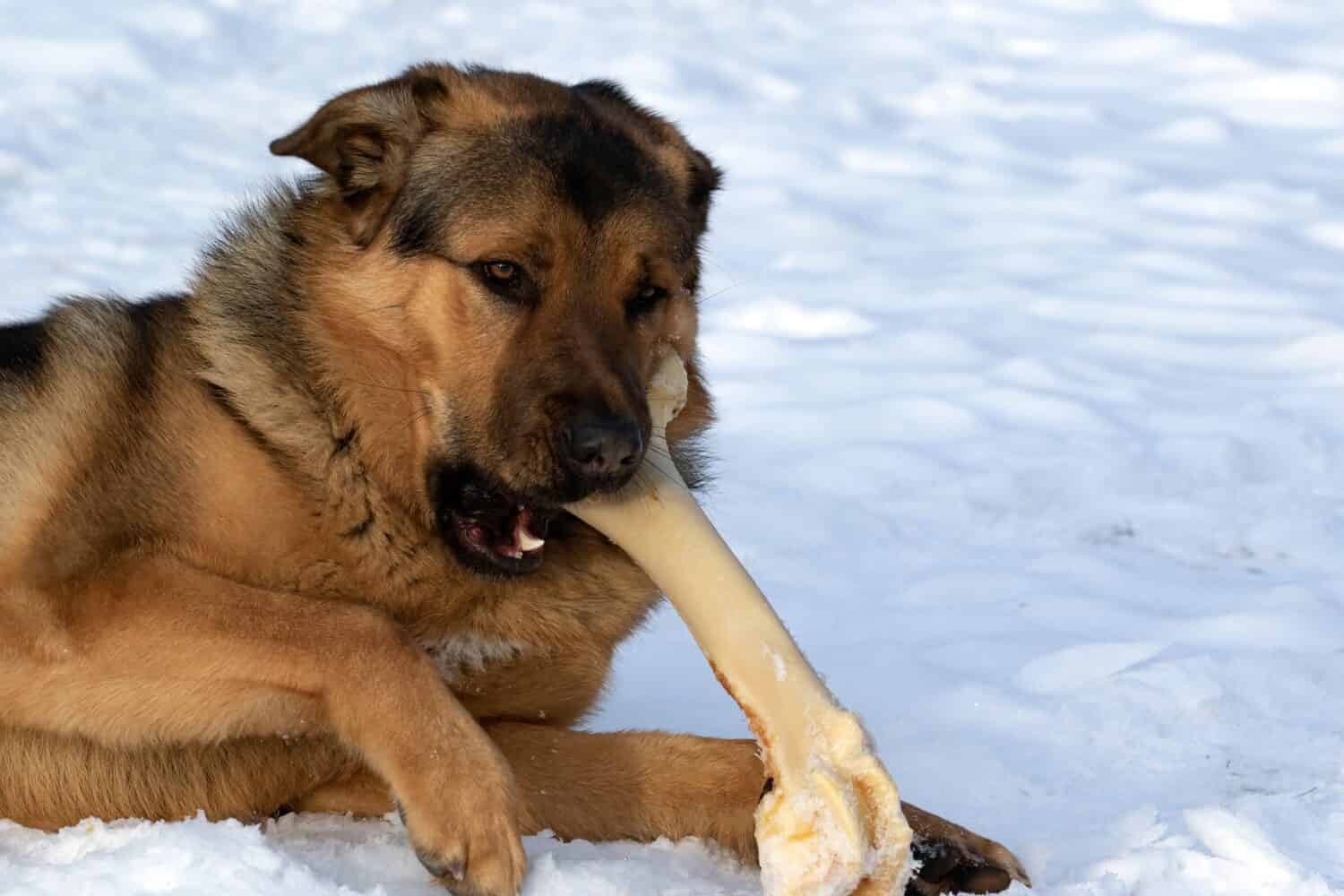
Big dogs require big dog bones!
©Viesinsh/Shutterstock.com
No matter what Mastiff/German Shepherd mix you end up with, one thing is certain, they will love you, and you will love them. Give them the best life you can, and they will do the same unconditionally. These dogs do not do well with smaller animals due to their high prey drive. It is not their fault to follow instincts that tell them to hunt and kill smaller animals. Training is essential, but it is more important to know your breed before you make the mistake of expecting them to understand why they shouldn’t kill your cat or hurt a child. You are responsible for avoiding putting these breeds in situations that will make them choose between their instincts and what you are asking of them. Most puppies do great with children and small animals and may form a lifelong bond. This is more difficult for adult dogs, so adopting a puppy for your child is always best.