
Lettuce is nutritious, hydrating, and a staple in many households. Did you know you can grow lettuce indoors? You don’t even need to use soil or fancy equipment! Follow along to discover how to grow lettuce indoors in 5 simple steps. At the end of this article, we’ll also discuss common lettuce-growing problems and how to prevent/fix them.
Is it Easy to Grow Lettuce Indoors?
Lettuce is one of the easiest plants to grow inside. This low-maintenance leafy green grows quickly and is constantly ready for harvest. You don’t need a lot of space either! You can grow lettuce indoors by a bright window, in a hydroponics system, or using grow lights. The best part about lettuce is that you can harvest it as needed and continue to let it grow.

Lettuce is an easy plant to grow indoors.
©Melica/Shutterstock.com
Best Indoor Lettuce Varieties
You don’t have to settle for one type of lettuce. There are hundreds of cultivars ranging in size, color, and shape. Some lettuce leaves are dark green and long, while others are light green and wide. Some of the most popular varieties are romaine lettuce, butterhead, summer crisp, red leaf lettuce, and iceberg.

One of the best lettuce varieties is the red leaf lettuce.
©Niteenrk/iStock via Getty Images
How to Grow Lettuce Indoors in 5 Steps
By following these five simple steps, you can have your lettuce stash. No space? No problem! Keep reading for a five-step guide on how to grow lettuce indoors using grow lights or bright window lights.
Step 1: Prepare the Container
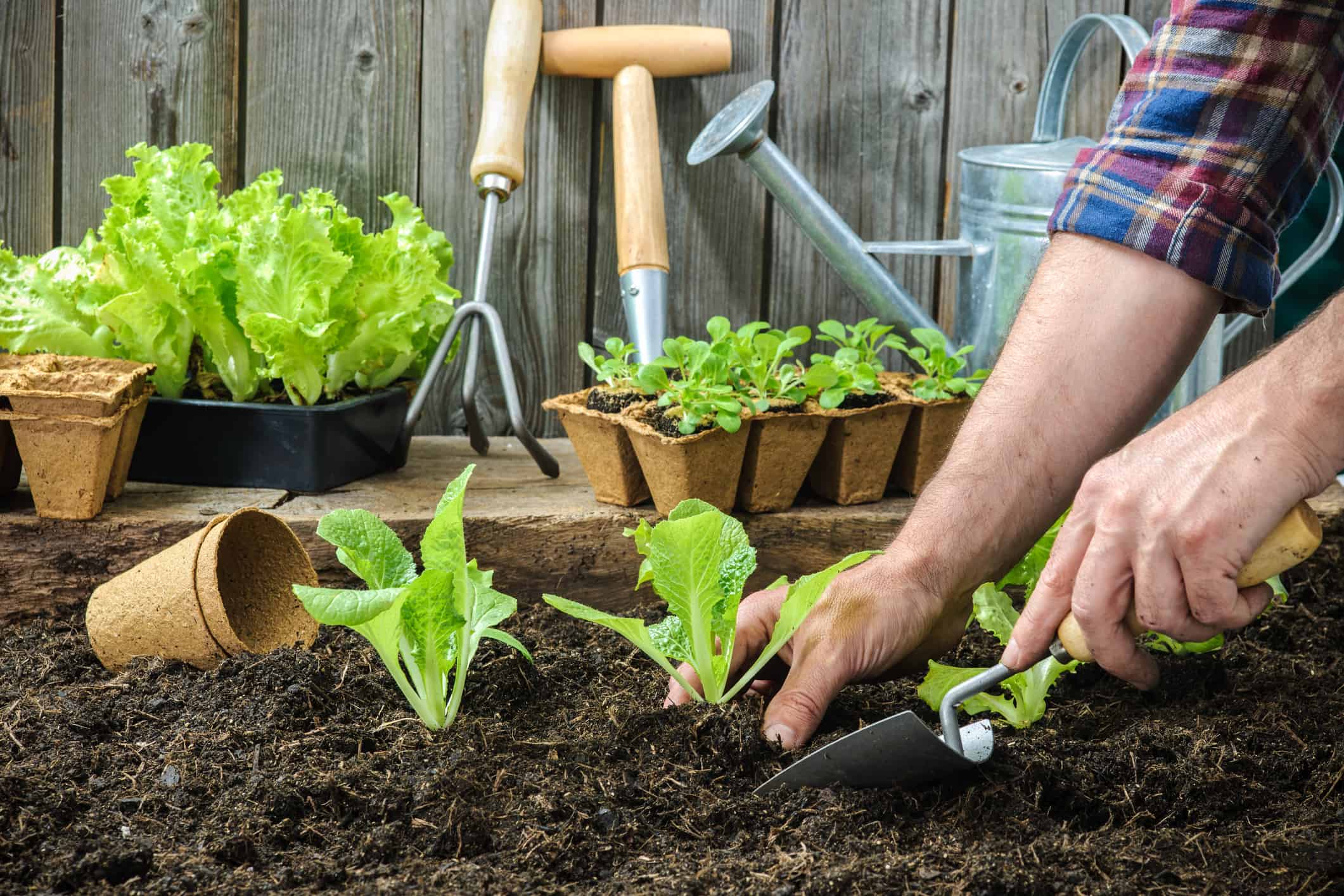
The first step in this guide is to prepare the container with soil. Lettuce isn’t a picky plant. You can use just about anything as a container, including old plastic jugs and water bottles. Although the material doesn’t matter, the container needs drainage holes. You can burn or cut them at the bottom.
So, what kind of soil is best for lettuce plants? Lettuce plants need nitrogen-heavy loose soil. The soil, like the container, needs to be well-draining.
Step 2: Germinate Seeds
Germinating seeds isn’t as difficult as you’d think. The best way to germinate seeds is by placing the small lettuce seeds in a paper towel. Wet the paper towel and fold it lightly. Don’t press down on the paper towel. Place the wet paper towel with the seeds in a plastic bag. Zip the bag and wait for about 4 to 7 days. They should sprout fairly quickly. This method is recommended if you’re using an old seed packet as not all seeds are viable. You can also simply plant the seeds shallowly in the container.
Step 3: Choose a Partially Sunny Location
Now that your seeds are in the container, choose a partially sunny location or set up your plant’s grow lights. This cool-weather crop doesn’t need a lot of light. Bright direct sunlight can kill lettuce plants or cause them to bolt. When lettuce plants bolt, they begin the flowering and seeding process. The leaves during this process taste bitter. Lettuce plants need at least 5 hours of direct sunlight. You can also grow them in partial shade, as long as the temperature is between 45 to 75°F.
So, what happens if your home doesn’t receive enough light? If this is the case, you can set up automatic grow lights, which turn on and off on a timer. Some of these lights have options for specific plant types like flowers, vegetables, and fruits.
Step 4: Water
The next step is to water your lettuce plant thoroughly, but also carefully. Lettuce plants need about an inch of water each week. Too much water, like too much sun, can cause problems. It’s best to water your plant deeply once to twice a week during the early mornings. This gives your plant time to absorb the water. Watering a plant indoors can attract pests like gnats. It can also stain floors, carpets, and walls. If possible, use a water collecting tray at the bottom of the container. You’ll need to pour out excess water though to decrease the chances of developing root rot. Another method is to water your plant in the sink and let the excess water drip out before placing the plant back in its spot.

Lettuce plants should only be watered about once or twice a week.
©iStock.com/Wirestock
Step 5: Prune and Harvest
The last step in our guide on how to grow lettuce indoors is to prune and harvest. Lettuce is a fast-growing plant that you can continue to harvest for months. Take what you need by clipping leaves. When you grow lettuce indoors, always remove dead or sick leaves. If you notice yellowing or white powder clip the affected part with sterile clippers/scissors.