
Quick Take
- One item sitting in your bathroom right now could be toxic to your corgi during grooming, and most owners use it without a second thought. Check safe toothpaste options →
- Skip this one monthly grooming task and you could turn every future session into a struggle. It all comes down to an anatomy detail that makes or breaks it. See the anatomy detail →
- Dental disease in corgis is expensive to treat and surprisingly easy to trigger, and the window to prevent it is shorter than most owners assume. Prevent dental disease early →
- There's a bath-time trick that keeps your corgi cooperative and calm, and it has nothing to do with the shampoo you choose. Get the bath-time tip →
Have you just adopted a corgi, or are you wondering about their grooming needs before getting one? Properly grooming your corgi requires brushing them weekly, bathing them and trimming their nails monthly, brushing their teeth daily, and cleaning their ears as needed. Corgis have double coats, which require regular maintenance to keep both their coat and skin healthy.
Brush Your Corgi Weekly
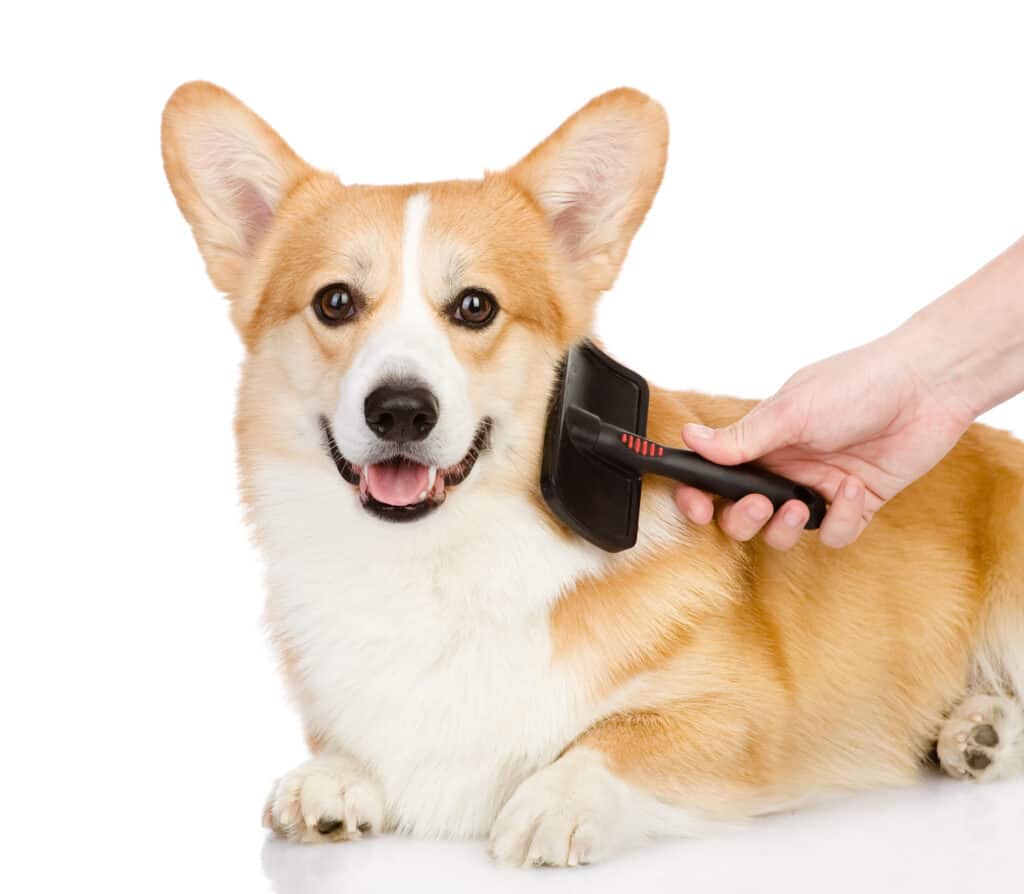
A slicker brush is a great grooming tool for your corgi.
©Ermolaev Alexander/Shutterstock.com
Corgis should be brushed weekly using a slicker brush and an undercoat rake. Most corgis will enjoy this process and may even ask to be brushed more often.
Since corgis have medium-length double coats, regular grooming is important, but missing an occasional session is not usually harmful. However, brushing regularly will promote coat and skin health as well as reduce the shed fur you find around the house.
Baths Can Help Remove Dead Fur
Corgis should be bathed around once a month or as needed when they’re dirty or smelly. Treats can make bath time a positive experience for everyone. Lick mats that attach to the shower walls are helpful if you don’t have someone to give your corgi treats while you bathe them.
Use a shampoo made for dogs, not human shampoos or dish soap. These can be harsh on your corgi’s skin and can cause dryness and irritation if used consistently, although they’re typically okay in a pinch.
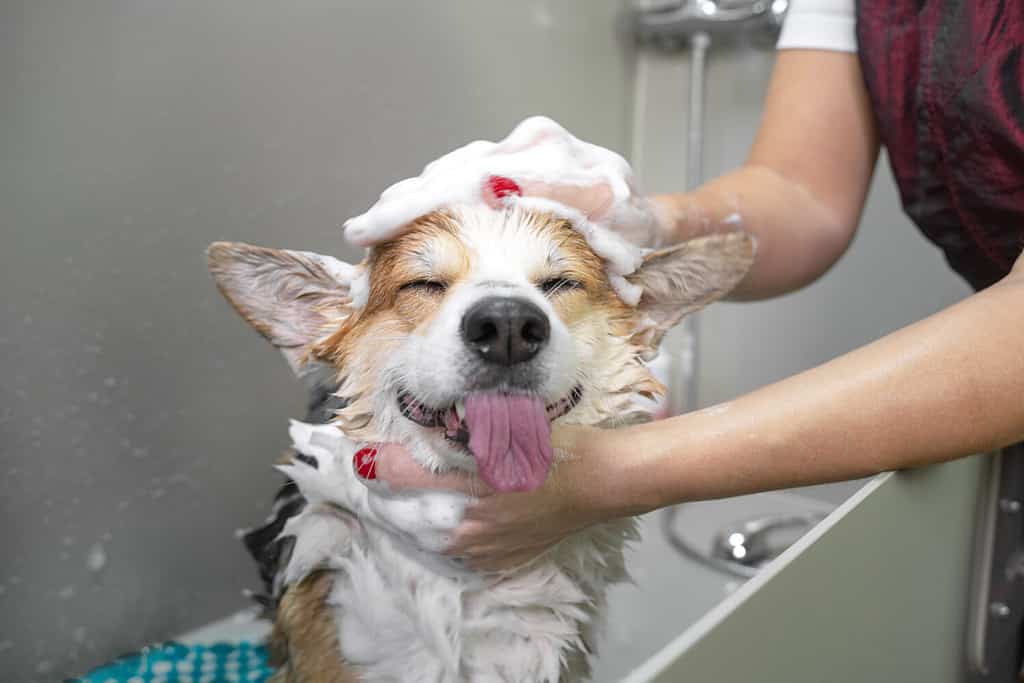
Bathe your corgi once a month, or more if necessary.
©Masarik/Shutterstock.com
Rinse your corgi’s coat thoroughly down to the skin after shampooing. Rubbing your hands over your corgi’s coat can help create a lather and reveal any soap suds you might otherwise miss.
Dry them off before letting them outdoors in cold weather or before brushing their coat.
Brush Your Corgi’s Teeth Daily
An often-missed but vital part of dog grooming is brushing their teeth. Ideally, you’ll brush your corgi’s teeth every single day. Brushing every other day can also work well, since plaque hardens after two days.
Brushing your corgi’s teeth regularly helps to prevent dental disease, which is pricey to treat and can lead to a host of other health problems. Make sure to use dog toothpaste since human toothpaste is toxic to dogs.

Brushing your corgi’s teeth daily is one of the best things you can do for their overall health.
©Masarik/Shutterstock.com
A human toothbrush may be used, but there are also a variety of toothbrushes made specifically for dogs. You can keep it simple and inexpensive, or try different types to see which one works best for you and your corgi.
You can also use dental hygiene products such as chews, dental treats, or water additives. Choose a Veterinary Oral Health Council (VOHC) approved product for the best results.
Trim Your Corgi’s Nails Monthly
Another monthly task is trimming your corgi’s nails. You can do this with traditional dog nail clippers, a Dremel, or a scratch pad.
Make sure to learn about the anatomy of a dog’s nail before clipping so that you don’t cut into the quick. The quick is located at the base of the nail and is filled with blood. Cutting your dog’s nail too short will cause bleeding and pain and can make them more reluctant to put up with nail trims in the future.
It’s best to trim a little at a time until you’re comfortable knowing where to cut. Using a Dremel or a scratch board can also reduce the risk of cutting your corgi’s nails too short.
If you’re uncomfortable trimming your corgi’s nails, you can always take them to a groomer or veterinarian for nail trimming, usually for a small fee.
Clean Your Corgi’s Ears as Needed
Check your corgi’s ears each month for wax build-up and signs of infection, such as redness, swelling, or odor.
If your corgi’s ears are dirty, clean the outer ear with a damp cotton pad and a dog-specific ear cleaning solution. Never insert anything into your corgi’s ear canal. If you notice excessive wax, consult your veterinarian for a professional cleaning.
Also, see your vet if you notice any signs of an ear infection. If your corgi is prone to ear infections, your vet may recommend checking and cleaning the ears weekly rather than monthly.