
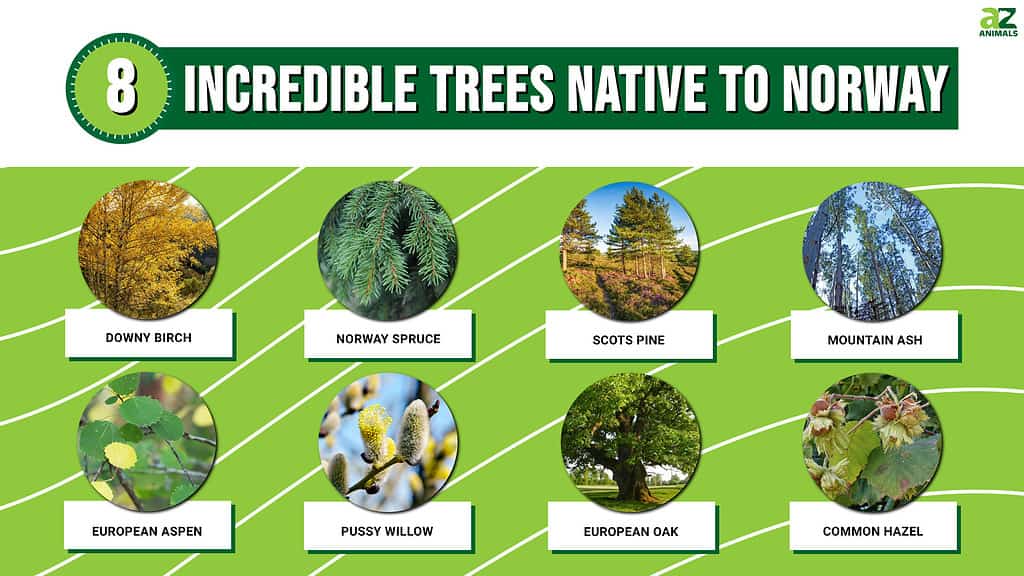
Norway is home to beautiful natural phenomena, like the aurora borealis and the midnight sun, but did you know it’s also home to an amazing array of trees? Norway’s trees grow alongside fjords, on mountains, and by the coast. They range from deciduous broadleaf oaks to tough-as-they-come conifers. Let’s take a look at 8 incredible trees native to Norway.
But first, where is Norway? Its position on the map helps us understand the wide variety of different trees species that grow there.
Where is Norway on the Map?
Norway is a country in Northern Europe. It borders Russia, Sweden, and Finland, and is surrounded by the North Atlantic Ocean and the North Sea. This country also includes the island territories of Svalbard and Jan Mayen.
The inland portions are generally cold, with a lot of snowfall, but the climate is temperate along its coastline. During summer, temperatures reach an average of 57 to 65 degrees Fahrenheit (13-18 Celsius). However, in winter, temperatures rarely rise above 27 F (2 Celsius).
This Scandinavian country has an astonishing rugged landscape of mountains, glaciers, coastal fjords, and cliffs. Surprisingly, only 5.2 million people live in Norway’s 323,802 square kilometers. The majority of citizens live in south Norway, centered around its capital city Oslo.
Norwegian, an old North Germanic language, is spoken in Norway. Polar bears make this country home, they live on the Svalbard archipelago just north of mainland Norway.
What is a Tree?
This is an odd question because we know what trees are. Or do we?
All trees have an independently developed trunk and branches. There isn’t one plant genus or family called “tree”. Instead, there are lots of plant geni that fall under this umbrella term.
Of Norway’s mainland, 38% is covered in forest. That equates to around 122,000 square kilometers of greenery. Experts report there are almost 11 billion trees with a trunk diameter of 1.9 inches (5 cm) or more. This measurement is important because it shows the trees are established in the ecosystem.
Let’s jump in and learn about the most incredible trees native to Norway!
1. Downy Birch (Birch Betula pubescens)
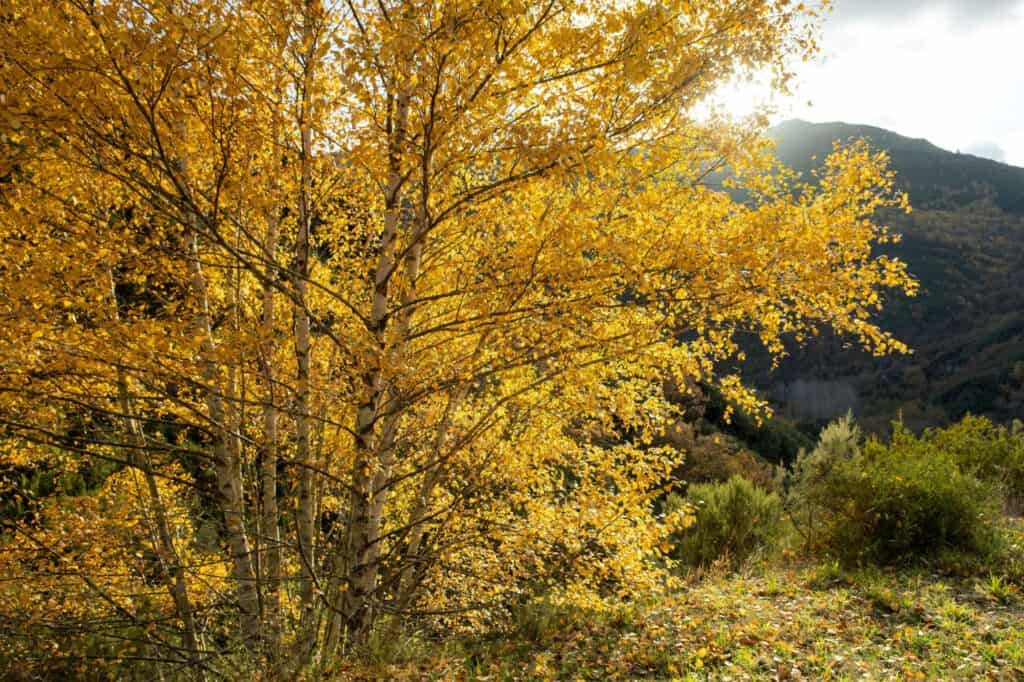
Downy birch trees are the farthest north-growing deciduous broadleaf tree in Europe.
©jessicahyde/Shutterstock.com
Better known as white birch or downy birch, this deciduous tree is native to Northern Europe. It’s the most common tree species in Norway (alongside birch pendula, the silver birch).
It grows on the coastline and on mountain sides before giving way to alpine trees in colder heights. It’s the farthest north-growing deciduous broadleaf tree in Europe.
It has white bark that’s easily stripped off, and a crown of 2-inch long mid-green leaves with a serrated edge. A white birch can reach heights of 33 to 66 feet tall and is home to a number of species, including the autumnal moth Epirrita autumnata. Amazingly, when larvae do too much damage to the silver birch, it releases chemicals that reduce its leaf quality.
2. Norway Spruce (Picea abies)
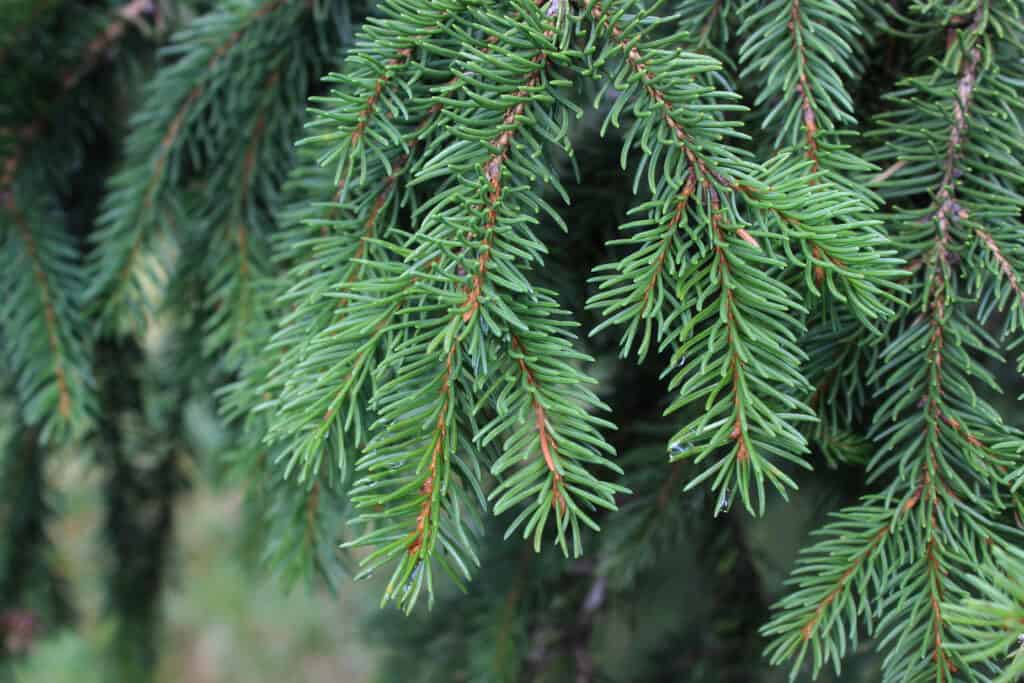
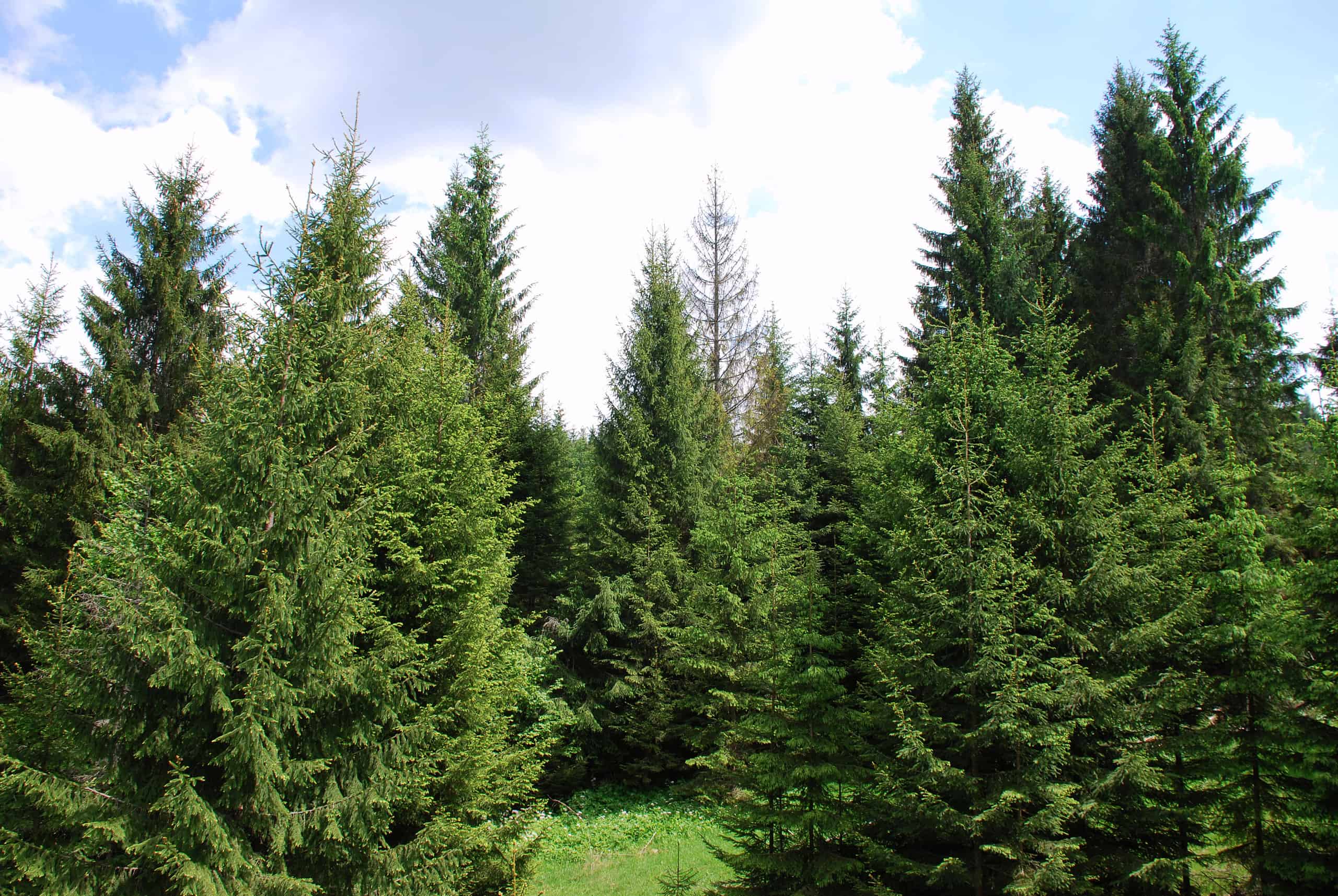
This evergreen has rich green branches of soft needles.
©Jovana Pantovic/Shutterstock.com
The Norway spruce is a Christmas favorite. It’s likely you’ve hung tinsel and fairy lights on this incredible tree.
Despite its name, experts aren’t sure if the Norway spruce is native to Norway. However, it is definitely native to northern, central, and eastern Europe and extends into Russia. It certainly grows in Norway today in mountainous forests.
This evergreen has rich green branches of soft needles and large spruce tree cones that can reach 6.5 inches long. It grows quickly when it’s young, sometimes gaining 40 inches a year, until it reaches 65 feet and slows down.
Tortrix moth caterpillars eat this tree’s cone scales, whereas cydia duplicana moth caterpillars prefer sections of cankerous or injured bark!
3. Scots Pine (Pinus sylvestris)
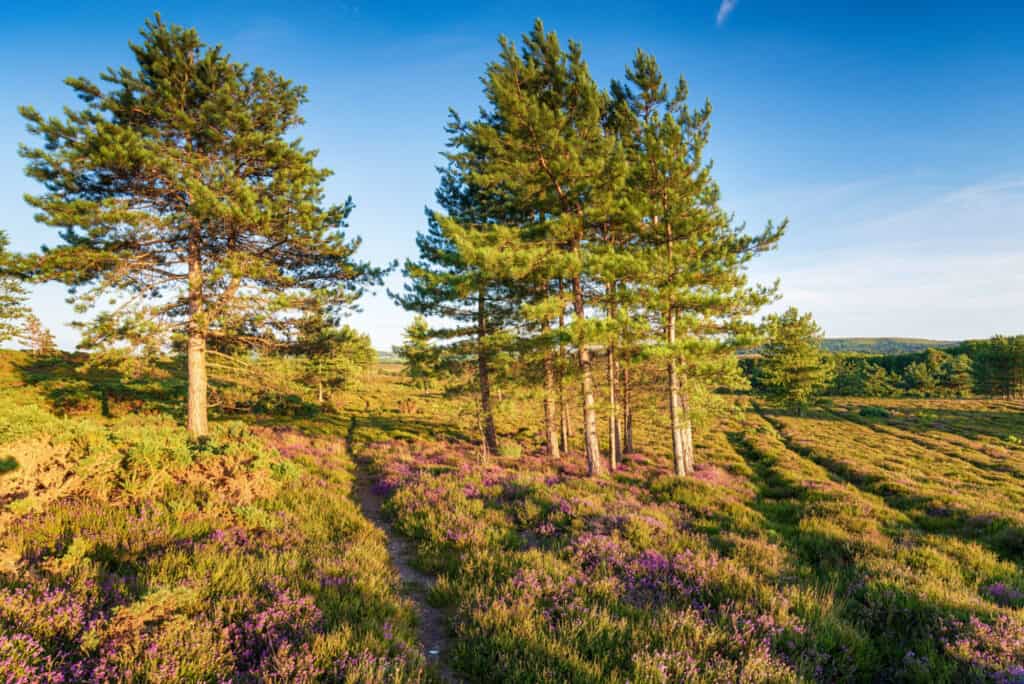
Scots pine can grow in poor soil, such as sand or rocky outcrops, so it thrives in difficult, exposed environments.
©Helen Hotson/Shutterstock.com
This evergreen tree is more commonly called the Scots pine or the Baltic pine. It’s native to Norway and holds the honor of northern Europe’s only native pine.
In the northernmost environments, such as the Arctic circle, it grows at sea level. But southern Pinus sylvestris thrives as a mountainous tree that grows 3,900-8,500 feet (1,200-2.600 meters) above sea level.
It has thick bark that’s orange-red when young, but matures to gray-green as its trunk grows to 115 feet tall and over 3 feet in diameter.
Scots pine foliage is composed of thick blue-green needles that reach several inches long. It can grow in poor soil, such as sand or rocky outcrops, so it thrives in difficult, exposed environments that broadleaf trees can’t tolerate.
4. Mountain Ash (Rowen Sorbus aucuparia)
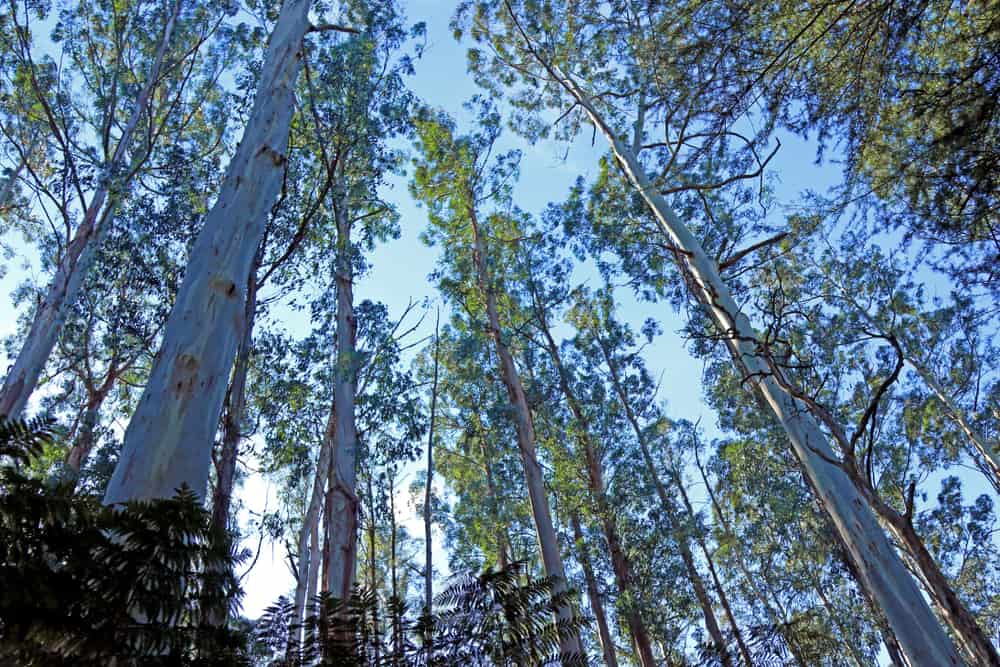
In Norse mythology, a giant ash tree supports the universe with its slim smooth-barked trunk.
©Sorrell Thomas/Shutterstock.com
This is one of the most attractive trees native to Norway and most of northern Europe.
The Rowan, or Mountain Ash as it’s commonly known, is a prolific tree in the rose family. Its range stretches from Iceland to Russia, China, and the UK. It’s not native to the United States but was introduced in the western country as an ornamental tree.
It has a slim smooth-barked trunk with a loose crown of pinnate green leaves. Pretty yellow-white blossoms emerge in spring and develop into bright red berries. The berries are a valuable resource for birds, and Norwegian elk graze its leaves.
In Norse mythology, a giant ash tree supports the universe. After the Doomsday event of Ragnarök, it was the source of new life.
5. European Aspen (Aspen Populus tremula)

Don’t misidentify the European aspen as North America’s native Populus treumloides, pictured above.
©iStock.com/Henrik_L
Known for it’s shimmering leaves, the European aspen is a beautiful tree native to Norway and northern Europe. It grows all the way from the Arctic Circle to Algeria in north Africa.
At the southernmost reaches of it’s range it grows in the cool mountains, but in northern Europe its more common in open forests and along coastlines. It loves light and space, and can reach 130 feet tall with a 33 feet wide crown. Its bark is smooth gray-brown when young, but cracks and fissures as it ages.
It’s a deciduous broadleaf tree with oval, serrated leaves that tremble in the breeze, hence its name tremula.
Don’t misidentify this Norway native as North America’s native Populus treumloides. These trees are closely related, but the American cousin’s leaves are more serrated.
6. Pussy Willow (Salix Caprea)
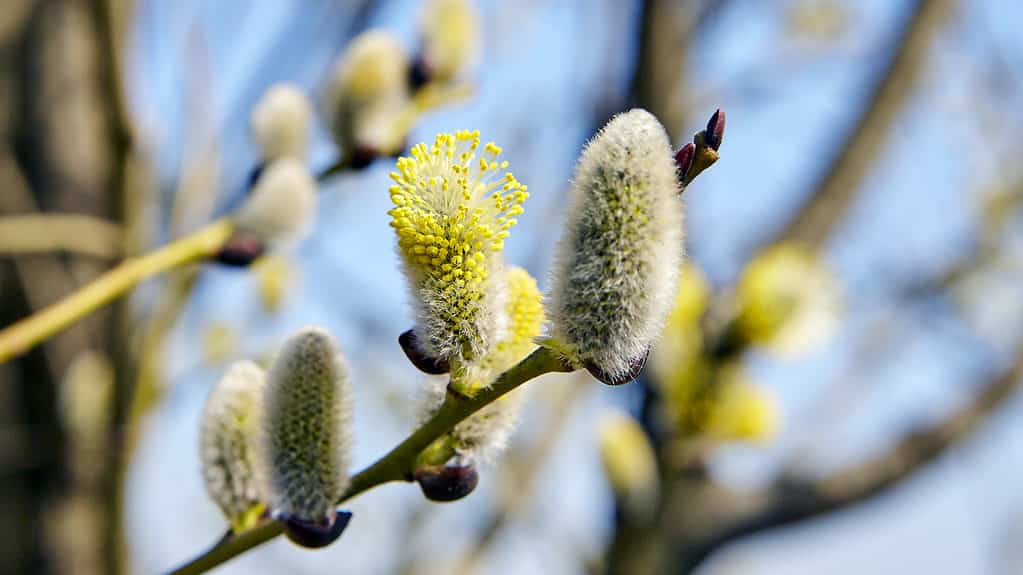
The male catkins are fluffy and small, while female catkins stay green and grow up to twice the length.
©iStock.com/Vital Hil
The pussy willow, or goat willow, is native to northern Europe including Norway where it enjoys wet environments, growing along fjord shores and riverbanks.
It’s a 30 feet tall deciduous tree with long green oval leaves. These unique leaves have a felty underside and bend at the tips, but it’s the catkin flowers that catch your eye. They often appear on bare branches before the leaves emerge and resemble a little cat’s paw!
Goat willow is dioecious, which means an individual tree grows either male or female catkins. The male catkins are fluffy and small, while female catkins stay green and grow up to twice the length of the male.
Salix caprea is an important tree for Norway’s ecosystems. Several moth species and mammals like elk eat these leaves.
7. European Oak (Oak Quercus robur)
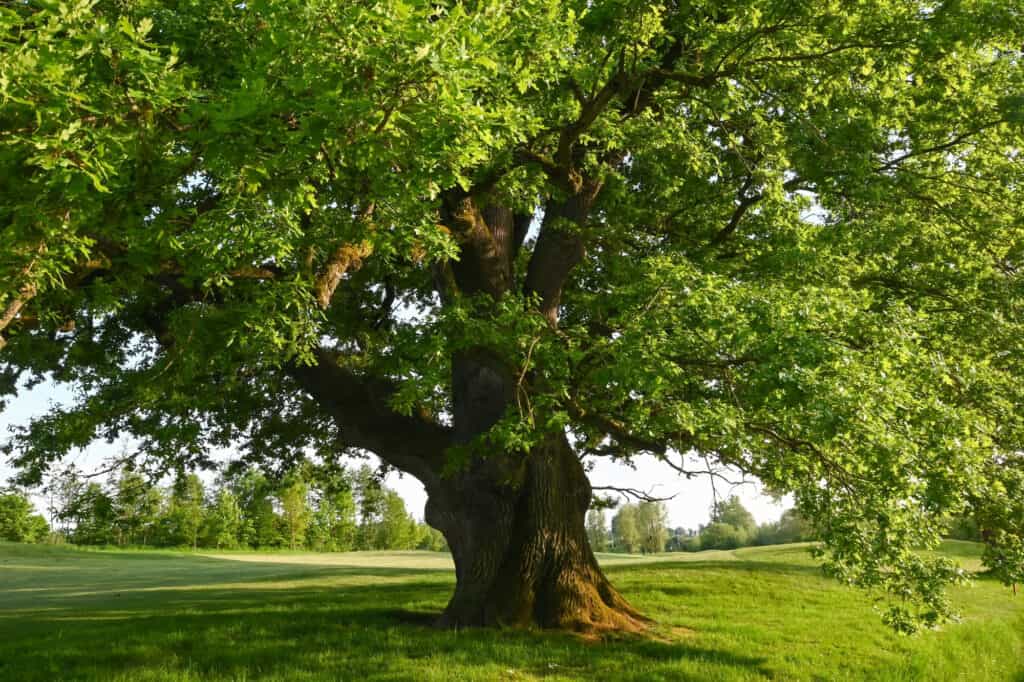
In Norway, this oak is associated with Thor, the god of thunder, and is called a “thunderstorm tree”.
©James d'Almeida/Shutterstock.com
Commonly called the European oak or English oak, Oak quercus is the King of British forests and a national emblem. It’s also native to most of northern Europe including Norway. In Norway, this oak is associated with Thor, the god of thunder, and is called a “thunderstorm tree”. The oldest oak in Norway is over 1000 years old!
Oak quercus robor sits in the Fagaceae family of oaks and beech plants. It grows in the warmer southern areas of Norway, and it can reach 40 feet tall. Oak trees have deep green lobed leaves, and brown acorns that provide food for mammals and birds. However, its most impressive stat is trunk width. European oak can grow an enormous trunk. In Norway, the thickest oak is 35.6 feet in diameter, while in Britain, the thickest oak is 40 feet in diameter!
8. Common Hazel (Corylus avellana)
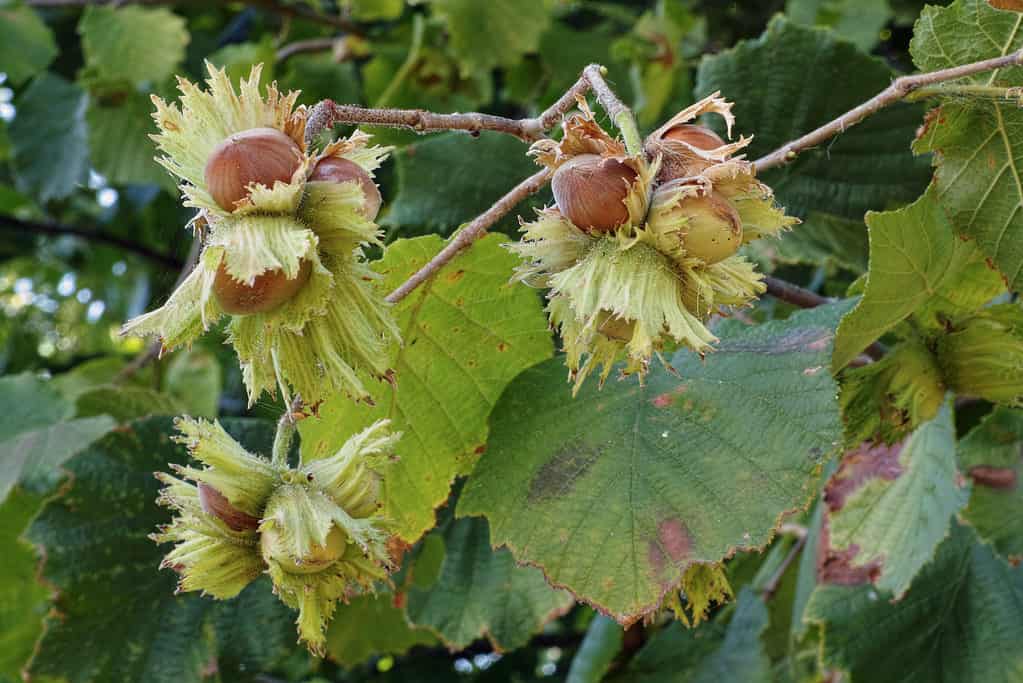
People, along with a wide variety of mammals including squirrels, dormice, and corvids, eat these delicious nuts.
©iStock.com/ffaber53
As its name suggests, the common hazel is best known for its hazelnuts. It’s a beautiful tree native to Norway and most northern European countries.
It’s a tree that tends to grow as a shrub with multi-stemmed trunks from a single rootball. Hazel trees are extensively coppiced in Europe and the bendy wood is used to make furniture or garden canes.
Corylus avellana is deciduous with bright green new growth in spring. Its foliage is oval, ridged, and has a hairy underside. It’s enjoyed by grazing mammals such as elk and deer. In spring, catkin flowers attract pollinators and mature into fall-time hazelnuts. People, along with a wide variety of mammals including squirrels, dormice, and corvids, eat these delicious nuts.
Hazel trees can reach 40 feet tall and have gray-brown peeling trunks. They’re an essential component of hedgerows across Europe.
Summary of 8 Incredible Trees Native to Norway
| Number | Tree | Scientific Name |
|---|---|---|
| 1 | Downy Birch | Birch Betula pubescens |
| 2 | Norway Spruce | Picea abies |
| 3 | Scots Pine | Pinus sylvestris |
| 4 | Mountain Ash | Rowen Sorbus aucuparia |
| 5 | European Aspen | Aspen Populus tremula |
| 6 | Pussy Willow | Salix Caprea |
| 7 | European Oak | Oak Quercus robur |
| 8 | Common Hazel | Corylus avellana |