
Quick Take
- Winged termites shed their wings the moment they land, and there is a calculated reason this happens immediately after finding a mate. Why wings get shed →
- Weather forecasters and exterminators share the same data, though only one group uses it to predict when termites will swarm your yard. See the swarm triggers →
- The white, translucent creatures crawling beside the flying termites aren't juveniles. Their role in the swarm is far more strategic. Meet the worker termites →
It’s been several hours since a heavy rainfall, and there’s a hum in the air. The humidity is still thick when something suddenly crawls out of the ground. After it takes flight, a torrent is unleashed, and more winged insects erupt from a hole in the earth.
As dozens of them pour from underground tunnels, as seen in this Instagram video, it might seem like a horror movie. In reality, it’s the nuptial flight of winged reproductive termites called alates. And while it’s a terrifying spectacle to witness, it’s a stunning mating show by some of the world’s most misunderstood insects.
Why Do These Termites Have Wings?
As wood-boring insects, termites don’t usually need wings. However, those capable of reproduction, known as alates, find them quite useful. When it’s time to leave the nest upon reaching full maturity, wings help alates locate mates. Without them, they’d be limited to scouring the ground for another eligible bachelor or bachelorette.
Wings make the search far easier, allowing them to cover more ground while saving what precious little time they have. The mating season of a termite varies by species, with most swarms occurring sometime between February and August, though some species swarm in late summer or fall. This is also known as the “swarming” period and is the only time you’ll see termites taking flight.
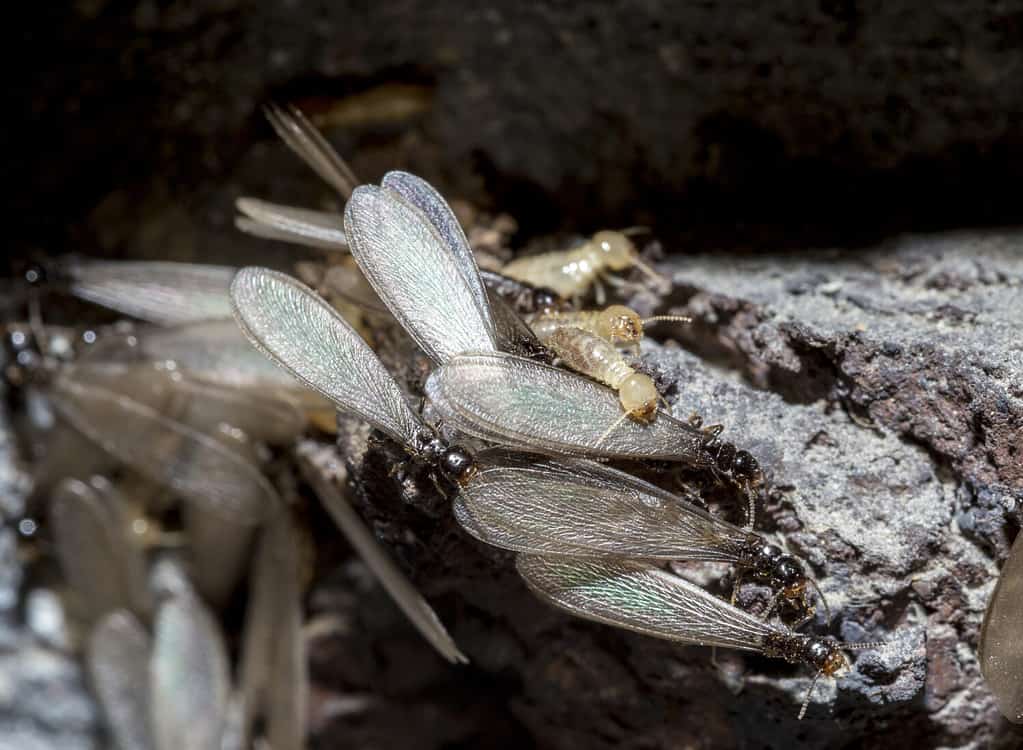
A termite’s wings are delicate and, while beautiful, are also extremely short-lived during mating season.
©Ilya Images/Shutterstock.com
The swarm itself is even shorter, lasting less than an hour in most cases. As they fly, they use chemical signals to attract mates. Both females and males release sex-pairing pheromones, and when a male locates a female, the two engage in a behavior known as tandem running, in which he follows her as she seeks a suitable nesting site. Once the two meet, they immediately descend and land.
Upon doing so, their wings naturally break off and are discarded when they’re no longer needed. The pair engage in a mating ritual to start a new colony before the cycle begins anew.
A Synchronized Reproductive Flight
Most people don’t find the sound and sight of hundreds of winged termites swarming overhead pleasant. But on hot, humid summer days, you’re more likely to witness this following a heavy rainfall. Temperature, heat, and environmental conditions are all factors that set off a winged termite’s biological clock. Once it senses extreme moisture in the air, it heads to the opening of its underground colony to begin its nuptial flight.
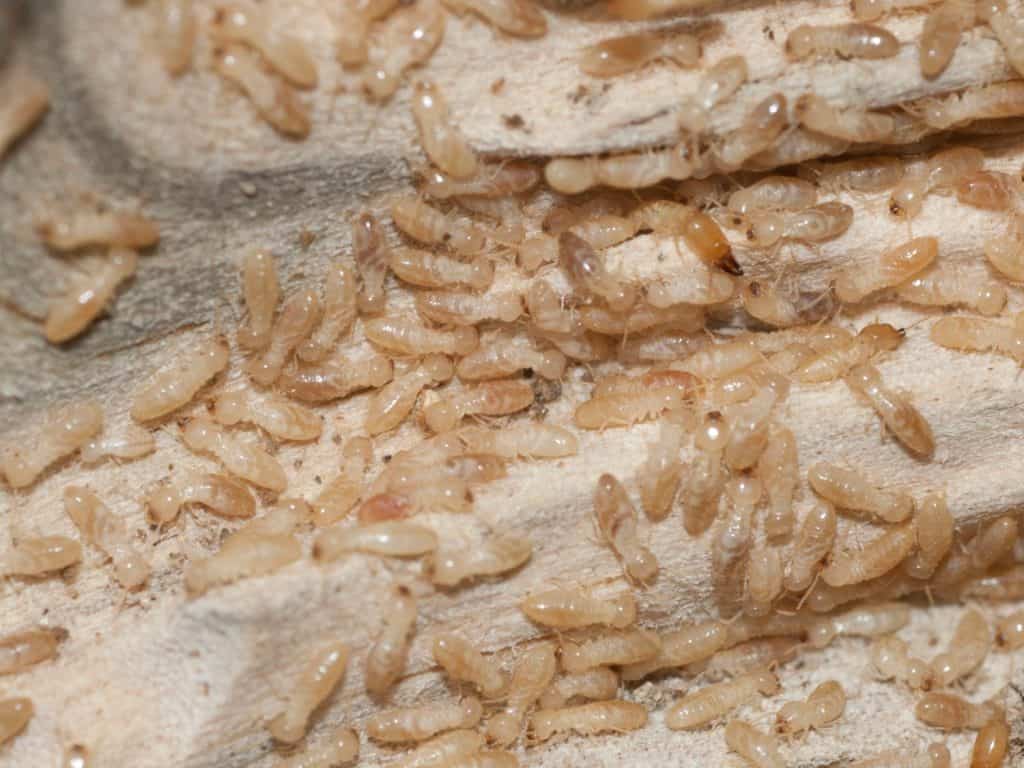
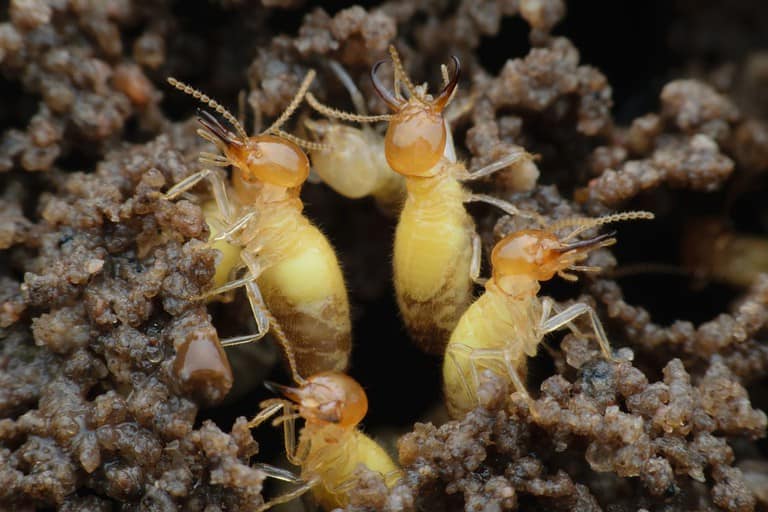
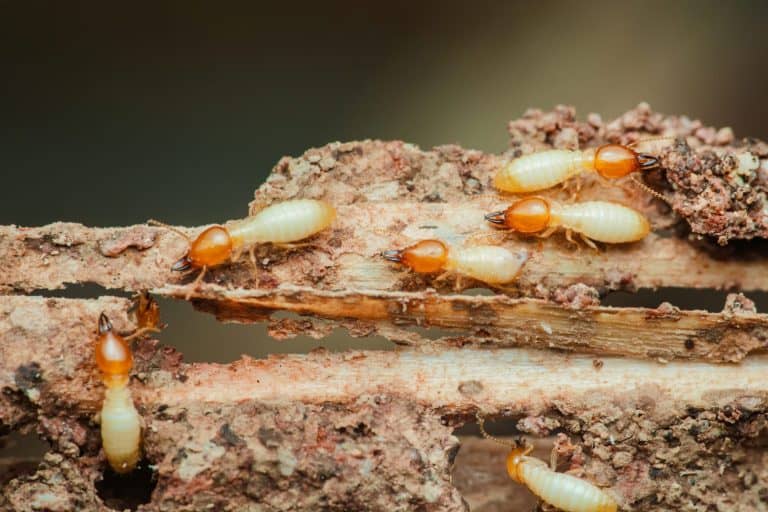
White, translucent termites are called subterranean workers and are responsible for protecting and rebuilding the colony.
©emongrara/Shutterstock.com
The reason for this is twofold. Humid air naturally protects the delicate wings of a termite. It also protects the insect’s delicate, soft body, which would otherwise be vulnerable above ground. Additionally, heavy rainfall softens the ground above the colony. This allows winged termites to enter and exit more easily. Attempting to leave the nest in dry conditions can damage the termite’s wings, rendering them unable to find a mate.
The ideal temperature for a nuptial flight is above 75 degrees Fahrenheit with high humidity. Seasoned experts, such as exterminators, can often predict termite activity based on weather reports. If rain is forecast, the risk of termite swarming increases. In rare cases, high-humidity households—usually with mold or mildew problems—can also trigger this during the summer months.
Winged Termites Do Not Emerge Alone
In the video, there are also white, almost translucent insects crawling around the opening of the termite colony. These small, wingless insects are known as subterranean worker termites. When the colony is breached during the nuptial flight, these workers are not far behind their winged relatives. They often travel to the surface to investigate and, if necessary, repair any damage that occurs when the winged termites take flight.
Given the size difference, it’s not unusual for alates to widen their exit. Since termites depend on the protection they get from remaining underground, it’s up to the workers to rebuild. They do this by using mud to patch large holes or collapsed areas. Since the ground is usually wet when alates emerge, the workers have the easy job of collecting mud and transporting it to where it’s needed.
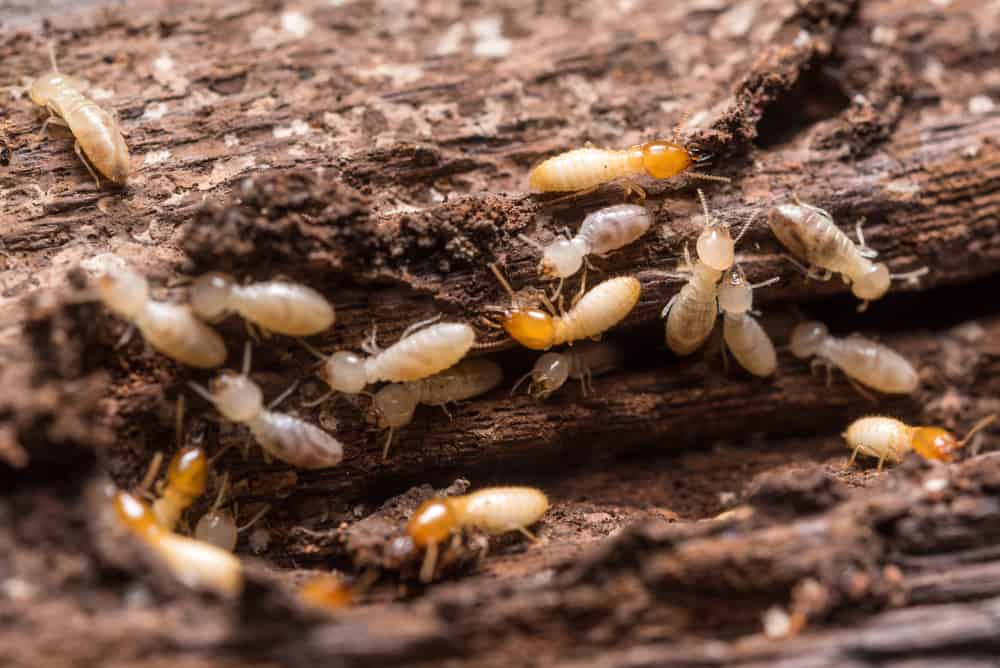
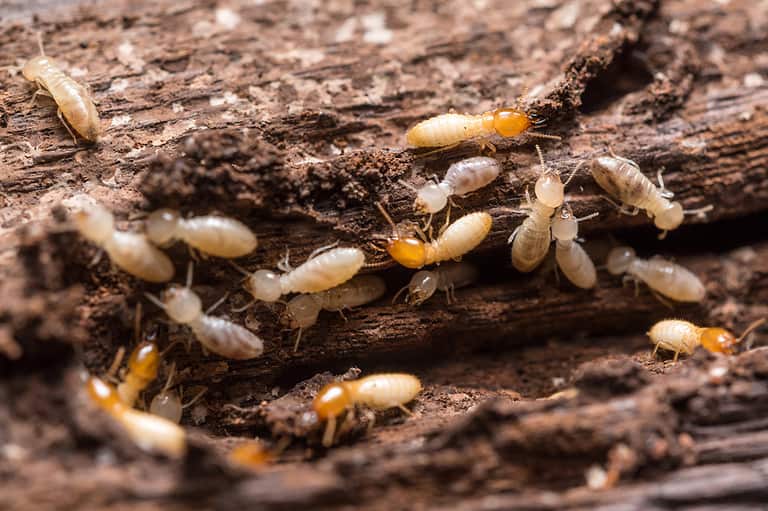
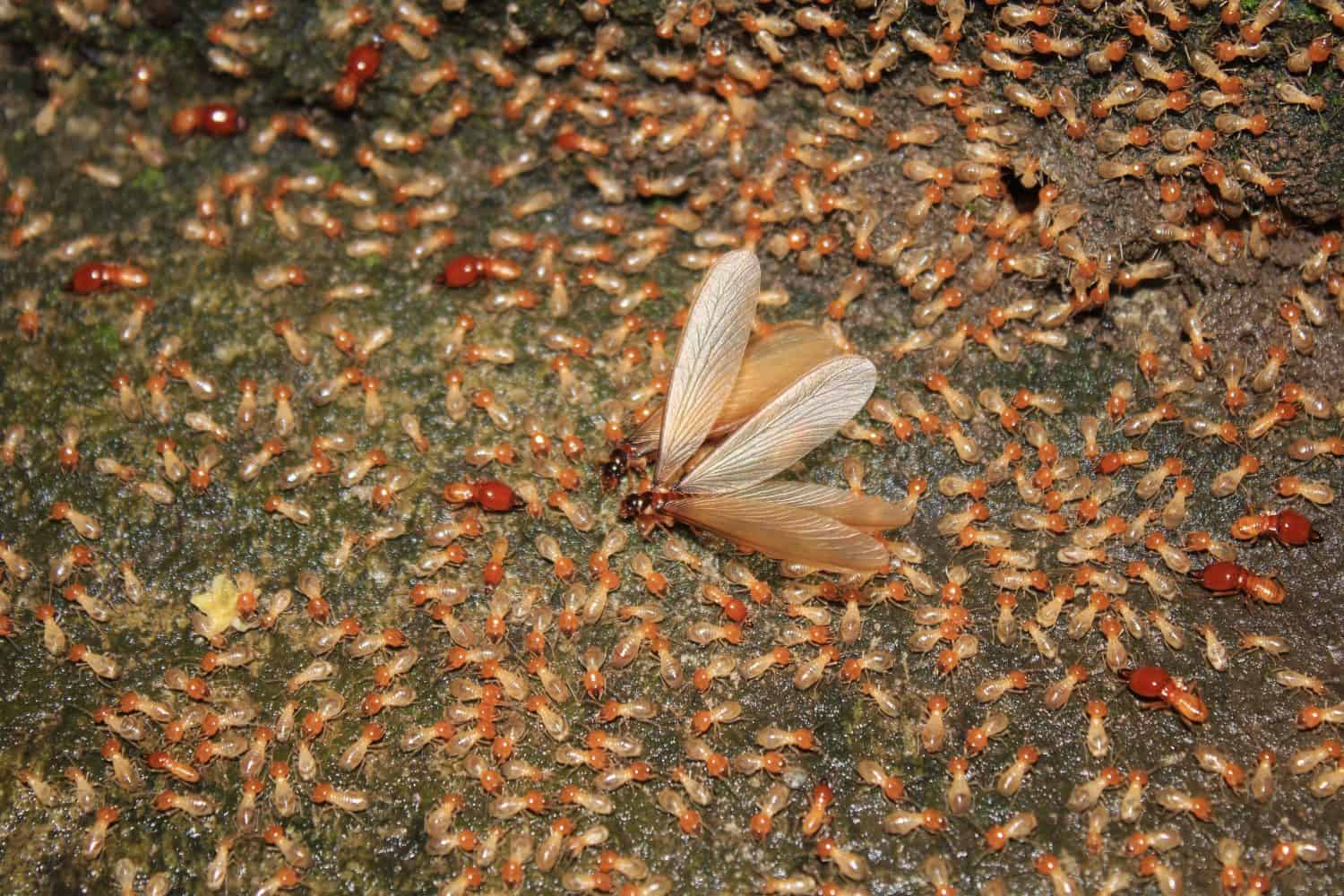
Broken wings are a sign of a significant termite infestation, while seeing subterranean worker termites confirms their activity.
©ChaiyonS021/Shutterstock.com
Occasionally, subterranean worker termites emerge solely to scout the area. They’re drawn by the flurry of activity and typically head back underground if there’s no glaring damage to fix. During infestations, these pests eat through the wood of a house. Dead alates are usually the first sign of an infestation, while subterranean worker termites are found deeper within a house’s rotted foundation and walls.
In the wild, winged termites are simply following nature’s design — even if it looks like something out of a Hollywood horror flick.