
Quick Take
- A little-known research practice may be undermining insect conservation worldwide. Parachute science explained →
- Social media is helping fill gaps in the scientific record for endangered insects. Social media vs. science gap →
- One country's butterfly crisis exposes exactly how global conservation fails the species that need it most. Bangladesh's butterfly crisis →
- Of the estimated 30 million insect species on Earth, the number with meaningful conservation protection will surprise you. See the protection gap →
If you’ve ever looked at endangered species lists, such as the IUCN Red List, you may have noticed that some are missing. Most are small enough to fit on the tip of your finger, are found all over the world, and some can even fly. While mammals, reptiles, amphibians, and birds are extensively studied, insects are often overlooked.
A study led by Dr. Shawan Chowdhury, head of the Global Change Ecology Lab at Monash University’s School of Biological Sciences, reveals why. Conservation has traditionally focused on vertebrates, but that’s not the only reason. Something called “parachute science” also takes away from vulnerable insect life, leaving data gaps where facts should be.
Continue reading
30 Million Species With Little Protection
Insects, including many viewed as pests, rarely receive the same affection as mammals. While most people can list at least three endangered species, very few can name threatened insects. With the exception of pollinators such as bees and butterflies, the insect world, as a whole, is understudied. In the study titled A framework for the strategic conservation of tropical insects, this is attributed to limited global visibility.

The Miami Blue butterfly is now one of Florida’s most endangered insects. Only a single extant population remains, with fewer than 100 individuals.
©pixelworlds/Shutterstock.com
Existing insect conservation efforts are concentrated in temperate climates, leaving other biomes—such as tropical ones—woefully underrepresented. In the study, Dr. Chowdhury stated, “We cannot effectively conserve species if we don’t know what is there, where populations are changing, or even where important existing knowledge can be found. Insects are fundamental to functioning ecosystems and food production, but they remain dramatically underrepresented in biodiversity monitoring, protected areas and conservation policy.”
In places with significant data gaps, local expertise is often underutilized. Instead of drawing on insights from community scientists, organizations rely on their own analysis, omitting crucial information that only those familiar with the landscape—and its insect life—can provide. This lack of local data and expertise is known as parachute science, and it could be severely hindering insect conservation efforts.
Parachute Science Takes Voices Away From Local Experts
According to Dr. Chowdhury, much of the data that scientists need exists in local journals, regional collections, or in photos and videos. This might even include citizen science, which has already proven to be highly effective when targeting the right demographic. Even observations on social media would help bridge the 26% gap in insect species distribution. Unfortunately, most scientific endeavors ignore these as options for data gathering.
As a whole, the study identified four areas of improvement regarding insect conservation:
- Limited global visibility of existing research
- Major data shortfalls
- Inadequate research infrastructure
- Insufficient conservation action

Bangladesh is home to a large majority of endangered butterfly species, such as the Sundarban crow.
©Chobi_Wala/Shutterstock.com
Parachute science can contribute to several of these problems, from limited data collection that causes shortfalls to poor research infrastructure that leaves entire species undocumented. This causes a domino effect wherein outside researchers may enter an area, collect data, and leave without building lasting partnerships with local experts. This often happens in low-income regions, where studies are conducted by external organizations without involving local experts.
The Bangladesh Dilemma
In the study, Dr. Chowdhury’s team cited Bangladesh as a perfect example of parachute science putting insect species at a disadvantage. As one of the world’s most densely populated tropical countries, it’s an excellent candidate for citizen science. Additionally, the country is a hub of information from locals, both within and outside the scientific community.
However, the team’s analysis identified 111 butterfly species in Bangladesh, while only 34 had been documented in scientific journals. Of these, only three focused on conservation. The remaining publications discussed species distributions but did not address their conservation status.
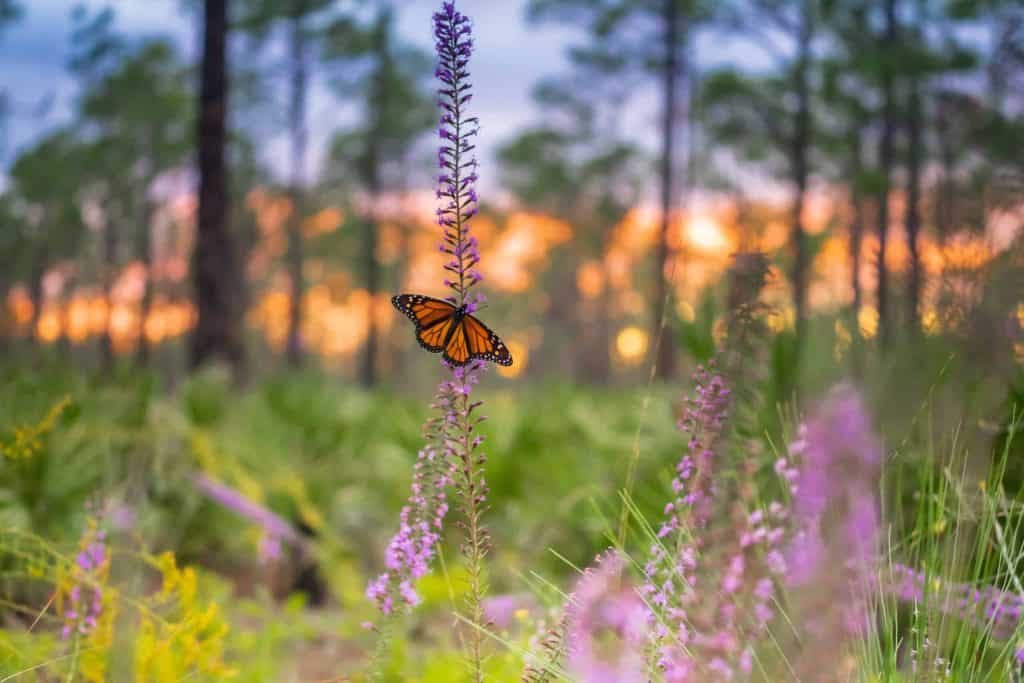
Monarchs are classified as endangered globally, but join the ranks of many others outside of temperate climates that don’t have enough support.
©AlejandroCarnicero/Shutterstock.com
By contrast, social media revealed a wealth of information, specifically for 167 of 169 endangered butterfly species. This is another point for citizen science, which encourages people without scientific backgrounds to do something extremely easy: simply observe. As researchers found more species documented online, they realized that the gap between available observations and formal conservation data was even larger than expected. By the end of their analysis, only one out of 226 butterfly species was adequately represented within the existing protected-area system.
This evidence suggests that the lack of insect conservation cannot be explained by funding alone. A lack of reliance on local communities, limited outreach, and insufficient region-specific expertise also play a role. Dr. Chowdhury’s closing warning highlights what could happen if these gaps remain unaddressed: “If we want global biodiversity targets to mean something, tropical insects cannot remain an afterthought.”