
Quick Take
- One of the new species has a feature so rare it exists in only one other tardigrade on the entire planet, a discovery scientists weren't even looking for. Discover the rare feature →
- The specimens were sitting in storage for over a decade before anyone realized what they actually were. See how samples were stored →
- Seamount summits and nearby deep-sea floors look similar on a map, but the difference in life found between them is staggering. Scientists still can't fully explain why. Explore the biodiversity gap →
- Tardigrades survive radiation, pressure extremes, and near-zero oxygen, yet the mechanism behind their near-indestructibility points to something unexpected in their DNA. Uncover their DNA secrets →
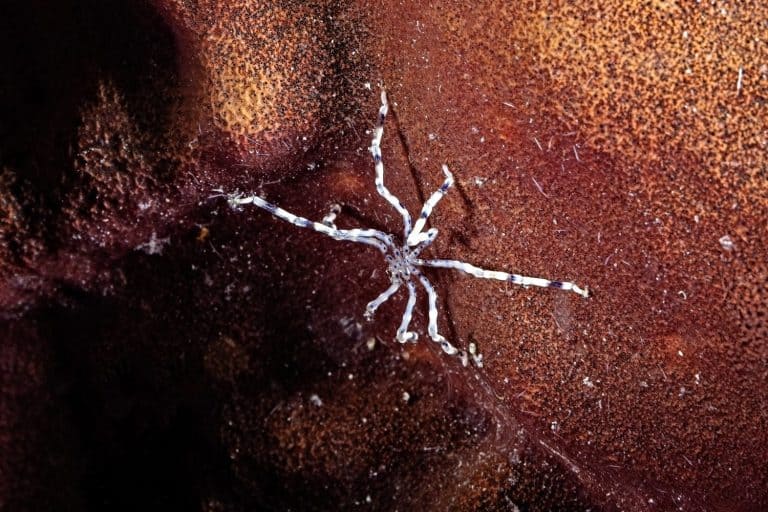
A deepwater survey of an underwater mountain has revealed two new species of water bears. Also known as moss piglets and tardigrades, these tiny creatures are a fraction of an inch long and have eight legs. They were found in the Eastern Tropical Atlantic among seabed sediment. We share the story of their discovery and its significance for marine biodiversity.
Tardigrades and Extreme Survival
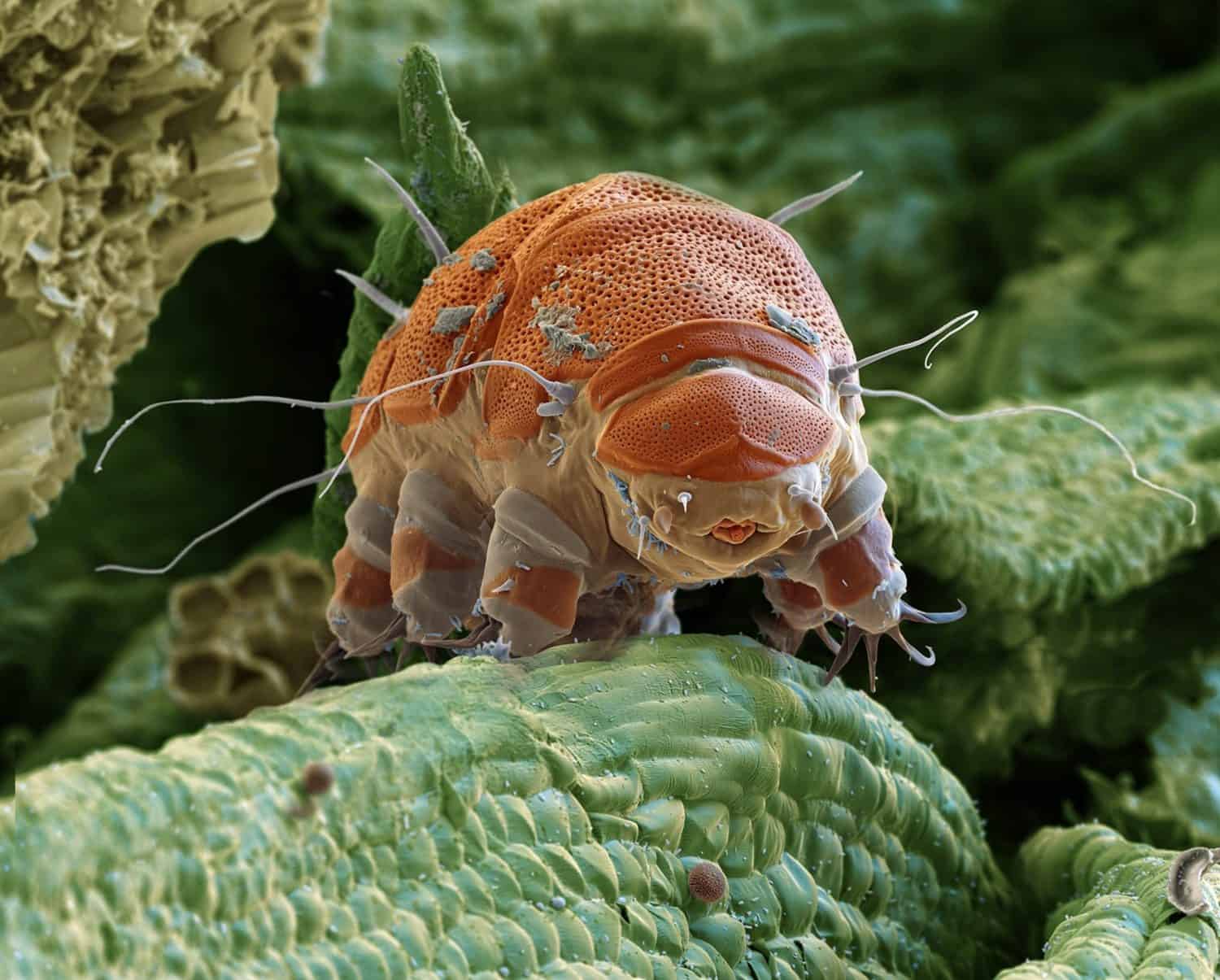
They may be tiny, translucent, and have a cute name, but water bears are one of nature’s toughest creatures. They are found in some of the most inhospitable environments on Earth, including Antarctica. These unusual animals may even be the most resilient organisms on the planet. They are resistant to drought, radiation, low-oxygen environments, and extremes of both temperature and pressure. Scientists describe them as ‘extremotolerant’ but are yet to figure out exactly how they do it.
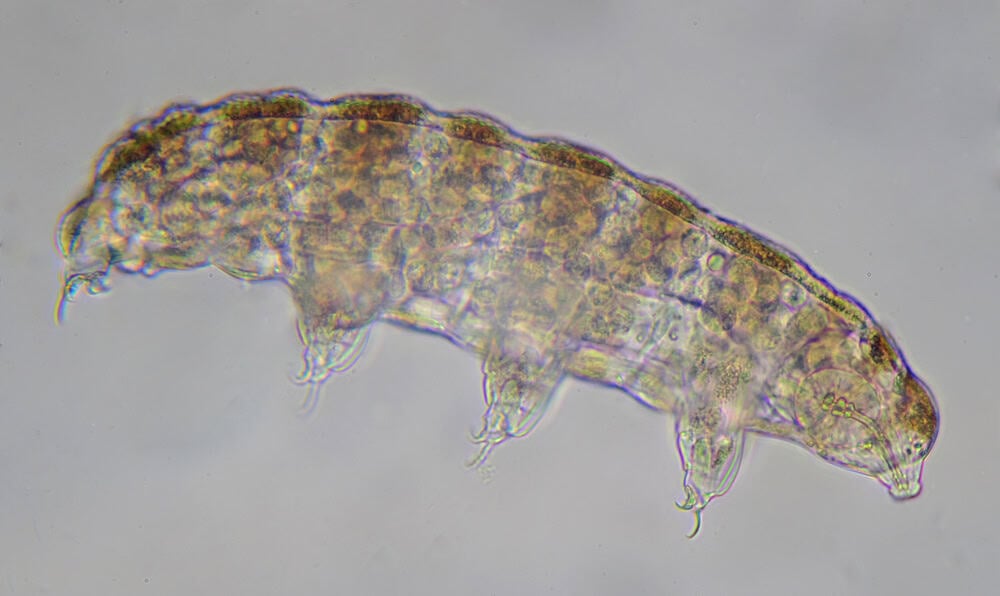
Tardigrades are nature’s survivors.
©Pasotteo/Shutterstock.com
That said, their survival traits are likely connected to their surprisingly intricate network of gene duplications and losses. This allows them to survive the numerous severe physical, chemical, and biological challenges of life in marine sediment. The lack of light, shifting substrate, high pressure, low oxygen, and limited food supply would be enough to put lesser creatures off!
Specimens From 2009
The exciting news of their discovery has only recently been published, but the specimens of the new species were actually collected in 2009! The sediment was sampled by the research vessel Meteor during its M79/3 cruise of the Cabo Verde (Cape Verde) region. The samples were collected using a multiple corer.
The researchers examined material from the summit plateau of an underwater mountain called Senghor Seamount and compared it to material from a deep-sea reference site located around 62 miles north of the seamount. They fixed the upper 5 cm (around 2 inches) of each core in formaldehyde and then extracted the tiny creatures within it using density gradient centrifugation.
What Were the New Tardigrade Species?
Megastygarctides hekatae was the first newly discovered species. The name comes from the Greek goddess Hekate. Her name derives from the numeral hekaton, meaning one hundred. Very fitting, as this species was found at a depth of around 100 meters!
The specimen is a female armored tardigrade with a cephalic plate, three body plates, three accessory plates, and a caudal plate. The new species was found at the seamount’s summit in coarse sand. Importantly, the new species has structures called genital spines, which are unusual in tardigrades. Only one other species has them, and that is Megastygarctides christinae. However, Megastygarctides hekatae is different from Megastygarctides christinae in several ways. For example, it has longer primary clavae (club-shaped sensory organs), lacks a second accessory body plate, and its claws are noticeably longer. No male specimen of this new species has yet been found.
Parastygarctus potercha is the second new species and is far smaller. The name potercha is the Latin version of the Ukrainian word for the ghost of a dead, unbaptized child. It refers to the species’ paedomorphic appearance. Paedomorphic is used to describe an organism that retains juvenile traits into adulthood. In the case of this tardigrade, its retained juvenile-like features are its small size and reduced claw numbers.
This specimen measured just 69.0 micrometers long and 21.0 micrometers wide. It only has three claws per leg on leg pairs I to III and two claws per leg on leg pair IV. This is a unique feature among tardigrades. Its cuticular armour is made up of a cephalic plate, three body plates, two intersegmental plates, and a caudal plate. Also, each body plate has a small ventral anterior pair and a large dorsal posterior pair of spine-like lateral processes.
Greater Biodiversity at Seamount Summits
Of the 219 marine tardigrade individuals recovered, 212 of them came from the Senghor Seamount summit. In all, there were twenty taxa (biological groups) identified, indicating this is an area of rich biodiversity. Representatives from the Halechiniscidae family, Styraconyxidae family, and Tanarctidae family of tardigrades were identified. This contrasts with the lack of diversity in the deep-sea reference site samples, which were made up of a fine ooze. Only seven individuals across two taxa were found here.
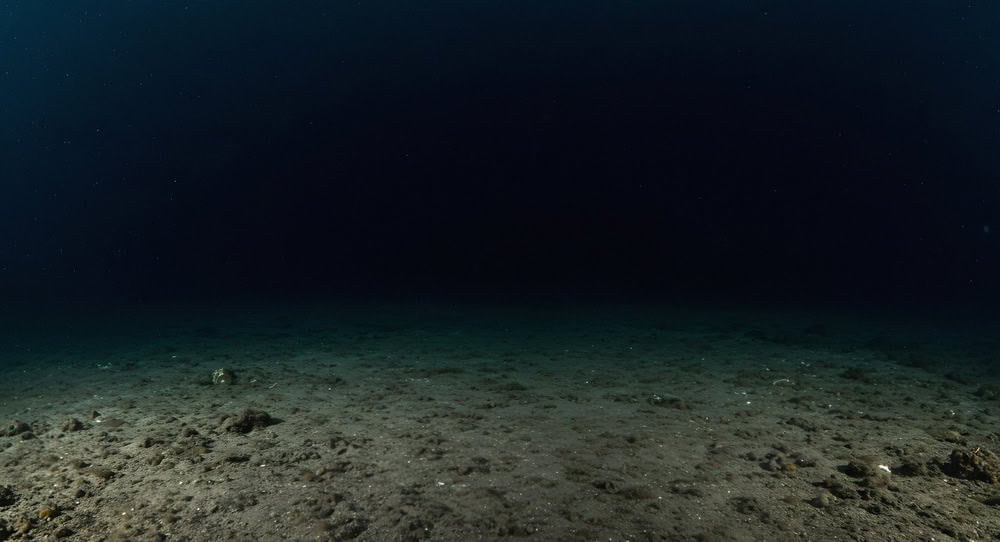
The biodiversity of the sea floor is still understudied.
©Yetugraphic/Shutterstock.com
Scientists suspect that Atlantic seamounts act as hotspots for meiofauna (small benthic invertebrates that live in aquatic sediments). There are more individuals here belonging to a broader range of species. Previous surveys of other seamounts have yielded similar results. Of course, the most exciting discovery was two new species of tardigrade!
However, scientists urge caution in interpreting the seamount-versus-deep-sea contrast when it comes to biodiversity. This area of research is still understudied. The number of samples taken so far is still relatively small and may not be truly representative of the wider picture. Also, some of the retrieved material is not in a fit state to be examined appropriately. There could be further new species lurking in these mysterious depths.