
Quick Take
- Bogong moths migrate hundreds of miles to spend the summer in the cool Australian Alps, navigating using the Earth's magnetic field and stars. See the phantom rainstorms →
- Huge swarms of migrating moths may be causing weather radar to detect apparent rainfall on dry nights across eastern Australia. Discover the weather glitch →
- Climate change, rising temperatures and drought threaten bogong moth populations, which have declined significantly in recent years.
- Weather radar could help scientists track bogong moth migrations, identify important habitats and protect the endangered insects and the wildlife that depends on them. Meet the possum connection →
Every year, millions of bogong moths undertake a long-distance migration across Australia, heading towards the Australian Alps for the summer. However, these huge swarms are now causing attention in more ways than one. Weather radar systems across Australia are suddenly showing rain even on nights when no rain is falling. One possible explanation is that the moths themselves are causing this unusual effect. As baffling as it is, this discovery could actually provide a new way to track the movements of bogong moths!
What Are Bogong Moths?
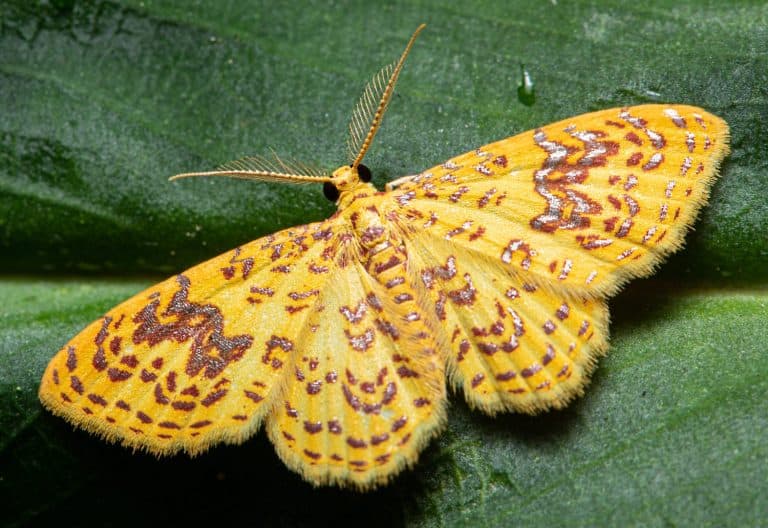
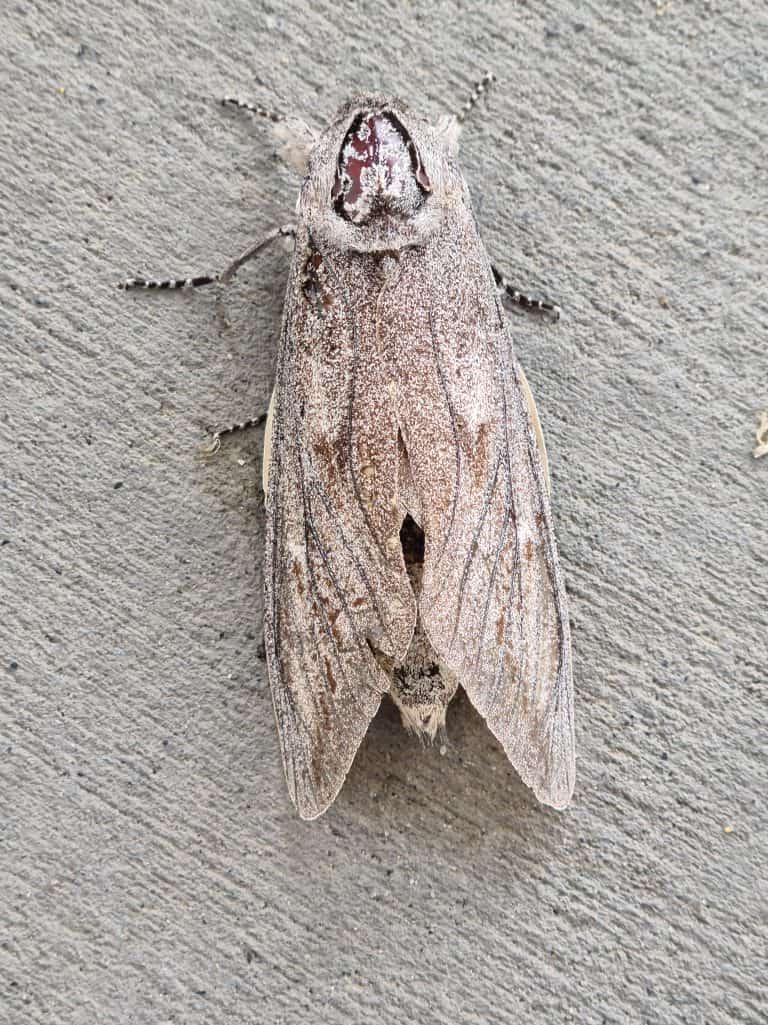
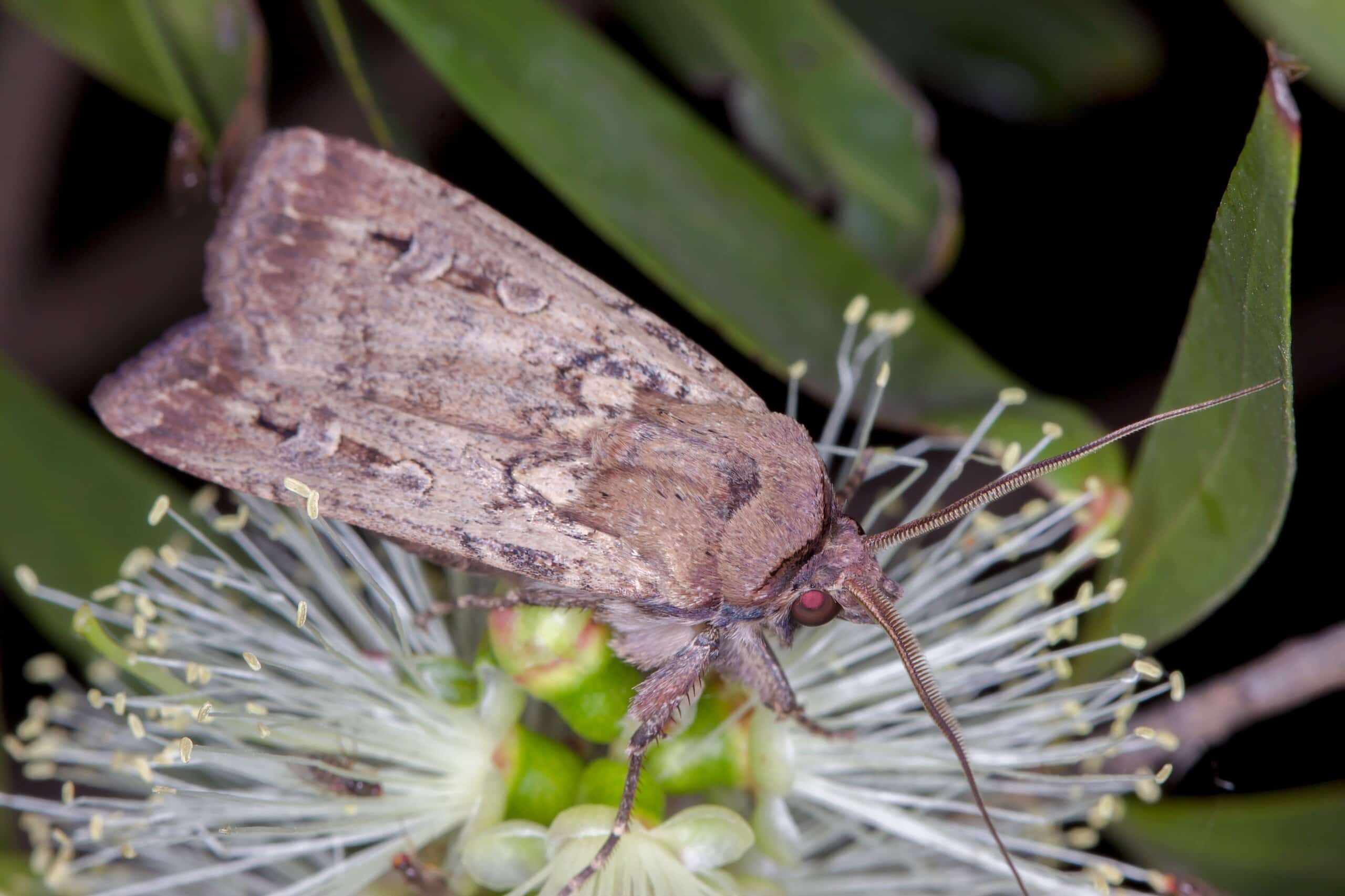
Bogong moths are native to south Australia, although there are small populations in western Australia. They are fairly large moths, with a wingspan of around 1.5 to two inches, and a body length of one to 1.5 inches. They have a greyish-brown coloration, often with a dark stripe and two light-colored spots on their wings.
Bogong moths are most active during the night, when they come out to feed on nectar. However, their larvae mainly feed on grasses, weeds, and winter pasture crops. Because of this, they are often considered pests. Bogong moths lay their eggs during the autumn in the arid and semi-arid plains of New South Wales, Queensland, and Victoria. Each female moth can lay up to 2,000 eggs. It takes approximately four to seven days for them to hatch. However, the larvae grow slowly through the winter before emerging as adults in the spring.
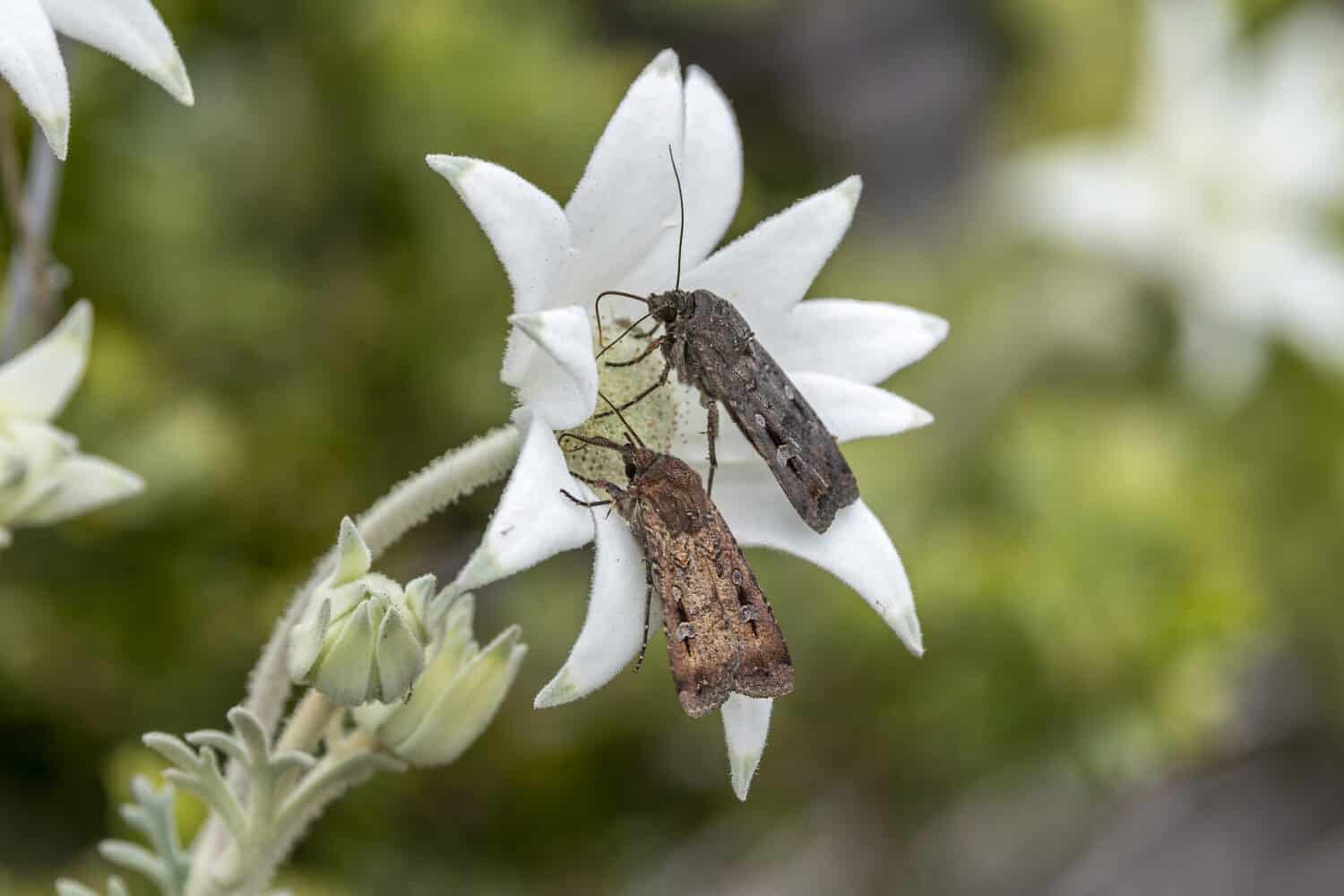
Bogong moths feed on flower nectar as adults but are considered pests in their larvae form.
©Ken Griffiths/Shutterstock.com
Most adult bogong moths are migratory and undertake a journey of around 600 miles across southeastern Australia in the early spring. They head for the higher, cooler grounds of the Australian Alps for the summer. Once there, they congregate in caves and crevices and remain relatively inactive in a dormant state. This is known as aestivation, which is similar to hibernation. The moths then undertake the same long journey to return to the lowland breeding grounds again in the autumn.
Why Are Bogong Moths Showing Up on Weather Radar?
Bogong moths typically migrate in vast swarms, consisting of thousands of individuals. They typically fly at night and have a unique method of navigation. Remarkably, they use a combination of the earth’s magnetic field and the constellations of stars in the night sky to find their way. This method is known as celestial navigation.
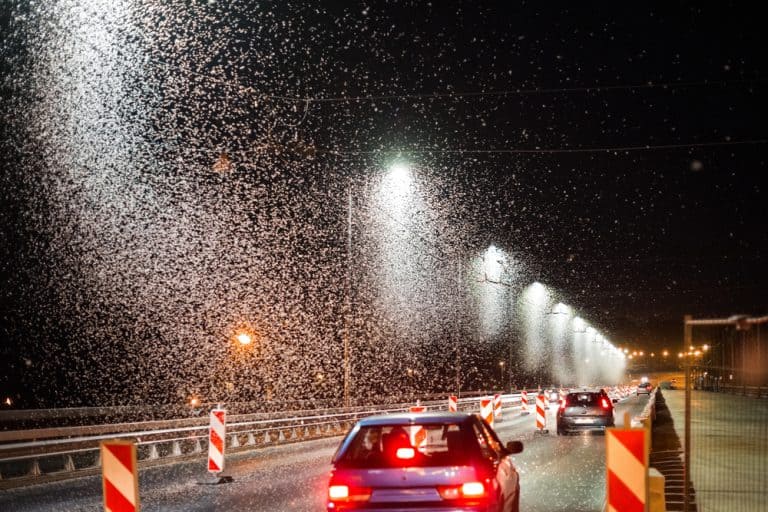
Surprisingly, weather radar systems have started picking up what appears to be rain, even when it’s not actually raining. This is mostly happening around New South Wales and Sydney, and experts believe that it is swarms of migrating bogong moths that are being detected. This has previously occurred once before in 2000, when “rain” was detected during the Olympic Games; it actually turned out to be moths.
Weather systems use radio pulses that bounce off the rain particles and return to the radar station. Temperature inversions, which occur when a layer of warm air sits above cooler air, can also cause radar echoes that look like rain. However, it’s thought that the pulses are bouncing off the moths, which is why it’s appearing as rain on the weather systems. Because the swarms are so huge, there’s plenty of opportunities for the pulses to hit their bodies and bounce off, making the signal large enough to be picked up. Experts aren’t sure how large the swarms need to be for detection, but the phenomenon has opened the possibility of a new way to track bogong moths.
How Weather Radar Could Help Protect Bogong Moths
Bogong moths are classified as an endangered species by the IUCN. They face various threats, but climate change is one of the most significant. Bogong moths rely on cool temperatures in the mountains where they spend their summers. However, increasing temperatures and a drying climate are now putting these habitats at risk. Drought is also a serious threat to these moths, as it affects the breeding grounds in the lowlands. It also affects the availability of food for both adults and larvae if plants and crops grow poorly.
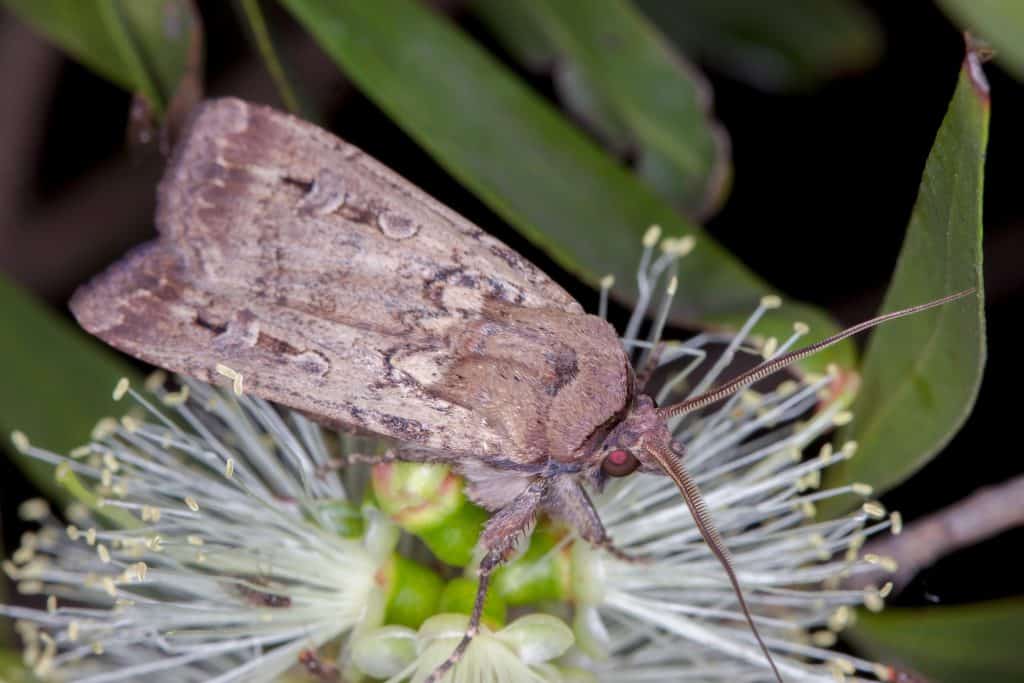
Bogong moths are in decline, with drought and climate change being some of their main threats.
©Andrew Allen Photography/Shutterstock.com
The populations of bogong moths have dropped significantly in recent years. Researchers want to better understand where they live and track their migration route to discover how to better protect them. However, conventional tracking methods are impossible to use on animals so small. Therefore, being able to use radar to detect them would be a significant benefit. By identifying where and when the moths are travelling, scientists can pinpoint the most important navigation locations. This means they can target conservation efforts to these habitats. This won’t only protect the bogong moths; it will also help the critically endangered mountain pygmy possum that feeds on moths.
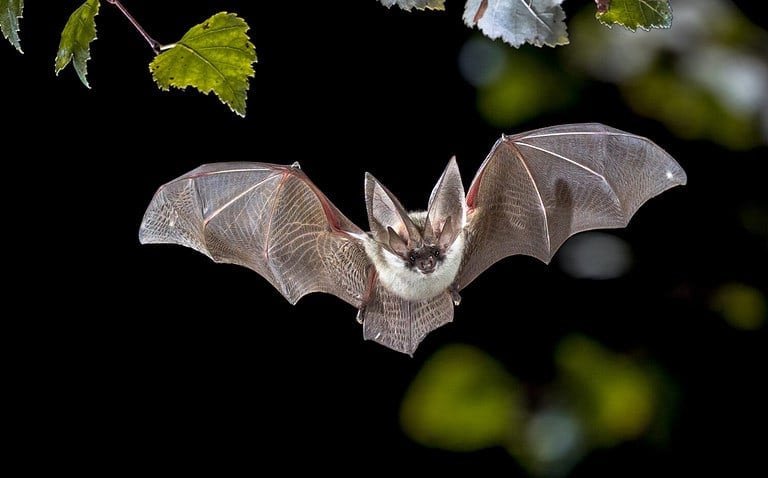
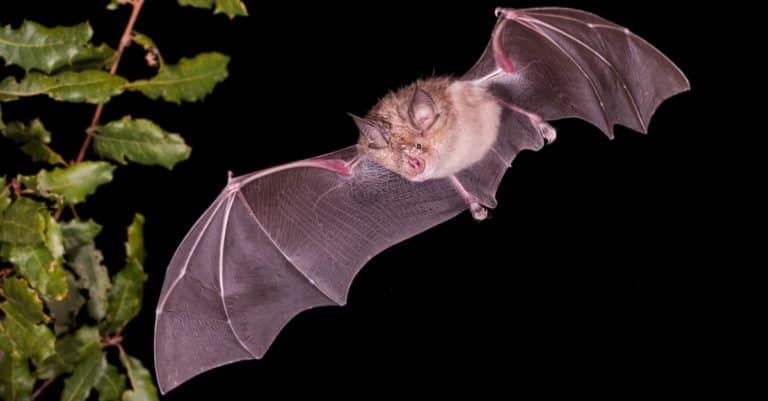
Bogong moths aren’t the only animals showing up on radar, though. Radar is already being used to track the movements of bats and birds. An initiative known as Aerocast has been developed for tracking bats, particularly flying foxes, using radar and a computer algorithm. It is hoped that it could eventually be used for bogong moths as well.