
Quick Take
- The larger of these two birds actually has the smaller wingspan, which reveals something unexpected about how size comparisons can mislead. Compare their sizes →
- Potoos can detect nearby predators with their eyes completely shut, and the biological trick that makes this possible is stranger than it sounds. See the eyelid slits →
- Potoos look and behave like owls, but lumping them together is a fundamental mistake. Their true relatives are far more surprising. Discover potoo taxonomy →
Potoos are nocturnal birds of the Neotropics. Masters of camouflage, they are known for their haunting calls. Potoos are distributed across Central America, South America, and the Caribbean, with the highest diversity in the Amazon Basin. There are seven recognized species in two genera, Nyctibius and Phyllaemulor. The most widespread species is the common potoo (Nyctibius griseus), closely followed by the great potoo (N. grandis). Continue reading to learn more about these fascinating nocturnal birds and what sets them apart.
What is a Potoo?
Common and great potoos are similar in behavior and appearance to owls; however, they are not related. Potoos belong to the order Caprimulgiformes and are cousins to nightjars, such as nighthawks (Chordeiles) and whip-poor-wills (Antrostomus), whereas owls are formidable raptors in the order Strigiformes.
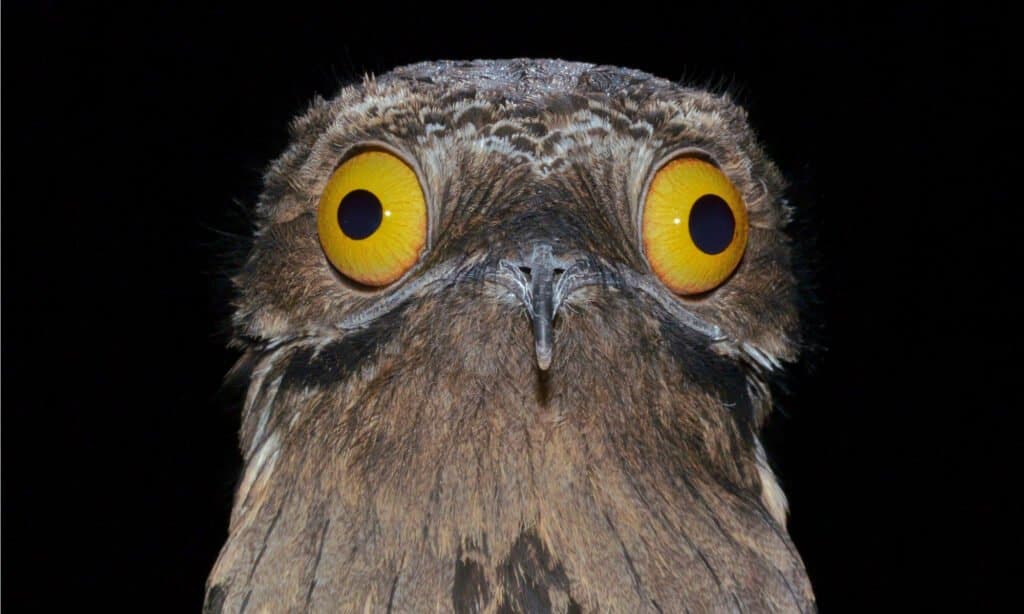
Because of their daytime habit of hiding in plain sight, blending in with the bark of trees, and suddenly opening their eyes when startled, looking a bit like a spirit appearing out of thin air, potoos have earned the nickname ghost bird.
©Fabio Maffei/Shutterstock.com
Potoos are found in tropical forests, humid rainforests, mangroves, and open woodlands throughout Central and South America, as well as on a few Caribbean islands. They spend their days perched perfectly still, high up in the canopy, on vertical snags or broken branches that match their mottled gray, black, and brown feathers.
Potoos are nocturnal birds that become active after sunset to hunt and feed. Potoos are ambush predators that employ a strategy called sit-and-wait foraging to surprise their prey. They are insectivores that feed on large flying insects, including beetles, moths, termites, grasshoppers, cicadas, and mantids.
Potoos catch insects on the wing, a hunting method known as hawking or sallying. They do not forage on the ground or pluck insects from leaves.
Common Potoo Vs. Great Potoo: Size and Appearance
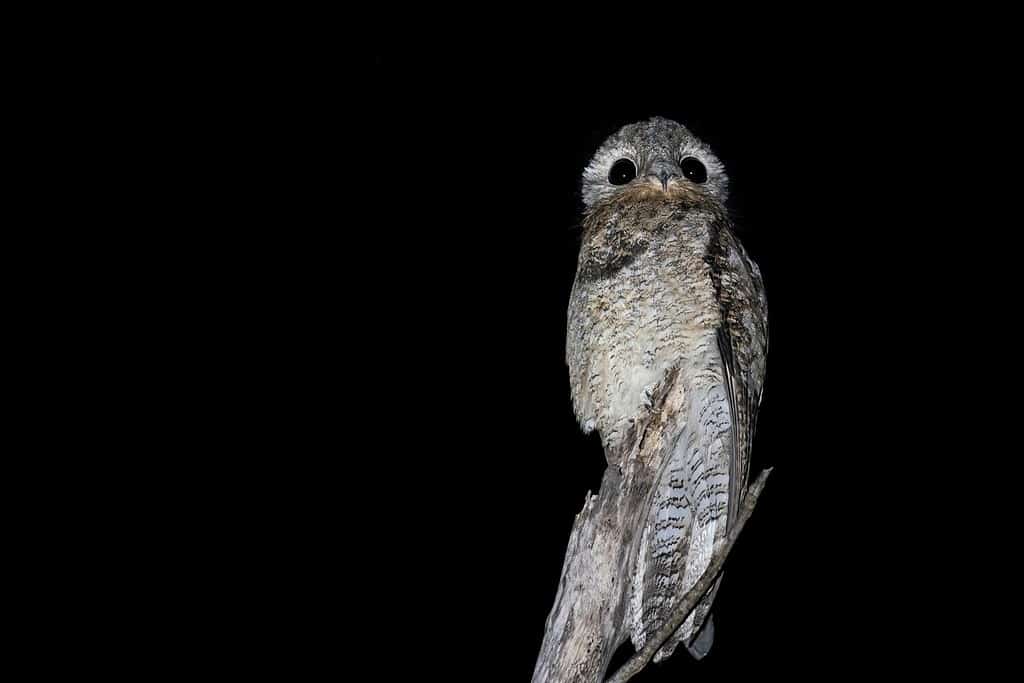
The neutral coloring of the great potoo helps it blend in.
©Rob Jansen/Shutterstock.com
The common potoo measures between 13 and 15 inches tall, with a wingspan of 33 to 37 inches. These birds weigh between five and eight ounces. Common potoos have long, mottled brown-red, black, gray, and white plumage.
The great potoo, the largest potoo species, weighs between 13 and 23 ounces, measures between 18 and 24 inches tall, and has a wingspan of 27 to 32 inches. Despite being a much larger bird overall, the great potoo has a smaller wingspan than the common potoo.
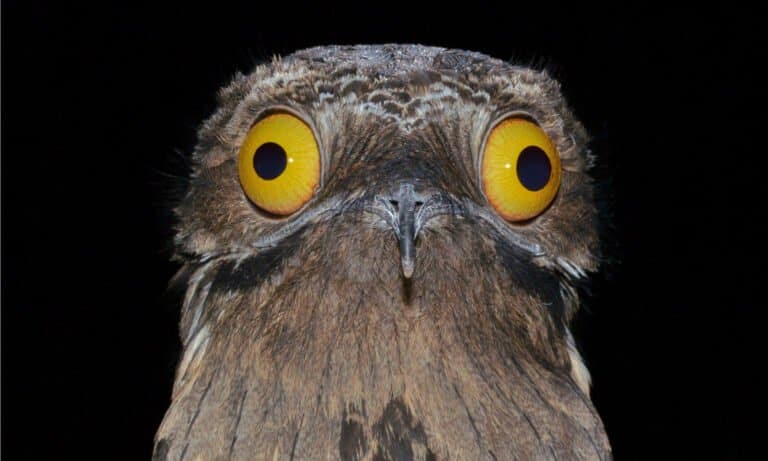
Their mottled gray, brown, white, burgundy, and black plumage provides them with camouflage among trees. These birds have a short neck, large mouth, and massive dark eyes with yellow-orange irises.
Both species are most easily identified at night by the reflection of light hitting their massive yellow eyes. You may also hear their haunting songs in the trees.
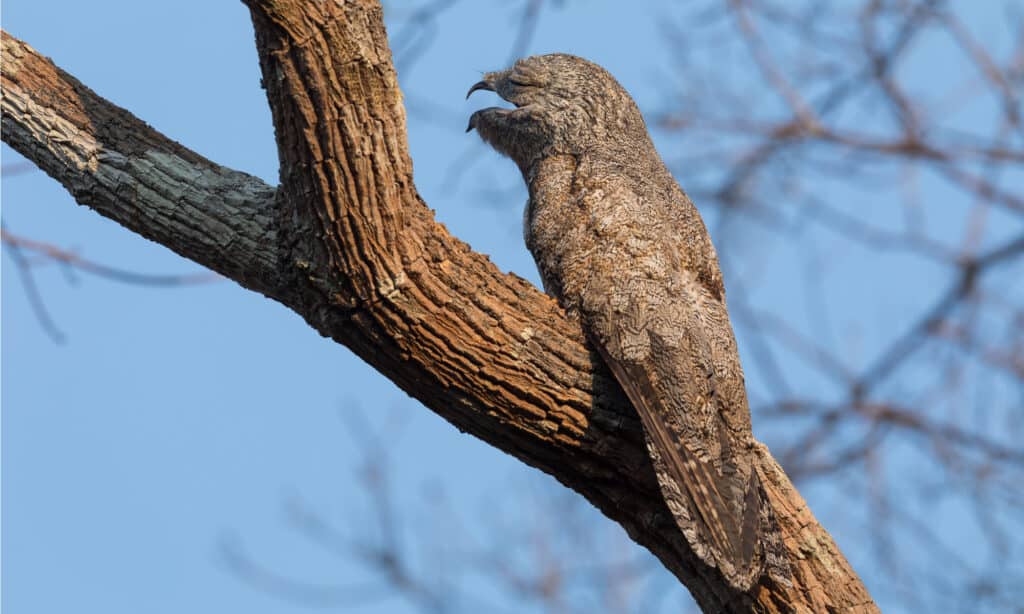
Potoos have a sharp, prominent tooth-like notch on the edge of their upper beak, which helps them grip, secure, and crush large, slippery insects when catching them in midair.
©Kelp Grizzly Photography/Shutterstock.com
Male and female potoos of both species are identical. They lack sexual dimorphism, meaning they share the same size, shape, and bark-like camouflage pattern. All potoos have two or three slits in their eyelids. These slits allow them to sense light and detect nearby movement even when their eyes are completely shut. This lets the bird monitor potential predators during the day without opening its massive, conspicuous yellow eyes, keeping its tree-branch camouflage intact.
Common Potoo Vs. Great Potoo: Behavior
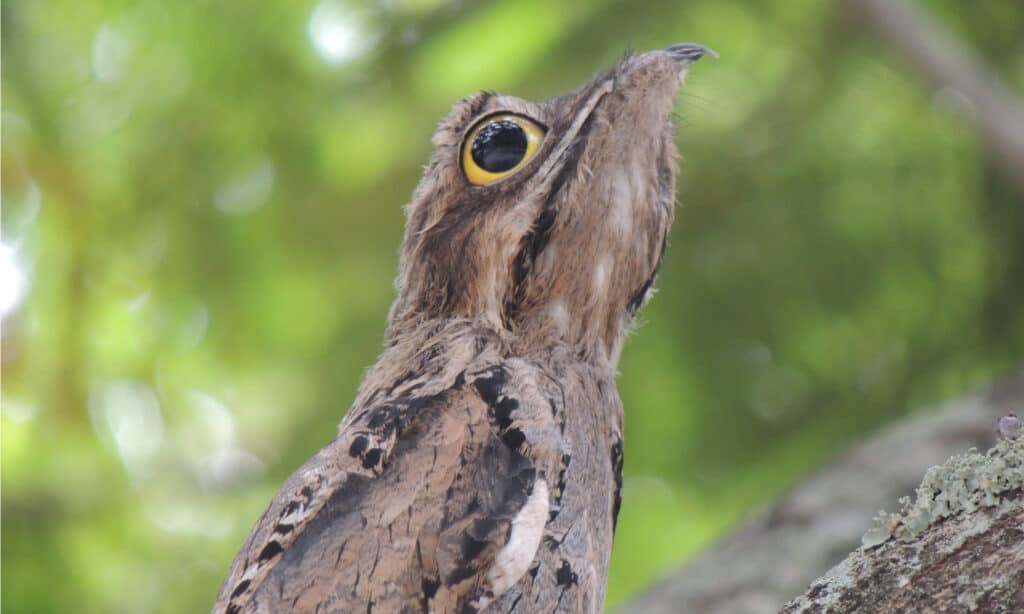
Potoos largely feed on large insects, which they catch in midair.
©Uryel Perozini/Shutterstock.com
Common potoos mimic their perches when they rest. That is, they use a technique called masquerading, which means they blend in almost flawlessly with their environments. If you go looking among tree stumps or dead wood in their region, you may well pass several without ever noticing them. Both adult and juvenile common potoos seek out dead wood perches that match their plumage and their body diameter so that they may appear to merely be a continuation of the dead wood. When potoos are startled by humans or predators, they may react by quickly flying away, attempting intimidation by opening their beaks, or instantaneously regaining composure and remaining hidden.
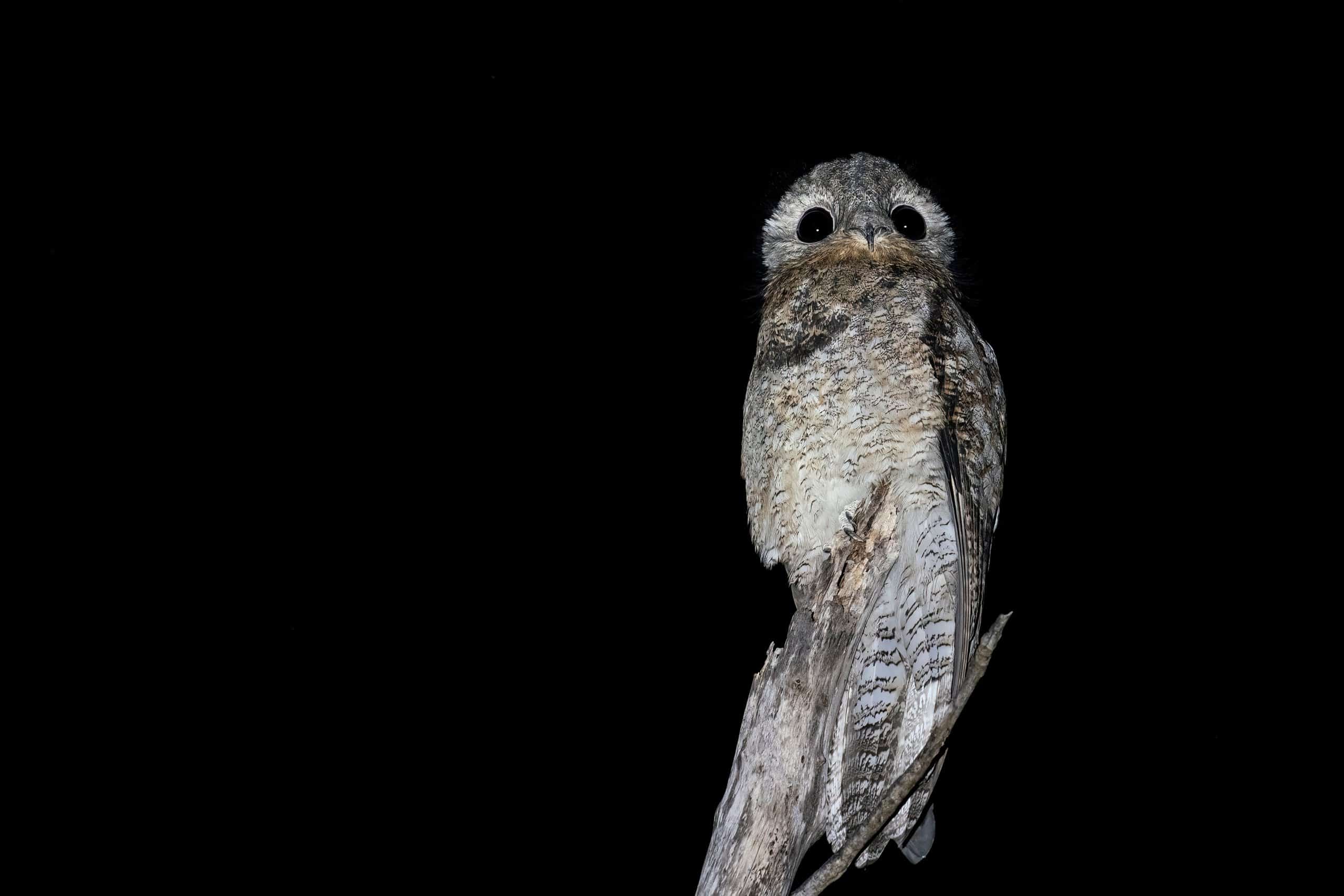
Great potoos perch high above their hunting grounds. They, too, blend in with their perches by choosing stumps and trees matching their diameter and coloring and closing their eyes.
Common Potoo vs. Great Potoo: Habitat and Range
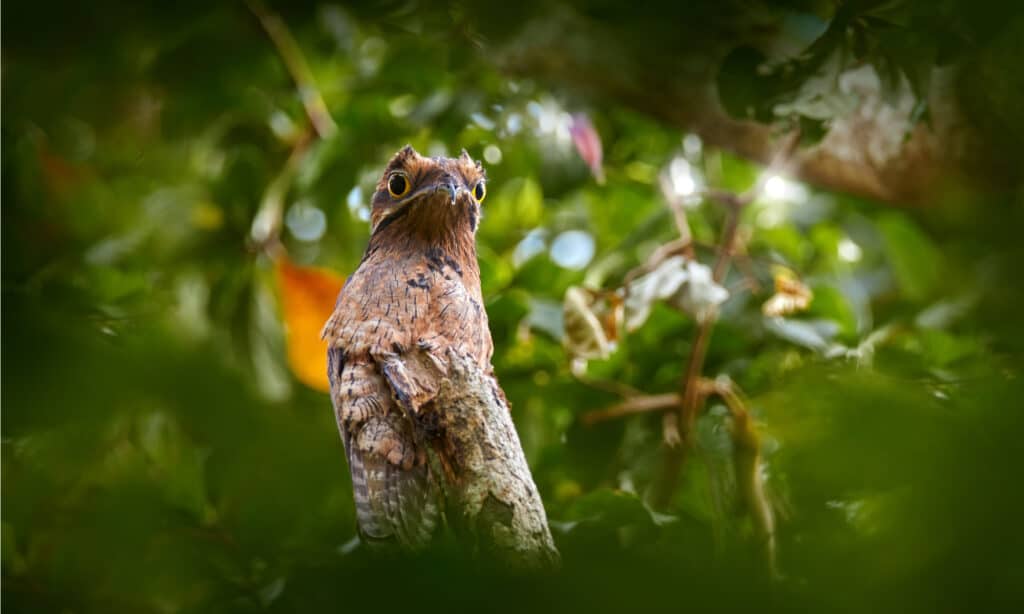
Potoos are solitary except during the mating season.
©Ondrej Prosicky/Shutterstock.com
The common potoo is widely distributed throughout Southern Central America and into the lowlands of Northern and Central South America. The birds may be found in Trinidad and Tobago, and most of mainland South America, except for Chile. Common potoos are most often found in woodlands and savannas, avoiding cooler mountainous ranges.
Great potoos range from Southern Mexico into Guatemala and throughout most of Central America and into Brazil and Bolivia, in South America. They cannot survive without trees. They do not build nests on the ground.
These birds tend to stay in humid and semi-humid forest habitats and dense lowland forests. They may also live along forest edges and clearings. Great potoos may also be found in woodlands and tree farms, but always where trees are present, and they blend in.
Common Potoo vs. Great Potoo: Diet
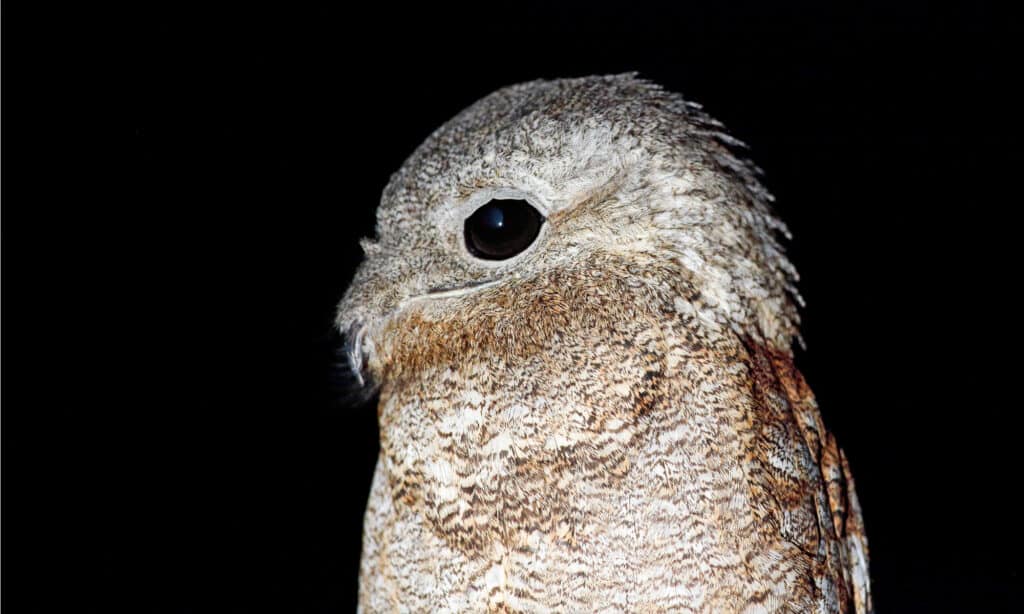
Nocturnal birds, potoos hunt insects from their quiet perches atop dead stumps and trees.
©Ondrej Prosicky/Shutterstock.com
Both the common potoo and the great potoo are nocturnal hunters. This means they use their wide mouths to capture their insect prey as they hunt and forage. Common potoos relish ants, flies, moths, termites, grasshoppers, locusts, and crickets. The great potoo eats beetles, katydids (similar to cicadas), and the rare bat or smaller bird.
Both birds use their unique camouflage to perch on branches, remaining nearly motionless as they wait for prey to approach. Typically, this involves sitting on a lower, exposed branch and staying as still as possible; almost perfectly motionless. When they spot prey, they launch from their branches, catch it instantly, consume it whole, and then return to their perches.
Common Potoo vs. Great Potoo: Conservation Status
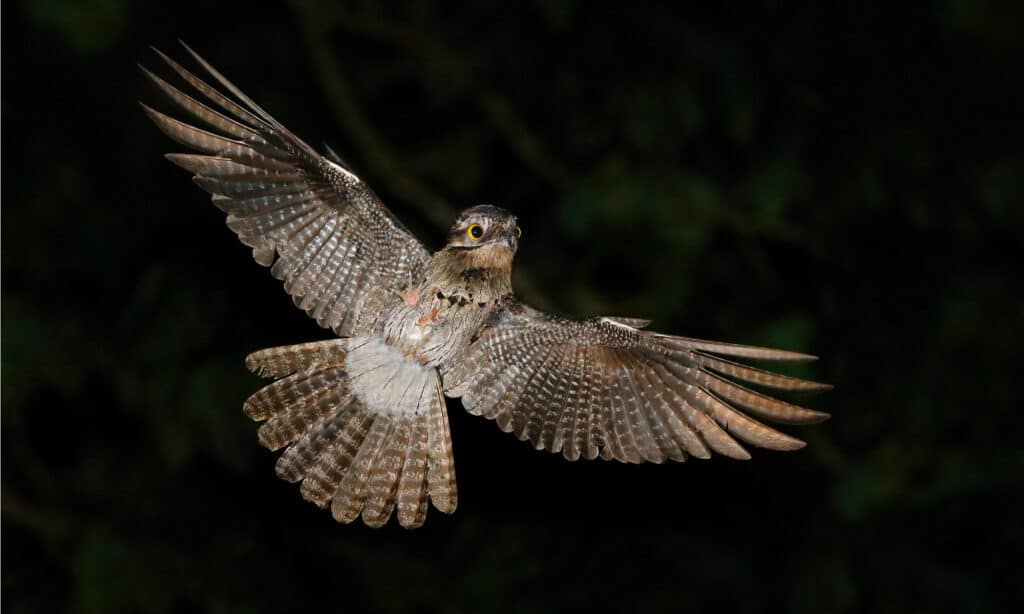
Potoos show off their unusual markings primarily in flight when their wings and tails are open.
©Ondrej Prosicky/Shutterstock.com
Thankfully, both the common potoo and the great potoo have been deemed by the IUCN as species in the “least concern” status. These birds have large ranges, allowing them to nest in a variety of habitats rather than being restricted to highly specific ones. The exact population sizes of these species are not well quantified, but both are considered to have large, stable populations.