Quick Take
- A massive crocodile on the bank barely reacts as canoes glide past, leaving one to wonder what would have happened if the paddlers got any closer. Watch the close encounter →
- Crocodiles bask in the sun for a reason that goes deeper than just warming up, and understanding it changes how you read this encounter entirely. Why crocodiles bask explained →
- Nile crocodiles are known to be territorial, though the rules of that territory are more complicated than most people assume. Nile crocodile territory rules →
- Wildlife guides give crocodiles space rather than distance for a specific reason, and it matters more than you'd think. How guides approach crocodiles →
A massive crocodile is stretched out along a riverbank in Zimbabwe, seemingly without a care in the world. But its peaceful afternoon is about to get a little more interesting. A group of canoeists approaches from the water, bringing their small boats surprisingly close to one of Africa’s most formidable predators. What happens next is almost as remarkable as an attack would have been. The enormous reptile barely seems interested in its unexpected visitors. But does that mean the paddlers were safe, or were they passing an animal capable of springing into action at any moment?
Watch the Massive Crocodile’s Surprisingly Calm Reaction
Shared by the YouTube channel Snakes in Zimbabwe, the short clip follows a group of canoeists as they approach a large crocodile resting along the shoreline. The paddlers slow down as the reptile comes into view, then continue past without attempting to touch or disturb it. Meanwhile, the crocodile remains remarkably still. There’s no dramatic chase, no sudden lunge, and no obvious interest in the passing boats. Of course, a crocodile’s apparent indifference should never be mistaken for an invitation to get closer.
Zimbabwe Is Home to One of Africa’s Most Powerful Predators
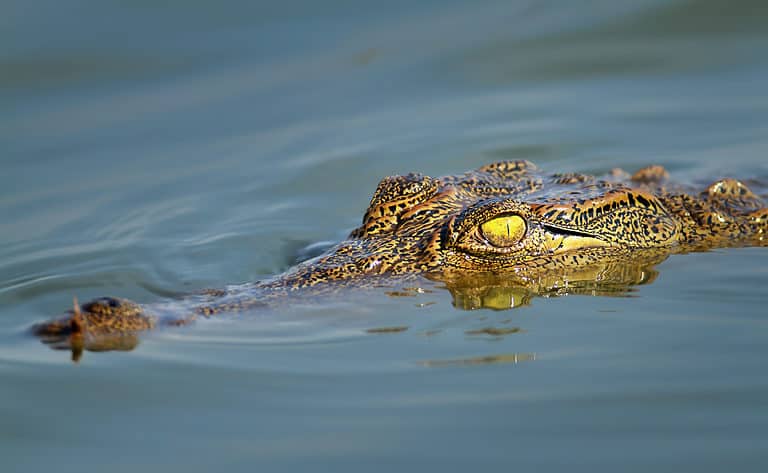
The encounter takes place in Zimbabwe, a southern African country known for spectacular wildlife and extensive river systems. Its native crocodile species is the Nile crocodile (Crocodylus niloticus), a formidable predator found throughout much of sub-Saharan Africa. These reptiles inhabit rivers, lakes, reservoirs, and wetlands, where they spend considerable time both submerged in water and resting along the banks.
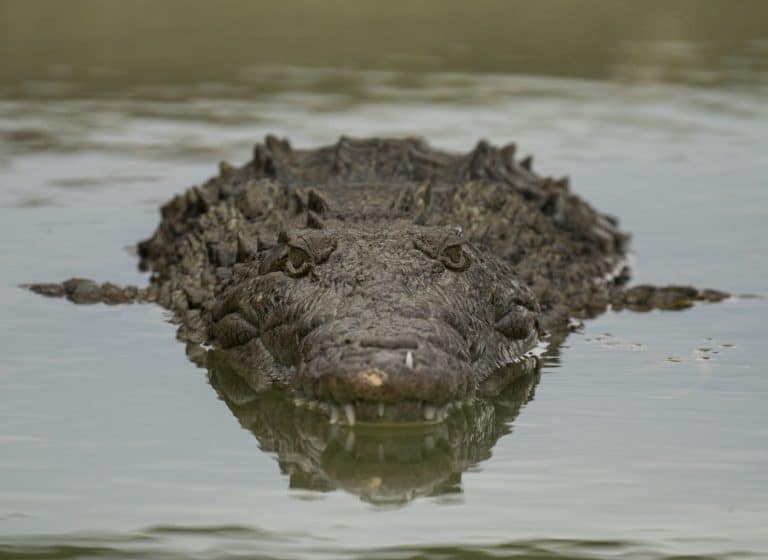
Large Nile crocodiles can grow beyond 16 feet in length, although not every individual reaches that size. Their powerful jaws, muscular tails, and ability to remain nearly concealed beneath the water make them effective ambush predators. Depending on their size and available prey, they feed on fish, birds, reptiles, and mammals. Although the crocodile in this video appears unusually relaxed, the footage alone cannot establish its exact size, age, or temperament.
Why Is This Crocodile Just Lying There?

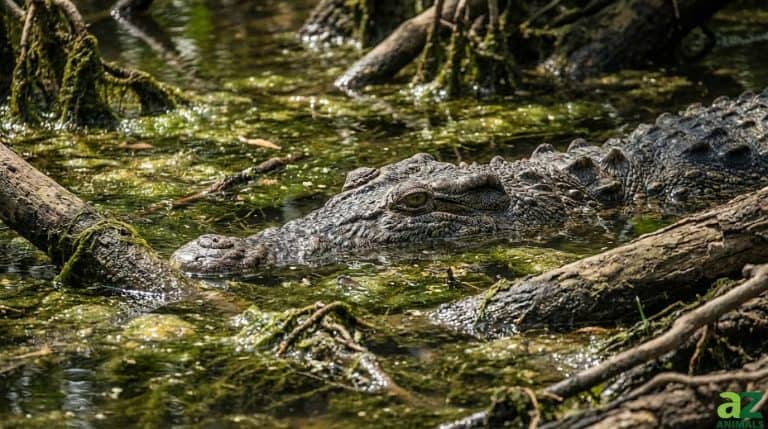
Nile crocodiles regularly leave the water to bask in the sun and regulate their body temperature. Photo: Naypong Studio/Shutterstock.com.
©Naypong Studio/Shutterstock.com
For humans, lying around in the sunshine might be a matter of relaxation. For crocodiles, it’s an essential part of survival. Unlike mammals, crocodiles are ectothermic, meaning they rely heavily on external heat sources to regulate their body temperature. Basking in sunlight helps them warm up, while moving into shade or water can help prevent overheating. Their temperature influences important functions, including digestion, movement, and overall activity.
That means the crocodile’s stillness in the video isn’t necessarily unusual. It may simply be resting and regulating its temperature, with little reason to react to the passing canoes. However, remaining motionless doesn’t mean an animal is asleep, unaware, or incapable of responding. Crocodiles are well adapted to spending long periods nearly motionless, an ability that also makes them effective hunters.
Are Nile Crocodiles Territorial?
Nile crocodiles can be territorial, particularly when breeding opportunities and important habitat are involved. Large males may defend sections of shoreline or water against competing crocodiles, while females can aggressively protect their nests and young. However, their behavior isn’t as simple as treating every approaching animal as an intruder. Crocodiles sometimes gather at favorable basking locations and tolerate others nearby, depending on conditions.
Research into Nile crocodile territoriality suggests that behavior can vary with sex, season, habitat, and access to resources. During the breeding season, defending important areas may become especially significant. In the canoe footage, however, there’s no clear evidence that the crocodile is defending territory or displaying aggression. Its lack of a visible reaction tells us only how it behaved during this particular encounter.
Why This Peaceful Encounter Still Deserves Caution
One of the most dangerous assumptions anyone can make around a crocodile is that a motionless animal poses no threat. Nile crocodiles are powerful predators capable of sudden movement, and their calm appearance offers no guarantee of safety. In crocodile habitat, paddlers should maintain a generous distance from animals on the banks or in the water, avoid approaching them for photographs, and never trail their hands or feet over the side of a canoe.
Visitors exploring Zimbabwe’s waterways should travel with experienced local guides, follow their instructions, and avoid swimming or entering the water where crocodiles may be present unless a responsible local authority has specifically established that an area is safe. Feeding or provoking wildlife is never appropriate, and even a seemingly harmless attempt to obtain a closer view can create unnecessary risks for people and animals alike.
What makes this footage so fascinating isn’t an explosive confrontation. It’s the fact that one of Africa’s most capable predators appears completely unbothered as several canoes pass nearby. The crocodile continues its afternoon on the shoreline, and the paddlers continue their journey. It’s a striking reminder that some of the most memorable wildlife encounters are the ones where people observe an extraordinary animal without interfering with its natural behavior.