
Quick Take
- The wolf's bite force measurement may be far stronger than the official number suggests. Compare bite force numbers →
- Wolves outlast lions in endurance, though stamina alone may be a dangerous strategy in this matchup. See the stamina breakdown →
- Both animals are built around teamwork, but strip that away in a one-on-one fight and one of them is left completely exposed. See how teamwork factors in →
- The size gap between these two apex predators is far more extreme than most people picture. See the size difference →
The lion (Panthera leo) is a large, social, and powerful feline, serving as an apex predator in sub-Saharan Africa and a small, isolated population in India’s Gir Forest. As carnivores, they live in prides, typically hunting large herbivores together, occupying savannas, grasslands, and woodlands. Wolves (Canis) are apex predators known for their high adaptability, social structure, and extensive ranges across the Northern Hemisphere. They are highly intelligent and communicative, and use cooperative hunting techniques to bring down large prey.
Although these species do not typically interact, one cannot help but wonder how a fight between a lion and a wolf would pan out. They are both pack animals with incredibly effective hunting methods.
A fight between a lion and a wolf is not going to be decided by a single factor. Determining the winner of this contest requires a thorough look at six factors: size, speed, bite force, defenses, offenses, and predatory behavior. Continue reading to discover which animal will reign victorious in a one-on-one battle: the lion or the wolf.
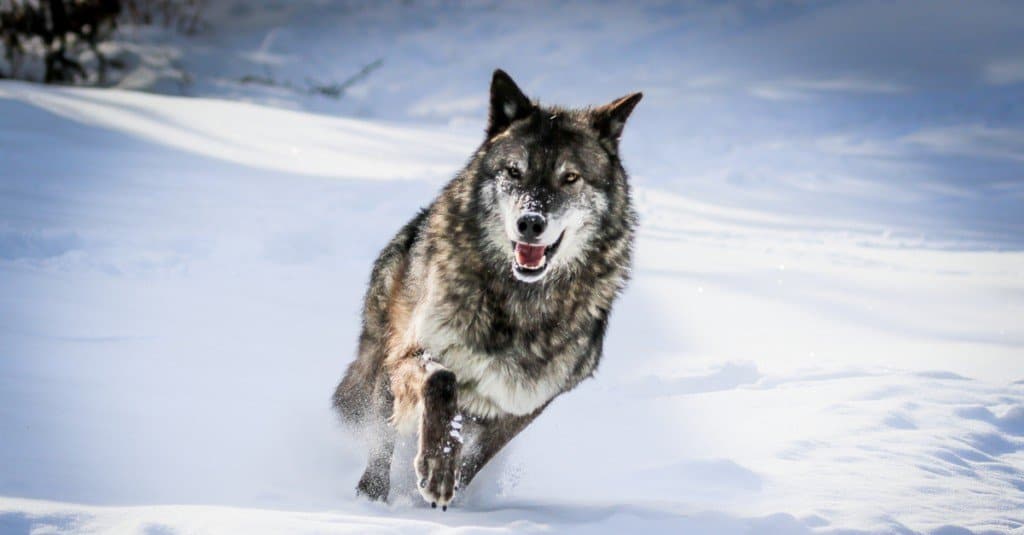
A fight between a lion and a wolf would be settled by size, aggression, and skill.
©Holly S Cannon/Shutterstock.com
Lion vs. Wolf: Size
The law of the wild is that the larger, stronger creature wins the fight most of the time. Only especially smart, effective predators can punch about their weight and bring down a bigger opponent.
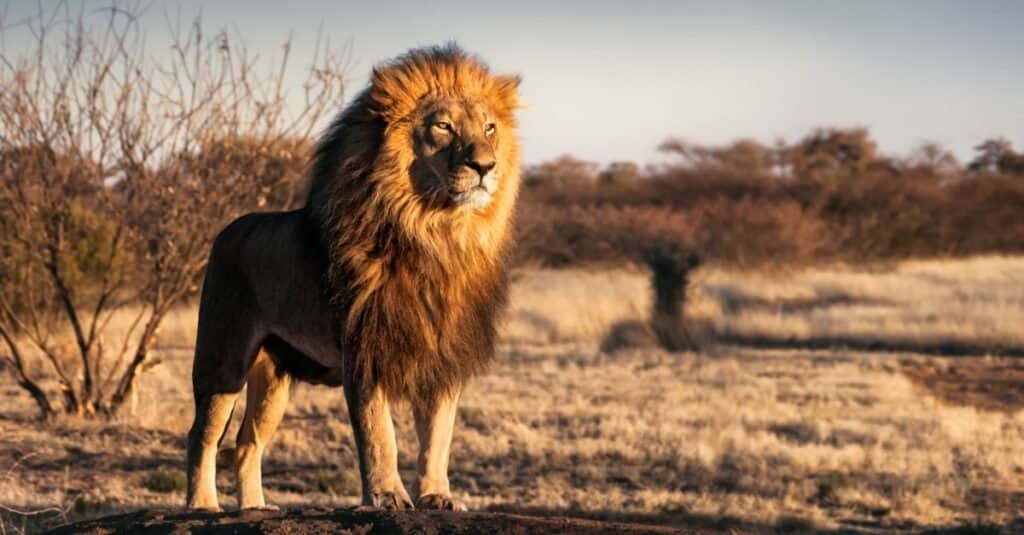
Lions can weigh over 500lbs, much more than wolves that weigh about 150lbs.
©2021 Photography/Shutterstock.com
Average adult male lions typically weigh between 330 and 550 pounds, with a shoulder height of approximately 3.5 to 4 feet and a head-to-body length of 5.5 to 8.3 feet. Females are smaller, weighing from 260 to 400 pounds and measuring between 4.6 and 5.9 feet in length.
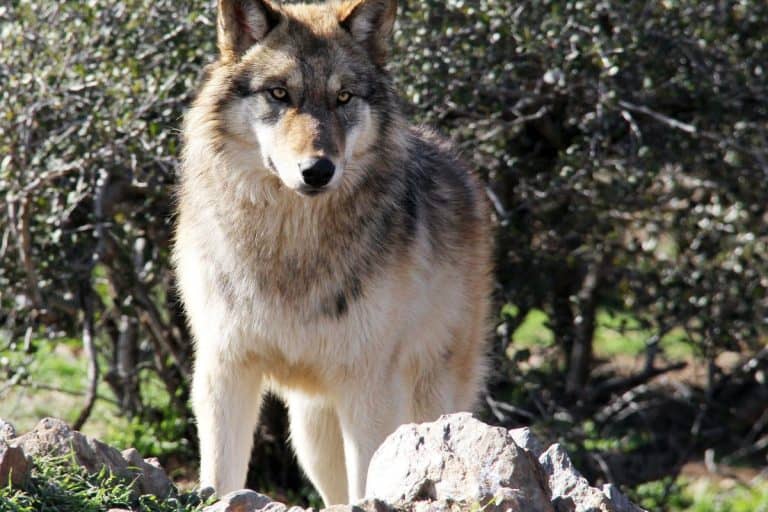
Average gray wolves (Canis lupus), the largest wolf species, typically weigh 70 to 110 pounds for males and 50 to 85 pounds for females. They are 2.2–2.7 feet tall at the shoulder and measure 4.5–6.5 feet in total length from nose to tail, although sizes vary significantly by region.
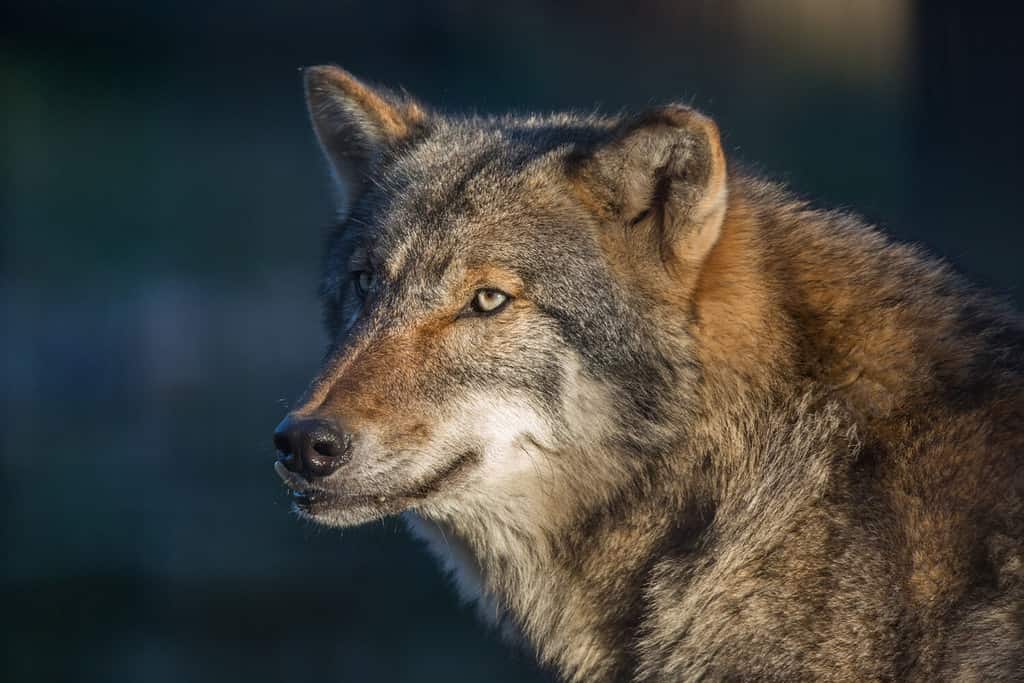
Wolves are closer in size to large dogs than lions.
©Szczepan Klejbuk/Shutterstock.com
The lion is approximately four times heavier and significantly longer than the wolf, giving it a decisive size advantage.
Size Advantage: Lion
Lion vs. Wolf: Speed
Because lions are ambush predators designed for explosive power rather than endurance, they cannot sustain high speeds over time. While they can charge in bursts of speed up to 50 miles per hour (mph), speeds of 30 to 35 mph are more realistic. Like lions, wolves are not built for speed. Although they can sustain a trotting speed of 5 to 10 miles per hour for hours at a time, wolves can sprint at speeds of up to 40 mph while chasing prey, but would not be able to sustain this speed for very long.
Although wolves have more stamina than lions, in terms of sheer bursts of speed, lions are superior.
Speed Advantage: Lion
Lion vs. Wolf: Bite Force
Lions have 30 teeth including 4-inch canines that can unleash anywhere from 650 pounds per square inch (PSI) to 1000 PSI bites when taking down prey. Wolves have 42 sharp teeth with 2-inch-long canines and a reported bite force of 400 PSI. However, that measurement did not account for the unique way a wolf bites in combat. A wolf’s actual bite could be much stronger in the wild.
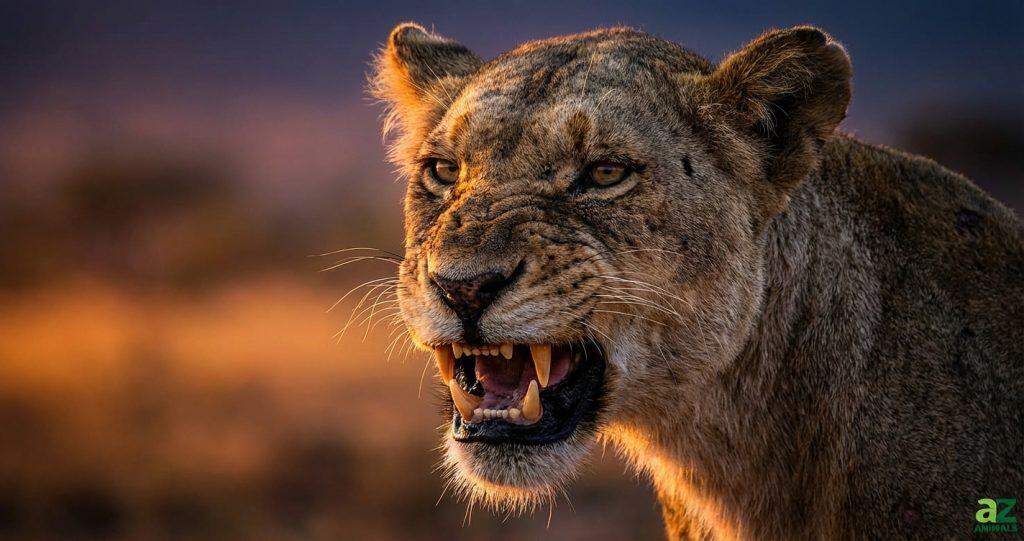
Lions have long canine teeth, which they use to grip, puncture, and hold onto prey during a hunt.
©A-Z Animals
Even if the wolf’s bite force were proven to be twice as strong as currently measured, it would still be much weaker than the lion’s.
Bite Force Advantage: Lion
Lion vs. Wolf: Defenses
Lions defend themselves and their territory primarily through vocalizations (roaring), scent marking, and violent physical confrontation by pride males. Wolves primarily rely on avoidance and speed rather than confrontation to defend themselves, typically engaging in aggressive defense only when cornered, protecting pups, or defending a kill.
Lions have adapted more physical defensive behaviors, while wolves rely more on cooperative/social defense, making the lion superior in terms of defense.
Defensive Advantage: Lion
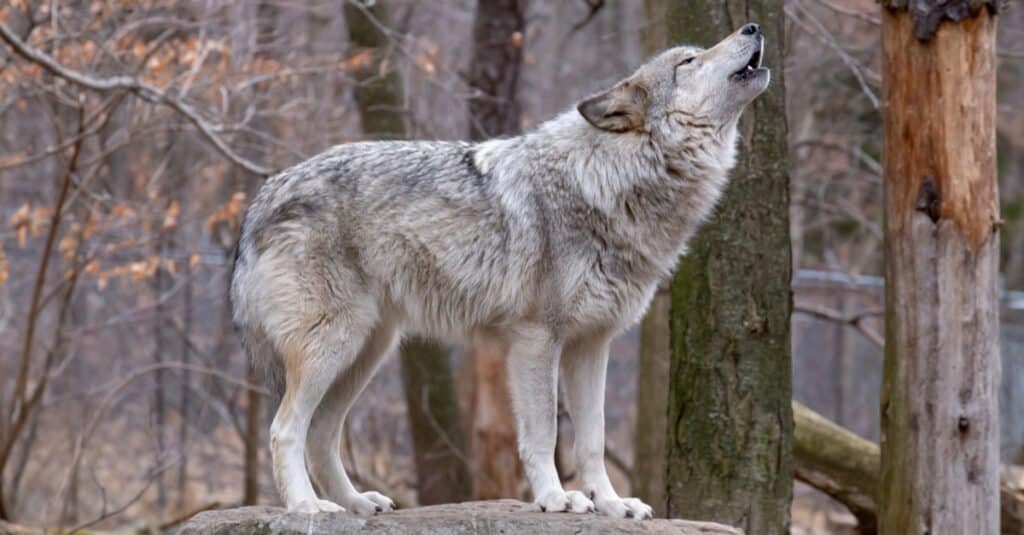
Wolves use endurance hunting methods to wear down and kill their prey.
©Allison Coffin/Shutterstock.com
Lion vs. Wolf: Offensive Capabilities
A lion has sharp claws that can tear prey open, as well as the strength to strike an enemy with its powerful paws and leave them reeling. Of course, it’s their bite that frightens their prey the most. Their long teeth and powerful bite are enough to kill much larger creatures, like wildebeests.
Wolves are also effective at fighting, using their long canine teeth, strong bites, and sharp claws to kill enemies. They can even pursue some prey into trees.
However, lions are far deadlier and more powerful individual attackers, whereas wolves rely on endurance and teamwork to compensate for their lower individual strength.
Offensive Advantage: Lion
Lion vs. Wolf: Predatory Behaviors
A lion is an apex predator that hunts in two ways. This large cat can be an opportunistic predator that identifies a tasty meal and moves in to kill it, or it can be a highly effective ambush predator. They can lie in wait for stragglers in a herd and then pick them off just as easily as they can lunge after a creature at the local water source.
Wolves are endurance predators that chase, harass, and injure their prey until it is too tired to continue.
Predatory Advantage: Lion
Who Would Win in a Fight Between a Lion and a Wolf?
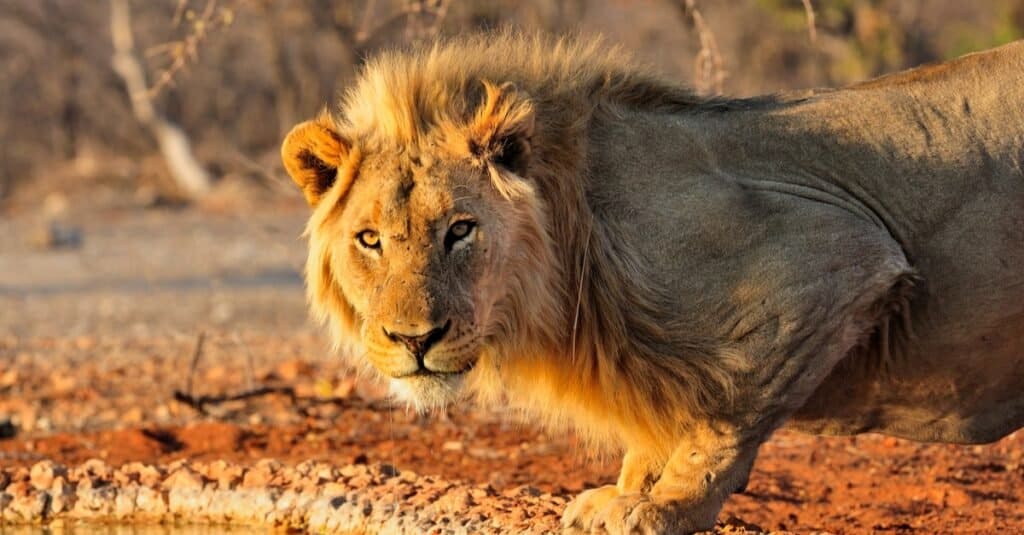
A lion would beat a wolf in a fight with relative ease, using patience and overwhelming power.
©Stephanie Periquet/Shutterstock.com
A lion would win in a fight against a wolf. Although lions and wolves are both carnivores with potent fighting abilities, a lion is overwhelmingly larger and stronger than a wolf.
The fight would begin the moment that the lion and the wolf sense each other, and it would not take long for the lion to eviscerate the wolf.
The wolf would try its normal routine to wear down the lion, jump in for a bite or a slash, and then back away and keep moving. The lion is patient enough to wait out the testing phase, but it will eventually get its paws or teeth on the much smaller creature. After all, lions often hunt and kill other large carnivores, like hyenas.
As with hyenas, a single mistake would allow the lion to lunge, grab the wolf with its paws, and deliver fatal bites to the throat or head, ensuring the lion’s victory.