
Flamingos may not be the only birds with bright pink plumage, but they are certainly the most recognizable. Known for standing on one leg and slender “S” shaped necks, flamingos are truly one-of-a-kind birds.
Unlike with other species, it is not easy to spot a male from a female flamingo. It takes a trained eye, which can be fooled from time to time, to determine male from female in a group of flamingoes (appropriately called a flamboyance).
Sizes
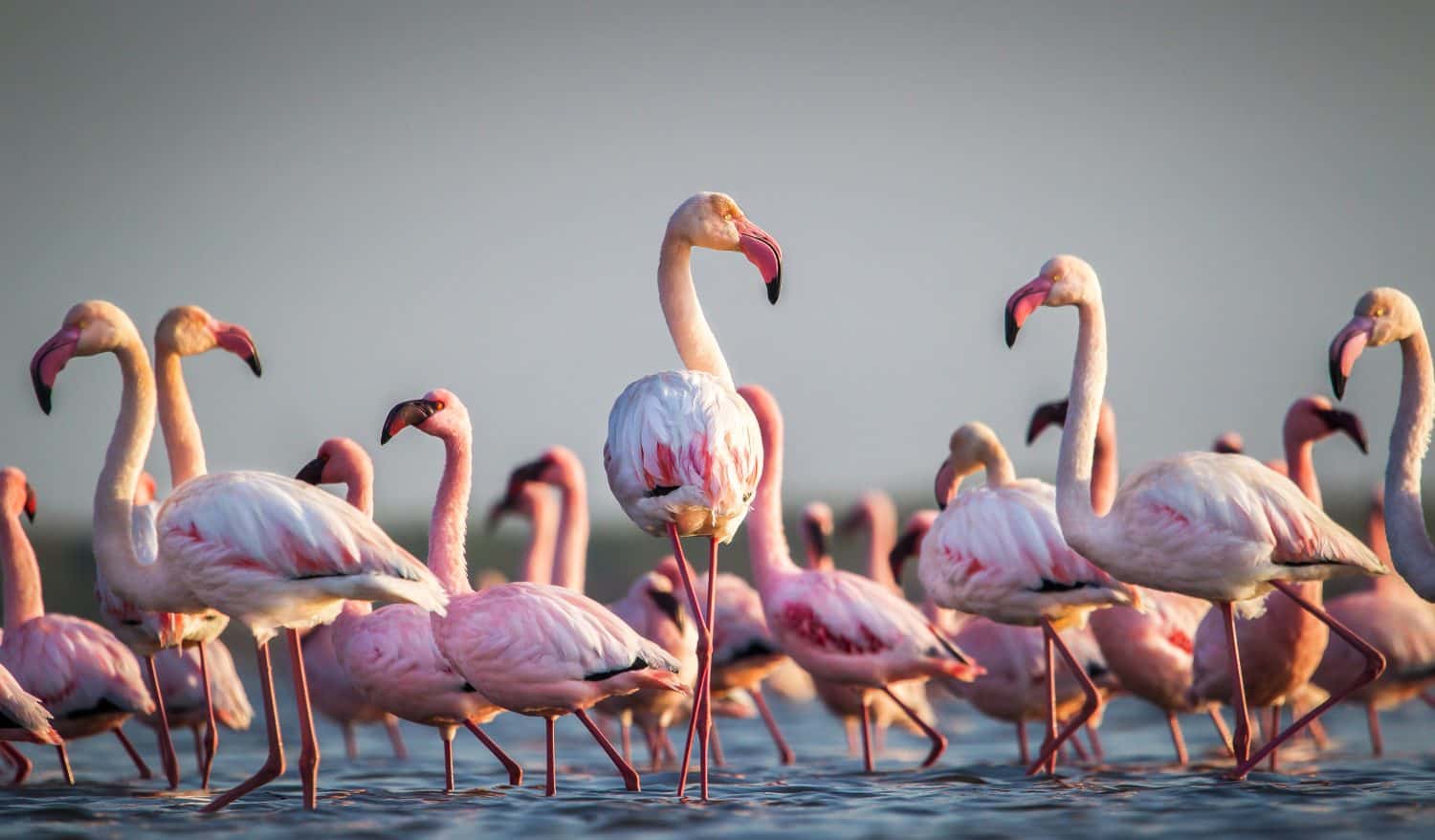
The male birds for each species of flamingo tend to be larger than the females.
©John Michael Vosloo/Shutterstock.com
Unlike other species who have a visible height or weight differential between sexes, there is no such difference between male and female flamingos.
Male flamingos tend to be larger than females, though only slightly. The general weight ranges for male and female flamingos based on species includes:
| Species Of Flamingo | Weight Of Flamingos |
| Greater Flamingo | 4.4 pounds to 8.8 pounds |
| Caribbean Flamingo | 4.9 pounds to 6.2 pounds |
| Andean Flamingo | 3.3 pounds to 10 pounds |
| Lesser Flamingo | 2.6 pounds to 6.0 pounds |
| James’s Flamingo | 3.3 pounds to 6.6 pounds |
| Chilean Flamingo | 4.0 pounds to 9 pounds |
The smaller weights tend to belong to the female flamingos, while the larger weights belong to the males. However, the average female tends to fall in the middle of the spectrum, which is why it is so difficult to tell, based on sight alone, if a flamingo is male or female. In fact, a blood test is often needed to determine if a flamingo is male or female, simply because the genders look so very similar to the naked eye.
Coloring
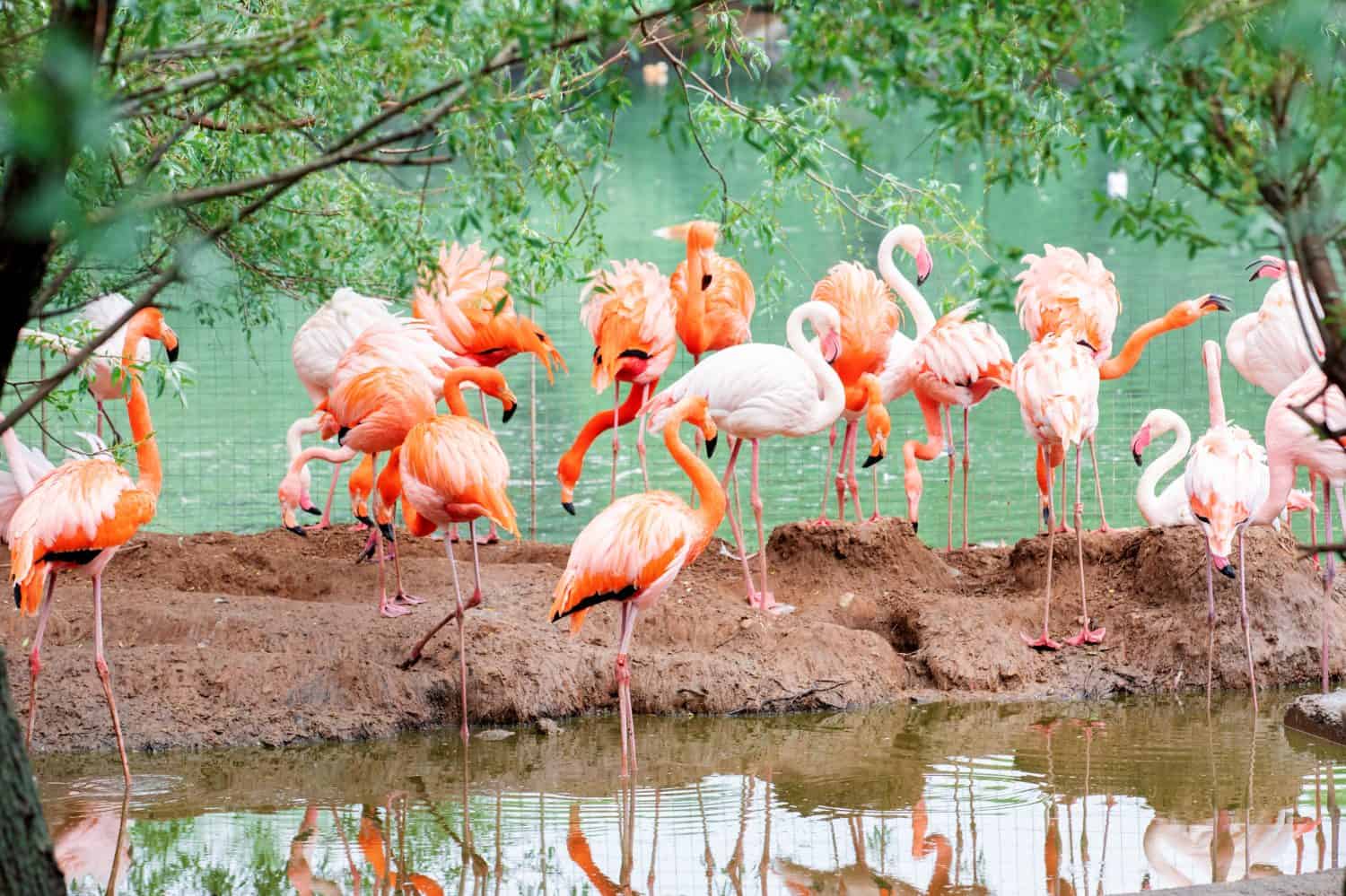
Flamingos with more vibrant coloration are generally males.
©Nailya Yakubova/Shutterstock.com
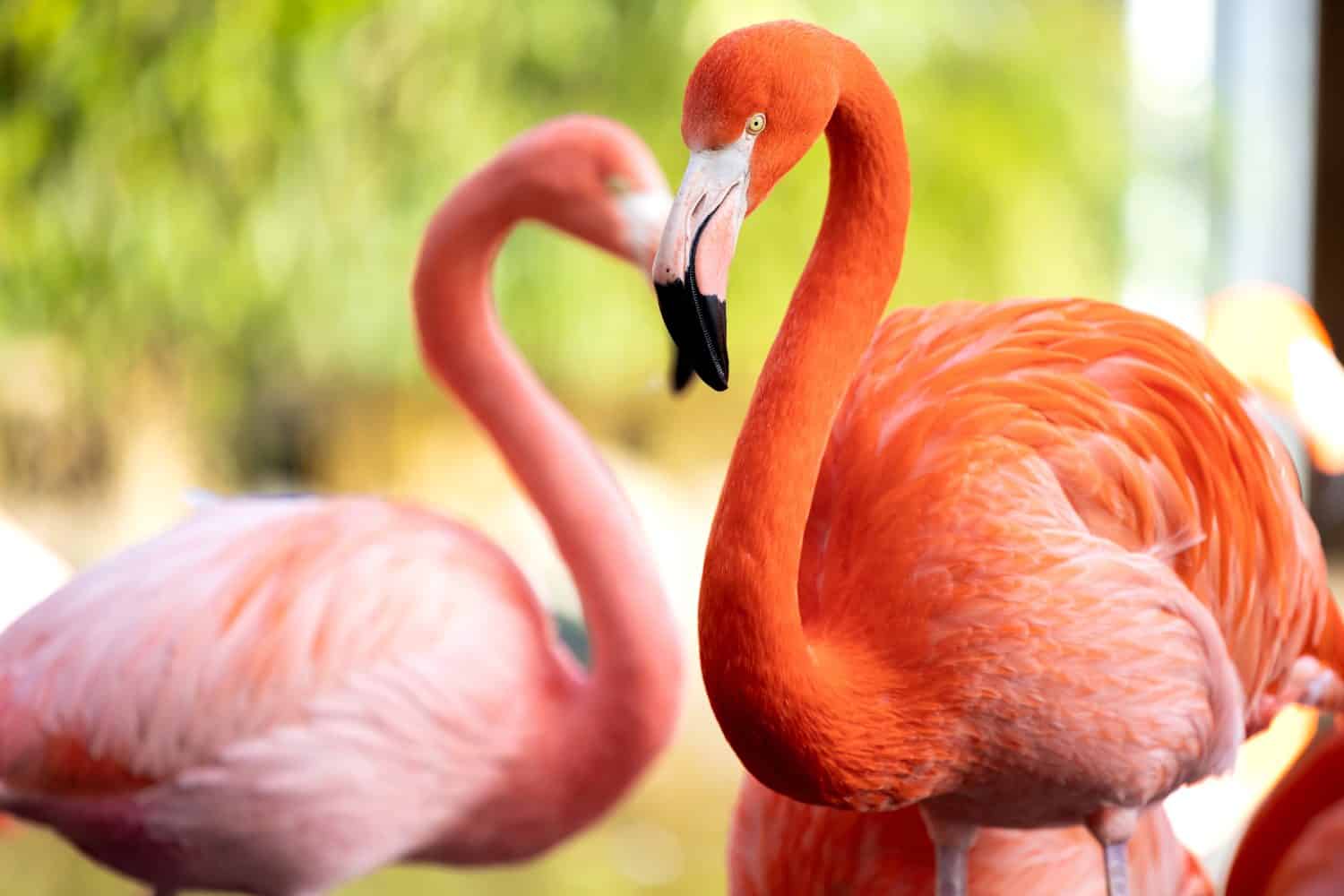
The coloration of flamingos varies by species. Some are shades of coral or nearly white, while others are a more vibrant shade of pink. In all species, however, the males tend to have the vivid plumage, with females sporting a more muted tone.
What is interesting about flamingos’ coloration is that it can change with their diet. This is because their pink feathers result from a diet rich in high-carotenoid foods. If food suddenly becomes scarce or environmental conditions change in their habitat, their feather color will change. Male and female flamingos turn similar colors when this happens.
Additionally, female flamingos may change their coloration when caring for their young. This happens as they pass the carotenoid-filled food off to their young, which turns the mother’s feathers white as a result. If food is abundant and chicks are present, it may be quite easy to identify some of the females in a flamboyance. However, females without chicks tend to be similar in color to male flamingos, making identification from observation alone difficult.
Aggression
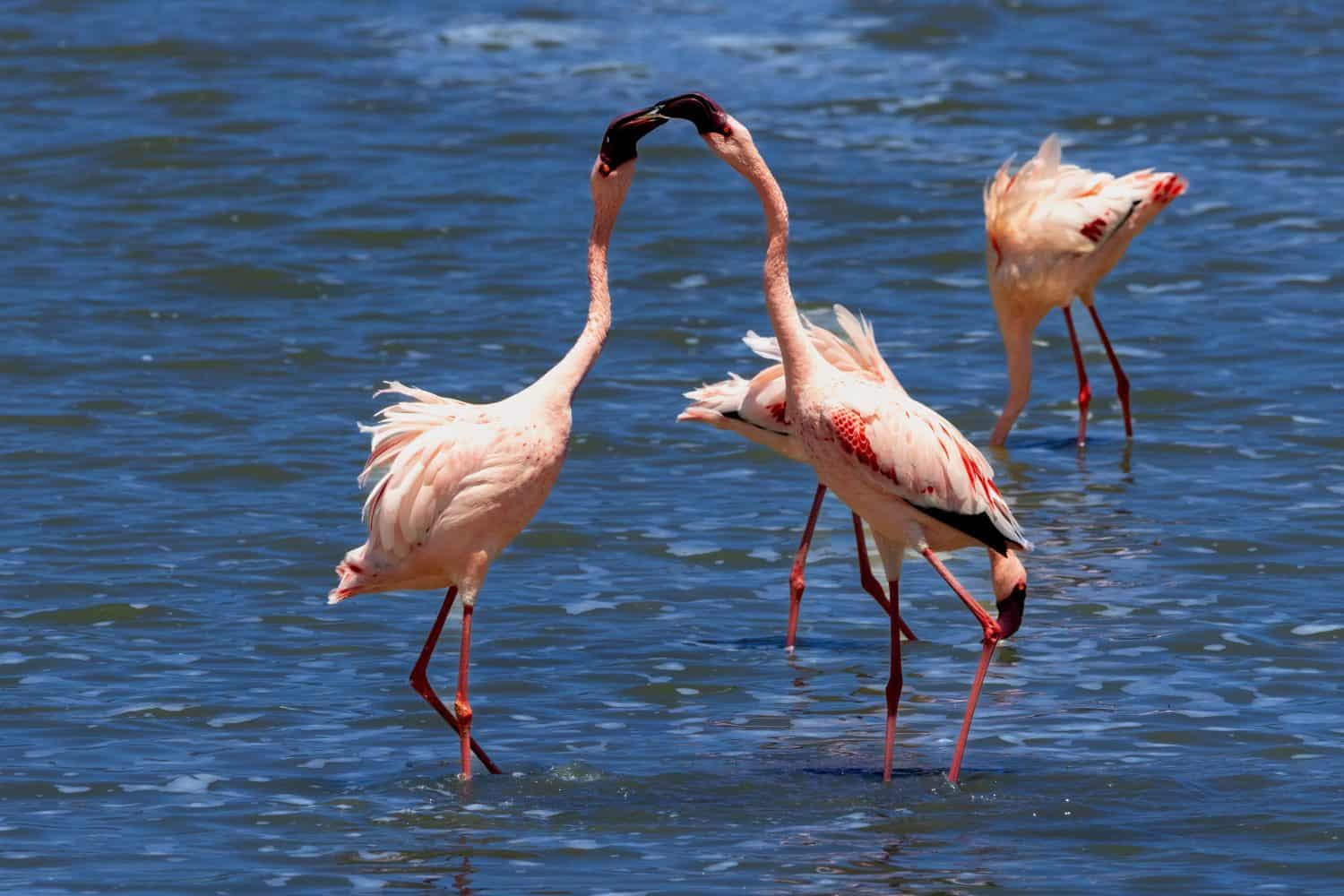
Male flamingos are often the birds exhibiting aggressive behaviors.
©Joao L. Vieira/Shutterstock.com
Male flamingos are more aggressive than females. This behavior is often seen during mating season, with males fighting over desired females. However, it should be noted that female flamingos are known to be aggressive with one another during mating season as well. Though not common, pecking and pushing have been observed.
According to a 2020 study, flamingos with brighter feathers tend to be the most aggressive. Therefore, if plenty of food is found with high levels of carotenoids, those with combative behavior could be either gender.
Bill Width
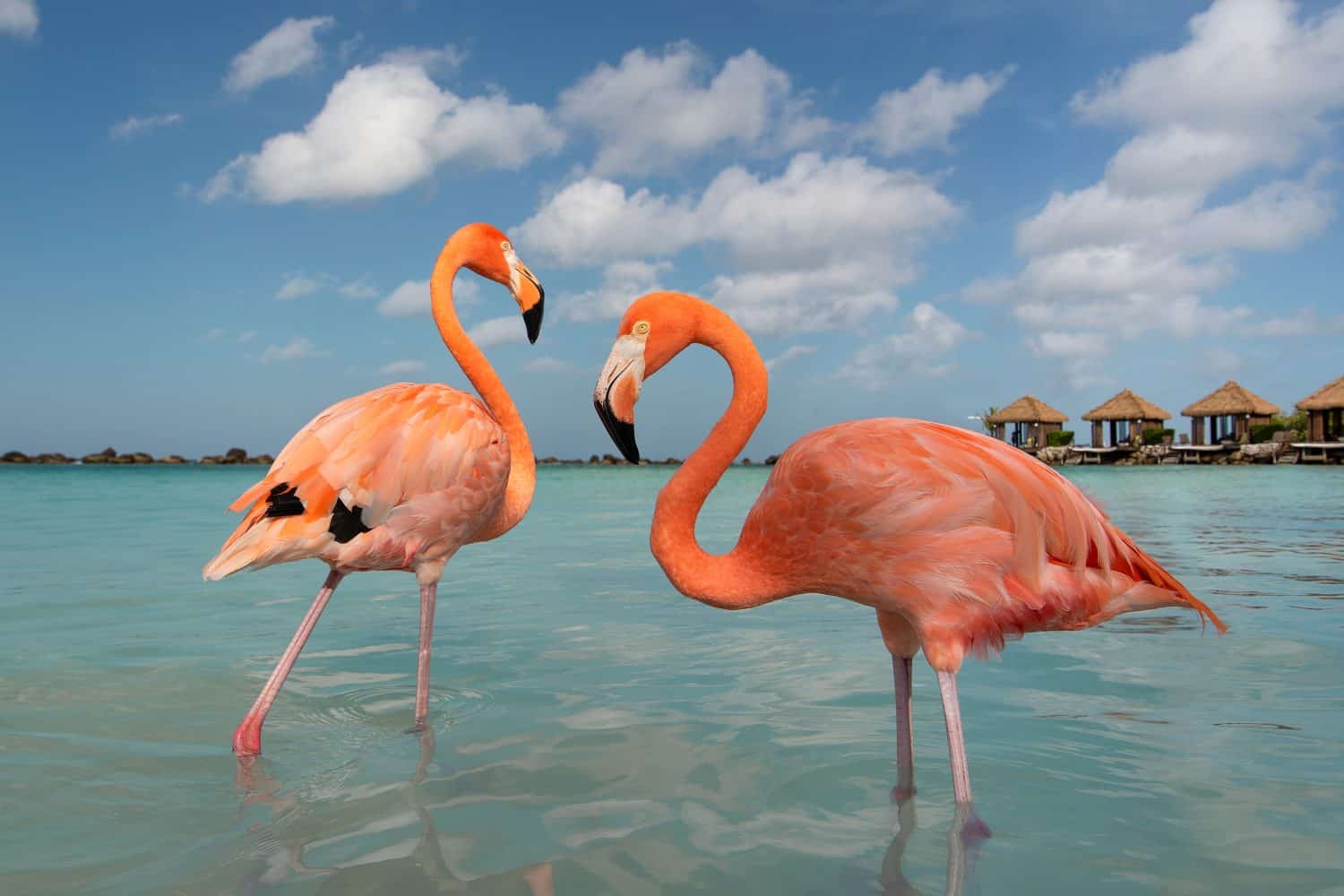
Female flamingos have a slightly thinner bill than their male counterparts.
©MirasWonderland/Shutterstock.com
Each species of flamingo has a slightly different bill. Some are thinner and have fewer lamellae (thin, hair-like structure that filters food from the water), while others are thicker and have more lamellae. This also corresponds to their diet.
In addition to the bills being different sizes based on species, the female flamingo’s bill is often thinner and shorter than the male flamingo’s bill. This is not very noticeable, especially from a distance, and requires measuring to detect the slight size variation within a species.
Given their similar coloring, size, and behaviors, the differences between males and females are not always apparent. While the largest, smallest, lightest, and darkest flamingos are easy to differentiate, those in the middle of the spectrum make it challenging to assign sex. The only way to do this is to perform a blood test. In the wild, this is nearly impossible to do, which is why population counts may not accurately reflect the number of males versus females in a flamboyance.