
Quick Take
- A dusty museum specimen collected in 1836 settled a debate that stumped scientists for nearly two centuries, though not in the way anyone expected. See how the 1836 specimen won →
- Scientists formally announced a brand-new pangolin species in 2025, then almost immediately had to scrap the name, and a 189-year-old naming rule is responsible for the problem. Where it hid for 200 years →
- A single confiscated pangolin scale can now expose entire smuggling networks, and this has nothing to do with visual identification. See what a single scale reveals →
- Lumping the Himalayan pangolin with the wrong species didn't just cause a paperwork headache. It put the animal at greater risk in a very specific way. See the conservation consequences →
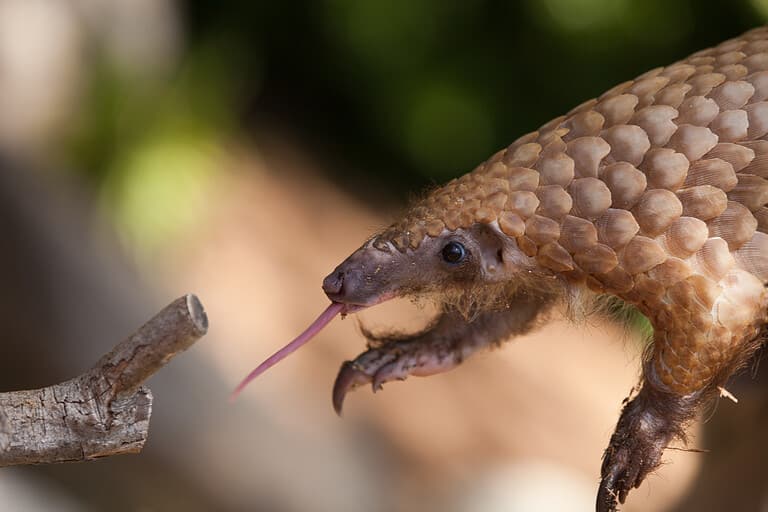
For nearly two centuries, a pangolin specimen sat quietly in a museum collection, its true identity hidden in plain sight. Today, scientists have used DNA preserved within that 190-year-old specimen to resolve a long-standing taxonomic mystery, confirming that the Himalayan pangolin is officially its own distinct species.
While this sounds like the discovery of a brand-new animal, the reality is more subtle. People have encountered the Himalayan pangolin for generations, and scientists have described it in the past. Instead, researchers re-validated its unique status using modern genetic testing — answering questions that older visual methods simply could not.
Continue reading
Solving a 190-Year-Old Scientific Mystery
In 1836, naturalist Brian Houghton Hodgson collected a pangolin skin in Nepal. Identifying it as a distinct species, he named Manis aurita. The specimen eventually joined the collection at London’s Natural History Museum. Without modern genetic tools, later scientists doubted Hodgson’s claim. Over the following decades, the scientific community demoted Manis aurita to only a subspecies — a regional variant of the Chinese pangolin (Manis pentadactyla) — and its unique status was lost for nearly two centuries.
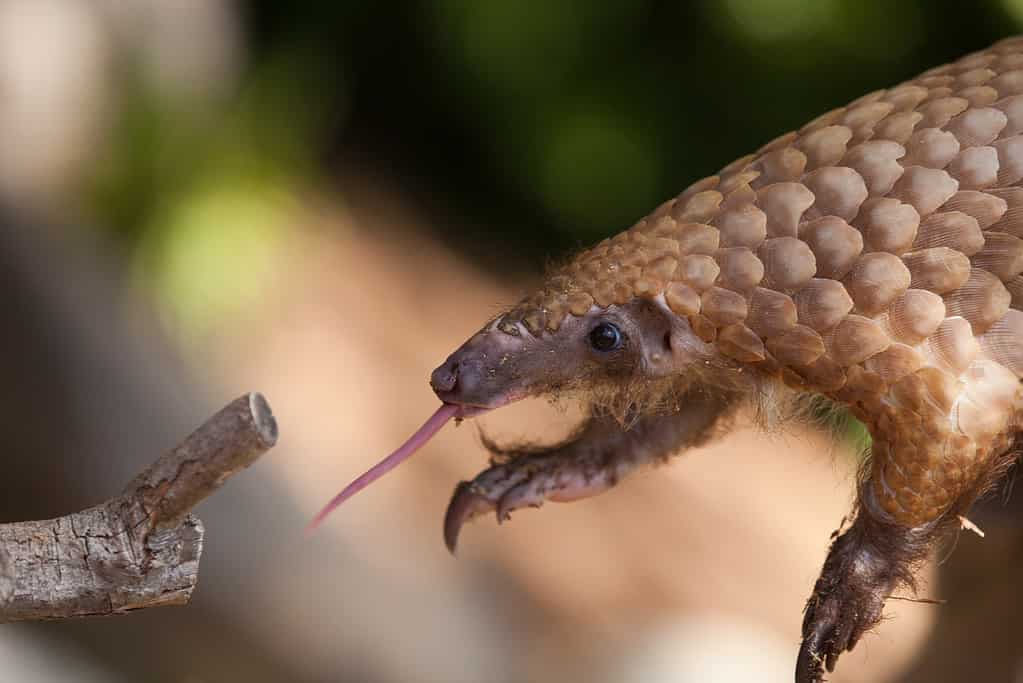
All eight pangolin species face threats of extinction.
©DarrenBradleyPhotography/iStock / Getty Images Plus via Getty Images
Then, in 2025, researchers analyzed modern genomic data from pangolins in the Himalayan foothills. They discovered that these animals formed a distinct lineage separate from Chinese pangolins and initially labeled them as a new species: Manis indoburmanica. However, the researchers began to question whether these “new” animals were actually the same as those Hodgson identified nearly two centuries earlier.
To find out, an international team extracted degraded DNA from the bone and teeth of Hodgson’s 1836 specimen. Because this specimen serves as the official physical reference for the species name (the “lectotype”), it was crucial for resolving the issue. Using Next-Generation Sequencing, they compared its genetic material against modern Asian pangolins, including 55 whole genomes and 70 mitochondrial genomes.
It was an exact match. Hodgson’s specimen was genetically identical to today’s Himalayan pangolins. Because scientific naming rules prioritize the earliest valid name, taxonomists dropped the modern label and restored Hodgson’s original 1836 name, Manis aurita.
A Revalidation, Not a Brand-New Discovery
It’s important to understand what this discovery does — and does not — mean. Scientists didn’t suddenly find a previously unknown animal wandering through the Himalayas. Himalayan pangolins have been observed for generations and were first scientifically cataloged by Hodgson back in 1836.
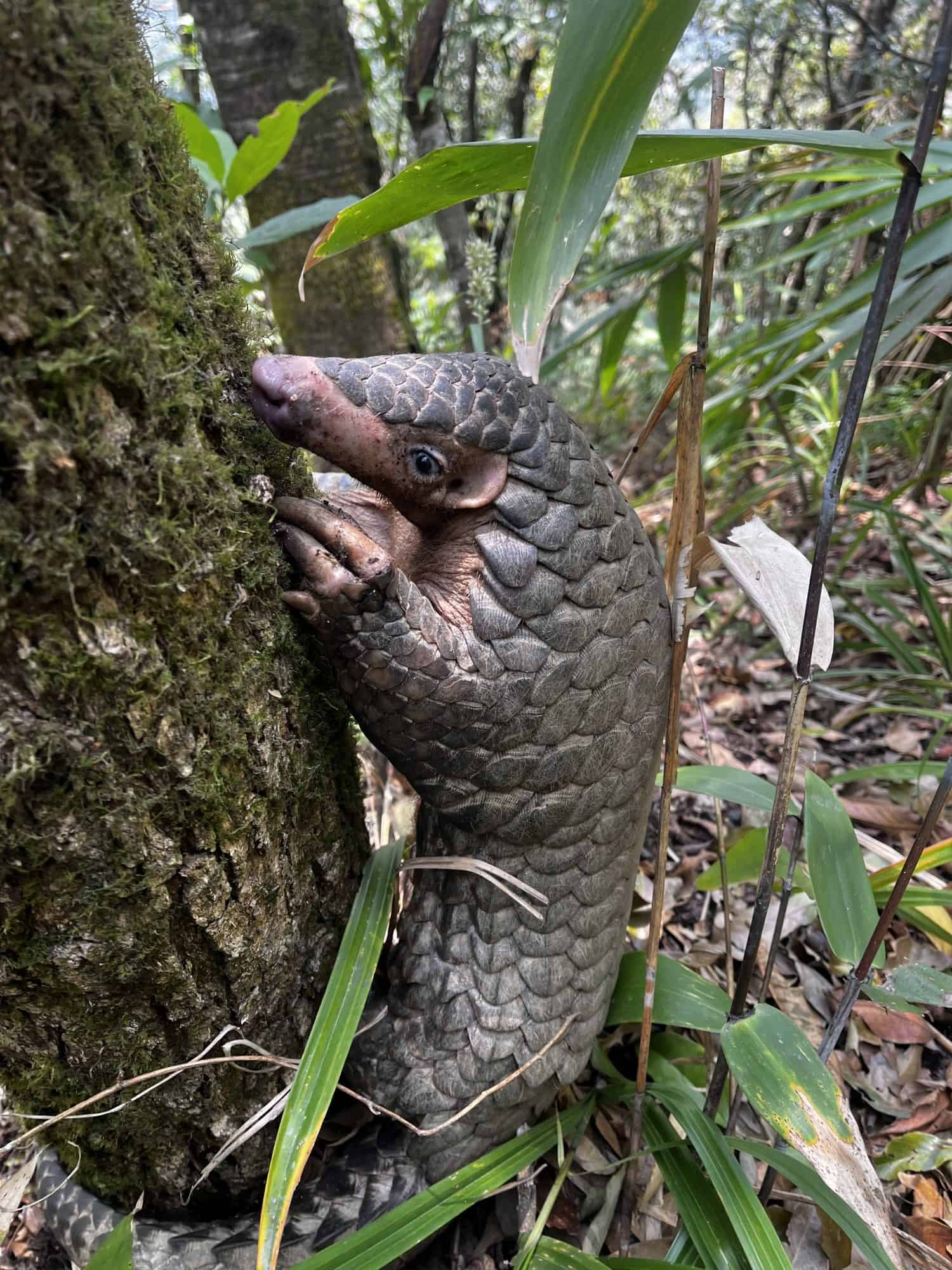
As of 2026, the Chinese pangolin is classified as Critically Endangered by the IUCN Red List.
©Prem Baniya Chhetri/Shutterstock.com
Instead, researchers simply corrected a long-standing classification error by revalidating the species that Hodgson originally discovered nearly 190 years ago.
According to the International Code of Zoological Nomenclature’s Rule of Priority, the oldest valid name takes precedence. Therefore, Hodgson’s Manis aurita takes priority over the 2025 proposed name Manis indoburmanica. This reinstates the Himalayan pangolin as a distinct species within the genus Manis.
Genomic data shows that Manis aurita diverged from the Chinese pangolin (Manis pentadactyla) 1.2 to 1.8 million years ago, maintaining millions of years of evolutionary isolation with virtually no genetic mixing.
How Is the Himalayan Pangolin Different?
While the Himalayan and Chinese pangolins look nearly identical at first glance, key physical and geographic differences set them apart.
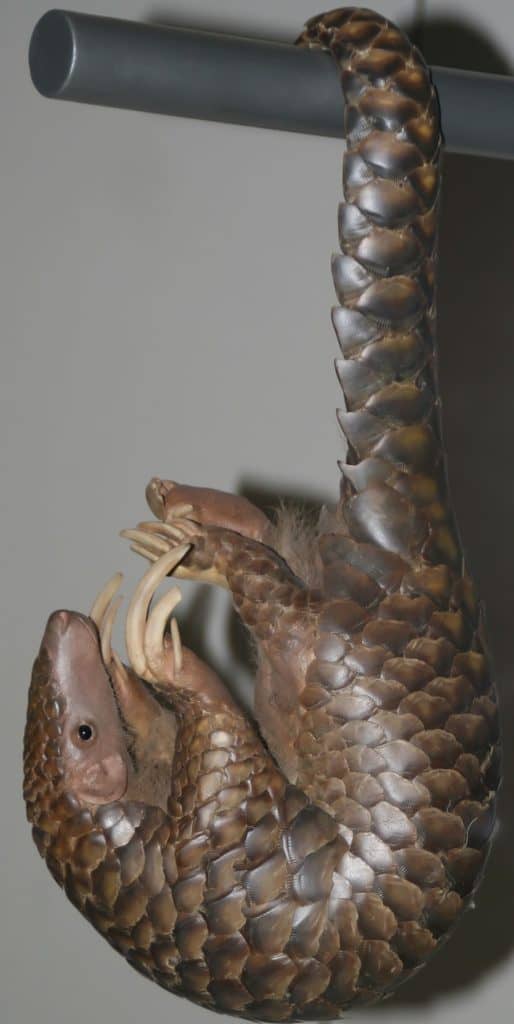
The species name, “aurita,” refers to the unique ear shape of the Himalayan pangolin.
©Photo by David J. Stang / CC BY-SA 4.0 / Wikimedia Commons – Original / License
The Himalayan pangolin is physically bigger, with a heavier body and a noticeably larger skull. Its tail is also noticeably longer relative to its body length compared to the shorter, stockier tail of the Chinese pangolin. Despite its larger size, the Himalayan pangolin has smaller outer ear rims, while the Chinese pangolin has larger, more prominent ears.
The Himalayan pangolin is found only in the high-elevation foothills of Nepal, northern India, Bhutan, and northern Myanmar, whereas the Chinese pangolin is found in southern China, Taiwan, and lower-elevation areas of Southeast Asia.
These differences, along with genetic analyses, clearly distinguish the two species.
Why Getting the Species Right Matters
Taxonomy isn’t just an academic exercise — it is critical for the survival of these animals. Pangolins are among the most heavily trafficked wild mammals on Earth, and poachers primarily hunt them for their scales. Because each of the eight living species (four Asian, four African) face different threat levels, precise identification dictates how we protect them.
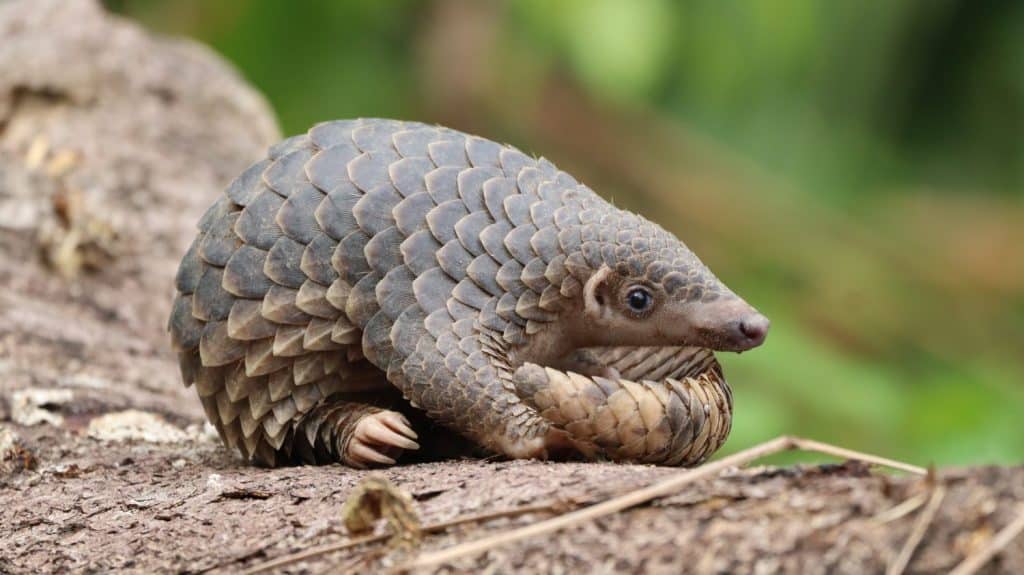
The Sunda pangolin typically lives in forests or plantations.
©adamardn/Shutterstock.com
For example, as of 2026, Sunda and Chinese pangolins are Critically Endangered, while other species are listed as Endangered or Vulnerable. Knowing exact boundaries ensures that funding and emergency actions are directed toward the populations under the greatest pressure. Accurate species definitions also help governments write precise wildlife laws and enforce regional protection plans tailored to the exact animals within their borders.
Recognizing Manis aurita as its own species highlights its small range and declining numbers — vulnerabilities that were hidden when it was lumped together with the Chinese pangolin.
How Pangolin DNA Could Help Catch Poachers
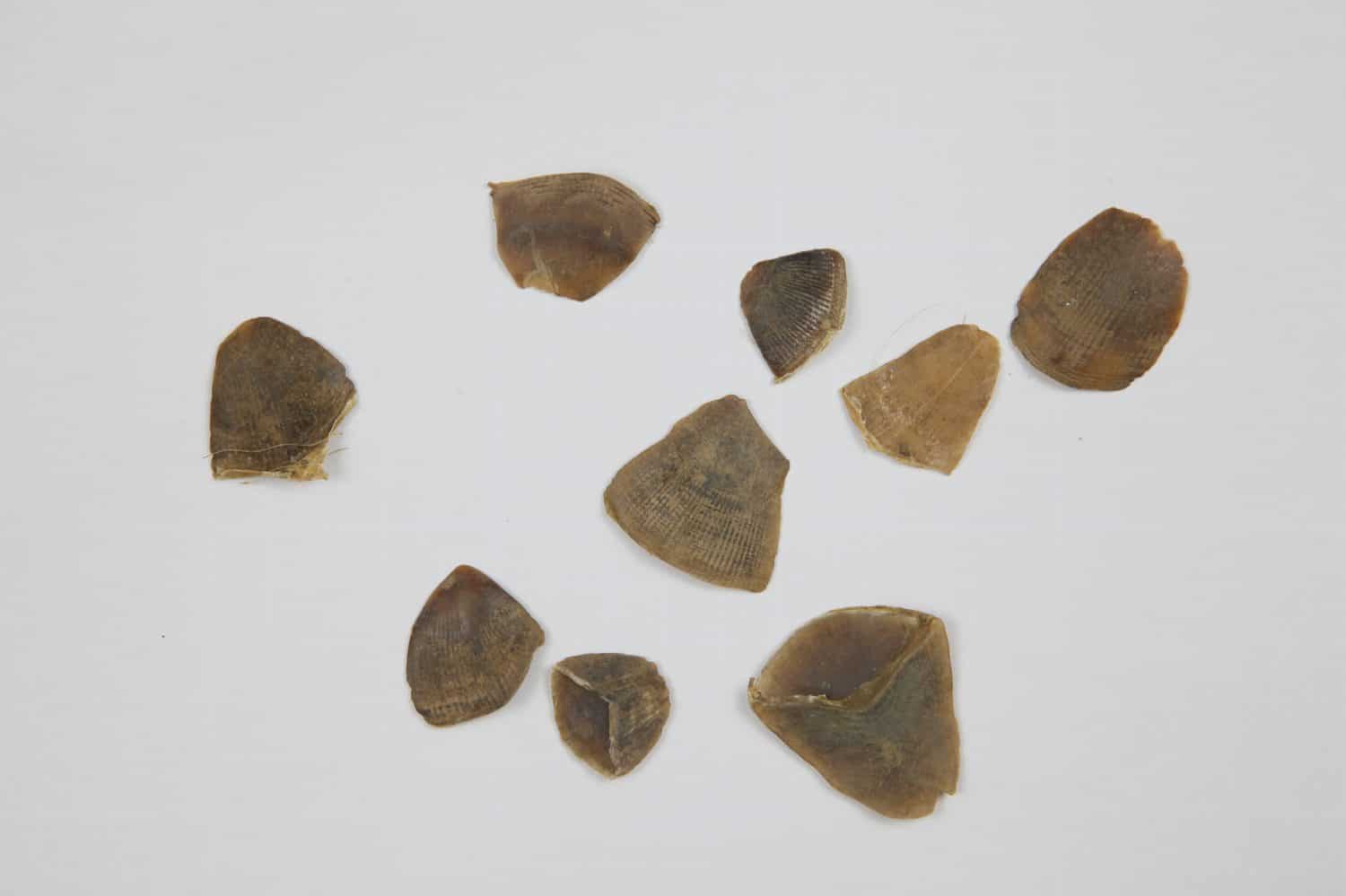
Identifying a particular species becomes even more difficult after a pangolin has been killed. Once scales have been stripped from an animal, detached from the body, processed, or ground down, there may be little left for investigators to identify visually. However, genetic testing can help bridge this gap by turning confiscated scales into vital forensic evidence.
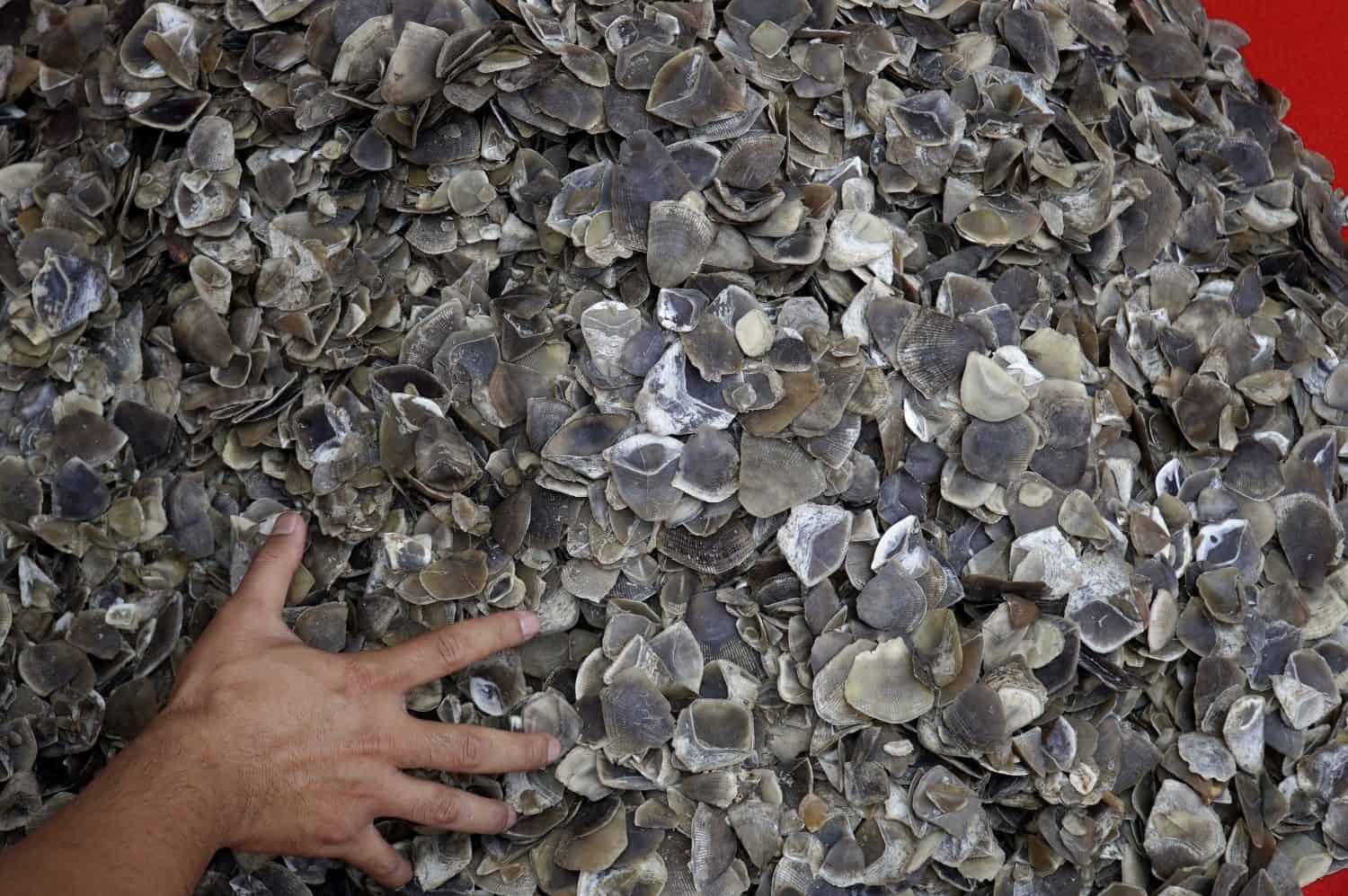
Poachers hunt pangolins mainly for their scales.
©Defizal/Shutterstock.com
Comparing scale DNA against wild reference genomes allows researchers to trace seized scales back to specific wild populations, revealing geographic areas under heavy poaching pressure. Matching genetic signatures across different international seizures can link separate shipments to the same supply chain, helping law enforcement uncover transnational trade networks. DNA analysis also reveals levels of genetic diversity; low genetic variation among confiscated scales suggests that a wild population is declining and at risk of a hidden genetic bottleneck.
In other words, a single scale provides much more than just the animal’s identity — it can reveal the animal’s origin and the overall health of its species.
A Species Rediscovered in the Archives
Nearly 190 years after Hodgson named a pangolin skin from Nepal, science has finally confirmed he was right all along.
The Himalayan pangolin wasn’t hiding in some unexplored forest; it was hiding in plain sight — preserved in museum collections, buried under two centuries of changing classifications. Modern DNA has now restored Manis aurita to its rightful place on the pangolin family tree.
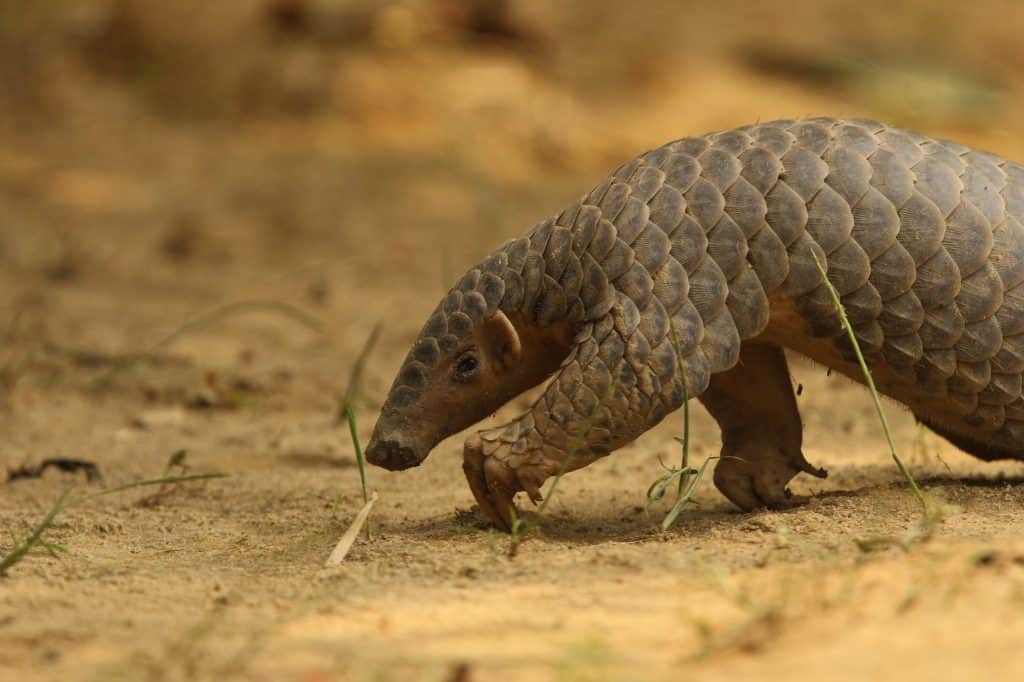
Pangolins are also called scaly anteaters.
©Adnan azad asif / CC BY-SA 4.0 / Wikimedia Commons – Original / License
By accurately identifying the species that exist today, scientists and conservationists have a much better chance of protecting these animals before they disappear entirely.