
Quick Take
- A worm with hundreds of tails and clones for offspring sounds like science fiction, yet it's been hiding in plain sight for over a century. Meet these bizarre worms →
- Scientists tripled the known number of branching worm species without ever getting wet, and the secret had been hiding in museum drawers since 1914. See the museum discovery →
- These worms may hold clues about symbiosis and complex body plans that science hasn't fully cracked yet, and the vast majority of them remain undiscovered. Discover what remains hidden →
If you know what to look for and you’re given the opportunity to dig through dusty old museum collections, chances are you might find a new species. Or ten. This situation seems to arise regularly, and the discovery of 10 new species of branching worms is no different. An international team of researchers led by the University of Göttingen discovered several new species of branching worms hidden in .
Up until this recent discovery, scientists only knew about three species of branching worms. A productive trip to the museum, followed by DNA sequencing and meticulous anatomical analysis, produced ten new species of branching worms. This not only expands the understanding of these strange creatures but also solves a long-unresolved puzzle dating back to the nineteenth century. Let’s learn more about branching worms, their astounding attributes, and how a team of researchers found something new by looking in collections of old specimens.
Continue reading
Meet the Branching Worm
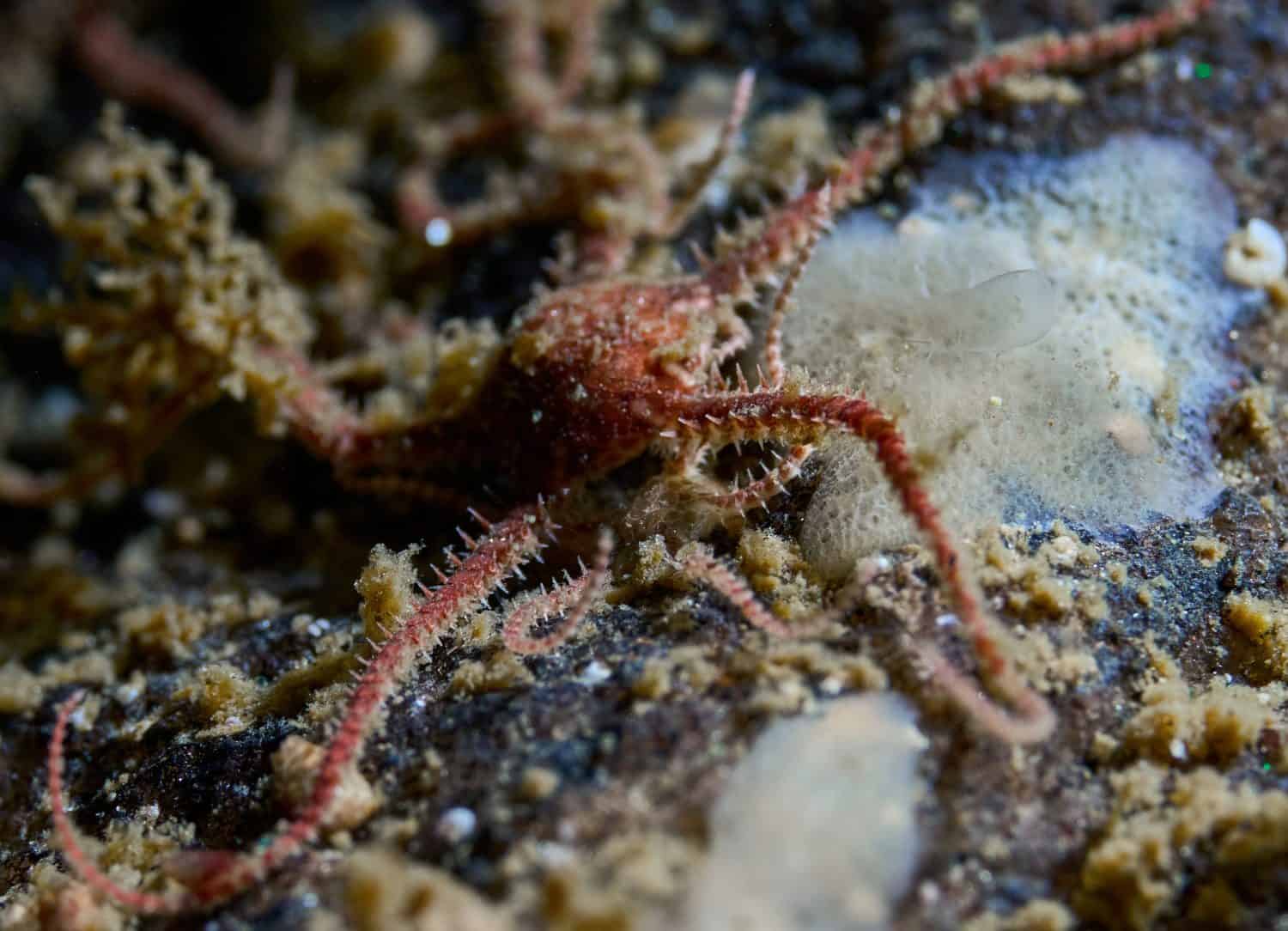
Branching worms are a type of polychaete worm that extends many ends of its body into the porous tissue of sea sponges.
©Aleksei Miroliubov/Shutterstock.com
Beneath the water’s surface live creatures that illustrate the remarkable potential of evolution. Sure, ghastly-looking fish down deep make all the headlines, but there are other, stranger creatures that live far closer to the surface. Take the worm family, Syllidae. The first species of polychaete worm was found over a century ago. However, it took until the new millennium for a second species to be found, living inside the tissues of a sea sponge in Darwin Harbour, Australia. A decade or so later, another species of branching worm from a different genus was found off the coast of Sado Island, Japan.
It makes sense that these worms are rarely found, as only the tips of their posterior ends, or branches, are visible to the naked eye. The rest of them stay buried in sea sponges. Most creatures have a single head and tail, but branching worms are different. They have a single head, but their bodies spread through the porous tissues of sea sponges using hundreds of interconnected posterior branches. Remarkably, their guts flow through all of these tree branch-like appendages. Even stranger, branching worms rely on stolonization for reproduction. This means that their posterior ends develop into small clones featuring eyes and primitive brains. Once they mature, these stolons detach and swim to the surface for spawning.
Up until very recently, information on the provenance, distribution, and diversity of branching worm species was scarce. Luckily, a team of researchers took a closer look at sea sponges found in old museum collections. This opened a whole new can of worms.
Digging in Drawers
A team led by the University of Göttingen has reconstructed the evolutionary history of branching worms by studying old specimens. On the hunt for branching worms, the team scoured various historical museum specimens, then compared them with new field samples. This turned up a surprising number of new branching worm species. In fact, they discovered ten species.
As Dr. Ekin Tilic, co-author of the study published in the Zoological Journal of the Linnean Society, told Eureka Alert, “Some of the sponges hiding these worms came from the Senckenberg collection and date back to 1914. We were able to reveal the worms without damaging the sponges by using microCT imaging – modern techniques are helping us rediscover hidden biodiversity in centuries-old collections.”
This approach resulted in the identification of thirteen distinct forms of branching worms, including at least ten new species found across the Indo-Pacific Ocean. Sea sponges live at various levels of the water column, and the researchers believe that branching worm specialization on different spongy hosts helped the creatures diversify and endure.
The research also solved a long-standing puzzle regarding the evolutionary line of branching worms. Thanks to their DNA sequencing and morphological analysis, the researchers found that branching worms form an evolutionary group with two major lineages. While one group fits within the known genus Ramisyllis, the researchers also discovered an entirely new genus, Cladosyllis. As co-author of the study, Dr. Guillermo Ponz Segrelles said, “For over a century, the rare branching worms were all classified as a single widespread species. However, we have shown that – like their bodies – their family tree has many branches, each closely associated with its own sponge species and located in specific areas.”
Spongeworthy Discoveries
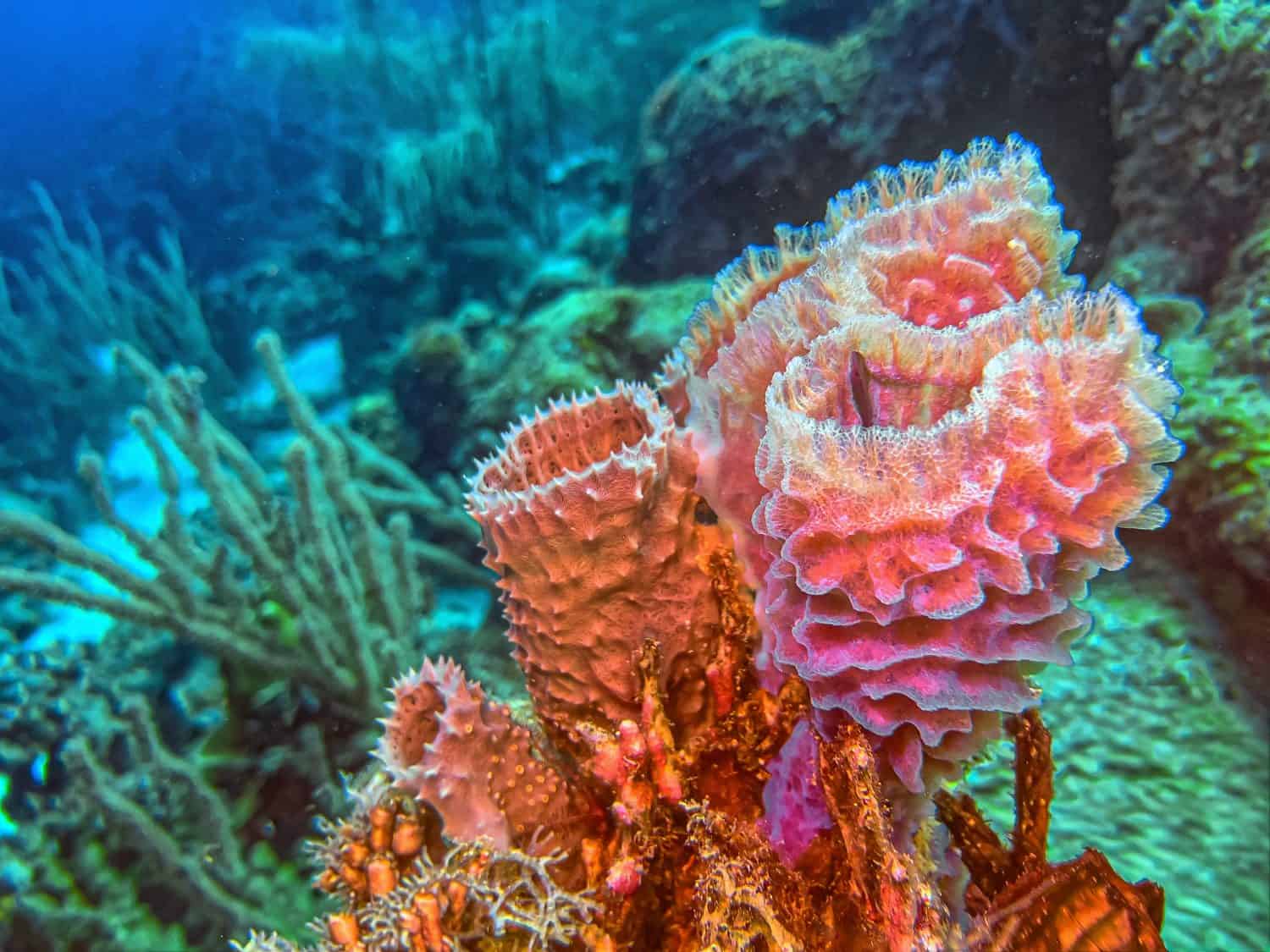
Researchers believe that many more undiscovered branching worm species are living in the ocean’s sea sponges.
©John A. Anderson/Shutterstock.com
Time and again, returning to long-forgotten specimens in dusty old museum drawers yields new insights and new species. As evidenced by their impressive finds, the researchers believe many more branching worm species still unknown to science are out there, likely hiding in overlooked sea sponges. Given their unique features and reproductive methods, these creatures could provide valuable insights into symbiosis, biodiversity, and complex body plans.
As Professor Maria Teresa Aguado, Scientific Curator of the Biodiversity Museum at Göttingen University and leader of the study, explained, “Our findings would have been impossible without access to valuable museum specimens. These collections are not just repositories of old samples, but resources that continue to generate new discoveries.”