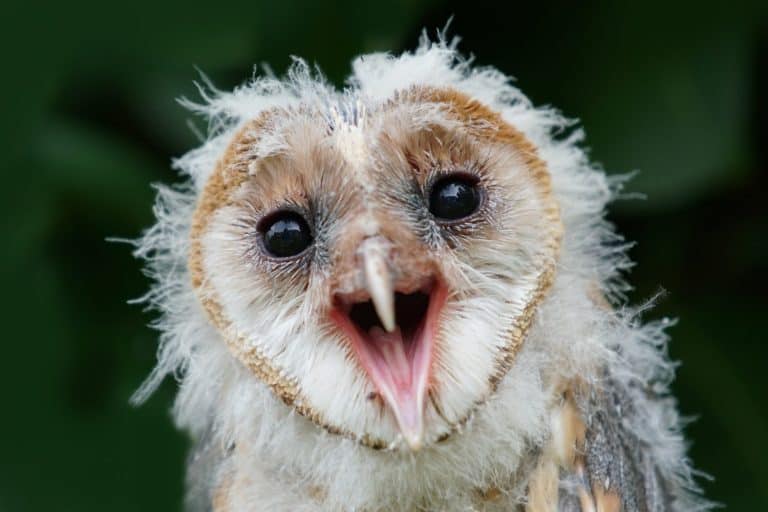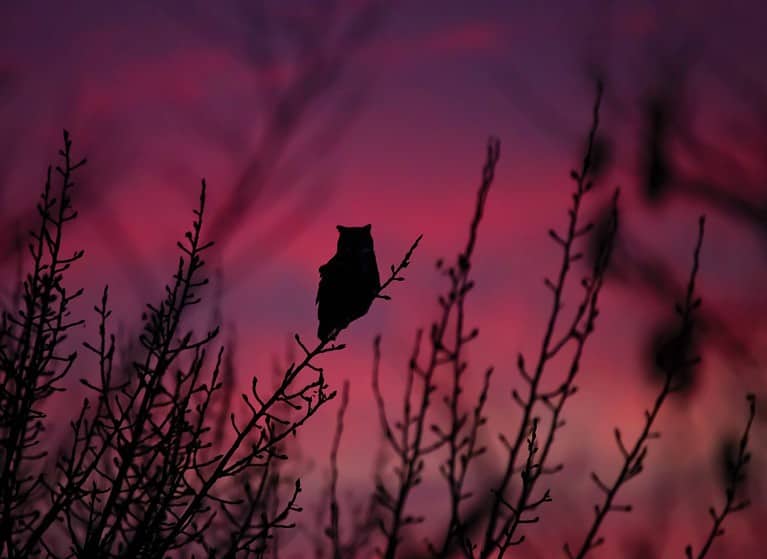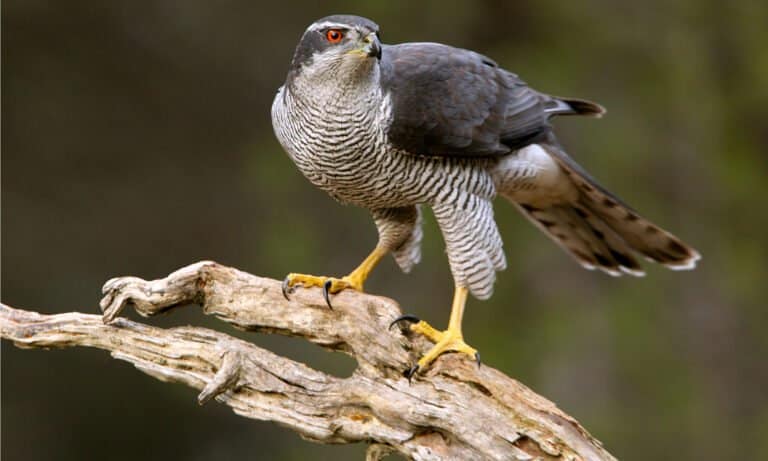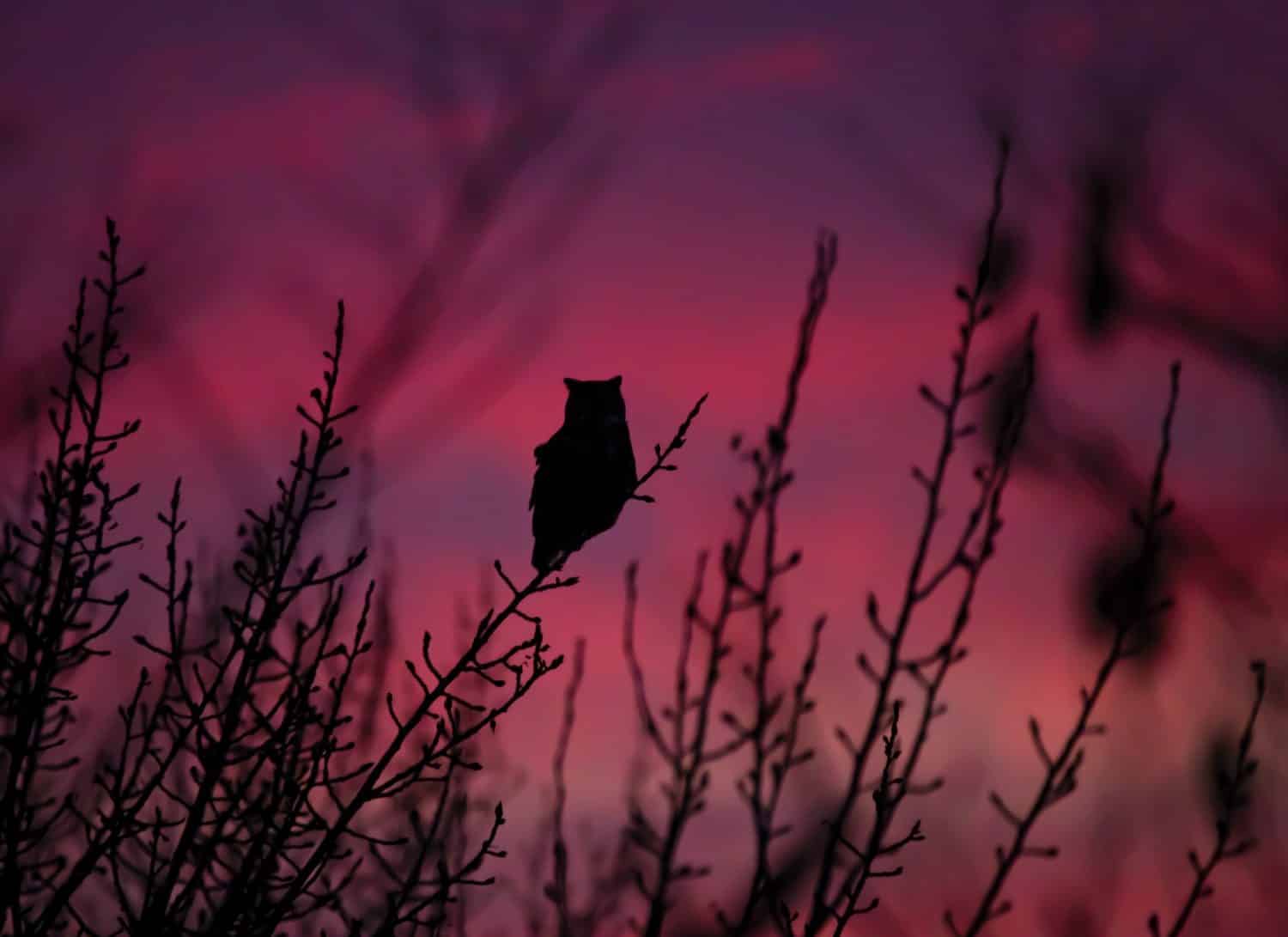

A count in January of 2022 by the Massachusetts Avian Records Committee recorded 510 bird species living in Massachusetts. Of those, 12 are owls! Due to their nocturnal habits, few people have seen an owl in the wild. However, there are several spots around the state where you might see these birds if you feel like staying up late. Let’s take a look at the 12 owls that live in Massachusetts.
1. Eastern Screech Owl
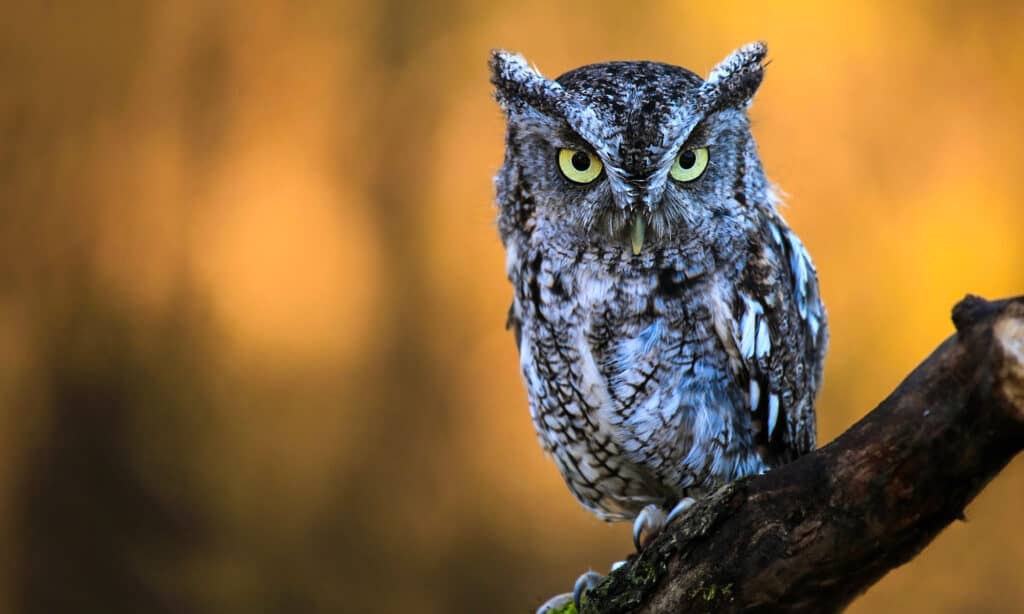
Screech owls have a varied diet and hunt at night.
©mlorenz/Shutterstock.com
Megascops asio
Short and stocky, eastern screech owls have a big head and raised ear tufts. Their feathers usually look gray or reddish-brown, with complicated banding and spot patterns. These feathered friends prefer to live in deciduous forests at lower elevations, with some common hunting grounds including the Quabbin Reservoir, Cape Cod, and the Berkshire Hills. Unlike many other types of owls, eastern screeches aren’t shy. They have adapted well to human presence, often living in artificial nest boxes in suburban or urban areas.
2. Great Horned Owl
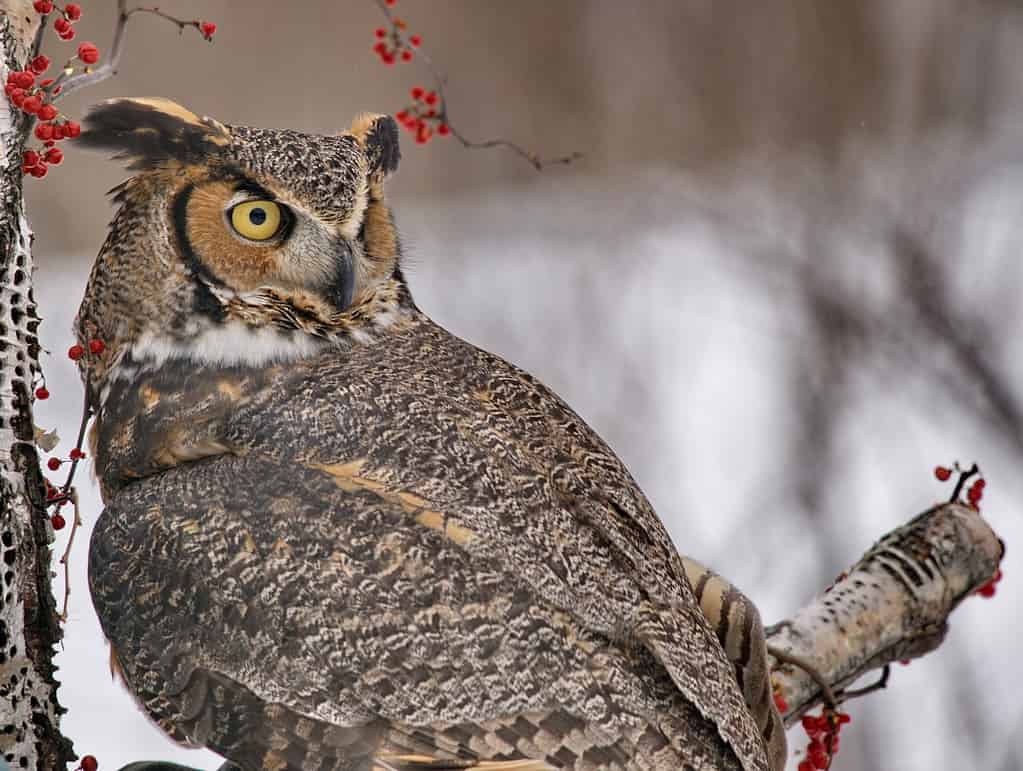
Great horned owls are capable of turning their heads totally around to watch their own backs.
©cindylindowphotography/Shutterstock.com
Bubo virhinianus
Great horned owls are common throughout Massachusetts. They aren’t picky about the woods they live in and have come to rely on the rats, squirrels, and other rodents humans attract. Some reports place them in all counties except Dukes and Nantucket. These large owls have a mix of gray and brown feathers, often with a white spot on their throats. Their tall ear tufts give them an iconic look while also contributing to their hunting abilities.
3. American Barn Owl
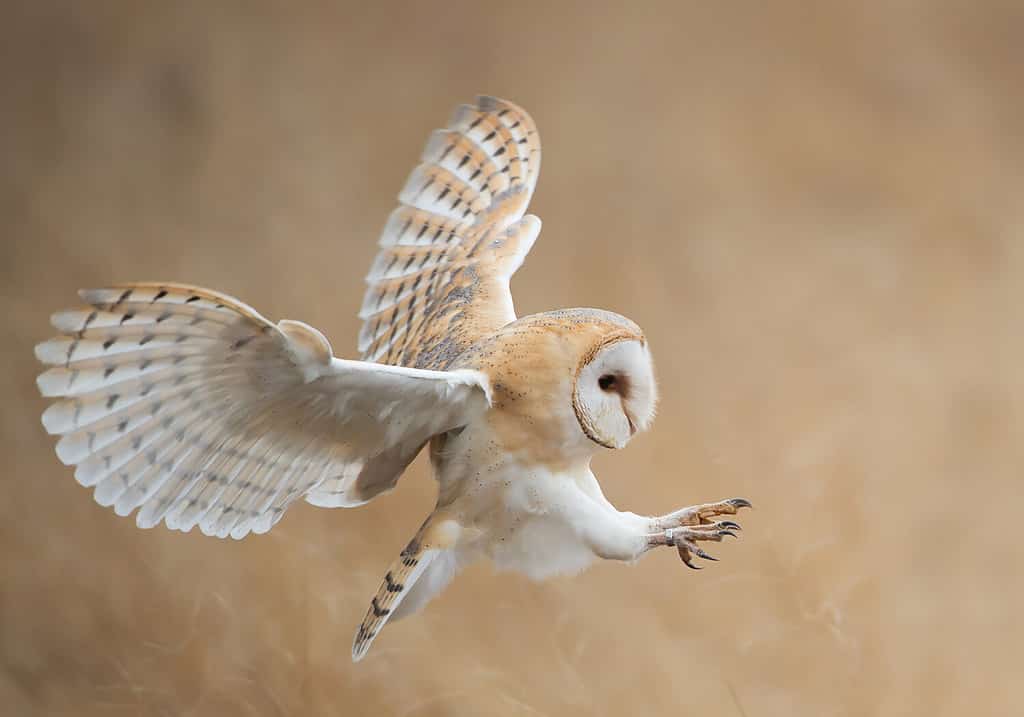
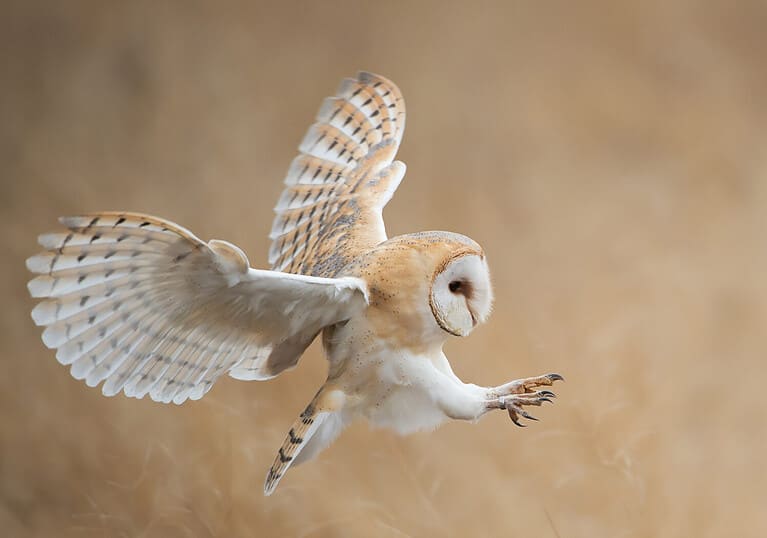
The bright white of a barn owl’s face led to the nickname “ghost owl.”
©MZPHOTO.CZ/Shutterstock.com
Tyto alba
These owls got their name because of their habit of making nests in abandoned or seldom-used structures, like barns. They find their prey in open spaces, making farms, meadows, and coastal marshes their preferred hunting grounds. A barn owl’s round, moon-like face makes them one of the most recognizable owl species, as does their pale coloration. Some places with known populations include the Quabbin Reservoir, the Concord River, and the Boston area.
4. Northern Hawk Owl
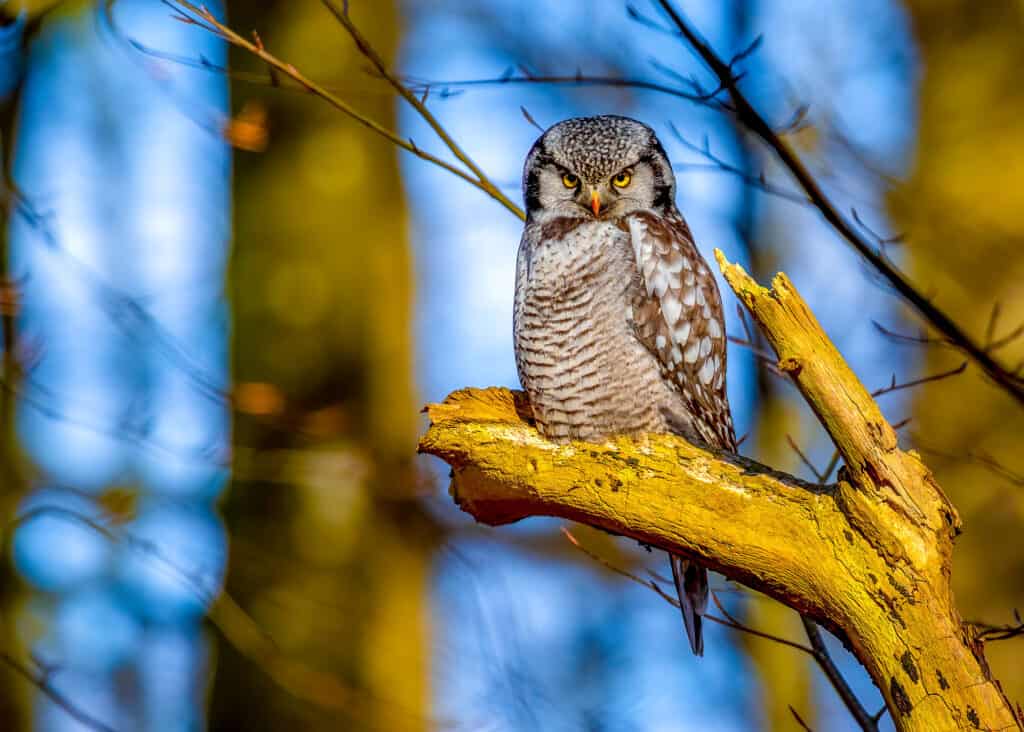
Since they hunt during the day, northern hawk owls might be the most visible owl species in Massachusetts.
©Svitlana Tkach/Shutterstock.com
Surnia ulula
Interestingly, northern hawk owls are most active during the day, though they also hunt at night. Their oval-shaped bodies and long tails make for easy identification as they sit atop tall trees to scan for prey in open or marshy areas bordering forests in the northern parts of the state. The striking black outline on northern hawk owls’ white faces and the horizontal striping of their belly feathers also help them stand out.
5. Burrowing Owl
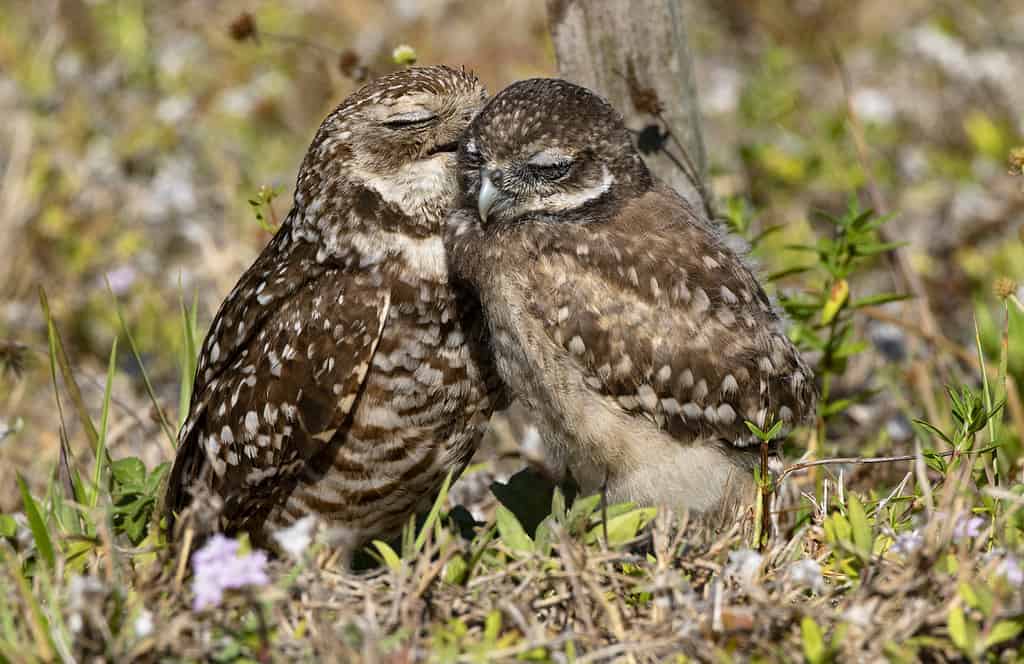
These small owls might be a rare sight in Massachusetts but can be seen in multiple areas.
©Florence and Joseph McGinn/iStock via Getty Images
Athene cunicularia
Burrowing owls break from the owl tradition. Not only do they nest in the ground, but they are most active during the day. Their small stature makes them hard to spot, and their mottled brown coloration also offers camouflage. They prefer to live in open areas with sparse plant life, such as prairies, airports, and farms. Reports of sightings include the Berkshires, Martha’s Vineyard, and the Cape Cod area.
6. Barred Owl
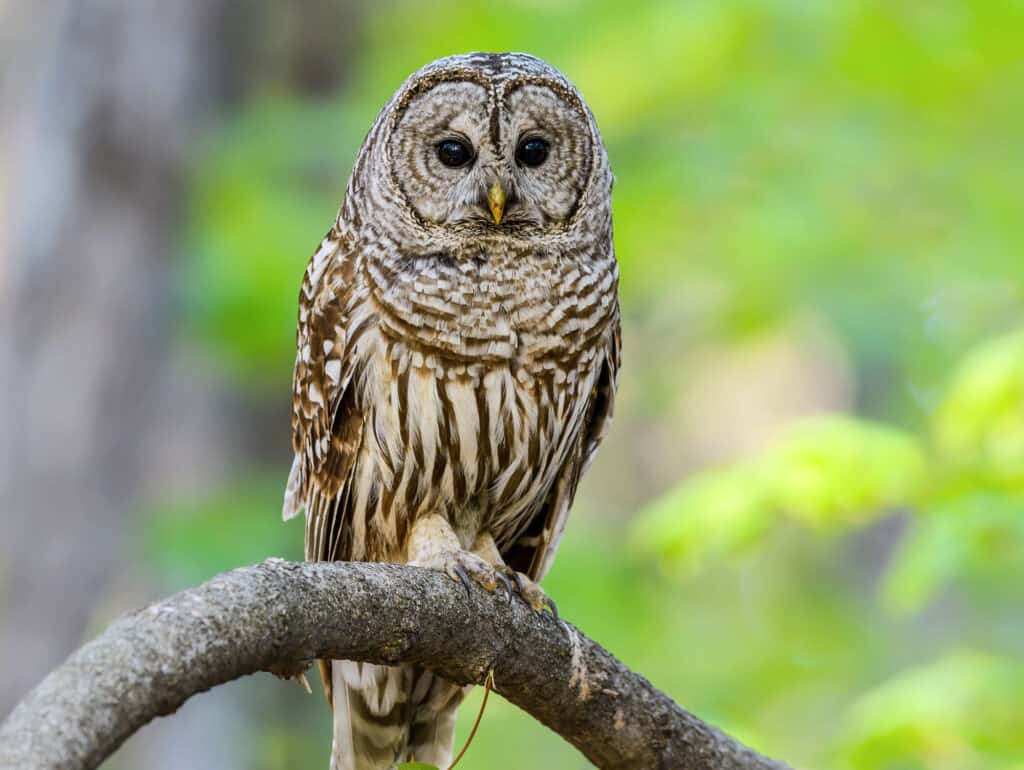
Barred owls live in most parts of Massachusetts, singing their songs about cooking.
©FotoRequest/Shutterstock.com
Strix varias
Except for the southeast region of the state, you can spot barred owls in most parts of Massachusetts. They live everywhere, from woods and marshes to large parks and gardens. Their unique call, one that sounds like “Who cooks for you, who cooks for you all,” can be heard year-round. The distinct striping on the barred owl’s wings, along with its gray and brown mottled body feathers, gives this bird its name. They also have a moon-shaped face, similar to a barn owl, that features gray feathers and dark eyes.
7. Short-Eared Owl
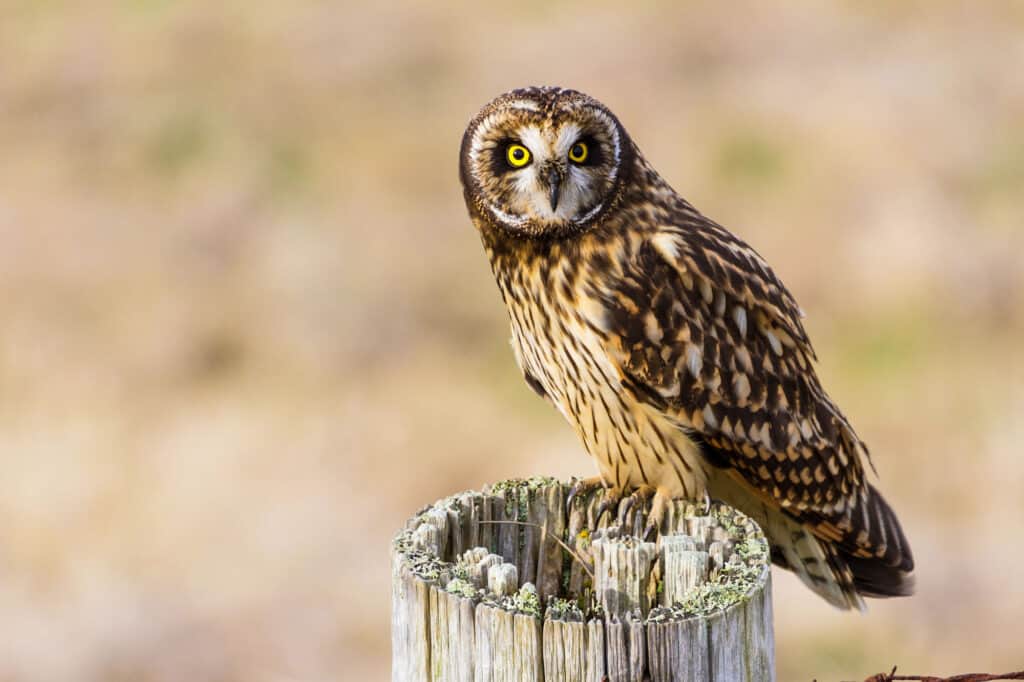
Avid birdwatchers can find short-eared owls near Cape Cod, the only nesting spot in the state for the birds.
©iStock.com/Devonyu
Asio flammeus
Did you know Massachusetts’ short-eared owls only lay eggs on the islands near Cape Cod? They like to hunt in wide open spaces, like meadows, and make their nests in the ground. They stay relatively close to their nesting sites, making the Cape an excellent place for sightings. The best time to see these striking birds is in the winter when their buff-brown coloration is more visible against the snow. Living up to their name, they also have small ear tufts that extend while hunting to look like horns.
8. Northern Saw-Whet Owl
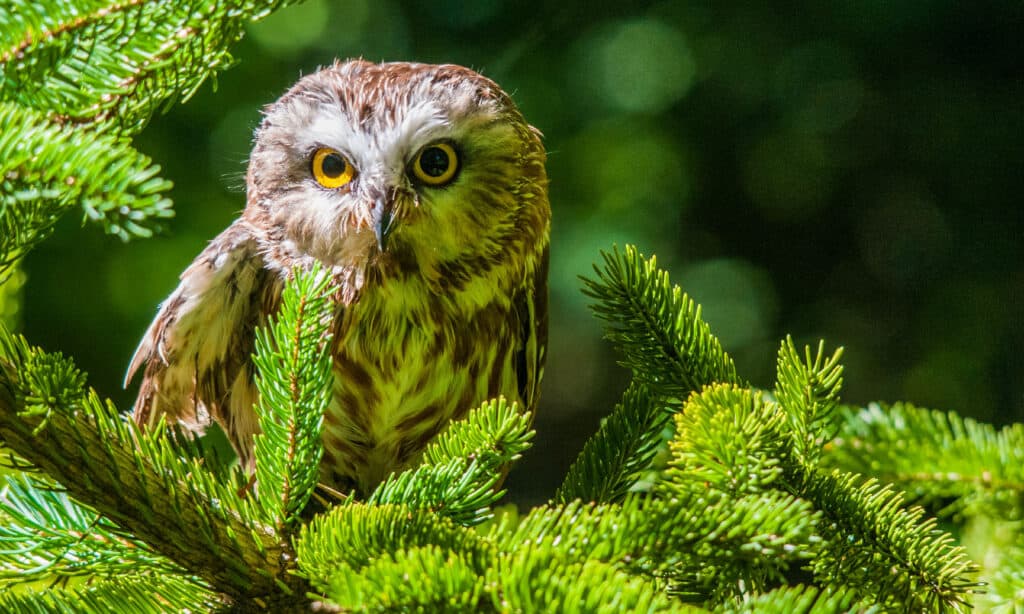
Massachusetts’ population of northern saw-whets has boomed in the last 50 years.
©iStock.com/bookguy
Aegolius acadicus
The northern saw-whet is the smallest owl in the eastern United States! Its wingspan only reaches about 18 inches and usually weighs less than six ounces — about as much as a deck of cards. Mass Audubon, a wildlife conservation organization, has helped increase the saw-whet population in the state since 1970. These tiny owls are quite elusive, but their sharp, almost beep-like calls fill the air in the right areas. The Boston area, the Worcester Hills, and the Berkshires have high concentrations of sightings.
9. Great Gray Owl
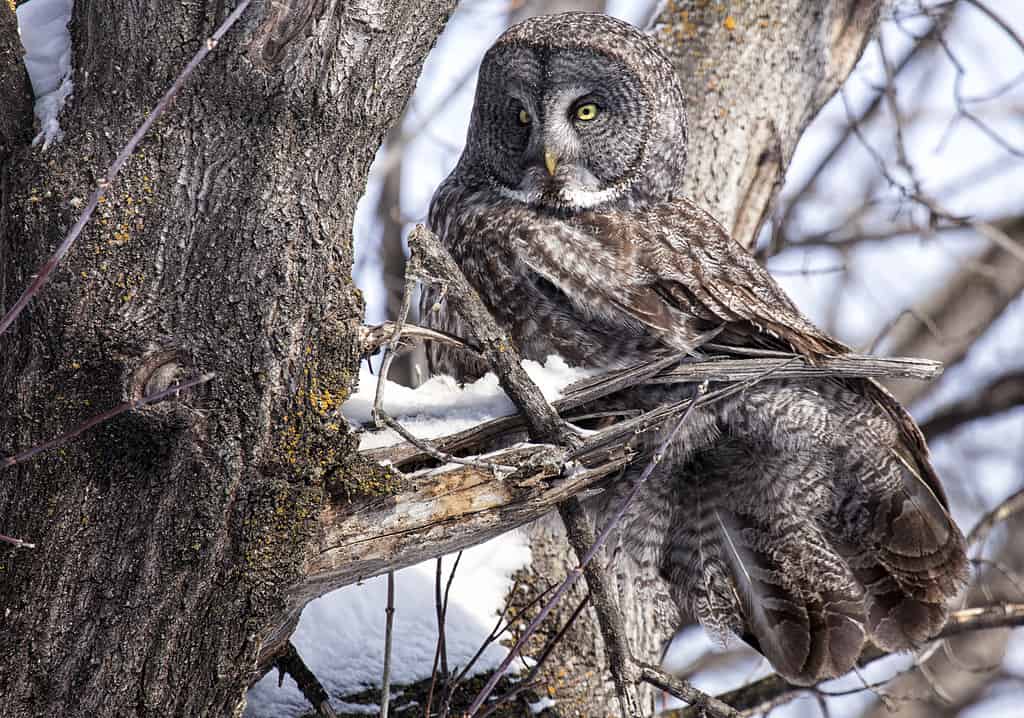
Great gray owls’ coloration helps them blend in and avoid being spotted by prey.
©Lynn_Bystrom/iStock via Getty Images
Strix nebulosa
These large birds may not be the largest owls, but they are the tallest. They can reach a height of 33 inches and a wingspan of over 60 inches. True to their name, gray owls feature silvery gray feathers and faces, with bright yellow beaks and eyes. The great gray owl is one of the rarest in North America but can be seen in Massachusetts in the Berkshire Mountains and the Cape Cod National Seashore.
10. Boreal Owl
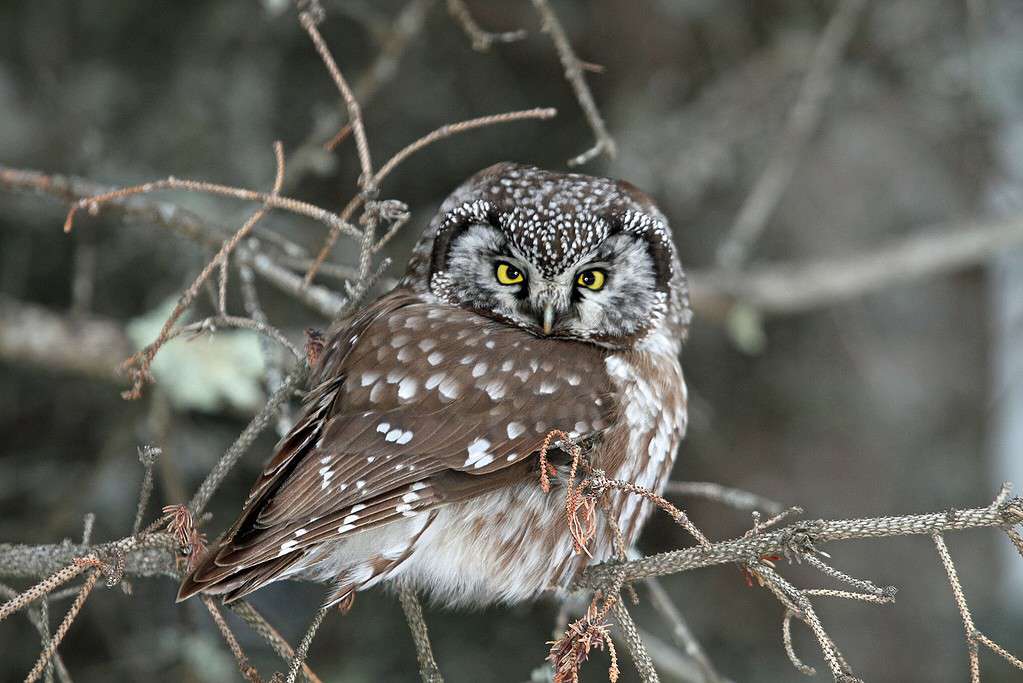
Finding these small owls is a great challenge for birdwatchers.
Aegolius funereus
Boreal owls are short, stocky, and have a square-shaped head. Shy and elusive, they have several traits that make them hard to spot. They only reach about 11 inches tall, and their mix of white, tan, and brown feathers helps them hide. Boreal owls also hunt only at night in the state and choose to roost in a different tree daily, so you can’t even track them back to a nest. They primarily live in the northern parts of the state.
11. Snowy Owl
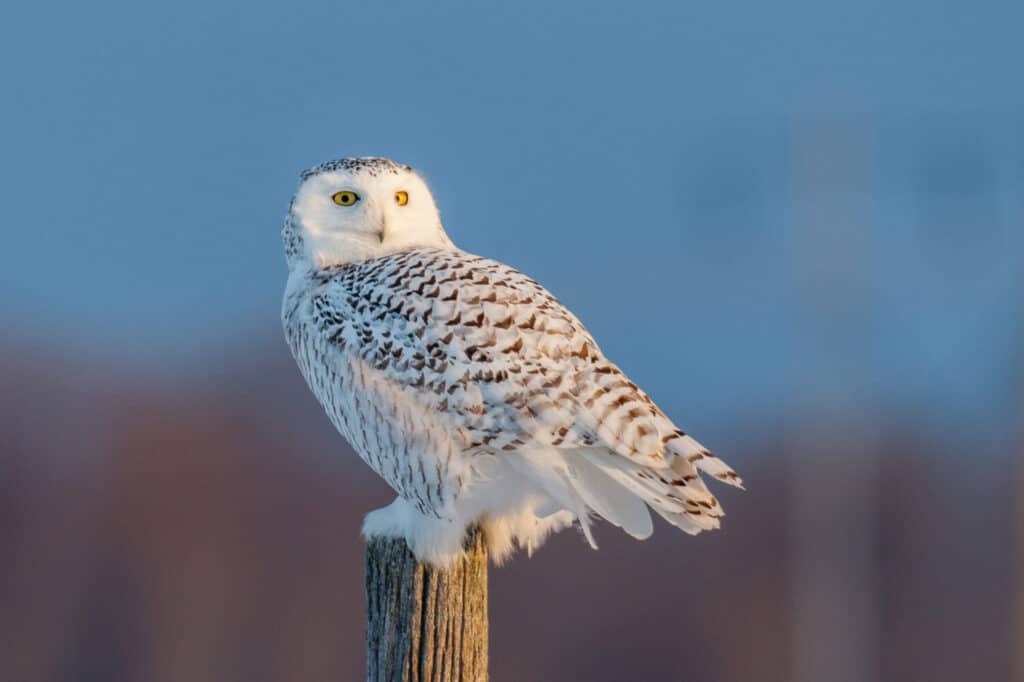
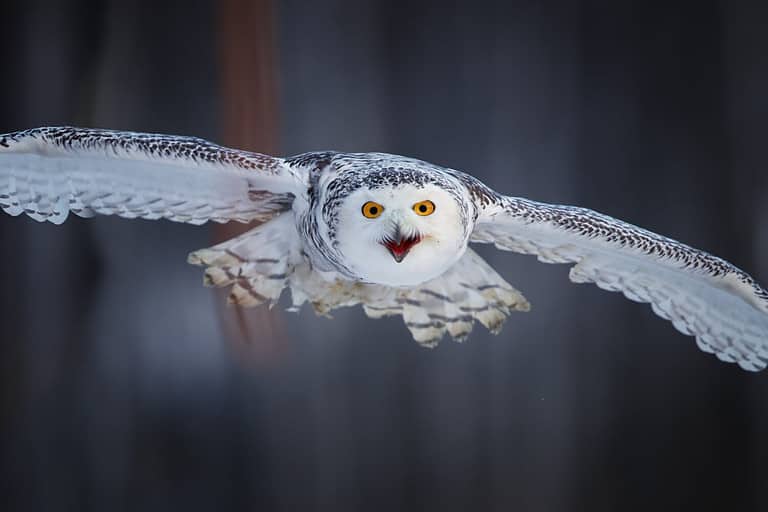
Snowy owls don’t usually spend all year in Massachusetts but make appearances in the winter.
©Guoqiang Xue/Shutterstock.com
Bubo scandiacus
Though snowy owls spend most of their lives in the Arctic, they do migrate south and make appearances in Massachusetts between late November and April. The Boston Logan Airport, located in East Boston, sees the largest concentration of snowy owls in the Northeast! Snowy owls are the largest owls in North America based on body mass.
12. Long-Eared Owl
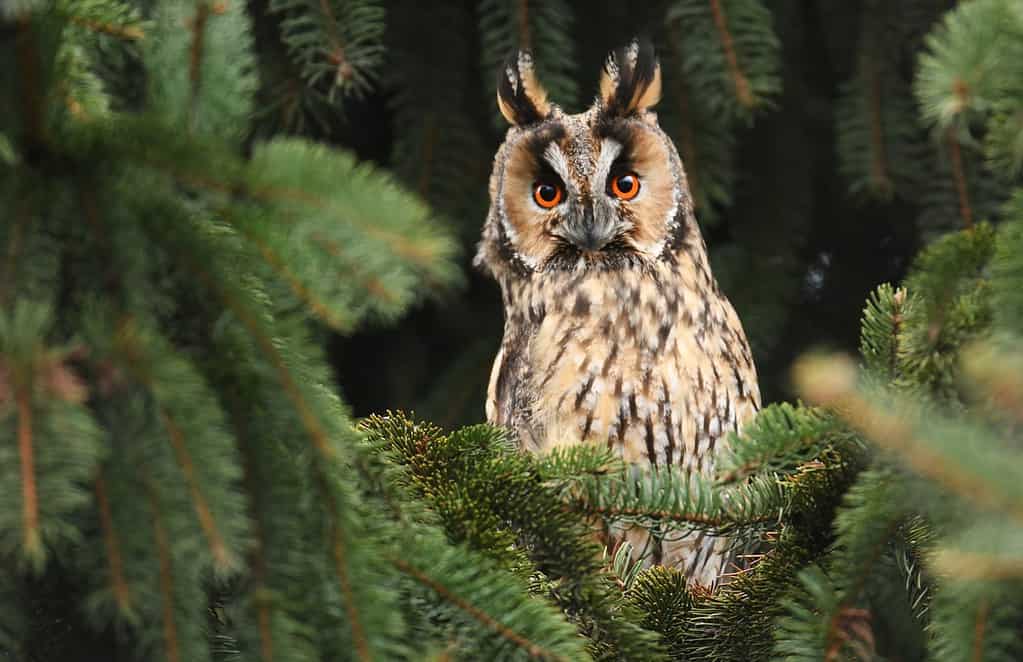
The ear tufts of a long-eared owl may look comical but actually help the owl locate sounds while hunting.
©Piotr Krzeslak/Shutterstock.com
Asio otus
It’s rare to see this elusive owl, and there are very few sightings in Massachusetts over the last 20 years. They prefer to live in dense, conifer forests, which also contributes to their master hiding skills. Though the state hosts a few breeding pairs, long-eared owls are more common in the states to the north and west of Massachusetts. Long-eared owls have distinctively long ear tufts — hence their name — and wide, yellow eyes that contribute to a surprised expression when they are spotted.